Germany charges three dual German-Russian nationals with espionage
January 6, 2025 2 Comments
 THE OFFICE OF THE Federal Prosecutor in Germany has charged three dual German-Russian citizens with acts of espionage on behalf of Russia, with the intent of harming the national security of the German state. In compliance with German privacy laws, the three espionage suspects have been publicly identified only by their first names and last name initials. They are: Dieter S., Alex D., and Alexander J.
Dieter S. appears to be the central suspect in this case. Following his arrest by the German Federal Criminal Police Office, he was found to have participated in military operations of the secessionist Donetsk People’s Republic in Ukraine. By that time, German authorities had already charged him with being in contact with an individual known to be a member of Russian intelligence, who operated as his handler.
According to the indictment, throughout his interactions with his Russian handler, Dieter S. repeatedly made it known that he was willing and able to carry out acts of sabotage against security-related installations in Germany, on behalf of the Russian Federation. He also offered to carry out arson attacks and use explosives against transportation facilities and infrastructure, such as railway lines, which were used by the German state to transport military supplies to Ukraine.
Subsequently, Dieter S. was instructed by his Russian handler to collect intelligence about potential targets in southeastern Germany. He thus engaged in systematic surveillance activities targeting the Grafenwoehr Training Area, a United States Army military training base located near Grafenwöhr, in eastern Bavaria. Grafenwöhr is the largest training facility maintained by the United States in Europe. Since 2022, it has been used to instruct Ukrainian troops on how to operate American-built tanks.
Dieter S. is also believed to have conducted surveillance at several loading stations used by the German and American militaries, as well as the facilities of private-sector contractors to the German military. In his surveillance operations, Dieter S. was assisted by Alex D. and Alexander J. All three men took photographs and videos of the targeted facilities. The collected material was eventually passed on to Dieter S.’s Russian handler.
Official charges against the three suspects were filed before the State Security Senate of the Munich Higher Regional Court on December 9. They were publicized by the office of the Federal Public Prosecutor General on December 30. A trial date is now pending.
► Author: Joseph Fitsanakis | Date: 06 January 2025 | Permalink
 A NEW REPORT IN The Washington Post newspaper claims that the Indian government is behind a “methodical assassination program” that has been targeting individuals deep inside India’s nuclear arch-rival Pakistan. According to the
 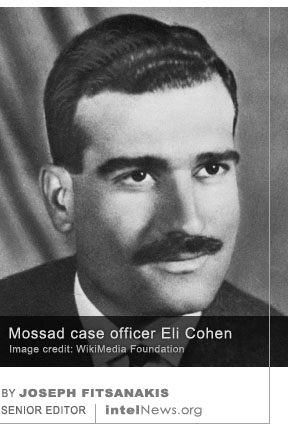 ISRAELI OFFICIALS ARE REPORTEDLY trying to recover the remains of Eli Cohen, an Israeli spy who was hanged in Syria in 1965, after his espionage activities were discovered. Born in Alexandria in 1924, Cohen was an Egyptian Jew, whose family immigrated to Israel after 1949. After joining the Mossad, Israel’s primary external intelligence agency, Cohen became a katsa, or case officer.
 THERE ARE CONFLICTING REPORTS about the fate of Russia’s military bases in Syria, following the complete collapse of the 54-year-long Assad dynasty. Late on Sunday it was
  facility outside of the former Soviet Union. Furthermore, it constitutes the sole warm-port fueling and repair facility that is exclusively available to the Russian Navy. It is home to the Russian naval group in Syria, which consists of a submarine and five warships.
 THE WHITE HOUSE HELD an emergency meeting on Friday with senior telecommunications industry officials to discuss the fallout from a Chinese cyber espionage operation
  A HIGHLY ANTICIPATED REVIEW of the European Union’s intelligence readiness to face conventional and hybrid threats has called for the establishment of a dedicated Europe-wide intelligence agency. Such an agency must rely on EU member states “trust[ing] each other” in order to confront increasingly aggressive espionage, sabotage, and other types of threats by outside actors like Russia, the report said.
 AUTHORITIES IN BRITAIN AND Germany are reportedly investigating the possibility that the Russian intelligence services may be behind two fires that occurred in shipping warehouses last summer. The fires occurred in late July in facilities belonging to DHL, a German logistics firm headquartered in Bonn.
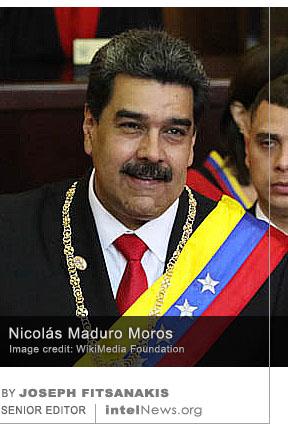 THE GOVERNMENTS OF SPAIN and the United States have strongly rejected allegations they were involved in an operation that aimed to kill leading Venezuelan officials, including the country’s President Nicolás Maduro. The
 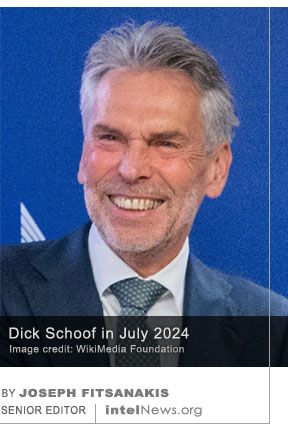 THE NETHERLANDS’ NEW PRIME minister has officially banned the use of all wireless devices from cabinet meetings, reportedly to defend against espionage operations from foreign actors. The move comes following
  AT LEAST FOUR OF the eight Russians
 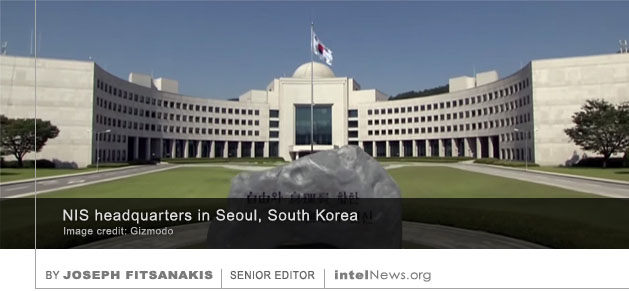 A FORMER INTELLIGENCE ANALYST for the Central Intelligence Agency (CIA), who is married to a high-profile columnist for The Washington Post, remains under arrest for allegedly spying for South Korea. According to an
 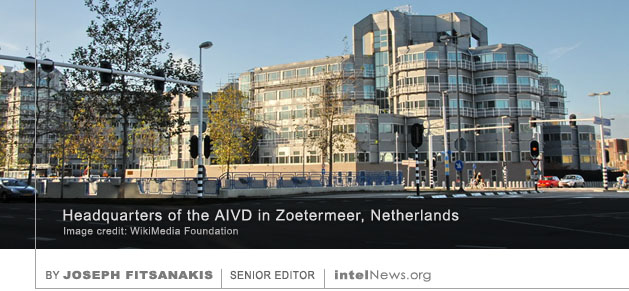 THE FORMER DIRECTOR OF the Netherlands’ intelligence service has been










Italian spy chief’s sudden resignation described as ‘seismic development’
January 13, 2025 1 Comment
Previously Belloni held positions in the Directorate-General for Political Affairs and Security of the Ministry of Foreign Affairs of Italy. She also served in several Italian embassies in Europe, notably Bratislava and Vienna. Belloni is commonly viewed as a career civil servant who has successfully served under various political administrations, without expressing any political preferences. Throughout her career, Belloni has refused to espouse partisan political views, which has only increased the respect with which she is viewed.
There is no known history of friction between Belloni and Giorgia Meloni, a rightwing populist who emerged as Italy’s first woman prime minister in October 2022. On the contrary, Belloni was viewed as an administrator who had gained Meloni’s trust. However, a report last week by the center-left La Repubblica newspaper claimed that Belloni detested Meloni’s constant interference in security affairs and found it difficult to truly gain the prime minister’s trust. The newspaper claimed that the spy chief tended her resignation on a phone call with the prime minister, telling close associates that she “couldn’t take it any more”.
In a subsequent interview published in the Corriere della Sera newspaper, Belloni said that “last few months of her mandate [had] been a real war of attrition”. Given the key position that Belloni held in the Italian cabinet, her sudden resignation has reignited the discussion about the phenomenon of executive overreach in Italian politics, as non-political career officials are resigning or being pushed out and are replaced by political appointees.
Meanwhile the prime minister announced last Thursday that she would appoint Vittorio Rizzi as Belloni’s successor in the DIS. A law enforcement official with a background in cybersecurity, Rizzi is currently serving as deputy director of the Internal Intelligence and Security Agency (AISI), the domestic security agency of Italy. He was appointed to that role by Meloni in September 2024.
► Author: Joseph Fitsanakis | Date: 13 January 2025 | Permalink
Filed under Expert news and commentary on intelligence, espionage, spies and spying Tagged with Department of Information for Security (Italy), DIS (Italy), Elisabetta Belloni, Giorgia Meloni, Italy, News, resignations, Vittorio Rizzi