French senior civil servant arrested on suspicion of spying for North Korea

Benoît QuennedeyA senior civil servant in the upper house of the French parliament has been arrested on suspicion of spying for North Korea, according to prosecutors. The news of the suspected spy’s arrest was first reported on Monday by Quotidien, a daily politics and culture show on the Monaco-based television channel TMC. The show cited “a judicial source in Paris” and said that France’s domestic security and counterintelligence agency, the General Directorate for Internal Security (DGSI), was in charge of the espionage case.

The senior administrator has been identified as Benoit Quennedey, a civil servant who liaises between the French Senate and the Department of Architecture and Heritage, which operates under France’s Ministry of Culture. Quennedey was reportedly detained on Sunday morning and his office in the French Senate was raided by DGSI officers on the same day. Quotidien said that he was arrested on suspicion of “collecting and delivering to a foreign power information likely to subvert core national interests”. The report did not provide specific information about the type of information that Quennedey is believed to have passed to North Korea. It did state, however, that a counterintelligence investigation into his activities began in March of this year.

Quennedey is believed to be the president of the Franco-Korean Friendship Association, the French branch of a Spanish-based organization that lobbies in favor of international support for North Korea. Korea Friendship Association branches exist in over 30 countries and are believed to be officially sanctioned by Pyongyang. They operate as something akin to the pre-World War II Comintern (Communist International), a Moscow-sanctioned international pressure group that advocated in favor of Soviet-style communism around the world. French media reported on Monday that Quennedey traveled extensively to the Korean Peninsula in the past decade and has written a French-language book on North Korea. News reports said that the French President Emmanuel Macron had been made aware of Quennedey’s arrest. The senior civil servant faces up to 30 years in prison if found guilty of espionage.

Author: Joseph Fitsanakis | Date: 27 November 2018 | Permalink

Four times more Sunni Islamist militants today than on 9/11, study finds

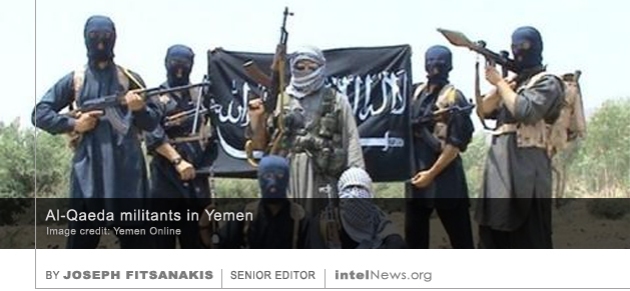
Al-Qaeda in YemenThere are four times as many Sunni Islamist militants today in the world than on September 11, 2001, despite an almost 20 year-long war campaign by the United States and its allies, according to a new report. Washington launched the ‘global war on terrorism’ in the aftermath of the 9/11 attacks that were perpetrated by al-Qaeda. In the ensuing years, American and other Western troops have engaged militarily in over a dozen countries, including Afghanistan, Iraq, Pakistan, Syria, Libya, Yemen, Somalia, Sudan, and the Philippines. But a new study by the bipartisan Center for Strategic and International Studies (CSIS) suggests that the West’s efforts to combat Sunni militancy are failing —and may even be making the problem worse. The report by the Washington-based think-tank states that the number of active Sunni Islamist militants today is as much as “270 percent greater than in 2001, when the 9/11 attacks occurred”.

Entitled “The Evolution of the Salafi-Jihadist Threat”, the 71-page report is one of the most extensive ever undertaken on this topic, drawing on information from data sets that date back nearly 40 years. It warns that, despite the rapid loss of territory suffered by the Islamic State in Iraq and Syria, armed Sunni militancy is “far from defeated”. The number of Salafi-jihadists —active proponents of armed fight against perceived enemies of Islam— has slightly declined in comparison to 2016, but it remains at near-peak levels over a 38-year period, says the CSIS report. It estimates that there are today as many as 230,000 Salafi-jihadists in almost 70 countries. Most of them are based in Syria (as many as 70,500), Afghanistan (as many as 64,000), Pakistan (up to 40,000), and Iraq (up to 15,000). Nearly 30,000 more are in Africa, primarily in Somalia, Nigeria and the Sahel region.

These fighters, and the groups they fight under, are far more resilient than Western antiterrorist strategists tend to assume, claims the report. They are also inadvertently aided by successive policy failures by the US and its closest Western allies. The latter focus primarily on the military aspects of counterterrorism campaigns, while ignoring the importance of improving local governance in territories where Sunni Islamism is rife, argues the report. Therefore, as the US and its allies continue to engage “in a seemingly endless [military] confrontation with a metastasizing set of militant groups”, they face seemingly endless waves of militants, who are becoming increasingly capable of resisting Western conventional military force. The report is available online in .pdf form, here.

Author: Joseph Fitsanakis | Date: 26 November 2018 | Permalink
Nerve agent used in Skripal attack ‘could have killed thousands’ say experts

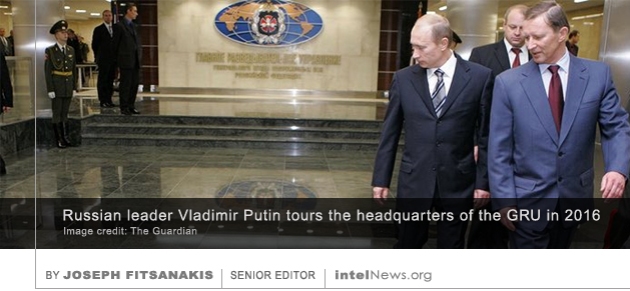
GRUThe amount of poison smuggled into Britain for a near-fatal attack on Russian former spy Sergei Skripal was powerful enough to kill “thousands of people”, according those leading the investigation into the incident. Skripal, a former military intelligence officer, was resettled in the English town of Salisbury in 2010, after spending several years in a Russian prison for spying for Britain. But he and his daughter Yulia almost died in March of this year, after being poisoned by a powerful nerve agent that nearly killed them. The attack has been widely blamed on the Russian government, though the Kremlin denies that it had a role in it.
Investigators from Britain and other Western countries have identified the poison used in the attack on the Skripals as novichok. The term (meaning ‘newbie’ in Russian) was given by Western scientists to a series of rarely used nerve agents that were developed the Soviet Union and Russia between 1971 and the early 1990s. It is believed that the poison was smuggled into the United Kingdom hidden inside an imitation perfume bottle, which had been fitted with a custom-made pump used to apply the poison. British authorities have determined that the assailants sprayed the poison on the doorway —including the handle— of the Skripals’ house in Salisbury. They then discarded the perfume bottle, containing the leftover novichok, in a garbage can before leaving the country in a hurry. The bottle was eventually recovered by Salisbury resident Charlie Rowley. His partner, Dawn Sturgess, died of poisoning after she applied some of the contents of the bottle on her wrists. British government scientists have since been examining the contents of the perfume bottle found inside Sturgess’ home.

On Thursday, BBC Television’s Panorama investigative program aired an episode entitled “Salisbury Nerve Agent Attack: The Inside Story”. Among those interviewed was Dean Haydon, a British Deputy Assistant Commissioner who is leading the ongoing investigation into the Salisbury attack. He told Panorama that “a significant amount” of novichok was left behind by the assailants inside the discarded perfume bottle. The amount of poison in the discarded bottle could have been used to kill “thousands”, he said, adding that the way it was applied to the Skripals’ home was “completely reckless”. The BBC program’s producers also spoke to a British government chemical weapons scientist, identified only as “Tim”, who is credited with having identified the substance used on the Skripals. He told the program that less than 100g of novichok was used against the Skripals, leaving the vast majority of the nerve agent inside the bottle. Given that novichok is “one of the deadliest substances known”, which has a “unique ability to poison individuals at very low concentrations”, the scientist said he was shocked by the amount of poison that was smuggled into Britain by the assailants.

The assailants have been identified by British intelligence as Dr. Alexander Yevgenyevich Mishkin (cover name “Alexander Petrov”) and Colonel Anatoliy Chepiga (cover name “Ruslan Boshirov”). Both men are said to be employees of the Russian military intelligence agency known as the Main Directorate of the General Staff of the Armed Forces, commonly referred to as the GRU. Moscow denies that it had any role in the attack on the Skripals.

Author: Joseph Fitsanakis | Date: 22 November 2018 | Permalink

Norwegian spy service seeks right to break law during espionage operations

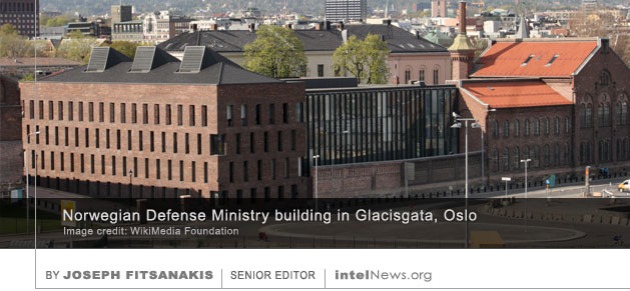
Royal Norwegian Ministry of DefenseNorway’s supreme legislature body is considering a bill that would offer immunity from prosecution to intelligence officers and informants who are authorized by the country’s spy service to conduct espionage. The bill has been proposed on behalf of the Royal Norwegian Ministry of Defense, which supervises the operations of the Norwegian Intelligence Service (NIS), Norway’s primary intelligence agency. The NIS operates primarily abroad and is the only institution of the Norwegian state that can be authorized by the government to break laws in foreign countries. However, supporters of the new bill point out that NIS overseas operations can also break Norwegian law. That is something that the proposed bill addresses, they argue.
The proposed bill offers immunity from prosecution to NIS case officers and their assets —either informants or foreign spies— who may commit offenses under Norwegian law, as part of authorized espionage operations. In its consultation note that accompanies the proposed bill, the Norwegian Ministry of Defense admits that a number of NIS operations “already violate existing Norwegian laws”. That is inevitable, argues the Ministry, because officers and informants who engage in espionage operations will often “act contrary to the stipulations of criminal law […] as part of their assignments”. They may, in other words, “do certain things that would be illegal if they were done not on behalf of the intelligence service”, states the consultation note.

The document does not provide details of the types of offenses that are committed in pursuit of intelligence operations, arguing that “the offenses that the NIS commits, as well as its methods, must remain secret”. It does, however, suggest that intelligence officers may make use of “false or misleading identities, documents and information”. They may also “smuggle large amounts of cash from the country”, which they will use to pay foreign assets. Given that these assets receive Norwegian taxpayers’ funds, and that some of them end up settling in Norway, it is important that their proceeds not be considered taxable income under Norwegian law, according to the Defense Ministry. By reporting their revenue to the Norwegian Tax Administration, these assets would make their NIS connection known, and thus blow their cover, the document states.

The Defense Ministry notes that the new bill “will have little legal significance”, as NIS espionage operations are generally shielded from prosecution under Norway’s existing legal codes. It will, however, formalize the NIS’ legal scope and allow the agency to assure its case officers that they can perform their missions without fearing arrest or prosecution, so long as they act within the parameters of their authorized missions. The spy agency will also be able to recruit more “informants, sources and contractors”, says the document.

Author: Joseph Fitsanakis | Date: 21 November 2018 | Permalink

European Union agrees to establish joint intelligence training school

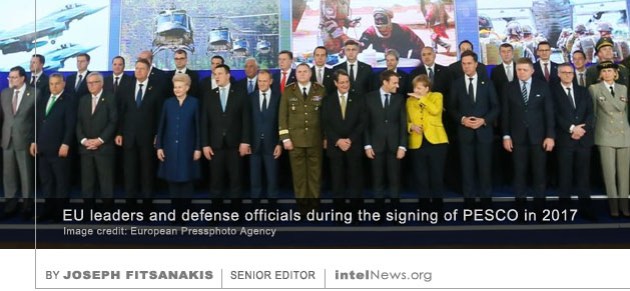
PESCO EUTwenty-five members of the European Union have agreed to establish a joint intelligence training academy, a move interpreted by some as a concrete effort to deepen inter-European security cooperation following Brexit. The announcement came just hours after leading EU heads of state spoke in favor of establishing a joint EU defense force. Calls for tighter cooperation between EU members in the areas of defense and security have been issued for decades. But the upcoming departure of Britain from the EU —popularly known as Brexit— has prompted Germany and France to propose deeper integration as a response to the rise of anti-EU sentiment across the continent.

The decision to establish a joint intelligence training school was approved on Monday by the ministers of defense and foreign affairs of 25 EU members. It was part of a wider agreement involving 16 other joint defense and security projects under the Permanent Structured Cooperation (PESCO) pact. The pact was first agreed on in September of 2017, and has since been functioning under the supervision of the European Defense Agency and the External Action Service —the diplomatic service of the EU. Nearly 20 projects of a military or security nature have since been signed under PESCO. Monday’s agreement virtually doubled the PESCO projects in existence. The new EU intelligence academy initiative will be led by Greece —an EU member since 1981— and will be headquartered in Cyprus, which joined the EU in 2004. When it becomes operational, the academy will provide “education and training in intelligence disciplines and other specific fields to EU member states’ intelligence personnel”, according to a joint PESCO communique issued on Monday.

The new intelligence school will work in cooperation with the individual intelligence agencies of the 25 co-signatory states, along with the North Atlantic Treaty Organization and with other regional security bodies, said PESCO. However, three EU states, namely Denmark, Malta and the United Kingdom, refused to support the project. Denmark and Malta are not participants in PESCO, while the United Kingdom is expected to leave the EU in March of next year. However, even before Brexit, London had vetoed the idea of closer EU intelligence cooperation, which it saw as a potential competitor to the so-called Five Eyes alliance, a postwar intelligence pact between the United States, the United Kingdom, Australia, New Zealand and Canada. Additionally, despite the overwhelming support for the intelligence academy by EU officials, it remains to be seen whether it will be realized. Observers told Politico on Monday that many other PESCO projects have “yet to get much beyond the drawing board” since their announcement last year.

Author: Joseph Fitsanakis | Date: 20 November 2018 | Research credit: K.A. | Permalink


Austria arrests second spy for Russia in a week: media reports

BVT AustriaAuthorities in Austria have arrested a second alleged spy for Russia in a week, according to media reports. Several Austrian news outlets reported on Monday that police had arrested an Austrian counterintelligence officer on suspicion of passing classified information to Russian intelligence. The news follows reports late last week of the arrest of an unnamed retired colonel in the Austrian Army, who is believed to have spied for Russia since 1988. As intelNews reported on Monday, the unnamed man worked at the Austrian Armed Forces’ headquarters in Salzburg. He is believed to have been in regular contact with his Russian handler, known to him only as “Yuri”, who trained him in the use of “sophisticated equipment” for passing secret information to Moscow. He is thought to have given Russia information on a range of weapons systems used by the Austrian Army and Air Force, as well as the personal details of high-ranking officers in the Austrian Armed Forces.
On Monday, the Vienna-based newspaper Kronen Zeitung, said that a second Austrian man had been arrested on suspicion of carrying out espionage for Moscow. The man was identified in Austrian news reports only as “O.”, due to strict restrictions imposed on media in the country. But the Kronen Zeitung said that the Vienna Public Prosecutor’s Office and the Austrian Ministry of Foreign Affairs had confirmed the reports of the arrest of the second alleged spy. According to the Vienna Public Prosecutor’s Office, the second individual was an employee of the Austrian Office for Protection of the Constitution and Counterterrorism, known as BVT. He had been investigated on suspicion of espionage for more than a year prior to his arrest this week. The man’s arrest took place alongside simultaneous raids at two residential addresses associated with him, according to reports. No further details about this latest case have been made available.

No information is available about the kind of information that the suspect is believed to have shared with Moscow. Furthermore, statements from Austrian officials do not mention any connection between the arrest of “O.” and the arrest of the retired Army colonel that took place last week. The Kronen Zeitung notes that, if found guilty of espionage, “O.” will face a sentence of up to 10 years behind bars. The embassy of Russia in Vienna refused to respond to questions about the arrest of “O.” on Monday night.

Author: Joseph Fitsanakis | Date: 13 November 2018 | Permalink

Austria summons Russian ambassador over arrest of alleged army spy

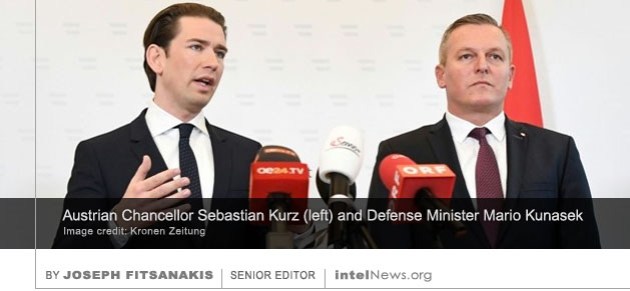
Sebastian Kurz Mario KunasekThe Austrian Ministry of Foreign Affairs summoned the Russian ambassador to Vienna on Friday, following the arrest of a retired Austrian Army colonel who allegedly spied for Moscow for more than two decades. The news was announced on Friday by Austrian Chancellor Sebastian Kurz at an emergency news conference in Vienna. He did not reveal the alleged spy’s identity, but said that he had been taken into custody as Austrian counterintelligence were investigating the extent of the security breach he caused.

However, according to the Kronen Zeitung, Austria’s highest-circulation newspaper, the suspect is a 70-year-old Army colonel who recently retired after a long military career. He reportedly worked at one of the Austrian Armed Forces’ two headquarters, located in the western city of Salzburg. The unnamed man is believed to have spied for Russia from the early 1990s until his arrest last week. The Kronen Zeitung said that the retired Army colonel was in regular contact with his Russian handler, known to him only as “Yuri”. The Russian handler reportedly trained him in the use of “sophisticated equipment”, which he used to communicate information to Moscow. He is thought to have given Russia information on a range of weapons systems used by the Austrian Army and Air Force, as well as the personal details of high-ranking officers in the Austrian Armed Forces. Austrian media reported that the alleged spy was paid nearly $350,000 for his services to Moscow. According to Austria’s Minister of Defense Mario Kunasek, the arrest came after a tip given to the Austrian government “a few weeks ago” by an unnamed European intelligence agency. He also said that Austrian security services were looking into the possibility that the suspect may have been part of a larger spy ring working for Moscow.

The incident has strained relations between Austria and Russia. In the past decade, Austria —which is not a member of the North Atlantic Treaty Organization— has been seen by observers as a rare ally of Moscow inside the European Union. Unlike the vast majority of European Union countries, Austria chose not to expel Russian diplomats following the poisoning of former Russian double spy Sergei Skripal in March of this year. In August, Russian President Vladimir Putin attended the wedding of his personal friend, Austria’s Foreign Minister Karin Kneissl. But Mrs. Kneissl has now canceled a planned visit to Moscow in December in response to last week’s spy scandal. Speaking in Moscow on Saturday, Russian Foreign Minister Sergei Lavrov dismissed Austria’s accusations as “unfounded” and “unacceptable”.

Author: Joseph Fitsanakis | Date: 12 November 2018 | Permalink

Moscow names intersection after Kim Philby, British spy for the USSR

Kim PhilbyIn a sign of worsening relations between the United Kingdom and Russia, a busy intersection in Moscow has been named after Kim Philby, the British senior intelligence officer who secretly spied for the Soviet Union. While working as a senior member of British intelligence, Harold Adrian Russell Philby, known as ‘Kim’ to his friends, spied on behalf of the Soviet NKVD and KGB. His espionage activities lasted from about 1933 until 1963, when he secretly defected to the USSR from his home in Beirut, Lebanon. Philby’s defection sent ripples of shock across Western intelligence and is often seen as one of the most dramatic incidents of the Cold War. He was part of a wider ring of upper-class British spies, known collectively as ‘the Cambridge spies’ because they were recruited by Soviet intelligence during their student days at the University of Cambridge in England.
Following his sensational defection, Philby lived in the Soviet capital until his death in 1988 at the age of 76. On Tuesday, a statement published on the website of the Moscow City Council announced that a busy intersection in the city’s southeast would be renamed to ‘Kim Philby Square’ in honor of the British defector. The statement said that the name change had been agreed upon by the city council and decreed by Moscow Mayor Sergei Sbyanin, a close associate of Russian President Vladimir Putin. Interestingly, Philby lived nowhere near the intersection named after him. His apartment —provided to him by the Soviet state in exchange for services rendered during his 30 years of spying— was located in a residential area of central Moscow. However, the intersection in question is situated near the headquarters of the SVR, Russia’s Foreign Intelligence Service, which is the primary successor agency to the Soviet-era KGB. In September of last year, SVR Director Sergei Naryshkin attended an exhibition in Moscow entitled “Kim Philby: His Intelligence Work and Personal Life”, organized by the Russian Historical Society. While there, Naryshkin was told by veterans of the KGB that Philby liked to take long walks through the streets of Moscow and that a street should be named after him in his honor.

French news agency Agence France Presse reported that it contacted the Moscow City Council but a spokeswoman said she was not in a position to comment on the Kim Philby Square renaming. The move comes a few months after a small pedestrian thoroughfare located across from the front entrance of the Russian embassy in Washington DC was symbolically named ‘Boris Nemtsov’, after a Russian opposition leader who was gunned down in downtown Moscow in February of 2015.

Author: Joseph Fitsanakis | Date: 09 November 2018 | Permalink

ISIS using Turkey as strategic base to reorganize, Dutch intelligence report says

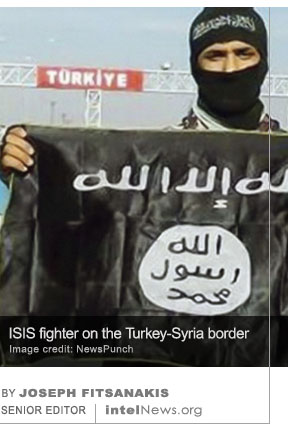
Turkey ISISIslamic State cells are using Turkey as a strategic base in which to recuperate, rebuild, and plan an underground war in Europe, according to a new report by Dutch intelligence. This assessment is featured in a report published on Monday by Holland’s General Intelligence and Security Service, known as AIVD. The document, which is available in the Dutch language on the website of the AIVD, is entitled The Legacy of Syria: Global Jihadism Remains a Threat to Europe.
The 22-page report argues that the government of Turkey does not see Sunni Islamist groups, such as al-Qaeda and the Islamic State (also known as the Islamic State of Iraq and Syria, or ISIS), as a pressing national security threat. Instead, Turkish security services are far more concerned with the ethnic Kurdish insurgents of the Kurdistan Workers’ Party (PKK) in Turkey and the People’s Protection Units (YPG) in Syria. Therefore, although Turkish authorities do sometimes take action to combat al-Qaeda and ISIS, “Turkish interests do not always correspond with European priorities on the field of counter-terrorism”, says the report. For that reason, Turkey served as a large transit center of tens of thousands of foreign fighters who poured into Syria to fight for Sunni Islamist groups during the height of the Syrian Civil War. At least 4,000 of those fighters are believed to be Turkish citizens, according to the AIVD report.

Today Turkey is home to tens of thousands of sympathizers of both al-Qaeda and ISIS —two organizations that maintain an active presence throughout the country— claims the report. The hands-off approach of the Turkish government is giving these groups “enough breathing space and freedom of movement” to operate relatively freely on Turkish soil. Additionally, al-Qaeda and ISIS members exploit the relative peace and stability of Turkey to forge plans to attack Western target, claims the AIVD report. It is from Turkey, it argues, that the Islamic State plans to shape and direct its pending underground war on the European continent.

Author: Joseph Fitsanakis | Date: 08 November 2018 | Permalink

France arrests six far-right militants who plotted to kill President Macron

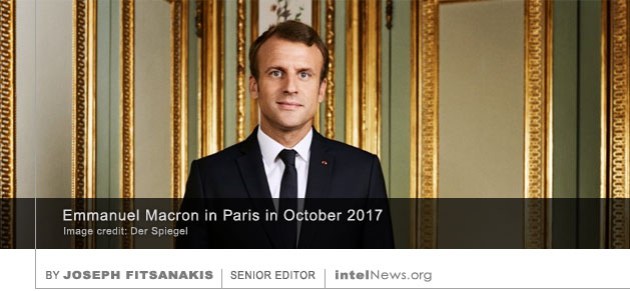
Emmanuel MacronAuthorities in France have announced the arrest of six individuals who were allegedly involved in a plot to kill French President Emmanuel Macron. Government prosecutors said on Tuesday that the six were arrested for planning “a violent action against the president of the Republic”. A former economy and industry minister, Macron resigned from the cabinet of left-of-center Prime Minister Manuel Valls in 2016 in order to lead a new right-of-center movement called En marche (Forward). In 2017 he won the presidential election with 66.1 percent, becoming the youngest president in the history of France.

French security services have responded to several instances of potential plots against Macron. In one recent case, a man was charged in July of last year with plotting to kill the president during France’s annual Bastille Day celebrations. This latest case, however, appears to be larger in size and sophistication. According to prosecutors, Tuesday’s arrests were part of a wider probe in to “a criminal terrorist association”. All six suspects had reportedly been monitored for quite some time by France’s domestic security agency, the General Directorate for Internal Security (DGSI).

The names and backgrounds of those arrested have not been released. But France’s BFM-TV station said on Tuesday that their ages ranged from 20 to 60, that they were men and women, and that they belonged to an unspecified “far-right organization”. It is also notable that their arrests took place as a result of raids in three different parts of the country —namely in the city of Moselle, located on the border of France, Germany and Luxembourg, and in Ille-et-Vilaine near Rennes in France’s northwestern Brittany region. More raids reportedly took place in the region of Isere in the French Alps. Reports early on Wednesday morning said that authorities were examining the details of the alleged assassination scheme, which was “imprecise and loosely formed”.

Author: Joseph Fitsanakis | Date: 07 October 2018 | Permalink

New book names ex-KGB defector who outed FBI agent Robert Hanssen as Russian spy

Robert HanssenA new book reveals for the first time the name of a former intelligence officer of the Soviet KGB who helped American authorities arrest Robert Hanssen, an American spy for the Soviet Union and Russia. The son of a Chicago police officer, Hanssen joined the Federal Bureau of Investigation in 1976 and was eventually transferred to the Bureau’s Soviet analytical unit, where he held senior counterintelligence posts. It wasn’t until 2000, however, that the FBI realized Hanssen had spied for Moscow since 1979. Following Hanssen’s arrest in 2001, it emerged that he had betrayed the names of 50 FBI and CIA assets or informants, many of whom perished in the hands of the Russian intelligence services.
In 2002, the US Department of Justice opined that Hanssen had caused “possibly the worst intelligence disaster in US history”. He is currently serving 15 consecutive life terms without the possibility of parole. But despite numerous articles, reports and books on the Hanssen spy case, the story of the FBI investigation that led to his arrest remains at best fragmentary. A major question concerns the identity of the mysterious person that helped FBI counterintelligence investigators zero in on Hanssen after years of fruitless efforts to confirm suspicions of the existence of a Russian mole. It is known that the FBI paid the sum of $7 million to a former KGB officer, who delivered the contents of Hanssen’s Russian intelligence file. But the identity of that informant has not been revealed.

That may have changed as of last month, however, thanks to The Seven Million Dollar Spy, a book written by the late David Wise, a journalist and best-selling intelligence author who died on October 8, aged 88. Wise’s book, published posthumously on October 23 in audio book format, received little media attention. But Newsweek intelligence correspondent Jeff Stein said last week that the book might bring us a step closer to uncovering the identity of the individual who led to Hanssen’s capture. Stein explains that the mysterious informant had previously developed a business relationship with Jack Platt, a retired CIA case officer who after the end of the Cold War co-founded an international security consultancy with ex-KGB operative Gennady Vasilenko. The two men staffed their company with several American and Russian former spies. Among them was Anatoly Stepanov, a former case officer in the KGB. Stein reports that, according to Wise’s posthumous book, Stepanov is in fact the pseudonym of former KGB officer Aleksandr Shcherbakov. It was he who delivered Hanssen’s file to the FBI, thus facilitating his eventual capture. It is believed that Shcherbakov defected to the United States in 2010 where he continues to live today under an assumed identity.

Author: Joseph Fitsanakis | Date: 06 November 2018 | Permalink

CIA suffered ‘catastrophic’ compromise of its spy communication system

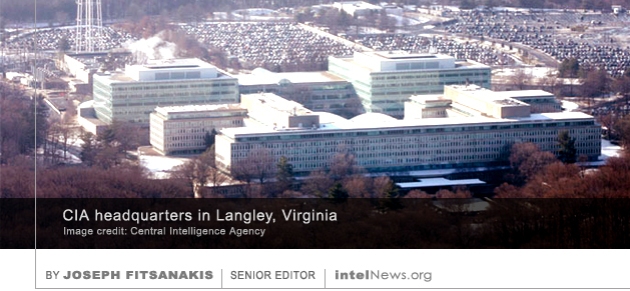
CIAThe United States Central Intelligence Agency suffered a “catastrophic” compromise of the system it uses to communicate with spies, which caused the death of “dozens of people around the world” according to sources. This is alleged in a major report published on Friday by Yahoo News, which cites “conversations with eleven former US intelligence and government officials directly familiar with the matter”. The report by the online news service describes the compromise of an Internet-based covert platform used by the CIA to facilitate the clandestine communication between CIA officers and their sources —known as agents or spies— around the world.
According to Yahoo News, the online communication system had been developed in the years after 9/11 by the US Intelligence Community for use in warzones in the Middle East and Central Asia. It was eventually adopted for extensive use by the CIA, which saw it as a practical method for exchanging sensitive information between CIA case officers and their assets in so-called ‘denied areas’. The term refers to regions of the world where face-to-face communication between CIA case officers and their assets is difficult and dangerous due to the presence of ultra-hostile intelligence services or non-state adversaries like the Taliban or al-Qaeda. However, it appears that the system was flawed: it was too elementary to withstand sustained scrutiny by Internet-savvy counterintelligence experts working for state actors like Iran, China or Russia.

In September of 2009, Washington made a series of impressively detailed revelations about the advanced status of Iran’s nuclear program. These angered Tehran, which redoubled its efforts to stop the US and others from acquiring intelligence information about the status of its nuclear program. Some sources told Yahoo News that one of the CIA assets inside Iran’s nuclear program was convinced by the Iranians to become a double spy. He proceeded to give Tehran crucial information about the CIA’s online communication system. Based on these initial clues, the Iranians allegedly used Google-based techniques “that one official described as rudimentary” to identify an entire network of CIA-maintained websites that were used to communicate with assets in Iran and elsewhere. The Iranians then kept tabs on these websites and located their users in order to gradually unravel an entire network of CIA agents inside their country. Around that time, Iranian media announced that the Islamic Republic’s counterintelligence agencies had broken up an extensive CIA spy ring consisting of more than 30 informants.

The Yahoo News report says that the CIA was able to successfully exfiltrate some of its assets from Iran before the authorities were able to apprehend them. The agency also had to recall a number of undercover officers, after they were identified by the Iranians. The effects of the compromise, however, persisted on a global scale, according to former US intelligence officials. In 2011 and 2012, another network of CIA spies was busted in China, leading to the arrest and execution of as many as three dozen assets working for the US. Many, says Yahoo News, believe that the Iranians coached the Chinese on how to use the CIA’s online communication system to identify clandestine methods and sources used by the agency.

Along with other specialist websites, IntelNews monitored these developments as they took place separately in Iran and China. However, the Yahoo News report is the first to piece together these seemingly disparate developments and suggest that they were likely triggered by the same root cause. What is more, the report suggests that the CIA had been warned about the potential shortcomings of its online communication system before 2009, when the first penetrations began to occur. In response to the compromise, the CIA has reportedly modified, and at times completely abandoned, its online communication system. However, the implications of the system’s compromise continue to “unwind worldwide” and the CIA is “still dealing with the fallout”, according to sources. The effects on the agency’s operational work are likely to persist for years, said Yahoo News.

Author: Joseph Fitsanakis | Date: 05 November 2018 | Permalink

South Africa to probe mysterious death of former Rwandan spy chief

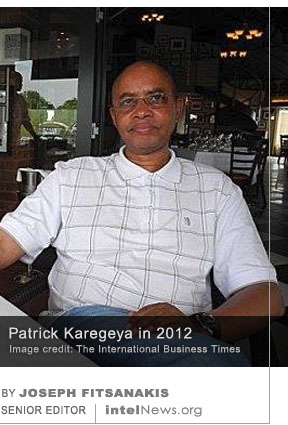
Patrick KaregeyaSouth Africa is preparing to launch an official inquest into the mysterious death of the former director of Rwanda’s external intelligence agency, who was found dead in a luxury South African hotel four years ago. The body of Patrick Karegeya, 53, was discovered on December 31, 2014, in a room at the Michelangelo Towers Hotel in Sandton, an affluent suburb of Johannesburg. Karegeya was a leading member of the Rwandan Patriotic Army (RPA), the armed wing of the Rwandan Patriotic Front (RPF), which was founded in 1987 in Uganda by Rwandan Tutsi refugees. In 1994, the RPA, led by Paul Kagame, took control of Rwanda, thus putting an end to the genocide of up to a million Tutsis and moderate Hutus. Soon afterwards Karegeya was named Director General of External Intelligence in the RPA, which was renamed to Rwandan Defense Forces.
In 2004 however, after falling out with Kagame, who had become President of Rwanda in 2000, Karegeya was arrested, stripped of his rank of colonel, and served 18 months in prison for “insubordination and desertion”. He fled the country in 2007 and received political asylum in South Africa. The Rwandan government later claimed that Karegeya had been a double spy for South Africa. In 2010, Karegeya teamed up with General Faustin Kayumba Nyamwasa, who used to head the Rwandan Army, and had also escaped to South Africa after falling out with President Kagame. The two formed a new Rwandan opposition party in exile, called the Rwanda National Congress. The response from the government in Kigali was to try Karegeya and Nyamwasa in absentia in a military court. They were both sentenced to lengthy prison terms for “promoting ethnic divisions” in the country. In 2011, the Rwandan government issued international arrest warrants for the two former military men, but South Africa refused to extradite them.

When Karegeya was found dead in his hotel room, his neck was abnormally swollen and showed signs of strangulation; a rope and a bloodied towel were found tucked inside the hotel room’s safe, according to media reports. Nobody has ever been tried for Karegeya’s murder. On Wednesday, however, French news agency Agence France Presse (AFP) said that the government of South Africa will be launching a formal investigation into Karegeya’s killing in a matter of months. The news agency said it had spoken to “a South African court official […] who did not have permission to speak to the media”. The official told AFP that the probe is “not a trial, it’s a formal inquest”, which may eventually lead to a court case. The inquest will be officially launched on January 16, 2019, said the anonymous official.

Author: Joseph Fitsanakis | Date: 02 November 2018 | Permalink

Suicide bomber who attacked Russian spy agency identified as ‘anarchist-communist’

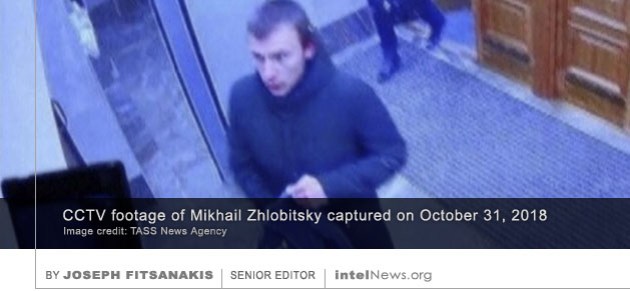
Mikhail ZhlobitskyA teenager who killed himself with an improvised explosive device in the lobby of a regional office of Russia’s domestic intelligence agency appears to have identified himself as an “anarchist-communist” on social media. At 8:52 am local time on Wednesday, the 17-year-old entered the regional office of Russia’s Federal Security Service (FSB) in the city of Archangelsk, located 800 miles north of Moscow. On CCTV footage released by the Russian security services, he is seen reaching into his backpack and taking out an object, which soon exploded, killing him and wounding three others.
The bomber was later identified in the Russian media as Mikhail Zhlobitsky, a student at a local technical college. Within hours, reports pointed to posts made on social media platforms by Zhlobitsky, who used several online aliases, including that of “Sergey Nechayev”, one of Russia’s leading 19th-century anarchists, who died in prison for advocating terrorism as a means of revolution. Shortly before the attack, someone using the alias “Valeryan Panov” commented on the social messaging application Telegram that he was about to bomb the FSB in Archangelsk. In the comment, which was posted on an anarchist forum, the user said that he had decided to act “because the FSB falsifies cases and tortures people”. The user added that he would probably die in the attack because he had to manually detonate the improvised explosive device he was carrying with him. He concluded his message with the words: “I wish you a glorious future of anarchist communism!”.

The activities of militant Russian anarchists and anarcho-communists date back to the mid-19th century; anarchist militants are responsible for numerous assassinations of senior Russian officials, including Emperor Alexander II, who was killed by a Russian anarchist in 1881. But the movement was ruthlessly suppressed by the Soviet state and today the FSB and other Russian security services are actively monitoring the remnants of the Russian anarchist movement. These include the Confederation of Revolutionary Anarcho-Syndicalists, the group Autonomous Action, and the Siberian Confederation of Labor. Large sections of these groups have now moved underground, as the government of Russian President Vladimir Putin has named anarchists as primary enemies of order and security in the Russian Federation. Earlier this month, another Russian teenager, Vladislav Roslyakov, killed himself after shooting 19 students and teachers at a technical college in Kerch, a Black Sea port city in Russian-annexed Crimea. No political motive for the attack has been reported.

Author: Joseph Fitsanakis | Date: 01 November 2018 | Research credit: S.F. | Permalink

Denmark recalls its envoy from Tehran, accuses Iran of assassination plot

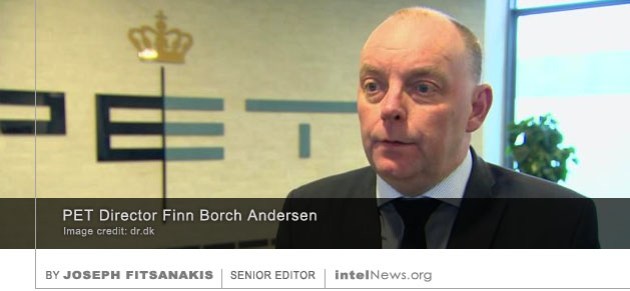
Finn Borch AndersenThe Danish government has recalled its ambassador from Iran and has accused the intelligence services of the Islamic Republic of plotting an assassination operation on Danish soil. Danish government officials also said that Copenhagen would seek to impose further economic and diplomatic sanctions on Tehran, in coordination with the European Union. The accusations against Iran were leveled during an emergency news conference in the Danish capital on Tuesday, led by Anders Samuelsen, Denmark’s Minister of Foreign Affairs, and Finn Borch Andersen (pictured), Director of the Danish Security and Intelligence Service, known as PET.


The two men said that “an Iranian intelligence agency” had planned “an attack on Danish soil”, which  Defense Minister Samuelsen condemned as “completely unacceptable”. PET Director Andersen said that a Norwegian national of Iranian background had been arrested in Sweden on October 21, and was now in custody awaiting extradition to Denmark. The arrestee is an employee of Iranian intelligence, said Andersen, and had been observed conducting surveillance against a Danish-based leading member of an Iranian separatist group. The alleged target is a member of the Arab Struggle Movement for the Liberation of Ahvaz (ASMLA), a hardline separatist group campaigning for a separate homeland for Iran’s Arab minority. Approximately 2 percent of Iranians (around 1.5 million people) belong to the country’s ethnic Arab population. Most of them are concentrated in Khuzestan, a region in Iran’s oil-rich southwest, which borders neighboring Iraq. Some of these ethnic Arabs seek autonomy from Tehran, which they see as an alien regime. ASMLA represents the militant wing of Iran’s separatist Arab community and has a history of staging terrorist attacks inside Iran. Last September, the group claimed it was behind an armed attack on a military parade in the city of Ahvaz —a major urban center in Iran’s Arab-speaking region— which killed 24 people, including some women and children. Later, however, a representative of the group retracted the claim.

On Tuesday, several Iranian officials issued strong denials of the Danish government’s allegations. Speaking in Tehran, Iranian Foreign Ministry Spokesman Bahram Qassemi dismissed Denmark’s claims as “spiteful”. He added that the timing of reports linking Iran to assassination operations on European soil were suspect and described them as “a plot by [Iran’s] enemies to damage Tehran’s growing relations with European countries”. Earlier this month, France seized the financial assets of individuals whom it described as Iranian spies, after blaming Tehran for a foiled bomb attack in Paris. The move followed the arrest of six people in France, Germany and Belgium, who allegedly planned to bomb the annual conference of the National Council of Resistance of Iran (NCRI) last June. The NCRI is led by Mujahedin-e Khalq (MEK), a militant group with roots in radical Islam and Marxism, which Iran sees as a terrorist organization.

Author: Joseph Fitsanakis | Date: 31 October 2018 | Permalink