German government charges CIA spy with treason

BND GermanyA German intelligence officer, who is accused of spying for the United States Central Intelligence Agency, has been officially charged with treason by authorities in Berlin. The 32-year-old man, identified in court papers only as “Markus R.”, worked as a clerk at the Bundesnachrichtendienst, or BND, Germany’s external intelligence agency. He was arrested in July 2014 on suspicion of having spied for the CIA for approximately two years. German prosecutors say they have evidence that shows Markus R. supplied the American spy agency with around 200 classified German government documents in exchange for around €25,000 —approximately $30,000.

Germany’s Office of the Federal Prosecutor said on Thursday that Markus R. made contact with the CIA in 2008 and offered his services to the American spy agency. He began working for the United States as a double agent soon afterwards. His arrest last year added to the already tense relations between Berlin and Washington. The latter had been damaged a year earlier, when it was revealed that the US National Security Agency, America’s signals intelligence organization, had bugged the personal cell phone of German Chancellor Angela Merkel. The revelation, which was made public by Edward Snowden, an American defector to Russia who had previously worked for the NSA, showed that Chancellor Merkel had been targeted as part of a wider US spy operation against Germany.

The revelations sparked the establishment in Germany of a nine-member parliamentary committee that was tasked with evaluating Snowden’s revelations and proposing Germany’s response. It appears that Markus R. tried to spy on the activities of the committee on behalf of his American handlers. Soon after Markus R.’s arrest was made public, the German government ordered the immediate removal from Germany of the CIA chief of station –who was essentially the top American intelligence official in the country. Berlin also instructed its intelligence agencies to limit their cooperation with their American counterparts “to the bare essentials” until further notice.

It is worth noting that, before his arrest last year, Markus R. is also said to have approached Russian intelligence with an offer to work for them. He is thus believed to have supplied Moscow with classified German government documents as well.

Author: Joseph Fitsanakis | Date: 21 August 2015 | Permalink

Pakistan spy chief who helped US covert activities in Soviet-Afghan war dies

Hamid GulGeneral Hamid Gul, a controversial Pakistani spymaster who helped facilitate America’s covert involvement during the closing stages of the Soviet-Afghan war, has died at the age of 72. General Gul entered military service in 1956, aged 20, and saw action in two of Pakistan’s wars with India. He rose to power within the military through his close association with General Muhammad Zia-ul-Haq, who became Pakistan’s sixth president in 1977. In 1987, shortly before President Zia died in a plane crash, General Gul was promoted to director of Pakistan’s Inter-Services Intelligence directorate, which is known as ISI. In that capacity, he oversaw the closing stages of the Soviet-Afghan war, which had begun nearly a decade later and gradually led to a resounding defeat for the Soviets.

As head of the ISI, General Gul helped the intelligence agencies of several countries, including those of Saudi Arabia and the United States, engage covertly in the war taking place across the Hindu Kush. In particular, he helped facilitate the transfer of foreign funds and weaponry to Sunni mujahedeen forces who were fighting the Soviets. It was from within the ranks of these forces that groups like al-Qaeda and the Taliban later emerged.

General Gul was never shy about his close operational links with the Afghan Taliban and al-Qaeda. He maintained close contact with al-Qaeda founder Osama bin Laden and with the late Mullah Muhammad Omar, leader of the Afghan Taliban. However, at the conclusion of the Soviet-Afghan War, Washington gradually disassociated itself from Sunni fundamentalist groups, including the Taliban. But General Gul maintained his public support for Muslim-inspired militant groups, among them Lashkar-e-Taiba, which operates in Indian-controlled Kashmir. As America began distancing itself from its former Afghan allies, and siding instead with India, General Gul’s relations with Washington worsened dramatically. In 2009, the General gave one of many controversial interviews to the media, in which he condemned the increasing military and political collaboration between the US and India. He noted that “the Americans and Israel [are] hell-bent” on positioning India to the role of overseer of “60 per cent of the world’s trade [which] passes through the Indian Ocean”, including transport routes of “Gulf oil, bound for China and Japan”.

In later years, General Gul became a vocal critic of US foreign policy in the Middle East and Central Asia, spoke out against the US invasions of Afghanistan and Iraq, and publicly supported the Taliban insurgency against the North Atlantic Treaty Organization forces in Afghanistan. He is survived by a widow and three children.

Author: Joseph Fitsanakis | Date: 20 August 2015 | Permalink
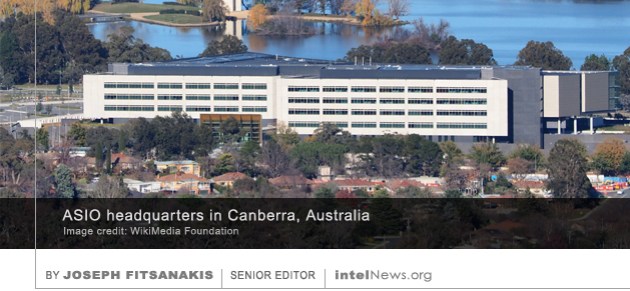
Soviet mole penetrated Australian intelligence, says former officer

ASIO AustraliaA Soviet double spy was able to penetrate the senior echelons of Australia’s intelligence agency during the Cold War, according to a retired Australian intelligence officer who has spoken out for the first time. Molly Sasson, was born in Britain, but worked for the Australian Security Intelligence Organisation (ASIO) from 1969 until her retirement in 1983. A fluent German speaker, Sasson was first recruited during World War II by the Royal Air Force, where she worked as an intelligence officer before transferring to the Security Service (MI5), Britain’s domestic intelligence agency. At the onset of the Cold War, Sasson helped facilitate the defection to Britain of Colonel Grigori Tokaty, an influential rocket scientist who later became a professor of aeronautics in London. But in the late 1960s, Sasson moved with her husband to Australia, where she took up a job with ASIO, following a personal invitation by its Director, Sir Charles Spry. Upon her arrival in Canberra, Sasson took a post with ASIO’s Soviet counterintelligence desk, which monitored Soviet espionage activity on Australian soil.
Aged 92 today, Sasson spoke publicly for the first time on Australia’s ABC News television network about her life and times. She told the reporter that she had “no doubt at all” that ASIO had been infiltrated by at least one Soviet-handled double spy in the 1970s. “If we put on an operation, it failed”, she said, adding that the Soviets “always seemed to be a step ahead of us. There must have been a tip-off. It can’t have been otherwise”, said Sasson. The 92-year-old former intelligence officer recounted one specific operation involving a Russian diplomat named Vladimir Dobrogorsky, who was believed by ASIO to be an intelligence operative. According to Sasson, ASIO counterintelligence officers were monitoring Dobrogorsky and knew the precise time and place that he was scheduled to meet with an Australian informant in downtown Canberra. However, not only did the meeting not occur, but Dobrogorsky left the Soviet embassy in the Australian capital that morning, never to return.

“I am convinced that someone within ASIO tipped him off”, said Sasson. Not only that, but when she and other ASIO officers expressed their concerns about the possible existence of a mole inside ASIO, senior agency officials dismissed them. At one point she was told to “not open this can of worms”, she told ABC News. The former ASIO officer added that the chief of the United States Central Intelligence Agency station in Canberra shared similar concerns with the ASIO’s leadership, but that they too were dismissed. Soviet intelligence operatives were notably active in Australia and New Zealand during the Cold War, as it was believed that intelligence agencies in the two Pacific Rim countries offered an easier path toward accessing British and American government secrets, due to the so-called Five Eyes agreement.

Author: Joseph Fitsanakis | Date: 19 August 2015 | Permalink

US warns China against use of non-official-cover operatives

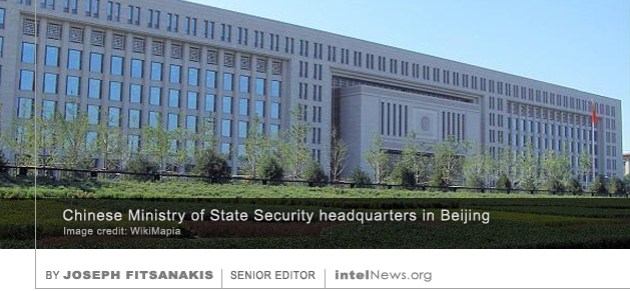
Chinese Ministry of State SecurityThe White House has warned the Chinese government to stop deploying on American soil intelligence operatives masquerading as tourists, business executives or other false covers. Nowadays the standard practice for intelligence personnel deployed abroad is to be posted as diplomatic staff in a foreign embassy or consulate. But there are some intelligence officers who do not follow that practice. These are known as non-official-cover operatives, or NOCs in American intelligence parlance. NOCs are typically high-level principal agents or officers of an intelligence agency, who operate without official connection to the diplomatic authorities of the country that is employing them. They typically pose as business executives, students, academics, journalists, or non-profit agency workers. Unlike official-cover officers, who are protected by diplomatic immunity, NOCs have no such protection. If arrested by authorities of their host country, they can be tried and convicted for operating as unregistered agents of a foreign government.
According to The New York Times, a significant number of Chinese NOCs have recently entered the United States as part of the Chinese government’s Operation FOX HUNT. Supervised by China’s Ministry of State Security (MSS), FOX HUNT is aimed at the thousands of former officials and other fugitives from China, who are alleged to have embezzled funds and are now living abroad, usually in considerable wealth. As part of the MSS operation, teams of intelligence agents are said to have been dispatched around the world in order to hunt down these fugitives, many of whom are believed to have embezzled hundreds of millions of dollars in government funds. Chinese media reports claim that nearly 1000 such fugitives have been “repatriated”, either voluntarily or involuntarily, since the launch of FOX HUNT. The tactics used by the Chinese NOCs are not clear, and some suspect that they include direct or indirect threats against the fugitives’ family members in China. Chinese reports have described FOX HUNT operatives as “mostly young, highly skilled”, and accustomed to “rapid-fire deployment” around the world.

The Times said that Washington views the parts of Operation FOX HUNT that take place on US soil as “a departure from the routine practice of secret government intelligence gathering” that both America and China practice against each other. The US, therefore, does not want Chinese officers without official diplomatic credentials, but posing instead as students, tourists or business representatives, engaging in intelligence operations on US soil, said the paper. It added that Washington’s warning had been delivered to Beijing “in recent weeks”. The Times article did not include specific descriptions of FOX RUN activities on American soil.

Author: Joseph Fitsanakis | Date: 17 August 2015 | Permalink

Rwandan spies target government critics abroad: Canadian report

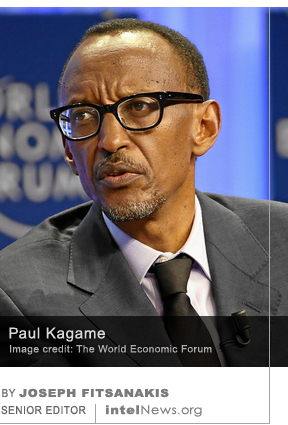
Paul KagameThe government of Rwanda uses intelligence operatives to systematically spy on, harass, and even kill opposition figures living abroad, according to a report issued by a Canadian security agency. The report was written by the National Security Screening Division of the Canada Border Services Agency, and was partly based on information from the Canadian Security Intelligence Service (CSIS). It was released as part of a court case involving a Rwandan man living in Canada, who was accused of working as a spy for the government of Rwanda.
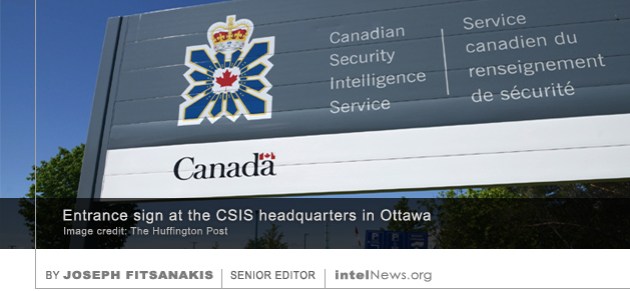
The report claims that there is “a well- documented pattern of repression of Rwandan government critics, both inside and outside Rwanda”, and says there is ample evidence of involvement by Rwandan spies in threats, attacks and even killings of opposition activists living abroad. The document cites the case of Patrick Karegeya, a leading member of the Rwandan Patriotic Front (RPF), an armed Tutsi rebel group that fought to end the genocide inflicted upon the Tutsis by their rival Hutus in the 1990s. Karegeya, who used to be director general of External Intelligence in the RPA, fell out with Rwanda’s President, Paul Kagame, in 2004. In January 2014, Karegeya was found dead in a hotel in Johannesburg, South Africa, where he had been living in exile.

Also cited in the report is a case in the United Kingdom, where two Rwandan exiles were warned by the police in 2011 that there were “threats to their [personal] safety emanating from the Rwandan government”. There was also evidence of Rwandan intelligence activity targeting opposition figures in Canada, said the report. In one recent case, the Rwandan government had attempted to “organize indoctrination training” aimed at Canadian youths of Rwandan heritage, but had to drop its plan following an investigation by CSIS. IntelNews regulars might also remember the case of Evode Mudaheranwa, a Rwandan diplomat who was expelled by the government of Sweden in 2012 for allegedly operating under orders by the Kagame government to silence its critics abroad.

Author: Joseph Fitsanakis | Date: 14 August 2015 | Permalink

Canada watchdog body to hold secret hearings over illegal spying claims

CSIS canadaA government watchdog in Canada is preparing to hold a series of closed-door hearings to weigh accusations that the country’s intelligence services illegally spied on law-abiding activists opposing the construction of oil pipelines. The British Columbia Civil Liberties Association (BCCLA) sued the Royal Canadian Mounted Police (RCMP) and the Canadian Security Intelligence Service (CSIS) in February 2014, claiming they spied on Canadian citizens engaging in legal protest. The lawsuit was filed after nearly 150 pages of internal records were accessed by The Vancouver Observer, following an official Access to Information request made by the newspaper.
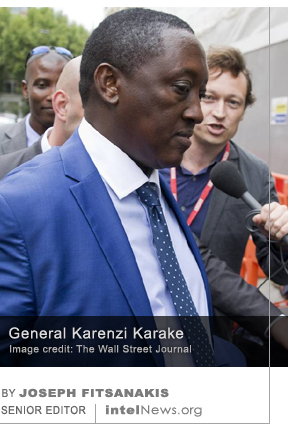
The BCCLA argues that information contained in the released documents shows that the RCMP and the CSIS gathered data on individuals and groups —including the Sierra Club— who are opposed to the construction of oil pipelines connecting Alberta’s so-called tar-sands to a number of ports in British Columbia. According to the BCCLA’s lawsuit, the documents demonstrate a series of clear violations of the 1985 Canadian Security Intelligence Service Act, which expressly forbids intelligence-collection activities targeting individuals or groups engaged in “lawful advocacy, protest or dissent”. Additionally, the BCCLA claims that the RCMP and the CSIS communicated the illegally acquired information to members of the Canadian Energy Board, officials in the country’s petroleum industry, and even employees of private security companies.

The hearings will be conducted in Vancouver by the Security and Intelligence Review Committee (SIRC), a government body that monitors Canada’s intelligence agencies. Josh Paterson, a lawyer for the BCCLA, told The Vancouver Sun newspaper that the hearings would be so secretive that even the legal teams representing the two sides of the dispute would not be allowed to remain in the room for the entire length of the proceedings.

Author: Joseph Fitsanakis | Date: 12 August 2015 | Permalink

Rwandan ex-spy chief freed after UK court refuses to extradite him to Spain

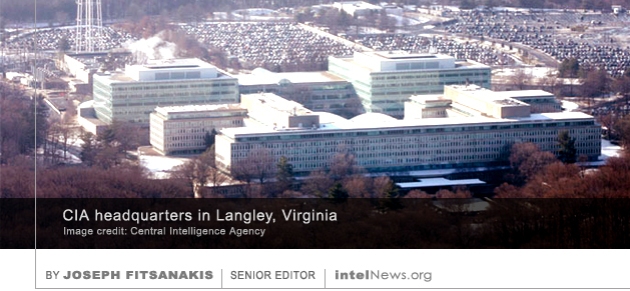
Karenzi KarakeA Rwandan former intelligence chief, whose legal team is led by the wife of British former Prime Minister Tony Blair, has been freed after a court in the United Kingdom refused to extradite him to Spain to face war crimes charges. General Emmanuel Karenzi Karake, 54, was the most senior intelligence official in the administration of Rwandan President Paul Kagame. He rose to fame as a commander in the Rwandan Patriotic Front (RPF), an armed rebel group from Rwanda’s minority Tutsi tribe that fought to end the genocide inflicted upon the Tutsis by their rival Hutus. In 1994, following the death of nearly a million people, the RPF took power in Rwanda and ended the slaughter. That accomplishment caused a rapid upsurge in the popularity of Karake and other senior RPF leaders. Karake’s popularity remains strong among the Tutsis despite his dramatic falling-out with Kagame in 2010, which led to the general’s dismissal from the government.
Critics, including groups like Human Rights Watch, have accused the Kagame government of instigating mass reprisals after assuming power in Rwanda, including mass murders of Hutus and other tribal members. In 2008, the Spanish government issued an arrest warrant for Karake, accusing him of having participated in “crimes of terrorism” and “war crimes” directed against civilians. Of particular interest to the Spanish authorities was Karake’s alleged participation in the 1997 killing of three Spanish citizens, who were in Rwanda as part of an outreach effort by Spanish medical charity Médicos del Mundo. The former RPF intelligence chief is also accused of having authorized the killing of six more Spanish citizens in Rwanda in the mid-1990s.

Karake was arrested in late June at London’s Heathrow International Airport on a European Arrest Warrant stemming from the Spanish indictment. Shortly afterwards he was granted bail pending extradition proceedings. But the case was dismissed on Monday, following an early morning hearing at the Westminster Magistrates Court in the British capital. According to the British Crown Prosecution Service, the Spanish extradition request was thrown out because the law did not permit UK authorities to hear offences committed abroad by non-British nationals. Karake was then able to leave the court, cheered by many of his supporters who were demonstrating outside.

It is worth pointing out that the Rwandan general was represented in Britain by an international law firm called Omnia Strategy, which was founded by Cherie Blair, wife of British former Prime Minister Tony Blair. It has been reported that Mrs Blair also led General Karake’s legal team in London.

Author: Joseph Fitsanakis | Date: 11 August 2015 | Permalink

CIA’s internal watchdog post remains vacant despite mounting calls to fill it

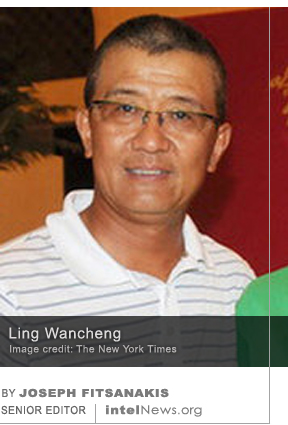
CIAThe administration of United States President Barack Obama has yet to nominate a replacement for the Central Intelligence Agency’s inspector general despite calls by Congress to quickly fill the sensitive post. The position has remained vacant since the end of January of this year, when David Buckley resigned after four years on the job. The position was created in 1989 in the aftermath of the so-called Iran-Contra affair, as part of a broader effort to institute independent oversight of the CIA. The Agency’s inspector general is tasked with, among other things, probing allegations of institutional illegality or personnel misconduct, and evaluating concerns raised by whistleblowers.
According to Michael Isikoff, chief investigative correspondent of Yahoo News, there are “mounting concerns on Capitol Hill” about the failure of the White House to nominate a replacement for Buckley, more than six months following his departure. Isikoff wrote that Senator Diane Feinstein (D-Ca), who chairs the Senate’s Select Committee on Intelligence, wrote to President Obama in June urging him to nominate a new CIA inspector general “as soon as possible”. In her letter, Feinstein expressed alarm over the delay, which could adversely affect a growing list of sensitive internal probes at the Agency. But the White House has yet to respond to Feinstein, let alone nominate a candidate for the position, said Isikoff.

Several government watchdogs and observers told Yahoo News that the situation at the CIA inspector general’s office is “hardly unique” and noted that the process for appointing inspector generals for US government agencies usually “takes too long”. Moreover, the Agency’s office of the inspector general is not headless; it is led by interim inspector general Christopher R. Sharpley, a government lawyer who worked under Buckley. However, many wonder whether the delay stems from the President’s inability to find an individual with a reputation for impartiality and the determination to handle one of the US Intelligence Community’s most challenging posts.

Author: Joseph Fitsanakis | Date: 06 August 2015 | Permalink

Is brother of China’s ex-chief of staff seeking to defect to the US?

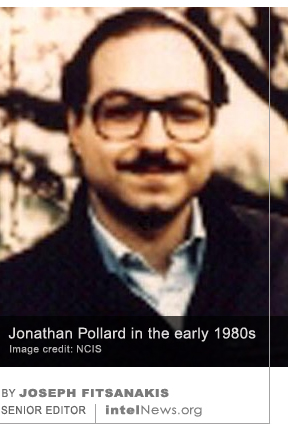
Ling WanchengA well-connected Chinese businessman, described by officials as potentially one of the most damaging defectors in the history of modern China, is reputed to have requested political asylum in the United States. Ling Wancheng, 54, is the multimillionaire brother of Ling Jihua, a close aide of China’s former premier, Hu Jintao, who rose through the ranks of the Communist Party of China to eventually lead its Central Committee’s General Office. With the help of his brother’s connections and political influence, Ling Wancheng transformed himself from a journalist to an entrepreneur in the early 2000s. Soon after receiving his graduate degree in business administration, he founded an investment firm and joined China’s nouveau riche elite. His wealth, which is estimated to be in the hundreds of millions of dollars, coupled with his older brother’s senior position within the Communist Party, made him one of China’s most politically connected entrepreneurs.

However, the Ling family’s fortunes turned dramatically for the worse in March of 2012, when Ling Jihua’s 23-year-old son was killed in a Beijing street while driving a Ferrari after a night of wild partying. Two half-naked women, who were also riding in the car, were seriously injured; one later died of her wounds. The circumstances of the crash, as well as Ling Jihua’s failed efforts to cover it up, were seen as symbolic of a spoiled generation of government officials, whose corrupt practices have isolated the Communist Party from the Chinese populace. Soon afterwards, the new administration of President Xi Jinping initiated a massive anti-corruption campaign as a means of restoring the reputation of the Communist Party. Ling was immediately demoted, cut off from the top echelons of the Chinese government, and in 2014 there were rumors that he would soon be facing a corruption investigation. In July of this year, it was officially announced that Ling had been expelled from the Communist Party and that he would be facing trial on charges of accepting bribes.

The announcement of Ling’s trial stated that he was accused of “accepting certain bribes for himself and on behalf of his family”. But no charges were filed against Ling Wancheng, and there were rumors that he was being pressured by Communist Party officials to testify against his brother. But it appears that the multimillionaire businessman, who owns several properties in the US, was able to flee China and is now in an undisclosed location on US soil. The New York Times, who tried to locate Ling earlier this week, spoke to unnamed American officials, who confirmed that he had indeed fled China and was in the US. The officials refused to confirm that Ling had applied for asylum. But they said that, if he did defect to America, Ling “could become one of the most damaging defectors in the history of the People’s Republic”, due to his political connections.

The Times added that Beijing had contacted the White House requesting that Ling be extradited to China. But the administration of US President Barack Obama appears unwilling to satisfy the Chinese government’s request, given that Chinese hackers are believed to be responsible for the recent theft of up to 24 million American government workers’ personal data.

Author: Joseph Fitsanakis | Date: 04 August 2015 | Permalink

No signs of ISIS decline despite Western efforts, say US spy agencies

ISIS forces in RamadiInternal reports by American intelligence agencies say that the Islamic State remains strong in Iraq and Syria, and that the group has been able to effortlessly replace its 10,000 fighters who have been killed in the past year. Despite the over $1 billion spent in the war against it by the Syrian and Iraqi governments, as well as by the West, the militant group is “fundamentally no weaker” than it was a year ago, when the United States began a bombing campaign targeting Islamic State strongholds, according to the reports. The Associated Press, which published a summary of the assessment, said that it represents the views of the Central Intelligence Agency, the Defense Intelligence Agency and other members of the US Intelligence Community. Citing anonymous US officials, the news agency said that the overall assessment of the situation could be described as a “strategic stalemate”.

If the leaked assessment is accurate, it would directly contradict the views expressed recently by retired US Marine Corps General John Allen, who is serving as Special Presidential Envoy for the Global Coalition to Counter ISIS. Speaking last week at the annual Aspen Security Forum in Colorado, General Allen argued that the Islamic State (known also as the Islamic State in Iraq and Syria, or ISIS) was “losing”. He added that “we have seen some significant progress” in the war against the group and said he believed that its “momentum has been checked strategically, operationally and, by and large, tactically”.

 But according to the Associated Press, US defense officials have seen “no meaningful degradation” in the numbers of ISIS fighters. They put the group’s current strength at between 20,000 and 30,000 uniformed troops, a number that is practically identical to that of August 2014, when the administration of US President Barack Obama initiated an air bombing campaign against ISIS targets. The intelligence assessments suggest that, not only is ISIS able to replenish its fighter ranks with new recruits from around the world, but that the group’s finances have not been significantly affected by the US air campaign. American fighter jets have repeatedly attacked ISIS-controlled oil installations in recent months; but the group has been able to rebuild its oil-drilling and -refining capacities, and continues to earn over $40 million a month from the sale of oil.

The reports go on to state that, based on current trends, it could take more than a decade before ISIS became weak enough to justify expectations that it could retreat from its strongholds in Iraq and Syria.

Author: Joseph Fitsanakis | Date: 03 August 2015 | Permalink

Memos may relate to secret NSA deal with leading cryptography vendor

William FriedmanIn 2007 I wrote in my “National Security Agency: The Historiography of Concealment” that America’s leading signals intelligence agency had made a secret deal with Crypto AG, a Swiss-based manufacturer of cryptographical equipment. The agreement, which lasted for much of the Cold War, allegedly allowed the NSA to read the classified messages of dozens of nations that purchased encoding equipment from Crypto AG. As I expected, the claim drew criticism from individuals connected with Crypto AG, including company scientists, who argued that the Swiss manufacturer would never have agreed to a deal that undermined its professional reputation as a trusted and neutral vendor of cryptological devices. Now, however, the BBC has revealed two recently declassified NSA memos that appear to provide further proof of the deal.

My 2007 claim was based on a string of well documented allegations that surfaced in the early 1980s. While conducting research for his seminal book The Puzzle Palace, historian James Bamford came across references to Project BORIS, which involved a pact between the NSA and the Swiss company. To be precise, the deal appeared to have been struck between the Swiss inventor and Crypto AG founder Boris Hagelin and William F. Friedman, an American cryptologist who led the Armed Forces Security Agency, a forerunner of the NSA. The two men were united by a deep personal friendship, which was forged during World War II by their mutual hatred of Nazism.

Bamford’s claim was echoed in 1996 by Scott Shane and Tom Bowman, reporters for The Baltimore Sun. In a six-part investigative series about the NSA, the two journalists wrote that Friedman visited Hagelin during a trip to Switzerland in 1955 and asked for his help so that American could dominate its Cold War rivals. According to Shane and Bowman, Hagelin agreed and built a type of cryptological backdoor in Crypto AG’s devices, which allowed the NSA to read millions of messages for many decades. The company, of course, reacted furiously, saying that claims of a secret deal were “pure invention”.

On Thursday, however, BBC security correspondent Gordon Corera confirmed that a BBC investigation of 55,000 pages of documents, which were declassified by the NSA in April, claim to have found proof of the secret agreement. The declassified material, said Corera, contains two versions of the same NSA memorandum, as well as an earlier draft, which refer to a “gentleman’s agreement” between Friedman and Hagelin. Under the agreement, Crypto AG would inform the NSA about periodical changes to the technical specifications of its encoding machines. The company would also provide the American spy agency with detailed lists showing the precise models purchased by various national governments around the world. Furthermore, Crypto AG agreed not to sell the more advanced, customizable models of its equipment to countries viewed by Washington as directly adversarial. This, says the BBC, amounted to Crypto AG deceiving some of its customers, by offering them “watered-down versions” of its encoding devices.

Corera notes that there is no evidence in the memos that Crypto AG built any kind of back door in its devices for use by the NSA. Instead, by providing the American agency with detailed operational knowledge of the devices, it enabled American codebreakers to reduce the time and effort needed to break encoded messages intercepted by the NSA.

There are a couple of minor errors in Corera’s article. For instance, the “father of American code-breaking” is not Friedman, as he claims, but Herbert Yardley, who led the so-called Black Chamber (also known as the Cipher Bureau) in 1919, long before Friedman was in the picture. Additionally, he fails to mention Bowman’s contribution to Shane’s Baltimore Sun article, which was published in 1996, not 1995, as he writes. These minor errors aside, however, the BBC discovery is absolutely crucial for our understanding of cryptological history in the Cold War.

Author: Joseph Fitsanakis | Date: 31 July 2015 | Permalink

Will Israeli spy Pollard receive secret spy wages after US lets him go?

Jonathan PollardLawyers for Jonathan Pollard, an American with Israeli citizenship who spied on the United States for Israel in the 1980s, confirmed on Tuesday that he will be released in November, by which time he will have served 30 years of a life sentence. The news was welcomed by Pollard’s supporters in Israel, who consider him a hero, as well as by pro-Israel Americans, who have been pressuring the US government to release him. But Newsweek’s veteran intelligence correspondent Jeff Stein responded to the news of Pollard’s release by posing an interesting question: when Pollard is released, will he have access to close to $1 million in spy wages that his Israeli handlers are reputed to have deposited for him in a Swiss bank account?

Stein was referring to a practice that is common among intelligence agencies, namely to deposit cash in offshore bank accounts as a way of compensating their assets. The latter can gradually access those funds during trips abroad, usually after their retirement, long after having ceased their espionage activities. If the asset is arrested or perishes, the funds are usually passed on to the asset’s surviving relatives. This method protects the asset from the prying eyes of counterintelligence agencies in the asset’s home country, and sends a message to future recruits that assets and their families will be taken care of by their handlers.

Following Pollard’s arrest in 1985, US government prosecutors repeatedly rejected the view, put forward by Pollard’s legal team, that the former US Navy analyst was a romantic who had spied on the US for Israel because he wanted to assist a small country surrounded by enemies. They told the court that Pollard had also spied for South Africa and had tried to spy for Australia, before finally settling for working for Israel. Far from being a romantic, they said, Pollard was a calculated businessman, who sought financial compensation for his services to the Jewish state. Indeed, according to the Naval Criminal Investigative Service and the Federal Bureau of Investigation, Pollard had pocketed at least $50,000 from his Israeli handers by the time of his arrest, in addition to receiving several expensive items as gifts. The spy had also been promised that Israel would deposit $30,000 every year in a Swiss bank account, which Pollard could access after his retirement.

In his article published Tuesday, Stein wonders whether Israel has continued to deposit $30,000 a year in Pollard’s reputed Swiss bank account, which is a standard practice for intelligence agencies. If the answer is yes, then the amount available today would be in the neighborhood of $1 million. If Pollard moves to Israel come November, as many believe he will, will he then have access to the money he earned by spying on the US government as an unregistered agent of a foreign power? And if so, how should this be expected to affect the already rocky relations between Washington and Tel Aviv?

Stein said he spoke to Pollard’s New York lawyer, Eliot Lauer, who called the rumors of a secret Swiss bank account “poppycock” and added that Pollard had been “secured employment and housing […] in the New York area”. Additionally, there are some who speculate that Pollard may not be allowed to leave the US as part of the conditions of his parole. At this stage, however, nobody knows for sure. Stein contacted the US Parole Commission, NCIS and the Central Intelligence Agency, but all declined comment.

Author: Joseph Fitsanakis | Date: 29 July 2015 | Permalink: https://intelnews.org/2015/07/29/01-1745/

Germany and Holland investigated Russian physicist for espionage

Eindhoven University of TechnologyThe German and Dutch governments allegedly joined forces to investigate a Russian supercomputer specialist, who studied in Germany and Holland, suspecting him of passing technical information to Russian intelligence. German weekly newsmagazine Der Spiegel, which published the report in its current issue, identified the physicist only as “Ivan A.” and said that the 28-year-old man was a member of a physics laboratory affiliated with the Max Planck Institute in the western German city of Bonn. According to Spiegel, Ivan A. studied in Bonn between 2009 and 2011, conducting research on quantum physics and nanophotonics, an area of study that examines the behavior of light on the nanometer scale. Much of the research in this specialized field relates to supercomputers and cutting-edge quantum computing applications.
Citing unnamed government sources, Spiegel said that Germany’s Office for the Protection of the Constitution, which is the country’s top counterintelligence agency, started to monitor the scientist once he began meeting regularly with a Russian diplomat. The diplomat, who was stationed at the consulate of the Russian Federation in Bonn, had been identified by German intelligence as a member of the Russian secret services. German counterintelligence officials thus began suspecting Ivan A. of channeling restricted technical information to Moscow via the Russian diplomat.

However, in 2013 Ivan A. relocated to the Dutch city of Eindhoven to study at the Eindhoven University of Technology, at which point German counterintelligence officers reached out to their Dutch colleagues. During one of his trips from Germany to Holland, Ivan A. was detained for several hours along with this wife at the Düsseldorf International Airport. He was questioned and his personal electronic devices were confiscated. Upon his release Germany and Holland jointly launched against him a formal investigation for espionage. Eventually his European Union residence visa was cancelled and he was expelled by the Dutch government as a danger to national security. Der Spiegel said Ivan A. returned to Russia and today denies that he was a spy.

Espionage scandals frequently rock German-Russian relations. In 2013, a German court convicted a married couple, Andreas and Heidrun Anschlag, of having spied for the Soviet Union and Russia since at least 1990. The two had used forged Austrian passports to enter West Germany from Mexico in 1988 and 1990.

Author: Joseph Fitsanakis | Date: 28 July 2015 | Permalink: https://intelnews.org/2015/07/28/01-1744/

US spy for Israel ‘may be released’ as part of Iran nuclear deal

Jonathan PollardA United States Navy intelligence analyst, who is serving a life sentence for spying on America for Israel, may soon be set free in an effort by Washington to quieten Israeli criticism of a recently struck international agreement on Iran’s nuclear program. Many in US counterintelligence consider Pollard, who acquired Israeli citizenship in 1995, one of the most damaging double spies in American history. But he is widely viewed as a hero in Israel, and many Israelis, as well as pro-Israel Americans, have been pressuring the US administration of President Barack Obama to release him. He has so far served nearly 30 years of his life sentence.
The Wall Street Journal published an article on Friday suggesting that the Obama administration was “preparing to release” Pollard. Citing unnamed US officials, the paper said Washington hoped that the move would “smooth [America’s] relations with Israel in the wake of the Iran nuclear deal”. The latter was signed earlier this month between Tehran and the so-called P5+1 nations, namely the five permanent members of the United Nations Security Council plus Germany. The New York Times added to the speculation on Saturday with a detailed front-page article, which confirmed that “some in Washington appear to be highlighting” Pollard’s upcoming 30-year parole hearing, which is set to take place in November. It added that the White House was contemplating using Pollard’s release to appease, not only Tel Aviv, but also pro-Israel supporters in Congress, many of whom have campaigned for years in favor of Pollard’s release.

But the paper also cautioned that linking a possible release of the jailed American spy with the Iranian nuclear deal was risky and could in fact provoke a serious backlash. It quoted Israeli and American analysts who said that, although Israel was in the past prepared to accept Pollard’s release in exchange for minor concessions in its conflict with the Palestinians, the coalition government of Israeli Prime Minister Benjamin Netanyahu considers the nuclear agreement with Iran to be “too serious a threat” to concede to, no matter what the trade-off is from Washington. Some Israeli commentators used strong words to describe Washington’s alleged plan to release Pollard as a way of appeasing Israel, describing it as “cynical, cheap and misguided”.

The Times said it contacted the US National Security Council on Friday and was told by a spokesman that there was “absolutely zero linkage between Mr. Pollard’s status and foreign policy considerations”.

Author: Joseph Fitsanakis | Date: 27 July 2015 | Permalink: https://intelnews.org/2015/07/27/01-1743/

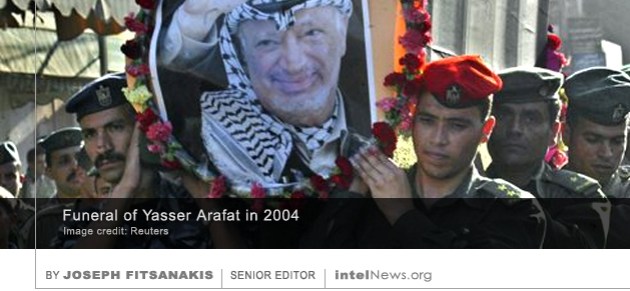
French prosecutors urge end to Yasser Arafat poisoning inquiry

Arafat funeralA government prosecutor in France has urged that a probe looking into whether the late Palestinian leader Yasser Arafat was poisoned with a radioactive substance should be dropped, because evidence shows he died of natural causes. Arafat was the founder of Palestinian nationalist group Fatah and led the Palestine Liberation Organization for over three decades before becoming the first president of the Palestinian Authority. He died in November 2004 at the Percy military hospital in Paris, France, weeks after being transferred there from his headquarters in Ramallah, West Bank. His official records indicate that he died from a stroke, which he suffered as a result of a blood disorder known as disseminated intravascular coagulation.


However, a year-long investigation by a team of forensic pathologists at the Vaudois University Hospital Centre in Lausanne, Switzerland, suggested in 2013 that the late Palestinian leader was likely poisoned with radioactive polonium. According to the results of the study, which included tests on Arafat’s bones and on soil samples from around his corpse, there was “unexpected high activity” of polonium-210. Traces of the same substance were discovered on the personal artifacts that Arafat used during his final days in Paris. The Swiss lab followed its probe with a second set of tests, which confirmed the initial results and were eventually published in the British peer-reviewed medical journal The Lancet.

The Swiss investigation prompted Arafat’s widow, Suha Arafat, to file a civil suit at a court in Nanterre, which launched a murder inquiry in August 2012. Further tests were carried out on Arafat’s belongings and his body was exhumed from its burial place in Ramallah. Tests were also carried out by the Russian Federal Medical and Biological Agency, which concluded that the late Palestinian statesman had died “not from the effects of radiation, but of natural causes”. The French inquiry was concluded in April of this year, and the results communicated to the French government prosecutor in Nanterre, Catherine Denis.

On Tuesday, Denis said she had studied the results of the medical investigation and had concluded that the polonium-210 isotopes found in Arafat’s remains and at his gravesite, were without question “of an environmental nature”. Consequently, the case should be dismissed, she said, adding that her view represented the opinion of the prosecution in the case of Arafat’s alleged poisoning. The court must now determine whether to accept the prosecutor’s advice or continue with the case, as is the wish of Arafat’s family.

Author: Joseph Fitsanakis | Date: 22 July 2015 | Permalink: https://intelnews.org/2015/07/22/01-1740/


