US warns China against use of non-official-cover operatives
August 17, 2015 Leave a comment
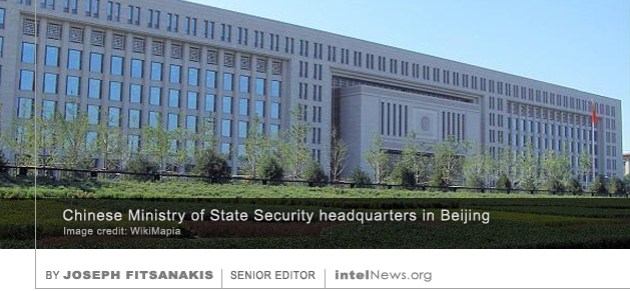 The White House has warned the Chinese government to stop deploying on American soil intelligence operatives masquerading as tourists, business executives or other false covers. Nowadays the standard practice for intelligence personnel deployed abroad is to be posted as diplomatic staff in a foreign embassy or consulate. But there are some intelligence officers who do not follow that practice. These are known as non-official-cover operatives, or NOCs in American intelligence parlance. NOCs are typically high-level principal agents or officers of an intelligence agency, who operate without official connection to the diplomatic authorities of the country that is employing them. They typically pose as business executives, students, academics, journalists, or non-profit agency workers. Unlike official-cover officers, who are protected by diplomatic immunity, NOCs have no such protection. If arrested by authorities of their host country, they can be tried and convicted for operating as unregistered agents of a foreign government.
According to The New York Times, a significant number of Chinese NOCs have recently entered the United States as part of the Chinese government’s Operation FOX HUNT. Supervised by China’s Ministry of State Security (MSS), FOX HUNT is aimed at the thousands of former officials and other fugitives from China, who are alleged to have embezzled funds and are now living abroad, usually in considerable wealth. As part of the MSS operation, teams of intelligence agents are said to have been dispatched around the world in order to hunt down these fugitives, many of whom are believed to have embezzled hundreds of millions of dollars in government funds. Chinese media reports claim that nearly 1000 such fugitives have been “repatriated”, either voluntarily or involuntarily, since the launch of FOX HUNT. The tactics used by the Chinese NOCs are not clear, and some suspect that they include direct or indirect threats against the fugitives’ family members in China. Chinese reports have described FOX HUNT operatives as “mostly young, highly skilled”, and accustomed to “rapid-fire deployment” around the world.
The Times said that Washington views the parts of Operation FOX HUNT that take place on US soil as “a departure from the routine practice of secret government intelligence gathering” that both America and China practice against each other. The US, therefore, does not want Chinese officers without official diplomatic credentials, but posing instead as students, tourists or business representatives, engaging in intelligence operations on US soil, said the paper. It added that Washington’s warning had been delivered to Beijing “in recent weeks”. The Times article did not include specific descriptions of FOX RUN activities on American soil.
► Author: Joseph Fitsanakis | Date: 17 August 2015 | Permalink
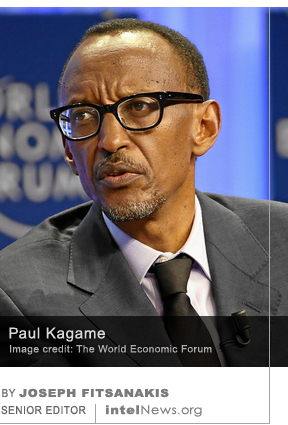 The government of Rwanda uses intelligence operatives to systematically spy on, harass, and even kill opposition figures living abroad, according to a report issued by a Canadian security agency. The report was written by the National Security Screening Division of the Canada Border Services Agency, and was partly based on information from the Canadian Security Intelligence Service (CSIS). It was released as part of a court case involving a Rwandan man living in Canada, who was accused of working as a spy for the government of Rwanda.
 A government watchdog in Canada is preparing to hold a series of closed-door hearings to weigh accusations that the country’s intelligence services illegally spied on law-abiding activists opposing the construction of oil pipelines. The British Columbia Civil Liberties Association (BCCLA) sued the Royal Canadian Mounted Police (RCMP) and the Canadian Security Intelligence Service (CSIS) in February 2014,
 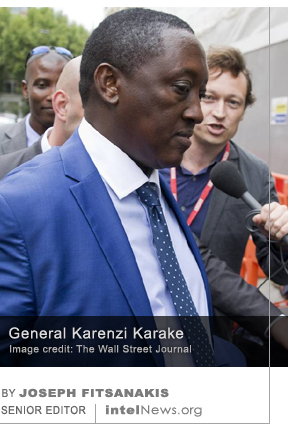 A Rwandan former intelligence chief, whose legal team is led by the wife of British former Prime Minister Tony Blair, has been freed after a court in the United Kingdom refused to extradite him to Spain to face war crimes charges. General Emmanuel Karenzi Karake, 54, was the most senior intelligence official in the administration of Rwandan President Paul Kagame. He rose to fame as a commander in the Rwandan Patriotic Front (RPF), an armed rebel group from Rwanda’s minority Tutsi tribe that fought to end the genocide inflicted upon the Tutsis by their rival Hutus. In 1994, following the death of nearly a million people, the RPF took power in Rwanda and ended the slaughter. That accomplishment caused a rapid upsurge in the popularity of Karake and other senior RPF leaders. Karake’s popularity remains strong among the Tutsis despite his dramatic falling-out with Kagame in 2010, which led to the general’s dismissal from the government.
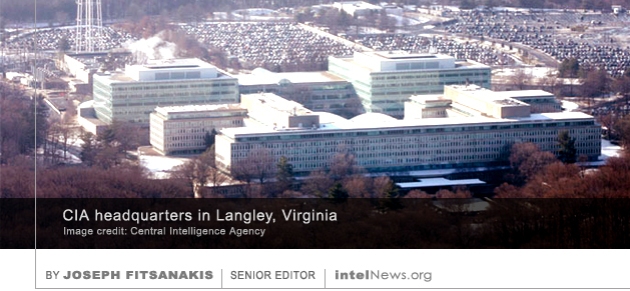 The administration of United States President Barack Obama has yet to nominate a replacement for the Central Intelligence Agency’s inspector general despite calls by Congress to quickly fill the sensitive post. The position has remained vacant since the end of January of this year, when David Buckley
 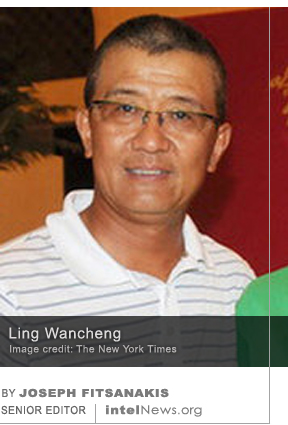 A well-connected Chinese businessman, described by officials as potentially one of the most damaging defectors in the history of modern China, is reputed to have requested political asylum in the United States. Ling Wancheng, 54, is the multimillionaire brother of Ling Jihua, a close aide of China’s former premier, Hu Jintao, who rose through the ranks of the Communist Party of China to eventually lead its Central Committee’s General Office. With the help of his brother’s connections and political influence, Ling Wancheng transformed himself from a journalist to an entrepreneur in the early 2000s. Soon after receiving his graduate degree in business administration, he founded an investment firm and joined China’s nouveau riche elite. His wealth, which is estimated to be in the hundreds of millions of dollars, coupled with his older brother’s senior position within the Communist Party, made him one of China’s most politically connected entrepreneurs.
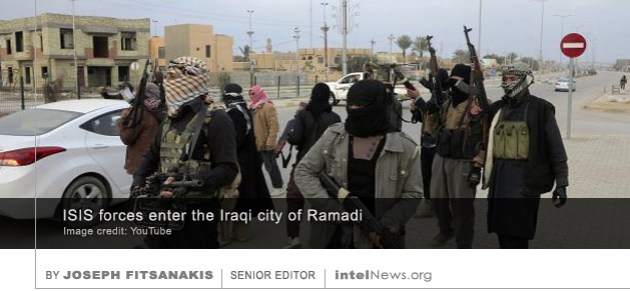 Internal reports by American intelligence agencies say that the Islamic State remains strong in Iraq and Syria, and that the group has been able to effortlessly replace its 10,000 fighters who have been killed in the past year. Despite the over $1 billion spent in the war against it by the Syrian and Iraqi governments, as well as by the West, the militant group is “fundamentally no weaker” than it was a year ago, when the United States began a bombing campaign targeting Islamic State strongholds, according to the reports. The Associated Press, which
  In 2007 I wrote in my “
 Lawyers for Jonathan Pollard, an American with Israeli citizenship who spied on the United States for Israel in the 1980s,
  The German and Dutch governments allegedly joined forces to investigate a Russian supercomputer specialist, who studied in Germany and Holland, suspecting him of passing technical information to Russian intelligence. German weekly newsmagazine Der Spiegel, which published the report in its current issue, identified the physicist only as “Ivan A.” and said that the 28-year-old man was a member of a physics laboratory affiliated with the Max Planck Institute in the western German city of Bonn.
 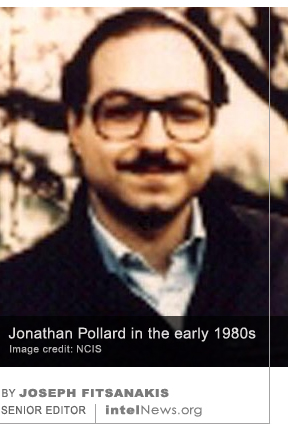 A United States Navy intelligence analyst, who is serving a life sentence for spying on America for Israel, may soon be set free in an effort by Washington to quieten Israeli criticism of a recently struck international agreement on Iran’s nuclear program. Many in US counterintelligence
 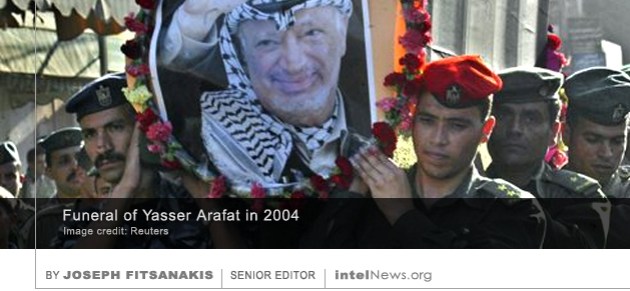 A government prosecutor in France has urged that a probe looking into whether the late Palestinian leader Yasser Arafat was poisoned with a radioactive substance should be dropped, because evidence shows he died of natural causes. Arafat was the founder of Palestinian nationalist group Fatah and led the Palestine Liberation Organization for over three decades before becoming the first president of the Palestinian Authority. He died in November 2004 at the Percy military hospital in Paris, France, weeks after being transferred there from his headquarters in Ramallah, West Bank. His official records indicate that he died from a stroke, which he suffered as a result of a blood disorder known as disseminated intravascular coagulation.
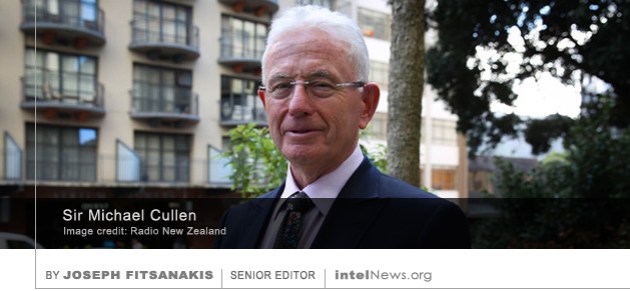 A former deputy prime minister of New Zealand, who is heading a major review of intelligence practices in the country, has said in an interview that spy agencies hurt their mission by practicing excessive secrecy. Sir Michael Cullen served as finance minister, education minister and attorney-General before serving as deputy prime minister of New Zealand, from 2002 to 2008. He was recently appointed by the government to co-chair a broad review of state intelligence agencies, with particular focus on updating the applicable legislative framework and evaluating the oversight exercised by lawmakers and the executive. The review is expected to affect the work of New Zealand’s two most visible intelligence agencies, the Security Intelligence Service and the Government Communications and Security Bureau.
 The final piece of sealed testimony in one of the most important espionage cases of the Cold War has been released, 64 years after it was given. The case led to the execution in 1953 of Julius and Ethel Rosenberg, an American couple who were convicted of spying for the Soviet Union. The Rosenbergs were arrested in 1950 for being members of a larger Soviet-handled spy ring, which included Ethel’s brother, David Greenglass. Greenglass agreed to testify for the US government in order to save his life, as well as the life of his wife, Ruth, who was also involved in the spy ring. He subsequently fingered Julius Rosenberg as a courier and recruiter for the Soviets, and Ethel as the person who retyped the content of classified documents before they were surrendered to their handlers. That piece of testimony from Greenglass the primary evidence used to convict and execute the Rosenbergs.








Soviet mole penetrated Australian intelligence, says former officer
August 19, 2015 3 Comments
Aged 92 today, Sasson spoke publicly for the first time on Australia’s ABC News television network about her life and times. She told the reporter that she had “no doubt at all” that ASIO had been infiltrated by at least one Soviet-handled double spy in the 1970s. “If we put on an operation, it failed”, she said, adding that the Soviets “always seemed to be a step ahead of us. There must have been a tip-off. It can’t have been otherwise”, said Sasson. The 92-year-old former intelligence officer recounted one specific operation involving a Russian diplomat named Vladimir Dobrogorsky, who was believed by ASIO to be an intelligence operative. According to Sasson, ASIO counterintelligence officers were monitoring Dobrogorsky and knew the precise time and place that he was scheduled to meet with an Australian informant in downtown Canberra. However, not only did the meeting not occur, but Dobrogorsky left the Soviet embassy in the Australian capital that morning, never to return.
“I am convinced that someone within ASIO tipped him off”, said Sasson. Not only that, but when she and other ASIO officers expressed their concerns about the possible existence of a mole inside ASIO, senior agency officials dismissed them. At one point she was told to “not open this can of worms”, she told ABC News. The former ASIO officer added that the chief of the United States Central Intelligence Agency station in Canberra shared similar concerns with the ASIO’s leadership, but that they too were dismissed. Soviet intelligence operatives were notably active in Australia and New Zealand during the Cold War, as it was believed that intelligence agencies in the two Pacific Rim countries offered an easier path toward accessing British and American government secrets, due to the so-called Five Eyes agreement.
► Author: Joseph Fitsanakis | Date: 19 August 2015 | Permalink
Filed under Expert news and commentary on intelligence, espionage, spies and spying Tagged with ASIO, Australian Security Intelligence Organisation, Cold War, double agents, history, Molly Sasson, News, USSR