Sweden closes Stockholm airspace in search for mystery submarine
October 21, 2014 Leave a comment
 By JOSEPH FITSANAKIS | intelNews.org
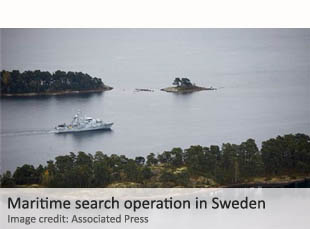
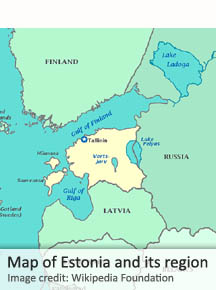
Swedish authorities shut down airspace above Stockholm on Monday, as they continued searching for a mystery foreign vessel that was sighted repeatedly off the coast of the Swedish capital last week. Swedish newspaper Svenska Dagbladet reported on Saturday that the search began last Thursday, after Swedish intelligence detected a number of Russian-language emergency radio signals, which were sent from the vicinity of the port of Stockholm to Kaliningrad, a Russian exclave located on the Baltic Sea between Poland and Lithuania. On Sunday, the Swedish Ministry of Defense confirmed the search for the vessel, though it refused to speculate on the national origin of its crew and refrained from calling it a submarine. But a grainy surveillance photograph issued by the Ministry appears to show a submarine of considerable size —said to be Russian— peeking out of the waters of the Baltic Sea, at a location believed to be 30 nautical miles from Stockholm. One English-language Swedish newspaper quoted Johan Wiktorin, a fellow at the Swedish Royal Academy of War Sciences, who suggested three possible reasons for foreign submarine activity in Sweden’s territorial waters near Stockholm. Wiktorin speculated that the vessel could be “mapping the waters” around the Swedish capital, or it could be installing underwater surveillance equipment aimed at collecting a variety of maritime intelligence in the area. Alternatively, the mystery vessel could be testing Sweden’s maritime defense systems, said Wiktorin. On Monday, however, intense speculation appeared in local media about a fourth potential reason for the mystery submarine activity in Swedish territorial waters. A photograph emerged showing a man dressed in black frogman gear on the Swedish island of Korso. The image was purportedly taken by a local man at around the time when the submarine was sighted in the area. Read more of this post





 By JOSEPH FITSANAKIS | intelNews.org









More information emerges on Poles who ‘spied for Russia’
October 23, 2014 Leave a comment
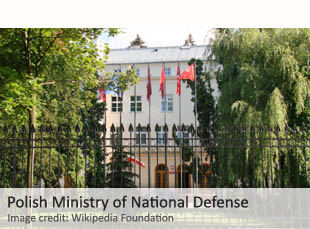
More information has emerged on two Polish citizens who were arrested earlier this month in Warsaw on charges of spying for a foreign intelligence agency. Polish media reported last week that a colonel in the Polish Army had been arrested by security personnel for operating as an unregistered agent of a foreign country. Subsequent media reports said a second man, a lawyer with dual Polish-Russian citizenship, had also been arrested. According to Polish media reports, the two men had been recruited by the GRU, Russia’s military intelligence agency. The organization is believed to have over a dozen officers stationed at the Russian embassy in the Polish capital, posing as diplomats, as well as an unknown number of non-official-cover operatives, who are not officially connected to the Russian diplomatic mission. One of the two arrestees has been identified simply as Zbigniew J., and is said to be a lieutenant colonel serving in Poland’s Ministry of National Defense. Polish newsmagazine Wprost said last weekend that Z.J. worked in the Ministry’s “enlightenment and morale” department, a post that required him to visit military units around the country as part of a team of experts. He would then impart the information gained from his travels to his GRU handler, an officer serving under diplomatic cover in Russia’s Warsaw embassy, during biweekly meetings. Wprost said Z.J. would receive small amounts for cash in exchange for his services, which are believed to have amounted to approximately $30,000 over the course of several years. The newsmagazine suggested that Z.J.’s motivations were primarily financial and were related to unspecified “personal troubles”. The second alleged spy arrested last week has been named as Stanisław Szypowski. He is a lawyer-turned-political-lobbyist who worked for Stopczyk & Mikulski, a prestigious law firm involved in a government-funded project to build facilities able to import liquefied natural gas into Poland. Read more of this post
Filed under Expert news and commentary on intelligence, espionage, spies and spying Tagged with counterintelligence, GRU, News, Poland, Russia, Stanisław Szypowski, Zbigniew J.