Video footage shows alleged CIA spy tackled outside US Moscow embassy

US embassy scuffleA Russian television station has aired footage allegedly showing a Russian guard stationed outside the United States embassy in Moscow trying to stop an American diplomat from entering the embassy. The Kremlin claims that the alleged US diplomat was in fact a Central Intelligence Agency officer who was returning to the embassy in disguise following a spy operation. As intelNews reported on July 1, the incident took place in the early hours of Monday, June 6. The American diplomat was making his way to the front entrance of the US embassy complex, which is located in the Presnensky District in downtown Moscow.

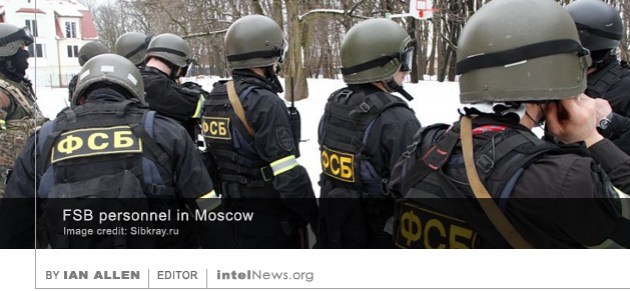
According to American sources, the diplomat was approached by an employee of the Russian Federal Security Service, the FSB, which regularly stations security personnel around the sizeable US embassy complex. The FSB claims that the guards are there to protect US diplomats, though it is common knowledge that the Russian agency, which is responsible for counterespionage, is primarily there to monitor activities in and around the US embassy. American sources claim that the diplomat presented the Russian guard with proof of identification when asked to do so. But he was then physically attacked and struck repeatedly by the FSB officer, which left him with several injuries, including a broken shoulder. The diplomat managed to enter the embassy grounds and had to be flown out of the country for urgent medical treatment. He has not returned to Russia.

On Thursday, Russian television channel NTV aired video footage purporting to show the altercation between the US diplomat and the FSB guard. The video aired on NTV shows a man exiting a taxi in a hurry and heading to what appears to be the US embassy’s front-perimeter entrance. However, as the man makes heads for the entrance, a uniformed individual jumps out of a guard station located nearby and tackles the man, throwing him on the ground. A scuffle ensues, during which the alleged diplomat is seen desperately trying to reach the entrance of the US embassy, which is American soil. He eventually manages to enter the embassy grounds, despite the effort of the uniformed guard to prevent him from entering. The same NTV report identified the American diplomat as Daniel Van Dyken and showed the photograph of a man said to be him. The report states that Van Dyken serves as third secretary of the US embassy’s Political Department.

Last week, Russian Foreign Ministry spokeswoman Maria Zakharova alleged that the diplomat in question was an intelligence officer. “It is well known”, said Zakharova, “that this very diplomat was in fact an agent of the CIA and was returning [to the US embassy], in disguise, after conducting an intelligence operation the previous night”. She also said that the Russian government employee involved in the altercation was a “police officer” who was attacked by the alleged spy when he asked to be shown proof of identification. Instead of supplying identification documents, the American diplomat “struck the guard in the face with his elbow before disappearing into the embassy”, said Zakharova. The US State Department and the CIA have refused to comment on Zakharova’s allegations.

Author: Ian Allen | Date: 08 July 2016 | Permalink

Muslim man held in New York prison claims he was CIA spy

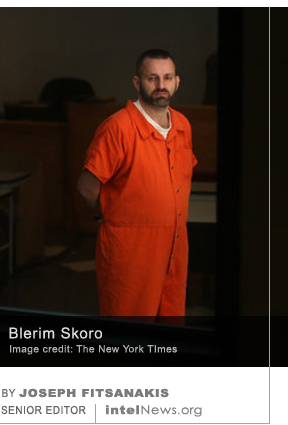
Blerim SkoroAn ethnic Albanian man facing deportation from the United States says he was trained by the Central Intelligence Agency to spy on “the most ruthless, dangerous terrorists in the Balkans and the Middle East”. Blerim Skoro, 45, from the former Yugoslav Republic of Kosovo, was arrested last February in Brooklyn, New York, for illegally using a discounted student MetroCard. He was then found to have entered the US illegally and is currently in prison in New Jersey, facing possible deportation back to Kosovo. But Skoro told The New York Times in an interview published on Wednesday that he cannot be sent back to Kosovo because he operated there as a spy for the CIA.

According to The Times, Skoro came to the US in 1994. Six years later, he was convicted in a New York court of transporting drugs and laundering nearly $700,000 in criminal proceeds. But while in prison, Skoro was recruited as an informant for the Federal Bureau of Investigation, and was tasked with monitoring inmates with militant Islamist leanings. In 2007, when Skoro was released from prison and deported back to Kosovo, he allegedly continued working for US intelligence. He told The Times that he was trained by US operatives in a CIA safe house in the former Yugoslav Republic of Macedonia before taking on assignments in the Balkans, the Middle East and even Pakistan. Throughout that time, Skoro says he posed as a militant Islamist who had become radicalized while serving his prison sentence in America. He claims to have supplied the CIA with intelligence relating to al-Qaeda and other Sunni Islamist groups.

However, in 2010, while traveling to a CIA safe house in Macedonia for a meeting, he was shot by assailants who probably knew he was working for a foreign spy agency. That incident prompted the CIA to sever its relationship with him, dismissing him from his agent status and offering him approximately $40,000 in compensation. Soon afterwards, Skoro made his way to Canada, from where he entered the US illegally, in November 2014. Before getting arrested in Brooklyn in February, he says he made contact with US intelligence officials, offering to spy for the US against the Islamic State. But his offer was not accepted. The Times article speculates that US intelligence may have no use for Skoro because his identity has been compromised, or because his reliability has come into question.

Currently Skoro is being held without bond at the Bergin County Jail in northern New Jersey, because federal prosecutors believe he might flee if released. The Times contacted the CIA, the FBI and police sources, but all declined to comment.

Author: Joseph Fitsanakis | Date: 07 July 2016 | Permalink
Ex-Yugoslav spy testifies in German trial about 1983 murder of dissident

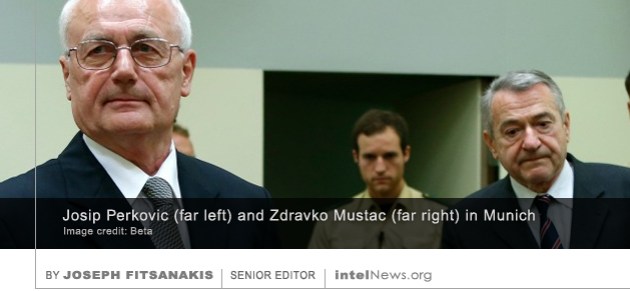
Josip Perkovic Zdravko MustacA former officer in the Cold-War-era Yugoslav intelligence service has begun testifying at a trial concerning the 1983 murder in Germany of a Yugoslav dissident by assassins sent by authorities in Belgrade. Stjepan Đureković, who was of Croatian nationality, defected from Yugoslavia to Germany in 1982, while he was director of Yugoslavia’s state-owned INA oil company. Upon his arrival in Germany, he was granted political asylum and began associating with Croatian nationalist émigré groups that were active in the country. He was killed on July 28, 1983, in Wolfratshausen, Bavaria. His killing was part of an operation codenamed DUNAV, which was conducted by the Yugoslav State Security Service, known by its Serbo-Croatian acronym, UDBA.
In 2009, following testimonies by several former UDBA agents, who were arrested in connection with the crime, the Office of the German Federal Prosecutor issued a European Arrest Warrant for Josip Perković, a former senior official in the UDBA. He is accused of having played a central role in organizing Đureković’s assassination. In 2014, Croatia, where Perković has been living since the demise of Yugoslavia, agreed to extradite Perković to Germany. The agreement materialized after heavy pressure was exercised on Croatia by the European Commission, after the country’s admission into the European Union.

Perković is now co-defendant in the trial taking place in Munich, along with another former UDBA intelligence official, Zdravko Mustać (see photo). Tuesday’s proceedings included testimony by another former UDBA man, Vinko Sindicić, who named both Perković and Mustać as direct accomplices in Đureković’s murder. Sindicić told the court that Perković was acting on orders to kill the German-based dissident, which came directly from the office of UDBA Director Zdravko Mustać. He added that Perković helped organize the logistics of Đureković’s assassination, including the location in Munich where the killing actually took place. Sindicić told the court that a female UDBA operative living in Munich was also involved in organizing the operation, and that the weapons used to kill Đureković had been secretly transported to Germany through Jadroagent, an international shipping and freight company based in Yugoslavia. During his testimony, which lasted for several hours, Sindicić claimed that the two men who carried out Đureković’s murder were UDBA assassins Branko Bijelić and Luka Sekula. The former died in 2004, but the latter still lives in Sweden and has yet to be extradited to Germany in connection with the murder trial.

It is worth noting that Sindicić spent a decade behind bars for his role in a failed attempt to kill another Yugoslav dissident émigré, Nikola Stedul, whom the UDBA tried to kill in the United Kingdom in 1988. Further charges against him were dropped in 2000, in a trial where he stood accused of complicity in the murder of yet another exiled Yugoslav dissident, Bruno Busić, who was killed in Paris in 1978. Both Perković and Mustać deny any involvement in Đureković’s assassination.

Author: Joseph Fitsanakis | Date: 06 July 2016 | Permalink

Egypt president removes spy officials following damning human-rights report

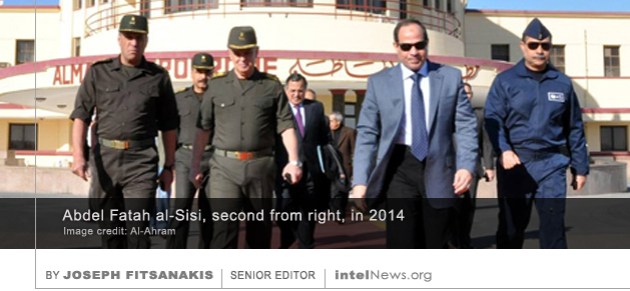
Abdel Fatah al-SisiSeventeen senior Egyptian intelligence officials were summarily removed from their posts hours after the government’s human-rights monitoring body issued a damning report of violations by security agencies. The removal of the officers was announced on Sunday in the official journal of the Egyptian government, in an article that bore the signature of Egypt’s President, Abdel Fatah al-Sisi. It listed the names of 17 senior officers of Egypt’s feared General Intelligence Directorate (GID). The article said the 17 would go into early retirement “based on their own requests”, but provided no information on the reasons why they allegedly asked to retire as a group, or who will replace them.

The announcement of the intelligence officers’ removal came shortly after the publication of the annual report on the state of human rights in Egypt by the country’s official government monitoring organization. Egypt’s National Council for Human Rights said in its 2016 report, published over the weekend, that the rights of citizens have “not yet become a priority for the state”. It added that the state of human rights in Egypt remains alarmingly poor despite the adoption of the country’s new constitution in 2014. Egyptian and international rights monitoring organizations claim that as many as 60,000 people have been arrested for political reasons since 2013, when the military overthrew the government of Muslim Brotherhood leader Mohamed Morsi, following months of protests against his administration.

Focusing on the period between April 2015 and March of this year, the report lists over 260 cases of enforced disappearances of individuals, of which 143 remain under what is termed by the authorities “pretrial detention”. The report further notes that “pretrial detention”, which is often indefinite, has become “a punishment in itself”, and points out that the numbers of prisoners currently held pretrial detention centers exceed their capacity three times over. Consequently, pretrial detainees are forced to “take turns sleeping due to lack of space”, says the report. It also criticizes Egypt’s security and intelligence services for failing to curb the use of torture, which remains widespread despite its condemnation by the government and the conviction of several police and security officers who were found to have tortured detainees to death.

The removal of the 17 senior GID officers highlights the embattled state and internal divisions that continue to plague the Sisi administration, two years after the military strongman assumed power in the country, following a military coup. His administration has focused largely on a violent crackdown against the Egyptian Muslim Brotherhood, which includes the imposition of death sentences on hundreds of thousands of people who were convicted in mass trials. Sisi’s legitimacy is disputed by the Muslim Brotherhood —arguably Egypt’s most popular social movement— and secularist reformers, who boycotted en masse the election that propelled him to the presidency. Sisi won with 97 percent of the vote in a heavily boycotted ballot that was reminiscent of the staged elections held by longtime Egyptian dictator Hosni Mubarak. At the same time, however, Sisi is facing challenges from within the military and intelligence services, which some believe may be planning another coup. In June 2014, a less than a month after taking office, SIS replaced 14 senior GID officials. He fired another 11 a year later, while 13 more were forced to retire last December.

Author: Joseph Fitsanakis | Date: 05 July 2016 | Permalink


IRA source in high-profile counterfeit money case claims his life is in danger

SupernoteA former senior member of the Official Irish Republican Army in the United Kingdom claims that he was abandoned by British and American spy agencies after he testified in a high-profile counterfeiting case. The case involves members of the Official IRA, including its alleged former chief of staff, who is wanted in the United States in connection with the so-called supernote counterfeit money investigation. The supernote, also known as superdollar or superbill, is a fake 100-dollar bill believed to be one of the highest-quality counterfeit banknotes ever detected. The US government believes that a nation-state is behind the production of the supernote, with North Korea being the primary suspect.
In 2000, in cooperation with the US Secret Service, British intelligence conducted a large-scale undercover operation codenamed MALI. According to the BBC’s investigative news program Panorama, the operation focused on Seán Garland, the former chief of staff of the Official IRA and former president of its political wing, the Workers’ Party of Ireland. The Official IRA and the Provisional IRA were the two main splinter groups of the “old” IRA, which parted ways in 1969 due to ideological and tactical differences. In 1972, the Official IRA declared a unilateral ceasefire and eventually morphed in to a leftwing political party calling itself the Workers’ Party of Ireland. Operation MALI allegedly found that the Workers’ Party former president, Seán Garland, traveled to Russia and visited the embassy of North Korea in Moscow. He is said to have picked up a package containing supernotes, which he then secretly smuggled into Ireland and from there to England, in exchange for money. Garland was arrested in 2005 in Belfast, UK, but managed to flee to Ireland when he was released on medical leave. He was arrested again in 2009 and released on bail. In 2011, his extradition request to the US was rejected by an Irish court on a technicality, but he remains wanted by Washington. Ireland is also considering whether there are legal grounds to prosecute Garland in Dublin. He and his supporters deny the charges against him and claim that they are politically motivated.

Last week, however, the man believed to be behind the tip-off that led to Garland’s arrest, said his life was in danger. The man, who uses the pseudonym “Michael O’Brien”, was a member of the Official IRA in the 1970s. But he says that after 1996 he worked as an undercover informant for Britain’s Security Service (MI5) and the Anti-Terrorist Branch of the British Police. He claims that it was he who first alerted British authorities about the involvement of members of the Workers’ Party of Ireland in the distribution of supernotes from Russia to Europe. He is also believed to have testified behind closed doors at a US court hearing involving Garland and other alleged conspirators in the counterfeit money case. However, O’Brien told The Sunday Times last week that his cover was blown in January of this year. Since then, he has allegedly been the subject of death threats and had to abandon his home in Belfast as a result. He also claims that the US Secret Service and British police have failed to provide him with protection. O’Brien told The Times that he chose to speak to the media in order to protect himself from possible assassination by Irish republicans.

Author: Joseph Fitsanakis | Date: 04 July 2016 | Permalink

Diplomat involved in fight with US embassy guard is CIA spy, says Russia

FSB - IAThe Russian government says that an American diplomat, who was allegedly beaten up by a Russian security guard outside the United States embassy compound in Moscow, is an undercover spy. The man, who has not been named, was stationed in the Russian capital by the State Department as an accredited diplomat with immunity from prosecution in Russia. However, The Washington Post reported earlier this week that the American diplomat was severely beaten by a Russian government employee while attempting to enter the US embassy compound.
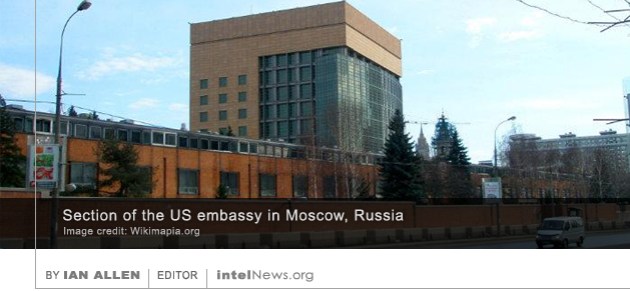
The alleged incident is reported to have taken place in the early hours of Monday, June 6. The American diplomat was making his way to the front entrance of the US embassy complex, which is located in the Presnensky District in downtown Moscow. According to American sources, the diplomat was approached by an employee of the Russian Federal Security Service, the FSB, which regularly stations security personnel around the sizeable US embassy complex. The FSB claims that the guards are there to protect US diplomats, though it is common knowledge that the Russian agency, which is responsible for counterespionage, is primarily there to monitor activities in and around the US embassy. American sources claim that the diplomat presented the Russian guard with proof of identification when asked to do so. But he was then physically attacked and struck repeatedly by the FSB officer, which left him with several injuries, including a broken shoulder. According to The Washington Post, the diplomat managed to enter the embassy grounds and had to be flown out of the country for urgent medical treatment. He has not returned to Russia.

The US government believes the attack was intentional. But what caused it? One theory entertained by The Washington Post is that the diplomat was in fact an officer of the Central Intelligence Agency working in Moscow under official cover, pretending to be a State Department employee. According to this theory, the FSB was chasing the American diplomat through the streets of Moscow after a spy operation that went awry. The Russians then tried unsuccessfully to prevent him from entering the US embassy, which constitutes American soil.

On Thursday, Russian Foreign Ministry spokeswoman Maria Zakharova alleged that the diplomat in question was an intelligence officer. “It is well known”, said Zakharova, “that this very diplomat was in fact an agent of the CIA and was returning [to the US embassy], in disguise, after conducting an intelligence operation the previous night”. She also said that the Russian government employee involved in the altercation was a “police officer” who was attacked by the alleged spy when he asked to be shown proof of identification. Instead of supplying identification documents, the American diplomat “struck the guard in the face with his elbow before disappearing into the embassy”, said Zakharova. The US State Department and the CIA refused to comment on Zakharova’s allegations.

Author: Ian Allen | Date: 01 July 2016 | Permalink

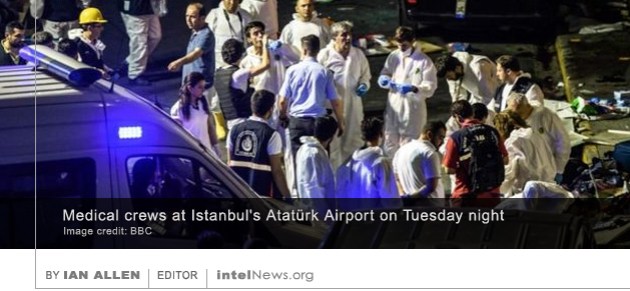
Analysis: Will ISIS claim responsibility for Istanbul airport attack? (updated)

Istanbul Airport TurkeyTurkish security and counterterrorism officials are blaming the Islamic State of Iraq and Syria for Tuesday’s bloody attack at Istanbul’s Atatürk airport, which left at least 41 people dead and nearly 300 injured. But will ISIS claim responsibility for the attack? And if not, why not? ISIS is indeed the most likely culprit of Tuesday night’s terrorist attack. The modus operandi of the three attackers, which some unconfirmed reports suggest Turkey has now confirmed were foreign nationals, matches that of previous ISIS attacks on high-profile international targets. More importantly, the style of the attack does not fit the profile of the secessionist Kurdistan Workers’ Party, known as PKK, which almost always targets uniformed personnel in Turkey.

There is no shortage of motives for ISIS to target Turkey. The militant group wants to destabilize Turkey, which it sees as a prime market for spreading its ideas, especially among the country’s disenfranchised religious working class. The attack at Istanbul’s airport happened in the holy month of Ramadan, the most revered time on the Muslim religious calendar, during which ISIS said would launch a wave of violence around the world. Last but not least, foreign and domestic intelligence agencies had warned the Turkish government in recent weeks of an impending large-scale attack by ISIS, saying that the group was anxious to re-galvanize its supporters after suffering heavy military defeats in Iraq and Syria. Since the start of 2015, experts have connected ISIS to at least seven different attacks on Turkish soil, most of them in large urban centers like Ankara and Istanbul. However, the only attacks the militant group has claimed responsibility for were against Syrian anti-ISIS activists based in southern Turkey. In contrast, ISIS has shied away from officially linking itself with deadly attacks against high-profile targets in Turkey. This latest attack may fall in line with that pattern.

But why would ISIS not claim responsibility for such a media-savvy strike? There is no question that the Sunni Islamist group wants to destabilize Turkey’s economy, a goal that it sees as key to its success. That explains Tuesday night’s attack on one of the country’s busiest transport hubs during the peak of the tourist season. At the same time, however, ISIS is aware that Turkey’s main concern in the Middle East is not Sunni Islamism, but the rise of the PKK and other secessionist Kurdish groups. The latter are some of ISIS’ most formidable military adversaries, and the Islamist group would rather not distract Turkey from its escalating war against the Kurds. What’s more, because Ankara has been paying most of its attention to Kurdish separatists, ISIS has been able to build an extensive network of operatives inside Turkey, and it does not want to see it demolished by Turkish security forces. ISIS is therefore engaged in a delicate balancing act: on the one hand it wants to destabilize Turkey so as to export its sectarian war to one of the world’s most populous Sunni Muslim nations. On the other hand, however, it does not want to alter Turkey’s security priorities, which are mostly focused on Kurdish militias.

What will it mean if ISIS breaks with the typical pattern and does claim responsibility for Tuesday’s attack in Istanbul? That would be equivalent to an official declaration of war by the Islamic State against the Turkish Republic, a call for arms issued to all pro-ISIS networks in Turkey for the opening of a northern front in this widening regional conflict. It could also spell trouble for Turkey’s beleaguered security forces, which will be forced to divide their attention between two foes, the PKK in the east and in urban centers, and ISIS in the south and in popular tourist resorts throughout the country.

Author: Ian Allen | Date: 30 June 2016 | Permalink

German cabinet approves spy service reform in wake of NSA controversy

BND - IAThe senior executive body of the German government has approved draft legislation that reforms the country’s intelligence services, following revelations that Germany helped the United States spy on European states. The legislation is seen as a response by the German government to a number of recent public controversies involving the Bundesnachrichtendienst, Germany’s Federal Intelligence Service, known as BND.
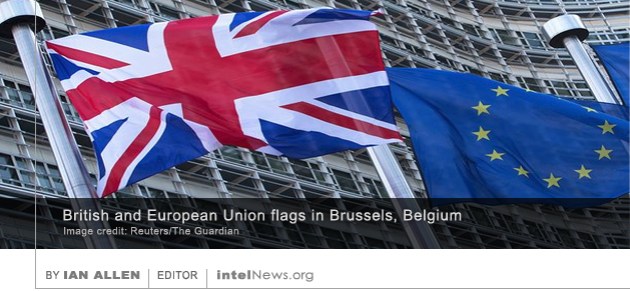
In 2015, the BND was found to have secretly collaborated with the US National Security Agency (NSA) in spying on several European governments and private companies. According to German investigative magazine Der Spiegel, the BND used its facilities at Germany’s Bad Aibling listening station to help the NSA spy on, among other targets, the palace of the French president in Paris, the headquarters of the European Commission in Brussels, and the France-based European conglomerate Airbus. In response to the revelations, Airbus filed a criminal complaint against the German government, while Belgium and Switzerland launched official investigations into the joint BND-NSA activities.

The extent of the BND-NSA collaboration prompted widespread public criticism in Germany. In response to the criticism, German Chancellor Angela Merkel promptly fired the director of the BND in April of this year, in a move that surprised many. Gerhard Schindler, who had headed the BND since 2012, was replaced by Bruno Kahl, a senior official in the German Federal Ministry of Finance, who did not come from within the ranks of the BND. Additionally, the German chancellor authorized a parliamentary inquiry into the operations of the BND, which was completed last spring. The resulting 300-page report forms the basis of the draft legislation that was approved on Tuesday by the German cabinet.

The new legislation bans the BND from spying on foreign governments or corporations for the benefit of German companies. It also prevents it from spying on targets within the European Union, unless the operation pertains to “information to recognize and confront threats to internal or external security”. This is taken to mean operations relating to suspected terrorist activity that directly threatens German national security. The legislation also calls for the establishment of a new independent oversight body consisting of senior judges and representatives of the Office of the Federal Prosecutor, whose job will be to evaluate and approve the BND’s proposed espionage activities against foreign targets.

The legislation will need to be finalized through its approval by the German Federal Parliament, known as the Bundestag. The body is expected to approve the legislation before the beginning of its official summer break in mid-July.

Author: Ian Allen | Date: 29 June 2016 | Permalink

Harassment of diplomats is part of escalating US-Russian ‘gray war’

US embassy in RussiaA notable increase in incidents of harassment of American diplomats stationed in Europe by Russian intelligence personnel appears to be part of what some officials describe as an escalating “gray war” between the US and Russia. For over a year now, American State Department personnel stationed in Europe have been complaining of a systematic campaign of “harassment and intimidation” against them and their families by Russian intelligence operatives. The campaign is allegedly being waged in Moscow and other European capitals, and has prompted one US diplomat to say that he and his colleagues were “feeling embattled out there in the embassy”. The Washington Post, which published the story on Monday, said that the diplomats’ concerns about the Russian campaign of intimidation were raised again at a recent meeting in Washington of US ambassadors serving in Europe and Russia.
According to The Post, some of the harassment can be characterized as routine, and involves Russian intelligence personnel conducting surveillance of American diplomats, taunting them at social events, or bribing local journalists to report negatively on their activities. But these pranks have allegedly become uglier and even criminal after 2014. The Post said that it had read “a series of secret memos” sent to the State Department by US embassies and consulates in Russia and Europe, which suggest that the increasing harassment of American diplomats is connected to the sanctions imposed by the US on Russia after its military intervention in Ukraine. In some instances, Russian intelligence operatives broke into the homes of American diplomats at night and rearranged the furniture, or turned on all the lights and electronic equipment before leaving. In another case, a US diplomat’s children were followed to school, while another’s car tires were slashed repeatedly, said the paper.

The State Department’s press secretary John Kirby told The Post that incidents of overt harassment of US diplomatic personnel by Russian government employees had indeed increased. Norm Eisen, America’s former ambassador to the Czech Republic, told the paper that the intimidation was part of “the gray war” between Washington and Moscow, which has escalated following Russia’s intervention in the Ukraine.

A statement from the Russian embassy in Washington denied that the Russian government was behind the alleged incidents. But it went on to state: “In diplomatic practice there is always the principle of reciprocity and, indeed, for the last couple of years our diplomatic staff in the United States has been facing certain problems”. This statement can be seen to imply that Russia is responding to instances of intimidation of its diplomats by US authorities. The statement added: “The deterioration of U.S.-Russia relations […] was not caused by us, but rather by the current [US] administration’s policy of sanctions and attempts to isolate Russia”. The Post said that US Secretary of State John Kerry raised the issued directly with Russian President Vladimir Putin during his visit to Moscow in March, but that the harassment has continued. US President Barack Obama is apparently aware of the situation, but has ordered US intelligence agencies “not to respond with similar measures against Russian diplomats”, said the paper.

Author: Ian Allen | Date: 26 1 June 2016 | Permalink

Experts warn about Brexit’s effects on European, NATO cooperation

BrexitAfter Thursday’s Brexit vote, European and American security officials have tried to pacify concerns about major disruption of longstanding Western security cooperation arrangements. But experts stress that the international security landscape will be significantly impacted by Britain’s decision to leave the European Union (EU). As early as Thursday night, British defense, military and intelligence officials launched a marathon of phone calls in order to reassure their European and American counterparts that the United Kingdom was not going to retreat from its role in security pacts with Europe and the North Atlantic Treaty Organization (NATO).
On Friday, the office of NATO Director General Jens Stoltenberg issued a statement assuring the public that Britain’s decision to leave the EU would not impact on NATO’s security arrangements. On Sunday, however, a new statement by Stoltenberg appeared to revise his earlier comments. It argued that Britain was “the biggest provider of security in Europe” and that its eventual exit from the EU “matters”, adding that the West’s security situation post-Brexit was “more unpredictable […] than before”. Citing security officials from both sides of the Atlantic, including Stoltenberg, The Wall Street Journal opined on Sunday that Brexit “could have a profound effect on global security”, but stressed that its precise impact remains uncertain. Some officials warned that, in the long run, Britain’s exit from the EU would weaken its military, which is Europe’s most powerful. This could happen through a possible breakup of the country, with Scotland and Northern Ireland splitting from the United Kingdom in reaction to Brexit. Alternatively, Britain’s worsening economic situation could prove detrimental to its overall defense spending.

On Saturday, United States Navy Admiral (ret.) and former NATO commander James Stavridis, argued that NATO will benefit from Brexit, because it will allow the United Kingdom to devote “more resources and manpower to support” NATO’s mission. There will also be a “reduction in the […] battlefield competition between NATO and the EU”, said Adm. Stavridis, which “will likely produce a stronger NATO”. Others, however, disagreed. Citing several current and former officials, The Wall Street Journal warned that Britain’s exit from the EU would result in the loss of a quarter of the EU’s combat power. That could prompt Germany, France, and other EU nations to increase their military spending, in order to advance a more unified defense policy among EU nations. That could bring about a unified EU military headquarters, or even a joint European Army, which NATO has traditionally resisted, as it believes it would duplicate resources and undermine transatlantic cooperation. But with Britain leaving the EU, a staunch pro-NATO voice that strongly objected to the creation of a European Army ceases to exist. That could open the door to the creation of a European Army, say experts.

Last but not least, the UK was a strong player lobbying in favor of instituting EU-wide sanctions against Russia in the wake of the war in eastern Ukraine and Russia’s annexation of Crimea. With London now removed from the decision-making center in Brussels, the voices from EU member states like Spain, Italy and Greece, which argue for abandoning the sanctions against Moscow, are likely to grow louder, said The Wall Street Journal.

Author: Ian Allen | Date: 27 June 2016 | Permalink

US, UK, had secret plan to bomb Middle East oil facilities if Soviets invaded

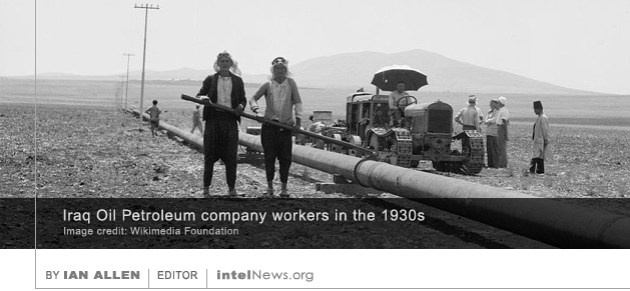
Iraq Oil Petroleum CompanyRecently uncovered documents shed further light on an ultra-secret plan, devised by the British and American governments, to destroy oil facilities in the Middle East in the event the region was invaded by Soviet troops. The documents, published on Thursday by George Washington University’s National Security Archive, were found in the British government archives and date from 1951 to 1955. They describe a top-secret United States plan known as NSC 26/2, which was approved by the National Security Council in 1949 and authorized by President Harry Truman. The plan aimed to prevent the use of Middle East oil facilities by Soviet troops if the latter were able to successfully invade the region.

American documents from the 1950s describe NSC 26/2 as a “denial policy”, which called for a secret collaboration between Middle East-based American and British oil companies. The goal was to sabotage or completely destroy oil facilities and equipment that were in British and American hands, before the Soviets could take them over. The most sensitive part of the plan was the need to keep it secret from the governments of Middle Eastern countries like Iran, Iraq, and Saudi Arabia, even though most of them were allies of the West at the time.

The existence of NSC 26/2 was first revealed in 1996, when the American newspaper Kansas City Star published an extensive article about it, written by Steve Everly. But the recently unearthed British documents shed more light than ever before on the intelligence aspects of the secret plan. Specifically, they reveal the leading role played by the Central Intelligence Agency in implementing the details of the plan in nearly every Middle Eastern country, including Kuwait, Bahrain, Qatar, Iran, Iraq, and Saudi Arabia. As part of the plan, the CIA systematically inserted what the National Security Archive describes as “undercover operatives” into posts in American and British oil companies. Their mission was to collect inside information and recruit other oil employees to facilitate the requirements of NSC 26/2. In essence, says the National Security Archive, the CIA created “a paramilitary force ready to execute the denial policy”.

Some of the documents also show that American and British leaders discussed the possibility of bombing —in some cases using nuclear weapons— some oil facilities in countries like Iraq and Iran that were state-owned and thus had no Western connections. In 1953, NSC 26/2 was updated and replaced with NSC 176, which was later renamed NSC 5401. The plan continued to call for the destruction of oil facilities in the Middle East, using “direct action”, if they were close to being seized by Soviet troops.

Author: Ian Allen | Date: 24 June 2016 | Permalink

Recent gains against ISIS are not enough, may actually backfire, say experts

First Post HWestern experts and intelligence officials are warning that the recent military gains made against the Islamic State of Iraq and Syria (ISIS) are not enough to damage it, and may in fact make the group stronger in the long run. Undoubtedly, the impressive momentum of ISIS, which calls itself the Islamic State, has been curtailed, and the image of invincibility that it once projected is no longer there. Observers estimate that the Sunni militant group has lost nearly a fifth of its territory in Syria, while it is no longer in control of about half of the land it used to occupy in Iraq. As a result of these territorial defeats, ISIS has lost a third of its oil production, which is believed to account for half of its overall revenue. Earlier this month, US President Barack Obama said that, as ISIS continues to concede territory, it is “losing the money that is its livelihood”.

But US intelligence officials do not seem to agree. Speaking on June 16 before the US Senate’s Select Committee on Intelligence, John Brennan, Director of the Central Intelligence Agency, cautioned against triumphalism. He told senators that the efforts of the international military coalition against ISIS “have not reduced the group’s terrorism capability and global reach”, adding that ISIS would “have to suffer even heavier losses of territory, manpower, and money for its terrorist capacity to decline significantly”. According to Reuters, a number of US intelligence officials and counterterrorism experts support Brennan’s views. The news agency said on Wednesday that many experts are warning that the military campaign on the ground was “far from eradicating [ISIS] and could even backfire”.

The fact that local troops fighting ISIS are almost completely composed of Shiite Arabs from Iraq and Iran, or are Kurdish Peshmerga, could add legitimacy to ISIS as the protector of the Sunni Arab minority in the region. There are also reports of human rights violations against Sunnis by the advancing Shiite forces, including an unconfirmed allegation that 49 Sunni men of fighting age were executed after surrendering to the anti-ISIS coalition in Falluja. Additionally, if ISIS loses much more territory, it will be tempted to simply abandon conventional fighting tactics and turn into a guerrilla group. Reuters quotes RAND Corporation analyst Seth Jones, who argues: “It looks like the areas that the Islamic State has lost, they are generally abandoning, and that would mean preparing to fight another way”. That could mean that ISIS fighters intend to blend in with the urban population and launch a campaign of sabotage, assassination and disruption of government services.

As ISIS has lost ground in Iraq and Syria, the flow of foreign fighters intending to join the organization has dropped significantly. But that is not necessarily a good thing, says Reuters. These fighters, who in the past were instructed to join ISIS in the Middle East, may now be told to launch lone-wolf terrorist attacks abroad. The Reuters report cites one terrorism expert, Hassan Hassan, of the Royal Institute of International Affairs in London, who argues that the international appeal of the Islamic State is not connected to the group’s military performance in the Middle East. In other words, its popularity among its Western followers will persist even if all of the group’s territorial strongholds are lost to its adversaries.

Author: Ian Allen | Date: 23 June 2016 | Permalink

American spy for Israel released after 30-year sentence ‘still a threat to US’

Pollard - aSenior United States intelligence officials have filed parole documents arguing that an American Navy analyst, who was recently released from prison after serving a 30-year sentence for spying for Israel, continues to pose a threat to national security. Jonathan Jay Pollard is a former intelligence analyst for the United States Navy, who has was jailed in 1985 for selling American government secrets to Israel. During his trial, the US government successfully argued that Pollard was one of the most damaging spies in American history, having stolen a high volume of classified documents in a relatively short period of time.
But Pollard was recently released from prison, having served his full 30-year sentence. However, as part of the conditions of his release, Pollard must consent to the US government having constant access to the hard drive of his personal computer and internet browsing history. He is also obligated to wear a GPS device at all times, which tracks his daily movements in New York, where Pollard has been living since his release from prison. Some intelligence observers, including Newsweek correspondent Jeff Stein, have voiced concerns that Pollard may be tempted to travel abroad in order to collect funds that his Israeli spy handlers may have deposited for him in offshore bank accounts as payment for his past acts of espionage.

Now Pollard’s lawyers have filed a legal brief arguing that his parole conditions are unnecessary and excessive, and that the US government should ease them considerably. However, documents filed late last week with the US Parole Commission by senior intelligence officers acting on behalf of the US Intelligence Community, make the case that Pollard’s parole conditions should continue unchanged. In a report published on Tuesday, the Daily Beast’s Shane Harris says the intelligence officers argue “forcefully” in the documents that Pollard “still poses a risk to national security”. One of the documents (.pdf), filed by Jennifer Hudson, Director of the Information Management Division at the Office of the Director of National Intelligence, uses particularly stark language in support of maintaining Pollard’s parole conditions. Hudson argues that “some of the sources and methods used to develop some of the intelligence exposed by Mr. Pollard not only remain classified but are still in use by the Intelligence Community today”.

Harris quotes an unnamed “former senior US intelligence official familiar with Pollard’s case”, who argues that the spy may have known which “up-and-coming” Israeli or other Middle Eastern leaders US intelligence had recruited or was trying to recruit as agents in the early 1980s. These individuals may today be in positions of prominence, and Pollard may be able to harm them. In her declaration filed with the Parole Commission, the ODNI’s Hudson argues that Pollard could also compromise information gathered from US agents in Israel and elsewhere, which could potentially reveal their identities. “Even in cases where [these agents are] no longer alive, such disclosure can place in jeopardy the lives of individuals with whom the source had contact”, she writes.

There is, of course, another reason too, says Harris, for the resistance put up by the US Intelligence Community against easing Pollard’s restrictions: “US spies don’t easily forgive, and they don’t forget”, he says. Pollard’s former colleagues are still angry about his monumental betrayal. The Daily Beast says it contacted one of Pollard’s lawyers for a comment, but there was no response.

Author: Ian Allen | Date: 22 June 2016 | Permalink

Iran says it foiled ‘massive terrorist attack’ by Sunni militants

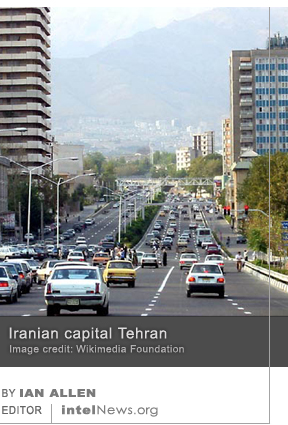
TehranIranian intelligence officials said on Monday that they foiled “one of the largest terrorist attacks ever planned” against the country, allegedly plotted by Sunni militants aiming to inflict mass casualties during the month of Ramadan. A statement by the Islamic Republic’s Ministry of Intelligence said that the attacks had been planned to take place simultaneously in the capital Tehran and several other Iranian cities. Iranian state-owned news agencies reported that an unspecified number of suspects had been arrested and were under interrogation by the authorities.
The statement by the Intelligence Ministry provided few details, but said that the suspects were arrested in several raids conducted across Iran. It added that “a great deal of explosives and ammunition” were confiscated in the raids. The Iranian Students News Agency (ISNA), which has close links with the Iranian government, said that the raids were personally coordinated by Rear Admiral Ali Shamkhani. Shamkhani is secretary of the Supreme National Security Council of Iran, which is effectively the country’s national security council. Another government-controlled news agency, Fars, said that the terrorist plot aimed to attack civilian targets during the holy month of Ramadan, which is the most revered time on the Muslim religious calendar. Iran’s official state news agency, IRNA, reported on Monday that the attacks had been planned for last Thursday, a day in the Iranian religious calendar when festivities are held to commemorate the death of Khadija bint Khuwaylid, the first wife of the Prophet Mohammed.

None of the media reports identified those who were allegedly connected with the planned attacks. However, the reports repeatedly used the term ‘takfir’, a derogatory epithet used to describe Muslims who display militancy against those whom they consider to be ‘unbelievers’. The term is frequently employed by state-owned Iranian media to refer to the followers of the Islamic State, which Iran has been battling for over a year in support of the Syrian government of President Bashar al-Assad. However, IRNA referred to the alleged plotters as “Wahhabi takfiris”, possibly implying a link with Saudi Arabia, where Wahhabism is the state-promoted religious dogma. Relations between Iran and Saudi Arabia have sunk to unprecedented lows in recent years. Last month, Iran said it would not allow religious pilgrims to visit Saudi Arabia for the annual hajj pilgrimage, because the Saudi authorities had not responded to Tehran’s requests to provide security for Iranian pilgrims.

Author: Ian Allen | Date: 21 June 2016 | Permalink

Islamic State’s online army is a Russian front, says German intelligence

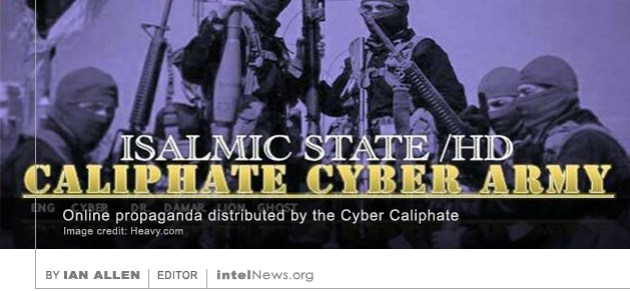
Cyber CaliphateA German intelligence report alleges that the so-called ‘Cyber Caliphate’, the online hacker wing of the Islamic State, is in fact a Russian front, ingeniously conceived to permit Moscow to hack Western targets without retaliation. The group calling itself Cyber Caliphate first appeared in early 2014, purporting to operate as the online wing of the Islamic State of Iraq and Syria (ISIS), later renamed Islamic State. Today the Cyber Caliphate boasts a virtual army of hackers from dozens of countries, who are ostensibly operating as the online arm of the Islamic State. Their known activities include a strong and often concentrated social media presence, and computer hacking, primarily in the form of cyber espionage and cyber sabotage.


Since its inception, the Cyber Caliphate has claimed responsibility for hacking a number of European government agencies and private media outlets. Its targets include the BBC and French television channel TV5 Monde, which was severely impacted by cyber sabotage in April of 2015. The Cyber Caliphate said it was also behind attacks on the servers of the United States Federal Bureau of Investigation, the Department of Defense, and the website of the Pentagon’s US Central Command. The US has since retaliated, both with cyber attacks and physical strikes. One such strike resulted in the killing of Junaid Hussain, a British hacker of Pakistani background, who was said to be among the Cyber Caliphate’s senior commanders. Hussain, 21, was reportedly killed in August 2015 in Raqqa, the Islamic State’s de facto capital in Syria, reportedly after clicking on a compromised link in an email, which gave away his physical whereabouts.

Now, however, a German intelligence report claims that the Cyber Caliphate is not associated with the Islamic State, but is rather a fictitious front group created by Russia. According to German newsmagazine Der Spiegel, which said it had seen the classified report, German authorities suggest that the Cyber Caliphate is in fact a project of APT28 (also known as ‘Pawn Storm’), a notorious Russian hacking collective with close ties to Russian intelligence. The German intelligence report echoes previous assessments by French authorities, which in 2015 stated that the TV5 Monde cyber attack was a false flag operation orchestrated by APT28. Also in 2015, a security report by the US State Department concluded that despite the Cyber Caliphate’s proclamations of connections to the Islamic State, there were “no indications —technical or otherwise— that the groups are tied”.

Author: Ian Allen | Date: 20 June 2016 | Permalink