Senior Iranian aide defects during nuclear talks in Lausanne
March 30, 2015 Leave a comment
 By JOSEPH FITSANAKIS | intelNews.org
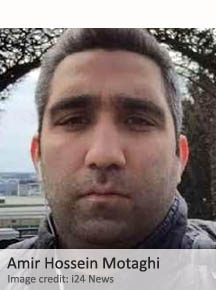
A media advisor to the Iranian president, who was in Switzerland to cover the ongoing international negotiations on the country’s nuclear program, has defected. Amir Hossein Motaghi is credited with having helped secure the impressive ascent of Hassan Rouhani to Iran’s presidency in 2013. Rouhani, who swept to power with over 50 percent of the vote, over 30 percentage points ahead of his nearest rival, owes much of his victory to his popularity among the youth. Motaghi led the media team that promoted Rouhani’s image among younger voters by cleverly employing online platforms such as Facebook and Twitter.
Following Rouhani’s victory, however, Motaghi repeatedly voiced impatience with the slow pace of social and political reforms in Iran. Recently he spoke in favor of the release of Jason Rezaian, the Iranian-American Tehran bureau chief for The Washington Post, who has been denounced as a spy and imprisoned by the Iranian government. There have been rumors in the Iranian media that Motaghi had been ordered to report once a week to Iran’s Ministry of Intelligence; some say he had been privately warned that he faced arrest upon his return to Iran.
Motaghi had reportedly been sent to the Swiss city of Lausanne by the Iran Student Correspondents Association (ISCA). His task was to cover the ongoing talks that aim to bring an end to the dispute between the Islamic Republic and a group of nations that have come to be known as P5+1, representing the five permanent members of the United Nations Security Council plus Germany. However, according to Iranian opposition sources, the media aide resigned from his ISCA post before filing an application for political asylum in Switzerland.
Soon afterwards, Motaghi gave an interview to Irane Farda, a pro-reform Iranian television station based in London, in which he explained the reasons for his defection. He accused the Iranian government of controlling Iranian media reports about the talks, by staffing its reporter entourage in Lausanne with undercover intelligence officers. He also said he could no longer pursue his profession conscientiously because he was only allowed to report approved news items. Furthermore, he accused the American delegation to the talks as “mainly speak[ing] on Iran’s behalf with […] the 5+1 countries [so as to] convince them to consent to an agreement”.
Late on Sunday, ISCA, the press agency believed to have sent Motaghi to Switzerland, released a statement claiming it did not employ the journalist and that his job had been terminated prior to the nuclear talks in Lausanne.
 By JOSEPH FITSANAKIS | intelNews.org










 intelNews.org
Ex-KGB spy killed in London ‘warned Italy about Russian terror plot’
March 31, 2015 by Joseph Fitsanakis 1 Comment
A witness has told a British inquiry investigating the murder of ex-KGB officer Alexander Litvinenko that the former spy may have been killed because he warned Italian authorities about an impending Russian terror plot. Litvinenko was an employee of the Soviet KGB and one of its successor organizations, the FSB, until 2000, when he defected with his family to the United Kingdom. He soon became known as a vocal critic of the administration of Russian President Vladimir Putin. In 2006, Litvinenko came down with radioactive poisoning soon after meeting former KGB/FSB colleague Andrey Lugovoy at a London restaurant. Many suspect that the Russian government is behind Litvinenko’s murder.
Speaking in a London court on Monday, Italian newspaper editor and politician Paolo Guzzanti said he believed Litvinenko was murdered by the Kremlin because he was helping Italian authorities assess a series of Soviet and Russian intelligence operations in the country. Guzzanti was speaking as the former president of the so-called Mitrokhin Commission, a parliamentary board set up in 2002 to investigate past intelligence operations by the Soviet KGB in Italy. Most of the work of the Commission stemmed from the revelations in the Mitrokhin Archive, named after Vassili Mitrokhin, who for three decades was the archivist in the KGB’s First Chief Directorate. Mitrokhin defected to the Britain in 1992, taking with him a treasure trove of documents about Soviet intelligence activities that took place abroad during the Cold War.
Guzzanti told the inquiry that Litvinenko had cooperated with the Mitrokhin Committee and had even shared information with one of its consultants, Mario Scaramella, about ongoing attempts by the FSB to organize terrorist strikes in Italy. According to Guzzanti, Litvinenko informed Scaramella that Russian intelligence operatives were helping transport weapons from Ukraine to Italy in order to assassinate Guzzanti and thus sabotage the work of the Mitrokhin Committee. Based on Litvinenko’s information, Scaramella accused Alexander Talik, a Ukrainian former officer of the KGB who lived in Naples, Italy, of helping Russian intelligence operatives smuggle guns into the country. Talik and a number of his accomplices were promptly arrested by Italian authorities after they found several weapons and grenades in their possession. According to Guzzanti, Litvinenko’s role in stopping the alleged assassination attempt against him and other members of the Mitrokhin Committee was what led to the Kremlin’s decision to murder the former KGB spy.
At the end of Monday’s proceedings, the inquiry directors announced the would adjourn until the next provisional hearing, which has been scheduled for July 27.
Filed under Expert news and commentary on intelligence, espionage, spies and spying Tagged with Alexander Litvinenko, Cold War, FSB, Italy, KGB, Mario Scaramella, News, Paolo Guzzanti, Russia, suspicious deaths, Vasili Mitrokhin