Pakistan’s spy chief visits Kabul in an effort to unify rival Taliban factions

Inter-Services Public Relations PakistanTHE DIRECTOR OF PAKISTAN’S powerful intelligence agency paid a surprise visit to the Afghan capital Kabul on Saturday, reportedly in an effort to mediate between rival factions of the Taliban. Lieutenant General Faiz Hameed, director of the Inter-Services Intelligence (ISI) directorate, was accidentally spotted by a British television crew in a Kabul hotel on Saturday. When asked about the purpose of his visit, Hameed said he planned to hold a meeting with Pakistan’s ambassador to Afghanistan. He did not respond to questions about whether he would also meet with the leadership of the Taliban, with whom the ISI has traditionally had close relations.

On Sunday, however, it emerged that Hameed had met with Gulbuddin Hekmatyar, the Pakistan-supported Pashtun leader and founder of Afghanistan’s Hezb-e-Islami Gulbuddin party. There are rumors that Hekmatyar, who served twice as Afghanistan’s prime minister in the 1990s, will be asked by the Taliban to join a coalition government. There are rumors that Islamabad is pressuring the Taliban to include non-Taliban figures in their cabinet, and thus form a governing partnership with non-Taliban elements.

Additionally, numerous reports claim that serious differences have emerged between the two strongest factions of the Taliban, which concern the appointment of cabinet officials. One faction is led by the group’s co-founder, Mullah Abdul Ghani Baradar, and the other by the Taliban deputy leader, Anas Haqqani. The latter is the brother of Sirajuddin Haqqani, who leads the powerful Haqqani Network —a militant group that works closely with the Taliban but has retained its operational independence. There were even reports that Haqqani militia members exchanged gunfire with Taliban units in Kabul last Friday, though these were dismissed as untrue by the Taliban.

Many observers believe that the differences between the various Taliban factions are real, and that Hameed traveled to Kabul in an effort to help them resolve their differences with the help of Pakistan’s mediation. The Reuters news agency cited an anonymous Pakistani senior official as saying that Hameed’s visit was also aimed to help the new Afghan government organize its military, and to ensure that the airport in the Afghan capital will become operational soon.

Author: Joseph Fitsanakis | Date: 6 September 2021 | Permalink

British foreign secretary admits errors in intelligence assessments of Afghanistan

Dominic RaabTHE CONSENSUS VIEW OF British intelligence in the weeks leading to the fall of Kabul to the Taliban was that the Afghan government would be challenged, but that the rebels were unlikely to take over the country in 2021. This was revealed on Wednesday in the House of Commons by Britain’s Foreign Secretary, Dominic Raab. Speaking at an emergency meeting of the House of Commons’ Foreign Affairs Select Committee, Raab fielded criticism that he had reacted slowly to the crisis in Afghanistan.

The foreign secretary told his critics that his department’s decisions had relied on assessments by the Joint Intelligence Committee, an interagency body that coordinates Britain’s intelligence agencies in issuing reports about pressing security matters. He told Parliament that the assessments he had been given pointed out that the pro-Western government of Afghan President Ashraf Ghani would be threatened by the Taliban following the withdrawal of Western troops. But they concluded that the government would remain in control of Kabul through 2021, said Raab.

The rapid fall of the Afghan capital to the Taliban caught the British intelligence establishment —and, consequently, the government as a whole— by surprise, said Raab, adding that the sheer “scale and speed of the fall of Kabul” was unexpected. The foreign secretary blamed “optimism bias” for the reports, but added that similar optimistic views were “widely shared” across the North Atlantic Treaty Organization. All parties involved would have to learn lessons from Afghanistan about the accuracy of intelligence reports, Raab concluded.

But the foreign secretary was less clear about why his office did not heed the warnings of the principal risk assessment of his own department, which was issued on July 22, approximately a month before the fall of Kabul. The assessment warned starkly that the return of the Taliban to power could be rapid, as “peace talks are stalled and [United States and] NATO withdrawal is resulting in Taliban advances”. This, said the assessment, could lead to the “fall of cities, collapse of security forces, [and] Taliban return to power”. The document also discussed the possibility that the British “embassy may need to close if security deteriorates” in the Afghan capital.

Author: Joseph Fitsanakis | Date: 3 September 2021 | Permalink

Can the Taliban access biometric data collected by US forces in Afghanistan?

Biometrics technology

CONCERNS ARE BEING RAISED by experts about whether the Taliban may have access to the biometric data of millions of Afghans —including those collected by the United States in its 20-year-long military campaign in Afghanistan. In an attempt to avoid recriminations by the Taliban, Afghans who worked for the United States and other Western powers, have been reportedly destroying evidence of their past association with these foreign powers. Evidence includes identification papers, payment stubs and other such documentation.

But in a recent article that rests on original research data, Pennsylvania State University Professor Margaret Hu warns that biometric data stored on Afghan government servers may provide the Taliban with all the evidence they need to identify former state workers, including those who worked for the United States. The data, says Hu, “could be transformed into death warrants in the hands of the Taliban”. What is more, much of the data has been collected by American troops in the past two decades.

The American military began collecting biometric data on the Afghan population as early as 2001. By 2007, US forces regularly collected biometric data across the country, using laptops and other portable electronic devices equipped with biometric data collection sensors. The resulting databases featured the names of several million Afghans by 2011. Hu says that the goal of the US Department of Defense was to build a massive biometric database that would encompass at least 80 percent of Afghanistan’s population —or approximately 32 million people.

In recent years, the US military’s system of biometrics collection had been adopted by the Afghan government, which used it to prevent election fraud, as well as to screen government employees. Now the Afghan government is no more, and the Taliban are in control of every government department, including the departments of defense, labor and the interior. The question is, do the militants have access to the biometrics databases of former government workers?

Hu says it is too soon to tell for sure. Some reports indicate that the Taliban —most of whom are rural peasants— lack the necessary technological know-how to access, search and ultimately utilize these databases. But other reports, says Hu, suggest that units of heavily armed Taliban fighters have already begun to employ “biometrics machines” to locate the homes of government workers and inspect them in early-morning and late-night raids. Time will tell, says Hu, if biometrics warfare is now a reality in Afghanistan.

Author: Joseph Fitsanakis | Date: 01 September 2021 | Permalink

Afghanistan chaos could revive CIA’s counterterrorism mission, say observers

US embassy in Afghanistan

THE RAPID TAKEOVER OF Afghanistan by the Taliban, and the potential descent of that country into an even deeper chaos, could force the United States Central Intelligence Agency to revive its counterterrorism mission, which it has been trying to put on the back-burner in recent years. This is discussed in an insightful article published last Friday in The New York Times by Julian Barnes, Adam Goldman and Mark Mazzetti (author of The Way of the Knife: The CIA, a Secret Army, and a War at the Ends of the Earth).

The three reporters cite anonymous “current and former officials” who claim that the spiraling instability of Afghanistan “could draw the CIA back into a complex counterterrorism mission for years to come”. This comes as American officials are “reworking plans to counter threats that could emerge from Afghanistan’s chaos”, according to the report. Their ultimate fear is that Afghanistan could emerge as a beehive for militants of all backgrounds and stripes, just as Syria did in the 2010s, and before it Afghanistan in the 1990s. Even if the Taliban want to stop this from happening, the CIA has no faith in their ability to do so, the authors note.

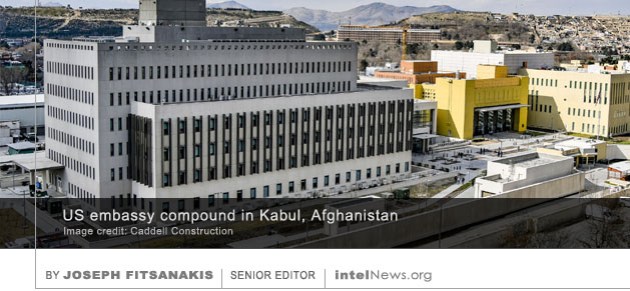
But what can the CIA do in that regard? The spy agency has lost its extensive system of stations and outposts throughout Afghanistan. Its networks of agents inside the war-torn country have crumbled, and it doesn’t even have access to a US or other Western diplomatic facility from which to operate in-country. It will therefore need to negotiate with neighboring countries in order to establish facilities that can allow it to run agents and operations inside Afghanistan. This will not be easy, given the influence of Pakistan, Russia and China in the broader region.

The article cites a number of “senior US officials” who argue that the CIA’s priorities will not necessarily change after what happened in recent weeks in Afghanistan. Yes, there may be more urgency on counterterrorism following the victory of the Taliban, they say. They note, however, that US intelligence agencies are perfectly capable of handling “multiple priorities at once”. But the article also quotes Don Hepburn, who served both in the CIA and the Federal Bureau of Investigation, who says that focusing on both state and non-state actors with the same intensity is not necessarily as simple as it sounds: “The agency is being drawn in many, many directions”, he cautions.

Author: Joseph Fitsanakis | Date: 30 August 2021 | Permalink

Israel has drastically curtailed intelligence-sharing with the US, report claims

Natanz Iran

THE GOVERNMENT OF ISRAEL scaled back significantly intelligence cooperation with the United States in January of this year, following the change of guard in the White House, according to The New York Times. In an article published on Thursday, the paper cited several unnamed Israeli and American sources in claiming that the Israeli administration of then-Prime Minister Benjamin Netanyahu limited its intelligence relationship with Washington almost as soon as Joe Biden assumed the presidency of the United States.

According to the report, the Israelis decided to scale back intelligence-sharing with Washington in order to keep the Biden administration in the dark about the latest developments in the Iranian nuclear program. Following the demise of much of its intelligence network in Iran in 2019, the United States relies heavily on Israeli intelligence when it comes to following developments inside Iran, said The Times. The hope in Israel is that, by denying the Biden administration information about developments inside Iran, Israel can prevent the White House from making drastic changes to former President Donald Trump’s policy on Iran.

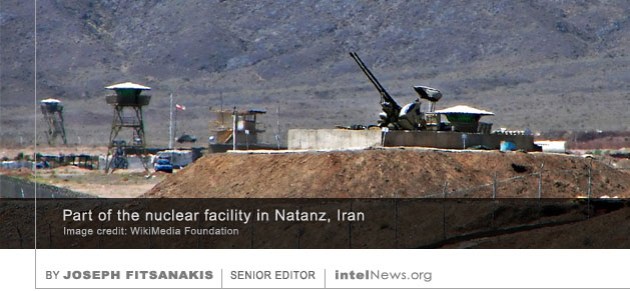
To illustrate its claim, the paper referred to the sabotage attack against Iran’s Natanz nuclear plant in April of this year, which has been widely attributed to Israel. According to the report, the Israelis gave the White House two hours’ notice of the plan, which was allegedly a deliberate attempt to prevent Washington from assessing the operation, and potentially pressuring Israel to cancel it.

American sources told The Times that the move by the Netanyahu administration had its roots in the bad blood between it and the administration of US President Barack Obama, who spearheaded the now-defunct nuclear deal with Iran. Additionally, American officials told the paper that the change of policy on intelligence-sharing by the Israeli government represented a violation of “a longstanding, unwritten agreement to at least advise the United States of covert operations” and giving Washington an opportunity to challenge specific courses of action.

But Israeli officials who spoke to the paper said that the reason why Washington was not given earlier notice about the attack on the Natanz nuclear plant was because of fears that it would be leaked. United States officials have leaked information before about pending Israeli covert operations, according to the Israelis. The report also suggested that the American and Israeli governments have tried to reset their intelligence relationship since the Natanz operation, but relations remain tense.

Author: Joseph Fitsanakis | Date: 27 August 2021 | Permalink

Revealed: Unlike other Western nations, France began Afghan evacuations in May

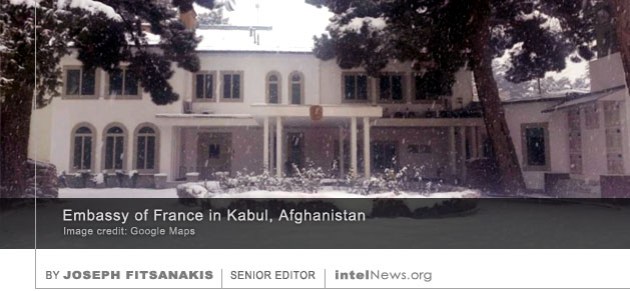
Embassy of France in Afghanistan

UNLIKE OTHER WESTERN NATIONS, which are currently scrambling to evacuate their citizens and Afghan embassy workers amidst the chaotic takeover of Afghanistan by the Taliban, France began its evacuations back in May. It was then that the French government put in motion a complex operation to evacuate Afghans who had worked for its diplomatic facilities, as well as their families. It is believed that around 600 Afghans were evacuated in May, with several dozen more evacuations following in June and July.

The French government is now being praised from all sides for its “anticipatory planning”. Back in May, however, there was far more criticism than praise. On July 5, in an interview with France’s state-owned international television outlet, France24, Etienne Gille, director of the French aid charity Amité Franco-Afghan, derided the evacuations of Afghans by the French government as “premature”, saying they would hurt the aid work on the ground. In May, a German diplomat, who spoke anonymously to France’s Monde newspaper, criticized France for its decision to evacuate Afghans, and said Germany would not leave Afghanistan, but would instead invest €400 million to fortify civil society there.

Why was the French response so different from those of other Western nations? Britain’s former ambassador to France, Lord Peter Ricketts, has offered one explanation. He told British newspaper The Telegraph that the main reason behind France’s anticipatory planning was its distance from the United States. Britain, which has “stronger ties to Washington” compared to France, relied largely on the White House’s assessments on the situation in Afghanistan. France, on the other hand, maintains a “relative distance” from the United States, and was thus able to “act quickly on its own conclusions”, Lord Peter said. He added that Paris “just got on with it without feeling the need to coordinate closely with the US”.

Speaking recently about France’s decision to move forward with evacuations in May, the country’s Foreign Affairs Minister, Jean-Yves Le Drian, said: “France does not forget those who have worked for us”. The French government is still evacuating some of its diplomats, as well as Afghans, but the bulk of the evacuations have been completed.

Author: Joseph Fitsanakis | Date: 26 August 2021 | Permalink

Taliban appoint obscure figures in senior intelligence and security positions

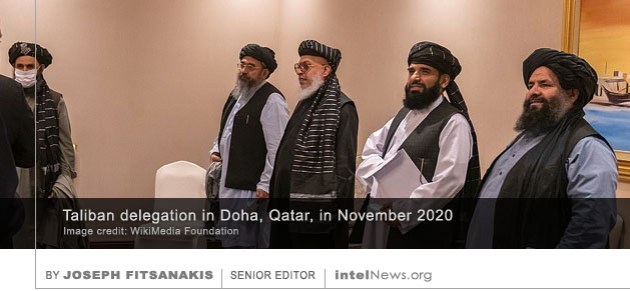
Taliban

A NUMBER OF OBSCURE figures, largely unknown to Western observers, have been appointed to senior security and intelligence positions by the Taliban, just days after their return to power in Afghanistan. Some of the names of senior officials have been made public by news agencies in the Middle East. Others were publicized on Tuesday by Pajhwok Afghan News, an independent news agency that publishes reports in Dari, Pashto and English.

Arguably the most notable of those appointed to senior positions by the Taliban is Abdul Qayyum, known as “Zakir”, He is a former senior military commander of the militant group, who has been appointed Afghanistan’s Acting Defense Minister. The American government and intelligence agencies are well acquainted with Zakir, as he was captured by United States forces in Afghanistan in 2001. He was subsequently transferred to the Guantanamo Bay detention camp, and from there to Pul-e-Charkhi prison in Kabul, from where he was released by the Afghan government in 2007, as part of a general amnesty. Upon his release, Zakir rose in the ranks of the Taliban and led its military wing until 2014.

Meanwhile on Tuesday, Pajhwok Afghan News reported that Afghanistan’s intelligence agency would be led by a Taliban commander it named as “Najibullah”. No other information about him was provided in the statement. As intelNews reported on Monday, Ahmad Zia Sraj, who headed the National Directorate of Security (NDS) under the government of Ashraf Ghani, was evacuated by Turkish special forces troops earlier this month, and is today believed to be in Ankara. Last week, the Taliban proceeded to dissolve the NDS. It is reported that most of its 30,000-strong force is now dispersed into refugee camps in India, Uzbekistan and Tajikistan.

Author: Joseph Fitsanakis | Date: 25 August 2021 | Permalink

Dozens of senior Afghan officials, including spy chief, smuggled to Turkey

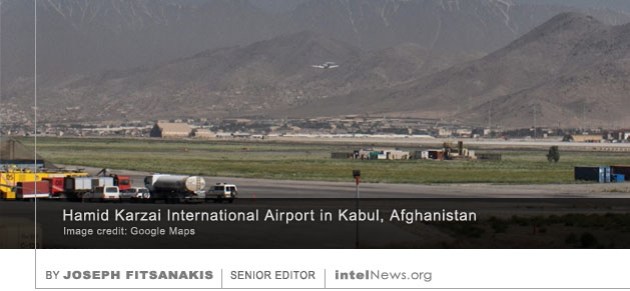
Kabul Airport Afghanistan

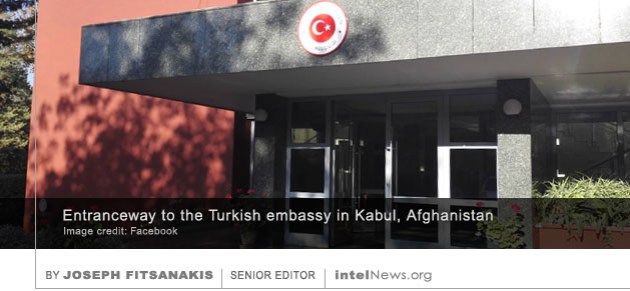
APPROXIMATELY 40 SENIOR OFFICIALS in the government of deposed Afghan President Ashraf Ghani have been secretly smuggled to Turkey in recent days. They include Afghanistan’s intelligence chief, according to reports in Turkish media. They claim that the Afghan officials were smuggled out of Taliban-controlled Afghanistan by Turkish military and intelligence operatives. The latter reportedly hid the officials among crowds of Turkish citizens who were evacuated from Kabul in recent days, as the Taliban were entering the Afghan capital.

Turkish media said the Turkish embassy in Kabul had developed evacuation plans earlier this summer, as the Taliban were conquering large swathes of territory throughout the countryside, including a number of provincial capitals. These plans were put in place for the benefit of Turkish expatriates who lived and worked in Afghanistan. However, according to reports, Turkish embassy officials also reached out to “Afghan officials, who have close ties with Turkey” and informed them of the evacuation plans.

As Taliban forces began to enter Kabul, Turkish embassy officials put the evacuation plans into action, and invited selected Afghan officials to make use of them. Within hours, a Turkish Airlines passenger plane appeared on the tarmac of the Hamid Karzai International Airport in Kabul. Due to a previously agreed-to arrangement between Ankara and Washington, some parts of the airport were being guarded by Turkish troops. These troops reportedly helped guide the evacuees onto the aircraft, while keeping at bay “a large crowd” of people seeking to leave Kabul, who “started to run towards the plane”.

The aircraft eventually left Kabul with 324 passengers on board, including around 40 senior Afghan officials. Among them were Afghanistan’s Minister of Foreign Affairs, Mohammad Hanif Atmar, the country’s Second Vice President, Sarwar Danish, as well as Ahmad Zia Sraj, who headed the National Directorate of Security (NDS). Formed in 2002, the NDS was the national intelligence and security service of Afghanistan until it was dissolved by the Taliban earlier this month. It is reported that most of its 30,000-strong force is now dispersed into refugee camps in India, Uzbekistan and Tajikistan.

Author: Joseph Fitsanakis | Date: 24 August 2021 | Permalink

UK names Russian intelligence operatives who allegedly poisoned Alexei Navalny

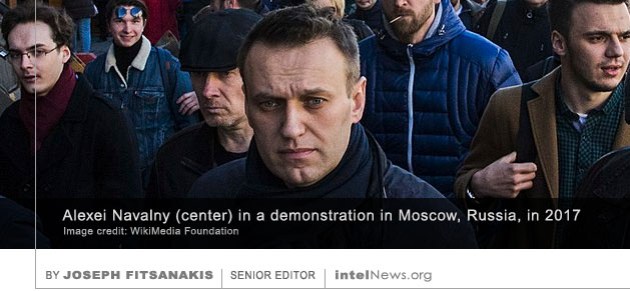
Alexei Navalny

THE BRITISH GOVERNMENT HAS announced sanctions against seven Russian intelligence operatives who, according to London, participated in the poisoning of the Russian blogger and political activist Alexei Navalny. Navalny, 45, remains in prison after being arrested last year by Russian authorities, who accused him of violating his parole. His arrest occurred as soon as he arrived in Russia from Germany. He had gone there to receive emergency treatment after he was allegedly poisoned during a domestic Russian flight that originated from Siberia.

While in Germany, Navalny was in a comatose condition for over three weeks, and then spent a further 32 days recovering in hospital. Medical examiners concluded that he was most likely poisoned with a military-grade nerve agent. Many Western biomedical experts believe that Navalny, a vocal critic of Russian President Vladimir Putin, was poisoned with a so-called Novichok substance —a technical term that describes a category of nerve agents developed by the Soviet Union during the Cold War. Novichok agents are typically designed to asphyxiate their host by paralyzing the muscles they come in contact with.

On Friday —the day that marked the first anniversary of Navalny’s alleged poisoning— the British Foreign and Commonwealth Office announced that it would impose sanctions against seven Russian citizens. They were named as: Ivan Osipov, Alexei Sedov, Vladimir Panyaev, Kirill Vasilyev, Vladimir Bogdanov, Alexey Alexandrov and Stanislav Makshakov. All are believed to be employees of the Russian Federal Security Service (FSB), which operates as the country’s primary counterterrorism and counterintelligence agency.

British authorities released a statement to explain their decision to impose the sanctions against the seven Russians. The statement notes that the seven alleged FSB officers were identified using “phone and travel records”. These suggest that they were “involved in the use of a chemical weapon in the attempted assassination of Russian opposition leader Alexey Navalny during his August 2020 visit to Siberia”, the statement said. In an accompanying statement, Britain’s Foreign Secretary, Dominic Raab, urged Moscow “to declare its full stock of Novichok nerve agents”. The Russian government has dismissed all allegations that it tried to kill Navalny.

Author: Joseph Fitsanakis | Date: 23 August 2021 | Permalink

German spy services face criticism for failing to anticipate swift Taliban victory

BND Germany

THE PRINCIPAL EXTERNAL INTELLIGENCE service of Germany, known as the Federal Intelligence Service, or BND, is facing growing criticism for allegedly failing to anticipate the swift ascendance of the Taliban in Afghanistan. Critics from every political faction have described the situation in Afghanistan as an “impending disaster” for German interests, and have questioned the BND’s effectiveness and competence.

In a statement to the Bundestag this past June, Germany’s Minister of Foreign Affairs, Heiko Maas, insisted that it was “inconceivable” that the Taliban “would, within just a few weeks, be able to seize power” in Afghanistan. In subsequent weeks, other leader members of Chancellor Angela Merkel’s cabinet echoed Maas’s statement. It now appears that, as German diplomats and intelligence officers were forced to leave hastily the Central Asian country, they left behind numerous “people employed in Germany’s interests”, analysis to the German national broadcaster, Deutsche Welle (DW).

In his according of the BND’s performance in the Afghan situation, DW journalist Marcel Fürstenau quotes former BND intelligence officer Gerhard Conrad, who claims that the spy agency lacked sources on the ground. Others, including University of London researcher Jan Koehler, tell Fürstenau that the German intelligence services failed to grasp the broader dynamics of Afghan society, which are permeated by “a lack of trust among the Afghan security forces in their own government”, and led them to surrender to the Taliban en masse.

The possibility of an official parliamentary investigation into the performance of the BND is now a strong prospect in the coming weeks, says Fürstenau. He adds that that several senior members of Chancellor Merkel’s government would have to testify behind closed doors during a probe. The soon-to-retire ‘iron lady’ of German politics may even have to testify after she leaves office, he concludes.

Author: Joseph Fitsanakis | Date: 20 August 2021 | Permalink

US spy agencies warned Kabul would fall, but did not give precise timeline, says report

US embassy in Afghanistan

ANALYSES BY UNITED STATES INTELLIGENCE agencies about the dynamics of the Taliban insurgency in Afghanistan became progressively grim over the summer, but did not provide precise timelines of the impending disaster, according to a new report. In his television address on Monday, US President Joe Biden admitted that his administration had rested on inaccurate estimates about the ability of the Taliban to overrun Afghan government defenses. Some —including many in the US intelligence community— have interpreted that statement to mean that the assessments given to the White House by the intelligence agencies were faulty or otherwise inaccurate.

On Tuesday, The New York Times reported that the intelligence community continuously revised its assessments of the Afghan civil war in the past year. Earlier this year, the consensus among intelligence agencies was allegedly that the Afghan government could potentially remain in power for as long as two years after a US military withdrawal. But that consensus had been shattered by mid-summer, according to The Times. By July, intelligence reports, led by those produced by the Central Intelligence Agency (CIA), “had grown more pessimistic” and explicitly “laid out the growing risks to Kabul”, according to the paper. These reports also warned that the Afghan government, including its intelligence and military components, would not be able to withstand an assault on the capital and other major urban centers by the Taliban.

At the same time, however, these assessments were typically “not given a high confidence judgment” or a particularly high level of certainty by the agencies, according to the report. One source told the paper that “it was often hard to get [CIA] analysts to clearly predict how quickly [a Taliban victory] would occur”. Instead, its assessments “could often be interpreted in a number of ways, including concluding that Afghanistan could fall quickly or possibly over time”.

The Times report seems to indicate that the White House rested much of its decision-making on earlier assessments by the intelligence community, which projected a less radical pace of change in Afghanistan. For instance, one report from April of this year suggested that the Taliban were at least 18 months away from being able to conquer Kabul. The article also points out the possibility that different agencies may have had differing views on the speed with which the Taliban would conquer Afghanistan, with the CIA being on the more pessimistic end of the scale.

Author: Joseph Fitsanakis | Date: 18 August 2021 | Permalink

Opinion: The Taliban’s takeover of Afghanistan was neither unexpected nor sudden

Taliban

THE COMPLETE TAKEOVER OF Afghanistan by the Taliban was “sudden” and “unexpected” only for those who have not been paying attention to the implosion of the country in recent months. There were certainly outliers, among them an assortment of Foreign Policy columnists, who, as late as July 28, were urging readers to stop “assuming the Taliban will win”. But ever since October of 2020, when United States President Donald Trump announced that American troops would leave the country (a policy that the Biden Administration eagerly adopted), the vast majority of reports about the future of Afghanistan have been unanimous: following an American military withdrawal, the Taliban would take over the entire country with little delay, and almost certainly without facing significant resistance.

This was certainly the view on the ground in Afghanistan, where desperate families have been leaving the country for many months now. The recent shocking images of Afghan men clinging on to American transport aircraft, were not the beginning of a desperate exodus from the country. Rather, these were the last groups of people who, for a variety of reasons, did not abandon the capital earlier. The impending reality of the Taliban takeover has been recognized especially by women in urban centers. They have been preparing for months for the change in the nation’s leadership, by burning their Western attire and throwing away their make-up kits.

Meanwhile, countries like Russia and the United Kingdom have been actively preparing to deal with the Taliban as the government of Afghanistan. It was nearly five weeks ago when Ben Wallace, Minister of Defense of Britain, arguably the United States’ closest international partner, announced that London was prepared to “work with the Taliban, should they come to power”. Soon afterwards, Russia’s longtime Foreign Minister, Sergei Lavrov, called the Taliban “rational actors” and warned the Afghan government that it risked losing control of the entire country by not entering into a negotiated settlement with the militants. Read more of this post

Alleged spy at British embassy in Berlin aroused suspicion by not using bank account

British embassy BerlinAn employee of the British embassy in Berlin, who was arrested last week on suspicion of spying for Russia, drew the attention of the authorities after he stopped using his bank account, according to reports. The man, who was arrested on August 10 by Germany’s Federal Criminal Police Office (BKA), has been identified in German media as David Smith, 57. His arrest is believed to have come as a result of a joint investigation by British and German authorities.

Smith is a longtime resident of Potsdam, a city located southeast of Berlin, and was married for 20 years to a woman from Ukraine, who is believed to have Russian heritage. According to some reports, however, his wife has not been living with him for some time. It has also been reported that Smith had been working for the British embassy in Berlin “for three or four years” in the period leading up to his arrest last week. It is also believed that he had previously served in the Royal Air Force and the Germany Guard Service (GGS). The latter is a joint British-German civilian volunteer force with roots in the Cold War, which provides security support to British Forces stationed in Germany.

Last week, several German news outlets said that Smith first aroused suspicions among British and German counterintelligence experts, after they noticed that he had not made use of his debit or credit cards for several months. His sudden lack of withdrawals from his bank accounts caused them to think that may have secured a cash-based source of income —possibly from a foreign intelligence agency. Citing anonymous intelligence officials, German media report that Smith passed on “low-grade information” to his Russian handlers, including lists of names of visitors to the British embassy. He was arrested, however, after British and German authorities allegedly feared that he was preparing to give Moscow more sensitive information in his possession.

Author: Joseph Fitsanakis | Date: 16 August 2021 | Permalink

CIA considers establishing stand-alone China mission center, report claims

CIA headquarters

THE UNITED STATES CENTRAL Intelligence Agency is weighing the possibility of establishing a stand-alone mission center that would focus on China, according to a new report. Traditionally, questions regarding China have fallen under the agency’s Mission Center for East Asia and Pacific, which focuses on the broader geographical region that includes China. However, according to the Bloomberg news agency, that may about to change.

Quoting “three current and former officials” with knowledge of “internal deliberations” at the CIA, Bloomberg said on Thursday that the proposal to establish a stand-alone China mission center orginages from the agency’s new director, William Burns. According to the report, Burns is looking for ways to “make it easier to secure headcount, funding and high-level attention for [the spy agency’s] China-related activities”.

A stand-alone China mission center would allow the CIA to utilize and combine diverse resources across its various directorates and units. Additionally, elevating the topic of China to a stand-alone mission would reflect the policy priorities of the administration of US President Joe Biden, said Bloomberg. The report comes less than a month after Burns said during an interview that the CIA might deploy China specialists at US government facilities around the world. This would mirror the agency’s approach to the challenge posed by Soviet Union during the Cold War.

During his Senate confirmation hearing in February of this year, Burns stated that he viewed China as the most serious threat to American national security in the near and long term. He added that China’s “adversarial [and] predatory leadership” aimed to “replace the United States as the world’s most powerful and influential nation”.

Author: Ian Allen | Date: 13 August 2021 | Permalink

Employee of British embassy in Berlin charged with spying for Russia

British embassy in BerlinAn employee of the British embassy in Berlin has been arrested by German authorities, who charged him with spying for the intelligence services of the Russian Federation, according to reports. The German newsmagazine Focus said on Wednesday that the employee is a 57-year-old British citizen. He was reportedly arrested on Tuesday by Germany’s Federal Criminal Police Office (BKA). His arrest took place in Potsdam, a city located southeast of Berlin. His arrest is believed to have come as a result of a joint investigation by British and German authorities.

There appears to be some confusion about the man’s position at the British embassy. In some reports, he is referred to as a “liaison officer”, a term that describes diplomatic personnel whose job is to exchange security-related information with the relevant authorities of the host-country. However, other reports suggest that the man is locally based in Berlin, and was working as support personnel at the British embassy, without having been granted diplomatic status. This would mean that he does not have diplomatic immunity in Germany or elsewhere.

It is also believed that BKA officers searched the man’s home and workplace. According to Focus, he has been charged with carrying out espionage activities on behalf of Russian intelligence. German prosecutors said he began working for Russian intelligence in November of 2020 at the very latest. During that time, he allegedly provided classified information to his Russian handlers on at least one occasion, in exchange for cash. Media reports suggest that the information he allegedly gave the Russians relates to counter-terrorism operations. No further information is known about the case at this stage.

Author: Joseph Fitsanakis | Date: 12 August 2021 | Permalink