December 31, 2018
by intelNews
 Since 2008, when we launched intelNews, it has been our end-of-year tradition to take a look back and highlight what we believe were the most important intelligence-related stories of the past 12 months. In anticipation of what 2019 may bring in this highly unpredictable field, we present you with our selection of the top spy stories of 2018. They are listed below in reverse order of significance. This is part three in a three-part series; part one is available here. Part two is available here.
04. China flexes its HUMINT muscle. Much has been written about China’s cyber-espionage capabilities. These are undoubtedly formidable and growing. But in 2018 Beijing also showed that it is becoming increasingly active in human intelligence —namely the use of human spies to clandestinely collect information. In January, the FBI arrested Jerry Chun Shing Lee, 53, who served in the CIA from 1994 to 2007, accusing him of having received “hundreds of thousands of dollars in cash” by China in exchange for carrying out espionage. In May, France confirmed the arrests of two French intelligence officers who are accused of spying for the Chinese government. The suspects are current and former officers in the General Directorate of External Security (DGSE), France’s primary external intelligence agency. At least one of the two suspects was reportedly stationed at the embassy of France in Beijing when French counterintelligence became aware of his alleged espionage. And in October the DGSE, along with France’s domestic security agency, the DGSI, warned of an “unprecedented threat” to security after nearly 4,000 leading French civil servants, scientists and senior executives were found to have been approached by Chinese spies using the popular social media network LinkedIn.
03. The Islamic State is quickly evolving into a clandestine organization. Earlier this month, US President Donald Trump announced that the Islamic State, also known as the Islamic State of Iraq and Syria (ISIS) had been defeated and that the he would be removing all US forces from Syria. Virtually no Western intelligence agency agrees with the view that ISIS has been defeated. In August, the US Department of Defense reported to Congress that ISIS retains over 30,000 armed fighters in Iraq and Syria. Another report by the United Nations’ Analytical Support and Sanctions Monitoring Team warned that ISIS is morphing into a “covert version” of its former self and that its organizational core remains mostly intact in both Iraq and Syria. Earlier this month, the US Pentagon warned again that ISIS is swiftly returning to its insurgent roots, as observers in Iraq and Syria cautioned that the group is witnessing a revival. What is more, recent analysis by the Pulitzer Center on Crisis Reporting says that a campaign of revenge by Iraq’s Shiite-dominated government against Sunni Arabs in regions once controlled by ISIS is aiding Islamists and fueling another pro-ISIS rebellion in the country. Overall, there are today four times as many Sunni Islamist militants in the world than on September 11, 2001, according to a study published in November by the bipartisan Center for Strategic and International Studies in Washington.
02. Nearly 150 Russian diplomats were expelled by 24 countries over Skripal poisoning. Relations between Russia and much of the West reached a new low this year, with the expulsion of nearly 150 Russian diplomats from two dozen countries around the world. The unprecedented expulsions came in response to Britain’s worldwide diplomatic effort to condemn Russia for the attempted assassination of former Russian spy Sergei Skripal in Salisbury, England, which was allegedly carried out by Russian government agents. They were publicized with a series of coordinated announcements that were issued from nearly every European capital, as well as from Washington, Ottawa and Canberra. By the early hours of March 13, the number of Russian diplomatic expulsions had reached 118 —not counting the 23 Russian “undeclared intelligence officers” that had been expelled from Britain the previous week. As intelNews explained at the time, the expulsions sent a strong political message to Moscow and did disrupt the Kremlin’s intelligence activities in the West. But they are expected to have a limited effect on Russia’s ability to carry out intelligence operations on foreign soil of the kind that allegedly targeted Skripal.
01. CIA suffered ‘catastrophic’ compromise of its spy communication system. That was alleged in a major report published by Yahoo News, which cited “conversations with eleven former US intelligence and government officials directly familiar with the matter”. The report described the compromise of an Internet-based covert platform used by the CIA to facilitate the clandestine communication between CIA case officers and their sources —known as agents or spies— around the world. It reportedly caused a “catastrophic” compromise of the system that the CIA uses to communicate with spies, which caused the death of “dozens of people around the world” according to sources. What is more, the report suggested that the CIA was warned about the potential shortcomings of its online communication system before 2009, when the first penetrations began to occur. In response to the compromise, the CIA has reportedly modified, and at times completely abandoned, its online communication system. However, the implications of the system’s compromise continue to “unwind worldwide” and the CIA is “still dealing with the fallout”, according to Yahoo News. The effects on the agency’s operational work are likely to persist for years, it said.
This is part three in a three-part series; part one is available here. Part two is available here.
► Authors: Joseph Fitsanakis and Ian Allen | Date: 31 December 2018 | Permalink
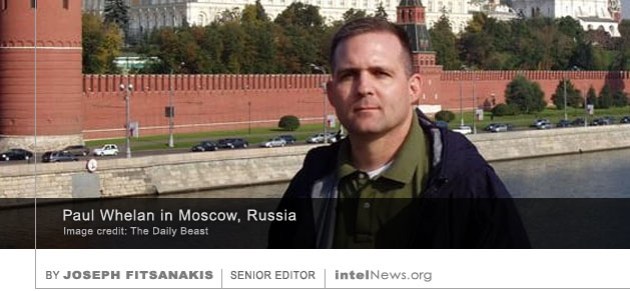 An American former Marine, who faces espionage charges in Russia, is a citizen of at least three other countries, namely Canada, Britain and the Republic of Ireland, according to reports. Paul Whelan, 48, was arrested by Russia’s Federal Security Service (FSB) on December 28 at the Metropol, a five-star hotel in downtown Moscow. News of Whelan’s arrest first emerged on January 3 in a report from Rosbalt, a Moscow-based news agency that known to be close to the Russian security services. He was reportedly indicted on Thursday and is now facing between 10 to 20 years in prison for espionage. His trial is not expected to take place until March.
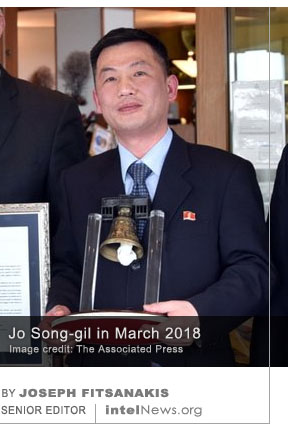 The acting ambassador of North Korea to Italy has been missing for two months and there are reports that he may be under the protection of a Western country. Jo Song-gil (pictured), 48, a career diplomat who is fluent in Italian, French and English, presented his diplomatic credentials to the Italian government in May of 2015. In October 2017, he became his country’s acting ambassador after Italian authorities expelled Ambassador Mun Jong-nam from the country. The expulsion came in response to North Korea’s nuclear test in September of that year, when Pyongyang announced the detonation of a hydrogen bomb that could be loaded onto an intercontinental ballistic missile.
 A retired general, who rose through the military’s ranks during Brazil’s 20-year dictatorship, will head the country’s intelligence agency as one of several military men in the new cabinet of President Jair Bolsonaro. Augusto Heleno, 71, was sworn in on Tuesday as head of the Institutional Security Cabinet (GSI), which advises the president on security policy and oversees Brazil’s intelligence and counterterrorism services. Heleno is one of four retired generals who are included in Bolsonaro’s 22-member
  Authorities in Colombia said that three Venezuelans, who were arrested in Colombia’s Caribbean coast with submachine guns and explosives, were planning to assassinate President Iván Duque. The claim was aired in a
  Since 2008, when we launched intelNews, it has been our
  Since 2008, when we launched intelNews, it has been our
 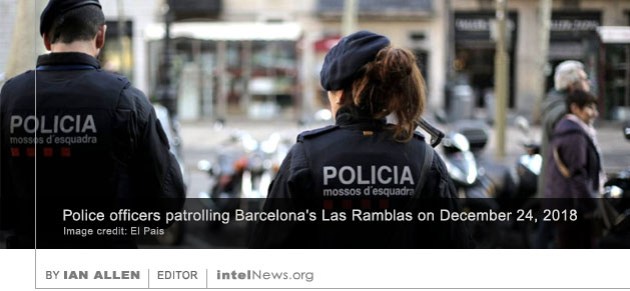 Police in Barcelona have intensified security checks in some of the Spanish city’s most recognizable landmarks, following a security warning from the United States Department of State. The surprise warning came in the form of a post on the popular social networking site Twitter on Sunday, December 23. In the
 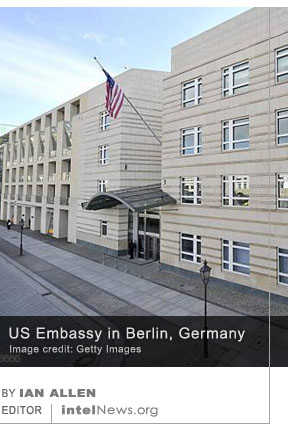 The Chinese government says it is seeking explanations from Washington after a leaked procurement database showed that American embassies purchased data forensics software and various tactical spy equipment. The purported database was
  On the heels of chaotic scenes at Britain’s Gatwick Airport, which
  The Saudi royal who is suspected by the international community of having ordered the state-sponsored murder of journalist Jamal Khashoggi is now leading a committee to reform the Kingdom’s spy services. Khashoggi, 59, was a Saudi government adviser who became critical of the Kingdom’s style of governance. He moved to the United States and began to criticize Saudi Arabia from the pages of The Washington Post. He was
 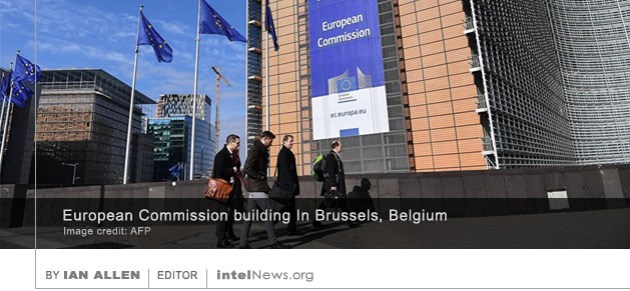 A group of hackers, allegedly working for the Chinese military, accessed thousands of classified diplomatic cables from the European Union during a protracted cyber-espionage operation, a report has revealed. Over 100 organizations are believed to have been targeted in the multi-year cyber-espionage campaign, including the United Nations, international labor groups, as well as government ministries from dozens of countries. The operation was revealed on Tuesday by Area 1, a cyber-security company founded by former officials of the United States National Security Agency, and
 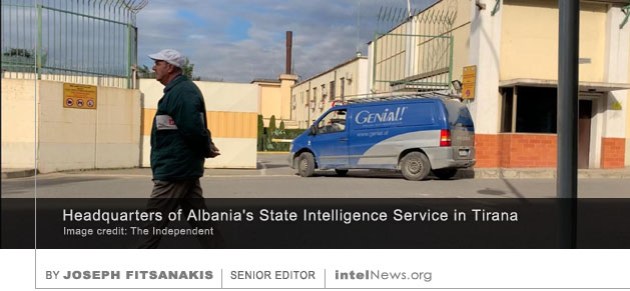 Sensitive information about the identities and activities of Albania’s intelligence operatives appeared online, apparently due to an administrative blunder. The incident has reportedly alarmed officials at the North Atlantic Treaty Organization (NATO), of which Albania has been a member since 2009. British newspaper The Independent, which reported the incident earlier this month, described it as “a dangerous breach that could have international consequences”. The paper
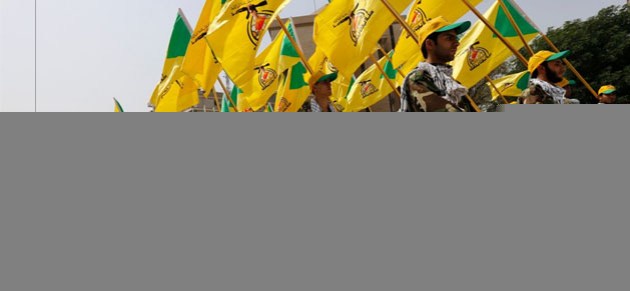
 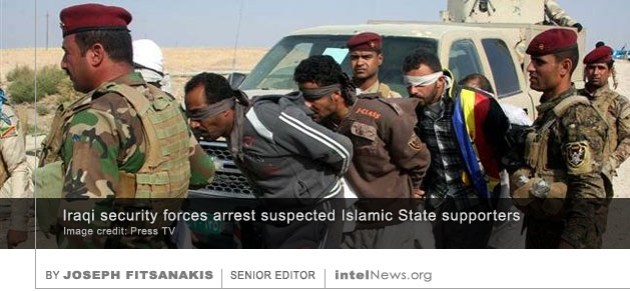 A campaign of revenge by Iraq’s Shiite-dominated government against Sunni Arabs in regions once controlled by the Islamic State is aiding Islamists and fueling another rebellion in the country, according to a new report. In 2014, the meteoric rise of the Islamic State of Iraq and Syria —ISIS, later renamed to Islamic State— was largely aided by the strong belief among Iraqi Sunnis that they were second-class citizens in a Shiite-dominated Iraq. In addition to its Sunni credentials, the Islamic State was also able to appeal to Iraqi Sunnis by portraying itself as pious, efficient and trustworthy. This image was in a sharp contrast to the widespread provincial view of politicians in Baghdad as corrupt, indifferent and ineffectual. Popular support for the Islamic State among Iraq’s Sunni Arab minority took the Iraqi government by surprise and almost enabled the militant group to conquer Baghdad in 2015.








US sent troops to OPEC member Gabon just days before military coup
January 8, 2019 by Ian Allen 2 Comments
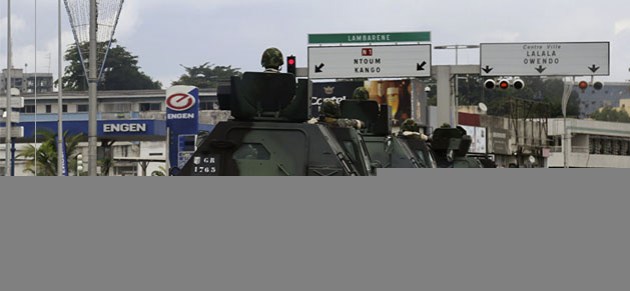
But in the early hours of Monday gun shots were reported in the vicinity of the studios of Radio Télévision Gabonaise (RTG), the country’s state-owned national broadcaster in the capital city, Libreville. A few hours later, regular broadcasting was suspended. A message was transmitted on the national radio station frequency by troops claiming to be members of a group calling itself the Patriotic Movement of the Defense and Security Forces of Gabon. Its leader, a man identifying himself as Lieutenant Kelly Ondo Obiang, said that the armed forces had “doubts” about President Bongo’s “ability to perform the responsibilities of his office”. He also announced the formation of a “Council of National Restoration” that would “ensure the smooth operation of the state and guarantee a transition to democracy”. However, a few hours later a government spokesman told international media that the coup had been defeated and that Lieutenant Obiang was under arrest. Two of his co-conspirators had been killed, said the spokesman.
Interestingly, the US deployed 80 American soldiers to Gabon on January 2, less than a week before the coup unfolded. In a letter sent to Congress on January 4, US President Donald Trump said that the troops would be stationed in Libreville and would carry with them “appropriate combat equipment”. Their purpose, said President Trump, would be to provide security protection for US “citizens, personnel and diplomatic facilities” in Kinshasa, capital of the neighboring Democratic Republic of the Congo (DRC). Security analysts fear that the pending announcement of the delayed election results in the DRC may spark widespread riots in the country of 81 million people. On Monday, a spokesman for the United States Africa Command (AFRICOM) told reporters that there was “no change in the status of our forces in Gabon” and that they would not be involved in the domestic political situation. The US troops were “not currently tasked with securing [US] diplomatic assets [in Gabon]”, added the AFRICOM spokesman. However, AFRICOM said that additional US troops may deploy to Gabon, the DRC or the Republic of the Congo, should the need arise.
It is not known whether the coup plotters were aware of the presence of the 80 US troops in Libreville when they tried to take over power on Monday.
► Author: Ian Allen | Date: 08 January 2019 | Permalink
Filed under Expert news and commentary on intelligence, espionage, spies and spying Tagged with Ali Bongo Ondimba, coup plots, DoD, Gabon, News, Patriotic Movement of the Defense and Security Forces of Gabon, United States, US DoD Africa Command