North Korea resumes Cold-War-era radio broadcasts for its spies abroad
July 20, 2016 3 Comments
 In a development that is reminiscent of the Cold War, a radio station in North Korea appears to have resumed broadcasts of encrypted messages that are typically used to give instructions to spies stationed abroad. The station in question is the Voice of Korea, known in past years as Radio Pyongyang. It is operated by the North Korean government and airs daily programming consisting of music, current affairs and instructional propaganda in various languages, including Arabic, Chinese, Spanish, French, English, and Russian. Last week however, the station interrupted its normal programming to air a series of numbers that were clearly intended to be decoded by a few select listeners abroad.
According to the South Korean public news agency, Yonhap, the coded segment was broadcast on shortwave at 12:45 a.m. on Friday, July 15. It featured a female announcer slowly reading a series of seemingly random numbers from an instruction sheet. The announcer began the segment by stating that she would “now provide a review on the topic of mathematics, as stipulated by the distance-learning university curriculum for the benefit of agents of the 27th Bureau”. She went on to read a series of numbers: “turn to page 459, number 35; page 913, number 55; page 135, number 86; page 257 number 2”, etc. This went on for approximately 12 minutes, said Yonhap.
The technique described above is informally known as ‘numbers stations’, and was extensively used by both Western and communist countries during the Cold War to send operational instructions to their intelligence personnel stationed abroad. Armed with a shortwave radio, an intelligence officer would turn to the right frequency on a pre-determined date and time, write down the numbers read out and proceed to decrypt them using a ‘number pad’, a tiny book that contained the key to deciphering the secret message aired on the radio. But the era of the Internet, mobile phones and microwave communications has caused the demise of ‘numbers stations’. The latter are rarely heard nowadays, though a number of nations, including Cuba, South Korea and Israel, are believed to still use them.
The last time North Korea is thought to have employed ‘numbers stations’ to contact its spies stationed abroad was in the spring of 2000, prior to the historic first Inter-Korean Summit that featured a face-to-face meeting of the then South Korean President Kim Dae-jung and the then North Korean Supreme Leader Kim Jong-il. Since that time, the North Koreans are believed to have stopped deploying broadcasts to communicate with their intelligence operatives in foreign countries. Yonhap quoted an unnamed South Korean government source as saying that last Friday’s broadcast was the first number sequence aired by Pyongyang in over 16 years. According to the news agency, the broadcast has Seoul worried about “possible provocations” that may be planned by North Korean spies living secretly in the south.
► Author: Joseph Fitsanakis | Date: 20 July 2016 | Permalink
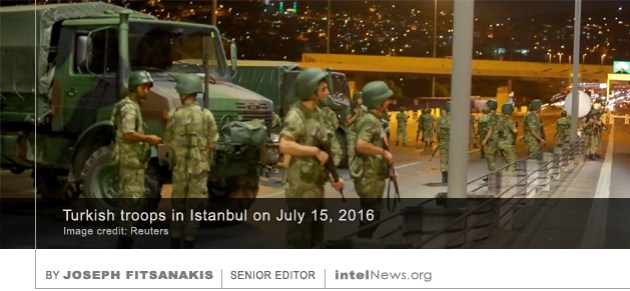 After the failure of the recent military coup d’état in Turkey, much attention has been given to the country’s armed forces, the police, even the judiciary. In contrast, little to no information has surfaced about Turkey’s intelligence establishment, which is led by MİT, the National Intelligence Organization. Did it anticipate the plot, and how did it fare as the crisis unfolded in the early hours of July 16?
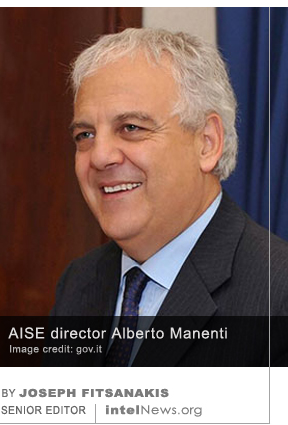 The head of Italian intelligence paid a secret visit to Syria earlier this month, a week after his Syrian counterpart visited Rome, according to reports from the Middle East. The Dubai-based newspaper Gulf News, which first reported the alleged behind-the-scenes exchange, said the visits focused on counter-terrorism cooperation between Syria and the European Union. The paper said that the initial contact was made in late June by Major General Deeb Zeitoun, head of Syria’s General Intelligence Directorate, who paid a secret visit to Rome. General Zeitoun’s visit was allegedly in response to an official invitation issued by the Italian government. The general is believed to have stayed in a secluded private villa, which was provided by the Italian External Intelligence and Security Agency, known as AISE. He subsequently met with several Italian intelligence officials, including AISE Director, General Alberto Manenti.
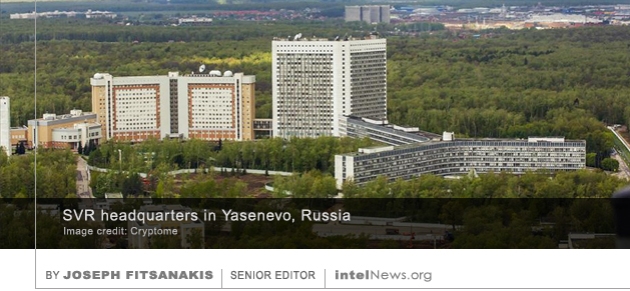 Recent satellite images reveal that the headquarters of the Russian Federation’s external intelligence agency has doubled, and possibly tripled, in size in the past nine years. The Russian Foreign Intelligence Service, known as SVR, is one of the successor agencies of the Soviet-era KGB. During the Soviet times, the present-day SVR was known as the First Chief Directorate or First Main Directorate of the KGB. Despite its name change, however, its mission remains the same, namely to collect secrets from targets outside the Russian Federation —often through the use of espionage— and to disseminate intelligence to the president. In the Soviet days, along with most of the KGB, the First Chief Directorate was headquartered in the imposing Lubyanka building, which is located in Moscow’s Meshchansky District. But in the early 1970s, the entire First Chief Directorate began a decade-long process of moving to a new, state-of-the-art complex in the southern suburbs of the Russian capital. The complex, which is located in Yasenevo, today houses the entire apparatus of the SVR, including its espionage wing, and is informally known as les (the forest) or kontora (the office).
 American Scientists’ Secrecy News blog, has
 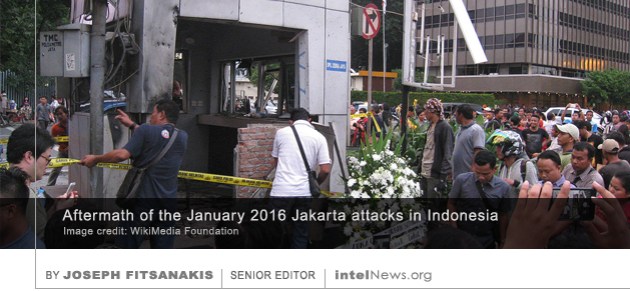 An ambitious new personnel exchange program between intelligence agencies in Australia and Indonesia aims to combat the unprecedented rise of militant Islamism in Southeast Asia, which is fueled by the Islamic State. The program, which is already underway, aims to strengthen intelligence cooperation between two traditionally adversarial regional powers.
 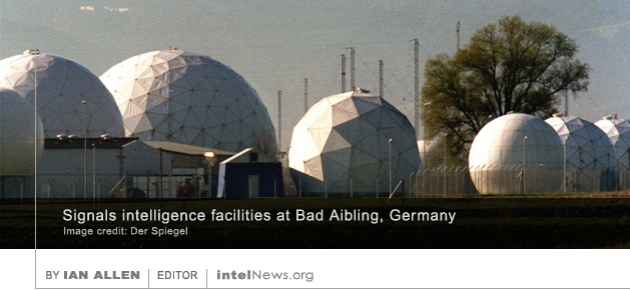 A major parliamentary inquiry into the operations of Germany’s main intelligence agency has concluded that it spied on nearly 3,500 foreign targets in recent years, most of which belonged to allied countries. The inquiry was initiated by the German government in response to a number of recent public controversies involving the Bundesnachrichtendienst, Germany’s Federal Intelligence Service, known as BND.
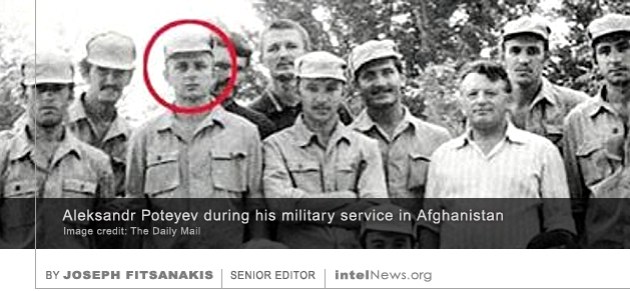 A Russian former senior intelligence officer, who reportedly defected to the United States after helping the Federal Bureau of Investigation arrest 10 Russian spies in 2010, is believed to have died. The arrests, which revealed the so-called “Russian illegals program” in the US, were part of a counterintelligence operation codenamed GHOST STORIES by the FBI. The operation culminated in June 2010 with the
 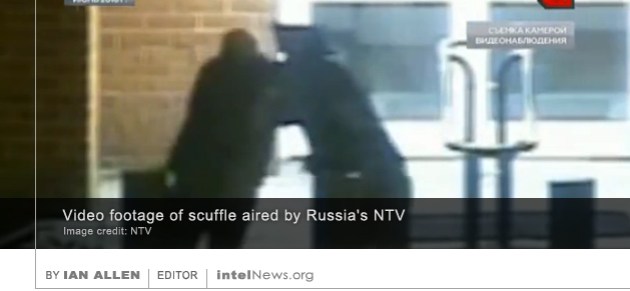 A Russian television station has aired footage allegedly showing a Russian guard stationed outside the United States embassy in Moscow trying to stop an American diplomat from entering the embassy. The Kremlin claims that the alleged US diplomat was in fact a Central Intelligence Agency officer who was returning to the embassy in disguise following a spy operation. As intelNews
 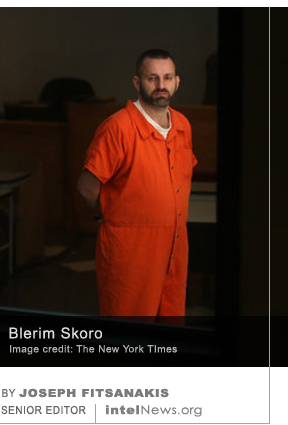 An ethnic Albanian man facing deportation from the United States says he was trained by the Central Intelligence Agency to spy on “the most ruthless, dangerous terrorists in the Balkans and the Middle East”. Blerim Skoro, 45, from the former Yugoslav Republic of Kosovo, was arrested last February in Brooklyn, New York, for illegally using a discounted student MetroCard. He was then found to have entered the US illegally and is currently in prison in New Jersey, facing possible deportation back to Kosovo. But Skoro told The New York Times in an
 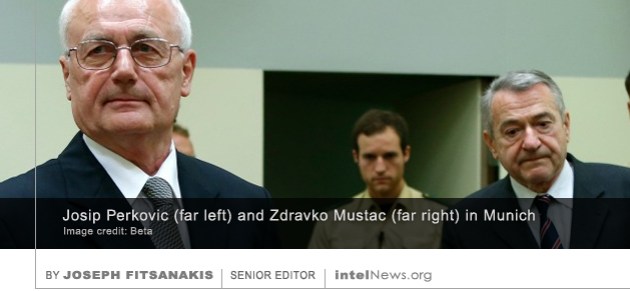 A former officer in the Cold-War-era Yugoslav intelligence service has begun testifying at a trial concerning the 1983 murder in Germany of a Yugoslav dissident by assassins sent by authorities in Belgrade. Stjepan Đureković, who was of Croatian nationality, defected from Yugoslavia to Germany in 1982, while he was director of Yugoslavia’s state-owned INA oil company. Upon his arrival in Germany, he was granted political asylum and began associating with Croatian nationalist émigré groups that were active in the country. He was killed on July 28, 1983, in Wolfratshausen, Bavaria. His killing was part of an operation codenamed DUNAV, which was conducted by the Yugoslav State Security Service, known by its Serbo-Croatian acronym, UDBA.
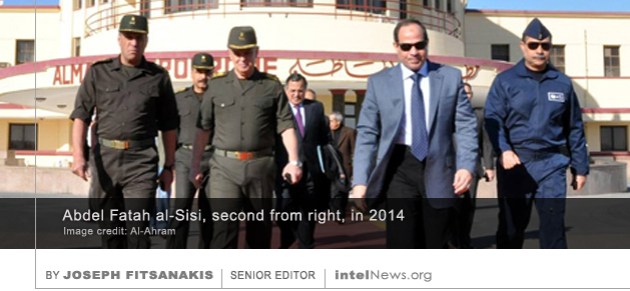 Seventeen senior Egyptian intelligence officials were summarily removed from their posts hours after the government’s human-rights monitoring body issued a damning report of violations by security agencies. The removal of the officers was
  A former senior member of the Official Irish Republican Army in the United Kingdom claims that he was abandoned by British and American spy agencies after he testified in a high-profile counterfeiting case. The case involves members of the Official IRA, including its alleged former chief of staff, who is wanted in the United States in connection with the so-called supernote counterfeit money investigation. The supernote, also known as superdollar or superbill, is a fake 100-dollar bill believed to be one of the highest-quality counterfeit banknotes ever detected. The US government believes that a nation-state is behind the production of the supernote, with North Korea being the primary suspect.
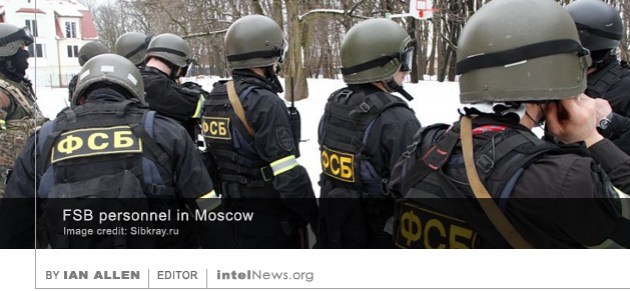 The Russian government says that an American diplomat, who was allegedly beaten up by a Russian security guard outside the United States embassy compound in Moscow, is an undercover spy. The man, who has not been named, was stationed in the Russian capital by the State Department as an accredited diplomat with immunity from prosecution in Russia. However, The Washington Post
 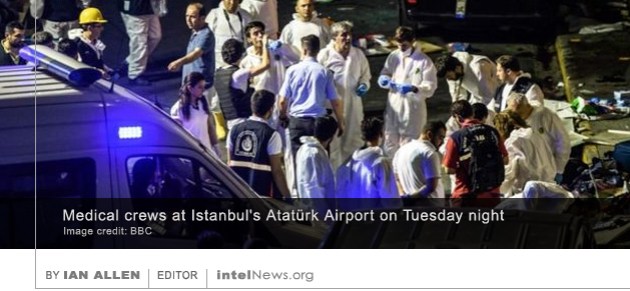 Turkish security and counterterrorism officials are blaming the Islamic State of Iraq and Syria for Tuesday’s bloody attack at Istanbul’s Atatürk airport, which left at least 41 people dead and nearly 300 injured. But will ISIS claim responsibility for the attack? And if not, why not? ISIS is indeed the






 intelNews.org
French government acknowledges it has special forces, spies, in Libya
July 21, 2016 by Joseph Fitsanakis Leave a comment
Paris has previously acknowledged the presence of French warplanes in Libya, which it says are only involved in reconnaissance operations. It is also known that France has set up a forward operating base in Niger, close to the southern Libyan border. But the French government has never before acknowledged the presence of French troops or intelligence operatives on Libyan soil. During the uprising that deposed longtime Libyan dictator Muammar Gaddafi, there were persistent rumors of daring operations by French commandos and intelligence operatives, which were never confirmed. In February of this year, French newspaper Le Monde claimed that French troops and spies were active in Libya. In a leading article titled “France’s Secret War in Libya”, the French daily said that President François Hollande had secretly authorized operations by elite special forces and officers of the DGSE, France’s General Directorate for External Security. But France’s Defense Ministry refused to comment on Le Monde’s allegations, while Laurent Fabius, who was then France’s Minister of Foreign Affairs, denied the newspaper’s claims, saying that France did not have the means to intervene militarily in Libya.
Speaking shortly after Wednesday’s disclosure by the Defense Ministry, President Hollande said the three special forces soldiers had died while “carrying out perilous intelligence operations” in Libya. In a subsequent interview on the Paris-based France Info Radio, French government spokesman Stephane Le Foll admitted that French operatives are indeed active in Libya. Asked whether the Defense Ministry’s statement offered such an acknowledgement, Le Foll responded: “French special forces are [in Libya], naturally, to offer assistance and to ensure that France has a presence wherever the struggle against international terrorism is taking place”.
► Author: Joseph Fitsanakis | Date: 21 July 2016 | Permalink
Filed under Expert news and commentary on intelligence, espionage, spies and spying Tagged with DGSE (France), France, Jean-Yves Le Drian, Libya, News, Stephane Le Foll