November 25, 2015
by Joseph Fitsanakis
 There are many unpredictable aspects of the Syrian conflict, but the downing of the Russian bomber by Turkish jets on Tuesday was not one of them. Indeed, given the simultaneous military campaigns taking place in a relatively small swath of territory by Russian, American, French, Syrian, Iranian, and other forces, it is surprising that such an incident did not happen earlier. Nevertheless, the downing of a Russian Sukhoi Su-24 by Turkish jets marked the first attack on a Russian fighter aircraft by a North Atlantic Treaty Organization (NATO) member state since 1953. Although this incident is not by itself sufficient to provoke an armed conflict between Turkey and Russia, it illustrates the main danger confronting the world in Syria: namely a conflagration between regional powers, many of which are armed with nuclear weapons.
In response to earlier incidents, Turkey had warned the Russian Air Force that it would not tolerate further violations of its air space by Russian jets conducting an air campaign in support of Syrian President Bashar al-Assad. The message delivered to the Russian ambassador in Ankara was that Turkish pilots would be ordered to open fire next time. That was precisely what happened on Tuesday, when a Turkish F-16 jet brought down a Russian bomber aircraft with a single missile strike. By most accounts, the Russian airplane was barely two miles inside Turkish airspace, presented no immediate threat to Turkey’s national security, and would probably have returned to Syrian airspace within seconds. But that did not stop the Turkish F-16 from shooting down the Russian plane. Adding injury to insult, Turkish-backed rebels on the Syrian side of the border shot dead one of the plane’s two Russian pilots and opened fire on a Russian rescue team that tried to save the crew, killing at least one marine.
Rather expectedly, a visibly furious Russian President Vladimir Putin, who is not used to being challenged militarily, described the incident as “a stab in the back” by “accomplices to terrorists”, and warned Ankara of “serious consequences”. But why would Turkey provoke Russia in such a direct way? Like every other country involved directly or indirectly in the Syrian Civil War, Turkey and Russia wish to see the Islamic State of Iraq and Syria (ISIS) 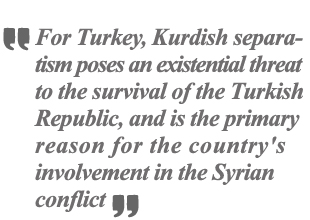 destroyed. But they differ drastically on what should follow. The Kremlin is adamant that President al-Assad, whom it considers its strongest ally in the Middle East, should remain in power. The Turks, on the other hand, view the Syrian president as an existential threat, due to his support for Kurdish militancy throughout the region.
The roots of the animosity between the Turkish state and the al-Assad regime go back to 1978, when the Kurdistan Workers Party (PKK) was established in Lebanon’s Beqaa Valley, which was at the time occupied by Syria. The PKK is a Marxist militant organization that seeks to establish a Kurdish homeland in eastern Turkey and northern Iraq. The group was actively trained, funded, armed and protected by Syria and the Soviet Union. The latter was actively interested in destabilizing Turkey, a NATO member, while Syria used the PKK to exercise pressure on its northern neighbor, with whom it was embroiled in a series of complex land- and water-rights disputes. In 1998, the al-Assad regime was forced to expel PKK leader Abdullah Öcalan, who was living in Damascus under Syrian protection, after Turkey threatened an all-out war if the Syrian intelligence services continued to shelter the PKK leadership.
Ankara saw the outbreak of the Syrian Civil War in 2011 as an opportunity to get rid of the al-Assad regime, which it sees as a primary threat to regional stability. Along with the United States, Turkey has been funding, arming and training a host of Syrian rebel groups, while at the same time hosting over 2 million refugees from Syria. The subsequent rise of ISIS alarmed America and its Western allies; but in the eyes of Ankara, ISIS pales into insignificance in comparison to the resurgence of Kurdish nationalism, which has been fueled by the demise of Ba’ath in Iraq and the fragmentation of Syria. For Turkey, Kurdish separatism poses an existential threat to the survival of the Turkish Republic, and is the primary reason for its involvement in the Syrian conflict.
It follows that Russia’s entry in the Syrian Civil War strengthens President al-Assad and the PKK, and is thus regarded by Turkey as a direct threat to its national security. Ankara is also concerned about France’s efforts to build a broad anti-ISIS alliance that includes Russia, and fears that the West is now openly flirting with the possibility of allowing al-Assad to stay in power in Damascus. The deliberate downing of the Russian airplane, which was undoubtedly authorized by the most senior levels of government in Ankara, was aimed at disrupting France’s efforts to build an anti-ISIS coalition, while at the same time pushing back against Russia’s regional ambitions.
What will happen next? Theoretically, Turkey could invoke Article 5 of the NATO charter, which would compel member-states to rush to its assistance. In reality, however, such an eventuality is remote, especially given the expressed willingness of Western leaders to help deescalate the Turkish-Russian row. Following their closed-door meeting on Tuesday, French President Francois Hollande and his American counterpart Barack Obama went out of their way to avoid mentioning the Russian plane incident, and briefly commented on it only after they were asked to do so by reporters. This does not mean that Russia will not respond; but it will most likely do so behind the scenes, probably by increasing its support for the PKK and other Kurdish separatist groups.
The downing of the Russian bomber highlights the immense contradictions and complica- tions that plague the anti-ISIS forces involved in the Syrian Civil War. It is clear that ISIS is now in a position to attack targets that are located far from its territory in Syria and Iraq, or in its wilayah (provinces) in Libya, Somalia, and elsewhere. However, the threat that ISIS currently poses to international peace and stability is at most marginal and symbolic. Of far more importance to the security of the world is the possibility of an armed conflagration between regional powers, which are being drawn into Syria by the vacuum created by the civil war. All of these regional powers, including Turkey, Russia, Iran, Saudi Arabia, Lebanon, Israel, and the US, are heavily armed, many with nuclear weapons. Moreover, they radically disagree on what a post-ISIS Middle East should look like.
The possibility of a serious conflagration between heavily armed regional actors will be removed only if and when the Syrian Civil War ends, even if that results in the loss of land to the so-called Islamic State. That must be the immediate goal of the Combined Joint Task Force and every other regional actor that wishes to see the end of ISIS. It is only after peace has been achieved in Syria that ISIS can be dealt with effectively.
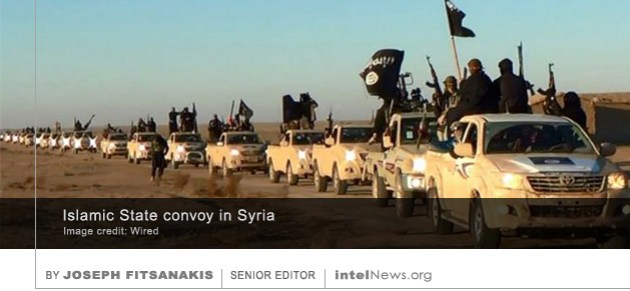 A report compiled by senior analysts in the United States Intelligence Community warns that the Islamic State will spread around the world unless it suffers significant territorial losses in Syria and Iraq. The eight-page report was commissioned by the White House and represents the combined views of analysts from the Central Intelligence Agency, the Defense Intelligence Agency, the National Security Agency, and other members of the US Intelligence Community. According to The Daily Beast, which revealed the existence of the repot on Sunday, the document is “already spurring changes” in how Washington is responding to the growth of the Islamic State. The group is also known as the Islamic State of Iraq and Syria (ISIS).
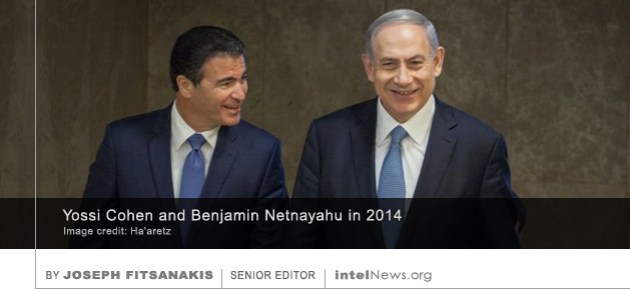 Monday brought an end to weeks of speculation in Israel, as Prime Minister Benjamin Netanyahu appointed the new director of the Mossad, the Jewish state’s national intelligence agency. At a hastily announced press conference in Jerusalem, Netanyahu
 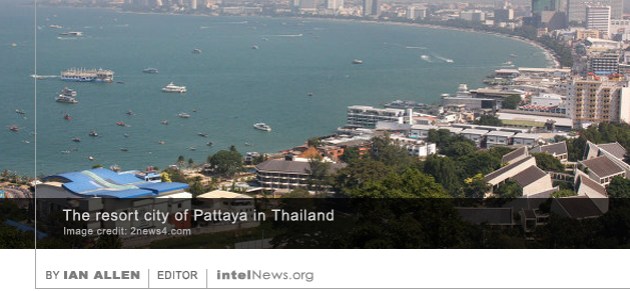 Russian intelligence officials have warned authorities in Thailand that the Islamic State is planning to strike at Russian targets in the Southeast Asian country. Thai authorities received the warning in a memorandum dated November 27, 2015, which came from the Russian Federal Security Service (FSB). The document, marked ‘urgent’, warned of a series of coordinated attacks against Russian-related businesses and facilities in several cities across Thailand. Several Thai news sites, as well as CNN in the United States,
 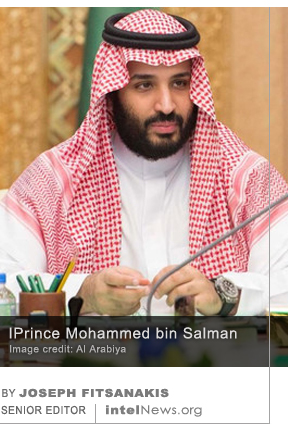 A report by Germany’s primary intelligence agency warns that internal power struggles and broader geopolitical changes are turning the Kingdom of Saudi Arabia into a major source of regional instability. The
 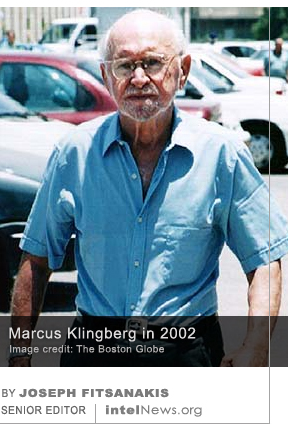 Marcus Klingberg, who is believed to be the highest-ranking Soviet spy ever caught in Israel, and whose arrest in 1983 prompted one of the largest espionage scandals in the Jewish state’s history, has died in Paris. Born Avraham Marek Klingberg in 1918, Klingberg left his native Poland following the joint German-Soviet invasion of 1939. Fearing persecution by the Germans due to his Jewish background, and being a committed communist, he joined the Soviet Red Army and served in the eastern front until 1941, when he was injured. He then received a degree in epidemiology from the Belarusian State University in Minsk, before returning to Poland at the end of World War II, where he met and married Adjia Eisman, a survivor of the Warsaw Ghetto uprising. Together they moved to Sweden, from where they emigrated to Israeli in 1948. It is believed that Klingberg was recruited by the Soviet KGB while in Sweden, and that he moved to Israel after being asked to do so by his Soviet handlers –though he himself always denied it.
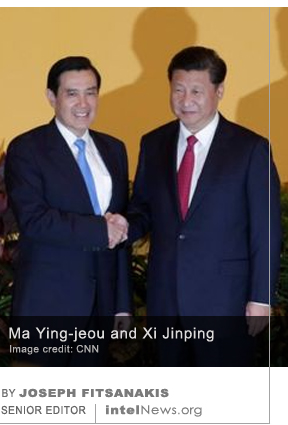 China and Taiwan reportedly swapped each other’s imprisoned spies, just days before a historic meeting between their heads of government. It was the first time in the two nations’ history that they have swapped jailed spies with each other. The exchange appears to have taken place in secret in late October, less than two weeks ahead of a historic November 7 meeting between Chinese President Xi Jinping and Taiwanese President Ma Ying-jeou. The meeting, which took place in Singapore, was hailed for its historic significance, as it was the first of its kind since 1949, when the two countries emerged following a bitter civil war between communist and nationalist forces.
 Police in Moldova says it
 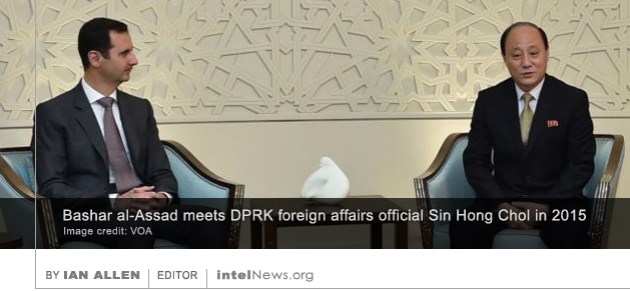 A powerful South Korean parliamentary committee has accused the North Korean government of ties to the Islamic State, an allegation that is vehemently denied by Pyongyang. On November 18, members of the Intelligence Committee of the National Assembly of Korea stated in a press conference that they believed North Korea had “possible ties to ISIS”. They were referring to the Islamic State of Iraq and Syria, which calls itself Islamic State. On Monday, North Korea’s state-run media blasted the South Korean allegations as “slander and fabrications”, and said they threatened to derail collaboration efforts between Seoul and Pyongyang.
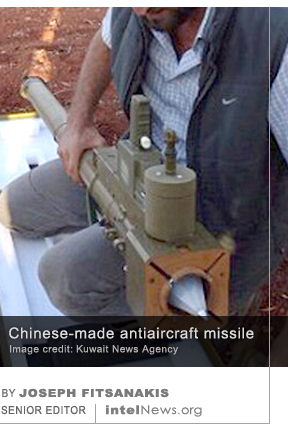 Significant amounts of Ukrainian-manufactured weapons are ending up in the hands of the Islamic State, prompting accusations that Kiev may be arming the militant group in an effort to impair its regional foe Russia. Persisting rumors that Ukraine may be secretly arming the Islamic State —also known as the Islamic State of Iraq and Syria, or ISIS— resurfaced last week, when authorities in Kuwait
  A United States Navy intelligence analyst, who has served 30 years of a life sentence for spying on America for Israel, is set to be freed on Friday. Many in US counterintelligence
 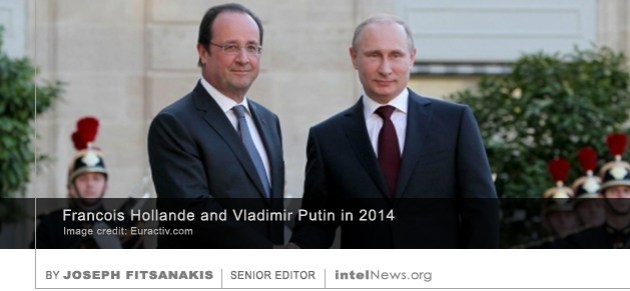 The United States and Russia, which have traditionally been cautious about sharing Middle East-related intelligence with France, have both announced that they will begin giving classified information to Paris. On Wednesday, France’s Defense Minister Jean-Yves Le Drian
 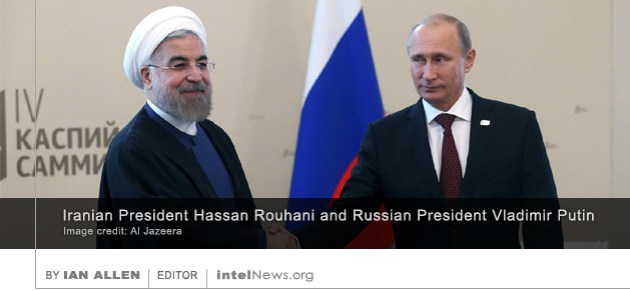 The governments of Russia and the Islamic Republic of Iran are arguably the two most important allies of Syrian President Bashar al-Assad. But the Russian-Iranian alliance over Syria is not as solid —and may not be as durable— as some believe. On Monday, Iranian news agency ISNA reported that Iran’s minister for intelligence condemned Russia’s increased military involvement in Syria and said it would weaken Iran’s security. The minister, Mahmoud Alavi,
 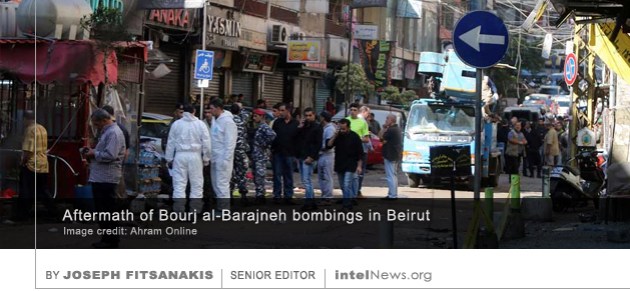 The recent attacks by Islamic State militants in Paris continue to dominate the world’s headlines. But the double suicide blasts that struck Beirut three days earlier are far more significant for the future of the Syrian Civil War. The outpouring of grief that followed the attacks of November 15 in the French capital prompted
  there, and even the Mossad, Israel’s feared spy service, rarely ventures in the Hezbollah-controlled neighborhoods.






 intelNews.org
Paris attack mastermind evaded Athens police raid in January
December 10, 2015 by Joseph Fitsanakis 9 Comments
Citing “a Belgian anti-terrorism source” the BBC said on Tuesday that Belgian and Greek authorities were aware of Abaaoud’s general whereabouts and were able to trace some of his phone calls to Islamist militants in Belgium. Eventually, a senior Belgian law enforcement official traveled to Athens to help coordinate a Greek police operation aimed at capturing Abaaoud. By that time, the Moroccan-born militant had been sentenced by a Paris court to 20 years imprisonment in absentia for his role in at least four planned attacks in France —all of which had been foiled by police. Upon capture, Greek authorities planned to extradite Abaaoud to France, where he would serve his sentence. However, the militant was able to get away, though the BBC said that the circumstances of his escape remain unclear. According to the report, an Algerian associate off Abaaoud was arrested during the operation in Athens and was extradited to Belgium.
Abaaoud was not the only Islamic State-linked militant known to have operated in Greece. The two suicide bombers who tried to enter the Stade de France in Paris on November 13 had entered the European Union through the Greek island of Leros, after crossing the Aegean by boat from Turkey. Meanwhile, another of Abaaoud’s associates, Belgian-born Frenchman Salah Abdeslam, whose current whereabouts are unknown, is believed to have traveled by ferry from Italy to Greece in August.
► Author: Joseph Fitsanakis | Date: 10 December 2015 | Permalink
Filed under Expert news and commentary on intelligence, espionage, spies and spying Tagged with Abdelhamid Abaaoud, Athens (Greece), Belgium, counterterrorism, France, Greece, Islamic State, News, Salah Abdeslam