Israel charges Swedish citizen with spying for Hezbollah

HezbollahIsraeli authorities have charged a Swedish citizen with working as an intelligence officer for the Lebanese militant group Hezbollah. It is believed that Hassan Khalil Hizran, 55, was born to Palestinian refugees in Lebanon, from where he emigrated to Sweden many years ago. But he was arrested in Tel Aviv on July 21 while disembarking a flight at Israel’s Ben Gurion International Airport and was taken into custody by the Shin Bet, Israel’s counterterrorism and counterintelligence agency. A spokesman for the agency said Hizran had confessed during interrogation to being an intelligence operative for Hezbollah, a primarily Shiite organization that controls much of Lebanon’s territory. He is said to have told his interrogators that he was recruited by the group in the summer of 2009 while visiting Lebanon from Sweden with his wife and children.
Shin Bet said that Hizran had been asked by his Hezbollah handlers to gather intelligence relating to Israeli military installations and that he visited Israel several times in order to fulfil his missions. He would then return to Lebanon after visiting a third country in order to provide his Hezbollah handlers with the information he had collected while in Israel. Sources in Tel Aviv said Hizran visited Lebanon at least twice since his 2009 recruitment, specifically in 2011 and 2013. He returned to Sweden with monetary sums given to him by Hezbollah as payment for his services, which amounted to several thousand dollars, according to Shin Bet. The Israeli security agency said the Swede was helping Hezbollah identify military targets for a future war, which it interpreted as “proof that Hezbollah is preparing for the net war with Israel by compiling a target bank”.

According to the Israelis, Hizran had also been tasked by Hezbollah with recruiting Arabs with ties to Israeli Jews, but that he was either unable or unwilling to do so. However, on Sunday he was charged with three criminal counts including contacting an agent of a foreign government and communicating sensitive information. The Swedish man’s Israeli lawyer, Leah Tsemel, denied that her client was guilty of espionage and claimed that he had “refused repeated requests to inflict harm on the national security of Israel”. The Swedish and Lebanese governments have not commented on Hizran’s arrest.

Author: Ian Allen | Date: 10 August 2015 | Permalink

CIA’s internal watchdog post remains vacant despite mounting calls to fill it

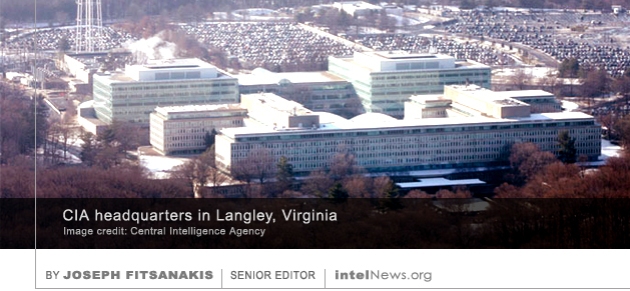
CIAThe administration of United States President Barack Obama has yet to nominate a replacement for the Central Intelligence Agency’s inspector general despite calls by Congress to quickly fill the sensitive post. The position has remained vacant since the end of January of this year, when David Buckley resigned after four years on the job. The position was created in 1989 in the aftermath of the so-called Iran-Contra affair, as part of a broader effort to institute independent oversight of the CIA. The Agency’s inspector general is tasked with, among other things, probing allegations of institutional illegality or personnel misconduct, and evaluating concerns raised by whistleblowers.

According to Michael Isikoff, chief investigative correspondent of Yahoo News, there are “mounting concerns on Capitol Hill” about the failure of the White House to nominate a replacement for Buckley, more than six months following his departure. Isikoff wrote that Senator Diane Feinstein (D-Ca), who chairs the Senate’s Select Committee on Intelligence, wrote to President Obama in June urging him to nominate a new CIA inspector general “as soon as possible”. In her letter, Feinstein expressed alarm over the delay, which could adversely affect a growing list of sensitive internal probes at the Agency. But the White House has yet to respond to Feinstein, let alone nominate a candidate for the position, said Isikoff.

Several government watchdogs and observers told Yahoo News that the situation at the CIA inspector general’s office is “hardly unique” and noted that the process for appointing inspector generals for US government agencies usually “takes too long”. Moreover, the Agency’s office of the inspector general is not headless; it is led by interim inspector general Christopher R. Sharpley, a government lawyer who worked under Buckley. However, many wonder whether the delay stems from the President’s inability to find an individual with a reputation for impartiality and the determination to handle one of the US Intelligence Community’s most challenging posts.

Author: Joseph Fitsanakis | Date: 06 August 2015 | Permalink

Gaddafi’s spy chief could be executed before revealing Libya’s terror past

Abdullah al-SenussiA group of American, British and Irish citizens are pressuring their respective governments to prevent the impending execution of Libya’s former intelligence strongman. Abdullah al-Senussi, 65, led Libya’s intelligence services during the regime of the country’s late dictator Muammar al-Gaddafi. Last week, however, he was sentenced to death by a court in Tripoli for his role in “inciting genocide” during the 2011 civil war that toppled Gaddafi’s regime. American, British and Irish officials are being urged to intervene to stop Senussi’s execution, so that he can help shed light on Libya’s role in international terrorist plots in the 1980s and 1990s.

Senussi rose rapidly through the ranks of Gaddafi’s regime in the 1970s after marrying the Libyan leader’s sister-in-law. Eventually, he became one of Gaddafi’s most trusted aides, escorting him on most international trips and seeing to the medical needs of the dictator. Throughout that time he is believed to have led at various times Libya’s internal security agency, its external spy organization, and the country’s military intelligence agency. It is unclear however, whether he actually held any official posts in the Libyan government, especially after 1977, when Gaddafi abolished official titles and declared that his country was a Jamahiriya —a “state of the masses” not ruled by officials, but by “revolutionary” popular councils and communes.

During Senussi’s reign, especially in the 1980s, Libya deepened its connections with militant groups in Africa, the Middle East and Europe, prompting some European and American officials to describe him as “the world’s most wanted man”. On Tuesday of last month, Senussi was among nine former Gaddafi aides and officials to be sentenced to death by a court in the Libyan capital. They include one of Gaddafi’s sons, Seif al-Islam al-Gaddafi, as well as the late Libyan dictator’s Prime Minister, Baghdadi al-Mahmoudi. Ironically, the sentence imposed on Gaddafi’s son cannot be implemented, as he is being kept prisoner by a militia in western Libya, which has refused to surrender him to the central government in Tripoli since 2011. Senussi however, is being held in Tripoli, having been captured at the Nouakchott International Airport in Mauritanian in March 2012 in what is believed to have been a successful French-led intelligence operation.

Critics of Libya’s past dealings with terrorist groups believe that the jailed former spy director is aware of crucial details relating to the bombing of Pan Am flight 103 over Lockerbie, Scotland, which killed 270 people in 1988. He is also thought to possess information relating to Libya’s support for the Provisional Irish Republican Army. The militant group is said to have received training, weapons and cash from the Libyan government in the 1980s and 1990s. Victims of IRA operations and their families have continued to pressure London to intervene to prevent Senussi’s execution since his extradition to Libya from Mauritania in 2013. The Libyan government has said that it intends to execute Senussi in September.

Is brother of China’s ex-chief of staff seeking to defect to the US?

Ling WanchengA well-connected Chinese businessman, described by officials as potentially one of the most damaging defectors in the history of modern China, is reputed to have requested political asylum in the United States. Ling Wancheng, 54, is the multimillionaire brother of Ling Jihua, a close aide of China’s former premier, Hu Jintao, who rose through the ranks of the Communist Party of China to eventually lead its Central Committee’s General Office. With the help of his brother’s connections and political influence, Ling Wancheng transformed himself from a journalist to an entrepreneur in the early 2000s. Soon after receiving his graduate degree in business administration, he founded an investment firm and joined China’s nouveau riche elite. His wealth, which is estimated to be in the hundreds of millions of dollars, coupled with his older brother’s senior position within the Communist Party, made him one of China’s most politically connected entrepreneurs.

However, the Ling family’s fortunes turned dramatically for the worse in March of 2012, when Ling Jihua’s 23-year-old son was killed in a Beijing street while driving a Ferrari after a night of wild partying. Two half-naked women, who were also riding in the car, were seriously injured; one later died of her wounds. The circumstances of the crash, as well as Ling Jihua’s failed efforts to cover it up, were seen as symbolic of a spoiled generation of government officials, whose corrupt practices have isolated the Communist Party from the Chinese populace. Soon afterwards, the new administration of President Xi Jinping initiated a massive anti-corruption campaign as a means of restoring the reputation of the Communist Party. Ling was immediately demoted, cut off from the top echelons of the Chinese government, and in 2014 there were rumors that he would soon be facing a corruption investigation. In July of this year, it was officially announced that Ling had been expelled from the Communist Party and that he would be facing trial on charges of accepting bribes.

The announcement of Ling’s trial stated that he was accused of “accepting certain bribes for himself and on behalf of his family”. But no charges were filed against Ling Wancheng, and there were rumors that he was being pressured by Communist Party officials to testify against his brother. But it appears that the multimillionaire businessman, who owns several properties in the US, was able to flee China and is now in an undisclosed location on US soil. The New York Times, who tried to locate Ling earlier this week, spoke to unnamed American officials, who confirmed that he had indeed fled China and was in the US. The officials refused to confirm that Ling had applied for asylum. But they said that, if he did defect to America, Ling “could become one of the most damaging defectors in the history of the People’s Republic”, due to his political connections.

The Times added that Beijing had contacted the White House requesting that Ling be extradited to China. But the administration of US President Barack Obama appears unwilling to satisfy the Chinese government’s request, given that Chinese hackers are believed to be responsible for the recent theft of up to 24 million American government workers’ personal data.

Author: Joseph Fitsanakis | Date: 04 August 2015 | Permalink

No signs of ISIS decline despite Western efforts, say US spy agencies

ISIS forces in RamadiInternal reports by American intelligence agencies say that the Islamic State remains strong in Iraq and Syria, and that the group has been able to effortlessly replace its 10,000 fighters who have been killed in the past year. Despite the over $1 billion spent in the war against it by the Syrian and Iraqi governments, as well as by the West, the militant group is “fundamentally no weaker” than it was a year ago, when the United States began a bombing campaign targeting Islamic State strongholds, according to the reports. The Associated Press, which published a summary of the assessment, said that it represents the views of the Central Intelligence Agency, the Defense Intelligence Agency and other members of the US Intelligence Community. Citing anonymous US officials, the news agency said that the overall assessment of the situation could be described as a “strategic stalemate”.

If the leaked assessment is accurate, it would directly contradict the views expressed recently by retired US Marine Corps General John Allen, who is serving as Special Presidential Envoy for the Global Coalition to Counter ISIS. Speaking last week at the annual Aspen Security Forum in Colorado, General Allen argued that the Islamic State (known also as the Islamic State in Iraq and Syria, or ISIS) was “losing”. He added that “we have seen some significant progress” in the war against the group and said he believed that its “momentum has been checked strategically, operationally and, by and large, tactically”.

 But according to the Associated Press, US defense officials have seen “no meaningful degradation” in the numbers of ISIS fighters. They put the group’s current strength at between 20,000 and 30,000 uniformed troops, a number that is practically identical to that of August 2014, when the administration of US President Barack Obama initiated an air bombing campaign against ISIS targets. The intelligence assessments suggest that, not only is ISIS able to replenish its fighter ranks with new recruits from around the world, but that the group’s finances have not been significantly affected by the US air campaign. American fighter jets have repeatedly attacked ISIS-controlled oil installations in recent months; but the group has been able to rebuild its oil-drilling and -refining capacities, and continues to earn over $40 million a month from the sale of oil.

The reports go on to state that, based on current trends, it could take more than a decade before ISIS became weak enough to justify expectations that it could retreat from its strongholds in Iraq and Syria.

Author: Joseph Fitsanakis | Date: 03 August 2015 | Permalink

Memos may relate to secret NSA deal with leading cryptography vendor

William FriedmanIn 2007 I wrote in my “National Security Agency: The Historiography of Concealment” that America’s leading signals intelligence agency had made a secret deal with Crypto AG, a Swiss-based manufacturer of cryptographical equipment. The agreement, which lasted for much of the Cold War, allegedly allowed the NSA to read the classified messages of dozens of nations that purchased encoding equipment from Crypto AG. As I expected, the claim drew criticism from individuals connected with Crypto AG, including company scientists, who argued that the Swiss manufacturer would never have agreed to a deal that undermined its professional reputation as a trusted and neutral vendor of cryptological devices. Now, however, the BBC has revealed two recently declassified NSA memos that appear to provide further proof of the deal.

My 2007 claim was based on a string of well documented allegations that surfaced in the early 1980s. While conducting research for his seminal book The Puzzle Palace, historian James Bamford came across references to Project BORIS, which involved a pact between the NSA and the Swiss company. To be precise, the deal appeared to have been struck between the Swiss inventor and Crypto AG founder Boris Hagelin and William F. Friedman, an American cryptologist who led the Armed Forces Security Agency, a forerunner of the NSA. The two men were united by a deep personal friendship, which was forged during World War II by their mutual hatred of Nazism.

Bamford’s claim was echoed in 1996 by Scott Shane and Tom Bowman, reporters for The Baltimore Sun. In a six-part investigative series about the NSA, the two journalists wrote that Friedman visited Hagelin during a trip to Switzerland in 1955 and asked for his help so that American could dominate its Cold War rivals. According to Shane and Bowman, Hagelin agreed and built a type of cryptological backdoor in Crypto AG’s devices, which allowed the NSA to read millions of messages for many decades. The company, of course, reacted furiously, saying that claims of a secret deal were “pure invention”.

On Thursday, however, BBC security correspondent Gordon Corera confirmed that a BBC investigation of 55,000 pages of documents, which were declassified by the NSA in April, claim to have found proof of the secret agreement. The declassified material, said Corera, contains two versions of the same NSA memorandum, as well as an earlier draft, which refer to a “gentleman’s agreement” between Friedman and Hagelin. Under the agreement, Crypto AG would inform the NSA about periodical changes to the technical specifications of its encoding machines. The company would also provide the American spy agency with detailed lists showing the precise models purchased by various national governments around the world. Furthermore, Crypto AG agreed not to sell the more advanced, customizable models of its equipment to countries viewed by Washington as directly adversarial. This, says the BBC, amounted to Crypto AG deceiving some of its customers, by offering them “watered-down versions” of its encoding devices.

Corera notes that there is no evidence in the memos that Crypto AG built any kind of back door in its devices for use by the NSA. Instead, by providing the American agency with detailed operational knowledge of the devices, it enabled American codebreakers to reduce the time and effort needed to break encoded messages intercepted by the NSA.

There are a couple of minor errors in Corera’s article. For instance, the “father of American code-breaking” is not Friedman, as he claims, but Herbert Yardley, who led the so-called Black Chamber (also known as the Cipher Bureau) in 1919, long before Friedman was in the picture. Additionally, he fails to mention Bowman’s contribution to Shane’s Baltimore Sun article, which was published in 1996, not 1995, as he writes. These minor errors aside, however, the BBC discovery is absolutely crucial for our understanding of cryptological history in the Cold War.

Author: Joseph Fitsanakis | Date: 31 July 2015 | Permalink

US Congressional review considers impact of federal database hack

Office of Personnel Management 2A United States Congressional review into last month’s cyber theft of millions of government personnel records has concluded that its impact will go far “beyond mere theft of classified information”. Up to 21 million individual files were stolen in June, when hackers broke into the computer system of the Office of Personnel Management (OPM). Part of OPM’s job is to handle applications for security clearances for all agencies of the US federal government. Consequently, the breach gave the unidentified hackers access to the names and sensitive personal records of millions of Americans —including intelligence officers— who have filed applications for security clearances.

So far, however, there is no concrete proof in the public domain that the hack was perpetrated by agents of a foreign government for the purpose of espionage. Although there are strong suspicions in favor of the espionage theory, there are still some who believe that the cyber theft could have been the financially motivated work of a sophisticated criminal ring. But a new report produced by the Congressional Research Service, which is the research wing of the US Congress, seems to be favoring the view that “the OPM data were taken for espionage rather than for criminal purposes”. The report was completed on July 17 and circulated on a restricted basis. But it was acquired by the Secrecy News blog of the Federation of American Scientists, which published it on Tuesday.

The 10-page document points out that strictly financial reasons, such as identity theft or credit card fraud, cannot be ruled out as possible motivations of the massive data breach. But it points out that the stolen data have yet to appear in so-called “darknet” websites that are used by the criminal underworld to buy and sell such information. This is highly unusual, particularly when one considers the massive size of the data theft, which involves millions of Americans’ credit card and Social Security numbers. Experts doubt, therefore, that the OPM data “will ever appear for sale in the online black market”. This inevitably leads to the conclusion that the breach falls “in the category of intelligence-gathering, rather than commercial espionage”, according to the report.

The above conclusion could have far-reaching consequences, says the report. One such possible consequence is that high-resolution fingerprints that were contained in the OPM database could be used to blow the covers of American case officers posing as diplomats, and even deep-cover intelligence operatives working secretly abroad. Furthermore, the hackers that are in possession of the stolen files could use them to create high-quality forged documents, or even publish them in efforts to cause embarrassment to American intelligence agencies.

Author: Ian Allen | Date: 30 July 2015 | Permalink: https://intelnews.org/2015/07/30/01-1746/

Will Israeli spy Pollard receive secret spy wages after US lets him go?

Jonathan PollardLawyers for Jonathan Pollard, an American with Israeli citizenship who spied on the United States for Israel in the 1980s, confirmed on Tuesday that he will be released in November, by which time he will have served 30 years of a life sentence. The news was welcomed by Pollard’s supporters in Israel, who consider him a hero, as well as by pro-Israel Americans, who have been pressuring the US government to release him. But Newsweek’s veteran intelligence correspondent Jeff Stein responded to the news of Pollard’s release by posing an interesting question: when Pollard is released, will he have access to close to $1 million in spy wages that his Israeli handlers are reputed to have deposited for him in a Swiss bank account?

Stein was referring to a practice that is common among intelligence agencies, namely to deposit cash in offshore bank accounts as a way of compensating their assets. The latter can gradually access those funds during trips abroad, usually after their retirement, long after having ceased their espionage activities. If the asset is arrested or perishes, the funds are usually passed on to the asset’s surviving relatives. This method protects the asset from the prying eyes of counterintelligence agencies in the asset’s home country, and sends a message to future recruits that assets and their families will be taken care of by their handlers.

Following Pollard’s arrest in 1985, US government prosecutors repeatedly rejected the view, put forward by Pollard’s legal team, that the former US Navy analyst was a romantic who had spied on the US for Israel because he wanted to assist a small country surrounded by enemies. They told the court that Pollard had also spied for South Africa and had tried to spy for Australia, before finally settling for working for Israel. Far from being a romantic, they said, Pollard was a calculated businessman, who sought financial compensation for his services to the Jewish state. Indeed, according to the Naval Criminal Investigative Service and the Federal Bureau of Investigation, Pollard had pocketed at least $50,000 from his Israeli handers by the time of his arrest, in addition to receiving several expensive items as gifts. The spy had also been promised that Israel would deposit $30,000 every year in a Swiss bank account, which Pollard could access after his retirement.

In his article published Tuesday, Stein wonders whether Israel has continued to deposit $30,000 a year in Pollard’s reputed Swiss bank account, which is a standard practice for intelligence agencies. If the answer is yes, then the amount available today would be in the neighborhood of $1 million. If Pollard moves to Israel come November, as many believe he will, will he then have access to the money he earned by spying on the US government as an unregistered agent of a foreign power? And if so, how should this be expected to affect the already rocky relations between Washington and Tel Aviv?

Stein said he spoke to Pollard’s New York lawyer, Eliot Lauer, who called the rumors of a secret Swiss bank account “poppycock” and added that Pollard had been “secured employment and housing […] in the New York area”. Additionally, there are some who speculate that Pollard may not be allowed to leave the US as part of the conditions of his parole. At this stage, however, nobody knows for sure. Stein contacted the US Parole Commission, NCIS and the Central Intelligence Agency, but all declined comment.

Author: Joseph Fitsanakis | Date: 29 July 2015 | Permalink: https://intelnews.org/2015/07/29/01-1745/

Germany and Holland investigated Russian physicist for espionage

Eindhoven University of TechnologyThe German and Dutch governments allegedly joined forces to investigate a Russian supercomputer specialist, who studied in Germany and Holland, suspecting him of passing technical information to Russian intelligence. German weekly newsmagazine Der Spiegel, which published the report in its current issue, identified the physicist only as “Ivan A.” and said that the 28-year-old man was a member of a physics laboratory affiliated with the Max Planck Institute in the western German city of Bonn. According to Spiegel, Ivan A. studied in Bonn between 2009 and 2011, conducting research on quantum physics and nanophotonics, an area of study that examines the behavior of light on the nanometer scale. Much of the research in this specialized field relates to supercomputers and cutting-edge quantum computing applications.

Citing unnamed government sources, Spiegel said that Germany’s Office for the Protection of the Constitution, which is the country’s top counterintelligence agency, started to monitor the scientist once he began meeting regularly with a Russian diplomat. The diplomat, who was stationed at the consulate of the Russian Federation in Bonn, had been identified by German intelligence as a member of the Russian secret services. German counterintelligence officials thus began suspecting Ivan A. of channeling restricted technical information to Moscow via the Russian diplomat.

However, in 2013 Ivan A. relocated to the Dutch city of Eindhoven to study at the Eindhoven University of Technology, at which point German counterintelligence officers reached out to their Dutch colleagues. During one of his trips from Germany to Holland, Ivan A. was detained for several hours along with this wife at the Düsseldorf International Airport. He was questioned and his personal electronic devices were confiscated. Upon his release Germany and Holland jointly launched against him a formal investigation for espionage. Eventually his European Union residence visa was cancelled and he was expelled by the Dutch government as a danger to national security. Der Spiegel said Ivan A. returned to Russia and today denies that he was a spy.

Espionage scandals frequently rock German-Russian relations. In 2013, a German court convicted a married couple, Andreas and Heidrun Anschlag, of having spied for the Soviet Union and Russia since at least 1990. The two had used forged Austrian passports to enter West Germany from Mexico in 1988 and 1990.

Author: Joseph Fitsanakis | Date: 28 July 2015 | Permalink: https://intelnews.org/2015/07/28/01-1744/

US spy for Israel ‘may be released’ as part of Iran nuclear deal

Jonathan PollardA United States Navy intelligence analyst, who is serving a life sentence for spying on America for Israel, may soon be set free in an effort by Washington to quieten Israeli criticism of a recently struck international agreement on Iran’s nuclear program. Many in US counterintelligence consider Pollard, who acquired Israeli citizenship in 1995, one of the most damaging double spies in American history. But he is widely viewed as a hero in Israel, and many Israelis, as well as pro-Israel Americans, have been pressuring the US administration of President Barack Obama to release him. He has so far served nearly 30 years of his life sentence.

The Wall Street Journal published an article on Friday suggesting that the Obama administration was “preparing to release” Pollard. Citing unnamed US officials, the paper said Washington hoped that the move would “smooth [America’s] relations with Israel in the wake of the Iran nuclear deal”. The latter was signed earlier this month between Tehran and the so-called P5+1 nations, namely the five permanent members of the United Nations Security Council plus Germany. The New York Times added to the speculation on Saturday with a detailed front-page article, which confirmed that “some in Washington appear to be highlighting” Pollard’s upcoming 30-year parole hearing, which is set to take place in November. It added that the White House was contemplating using Pollard’s release to appease, not only Tel Aviv, but also pro-Israel supporters in Congress, many of whom have campaigned for years in favor of Pollard’s release.

But the paper also cautioned that linking a possible release of the jailed American spy with the Iranian nuclear deal was risky and could in fact provoke a serious backlash. It quoted Israeli and American analysts who said that, although Israel was in the past prepared to accept Pollard’s release in exchange for minor concessions in its conflict with the Palestinians, the coalition government of Israeli Prime Minister Benjamin Netanyahu considers the nuclear agreement with Iran to be “too serious a threat” to concede to, no matter what the trade-off is from Washington. Some Israeli commentators used strong words to describe Washington’s alleged plan to release Pollard as a way of appeasing Israel, describing it as “cynical, cheap and misguided”.

The Times said it contacted the US National Security Council on Friday and was told by a spokesman that there was “absolutely zero linkage between Mr. Pollard’s status and foreign policy considerations”.

Author: Joseph Fitsanakis | Date: 27 July 2015 | Permalink: https://intelnews.org/2015/07/27/01-1743/

Did US DEA forces pose as Mexican troops to capture drug kingpin?

Joaquín ‘El Chapo’ GuzmánThe notorious drug lord Joaquín ‘El Chapo’ Guzmán captured the attention of the world’s media a few weeks ago, when he escaped from a maximum security prison in Mexico through a secret tunnel. But his cinematic prison breakout may have overshadowed the story of his arrest, which, according to recent reports, may be as interesting as that of his latest escape from prison.

Guzmán was arrested in a pre-dawn raid on February 22, 2014. He was reportedly captured in Mazatlán, a resort town in Mexico’s west-coast state of Sinaloa, by an elite squad of Mexican marines. The marines, we were told at the time, were receiving crucial intelligence support from a several United States government agencies. Or at least that is the official story of the drug kingpin’s arrest. On July 18, however, Mexico’s leading investigative newsmagazine, Proceso, published a lead article alleging that Guzmán was not arrested by Mexican marines, but by American operatives disguised as Mexican marines.

The article was written by J. Jesús Esquivel, a longtime reporter on intelligence and security affairs, who has authored two books on the history of operations conducted by the Drug Enforcement Administration (DEA), the Central Intelligence Agency (CIA) and other American security and intelligence agencies in Mexico. In his July 18 article, Esquivel says he was told by two American officials —who he does not name— that Mexican marines had little to do with Guzmán’s capture. The drug lord was tracked down by the US Marshals Service and the DEA through a web of informants and electronic tracking devices. Once they knew they had him, he two agencies, supported by a third American agency, which Esquivel does not identify, raided Guzmán’s hotel suite in Mazatlán, dressed in Mexican marine uniforms and driving vehicles bearing Mexican navy insignia.

The Intercept, which covered Proceso’s story on Thursday, correctly stated that, if the newsmagazine’s allegations are true, they would not mark the first time that American government agents posing as Mexican troops have conducted counternarcotics operations in Mexico. The practice has been revealed before, most recently by The Wall Street Journal. But, if true, Proceso’s allegations would seem to indicate an unprecedented degree of operational activity by US intelligence and security agencies south of the border. Additionally, it is alleged that the American agencies deliberately chose to keep their Mexican counterparts in the dark until after Guzmán had been captured, because they feared that the drug kingpin would be notified by informants inside the Mexican government. If this information is accurate, it would indicate that the line separating the Mexican drug cartels from the country’s government remains markedly blurry.

Author: Ian Allen | Date: 24 July 2015 | Permalink: https://intelnews.org/2015/07/24/01-1742/

CIA using Macau casinos to recruit Chinese officials, says report

Sands casino in Macau ChinaOfficials in China think that United States spy agencies are using casinos in Macau to entrap Chinese government employees, according to a report produced on behalf of an American-owned casino chain in the former Portuguese colony. The report was produced by a private investigator and was commissioned by Sands China, the Macau branch of a casino venture owned by American gambling magnate Sheldon Adelson. Its goal was to investigate why the Chinese-appointed authorities in Macau were hostile to the gambling industry in general and Sands China in particular.

The report is dated June 25, 2010, and includes a warning that it should not be shared with Chinese officials in Macau or in mainland China. It cites several unnamed officials in China’s Liaison Office, which governs Macau and Hong Kong, as well as sources in China’s Ministry of Foreign Affairs, and Chinese businessmen with close ties to the government in Beijing. It suggests that Beijing is weary of the damage caused to its public image by thousands of its employees gambling away an estimated $2 billion each year in Macau. Additionally, says the report, the central government in Beijing is hostile to the foreign-owned gambling industry in Macau because it believes that it collaborates with Western intelligence agencies. Sands China establishments in Macau, in particular, are believed by the Chinese government to be recruiting grounds for the United States Central Intelligence Agency, says the 2010 report.

Citing “well-placed sources” in the Chinese capital, the report suggests that the fear of espionage is “the primary subject” that causes Beijing’s hostility toward Sands China. It notes that “many of the [Chinese] officials we contacted were of the view that US intelligence agencies […] have penetrated and utilized the casinos [in Macau] to support their operations”. It adds that Chinese counterintelligence agencies have “evidence” that CIA operatives “monitor mainland government officials” who visit Macau to gamble, paying particular attention to those losing large amounts of money, or those visiting Macau without the knowledge of their superiors. They then “lure and entrap” them, forcing them “to cooperate with US government interests”.

The report was uncovered by the Investigative Reporting Program of the University of California Berkeley’s Graduate School of Journalism and published on Wednesday in British broadsheet The Guardian. The paper said the report was among a set of documents filed with a court in Las Vegas, where the former head of Sands’ Macau casinos is suing the company for wrongful dismissal. The Guardian contacted the Sands Company, which rejected the contents of the report as “a collection of meaningless speculation”. Its senior vice president for global communications and corporate affairs, Ron Reese, also dismissed the report as “an idea for a movie script”.

Author: Joseph Fitsanakis | Date: 23 July 2015 | Permalink: https://intelnews.org/2015/07/23/01-1741/

French prosecutors urge end to Yasser Arafat poisoning inquiry

Arafat funeralA government prosecutor in France has urged that a probe looking into whether the late Palestinian leader Yasser Arafat was poisoned with a radioactive substance should be dropped, because evidence shows he died of natural causes. Arafat was the founder of Palestinian nationalist group Fatah and led the Palestine Liberation Organization for over three decades before becoming the first president of the Palestinian Authority. He died in November 2004 at the Percy military hospital in Paris, France, weeks after being transferred there from his headquarters in Ramallah, West Bank. His official records indicate that he died from a stroke, which he suffered as a result of a blood disorder known as disseminated intravascular coagulation.

However, a year-long investigation by a team of forensic pathologists at the Vaudois University Hospital Centre in Lausanne, Switzerland, suggested in 2013 that the late Palestinian leader was likely poisoned with radioactive polonium. According to the results of the study, which included tests on Arafat’s bones and on soil samples from around his corpse, there was “unexpected high activity” of polonium-210. Traces of the same substance were discovered on the personal artifacts that Arafat used during his final days in Paris. The Swiss lab followed its probe with a second set of tests, which confirmed the initial results and were eventually published in the British peer-reviewed medical journal The Lancet.

The Swiss investigation prompted Arafat’s widow, Suha Arafat, to file a civil suit at a court in Nanterre, which launched a murder inquiry in August 2012. Further tests were carried out on Arafat’s belongings and his body was exhumed from its burial place in Ramallah. Tests were also carried out by the Russian Federal Medical and Biological Agency, which concluded that the late Palestinian statesman had died “not from the effects of radiation, but of natural causes”. The French inquiry was concluded in April of this year, and the results communicated to the French government prosecutor in Nanterre, Catherine Denis.

On Tuesday, Denis said she had studied the results of the medical investigation and had concluded that the polonium-210 isotopes found in Arafat’s remains and at his gravesite, were without question “of an environmental nature”. Consequently, the case should be dismissed, she said, adding that her view represented the opinion of the prosecution in the case of Arafat’s alleged poisoning. The court must now determine whether to accept the prosecutor’s advice or continue with the case, as is the wish of Arafat’s family.

Author: Joseph Fitsanakis | Date: 22 July 2015 | Permalink: https://intelnews.org/2015/07/22/01-1740/

Excessive secrecy hurts intel agencies, says head of NZ spy review

Sir Michael CullenA former deputy prime minister of New Zealand, who is heading a major review of intelligence practices in the country, has said in an interview that spy agencies hurt their mission by practicing excessive secrecy. Sir Michael Cullen served as finance minister, education minister and attorney-General before serving as deputy prime minister of New Zealand, from 2002 to 2008. He was recently appointed by the government to co-chair a broad review of state intelligence agencies, with particular focus on updating the applicable legislative framework and evaluating the oversight exercised by lawmakers and the executive. The review is expected to affect the work of New Zealand’s two most visible intelligence agencies, the Security Intelligence Service and the Government Communications and Security Bureau.

Last Saturday, Sir Michael spoke to TVNZ, New Zealand’s national television broadcaster, about the progress of the review, and shared some of his preliminary thoughts on the subject of intelligence practice and reform. He said in the interview that much of the documentation about intelligence processes and operations was being kept secret without apparent reason. “I’ve seen documents [from] briefings, which it would be hard to justify in my view those briefings not being made public”, he said. He added that there was “a need for the agencies to be much more open about what they do”, noting that sources and methods could be adequately protected through a careful process of redacting. The former deputy prime minister said that, ironically, the intelligence agencies are “their worst enemy by being so secretive about almost everything that they do”. Their attitude, he told TVNZ, negatively affected the level trust between them and the citizens they protect; the latter, he added, “would get a better idea of the need for the [intelligence] agencies if some of these documents were made public”.

Sir Michael also commented on New Zealand’s membership in the so-called ‘Five-Eyes’ alliance, which is part of the UKUSA intelligence-sharing treaty between it and the nations of Australia, Canada, the United Kingdom and the United States. He told TVNZ that New Zealand had to share intelligence with allied nations, because it needed access to offshore information affecting its national security, which it cannot collect by itself. Some New Zealand politicians and pundits suggested that the country should exit the treaty after it was revealed last year that the US had been making use of New Zealand embassies around the world to collect electronic signals. In April of this year, The New Zealand Herald said that the country’s embassy in Bangladesh had been made available to British and American intelligence agencies to operate out of. Wellington’s relations with Dhaka have been strained as a result.

Author: Joseph Fitsanakis | Date: 21 July 2015 | Permalink: https://intelnews.org/2015/07/21/01-1739/

South Korean spy’s suicide reportedly linked to wiretap controversy

NIS South KoreaA suicide note found next to the body of a South Korean intelligence officer mentions a phone hacking scandal that has caused controversy in the country. The 45-year-old man, identified only as “Lim” by South Korean authorities, worked for the country’s primary intelligence organization, the National Intelligence Service (NIS). He was found dead late on Saturday morning inside his car, which had been parked on a deserted rural road on the outskirts of South Korean capital Seoul. According to local reports, authorities found a metal plate with burnt-out coal inside his car, which had been locked from the inside. Finding no apparent marks on his body, the police have ruled his death a suicide.

The man reportedly left a three-page handwritten note on the passenger seat of his car, which is said to contain his will and a list of the reasons that drove him to kill himself. South Korean media cited a “senior government insider” who said that among the reasons mentioned in the suicide note is a controversial phone tapping scandal that has made national news in recent days. According to the insider, the program is identified in the letter as a wiretapping scheme “of national importance”.

The program appears to refer to the the disclosure made this month by a group of unidentified hackers that exposed the dealings of a surveillance software manufacturer with a markedly poor civil-liberties record. The disclosure, made by British newspaper The Guardian, shows that the Italian company, Hacking Team Ltd, is believed to have sold powerful surveillance software to governments with a history of civil-rights violations, including Nigeria, Ethiopia, Saudi Arabia, Azerbaijan and Uzbekistan. Among the customers, however, are a number of countries with stronger civil-rights protections, including South Korea and Cyprus, which is a member of the European Union. Cyprus’ intelligence chief resigned earlier this month as a result of the disclosure. According to technical experts, the software sold by Hacking Team can intercept data exchanged via cellular phones and other wireless devices. It can also spy on all communications devices connected to the Internet using malware that is undetectable by commonly used antivirus software. Moreover, software supplied by Hacking Team cannot be removed from a compromised cellular device unless it is reset at the factory.

NIS authorities in Seoul issued a press statement last week, claiming that the phone hacking software had been used only against North Korean targets abroad, including agents of Pyongyang operating around the world. But human rights organizations, as well as opposition parties in South Korea, said they believed the software had been used to monitor domestic dissent. Earlier this year, a former director of NIS was jailed for organizing an online propaganda campaign to dissuade citizens to vote for the liberal opposition. The NIS issued a statement last week saying that it would be willing to share the operational details and records of the controversial software with lawmakers in order to dispel rumors that it was used against domestic political activity.

Author: Ian Allen | Date: 20 July 2015 | Permalink: https://intelnews.org/2015/07/20/01-1738/