Russia says it uncovered spy satellites disguised as space debris

Space debrisBy JOSEPH FITSANAKIS | intelNews.org

The Russian government says it recently detected a group of satellites that are spying on Russia while orbiting the Earth camouflaged as “space junk”. The finding was announced on Sunday, April 12, on the Moscow-based Zvezda television station, which is wholly owned by Russia’s Ministry of Defense. For much of the day, Zvezda marked “Space Day”, which has been annually commemorated in Russia ever since 1961, when cosmonaut Yury Gagarin journeyed in outer space.

The station hosted Major General Oleg Maidanovich, of the country’s Aerospace Defense Forces (ADF), in a program entitled “Special Operations in Space”. Maidanovich told the program that specialists in the ADF’s Intelligence Center uncovered “a newly deployed group of space satellites” that were designed to collect signals intelligence (SIGINT) from Russian telecommunications and other electronic systems. However, the satellites had been disguised to appear and behave like “space junk”, he said. By “space junk”, Maidanovich was referring to rocket stages, old and defunct communications satellites, and various other fragments of manmade devices that have ended up in outer space since the 1950s and are endlessly orbiting the Earth.

Maidanovich said that it was not unusual for space reconnaissance agencies to camouflage their spy satellites as space debris and deploy them into Earth’s orbit in a dormant state for several years. Then, once the target country’s space reconnaissance counterintelligence forces disregard the device as a piece of space junk, the satellite is suddenly reawakened and begins to collect SIGINT. For that reason, he said, Russia’s ADF monitors at least a fifth of a total of 100,000 objects orbiting planet Earth on any given day, due to concerns that such objects may be used for SIGINT collection by rival spy agencies.

The Russian ADF commander declined a request to identify the country believed to be behind the alleged camouflaged spy satellites, saying it was “not necessary to do so at the present time”. He added that his office typically notifies the Kremlin when it detects disguised spy satellites, and that the decision on whether to shoot them down is made “on a national level”.

ISIS has lost control of most oil fields: German intelligence report

Guard at a northern Iraq oil fieldBy JOSEPH FITSANAKIS | intelNews.org

The Islamic State has lost control of approximately 95 percent of its oil production capacity following the advancing Iraqi counteroffensive, according to a leaked German intelligence report. Last June, a massive offensive by armed members of the Islamic state, also known as the Islamic State of Iraq and al-Sham (ISIS), conquered much of northern Iraq, including the cities of Mosul and Tikrit. As the crumbling Iraqi army kept hastily retreating south, ISIS forces encountered almost no resistance during their onslaught.

In the past two months, however, a large-scale counter-offensive by Iraqi forces and irregular Shiite militias, supported by Iran and the United States, has reclaimed much of the land previously occupied by ISIS. Earlier this month, Iraqi forces recaptured the strategically located city of Tikrit, in a move that is widely viewed as the greatest victory so far for the anti-ISIS forces.

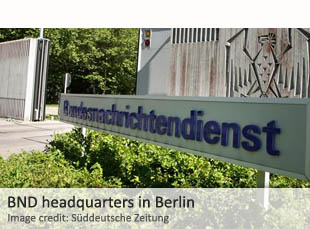
Along with Tikrit, Iraqi forces have managed to recapture a number of oil fields, which provided ISIS with a lucrative source of income for much of the past year. On Thursday, German broadsheet Süddeutsche Zeitung cited a leaked intelligence report that claimed ISIS had lost control of “a minimum of three oil fields” in northern Iraq. The Munich-based newspaper said it had seen a report on the subject authored by the Bundesnachrichtendienst, or BND, Germany’s external intelligence agency. According to the report, the Iraqi counteroffensive had reclaimed all but one of the ISIS-controlled oil fields in the country.

The BND documents state that the ISIS government now only controls the Qayara oil field, located in Iraq’s southeastern Nineveh province. The oil field’s daily output capacity of around 2,000 barrels leaves ISIS with only “five percent of the extraction capacity” it had before the Iraqi counteroffensive, says the paper. Moreover, satellite images taken last March show that retreating ISIS forces set fire to two of the largest oil fields in their possession, the Ajil and Himrin facilities. That, according to the BND, shows that ISIS were themselves pessimistic about being able to reclaim these oil fields from the Iraqi forces.

Hezbollah likely behind malware that attacked Israeli servers

Malware program codeBy JOSEPH FITSANAKIS | intelNews.org

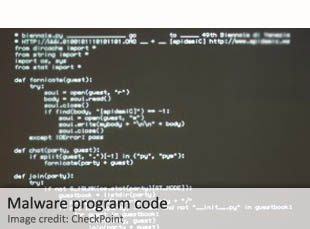
A report by a major Israeli computer security firm claims that “a Lebanese entity”, possibly Hezbollah, was behind a cyberespionage operation that targeted companies connected to the Israeli military. In late March, Israeli computer security experts announced they had uncovered an extensive cyberespionage operation that targeted computers in Israel, and to a lesser extent in the United States, Britain, Turkey and Canada. The cyberespionage operation, dubbed VOLATILE CEDAR by Israeli computer security experts, was allegedly launched in 2012. It employed a sophisticated malicious software, also known as malware, codenamed EXPLOSIVE. One Israeli security expert, Yaniv Balmas, said the malware was not particularly sophisticated, but it was advanced enough to perform its mission undetected for over three years.

It is worth noting that, during the period of operation, the EXPLOSIVE malware kept surreptitiously updating itself with at least four different versions, which periodically supplemented the original malware code. Additionally, once the discovery of the malware was publicized in the media, security experts recorded several incoming messages sent to the installed malware asking it to self-destruct. These clues point to a level of programming and operational sophistication that exceeds those usually found in criminal cyberattacks.

According to Israeli computer security firm CheckPoint, there is little doubt that the source of the malware was in Lebanon, while a number of programming clues point to Lebanese Shiite group Hezbollah as “a major player” in the operation. In a report published this week, CheckPoint reveals that most of the Israeli targets infected with the malware belong to data-storage and communications firms that provide services to the Israel Defense Forces. According to one expert in the firm, the malware designers took great care to avoid “a frontal attack on the IDF network”, preferring instead to target private entities that are connected to the Israeli military. More specifically, the web shells used to control compromised servers after successful penetration attempts were of Iranian origin. Additionally, the initial command and control servers that handled EXPLOSIVE appear to belong to a Lebanese company.

The head of CheckPoint’s security and vulnerability research unit, Shahar Tal, told Ha’aretz newspaper: “We are not experts on international relations and do not pretend to analyze the geopolitical situation in Lebanon”. But these attacks originated from there, and were specifically designed to infiltrate “systems that are connected to the IDF”, he added.

Revealed: DEA’s massive phone tapping scheme that preceded NSA’s

Drug Enforcement AdministrationBy JOSEPH FITSANAKIS | intelNews.org
For nearly a decade before 9/11 and the controversial phone tapping program enacted by the National Security Agency, another American intelligence organization, the Drug Enforcement Administration, operated a mass phone surveillance scheme. The scheme, which is no longer in effect, collected data on billions of phone exchanges involving Americans and became a blueprint for NSA’s post-9/11 monitoring efforts. The DEA surveillance program was first disclosed in a report by the Department of Justice in January of this year. But its history, as well as its full extent, were fully revealed on Tuesday by USA Today.

The paper said the DEA program was initiated in 1992, during the presidency of George Bush, Sr., and was aimed at monitoring call data to and from “designated foreign countries” that were “linked to drug trafficking”. But the program grew to monitor data on every call made to and from the US to as many as 116 nations, said the paper, including every country in the Americas. In all, billions of calls were monitored in the over two decades that the program lasted. Citing interviews with “more than a dozen current and former intelligence officials”, USA Today said the DEA surveillance program did not access the content of intercepted phone calls, but rather the pen-register data, namely which numbers were dialed and when.

The intercepted information enabled the DEA to trace transnational networks of traffickers and money handlers used by large drug cartels. Information acquired through the program was also used for non-narcotics-related investigations, said the paper. However, the two-decade-long program did not utilize court warrants, and was thus very similar to the NSA’s controversial wiretapping scheme revealed by a series of whistleblowers in the years following 9/11. USA Today said the DEA stopped the surveillance program in September of 2013. Shortly after that, said the paper, the database containing the information collected through the program was deliberately purged.

Turkish general claims CIA ‘may have had role’ in 2003 coup plot

Bilgin BalanliBy JOSEPH FITSANAKIS | intelNews.org
A Turkish former four-star general, who was jailed for his role in an alleged coup plot by secularists in the Turkish military, has alleged in an interview that the United States may have advised the coup plotters. Bilgin Balanli was the only active-duty four-star general to be charged in connection with the so-called Balyoz Harekâti (Operation SLEDGEHAMMER) coup-plot case. The alleged plot became widely known in early 2010, when Taraf, a liberal Turkish daily, published documents from 2003 that outlined the plotters’ plans for a military takeover of government. According to Taraf, the conspirators were secularists within the ranks of Turkey’s military and intelligence agencies, who were opposed to the rule of the Islamist Justice and Development Party (AKP), headed by Recep Tayyip Erdoğan.

The documents outlined plans to bomb two mosques in Istanbul and bring down a Turkish fighter jet over the Aegean Sea, which would be blamed on Greece. The plotters hoped that the ensuing crisis would permit the military to assume power in the country. The AKP-led government reacted swiftly: on February 21, 2010, police operations took place in nearly a dozen Turkish provinces, leading to the arrests of over 40 leading coup plotters. Another 325 were charged in the following days. The alleged plotters argued that Operation SLEDGEHAMMER was simply an exercise that had been conceived as a scenario-based simulation for a military seminar. But the courts rejected their argument and sentenced nearly 300 of the accused to prison terms ranging from a few months to several years. More recently, however, most of those sentenced were released pending retrials. Many were acquitted last month on grounds that their civil rights had been violated during their initial trial.

Among those acquitted was General Balanli, who was about to be promoted to Chief of Staff for the Turkish Air Force when he was arrested in connection to SLEDGEHAMMER in 2010. His conviction meant that he had to resign from his post and relinquish his state pension. In his first lengthy interview since his acquittal, Balanli said he believes many of the coup planning documents had been authored by a non-Turkish intelligence agency, probably the US Central Intelligence Agency. Balanli was referring to allegations, made by many of the accused during the SLEDGEHAMMER trials, that an American senator had provided some of the coup planning documents, with the help of a retired Turkish military officer based in Istanbul. According to Balanli, much of the terminology and phraseology found in the plot documents was clearly not written by Turkish-language speakers. For example, said Balanli, the Turkish-language documents used the term “ocean” to refer to the Aegean Sea. “We do not use the word ‘ocean’ to refer to our seas”, said the Turkish general. “The term ‘ocean’ is only used by the US to refer to the sea”, he argued. “I believe that these documents were translated from the English, from the original American plan”, said Balanli.

The former general’s claim, though unsubstantiated, is bound to be refuted by Washington. It will, however, reinforce Turkish President Erdoğan’s claim that his pro-Islamist government has been the subject of plots and machinations from the West, and especially from Washington.

UK spied on Argentina to prevent second Falklands war, papers show

Port Stanley, FalklandsBy JOSEPH FITSANAKIS | intelNews.org
The British government carried out an extensive program of intelligence collection and psychological operations in Argentina until 2011, because it was concerned about the security of the Falkland Islands, according to newly leaked documents. In 1982, the two countries went to war over the islands, which are ruled by Britain but are claimed by Argentina. The 74-day conflict, which killed nearly 1,000 soldiers and civilians on both sides, ended in defeat for the Argentinian forces and solidified British authority in the South Atlantic territory. But Argentina continues to dispute Britain’s rule over the Falklands, which it calls Malvinas, and has repeatedly threatened to take them over.

Documents released last week by Argentine online news portal TN.com, reveal that a consortium of British intelligence units implemented a broad program of spying and propaganda operations against Argentina. The program, codenamed Operation QUITO, lasted from 2006 to 2011, and was aimed at hampering perceived efforts by the Argentine government to subvert British rule in the Falklands. The news portal said it received the documents from Edward Snowden, an American former intelligence contractor who currently lives in Russia under political asylum. According to TN.com, the secret program was implemented by the Joint Threat Research Intelligence Group (JTRIG, as reported by intelNews in February 2014). It is believed that JTRIG is an office operating under the command of the Government Communications Headquarters (GCHQ), Britain’s signals intelligence agency. Its focuses on psychological operations —known in Britain as “effects operations”— which are aimed at discrediting their targets through sabotage and misinformation campaigns.

According to the newly released documents, JTRIG launched Operation QUITO as a “long-term, far reaching” program that included the interception of communications of Argentine politicians, the planting of computer viruses on Argentine networks and the spreading of misinformation or pro-British propaganda online. As of Sunday night there had been no official response to the news report from either the Argentine or the British governments.

China’s once all-powerful security chief faces corruption charges

Zhou YongkangBy JOSEPH FITSANAKIS | intelNews.org
One of China’s most powerful government figures has been charged with criminal acts, including abuse of power and disclosure of state secrets, in what observers describe as an unprecedented development. At the height of his power, Zhou Yongkang, 73, headed China’s Central Political and Legal Affairs Commission, which oversees the country’s security institutions, such as the police, as well as intelligence and paramilitary organs of the state. He remained in that position until his retirement in 2012. Prior to that he was one of only 9 members of the Chinese Communist Party’s 17th Politburo Standing Committee, which serves as the country’s most senior decision-making body.

A highly decorated and immensely wealthy government bureaucrat, Zhou Yongkang has a built an entire network of allies within the ranks of China’s energy industry, from which he gradually rose to the highest echelons of power. Last December, however, state media suddenly reported Zhou’s arrest for “violations of Party discipline”, while a press release from the Communist Party announced the commencement of an investigation into Zhou and his family. Shortly afterwards, and while he was in custody, he was expelled from the Communist Party. On Thursday, a court in the northern Chinese city of Tianjin charged Zhou with using his political power and influence to turn the state agencies he supervised into tools for advancing narrow personal interests. In the process, said the court, he violated Communist Party discipline by undermining the central authority of the government and the state.

Zhou is the most senior government official to be charged with corruption since the founding of the People’s Republic of China, in 1949. Observers note that his fall from power is part of President Xi Jinping’s much heralded crackdown on government corruption, which aims to improve the popular image of the Communist Party. Others suggest that the president is also trying to consolidate his power base within the Party and dissolve networks of powerful bureaucrats that are critical of his reform plans.

Many of Zhou’s former allies and associates in government are also being investigated as part of a series of related anti-corruption probes. Many of his immediate subordinates were sacked shortly after Zhou was first detained back in December of last year.

News you may have missed #891

Edward SnowdenBy IAN ALLEN | intelNews.org
►►Sophisticated malware found in 10 countries ‘came from Lebanon’. An Israeli-based computer security firm has discovered a computer spying campaign that it said “likely” originated with a government agency or political group in Lebanon, underscoring how far the capability for sophisticated computer espionage is spreading beyond the world’s top powers. Researchers ruled out any financial motive for the effort that targeted telecommunications and networking companies, military contractors, media organizations and other institutions in Lebanon, Israel, Turkey and seven other countries. The campaign dates back at least three years and allegedly deploys hand-crafted software with some of the hallmarks of state-sponsored computer espionage.
►►Canada’s spy watchdog struggles to keep tabs on agencies. The Security Intelligence Review Committee (SIRC), which monitors Canada’s intelligence agencies, said continued vacancies on its board, the inability to investigate spy operations with other agencies, and delays in intelligence agencies providing required information are “key risks” to its mandate. As a result, SIRC said it can review only a “small number” of intelligence operations each year.
►►Analysis: After Snowden NSA faces recruitment challenge. This year, the NSA needs to find 1,600 recruits. Hundreds of them must come from highly specialized fields like computer science and mathematics. So far the agency has been successful. But with its popularity down, and pay from wealthy Silicon Valley companies way up, Agency officials concede that recruitment is a worry.

Peru crisis deepens as prime minister is ousted over spy scandal

Ollanta Humala and Ana JaraBy JOSEPH FITSANAKIS | intelNews.org
For the first time in 50 years, the Peruvian Congress has voted to depose the nation’s prime minister, following allegations of espionage against opposition figures by the country’s intelligence agency. Prime Minister Ana Jara assumed office less than a year ago, after being asked to form a government by Peru’s embattled President, Ollanta Humala. Although her government faced sustained criticism from opposition forces almost from the very beginning, critics began calling for her immediate resignation on March 19, when allegations of politically motivated espionage surfaced in the national press. Peru’s leading weekly, Correo Semanal, said it had uncovered systematic spying by Peru’s National Intelligence Directorate (DINI) against law-abiding citizens who had voiced disagreements with the government. The paper alleged that DINI had for years gathered information on dozens of opposition politicians, military leaders and their families, business executives, as well as journalists known to be critical of government policies.

The revelations prompted a swift reorganization of DINI’s upper echelons on orders of the prime minister. But members of Congress said the restructuring of the intelligence agency had been an attempt by Prime Minister Jara to pacify her critics and called for her ouster. In a barrage of editorials in the Peruvian press, opposition figures accused the prime minister of failing to control the country’s unruly and corrupt intelligence community, whose controversial history is marred by excesses during and after the Cold War.

Late on Monday evening, the Peruvian Congress voted by 72 to 42 and two abstentions to unseat the prime minister. She will now have to tend her resignation to the president within 72 hours of losing Monday’s confidence vote. Presidnet Humala will then seek to form a government under a new prime minister, the eighth in his four years in power. The outgoing prime minster, meanwhile, accused Congress of treating her as a scapegoat and blasted the opposition for politicizing the issue of domestic espionage. In a message posted on her personal Twitter account, Jara said it was “an honor” for her to have been censured “by this Congress”.

Ex-KGB spy killed in London ‘warned Italy about Russian terror plot’

Alexander LitvinenkoBy JOSEPH FITSANAKIS | intelNews.org
A witness has told a British inquiry investigating the murder of ex-KGB officer Alexander Litvinenko that the former spy may have been killed because he warned Italian authorities about an impending Russian terror plot. Litvinenko was an employee of the Soviet KGB and one of its successor organizations, the FSB, until 2000, when he defected with his family to the United Kingdom. He soon became known as a vocal critic of the administration of Russian President Vladimir Putin. In 2006, Litvinenko came down with radioactive poisoning soon after meeting former KGB/FSB colleague Andrey Lugovoy at a London restaurant. Many suspect that the Russian government is behind Litvinenko’s murder.

Speaking in a London court on Monday, Italian newspaper editor and politician Paolo Guzzanti said he believed Litvinenko was murdered by the Kremlin because he was helping Italian authorities assess a series of Soviet and Russian intelligence operations in the country. Guzzanti was speaking as the former president of the so-called Mitrokhin Commission, a parliamentary board set up in 2002 to investigate past intelligence operations by the Soviet KGB in Italy. Most of the work of the Commission stemmed from the revelations in the Mitrokhin Archive, named after Vassili Mitrokhin, who for three decades was the archivist in the KGB’s First Chief Directorate. Mitrokhin defected to the Britain in 1992, taking with him a treasure trove of documents about Soviet intelligence activities that took place abroad during the Cold War.

Guzzanti told the inquiry that Litvinenko had cooperated with the Mitrokhin Committee and had even shared information with one of its consultants, Mario Scaramella, about ongoing attempts by the FSB to organize terrorist strikes in Italy. According to Guzzanti, Litvinenko informed Scaramella that Russian intelligence operatives were helping transport weapons from Ukraine to Italy in order to assassinate Guzzanti and thus sabotage the work of the Mitrokhin Committee. Based on Litvinenko’s information, Scaramella accused Alexander Talik, a Ukrainian former officer of the KGB who lived in Naples, Italy, of helping Russian intelligence operatives smuggle guns into the country. Talik and a number of his accomplices were promptly arrested by Italian authorities after they found several weapons and grenades in their possession. According to Guzzanti, Litvinenko’s role in stopping the alleged assassination attempt against him and other members of the Mitrokhin Committee was what led to the Kremlin’s decision to murder the former KGB spy.

At the end of Monday’s proceedings, the inquiry directors announced the would adjourn until the next provisional hearing, which has been scheduled for July 27.

Senior Iranian aide defects during nuclear talks in Lausanne

Amir Hossein MotaghiBy JOSEPH FITSANAKIS | intelNews.org
A media advisor to the Iranian president, who was in Switzerland to cover the ongoing international negotiations on the country’s nuclear program, has defected. Amir Hossein Motaghi is credited with having helped secure the impressive ascent of Hassan Rouhani to Iran’s presidency in 2013. Rouhani, who swept to power with over 50 percent of the vote, over 30 percentage points ahead of his nearest rival, owes much of his victory to his popularity among the youth. Motaghi led the media team that promoted Rouhani’s image among younger voters by cleverly employing online platforms such as Facebook and Twitter.

Following Rouhani’s victory, however, Motaghi repeatedly voiced impatience with the slow pace of social and political reforms in Iran. Recently he spoke in favor of the release of Jason Rezaian, the Iranian-American Tehran bureau chief for The Washington Post, who has been denounced as a spy and imprisoned by the Iranian government. There have been rumors in the Iranian media that Motaghi had been ordered to report once a week to Iran’s Ministry of Intelligence; some say he had been privately warned that he faced arrest upon his return to Iran.

Motaghi had reportedly been sent to the Swiss city of Lausanne by the Iran Student Correspondents Association (ISCA). His task was to cover the ongoing talks that aim to bring an end to the dispute between the Islamic Republic and a group of nations that have come to be known as P5+1, representing the five permanent members of the United Nations Security Council plus Germany. However, according to Iranian opposition sources, the media aide resigned from his ISCA post before filing an application for political asylum in Switzerland.

Soon afterwards, Motaghi gave an interview to Irane Farda, a pro-reform Iranian television station based in London, in which he explained the reasons for his defection. He accused the Iranian government of controlling Iranian media reports about the talks, by staffing its reporter entourage in Lausanne with undercover intelligence officers. He also said he could no longer pursue his profession conscientiously because he was only allowed to report approved news items. Furthermore, he accused the American delegation to the talks as “mainly speak[ing] on Iran’s behalf with […] the 5+1 countries [so as to] convince them to consent to an agreement”.

Late on Sunday, ISCA, the press agency believed to have sent Motaghi to Switzerland, released a statement claiming it did not employ the journalist and that his job had been terminated prior to the nuclear talks in Lausanne.

News you may have missed #890

Kim Kuk-giBy IAN ALLEN | intelNews.org
►►US DEA agents given prostitutes and gifts by drug cartels. US Drug Enforcement Administration agents allegedly had “sex parties” with prostitutes hired by Colombian drug cartels overseas over a period of several years, according to a report released Thursday by the Justice Department. Former police officers in Colombia also alleged that three DEA supervisory special agents were provided money, expensive gifts and weapons from drug cartel members. Seven of the 10 DEA agents alleged to have participated in gatherings with prostitutes and received suspensions of two to 10 days.
►►Polish lieutenant accused of spying for Russia. A Polish Air Force pilot allegedly copied several thousand flight plans for F-16 fighters and handed them to Russian intelligence. According to Polish media, the airman was arrested by authorities last November, but the information has only recently emerged. The pilot was allegedly suspended from his duties, his passport was confiscated, and he was banned from leaving the country. Some reports suggest that soon after the arrest of the lieutenant, a Russian diplomat was expelled from the country for spying.
►►North Korea claims arrest of South Korean spies. North Korea said it had arrested two South Koreans engaged in espionage. The two arrested men, identified as Kim Kuk-gi (see photo) and Choe Chun-gil, were presented at a press conference in Pyongyang attended by journalists and foreign diplomats. A North Korean media report said Kim and Choe had gathered information about North Korea’s “party, state and military secrets”. It was not immediately clear where or when the two men were arrested. In Seoul, the country’s intelligence agency said the charge that the two men were working for the agency was “absolutely groundless”.

‘Gloves are coming off’ in US-Israel clash over Iran, says intel insider

Benjamin Netanyahu and Barack ObamaBy JOSEPH FITSANAKIS | intelNews.org
An American former intelligence operative has called the latest revelations of Israeli spying against the United States “appalling” and warned that “the gloves are coming off” in the clash between Washington and Tel Aviv over Iran. The unnamed former operative, described as having “long, firsthand familiarity with Israeli operations”, told Newsweek magazine’s intelligence correspondent Jeff Stein that he was not surprised to find out Israel has been spying on the closed-door talks between the US and the Islamic Republic.

He was referring to The Wall Street Journal’s leading article on Monday, which alleged that the Jewish state’s intelligence services have been spying on American officials during their closed-door negotiations with the government of Iran over its nuclear program. The paper said the spy operation against the US forms part of a broader campaign by Tel Aviv to sabotage the talks, which aim to bridge the differences between the Islamic Republic and a group of nations that have come to be known as P5+1, representing the five permanent members of the United Nations Security Council plus Germany.

Newsweek has reported before allegations about aggressive Israeli espionage against the US. Last year, Stein elicited a strong reaction from the Israeli government when he quoted Congressional staffers saying that America’s Jewish allies had “crossed red lines” in their efforts to steal American secrets. According to Stein, intelligence representatives had briefed members of Congress about Israeli spy operations against US interests that were “unrivaled and unseemly” and had reached levels far higher than similar activities by other allied countries, such as Britain or Japan.

This time, however, says Stein, Israeli actions “mark a new frontier” in the intelligence rivalry between Washington and Tel Aviv. He quotes an American former intelligence insider who condemns Israeli efforts to sabotage US-Iranian talks as “manipulation of our institutions” and blasts American lawmakers siding with Israeli Prime Minister Benjamin Netanyahu as “useful idiots” who “sacrifice the US national interest for a foreign ideology”, namely “Likud rightwing Zionism”. The unnamed source added that the controlled leaks about the widening rift in US-Israeli relations reveal the anger currently being felt in Washington against the Israeli government. Behind closed doors, officials in the White House, the foreign-policy and intelligence communities “are prepared to act on that anger”, he concluded.

Israel ‘spied on the United States’ during Iran nuclear negotiations

Benjamin Netanyahu and Barack ObamaBy JOSEPH FITSANAKIS | intelNews.org
The intelligence services of Israel have allegedly been spying on American officials during their closed-door negotiations with the government of Iran over its nuclear program. The Wall Street Journal said the spy operation forms part of a broader campaign by Tel Aviv to sabotage the talks, which are aimed at bridging the differences between the Islamic Republic and a group of nations that have come to be known as P5+1, representing the five permanent members of the United Nations Security Council plus Germany.

In a leading article published on Monday, the paper said it decided to reveal the existence of the Israeli spying program after interviewing “more than a dozen current and former US and Israeli diplomats, intelligence officials, policy makers and lawmakers”. Ironically, according to The Journal, the administration of US President Barack Obama found out about the Israeli spying after instructing American intelligence agencies to conduct a counterintelligence operation against Tel Aviv, in order to see what they knew about the secret negotiations with Iran. After spying on Israeli government officials, the American agencies concluded that they were in possession of confidential information that could only have been acquired from spying on participants in the negotiations.

According to The Journal, American officials were not surprised by the spying. But they were especially perturbed, said the paper, to find out that the Israeli government proceeded to leak the secret information to American lawmakers opposed to a possible deal with Iran, in order “to undermine US diplomacy”, according to one unnamed senior American official.

Israeli officials told The Journal that Tel Aviv had indeed acquired confidential information about the negotiations, but that they had done so by spying on Iranian, not American, negotiators. Speaking late on Monday, a spokesman for the office of the Israeli Prime Minister Benjamin Netanyahu said the American newspaper’s allegations were “utterly false. The state of Israel does not conduct espionage against the United States or Israel’s other allies”, he said, adding that the “false allegations” were “clearly intended to undermine the strong ties between the United States and Israel”.

Former spy sues Dutch state for ‘abandoning’ him in Afghanistan

MIVDBy JOSEPH FITSANAKIS | intelNews.org
A former agent for Holland’s military intelligence agency has sued the Dutch state, alleging that it abandoned him in Afghanistan, after he had spent years providing support services to Dutch operatives there. Dutch newspaper De Telegraaf reported last week that the former agent, identified only as I.A., is a former police officer who relocated to Afghanistan while working for a Western contractor. He then stayed on in the Afghan capital Kabul, where he imported and sold cars. According to I.A., he was eventually approached by Holland’s Military Intelligence and Security Service (MIVD) and secretly hired as an agent.

Dutch researcher Dr. Matthijs Koot, who translated De Telegraaf’s article into English, reports that I.A. claims he was tasked by the MIVD to acquire local cars with forged license plates, as well as provide forged travel documentation, for Dutch Special Forces in Afghanistan. He also says he supplied Dutch intelligence officers with weapons that “fit what was usually seen on the streets” of Kabul, thus helping them blend in with the local population.

According to De Teelgraaf, I.A. is now suing the Dutch government, alleging that the MIVD “left him to his fate” in Afghanistan, a move that allegedly cost him extensive financial damage. He wants the MIVD to acknowledge that he worked for them and furthermore that he should not have been abruptly fired when his services were no longer needed. According to the paper, I.A. threatened to release to the media details of his work for MIVD, including recorded conversations with MIVD officers. This prompted the agency to give him €500,000 ($700,000) in an attempt to unofficially settle his case. This was allegedly confirmed in a court in The Hague by Marc Gazenbeek, legal affairs director for the Dutch Ministry of Defense. However, I.A. claims the money he was given is insufficient and is suing for millions in damages. The Telegraaf says that Pieter Cobelens, who was director of MIVD at the time of I.A.’s employment, denies he was aware of his employment as a spy. The case continues.