Austrian court acquits Kazakh security officials in double-murder trial
July 14, 2015 Leave a comment
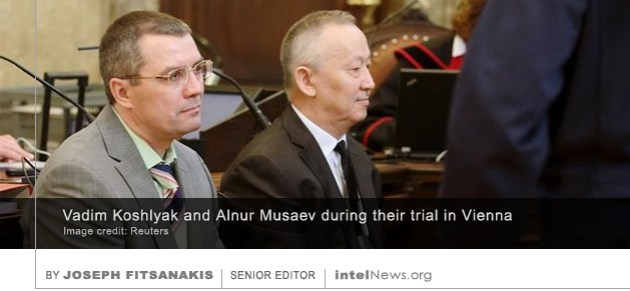 Kazakhstan’s former spy chief and a former presidential bodyguard have been acquitted by an Austrian jury, five months after a co-defendant in their double-murder trial, who was also the Kazakh president’s former son-in-law, was found dead in his Vienna cell. As intelNews has written before, the case centers on the 2007 disappearance of Aybar Khasenov and Zholdas Timraliyev, both of them senior executives of JSC Nurbank, one of Kazakhstan’s largest private banking institutions. Their bodies were found in May of 2011 in a dumping site in Almaty, Kazakhstan’s largest urban center. They had been stuffed in large metallic barrels filled with lime. Both had been tortured and one of them had been raped prior to being killed.
The Kazakh regime of autocratic President Nursultan Nazarbayev accused Rakhat Aliyev of the murder of the two executives. Aliyev, who was Nazarbayev’s former son-in-law, had served for years as Kazakhstan’s deputy foreign minister before being appointed director of the country’s intelligence agency, the National Security Committee, also known as KNB. In 2007, however, Aliyev, who by that time was serving as Kazakhstan’s ambassador in Vienna, divorced the president’s eldest daughter, Dariga Nazarbayeva. He subsequently fell out with the presidential family in spectacular fashion. He was almost immediately stripped of his government positions, including the title of ambassador, and issued with an arrest warrant, while the Kazakh authorities demanded that Austria surrender him to Astana.
However, Austrian authorities rejected two extradition requests by the Kazakhs and decided instead to investigate the case for themselves. They soon arrested Aliyev along with two of his alleged accomplices in the murder of the Nurbank executives. The two, Vadim Koshlyak, a former bodyguard of Nazarbayev, and Alnur Musaev, who like Aliyev is a former director of the KNB, were also residing in Vienna at the time. All three were taken to prison while the Austrian authorities investigated the murders. The plot thickened in February of this year, however, when Aliyev was found hanged in his Vienna cell. The official verdict was suicide, but Aliyev’s family and lawyers have rejected it and they, along with many other exiled critics of Nazarbayev’s regime, have raised questions about possible complicity of the KNB in the killing. As intelNews reported back in 2009, a Kazakh intelligence operative was arrested by Austrian authorities in 2008, as he was trying to kidnap Musaev.
The trial of the two surviving defendants, Koshlyak and Musaev, opened in April of this year in Vienna amidst tight security, involving dozens of judicial guards. Over sixty witnesses testified either in person or via video-link, many of them in disguise in order to conceal their identities. The BBC described the court proceedings as “the most complex and unusual Austria has seen”. Both defendants pleaded not guilty, while their lawyers said they had been framed by the corrupt Kazakh government because they were friends of the late Aliyev. They also said that Kazakh authorities had provided the Austrian prosecutors with false evidence designed to convict Koshlyak and Musaev.
On Friday last week, Musaev was fully acquitted by the jury while Koshlyak was sentenced to two years in jail, of which 14 months were suspended. In accordance with Austrian judicial procedure, the jury gave no reasoning for its decision. The prosecutors said that they plan to appeal the decision.
► Author: Joseph Fitsanakis | Date: 14 July 2015 | Permalink: https://intelnews.org/2015/07/14/01-1734/
 The head of the main intelligence agency of the island state of Cyprus has resigned after an invoice leaked online showed that the agency made several purchases of controversial surveillance software. Andreas Pentaras, who has led the Cyprus Intelligence Service (KYP) since 2013,
 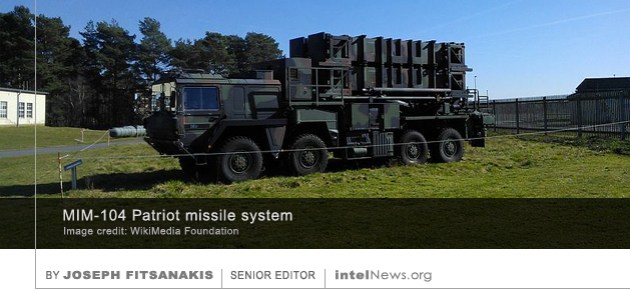 A Patriot missile system stationed in Turkey by the North Atlantic Treaty Organization (NATO) was allegedly hacked by a remote source, according to reports. German magazine Behörden Spiegel
 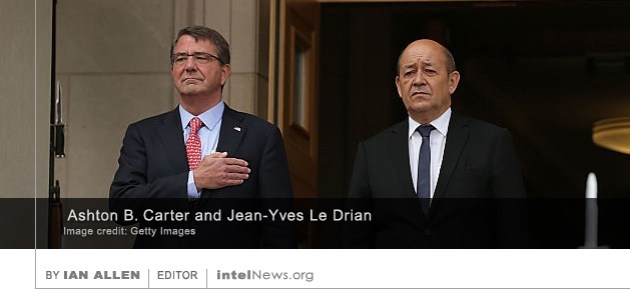 A fortnight ago, I gave an
 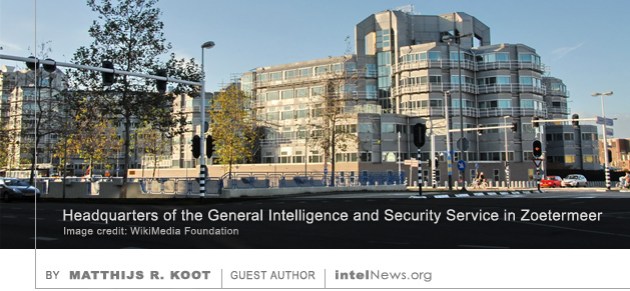 On July 2, 2015, the Dutch government released for public consultation a long-awaited bill that overhauls the Dutch Intelligence and Security Act of 2002. Known also as Wiv2002, the Act is the legal framework for the operations of the General Intelligence and Security Service (AIVD) and the Military Intelligence and Security Service (MIVD). The bill is a complete rewrite of the present law, and includes expansions of power, as well as changes to the approval regime and oversight. The below provides a brief overview focused on the interception and hacking powers.
 A Soviet double spy, who secretly defected to Britain 30 years ago this month, has revealed for the first time the details of his exfiltration by British intelligence in 1985. Oleg Gordievsky was one of the highest Soviet intelligence defectors to the West in the closing stages of the Cold War. He joined the Soviet KGB in 1963, eventually reaching the rank of colonel. But in the 1960s, while serving in the Soviet embassy in Copenhagen, Denmark, Gordievsky began feeling disillusioned about the Soviet system. His doubts were reinforced by the Soviet invasion of Czechoslovakia in 1968. It was soon afterwards that he made the decision to contact British intelligence.
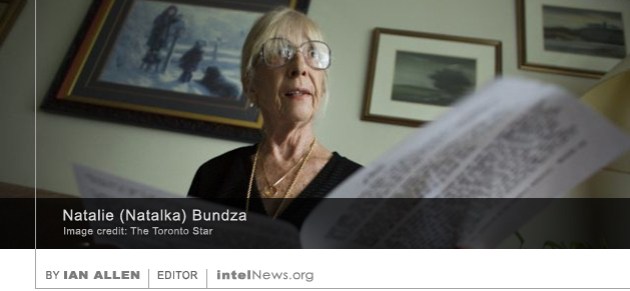 A set of declassified intelligence documents from the 1950s and 1960s offer a glimpse into the secret war fought in Canada between American and Soviet spy agencies at the height of the Cold War. The documents were authored by the United States Central Intelligence Agency and declassified following a Freedom of Information Act request filed on behalf of the Canadian newspaper The Toronto Star.
  An American former supreme allied commander of the North Atlantic Treaty Organization has warned that a possible Greek exit from the Eurozone “could become a geopolitical nightmare” for the European Union and NATO. James Stavridis, a retired four-start US Navy admiral, who served as NATO’s 16th Supreme Allied Commander Europe from 2009 to 2013, said solving the Greek crisis should not be left to the central bankers. In an article
 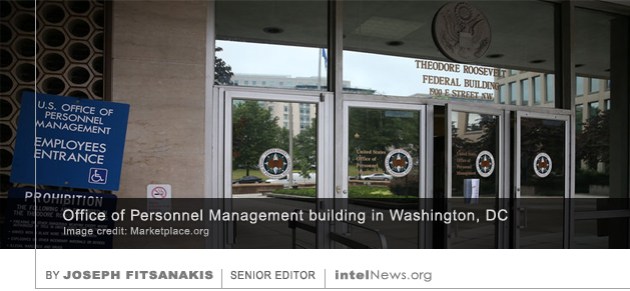 United States intelligence officials expressed concerns about a federal database containing details of security-clearance applications in the years prior to a massive cyber hacking incident that led to the theft of millions of personnel records. Up to
 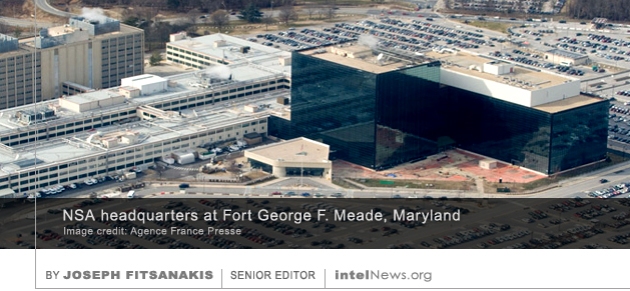 New information published by international whistleblower website WikiLeaks seems to suggest that the United States National Security Agency (NSA) collected information on export contracts by French companies and sought inside information on France’s position in international trade negotiations. According to the website, which
  Several Western countries issued travel warnings for Greece on Sunday, as the Greek government shut down all banks and imposed capital controls following the breakdown of talks between Athens and the European Union.
  Leaders from all sides of the French political spectrum urged the French government on Thursday to offer political asylum, and even French citizenship, to the American defector Edward Snowden and to WikiLeaks founder Julian Assange. The calls were made in response to
  n in Syria and Iraq, the continuing crises in Ukraine and in Libya, as well as the financial meltdown in Greece. So there is a recognition that their intelligence agencies must continue to work together on several pressing issues.
 routine practice. However, I do believe that this regimen can easily be changed to address particular needs, through what is called a “presidential finding”, basically a direct order issued by the president of the United States to target an individual foreign leader.
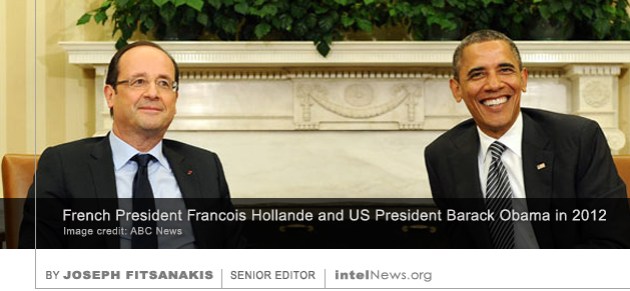 The president of France has convened an emergency meeting of the country’s highest national security forum in response to revelations that the United States spied on three French presidents. The Conseil de la Défense is to convene in Paris on Wednesday to discuss the emergence of documents that appear to implicate the US National Security Agency (NSA) in spying on Jacques Chirac and Nicolas Sarkozy, who ruled France from 1995 to 2012. The documents further indicate that the NSA may have also targeted the personal communications of Francois Hollande, France’s current head of state.








IRA spy’s lawsuit against MI5 to be judged in secret, UK court decides
July 15, 2015 by intelNews Leave a comment
However, McGartland’s cover was dramatically blown in 1991, when the IRA began suspecting that he might be an MI5 mole. After several hours of interrogation by the IRA’s Internal Security Unit, McGartland managed to escape his captors by throwing himself out of a third-floor window. He survived serious injuries and was taken into hiding by MI5, living in a series of safe houses across Britain for nearly a decade. In 1999 the IRA caught up with him at an MI5 safe house in North Tyneside, in the northeast of England, where he was shot and left for dead by an IRA hit team while walking to his car.
McGartland is now suing MI5 and its institutional patron, the British Home Office, claiming that they failed to support him after he was shot by the IRA. In his lawsuit, McGartland claims that the government funding he was receiving for treatment for post-traumatic stress disorder was withdrawn after he publicly criticized the British government’s counterterrorism policies. In May of 2013, it emerged that Home Office solicitors had filed a formal request to hold the trial as a Closed Material Procedure (CMP) hearing. This type of practice, which became law in Britain under the 2013 Justice and Security Act, allows the court to decide a case without giving the plaintiff party any details of the information against them.
In many cases, the government resorts to CMP ostensibly to protect ‘sources and methods’. But McGartland’s legal team said that the secret hearing was designed “solely to cover up [MI5’s] own embarrassment and wrongdoing and not, as the Government has been claiming, to protect national security”. Moreover, civil rights groups warned that applying CMP to McGartland’s lawsuit would open the way for the imposition of wider restrictions on the principle of open justice and would normalize secret hearings in the civil courts.
After the judge hearing the case decided to impose CMP on the proceedings, McGartland’s legal team filed an appeal. Now the appeal judges seem to have sided with the Home Office. In a decision published on Tuesday, the judges opined that the imposition of CMP was “a case management decision properly open to the judge and there is no proper basis for this court to interfere with it”. They added that their decision did not represent a blanket approval of secret legal proceedings, but that they expected court judges to scrutinize future CMP applications “with care”.
The ruling means that McGartland’s legal team will not be allowed to hear testimony by certain MI5 witnesses or view court material designated as “sensitive” by the government. Lawyers for the former IRA informant said on Tuesday that the approval of the imposition of CMP represented “a serious aberration from the tradition of open justice”. But lawyers for the Home Office said that the ability to protect sensitive information was central to the proper function of a national security service.
► Author: Joseph Fitsanakis | Date: 15 July 2015 | Permalink: https://intelnews.org/2015/07/15/01-1735/
Filed under Expert news and commentary on intelligence, espionage, spies and spying Tagged with 2013 Justice and Security Act (UK), Closed Material Procedure, government secrecy, informants, lawsuits, Martin McGartland, MI5, News, Provisional IRA, Provisional IRA Internal Security Unit, UK, UK Home Office