Australian court releases judge’s remarks in unprecedented ‘secret prisoner’ trial

first-post-v-2AN AUSTRALIAN HIGH COURT has released the sentencing remarks in an unprecedented closed-door trial of an intelligence officer, identified only as “Witness J”, who was convicted in 2019 of a crime that cannot be revealed. The man, who is also known as “Prisoner 123458,” was given a jail sentence in November of 2019. His sentencing came following a closed-door hearing, which was described by a judge as “generally undesirable” and “unusual”. The very existence of the court case came to light only after Witness J filed a lawsuit against the jail in which he was being held, arguing that his treatment was substandard.

Witness J is believed to be in his mid-30s and to have served for many years as an intelligence officer in the Australian military, with a top secret security clearance. He is also believed to have served in Iraq, Afghanistan and East Timor with a distinguished service record. But he drew the attention of counterintelligence investigators in 2018, while undergoing a routine re-evaluation of his security clearance status. During that time he was reportedly serving as a civilian in an undisclosed country in Southeast Asia. This period, according to reports, coincided with the deterioration of Witness J’s mental health.

Witness J was eventually jailed in mid-May 2018 and spent a month in solitary confinement. He was then placed in a high-security wing for serious sex offenders at the Alexander Maconochie Centre prison in Canberra. This was not because he was a sex offender, but because it was determined that he would be safer there than in the other wings of the prison. In early 2019, Witness J was sentenced in a closed-door trial, which was held under the secrecy provisions of Australia’s 2004 National Security Information Act. He was released from prison 15 months into his 24-month sentence, after agreeing to plead guilty to security breaches.

Last week, the Supreme Court of the Australian Capital Territory (ACT) released the sentencing remarks of the judge in Witness J’s case, which had remained secret since November of 2019. According to ABC News, the remarks are heavily redacted in order to comply with restrictions under the National Security Information Act. The redacted document makes clear that Witness J faced a total of five charges. However, the sentencing remarks make no mention of the nature of the charges against him.

In his remarks, the judge in the case, Justice John Burns, mentions that the court had been given a report by Witness J’s doctor, which detailed his deteriorating mental state and his depression. The judge goes on to explain that he took the doctor’s report into account in sentencing Witness J. He argues, however, that despite his illness, the accused was aware of his actions and deliberately chose to conduct himself in a “grossly reckless” manner.

Author: Ian Allen | Research credit: P.C.| Date: 24 April 2023 | Permalink

US arrests two over alleged clandestine Chinese police station in New York City

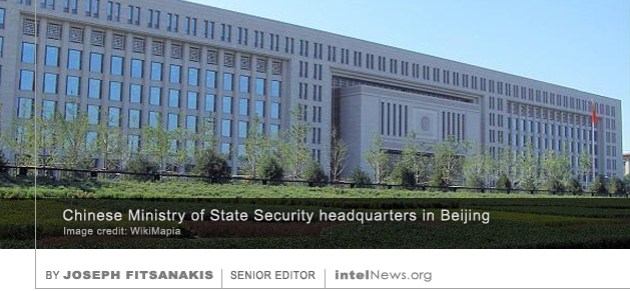
Chinese Ministry of State SecurityTHE UNITED STATES HAS arrested two residents of New York City for allegedly conspiring to create and operate a clandestine police station run by the Chinese government in the borough of Manhattan. The arrests come a month after authorities in Canada launched an investigation into allegations that the Chinese government was running at least two clandestine police stations in Montreal and four more in Toronto.

The allegations first surfaced in a 2022 report by Safeguard Defenders, a Spanish-based non-government organization that focuses on the state of human rights in China. The report, titled “110 Overseas: Chinese Transnational Policing Gone Wild”, claimed that China’s Ministry of Public Security, in association with Chinese diplomatic facilities around the world, operated dozens of clandestine police stations in over 50 countries. Their official mission, according to the report, was to service the needs of Chinese citizens living abroad, as well as visitors from China. However, these clandestine police stations were “actively […] engaging in covert and illegal policing operations” targeting Chinese citizens and expatriates, according to Safeguard Defenders.

On Monday, two New York City residents, Chen Jinping, 59, and Lu Jianwang, 61, were arrested and charged with conspiring to operate as unregistered agents of the People’s Republic of China. They were also charged with obstruction of justice in connection with the Department of Justice’s investigation into their activities. United States government prosecutors allege that Chen and Lu were behind the establishment of a clandestine police station in Manhattan. According to the indictment, the Manhattan police station —the first of its kind in the United States— was operated by China’s Ministry of State Security (MSS). It is reported that the station was shut down by the MSS in late 2022, soon after Chinese officials became aware of an investigation into the activities of the station by the United States Federal Bureau of Investigation.

A representative of the United States prosecutor accused the Chinese government of engaging in a “flagrant violation” of American sovereignty with “actions that go far beyond the bounds of acceptable nation-state conduct”. Meanwhile, Chen and Lu appeared before a federal judge in Brooklyn on Monday. They face up to 25 years in prison if convicted.

Author: Joseph Fitsanakis | Date: 18 April 2023 | Permalink

China-based Australian businessman charged with espionage

ASIO AustraliaAN AUSTRALIAN BUSINESSMAN, WHO has worked in China for over two decades, is facing up to 15 years in prison for allegedly selling secrets to two foreign intelligence officers. The businessman, Alexander Csergo, 55, grew up in Sydney, but moved to China in 2002 and currently works for a digital solutions firm in Shanghai. According to reports, Csergo describes himself on social media as a “business strategist” and an “operational transformation specialist”.
Csergo was arrested by the Australian Federal Police (AFP) on Friday afternoon at his family home in the eastern Sydney suburb of Bondi. According to a press release, Csergo’s arrest resulted from an investigation by the Counter Foreign Interference Taskforce (CFITF), aa joint counterintelligence body led by the AFP and the Australian Security Intelligence Organisation. Established in 2021, the CFITF brings together counterintelligence units from across Australia’s federal government sectors in order to discover, disrupt and investigate foreign interference activity.

Australian government prosecutors claim that representatives of a foreign think-tank approached Csergo on social media while he was overseas —presumably in China. The think-tank representatives arranged for Csergo to come in contact with two individuals, calling themselves “Evelyn” and “Ken”. They offered to pay Csergo in return for reports that contained “information about Australian defence, economic and national security arrangements, as well as matters relating to other countries”.

Csergo allegedly agreed to provide the requested services and proceeded to compile a number of reports for the think-tank between February 2021 and April 14 of this year. The Australian government alleges that “Evelyn” and “Ken” are in fact emploees of a foreign intelligence service, which has not yet been publicly identified in Australian government press releases. The Australian government also claims that these individuals may have tried to recruit other Australians, or foreign citizens living in Australia.

Author: Joseph Fitsanakis | Date: 17 April 2023 | Permalink

New report assesses record of Russian unconventional operations in Ukraine war

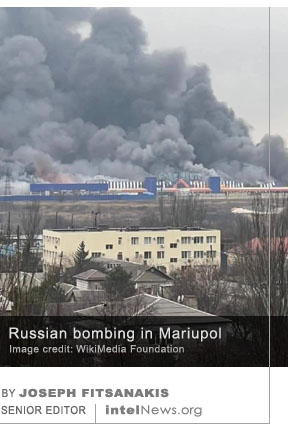
Ukraine MariupolA NEW REPORT PUBLISHED by a London-based security think-tank concludes that Russia has employed unconventional operations effectively to subdue the population in occupied areas of Ukraine. These successes contrast sharply with the inferior performance of Russia’s conventional military forces, as revealed last week in a series of leaked documents belonging to the United States Department of Defense.
The 39-page report was published on March 29 by the Royal United Services Institute (RUSI). It is titled “Preliminary Lessons from Russia’s Unconventional Operations During the Russo-Ukrainian War, Feb 2022-Feb 2023”. It suggests that the early assessments of the Russian intelligence community failed to anticipate by a wide margin the strength of the Ukrainian opposition to the Russian invasion, as well as the West’s resolve to assist Kyiv. Moreover, early assessments by Russian intelligence agencies severely over-estimated the capabilities of the Russian military, with near-catastrophic results.

However, the report claims that, in contrast to its early assessments, the record of unconventional operations by Russia’s intelligence community in Ukraine has been largely successful, and has allowed Moscow to effectively subdue occupied populations in eastern Ukraine. It suggests that Russian intelligence agencies began planning for the military invasion at least eight months in advance. They prepared the ground by assembling a large network of agents on the ground in Ukraine, which included at least 800 Ukrainian government officials. Some of these officials offered to spy for Russia voluntarily, while others were coerced through various means.

The agent network inside Ukraine gave Russian intelligence agencies access to government databases, as well as to communications intercepts. These were used to construct detailed assessments of targeted individuals in occupied areas of Ukraine, and enabled Russian intelligence agencies to operate surgically in neutralizing leading pro-Kyiv officials in those areas. That method has been largely effective in the past year, and has allowed Moscow to exercise strict control in areas under occupation through “a steady stream of human intelligence” from its agent networks, the report claims.

In an unrelated development, a trove of leaked documents circulated on several social media platforms late last week. The documents appear to contain intelligence briefs compiled by the Joint Staff of the United States Department of Defense. The briefs contain intelligence information from a host of American intelligence agencies, including the Central Intelligence Agency and the National Security Agency. According to reports, the documents show the extent to which American intelligence has penetrated the Russian government. They also show Washington’s ability to assess with accuracy Moscow’s military and intelligence planning. The New York Times, which reported on the leak last week, said the documents show that “nearly every Russian security service [has been] penetrated by the United States in some way”.

Author: Joseph Fitsanakis | Date: 10 April 2023 | Permalink

Bomb hidden inside decorative figurine kills pro-Kremlin military blogger in Russia

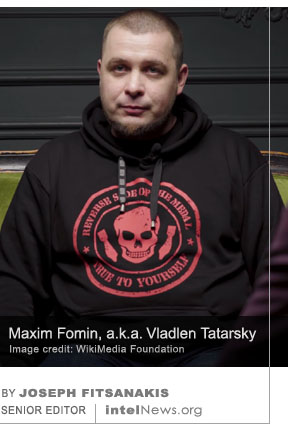
Vladlen Tatarsky Maxim FominA POWERFUL EXPLOSION, LIKELY caused by a bomb hidden inside a decorative figurine, has killed one of the most prominent pro-Kremlin bloggers as he was giving a public talk in downtown St. Petersburgh, Russia. The bomb killed Maxim Fomin, 40, who was known in online blogger circles under the pseudonym Vladlen Tatarsky. Born in eastern Ukraine, Fomin supported the pro-Russian secessionist movement in the Donbas. By 2021, when he obtained Russian citizenship, he had already made a name for himself as a pro-Kremlin military blogger on the Telegram social media platform.
In 2022, when the Russian military invaded Ukraine again, Fomin used his Telegram channel to spread pro-Kremlin information among his nearly 600,000 followers. He quickly rose to prominence as a commentator on military matters on Russian state-owned television. He also authored several books espousing Russian nationalist views. Fomin’s online activism came to embody a new generation of Russian bloggers who use their reach among Russian Internet users to aggressively promote pro-Kremlin political views.

On Sunday afternoon, Fomin was the main speaker at a pro-Kremlin event held in a St. Petersburg meeting hall, which is known as the Street Food Bar #1 Café. The downtown establishment used to belong to Yevgeny Prigozhin, one of Russian President Vladimir Putin’s closest collaborators. Prigozhin is the alleged owner of the Wagner Group private military company. In 2019, Prigozhin is believed to have donated the property to a group of pro-Kremlin activists, who have since been using it to host nationalist meetings in downtown St. Petersburg.

On Sunday afternoon, Fomin was the main speaker at an event held in the Street Food Bar #1 Café. The event had been organized by Cyber Front Z, an umbrella group of Russian nationalist bloggers, who refer to themselves on Telegram as a pro-Kremlin cyber army. At least 100 people were present at the event, according to reports. Shortly before the event began, an unknown woman tried to enter the facility carrying a large box. She told the event organizers at the entrance that the box contained a figurine, which she intended to present to Fomin as a gift. Read more of this post

United States charges Russian spy who lived in Maryland using forged identity

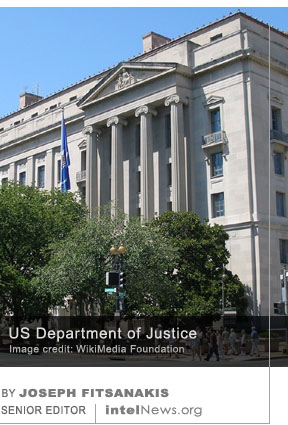
US Department of JusticeA RUSSIAN INTELLIGENCE OPERATIVE, who lived in Maryland using forged Brazilian identity documents, has been charged with espionage and other crimes by the United States Department of Justice. Victor Muller Ferreira, a Brazilian national, was stopped from entering the Netherlands in June of last year, where he had intended to join the International Criminal Court (ICC) as an intern.
Shortly after Muller was stopped at Amsterdam’s Schiphol International Airport, the Netherlands General Intelligence and Security Service (AIVD) revealed that he was in fact Sergey Vladimirovich Cherkasov, a 36-year-old Russian citizen. According to the AIVD, Cherkasov had worked for over a decade as an intelligence officer for the Main Directorate of the Russian Armed Forces’ General Staff, which is commonly known in the intelligence field as GRU.

A few days after Cherkasov returned to Brazil, a federal court in Guarulhos, a suburb of Sao Paolo, found him guilty of having used the identity of a dead Brazilian citizen to forge identity papers, which he then used to enter and leave Brazil 15 times over 10 years. The 10-year period had started in 2010, when Cherkasov had entered Brazil using his real Russian identity. But when he left the country a few months later, he did so using the forged identity that had allegedly been provided to him by Russian intelligence. Having examined the charges against Cherkasov, the court jailed him for 15 years.

Now the United States Department of Justice has charged Cherkasov with a list of new crimes, including acting as an unregistered agent of a foreign power and repeatedly carrying out visa, bank and wire fraud. The charges resulted from an investigation that was conducted by the Federal Bureau of Investigation’s counterintelligence division, in coordination with the Bureau’s Washington Field Office.

The charges stem from the years 2018-2020, when Cherkasov used his forged Brazilian identity to enroll as Master’s student at the Johns Hopkins University’s School of Advanced International Studies. Cherkasov successfully completed his graduate degree in 2020. Two years later, he left for the Netherlands, where he hoped to enter employment in the ICC.

Author: Joseph Fitsanakis | Date: 27 March 2023 | Permalink

Greek authorities uncover identity of Russian spy who posed as Greek citizen

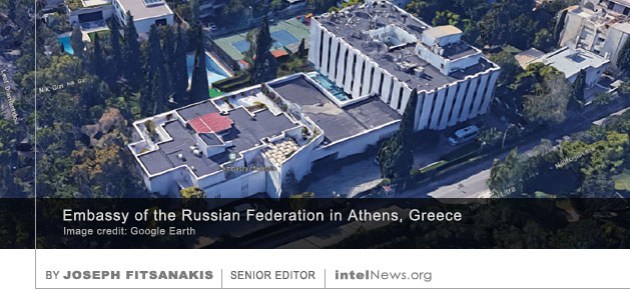
Embassy of Russia in GreeceGREEK INTELLIGENCE OFFICIALS ANNOUNCED late last week that they had uncovered the identity of a female Russian spy who lived in central Athens using a set of forged identity documents. According to the Greek National Intelligence Service (NIS/EYP), the case is under investigation by several Western intelligence agencies. Additionally, there seems to be a connection with Brazil where the Russian spy’s husband lived until recently, using forged identity papers.
In an article published on Friday, the Greek daily Kathimerini, identified the woman as “Irena A.S.”. It said she had arrived in Greece from an unspecified Latin American country in 2018. Soon afterwards, she assumed a new cover identity, using the birth certificate of a Greek child named Maria Tsalla. The child is believed to have died in the northeastern Athens suburb of Marousi in December 1991, a few days after being born. According to the report, NIS/EYP officers discovered that the dead child’s archived death certificate in the Marousi town hall had been removed by persons unknown, giving officials the impression that Maria Tsalla was still alive.

Soon after assuming her cover identity, Irena A.S. registered herself as a resident of Aliveri, a largely rural municipality in the central Greek island of Euboea. Less than a year later, using the name Maria Tsalla, she opened a knitwear store in the central Athens neighborhood of Pagrati, where she also rented an apartment. It is believed that she had hired an employee and had a Greek boyfriend, none of whom were aware that she was not Greek. According to the article in Kathimerini, the NIS/EYP has yet to uncover evidence that Irena A.S. was in contact with officials at the Russian embassy in Athens (pictured).

For reasons that remain unclear, Irena A.S. left Greece in a hurry in January of this year, leaving behind most of her personal belongings. She eventually contacted her store and apartment landlords, informing them that she would not be returning to Greece due to some health issues. In the weeks that followed, she ensured that all of her financial obligations toward her landlords and employee were met. It is believed that Irena A.S.’s husband, also a Russian national, who lived in Brazil using forged cover credentials, and going by the cover name “Daniel Campos”, also disappeared in January of this year. It is highly likely that they have both returned to Russia, possibly under fear of their cover being blown.

Author: Joseph Fitsanakis | Date: 20 March 2023 | Permalink

Alleged Russian spy and sabotage cell busted in Poland [updated]

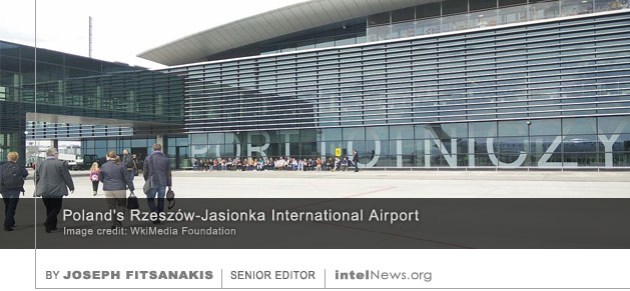
Rzeszów–Jasionka International Airport PolandSIX NINE MEMBERS OF AN alleged Russian saboteur cell have been arrested in Poland, according to media reports and official acknowledgements by Polish authorities. Early reports on Wednesday afternoon local time centered on the arrests of six nine individuals, who were detained on suspicion of conducting espionage and planning sabotage attacks against various elements of transportation infrastructure.

Radio station RMF24 FM reported that the six nine individuals were detained following a number of early-morning raids conducted by the Polish Internal Security Agency (ABW), which is the country’s primary counterintelligence and counterterrorism organization. At least some of the six nine individuals are reportedly Belarusian nationals who were active in Poland’s southeastern Podkarpackie Voivodeship, a largely rural province that borders Ukraine’s Lviv Oblast. Later on Wednesday, the RMF24 FM report was confirmed by Polish government officials, who spoke to the BBC.

Notably, the Podkarpackie Voivodeship is home to the Rzeszów–Jasionka International Airport, located near the village of Jasionka, which is approximately 60 miles, or 100 kilometers, from the Ukrainian border. Since the February 2022 Russian invasion of Ukraine, this provincial airport has been transformed into a major logistical gateway for the transportation of Western military and humanitarian aid to Ukraine. Dozens of Western aircraft land there every day, carrying supplies that are then loaded onto trucks or trains en route to Ukraine.

According to RMF24 FM, the six nine foreign nationals installed hidden miniature cameras at railway junctions and other strategic transportation hubs throughout the Podkarpackie Voivodeship. The cameras were allegedly used to collect information on the movement of trains and trucks that were being used to transport supplies from the Rzeszów–Jasionka International Airport to Ukraine. The radio station said that Polish authorities were scheduled to provide further information about the alleged spy cell at a press conference on Thursday.

[Updated to reflect arrest of nine individuals, as opposed to six, as initially reported]

Author: Joseph Fitsanakis | Date: 16 March 2023 | Permalink

Canada investigating claims of secret Chinese police stations in Montreal

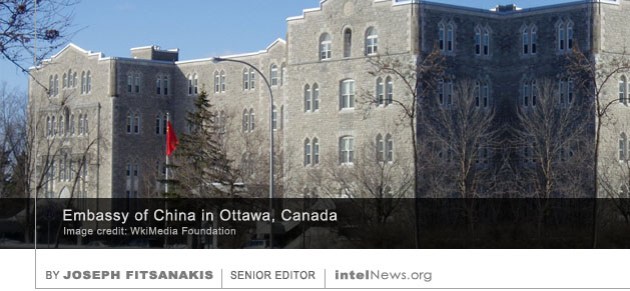
Chinese embassy of China in CanadaAUTHORITIES IN CANADA ARE reportedly probing claims that the Chinese government is operating at least two “clandestine police stations” in Montreal, which allegedly monitor the activities of Chinese citizens and Canadians of Chinese origin. The announcement comes less than four months after a similar investigation took place into the alleged existence of four illegal Chinese police stations operating in the Toronto area.
The investigations were sparked by a report issued in 2022 by Safeguard Defenders, a Spanish-based non-government organization that focuses on the state of human rights in China. The report, titled “110 Overseas: Chinese Transnational Policing Gone Wild”, claimed that China’s Ministry of Public Security, in association with Chinese diplomatic facilities, operated dozens of clandestine police stations around the world. Their official mission, according to the report, was to service the needs of Chinese citizens living abroad, as well as visitors from China. At the same time, however, these clandestine police stations were “actively […] engaging in covert and illegal policing operations” against Chinese citizens and expatriates, according to Safeguard Defenders.

Last Thursday, the Royal Canadian Mounted Police (RCMP) field office in Quebec said it was “carrying out police actions aimed at detecting and disrupting […] foreign state-backed criminal activities” in the Montreal area. On the same day, Canadian Prime Minister Justin Trudeau pledged during a Parliamentary session that his administration would “take every measure to protect Canadians from unacceptable actions by hostile authoritarian regimes”.

The Chinese embassy in Ottawa did not respond to media requests for comment. Last year, in response to the RCMP’s investigation in Toronto, the embassy had said that the alleged clandestine police stations were service centers run by volunteers and not by Chinese diplomatic or law enforcement staff. It also argued that the mission of these centers were to provide consular services to Chinese citizens in the midst of the disruptions that were caused by the COVID-19 pandemic. In a statement issued last Friday, Chinese Foreign Affairs Ministry spokesperson Mao Ning accused Canada of “sensationalizing and hyping the matter [in order to] attack and smear China”.

Author: Joseph Fitsanakis | Date: 15 March 2023 | Permalink

Social unrest threatens Israel’s intelligence relationship with West, officials warn

Mark MilleyTHE SPIRALING SOCIAL UNREST in Israel and the Palestinian Territories may harm longstanding intelligence-sharing agreements between Israel and its Western allies, including the United States, according to reports. Historically, intelligence-sharing partnerships between Israel and its closest ally, the United States, have tended to remain largely unaffected by regional upheavals. This time, however, some Israeli officials are concerned that the Israeli-American intelligence relationship is “under a question mark and under great tension”.
According to several reports from the Middle East, Washington was greatly disturbed last month, when leading hardliners in Israeli Prime Minister Benjamin Netanyahu’s coalition government attempted to boycott negotiations between Israeli and Palestinian officials in Jordan. The negotiations, which were sponsored by the United States, were an attempt by Washington to de-escalate the spiraling violence between Palestinian factions and Israeli settlers in the Occupied Territories.

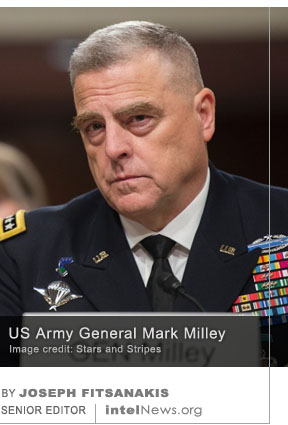
Security observers registered surprise on Friday, March 3, when it was announced that the Joint Chiefs of Staff Chairman General Mark Milley (pictured) had arrived in Israel for a previously unannounced visit. The official purpose of General Milley’s visit was to discuss “security cooperation” between Israel and the United States. The American military official made no public remarks while in Israel, where he reportedly met with Minister of Defense Yoav Gallant and Lieutenant General Herzl Halevi, Chief of General Staff of the Israel Defense Forces.

But, according to Al-Monitor, General Milley’s remarks to his Israeli counterparts were “unprecedented” in nature. The news outlet quoted an anonymous top Israeli security official, who said he could “not remember when our American allies spoke to us in such a way”. According to the anonymous official, General Milley’s remarks included the phrase “you have to decide which side you are on”. The American military official also told the Israelis that “if you want to continue to talking to us, you need to calm the [Palestinian] territories”. Read more of this post

WHO calls on US and China to release intelligence about origins of COVID-19

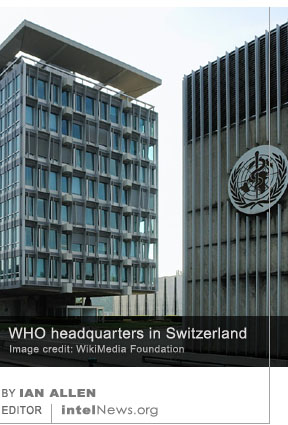
World Health OrganisationTHE WORLD HEALTH ORGANIZATION has called on the United States and China to share what they know about the source of the COVID-19 pandemic. The call, made by WHO’s Director-General Dr. Tedros Adhanom Ghebreyesus and others, came days after United States Federal Bureau of Investigation Director Christopher Wray said in a television interview that COVID-19 “most likely” originated from a Chinese government laboratory.
Wray made the statement last week in a televised interview with Fox News, in response to a question about the origins of the COVID-19 virus. Wray said that, “for quite some time now”, the FBI has “assessed that the origins of the pandemic are most likely a potential lab incident in Wuhan”, a city in central China. Wuhan hosts the Wuhan Institute of Virology, which includes laboratories that specialize on biosecurity and the study of newly emerging infectious diseases. Wray added that Beijing has “been doing its best to try to thwart and obfuscate the work” of the United States in trying to determine the precise origins of the virus.

Late last week, Dr. Maria Van Kerkhove, an infectious disease epidemiologist and the WHO’s technical lead on COVID-19, said the WHO had contacted the United States’ mission to the United Nations in Geneva, Switzerland, to inquire about the information that informs the FBI’s assessment. On Friday, meanwhile, Dr. Tedros called for “any country [with] information about the origins of the pandemic” to come forward. The WHO Director-General went on to say that “it’s essential for that information to be shared with WHO and the international scientific community”.

The WHO also called on China “to be transparent in sharing data and to conduct the necessary investigations and share the results” with the global scientific community, “not so as to apportion blame, but to advance our understanding of how this pandemic started, so we can prevent, prepare for and respond to future epidemics and pandemics”. When asked about the WHO’s own investigation into the origins of COVID-19, Dr. Tedros responded that “all hypotheses on the origins of the virus remain on the table”.

In the meantime, China responded angrily to the FBI director’s comments. Beijing has previously dismissed claims that COVID-19 may have emerged as a result of an accident at a Chinese government-funded lab as a disinformation campaign designed to smear its image and reputation around the world. Last week, Mao Ning, a spokeswoman for China’s Ministry of Foreign Affairs, reacted angrily to allegations that the government of China is responsible for the COVID-19 pandemic. Mao called on the United States to “look to its own biological laboratories scattered across the world when searching for the virus’s source”.

Author: Ian Allen | Date: 08 March 2023 | Permalink

Canadian parliament pressures government to investigate Chinese election meddling

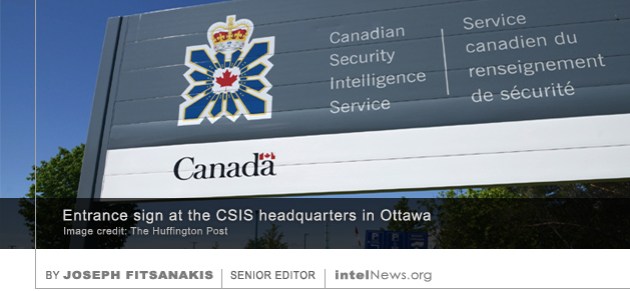
CSIS canadaA KEY COMMITTEE IN the Parliament of Canada passed a motion late last week that calls on the government to investigate allegations of foreign interference in the country’s general elections. Last Thursday’s vote by the Standing Committee on Procedure and House Affairs came soon after its members attended closed-door testimony by senior intelligence officials, which touched on various topics relating to the national security of Canada.

The motion specifically mentioned recent testimony by David Vigneault, Director of the Canadian Security Intelligence Service (CSIS), which is Canada’s primary national intelligence agency. Vigneault told the Procedure and House Affairs Committee that there had been no major efforts by foreign powers to interfere in Canadian elections in 2019 and 2021. As a result, the integrity of the election processes and results had not been compromised, Vigneault said.

However, the CSIS director added that an investigation had been launched into allegations that China carried out concerted efforts to meddle in these elections. Vigneault was referring to a series of media reports in the past year, which have alleged that China employed its embassy in Ottawa, as well as its network of consulates across China, to carry out a campaign of interference into Canadian political life, and election campaigns in particular. Much of the momentum behind these allegations comes from the opposition Conservative Party of Canada. Some senior Conservative officials have explained their electoral defeat by the ruling Liberal Party as a result of Chinese interference.

All five Liberal Party lawmakers in the Procedure and House Affairs Committee voted against the motion to launch a broad public inquiry into alleged Chinese electoral interference. However, they were outnumbered by the six opposition lawmakers, who united in voting for the motion. The motion is not binding. However, as a report in the Reuters news agency notes, it places pressure on the government of Prime Minister Justin Trudeau to address these concerns. Trudeau has acknowledged that China did try to interfere in the Canadian general elections, but has insisted that the election results were not affected by these efforts.

Author: Joseph Fitsanakis | Date: 06 March 2023 | Permalink

Australia to deport Kazakh-born Irish woman for allegedly spying for Russia

Irish National Space CentreTHE GOVERNMENT OF AUSTRALIA has ordered the deportation of a Kazakh-born Irish citizen, who is believed to be a spy for the Russian Federation, according to reports from Australia and Ireland. The woman in question has been identified as Marina Sologub, 39, an ethnic Russian who was born in Kazakhstan, but grew up in the Republic of Ireland.
Sologub reportedly spent her teenage years in Glanmire, a suburb of the city of Cork, located on Ireland’s southern coastline. She eventually enrolled at University College Cork, where she graduated with a degree in Politics and Governance. While still at university, Sologub worked for Bernard Allen, a member of parliament for Ireland’s center-right Fine Gael political party. She then worked full-time at the office of Willie Penrose, a parliamentarian for the left-of-center Labour Party, which is far smaller than Fine Gael.

In 2011, when she was in her late 20s, Sologub was hired by Ireland’s National Space Centre in Middleton, Cork, where she remained for 7 years. According to media reports, Sologub has claimed that she was instrumental in “the development of intergovernmental agreement between Republic of Ireland and Russia Federation in use of space for civil purposes” during her time at the National Space Centre.

In 2020, Sologub’s impressive résumé landed her a job with the British-headquartered international consultancy firm Deloitte in Australia. She moved to Australia in September of that year and worked for Deloitte for about a year, at which point she was hired by a private firm specializing in the space industry. She subsequently entered employment with the city council of Marion, a small suburb of Adelaide, the capital of South Australia.

On February 22, the Australian Security Intelligence Organisation (ASIO), which is tasked with counterintelligence, announced that Sologub’s visa was under investigation on suspicion of her role in international espionage. It was reported that Sologub had had “extensive interactions with diplomatic staff from the Russian embassy” in Australia, which began soon after she entered the country in 2020. Now Australia has announced Sologub’s deportation from the country. According to media reports, Sologub’s deportation is part of a wider operation that aims “to identify Russian intelligence workers among high-ranking employees” in Australian government and industry.

Author: Joseph Fitsanakis | Date: 27 February 2023 | Permalink

Russia covertly mapping key energy infrastructure for sabotage, Dutch report warns

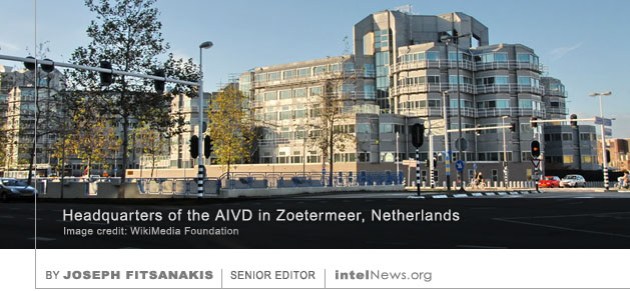
AIVD HollandTHE RUSSIAN INTELLIGENCE SERVICES are “covertly mapping” the energy infrastructure of the North Sea, in preparation for acts of disruption and sabotage, according to a new report form the Dutch government. The 32-page report was published this week, ahead of the one-year anniversary of the 2022 Russian invasion of Ukraine. It was authored collaboratively by the two main intelligence agencies of the Netherlands, the General Intelligence and Security Service (AIVD) and the Military Intelligence and Security Service (MIVD).
The report notes that Russian spy ships, drones, satellites and human agents are engaged in an unprecedented effort to chart the energy and other “vital marine infrastructure” of the North Sea. The purpose of this effort is to understand how the energy and other key infrastructure works in the North Sea. The term North Sea refers to the maritime region that lies between France, Belgium, the Netherlands, Germany, Denmark, Norway and the United Kingdom. It hosts key energy infrastructure, including oil, natural gas, wind and wave power installations, which supply energy to much of northern Europe.

According to the report, Russian intelligence and espionage activities in the North Sea “indicate preparatory acts of disruption and sabotage. These appear to be aimed at energy systems, but also other vital infrastructure, such as undersea power and communication cables, and even drinking water facilities. Consequently, physical threats toward any and all of these facilities should be viewed as conceivable, the report warns.

On Saturday, the Dutch government said it would expel an undisclosed number (believed to be at least ten) of Russian diplomats. It also accused Moscow of engaging in constant efforts to staff its diplomat facilities in the Netherlands with undercover intelligence officers. On the same day, the Dutch government said it would shut down its consulate in Russia’s second-largest city, St. Petersburg, and ordered Russia to shut down its trade mission in the port city of Amsterdam.

Author: Joseph Fitsanakis | Date: 21 February 2023 | Permalink

Russia’s spy networks in Europe see greatest post-Cold War setback, experts claim

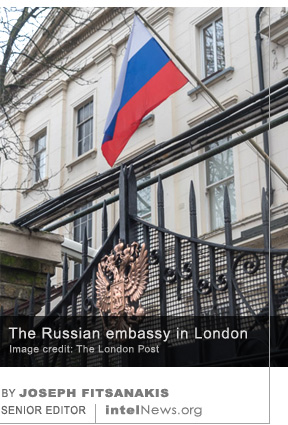
Russian embassy LondonRUSSIA’S ABILITY TO CONDUCT human intelligence operations in Europe has suffered greater damage in recent years than at any time since 1991, according to some experts. These setbacks have partly been caused by what The Washington Post refers to in a recent article as “a campaign to cripple Russian spy networks”, which is taking place across the continent. This Europe-wide campaign has grown in momentum since the Russian invasion of Ukraine and supplements boarder efforts to arm Ukraine in its war against the Kremlin.

The initial blow against the Kremlin’s spy network was delivered last year, when a wave of mass expulsions of Russian diplomats resulted in more than 400 suspected Russian intelligence officers being ordered to leave various European capitals. According to observes, the expelled Russian diplomats were in reality intelligence officers, who were active across Europe under diplomatic cover. Since that time, European counterintelligence agencies have launched a series of “precision strikes” against what remains of Russia’s human intelligence network across the continent.

The recent wave of expulsions of Russian intelligence personnel was not unprecedented. But it does suggest a degree of collaboration between Europe’s counterintelligence agencies that is difficult to match with historical examples. An interesting element in this collaboration is what The Washington Post describes as a “post-Ukraine shift in mind-set” in countries that had previously taken a softer approach toward the Kremlin. These include Germany, as well as Britain, which since 2018 has “refused on national security grounds over 100 Russian diplomatic visa applications”.

Russia’s response has been noticeably muted, and may mean that Moscow was caught off-guard by this Europe-wide counterintelligence campaign. The Post quotes Antti Pelttari, director of the Finnish Security and Intelligence Service (SUPO), who claims that the Russian capability to conduct human intelligence operations in Europe “has been degraded considerably”. This would imply that the Kremlin’s ability to carry out covert political action, such as political influence campaigns and related psychological operations, has been curtailed. Moreover, it is likely that the Russian intelligence services are unable to adequately assist the Kremlin’s decision-making capabilities with actionable information. Read more of this post