British spy testifies in disguise in alleged al-Qaeda member’s trial
February 20, 2015 Leave a comment
 By IAN ALLEN | intelNews.org
A heavily disguised British intelligence officer has given evidence in the trial of the alleged leader of an al-Qaeda cell who is being tried in the United States for planning to bomb the New York subway system. Abid Naseer, 28, from Pakistan, was a studying in Britain in April 2009, when he was arrested by British police along with 12 other people for allegedly planning a series of suicide bombings in a popular shopping center in the city of Manchester. In January 2013, however, he was extradited to the US, where he also faces changes of having tried to organize suicide attacks against the New York public transportation system.
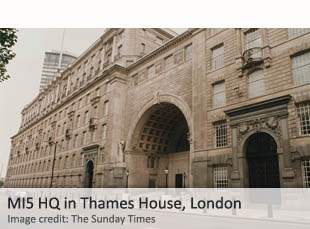
American prosecutors claim Naseer received paramilitary training in Pakistan before moving to the UK intent on carrying out terrorist attacks. Last year, the prosecution asked the judge whether six intelligence officers from the UK’s Security Service (also known as MI5), who monitored Naseer’s activities in the months leading up to his arrest, could provide evidence in court. Moreover, the prosecution requested that the MI5 officers be allowed to provide evidence without revealing their identities, since they work as surveillance operatives and are currently involved in counterterrorism investigations. The judge agreed, and the first of the six MI5 officers gave evidence this week through a video link from an undisclosed location in the Britain.
The witness concealed his identity by wearing a false goatee beard, thick spectacles and what reporters described as “a long black wig”. He was also wearing heavy make-up and was identified in court only as “serial number 1603”, according to British newspaper The Daily Telegraph. He told the court that he was part of a large team of MI5 surveillance officers who closely followed Naseer for over a month while he was allegedly planning suicide operations in Britain and the US. The physical surveillance included following the suspect as he was scouting targets in Manchester and sitting behind him on a bus traveling from Manchester to Liverpool. Naseer is defending himself in the trial and had the chance to cross-examine the MI5 officer, said The Telegraph.












 intelNews.org
Peru recalls ambassador from Chile as espionage probe widens
February 23, 2015 by Ian Allen 1 Comment
The government of Peru has officially recalled its ambassador from Chile as it investigates three Peruvian naval officers who are said to have passed military secrets to Chilean intelligence. Peruvian President Ollanta Humala announced on Saturday that the decision had been taken to recall the country’s ambassador from Santiago following an emergency meeting of the cabinet. The espionage allegations against the three officers appeared in the Peruvian media last Thursday. Several leading newspapers, among them the Lima-based El Comercio, said the three junior Peruvian officers were suspected of having spied for Chile from 2005 to 2012.
On the following day, Peru’s Minister of National Defense, Pedro Cateriano, officially confirmed the reports and said two of the officers had been arrested and would be tried in a military court. A third one was being investigated for possible connections with the Chilean spy ring, said Cateriano. According to the Peruvian government, the naval officers stole classified military documents and passed them on to their Chilean handlers in exchange for money. They are alleged to have traveled abroad on several instances between 2005 and 2012, in order to conduct secret meetings with Chilean diplomats and intelligence officers, in countries such as Argentina, Bolivia, Brazil and even Argentina itself. It was there, according to reports from Peru, that the three alleged spies passed on classified information to their handlers. Defense Minister Cateriano implied on Friday that the officers came under suspicion when their superiors, who knew the level of their government pay, deduced that they did not have sufficient funds to pay for international travel, and concluded that someone else must be funding their frequent trips abroad.
Following an emergency session on Friday, the Peruvian Congress issued a statement urging Chile to provide “firm guarantees” that such “aggressive actions” against Peruvian sovereignty would not be repeated. The Chilean government said late on Friday that it did not condone or promote espionage. But Peruvian President Humala told reporters on Saturday that a more precise and direct answer was in order. The two naval officers are not expected to stand trial until the summer. Meanwhile, authorities in Peru say they are investigating possible involvement by high-ranking military officers in the alleged spy ring.
Filed under Expert news and commentary on intelligence, espionage, spies and spying Tagged with Chile, diplomacy, espionage, military intelligence, News, Ollanta Humala, Pedro Cateriano, Peru, poisoning, suspicious deaths