European, American, Russian fighters join both sides of Syrian war
November 22, 2013 5 Comments
 By JOSEPH FITSANAKIS | intelNews.org
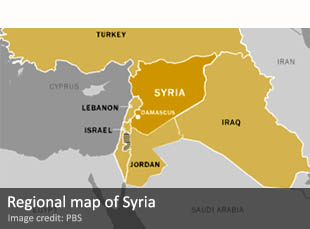
Nearly three years into the Syrian Civil War, it is becoming increasingly clear that the opposition forces are far more fragmented than the government side. Many of the rebel factions are now largely concerned with fighting each other for control of territory and other key assets, including oil installations and cross-border trade routes. Amidst the chaos, thousands of foreign fighters are flooding into the country, motivated by ideology or money. It is estimated that between 6,000 and 11,000 foreign fighters have entered Syria since the war, causing United States intelligence officials to speak of “a growing presence of foreigners” in the ranks of armed factions. At least 300 British citizens are estimated to have traveled to Syria with the intent of joining the Civil War, according to The Times of London. Most of them are young Islamist radicals who are intent on helping topple the administration of Syrian President Bashar al-Assad, according to the paper. Another British newspaper, The Daily Telegraph, reported recently that four British citizens —all London residents— died recently in Syria’s largest city, Aleppo, while fighting alongside government troops in support of President Assad. They were fighting against the al-Nusra Front, an opposition group with strong links to al-Qaeda. Meanwhile, The New York Times said on Wednesday that “dozens of Americans” have entered or tried to enter Syria to join various rebel factions in their fight against the government. The paper cited unnamed “American intelligence officials” in alleging that the Americans are a “small subset” of a larger group of “roughly 600” Western-born Islamists who have entered Syria from Western Europe, North America and Australia since 2011. The ongoing conflict has also attracted hundreds of Russian fighters, according to reports. Foreign Policy magazine notes the “rising flow” of radical Islamists from the Russian Federation to Syria in recent months. Read more of this post
















News you may have missed #858
November 26, 2013 by Ian Allen Leave a comment
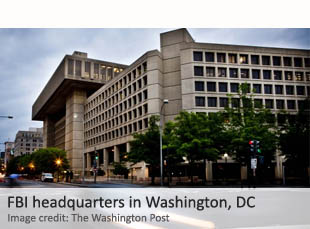
►►The FBI facilitates NSA’s domestic surveillance. Shane Harris writes in Foreign Policy: “When the media and members of Congress say the NSA spies on Americans, what they really mean is that the FBI helps the NSA do it, providing a technical and legal infrastructure that permits the NSA, which by law collects foreign intelligence, to operate on US soil. It’s the FBI, a domestic US law enforcement agency, that collects digital information from at least nine American technology companies as part of the NSA’s PRISM system. It was the FBI that petitioned the Foreign Intelligence Surveillance Court to order Verizon Business Network Services, one of the United States’ biggest telecom carriers for corporations, to hand over the call records of millions of its customers to the NSA”.
►►Egypt expels Turkish ambassador. Egypt says it has ordered the Turkish ambassador to be expelled, following comments by Turkey’s prime minister. Saturday’s decision comes after Turkish Prime Minister Recep Tayyip Erdoğan renewed his criticism of Egypt’s new leaders earlier in the week. Turkey and Egypt recalled their ambassadors in August following Turkey’s sharp criticism of Egypt’s leaders and Mohamed Morsi’s ouster. Turkey’s ambassador returned to Egypt a few weeks later, but Egypt has declined to return its ambassador to Turkey. Turkey’s government had forged a close alliance with Morsi since he won Egypt’s first free presidential election in June of 2012.
►►The internet mystery that has the world baffled. For the past two years, a mysterious online organization has been setting the world’s finest code-breakers a series of seemingly unsolvable problems. It is a scavenger hunt that has led thousands of competitors across the web, down telephone lines, out to several physical locations around the globe, and into unchartered areas of the “darknet”. Only one thing is certain: as it stands, no one is entirely sure what the challenge —known as Cicada 3301— is all about or who is behind it. Depending on who you listen to, it’s either a mysterious secret society, a statement by a new political think tank, or an arcane recruitment drive by some quasi-military body. Which means, of course, everyone thinks it’s the CIA.
Filed under Expert news and commentary on intelligence, espionage, spies and spying Tagged with 0 Egypt expels Turkish ambassador, 0 The FBI facilitates NSA's domestic surveillance, 0 The internet mystery that has the world baffled, Cicada 3301, cryptology, diplomatic expulsions, domestic intelligence, Egypt, FBI, News, news you may have missed, NSA, Turkey, United States