Revealed: South Korean intel officers caught spying on Australia
May 2, 2013 2 Comments
 By JOSEPH FITSANAKIS | intelNews.org |
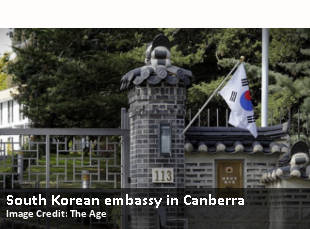
A court in Australia has released information about “inappropriate activities” allegedly conducted by South Korean intelligence officers targeting trade negotiations between Seoul and Canberra. The 2011 case involved operatives of South Korea’s National Intelligence Service (NIS), who purportedly tried “to obtain sensitive information” from Australian civil servants. The documents, released Tuesday by Australia’s Federal Court, reveal that an Australian government official, Dr. Yeon Kim, was sacked and had his security clearance revoked, for allegedly holding clandestine meetings with South Korean NIS officers. The Australian government accused Kim, who worked for the Bureau of Agricultural and Resource Economics and Sciences, of meeting repeatedly with Hoo-Young Park, an employee of the South Korean embassy in Canberra, who had been declared to the Australian government as an NIS liaison officer. According to the court documents, three other NIS officers serving under diplomatic cover in Australia, Bum-Yeon Lee, Sa-Yong Hong, and a man named Kim, were involved in collecting intelligence on Australian trade secrets. According to the Australian Security Intelligence Organisation (ASIO), which detained Kim, he willingly participated in the “foreign interference” operation by the NIS. It is worth noting, however, that there were no expulsions of South Korean intelligence officers or diplomats following Kim’s detention. On the contrary, ASIO appears to have gone to great lengths to prevent disclosure of the spy affair and even protect the identities of the NIS officers involved. In a move interpreted by some as an attempt by Canberra to safeguard its good relations with Seoul, the Australian government warned in a memo that any disclosure of the South Korean intelligence operation would have “a detrimental impact” on bilateral relations between the two nations. Read more of this post










 intelNews.org
News you may have missed #834
May 3, 2013 by Ian Allen 2 Comments
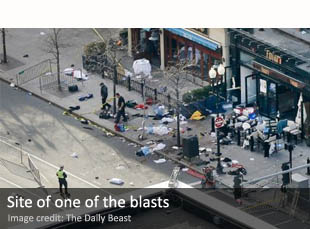
►►Why FBI and CIA didn’t connect the dots on Boston bombers. The FBI and the CIA are being criticized for not keeping better track of Tamerlan Tsarnaev in the months before the Boston Marathon bombings. How could they have ignored such a dangerous person? How do we reform the intelligence community to ensure this kind of failure doesn’t happen again? Legendary security expert Bruce Schneier says the idea of connecting the dots is a bad metaphor, and focusing on it makes us more likely to implement useless reforms.
►►Korean spy’s deportation reveals web of intrigue. Relations between Australia and South Korea have been strained after the East Asian economic powerhouse was caught soliciting sensitive information from public servants, and the deportation of a South Korean spy for espionage in 2009 was disclosed. New details of South Korean espionage in Australia were revealed in an unfair dismissal case before the Fair Work Commission brought by a former intelligence officer with the Australian Federal Police, Bo-Rim “Bryan” Kim.
►►Secret US court approved all domestic spying requests in 2012. The United States Foreign Intelligence Surveillance Court (also known as FISA court) quietly rubber-stamped nearly 2,000 government requests to search or electronically monitor people in the United States last year, according to a Justice Department report. The agency, which oversees requests for surveillance warrants against suspected foreign intelligence agents on US soil, released the report to Senate majority leader Harry Reid (D-Nevada), showing that by approving the 1,856 inquiries “for foreign intelligence purposes”, it had granted every single government request in 2012.
Filed under Expert news and commentary on intelligence, espionage, spies and spying Tagged with 0 Korean spy’s deportation reveals web of intrigue, 0 Secret US court approved all domestic spying requests in 2012, 0 Why FBI and CIA didn't connect the dots on Boston bombers, 2013 Boston Marathon attacks, Australia, Bruce Schneier, espionage, Foreign Intelligence Surveillance Act, News, news you may have missed, South Korea, United States