Research sheds light on Japan’s wartime espionage network inside the United States
September 26, 2022 1 Comment
 MUCH HAS BEEN WRITTEN about the wartime intelligence exploits of the Allies against Japan. Such exploits range from the United States’ success in breaking the Japanese JN-25 naval code, to the extensive operations of the Soviet Union’s military intelligence networks in Tokyo. In contrast, very little is known about Japan’s intelligence performance against the Allies in the interwar years, as well as after 1941. Now a new paper by an international team or researchers sheds light on this little-studied aspect of intelligence history.
The researchers, Ron Drabkin, visiting scholar at the University of Notre Dame, K. Kusunoki, of the Japan Maritime Self-Defence Force, and Bradley W. Hart, associate professor at California State University, Fresno, published their work on September 22 in the peer-reviewed journal Intelligence and National Security. Their well-written article is entitled “Agents,  Attachés, and Intelligence Failures: The Imperial Japanese Navy’s Efforts to Establish Espionage Networks in the United States Before Pearl Harbor”.
The authors acknowledge that the history of the intelligence efforts of the Imperial Japanese Navy (IJN) has received very little attention by scholars. Consequently, it remains unexplored even in Japan, let alone in the international scholarship on intelligence. There are two main reasons for that. To begin with, the IJN systematically destroyed its intelligence files in the months leading to Japan’s official surrender in 1945. Then, following the war, fearing being implicated in war crimes trials, few of its undercover operatives voluntarily revealed their prior involvement in intelligence work.
Luckily, however, the past decade has seen the declassification of a number of Federal Bureau of Investigation (FBI) counterintelligence files relating to Japanese intelligence operations targeting the United States. Most of these files date from the 1930s and early 1940s. Additionally, a number of related documents have been declassified by the government of Mexico, which is important, given that Mexico was a major base for Japanese intelligence operations targeting the United States. Read more of this post
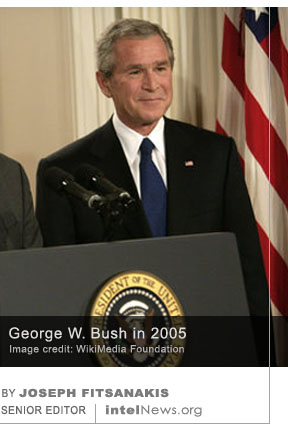 A TIP BY BELGIAN intelligence helped the Federal Bureau of Investigation foil a plot by Iraqi nationals to kill former United States President George W. Bush. American news outlets
  THE AUSTRIAN STATE HAS launched a probe into an attempt by alleged pro-Russian government officials in Vienna to create a brand new intelligence service in 2018, according to news reports. The effort did not succeed.
  THE UNPRECEDENTED GROWTH OF digital access in our time has revolutionized online user access to information. Yet, the same phenomenon is behind the growing power of individuals, groups and state actors to create and disseminate misinformation and disinformation with unprecedented intensity. In the case of misinformation, false, mistaken or otherwise misleading information is disseminated by unsuspecting users. When these actors are acting deliberately with the intention to mislead, deceive or confuse, their actions amount to disinformation.
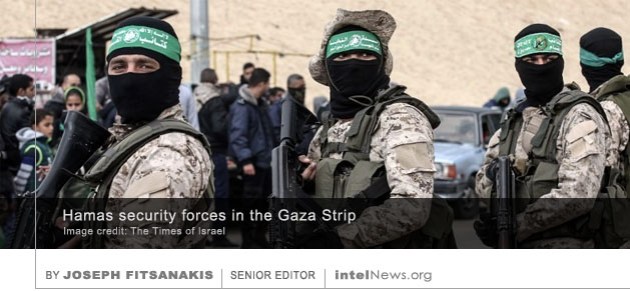 A NEW STUDY SHEDS light on the little-studied topic of counterintelligence operations launched against Israel by the Islamic Resistance Movement, better known as Hamas. Hamas is a Palestinian Sunni Islamist and nationalist organization with a 35-year history, which has controlled the Gaza Strip since 2007. As is typically the case with Middle Eastern non-state actors, Hamas is a complex umbrella organization that combines social-service and administrative functions with armed elements. The latter include internal policing components and a full-time military wing, as well as reserve armed forces.
 A NEW PAPER, PUBLISHED by the United Kingdom’s Royal United Services Institute (RUSI) for Defence and Security Studies, sheds light the complex relationship between Italy and the West’s two principal adversaries, Russia and China. Italy is a major global economic power. It is a prominent member of the Group of Seven (G7), which collectively account for more than 50 percent of global net wealth. It is also a member of the North Atlantic Treaty Organization (NATO) and the European Union (EU).
 A SECURITY BULLETIN ISSUED jointly by the United States Department of Homeland Security (DHS) and the Federal Bureau of Investigation (FBI)
  MULTIPLE NEWS OUTLETS CLAIMED on Wednesday that Monday’s search by authorities of a Florida residential compound belonging to former United States President Donald Trump was based on information provided to the Federal Bureau of Investigation by a confidential human source. The source reportedly gave the FBI details about a number of classified documents that were allegedly hidden in Trump’s Florida estate, as well as their precise location.
 A GROWING CONVERGENCE BETWEEN the Central Intelligence Agency (CIA) and the United States military has been one of the most notable changes in American intelligence after 9/11.
  THE NORTHERN IRISH CONFLICT was a 30-year irregular war involving the government of the United Kingdom and an assortment of paramilitary groups. By the mid-1990s, when most of these groups had declared ceasefire, over 3,600 people had been killed and over 40,000 injured. The major paramilitary groups that participated in the conflict were the separatist Provisional Irish Republican Army (IRA) and Irish National Liberation Army (INLA), and the pro-UK, or ‘loyalist’, Ulster Volunteer Force (UVF) and Ulster Defence Association (UDA).
 A FEDERAL JUDGE IN HAWAII has denied bail to a married American couple, who are believed to have assumed the identities of dead children in order to lead double lives for over 20 years, according to prosecutors. Local media reports
 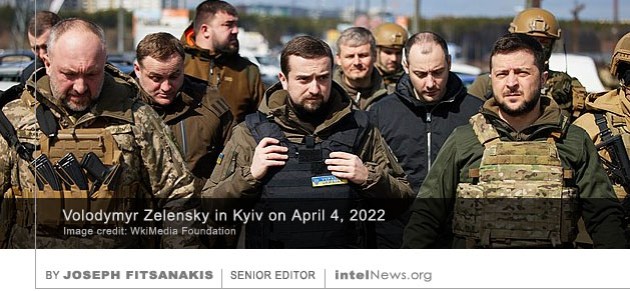 ON SUNDAY, JULY 17, the Ukrainian administration of President Volodymyr Zelenskiy announced the most extensive shake-up of the nation’s security leadership since the Russian military invasion. Two key members of Zelenskiy’s inner circle, Ukraine’s Prosecutor General Iryna Venediktova and domestic security chief Ivan Bakanov, were
  invariably, no. In fact, even the Ukrainians themselves are not in a position to trust their own intelligence services.
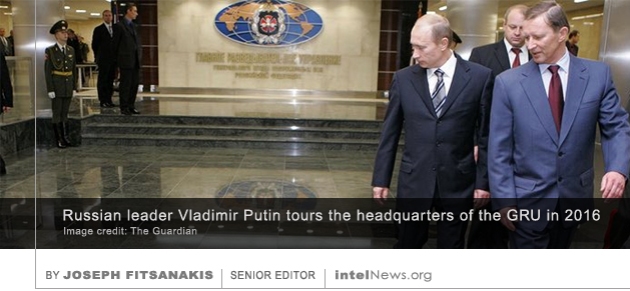 AN ALLEGED RUSSIAN SPY, who used a forged Brazilian identity to travel internationally, has been jailed in Brazil after he was denied entry in Holland, where he had traveled to work as an intern. IntelNews has
 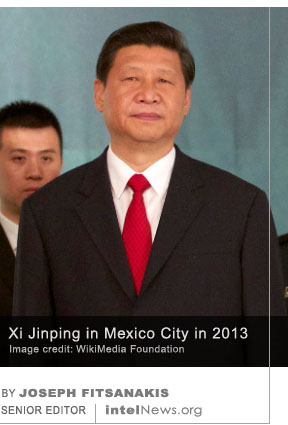 INTELLIGENCE OBSERVERS OFTEN REFER to the Communist Party of China (CPC) as “the world’s largest secret society”. Barring brief periods of relative openness in the late 1990s and early 2000s, the closed decision-making system of the CPC has presented Western intelligence analysts with cascading intractable enigmas for over half a century. This problem has become even more pressing under the decade-long leadership of Xi Jinping, during which the imposition of rigorous counterintelligence measures have turned China into a text-book hard intelligence target.
 social media, to social-science-based quantitative studies. Sverdrup-Thygeson and Stenslie explain that the two extremes of Beijingology are invariably disconnected from what is actually happening on the ground in China, and are thus of limited value.








Reuters investigation focuses on alleged loss of CIA spy networks in Iran
October 3, 2022 by Joseph Fitsanakis 1 Comment
The news agency said two of its reporters, Joel Schectman and Bozorgmehr Sharafedin, spent dozens of hours interviewing six Iranian former CIA assets, as well as 10 former employees of the United States Intelligence Community, who have “knowledge of Iran operations”. All six of the Iranians interviewed spent between five and 10 years in prison for their CIA connections. Two of them left Iran after serving their prison sentences, and are now refugees in central and northern Europe. At least one of them claims he was never contacted by the CIA after his release in 2019.
According to the Reuters investigation, CIA assets in Iran operate in a high risk environment, given that the United States has not had diplomatic facilities in the Middle Eastern country since 1979. Diplomatic facilities are regularly used to shelter CIA personnel, who recruit, train and handle foreign assets. Despite the absence of such facilities, the CIA is willing to take great risks in running agents inside Iran, because of the country’s geopolitical significance. The agency’s intensity in operating in Iran is matched by the Islamic Republic’s aggressive counterintelligence posture, which, according to the Reuters investigation, has “netted dozens of CIA informants” in recent years.
It is claimed that Iran’s counterintelligence efforts were inadvertently aided by a mass-produced CIA covert communications system, which the spy agency operated until 2013 in at least 20 countries around the world, including Iran. The Internet-based system was intended for use by CIA sources who were not fully vetted, but were still considered useful due to their access to secret information, according to Reuters. This appears to be a major update on a story that was first reported by Yahoo News in 2018. It claimed that that the CIA had suffered a “catastrophic” compromise of the system it used to communicate with spies, which caused the death of “dozens of people around the world” according to sources.
Reuters said it contacted CIA spokeswoman Tammy Kupperman Thorp, who declined to comment on specific allegations. The CIA spokeswoman dismissed the “notion that CIA would not work as hard as possible to safeguard” its assets around the world as “false”. The news agency said it also contacted Iran’s Ministry of Foreign Affairs and its Mission to the United Nations in New York, but received no responses.
► Author: Joseph Fitsanakis | Date: 03 October 2022 | Permalink
Filed under Expert news and commentary on intelligence, espionage, spies and spying Tagged with CIA, espionage, HUMINT, Iran, United States