Israel wants United States to lift sanctions on controversial cyber-spy firms
November 10, 2021 Leave a comment
THE GOVERNMENT OF ISRAEL is pressuring the United States to reverse its recent decision to blacklist two controversial digital surveillance companies, which Israel sees as “a crucial element of its foreign policy”. The US Department of Commerce placed the two firms, NSO Group Technologies and Candiru, on a sanctions list on November 3. According to a statement issued by the US Department of Commerce, the two firms engaged “in activities that are contrary to the national security or foreign policy interests of the United States”.
The move followed revelations of a spy software known as Pegasus, which is marketed by NSO Group. As intelNews and others reported back in July, Pegasus is able to install itself on targeted telephones without requiring their users to click a link or download an application. Upon installation, the software provides the spying party with near-complete control of a targeted telephone. This includes the ability to browse through the device’s contents, such as photographs and videos, record conversations, as well as activate the telephone’s built-in microphone and camera at any time, without its user’s consent or knowledge.
The US is among several Western governments that have criticized the Pegasus software as a malicious tool used by some of NSO Group’s customers to maliciously target government officials, journalists, businesspeople, activists, academics, and embassy workers”. Software tools such as Pegasus have enabled a host of governments around the world to “conduct transnational repression [by] targeting dissidents, journalists and activists outside of their sovereign borders to silence dissent”, according to the US Department of Commerce.
According to The New York Times, however, the government of Israel supports the work of NSO Group and Candiru, and “sees the Pegasus software as a crucial element of its foreign policy”. The Israelis were thus “alarmed” by Washington’s decision to blacklist the two firms, and are determined to lobby the White House on their behalf. The goal of the Israeli government, according to the paper, is to convince the American administration that the activities of NSO and Candiru, “remain of great importance to the national security of both” Israel and the US. In return for the US reversing its decision to blacklist the companies, Israel is willing to exercise “much tighter supervision” of these and other similar firms, through its software-licensing system, according to The Times.
► Author: Joseph Fitsanakis | Date: 10 November 2021 | Permalink



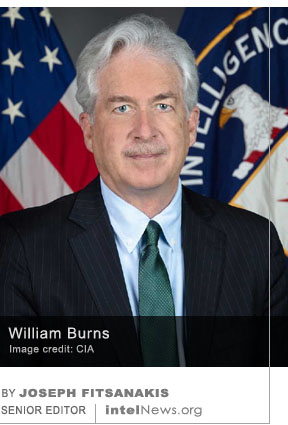 THE DIRECTOR OF THE United States Central Intelligence Agency has returned to Washington from a surprise visit to Russia, where he led a high-level team of American officials in meetings with their Russian counterparts. The two-day visit was


 A POPULAR TURKISH NEWSPAPER has published an interview with a member of a network of spies who were allegedly recruited by the Israeli agency Mossad to spy on Palestinian students living in Turkey. As intelNews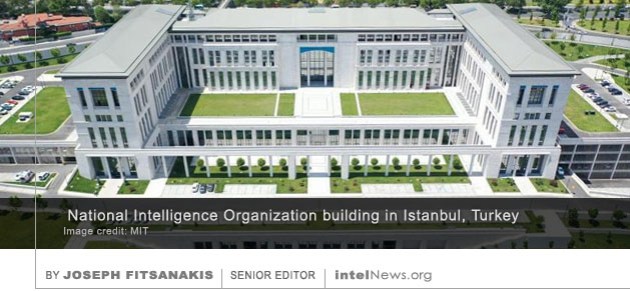

 THE INTELLIGENCE CHIEFS OF the United States, Japan and South Korea are to meet behind closed doors this week. The meeting will take place nearly two years after a major diplomatic spat between Japan and South Korea threatened to significantly harm intelligence cooperation between them. In November of 2019, the South Korean government threatened to terminate the General Security of Military Information Agreement (GSOMIA). The agreement was initiated in 2016 under American tutelage, with the aim of facilitating the sharing of intelligence between South Korea and Japan about North Korea’s missile and nuclear programs.






 intelNews.org
Hacker behind attack on popular booking site has ties to US intelligence, paper claims
November 12, 2021 by Joseph Fitsanakis 1 Comment
The authors argue that the interest Booking.com poses for security services is “no surprise”. The website’s data includes valuable information about “who is staying where and when, where diplomats are, who is traveling to suspicious countries or regions, where top executives book an outing with their secretary —all valuable information for [the world’s intelligence] services”.
According to the report, the hacker was able to penetrate an insufficiently secured server belonging to Booking.com, and gain access to the accounts of customers, by stealing their personal identification numbers, or PINs. Accordingly, the hacker stole “details of hotel [and flight] reservations” of thousands of Booking.com customers in the Middle East. The report claims that targeted customers included Middle East-based foreign diplomats, government officials and other “persons of interest” to American intelligence.’’
After detecting the breach, Booking.com allegedly conducted an internal probe, which verified that the hacker —nicknamed “Andrew”— had “connections to United States spy agencies”, according to the report. The company then sought the assistance of the Dutch General Intelligence and Security Service (AIVD). At the same time, however, Booking.com consulted with a British-based law firm, which advised it that it was not obligated to make news of the hacker attack public. It therefore chose not to publicize the incident, according to the NRC article.
► Author: Joseph Fitsanakis | Date: 12 November 2021 | Permalink
Filed under Expert news and commentary on intelligence, espionage, spies and spying Tagged with AIVD (Netherlands), Booking.com, computer hacking, Netherlands, News