October 31, 2019
by Joseph Fitsanakis
 In 2011, the discovery of Osama bin Laden’s hideout in Abbottabad raised questions about Pakistan’s knowledge of his whereabouts. Today it is hardly controversial to suggest that at least some elements in the Pakistani government must have been aware of bin Laden’s location. Last week’s discovery of Abu Bakr al-Baghdadi in a region of Syria controlled by Turkey inevitably raises similar questions about Ankara’s role in the Syrian conflict and its relationship with the Islamic State.
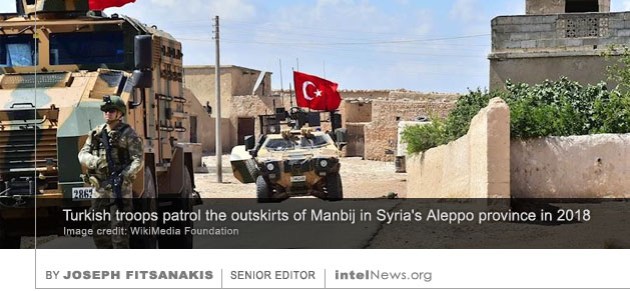
The self-proclaimed caliph of the Islamic State was found hiding in Barisha, a village in the Syrian province of Idlib, which is located just two miles from the Turkish border. The region that surrounds Barisha is under the control of Turkey and can most accurately be described as a Turkish protectorate inside Syria. The area north of Barisha has been under Turkish control since August of 2016, when Ankara launched Operation Euphrates Shield, a cross-border operation conducted by the Turkish Armed Forces in cooperation with Turkish-baked militias in Syria. In early 2018, Turkish and pro-Turkish forces extended their territorial control further south, capturing Barisha and all surrounding regions. They remain in control of the area to this day.
Turkish-occupied northern Syria is often described as a “proto-state”. It is governed by a collection of local councils of Turkmens and Arabs, with some Kurds and Yazidis also present. These councils elect representatives to the self-proclaimed Syrian Interim Government, which was formed in Turkey by Turkish-backed Syrian exiles and is currently headquartered in Azaz, an Arab-majority city of 30,000 that is under direct Turkish military control. Azaz is also the headquarters of the Turkish-backed “Free Police”, a gendarmerie-style militia that is funded, trained and equipped by the Turkish government.
In addition to the Turkish troops, the region is controlled by the Turkish-funded Syrian National Army. The 25,000 troops of the SNA —which is jokingly referred to by the locals as the “Turkish Syrian National Army”— operate completely under Turkish command. A substantial portion of the SNA’s force consists of former Islamic State fighters who switched their allegiance to the SNA once they saw the writing on the wall. Others are former members of the group that used to call itself Jabhat al-Nusra, an al-Qaeda affiliate that has become the most powerful Salafi-jihadist force in Syria after the demise of the Islamic State.
Turkish-occupied northern Syria is also the base of Ahrar al-Sham, a Salafi-jihadist group consisting of over 20,000 fighters, which is not officially aligned with al-Qaeda, but has similar goals. Since at least 2017, Ahrar al-Sham has effectively operated as a Turkish proxy militia and is in charge of dozens of check points and observation posts throughout the region. Lastly, the area is home to Hurras al-Din, yet another Salafi-jihadist group that is affiliated with al-Qaeda —though its leaders deny it. The group is able to operate in Turkish-controlled areas of Syria with suspicious ease. It was this group, Hurras al-Din, that sheltered al-Baghdadi in Barisha in return for cash.
Given Turkey’s military and political control of Idlib province, the question arises of how the world’s most high-profile terrorist leader was able to enter the region and receive protection from a militia that operates there under the watchful eye of the Turkish military. The New York Times reports that al-Baghdadi had been living in Barisha for several months before last week’s raid, and that Washington had been aware of his hideout location since the summer. Was Turkish intelligence also aware of the Islamic State leader’s whereabouts? If not, how could that be? If yes, why did it take a Kurdish spy, handled by Syrian Kurdish intelligence, to locate him and provide information to the Untited States? More importantly, what exactly is the relationship between Turkey and the al-Qaeda-linked Islamists who seem to operate freely in Idlib and provide protection to senior Islamic State officials in exchange for cash?
There are clearly more questions than answers here. If the United States is serious about combating Islamist extremism in the Middle East, it must press Ankara on these questions as a matter of urgency.
► Author: Joseph Fitsanakis | Date: 31 October 2019 | Permalink
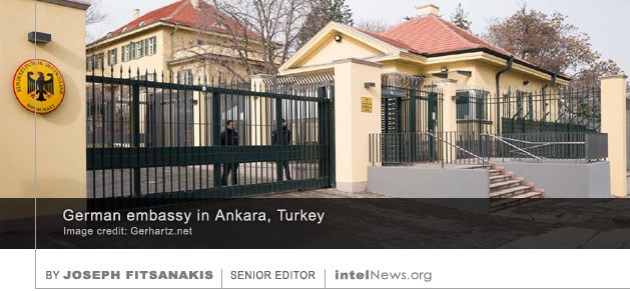 Turkish authorities have charged a lawyer working for the German embassy in Ankara with espionage, further-straining the already tense relationship between the two North Atlantic Treaty Organization allies. German newsmagazine Der Spiegel, which reported on the arrest, did not name the lawyer, but said he is a Turkish citizen and was arrested in September.
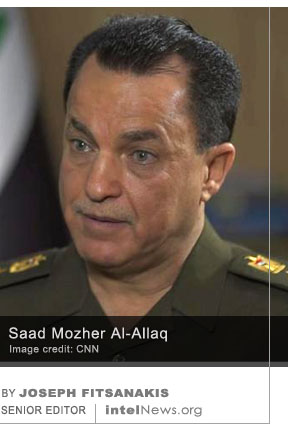 In a rare interview, the head of Iraq’s military intelligence has warned of an impending “catastrophe” as the Islamic State continues to edge ever-closer to rebuilding its networks of fighters and supporters in the Middle East. Lieutenant General Saad Mozher Al-Allaq, head of Iraq’s Military Intelligence Directorate, gave a rare
 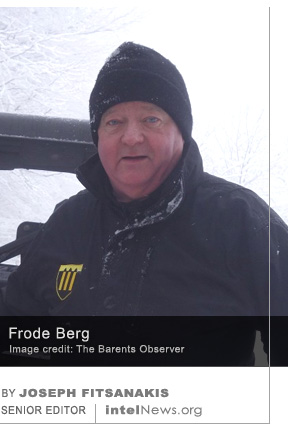 A rare three-way spy-swap has reportedly taken place between Russia and two North Atlantic Treaty Organization (NATO) members, Lithuania and Norway. Rumors of a possible exchange of imprisoned spies between the three countries first
 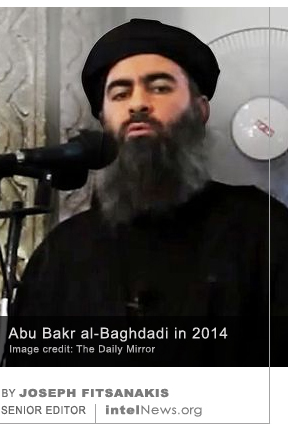 The Islamic State’s Syrian hideout that housed the group’s leader until his demise on October 26, was equipped with a frequently used internet connection, according to Arab media reports. Abu Bakr al-Baghdaid, the self-proclaimed caliph of the Islamic State, was killed by United States soldiers in Barisha, a village in the Syrian province of Idlib, which is located
 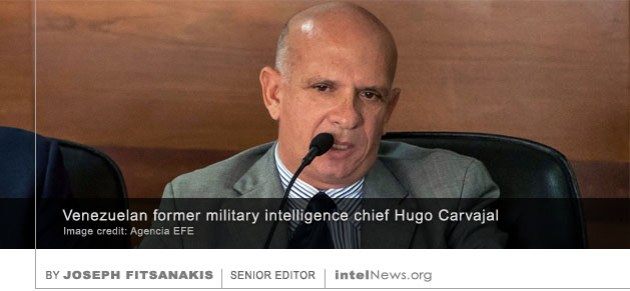 The former director of Venezuela’s military spy agency, who is wanted in the United States for drug trafficking, reportedly disappeared in Spain as authorities there were attempting to extradite him to Washington. Hugo Carvajal is a retired general and former diplomat, who was a member of the late Venezuelan President Hugo Chávez’s inner circle. From 2004 to 2011, under Chávez’s tutelage, Carvajal headed the Directorate General of Military Counterintelligence (DGCIM).
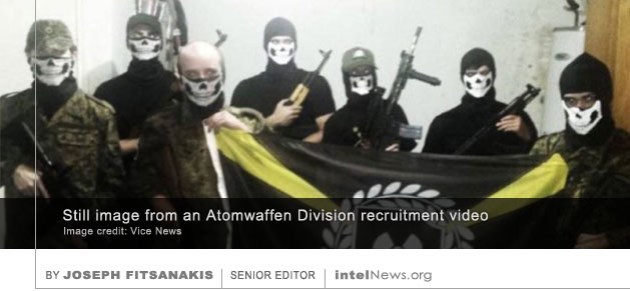 A data dump of unprecedented scale includes usernames, IP addresses and even the content of thousands of private chat logs stolen from an influential neo-Nazi website that is now defunct. The data belonged to IronMarch, which was founded in 2011 by Alexander Mukhitdinov, a Russian far-right activist using the online nom-de-guerre “Slavros”. In the nearly six years of its existence, the website featured some of the most extreme and uncompromising far-right content on the World Wide Web.
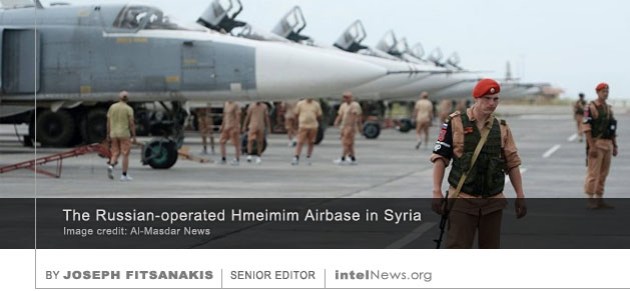 Authorities in Turkey were concerned that Russia might bomb the presidential palace in Ankara in 2015, to retaliate against the downing of a Russian fighter jet by the Turkish military, according to an intelligence report. On November 25 of that year, a Russian Sukhoi Su-24M attack bomber was shot down by a Turkish F-16 fighter jet over the Syrian-Turkish border. Ankara claimed that the Russian aircraft had violated Turkish airspace for longer than five minutes and had failed to respond to 10 warning messages communicated by radio. By the time the Russian plane was fired upon it was nearly 1.5 miles inside Turkish airspace, according to Turkey’s Ministry of Defense. But the Kremlin claimed that the downed aircraft had been flying a mile south of the Turkish border when it was shot down.
 A day after the United States Department of Justice charged two Saudi citizens with engaging in espionage on American soil, Saudi officials hosted the director of the Central Intelligence Agency in Riyadh, reportedly to discuss “the longstanding Saudi-US partnership”.
 United States authorities have charged two employees of the social media firm Twitter and a member of staff of Saudi Arabia’s royal family with spying for Riyadh. The Federal Bureau of Investigation filed a complaint on Wednesday in San Francisco, accusing the three men of “acting as unregistered agents” for Saudi Arabia. The phrase is used in legal settings to refer to espionage.
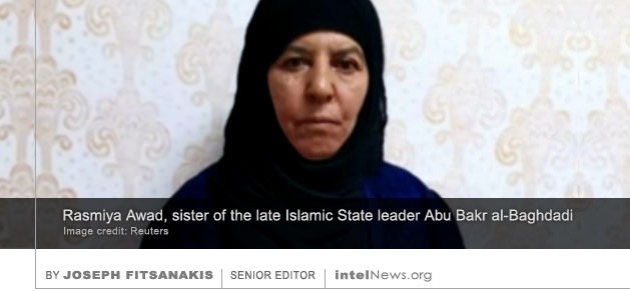 A Turkish government official has described the arrest of the sister of the late Islamic State leader Abu Bakr Al-Baghdadi as “an intelligence goldmine”. The official was referring to the arrest of Rasmiya Awad, an Iraqi citizen, who was reportedly arrested on Monday. Little is known about al-Baghdadi’s sister. She is believed to have been born in 1954, which makes her 65 years old this year.
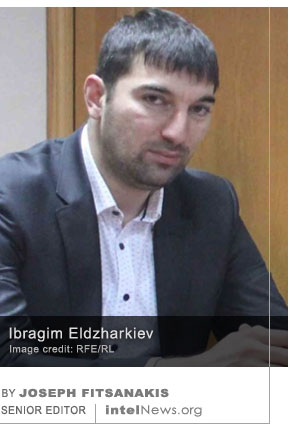 A senior counter-terrorism officer in the Russian police has been gunned down along with his brother in a downtown Moscow street, in what authorities describe as a contract killing. One of the two victims has been named as Ibragim Eldzharkiev (pictured), who headed the Russian Interior Ministry’s Anti-Extremism Center in the Republic of Ingushetia in the Russian Caucasus. His younger brother was reportedly also killed in the attack.
 The British government has been accused by opposition parties, and by pro-remain conservative figures, of trying to conceal a report documenting Russian meddling in British politics. The report documents the results of an investigation into Russia’s alleged attempts to influence the outcome of the 2017 general election in the United Kingdom, as well as the result of the 2016 European Union referendum, which ended in victory for the pro-Brexit campaign.
 The Facebook-owned company WhatsApp has filed a lawsuit against a leading Israeli technology firm, accusing it of enabling governments around the world to spy on 1,400 high-profile users, including politicians and diplomats. The Reuters news agency






 intelNews.org
South Korea rejects US pressure to maintain intelligence agreement with Japan
November 22, 2019 by Joseph Fitsanakis 2 Comments
The agreement has fallen victim to an escalating tit-for-tat row between the two Asian countries, which is rooted in the use of forced Korean labor by Japan in World War II. South Korea is demanding financial compensation for the use of slave labor, including sex slaves, by Japanese occupation troops during Korea’s annexation by Japan from 1910 until 1945. In July, Tokyo responded to a mass boycott of Japanese goods by South Korean consumers by limiting the export of electronics to be used in South Korea’s ship-building industry. It also removed South Korea from the list of countries with the ability to fast-track their exports to Japan. South Korea responded last summer by threatening to effectively abandon GSOMIA.
Since that time, Washington has been pressuring Seoul to remain in the treaty. The United States is widely seen as the architect of GSOMIA, as it worked closely with Japan and South Korea for over 6 years to convince them to agree to exchange intelligence, despite their deep-rooted mutual animosity. The White House has traditionally viewed GSOMIA as a significant parameter in security cooperation between its allies in the Far East. Back in August, American officials warned that terminating GSOMIA would threaten its ability to monitor North Korean nuclear activity.
But Seoul is not willing to back down. On Thursday, the country’s Minister of Foreign Affairs, Kang Kyung-wha, said that unless there was “a change in Japan’s attitude, our position is we won’t reconsider”. Kang Gi-jung, Political Affairs Secretary to South Korean President Moon Jae-in, added that Seoul would “not wave a white flag”. Japan’s Minister of Defense, Taro Kono, urged South Korea to “make a sensible decision” and warned that Seoul, not Tokyo, would be the biggest victim of the termination of GSOMIA. Most observers expect that GSOMIA will simply expire come Saturday.
► Author: Joseph Fitsanakis | Date: 22 November 2019 | Permalink
Filed under Expert news and commentary on intelligence, espionage, spies and spying Tagged with General Security of Military Information Agreement, GSOMIA, intelligence cooperation, Japan, News, North Korea, South Korea