Election meddling by foreign powers already underway, says Canadian spy agency

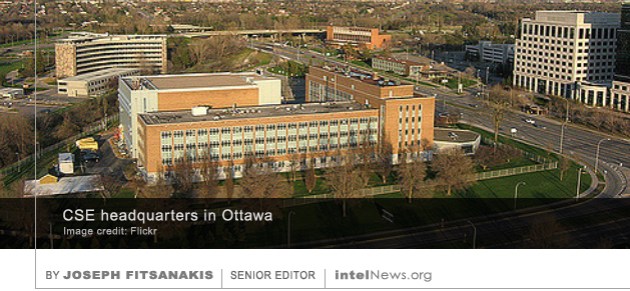
CSE CanadaThe manipulation of social media by foreign governments aiming to sow division in Canada ahead of the country’s federal election in October is growing, according to the country’s signals intelligence agency. In a report published Monday, the Communications Security Establishment (CSE), Canada’s national communications interception agency, warns that election meddling by foreign powers is already taking place. The report, titled “2019 Update: Cyber Threats to Canada’s Democratic Process”, says that voters, as well as specific political figures, have been targeted by foreign powers since 2015 in the North American country.

The foreign intelligence agencies behind the efforts to manipulate Canada’s electoral process have systematically attempted to “polarize Canadians or undermine Canada’s foreign policy goals”, says the report. These efforts will continue and intensify in the run-up to October, claims the report, and concludes by warning that Canadians should expect to “encounter some form of foreign cyber interference ahead of, and during, the 2019 federal election”. However, foreign cyber interference on the scale that was experienced in the months leading up to the 2016 presidential election in the United States is improbable, according to the CSE.

Meanwhile, in an unrelated development, the former director of the Canadian Security Intelligence Service (CSIS), Canada’s primary national intelligence service, said in an interview last week that Ottawa would have to be patient in dealing with Russia and —especially— China. Speaking at a public forum hosted by the Canadian International Council in Vancouver, Richard Fadden noted that neither China nor Russia wish to go to war with the West. What they want instead is to “fragment the West” and thus increase their own influence on the international scene, said Fadden, who directed the CSIS from 2009 to 2013. It would be fair for Canada to “poke back”, he said, but would have to be “careful how [to] do it”, he added. “We need to be realistic. We’re dealing with an emergent superpower and […] we’re going to have to be patient”, Fadden concluded.

Author: Joseph Fitsanakis | Date: 09 April 2019 | Research credit: C.D. | Permalink

Russian teams bribed Madagascar presidential candidates, BBC claims

Marc Ravalomanana Andry RajoelinaTeams of “Russian technical specialists” bribed several leading candidates in last year’s presidential elections in Madagascar, in an effort to influence the outcome, according to an investigation by the BBC. The 2018 presidential campaign was among the most closely fought in Madagascar’s 60-year post-independence history. The electorate’s attention concentrated mostly on two former presidents, Marc Ravalomanana, and Andry Rajoelina. Following a closely contested second round in late December, Rajoelina was elected president, having received 500,000 votes more than his opponent. Since his election, Rajoelina has promoted closer ties with Russia. Most notably, he has strengthened his country’s military cooperation with Moscow —a process that was initiated by his predecessor in October of last year.

But a new investigation by the BBC suggests there was a “systematic and coordinated operation” by a group of Russian businessmen with ties to the Kremlin to help Rajoelina get elected. There were “clear signs of Russian meddling in the polls”, claims the BBC, adding that at least six leading candidates in the election were offered money by the Russians to support rival candidates in the second round of the elections. Among them was Andre Mailhol, a Christian pastor who ran for president and ended up in fourth place with around 60,000 votes. He told the BBC that a group of Russians paid his deposit to run in the election and funded his campaign. In return, they asked that he would support their preferred candidate in the second round of the elections. Mailhol said that the Russians made him sign a contract promising to do as he was told.

The BBC claims that the payments to several presidential candidates were made by “dozens of Russians” who are central figures in Madagascar’s business community. They allegedly include Andrei Kramar and Roman Pozdnyakov, who live permanently in the island country. Other alleged accomplices are diamond trader Vladimir Boyarishchev, as well as Maksim Shugaley, a political campaign manager who lives in Russia. The BBC claims that their activities were funded by Yevgeny Prigozhin, a Kremlin operative who has been indicted in the United States for his alleged interference in the 2016 US presidential election. Prigozhin has allegedly been financing “teams of Russian technical specialists” to sway the results of elections in Madagascar and other African countries, according to the BBC.

Author: Joseph Fitsanakis | Date: 08 April 2019 | Permalink

US prosecutors to use secret surveillance evidence in Huawei lawsuit

Huawei 2Prosecutors in the United States have informed lawyers representing the Chinese telecom- munications firm Huawei that they intend to use evidence obtained through secret surveillance in a lawsuit against the company. The case involves the arrest of Meng Wanzhou by Canadian authorities in December of last year. Meng, 47, is Huawei’s deputy chair and chief financial officer, and is the daughter of Ren Zhengfei, a former officer in the Chinese People’s Liberation Army, who founded the telecommunications giant in 1988. She was detained on December 1 in Vancouver at the request of the US, which claims it has evidence that she “tried to evade the American embargo against Iran”. On March 1, the Canadian Department of Justice formally commenced Meng’s extradition process to the US, which Huawei’s lawyers are currently seeking to prevent.

In a lawsuit brought by US government prosecu- tors against Huawei, the Chinese telecom- munications firm is accused of having conspired to defraud several multinational banks by misrepresenting its relationship with a company called Skykom Tech. Washington says that the company is in fact a front used to conceal illicit activities conducted by the Islamic Republic of Iran. American government prosecutors claim that Huawei worked with Skykom Tech to evade US-imposed economic sanctions on Iran. At a Thursday morning hearing in a federal court in Brooklyn, New York, Assistant US Attorney Alex Solomon said that US authorities had used “secret surveillance” to collect evidence against Huawei. He also said that the evidence had been obtained under a US Foreign Intelligence Surveillance Act (FISA) warrant, which is issued by a secret court and usually pertains to counterintelligence investigations —i.e. when a target is suspected of spying against the US.

Solomon said that the evidence against Huawei was “obtained […] from electronic surveillance and physical search”. He did not elaborate, but added that US government’s legal team had notified Huawei that it planned to use the FISA evidence in court. Last month Huawei rejected all charges filed against it. The company has not yet commented on the FISA evidence. The next date in the court case has been scheduled for June 19, 2019.

Author: Ian Allen | Date: 05 April 2019 | Permalink

US Homeland Security Department accused of disbanding homegrown terrorism unit

Department of Homeland Security DHSSome employees of the United States Department of Homeland Security claim that a unit specializing on homegrown and domestic terrorism was inexplicably disbanded, leaving America vulnerable to attack. The allegations were published on Tuesday on the website of The Daily Beast, an investigative news and opinion website. In a leading article published on the site, reporter Betsy Woodruff cites “current and former DHS officials” with knowledge about the Office of Intelligence and Analysis (I&A), which is the intelligence wing of the DHS.
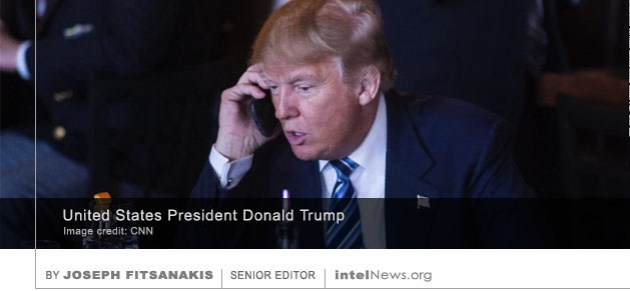
Woodruff claims that, until recently, I&A employoed a team of analysts that worked on potential threats from domestic terrorism activity and homegrown violent extremist individuals or groups. They then shared their reports with law enforcement on the state and local level, which is DHS’s mission. But in August of 2017, when David Glawe assumed the post of Under Secretary of Homeland Security for Intelligence and Analysis, I&A experienced a major reorganization. The article alleges that Glawe —who was appointed by President Donald Trump— did away with the I&A unit that monitors domestic militancy, including far-right radicalization. Ever since that move, I&A have “significantly reduced their production [of analysis] on homegrown violent extremism and domestic terrorism”, according to a DHS official quoted in The Daily Beast piece. The I&A’s reduction in output has “generated significant concern at headquarters given the growth in right-wing extremism and domestic terrorism we are seeing in the US and abroad”, said another DHS official.

But in a written response to the website’s allegations, Glawe dismissed the claims as “patently false and the exact opposite of what we have done”. He went on to state that I&A has “significantly increased tactical intelligence reporting on domestic terrorists and homegrown violent extremists since 2016”. Referring to The Daily Beast’s claims, Glawe said that “those pushing such a narrative either do not understand intelligence collection efforts or don’t care about the truth”.

Author: Ian Allen | Date: 04 April 2019 | Permalink

US Secret Service arrests Chinese woman for entering Trump’s vacation property

Donald TrumpA Chinese woman who entered President Donald Tump’s Mar-a-Lago resort in Palm Beach, Florida, was found to be in possession of two passports, four mobile phones and a flash drive containing “malicious software”, according to the United States Secret Service. Secret Service agents told a US District Court for the Southern District of Florida on Monday that the woman, identified as Yujing Zhang, entered the private club –which serves as President Trump’s vacation home– on Saturday afternoon. She allegedly approached Secret Service personnel and sought entrance to the property. When asked to identify herself, she reportedly took out of her bag two Chinese passports and said she intended to use the Mar-a-Lago swimming pool.
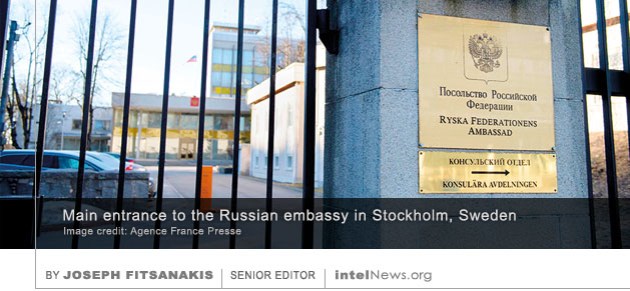
When Mar-a-Lago personnel could not find her name on the list of the private club’s members, Zhang told them that she was related to a man with the same last name, who appeared on the membership list. She was allowed onto the property on the assumption that the club member was her father, in what security personnel later described as an error caused by “a language barrier issue”. Once inside Mar-a-Lago, Zhang then reportedly told a receptionist that she was there to attend a meeting of the United Nations Chinese American Association. Some of the club personnel, who knew that no such event had been scheduled to take place at Mar-a-Lago, contacted the Secret Service. Zhang told Secret Service agents that she had been told by “a friend” called “Charles” to travel from Shanghai to Florida in order to attend the United Nations Chinese American Association meeting. But she said she was unable to provide further details.

After detaining her, Secret Service agents found that she was carrying –aside from the two Chinese passports– four cellphones, a laptop computer with an external hard drive attached to it, and a thumb drive. Secret Service agents said that, upon further examination, the thumb drive was found to contain “malware”. Zhang was then arrested for entering a restricted property and making false statements to Secret Service officials. On Tuesday, Zhang’s lawyer said she was “invoking her right to remain silent”. The US Department of Justice said it would not comment on the case. If found guilty, Zhang could spend up to five years behind bars.

Author: Joseph Fitsanakis | Date: 03 April 2019 | Permalink

Russian diplomat involved in espionage leaves Sweden after ‘unusual’ delay

Russian Embassy SwedenRussia has recalled one of its diplomats from Sweden after he was caught receiving classified information from a computer expert at a nightclub in Stockholm. The computer expert was later identified as Kristian Dmitrievski, a 45-year-old naturalized Swede who was born in Russia. The Swedish government accuses him of having been recruited by Russian intelligence in 2017 or earlier. He allegedly met with his Russian handlers on a regular basis since his recruitment, passing them classified information of a technical nature.


Dmitrievski was reportedly arrested on the evening of February 26, while meeting his alleged Russian handler in a downtown area of the Swedish capital. Both Dmitrievski and his alleged handler were detained by officers of the Swedish Security Service, known as SÄPO. Swedish authorities later said that Dmitrievski’s alleged handler was a member of staff of the Russian embassy in Stockholm and had diplomatic immunity. SÄPO added that the Russian diplomat was believed to be a Russian intelligence officer who worked under diplomatic cover. The Russian man’s diplomatic status granted him immunity, so Swedish authorities were unable to file espionage charges against him. However, the Swedish Foreign Affairs Ministry summoned the Russian ambassador to file a protest, while the alleged intelligence officer was told to leave the country.

Surprisingly, however, Moscow did not recall the diplomat, as expected, and no further reports were issued about the incident. Then on March 28, the Swedish daily Dagens Nyheter named the Russian diplomat as Yevgeny Umerenko. Later that day, the Associated Press news agency said that it had seen “an intelligence report from a European service” that identified Dmitrievski’s Russian handler as Yevgeny Umerenko. The Associated Press described Umerenko as a “Line X officer” —a Soviet-era classification referring to case officers specializing in technological espionage. Western intelligence agencies had apparently been monitoring Umerenko’s activities ever since he had a similar role at the Russian embassy in Berlin, immediately before being transferred to Stockholm.

In its report, the Associated Press said that Moscow had finally recalled Umerenko from its embassy in Sweden, and that he was back in Russia. The news agency added it spoke to Anna Lundbladh, a spokeswoman for Sweden’s Ministry for Foreign Affairs, who confirmed that Umerenko had left Sweden, but went on to say that the Swedish government would “not discuss this matter in further detail”.

Author: Joseph Fitsanakis | Date: 01 April 2019 | Permalink

French ex-spy accused of plot to assassinate Congolese politician found dead in Alps

Lucinges FranceA former paramilitary officer in the French intelligence service, who was under investigation for allegedly plotting to kill a senior Congolese opposition figure, has been shot dead near a village in the French Alps. Daniel Forestier, 57, served for nearly 15 years in a paramilitary unit of the Directorate-General for External Security (DGSE) —France’s equivalent of the United States Central Intelligence Agency. After his retirement from the DGSE, he moved with this wife and two children to the alpine village of Lucinges, near Geneva, in the Auvergne-Rhône-Alpes region in southeastern France. He reportedly operated a tobacconist shop, served in the village council, and wrote spy novels in his spare time.

Last September, however, a judge placed Forestier under a pre-trial investigation for allegedly participating in a plot to kill General Ferdinand Mbahou. From 1992 to 1997 Mbahou (a.k.a. Mbaou) served as Director of Presidential Security in the Republic of the Congo. In 1997, Mbahou fled the country along with his employer, President Pascal Lissouba, who was ousted in a brutal civil war by militias loyal to Colonel Denis Sassou Nguesso of the Congolese Labor Party. From his new home in Val d’Oise, just outside of Paris, Mbahou has continued to criticize Colonel Sassou Nguesso, who is the current president of the Republic of the Congo. Forestier and another former DGSE officer, Bruno Susini, were accused of having hatched a plan to kill Mbahou. Their indictment mentioned “participation in a criminal organization” and “possession of explosives”. Forestier reportedly told the magistrate that he was a member of a group that planned to assassinate Mbahou, but that he abandoned the effort after conducting reconnaissance and realizing that the plan was “impractical”.

Forestier’s body was discovered on Wednesday “in a pool of blood” in a parking lot in Haute-Savoie, an alpine resort area on the shores of Lake Geneva. According to a police report, he had been shot five times in the chest and head in what public prosecutor Philippe Toccanier described as “a professional job”. He added that Forestier’s killing was “almost undoubtedly […] a settling of scores”.

Author: Joseph Fitsanakis | Date: 28 March 2019 | Permalink

Dissident group ‘approached the FBI’ after raid on North Korean embassy in Madrid

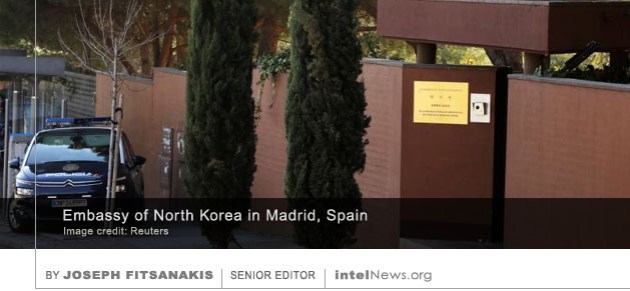
North Korea embassy SpainMembers of a self-styled dissident group that raided North Korea’s embassy in Madrid last month reportedly approached the authorities in the United States, offering to share material taken from the embassy. The attack took place in the afternoon of February 22 in a quiet neighborhood in northern Madrid, where the North Korean embassy is located. Ten assailants, all Southeast Asian-looking men, entered the three-story building from the main gate, brandishing guns, which were later found to be fake. They tied up and gagged the embassy’s staff, as well as three North Korean architects who were visiting the facility at the time. The assailants later abandoned the building in two embassy vehicles that were later found abandoned.

Initial reports alleging that Washington was involved in the raid were later found to be inaccurate, as an obscure North Korean dissident group, calling itself Cheollima Civil Defense —also known as Free Joseon— claimed responsibility for the attack. Cheollima Civil Defense is North Korea’s first known active resistance group in living memory, and has called for the overthrow of the Kim dynasty. But little is known about its members.

On Tuesday, however, Judge José de la Mata, of the Spanish High Court, told reporters that three members of the group had been identified by Spanish authorities. He named them as: Adrian Hong Chang, a Mexican national who is a resident of the United States; Sam Ryu, an American citizen; and Woo Ran Lee, a South Korean. Judge de la Mata said that all ten members of the group had managed to leave Spain in the hours following the attack on the North Korean embassy. Interestingly, however, Chang, who left Europe through Portugal, appeared in New York on February 27 and approached the local field office of the FBI. He allegedly met with FBI agents and described the raid on the North Korean embassy. He then offered to give the FBI some of the material that Cheollima Civil Defense stole from the embassy, including a mobile phone, USBs, laptops, as well as several hard drives.

It is not known whether the FBI accepted Chang’s offer. But, according to Judge de la Mata, Chang “handed over audiovisual material” to the FBI. When asked about Judge de la Mata’s statement, the FBI said it does not comment on investigations that are in progress. The US Department of State said that the American government “had nothing to do” with the attack on the North Korean embassy in February.

Author: Joseph Fitsanakis | Date: 27 March 2019 | Permalink

Moscow confirms arrival of Russian troops in Venezuela

Russian planes CaracasRussian media reports have confirmed that an airplane carrying 100 Russian troops arrived in Caracas on Saturday, causing tensions to rise between Washington and Moscow over the deepening crisis in Venezuela. The arrival of the Russian troops in the Venezuelan capital was first reported on Saturday morning by Venezuelan reporter Javier Mayorca, who said on Twitter that two Russian military airplanes had landed in Caracas. The reporter said that an Antonov An-124 Ruslan cargo plane belonging to the Russian Air Force could be seen on the tarmac of the Simón Bolívar International Airport in the Venezuelan capital. Another, smaller aircraft, also bearing the Russian flag on its fuselage, landed shortly afterwards, said Mayorca.

Within hours, several Venezuelan media reports appeared to confirm Mayorca’s claims, some even posting photographs of the two Russian planes surrounded by what appeared to be uniformed Russian soldiers. The BBC reported that the Russian cargo plane had delivered 100 Russian troops and 35 tons of military equipment. The force was led by General Vasily Tonkoshkurov, commander of the General Staff of Russia’s Armed Forces, according to the BBC. Later on Saturday, the Russian government-owned news agency Sputnik confirmed that Russian troops had arrived in Caracas. Citing anonymous “diplomatic sources”, Sputnik said the Russian troops had been sent to Caracas in order “to fulfil technical military contracts” and “to take part in consultations […] on defense industry cooperation” with Venezuelan officials. It added that there was “nothing mysterious” about the visit and that it was “related to [military] contracts that had been signed by the two countries years ago”.

Russia has supported Venezuela militarily, economically and diplomatically ever since 1999, when Hugo Chávez became president. The recent political crisis in the Latin American country, which has prompted a direct diplomatic intervention by Washington, has brought Caracas and Moscow closer together, as Russia has strongly opposed efforts by the United States to bring down the government of Nicolás Maduro. Earlier this year, Russia sent two Tu-160 long-range bomber aircraft to take part in a military exercise organized by the Venezuelan government.

On Monday, Washington said that the United States Secretary of State Mike Pompeo had a telephone conversation with Russian Foreign Affairs Minister Sergei Lavrov. Pompeo told his Russian counterpart that Moscow should “cease its unconstructive behavior” and warned him that the United States would “not stand idly by as Russia exacerbated tensions” in Venezuela. Late on Monday, Sputnik quoted a “diplomatic source” as saying that that the “visit of Russian military personnel to Venezuela [was] in no way connected to the statements of the United States on potential intervention in Venezuela”.

Author: Joseph Fitsanakis | Date: 26 March 2019 | Permalink

Documents show ISIS plans sleeper cell attacks in Middle East, Europe

Islamic State - IADocuments acquired from retreating Islamic State fighters in Syria appear to show that the militant group is planning a series of high-profile attacks in Europe and the Middle East, using newly formed sleeper cell units. The information was revealed over the weekend by the British newspaper The Sunday Times. The London-based broadsheet said that the information was found last month in flash drive, which was left behind by retreating Islamic State forces in Syria, and acquired by Kurdish militia forces. The flash drive was found to contain dozens of internal documents belonging the militant group, which is also known as Islamic State of Iraq and Syria (ISIS).

Among them, said The Times, are several memoranda authored by an ISIS leader and operations planner known as Abu Taher al-Tajiki. In his memoranda, al-Tajiki informs the group’s senior leadership that he commands numerous fighters who are willing and able to carry out strikes “far away” from the Islamic State’s strongholds in the Middle East and Africa. He states that he is in regular communication with them and that they are awaiting instructions to “undertake the operations”. Al-Tajiki then calls for the creation of a Foreign Relations Office under the Islamic State’s Department of Operations, which would be tasked with launching attacks throughout Europe. He adds that the new Office can also count on the assistance of computer hackers and other technically literate Islamic State members. In another memorandum, al-Tajiki suggests the creation of what he calls “crocodile cells” in Syria and Iraq. These cells will “lurk beneath the surface” and “attack at the right moment to assassinate the enemies of Allah”, says al-Tajiki.

The Times report comes as experts warn that the Islamic State retains significant financial power, despite the loss of its territories in the Middle East. In a well-informed article in The Atlantic, David Kenner reports from Beirut that the Islamic State without its territories is a double-edged sword. On the one hand, the group cannot rely on taxation and oil revenues that used to enrich its coffers by $1 million per day during the height of its power. On the other hand, argues Kenner, the loss of its territory has freed the Islamic State from the costs associated with state-running and allows it to devote its financial resources “exclusively to terrorist activity”. These resources —cash and other assets— are formidable, says Kenner. In the words of Howard Shatz, senior economist at the Rand Corporation and an expert on ISIS’ finances, we “don’t know where it all went” after ISIS lost its territory. We do know that much of it has been invested in “legitimate commercial enterprises”, says Shatz, with the help of profit-oriented middlemen with access to markets that are as far away as Southeast Asia and the Caribbean. A lot of it is hidden in suitcases and boxes throughout Iraq, Syria and Turkey. All of it is intended to be used to fund terrorist attacks, warns Kenner.

Author: Ian Allen | Date: 25 March 2019 | Permalink

East German Stasi spies questioned for evidence on Lockerbie bombing

Lockerbie air disasterFive former officers of East Germany’s State Security Service, known commonly as the Stasi, have been questioned in Berlin over the Lockerbie air disaster at the request of British prosecutors. A total of 270 people died on December 21, 1988, when Pan Am flight 103, flying from Frankfurt to Detroit, exploded in mid-air over the Scottish village of Lockerbie. In 2001, a British court sitting in the Netherlands ruled that the bombing was carried out by Abdelbaset al-Megrahi, former head of security for Libyan Arab Airlines. Al-Megrahi was also believed to have been an officer of Intelligence of the Jamahiriya —Libya’s main intelligence service. He claimed he was innocent of the crime until his death in 2012 from cancer.

But Scotland’s independent public prosecution agency, the Crown Office and Procurator Fiscal Service, has always claimed that several other Libyan intelligence operatives helped Megrahi bring down Pan Am flight 103. Last December, the Crown Office said that it was continuing to pursue a criminal inquiry into several individuals —other than Megrahi— who were “involved in the conspiracy” to bomb Pan Am flight 103. As part of the inquiry, Crown Office prosecutors have interviewed potential suspects and witnesses, including Abdullah Senussi, former head of Libyan intelligence.

On Thursday, the German news agency DPA said that five former officers of the East German Stasi —all of them in their 70s and 80s— had been interviewed in connection to the Lockerbie bombing. The news agency said that the interviews had been conducted by German intelligence officers at the request of Crown Office prosecutors in Britain. Later on Thursday, the Berlin office of the German state prosecutor confirmed that the unnamed five individuals had been interviewed “as witnesses, not as suspects” throughout the past nine months. It gave no further information, saying that “it would be inappropriate to comment on a developing criminal investigation”.

All five former Stasi officers are believed to have provided evidence at the trial in the Netherlands that resulted in Megrahi’s conviction. Among other things, they told the court that the Libyans had contracted a Swiss businessman who manufactured the timer that detonated the Lockerbie bomb. Moreover, the 2014 documentary My Brother’s Bomber, directed by the American filmmaker Ken Dornstein, whose brother died in the Lockerbie bombing, claimed that the Stasi had closely monitored the activities of Libyan intelligence in West Germany in the years leading up to the downing of Pan Am flight 103. Some believe that the Stasi had evidence of a conspiracy by several Libyan intelligence officers to carry out the bombing.

Author: Joseph Fitsanakis | Date: 22 March 2019 | Permalink

Putin’s ex-adviser found dead in Washington had broken neck, say medical examiners

Mikhail LesinA former senior adviser to Russian President Vladimir Putin, who died allegedly by falling while intoxicated in a luxury hotel room in Washington, may in fact have been strangled to death, according to a newly released medical examination. The body of Mikhail Yuriyevich Lesin, a well-known Russian media mogul, was found in the luxury Dupont Circle Hotel on November 5, 2015. He became famous in Russia soon after the collapse of the communist system, when he founded Video International, an advertising and public-relations agency that was hired by Russian President Boris Yeltsin to run his reelection campaign in 1995.

Yeltsin’s electoral success was partly attributed to the well-tailored media message projected by Lesin’s company. The media magnate was rewarded by Yeltsin, who offered him influential government posts, including that of director of Russia’s state-owned news agency Novosti. Meanwhile, Lesin became a media personality and frequently gave interviews espousing a free-enterprise model for the Russian media industry. But soon after Vladimir Putin’s ascendance to the presidency, Lesin saw the writing on the wall and began advocating for increased government regulation of media and telecommunications conglomerates. In 1999, Putin made him Minister of Press, Broadcasting and Mass Communications, a post he held for nearly six years, until 2004. In 2006, Lesin was awarded the Order for Merit to the Fatherland, one of the most prestigious civilian decorations in Russia.

But in late 2009, Putin abruptly fired Lesin from his post in the Kremlin’s Media Advisory Commission, allegedly because the media mogul had developed close contacts with Russian organized crime. Lesin’s ties with Putin’s inner circle were further strained in 2014, when he resigned from his position as head of Gazprom Media, after he clashed with pro-Putin executives on the board. When Lesin’s body was found in his hotel room by a member of the hotel staff, some suggested that he may have been killed by the Kremlin. Read more of this post

Heavily armed gang attacks nuclear fuel convoy in Brazil

Angra Nuclear Power PlantA convoy of trucks carrying nuclear fuel to one of Brazil’s nuclear plants was attacked by a heavily armed gang on Tuesday, according to police reports. The convoy was carrying uranium fuel from Resende, an industrial city in the municipality of Rio de Janeiro in southeastern Brazil. Its destination was the Angra Nuclear Power Plant in the coastal city of Angra dos Reis, which is located 100 miles south of Resende. Angra is Brazil’s sole nuclear power plant. It consists of two pressurized water reactors, Angra I and Angra II. It is owned by Eletrobras, Brazil’s state-owned power utility firm, which is also the world’s tenth largest electric utilities company.

According to Brazil’s O Globo newspaper, the nuclear fuel convoy came under heavy attack by gunmen as it reached the outskirts of Angra dos Reis, just a few miles north of the power plant. The Brazilian Federal Highway Police said in a statement that its vehicles that were escorting the nuclear fuel convoy were shot at and returned fire. It added that the attackers fled the scene without anyone getting hurt, and that no arrests were made. The convoy then reached the power plant without further incident 20 minutes following the shootout. The police statement was followed by a public announcement by Eletronuclear, Eletrobras’ nuclear utility arm. The announcement argued that national security was not compromised by the attack, as the fuel carried by the trucks consisted of “uranium in its natural state”. It would therefore have to be weaponized with the use of advanced mechanical instruments before it could be truly harmful.

Brazilian Federal Highway Police officials told reporters that they did not believe that the gunmen had planned to attack the nuclear fuel convoy. They claimed that the convoy happened to be passing from the scene of the attack as a shootout was taking place between members of rival drug gangs, which are known to control the outskirts of Angra dos Reis. Some of the gang members began shooting at the police vehicles escorting the convoy, apparently without realizing that the trucks they were shooting at were carrying nuclear fuel.

The incident underscores the steady rise and increasing aggressiveness of organized criminal gangs in Brazil, which, according to some observers, are beginning to resemble Mexico’s drug cartels. Angra dos Reis’ Mayor Fernando Jordão told O Globo that the residents of his city felt unprotected by the federal government. “Regional security must be improved”, he added, especially since “there are nuclear plants here. This region is very sensitive”, he said.

Author: Joseph Fitsanakis | Date: 20 March 2019 | Permalink

Analysis: Who was behind the raid on the North Korean embassy in Madrid?

North Korea SpainAn obscure North Korean dissident group was most likely behind a violent raid on North Korea’s embassy in Madrid on February 22, which some reports have pinned on Western spy agencies, including the Central Intelligence Agency. The group, known as the Cheollima Civil Defense, is believed to be the first North Korean resistance organization to declare war on the government of Supreme Leader Kim Jong-un.

THE ATTACK

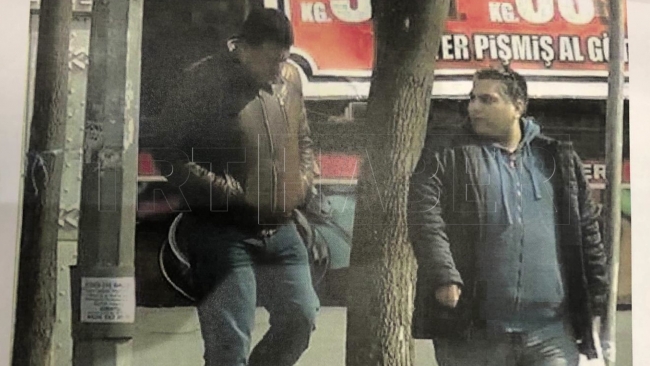
The attack took place at 3:00 in the afternoon local time in Aravaca, a leafy residential district of northern Madrid, where the embassy of North Korea is located. Ten assailants, all Southeast Asian-looking men, entered the three-story building from the main gate, brandishing guns, which were later found to be fake. They tied up and gagged the embassy’s staff, as well as three North Korean architects who were visiting the facility at the time. But one staff member hid at the embassy. She eventually managed to escape from a second-floor window and reach an adjacent building that houses a nursing home. Nursing home staff called the police, who arrived at the scene but had no jurisdiction to enter the embassy grounds, since the premises are technically North Korean soil. When police officers rang the embassy’s doorbell, an Asian-looking man appeared at the door and Q Quote 1said in English that all was fine inside the embassy. But a few minutes later, two luxury cars belonging to the North Korean embassy sped away from the building with the ten assailants inside, including the man who had earlier appeared at the front door.

Once they entered the embassy, Spanish police found eight men and women tied up, with bags over their heads. Several had been severely beaten and at least two had to be hospitalized. The victims told police that the assailants were all Korean, spoke Korean fluently, and had kept them hostage for nearly four hours. But they refused to file formal police complaints. The two diplomatic cars were later found abandoned at a nearby street. No money was taken by the assailants, nor did they seem interested in valuables of any kind. But they reportedly took with them an unknown number of computer hard drives and cell phones belonging to the embassy staff. They also stole an unknown quantity of diplomatic documents, according to reports.

POSSIBLE FOREIGN CULPRITS

Within a few hours, Spanish police had reportedly ruled out the possibility that the assailants were common thieves, arguing that the attack had been meticulously planned and executed. Also, common thieves would have looked for valuables and would not have stayed inside the embassy for four hours. Within a week, several Spanish newspapers, including the highly respected Madrid daily El País and the Barcelona-based El Periodico, pinned the raid on Western intelligence services. They cited unnamed police sources who claimed that at least two of the assailants had been identified and found to have links with the CIA. The reports also cited claims by embassy employees that the attackers interrogated them extensively about Soh Yun-sok, North Korea’s former ambassador to Madrid. Soh became Pyongyang’s chief nuclear negotiator after he was expelled by the Spanish government in 2017 in protest against North Korea’s nuclear missile tests. Read more of this post

Bosnia accuses Croatian spy services of arming Islamists

Dragan MekticAuthorities in Bosnia and Herzegovina have accused the government of Croatia of deliberately arming militant Islamists in order to damage Bosnia’s reputation and sabotage its campaign to join the European Union. The claims were aired by a Bosnian government minister on Thursday, a day after allegations of a weapons-smuggling plot by Croatia were made in the Bosnian media. On Wednesday, Zurnal, a Bosnian investigative website, alleged that the Croatian intelligence services had recruited a Bosnian national and used him to smuggle weapons and explosives into the majority Muslim country.

According to Zurnal, the Bosnian man was “intercepted” by Croatian intelligence while driving through Croatia on his way to Bosnia. He was traveling to Bosnia from an unnamed “European Union country”, where he allegedly lives. The Zurnal report alleges that officers of Croatia’s Security and Intelligence Agency (SOA) had evidence that the Bosnian man was a supporter of the Islamic State and threatened to notify the authorities in his country of residence. They then allegedly used this threat in order to pressure the Bosnian man to smuggle weapons and explosives into Bosnia and hide them in a mosque in Zenica, a city of about 100,000 residents in central Bosnia.

On Thursday, Bosnia and Herzegovina’s Minister of Security, Dragan Mektic (pictured), accused the SOA of plotting the weapons-smuggling operation in an attempt to damage Bosnia’s reputation. The goal of the operation, said Mektic, was to paint Bosnia as a center of Islamic State activity in Europe and sabotage the country’s efforts to join the European Union —of which Croatia is already a member. Also on Thursday, the office of Bosnia’s state prosecutor announced that an investigation had been launched into whether Croatian intelligence agencies had attempted to recruit other Bosnian citizens with known extremist views.

Since 2014, Croatian and Serbian security agencies have repeatedly warned that hundreds of Bosnian Muslims traveled to Syria and Iraq to join the Islamic State, and that many of them have since returned to the Balkans. But the Bosnian government argues that extremist Islam has no place in the country, whose predominantly Muslim population follows moderate versions of the religion. Late on Thursday, the Croatian government dismissed Mektic’s claims as “groundless” and said that they were aimed at harming relations between Bosnia and Croatia. No information has been released about the identity of the Bosnian arms smuggler, his current whereabouts or the fate of the alleged operation.

Author: Joseph Fitsanakis | Date: 15 March 2019 | Permalink