Shiite militias ‘acting like mafia gangs’ in Iraq’s former ISIS-held areas
January 11, 2019 2 Comments
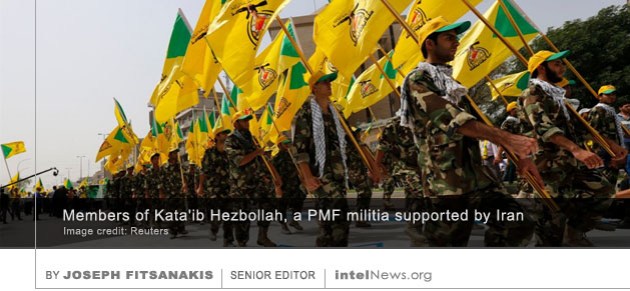 The Shiite militias that fought in the war against the Islamic State are now “engaged in mafia-like practices” in former Islamic State strongholds, enraging Iraqi Sunnis and sparking fears of another Islamist insurgency, according to a leading article in The Washington Post. In 2014, the meteoric rise of the Islamic State of Iraq and Syria —ISIS, later renamed Islamic State— was largely aided by Sunni Arabs’ belief that they were second-class citizens in a Shiite-dominated Iraq. Popular support for the Islamic State among Iraq’s Sunni Arab minority took the Iraqi government by surprise and almost enabled the militant group to conquer Baghdad in 2015. Today, after the destruction of the Islamic State’s self-declared caliphate, Iraq’s Shiite-dominated security and intelligence services have returned to Sunni-majority regions that were once ruled by ISIS.
But there signs that about 50 Shiite militias, which were supported by the Iraqi state throughout the war against ISIS, are now becoming highly autonomous armed gangs that are undermining the central government in Baghdad. These militias —many of which are politically aligned with Iran— are essentially armed wings of Shiite political parties that control more than a quarter of the seats in the Iraqi parliament. In 2014, the Shiite-dominated Iraqi government attempted to utilize the power of the militias by uniting them under the umbrella of the Popular Mobilization Forces (PMF). PMF troops participated in every major front of the war against ISIS and today are an officially recognized military force with rank and salary structures that are equivalent to those of the Iraqi military and police. Technically, the PMF operate under the command of the Iraqi prime minister. In reality, however, the militias that make up the PMF are led by their respective Shiite commanders, many of whom are ideologically allied to Tehran.
The PMF militias are today in control of much of Sunni-dominated Western Iraq, which they helped retake from ISIS. According to Washington Post correspondents Tamer el-Ghobashy and Mustafa Salim, the militias are now using their newfound territorial power to make large sums of money. Various PMF militias operate countless checkpoints across Western Iraq, on roads between cities or —increasingly— within cities such as Mosul, imposing toll fees on supply trucks and even on individual motorists. The two Washington Post correspondents warn that these militia members are beginning to exhibit “mafia-like” behavior, establishing protection rackets and kidnapping motorists at night in order to release them for a fee paid by their families.
Additionally, PMF commanders make arbitrary decisions about which of the nearly 2 million Iraqi Sunnis, who were displaced in refugee camps due to the war, are allowed to return to their homes. Many of these homes and land that used to belong to Iraqi Sunnis are now being expropriated by PMF commanders, who claim that their previous owners collaborated with ISIS, often without evidence. This practice, say el-Ghobashy and Salim, is rapidly altering the demographic balance between Sunnis and Shiites throughout Western Iraq. The two authors forewarn that these mafia-like practices by the PMF are “fostering local resentments […] and revive the kind of Sunni grievances that underpinned the Islamic State’s dramatic rise three years ago”.
► Author: Joseph Fitsanakis | Date: 11 January 2019 | Permalink
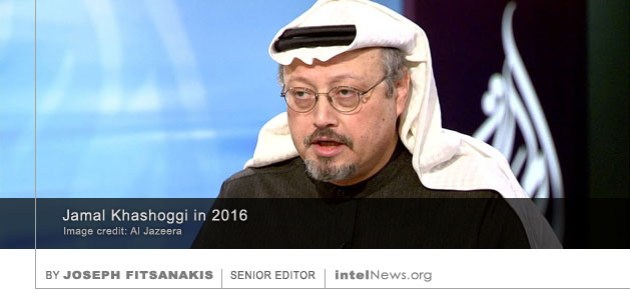 An international law center based in New York is suing the United States Central Intelligence Agency for access to classified files relating to the death of the Saudi journalist Jamal Khashoggi. Khashoggi, 59, was a Saudi government adviser who became critical of the Kingdom’s style of governance. He moved to the United States and began to criticize Saudi Arabia from the pages of The Washington Post. He was
  Authorities in Holland have officially accused Iran of ordering the contract murders of two men on Dutch soil in 2015 and 2017, one of them just a block away from the Dutch foreign ministry’s headquarters. The announcement illuminates the reason behind the expulsion of two Iranian diplomats from Holland last year, which the authorities did not explain at the time.
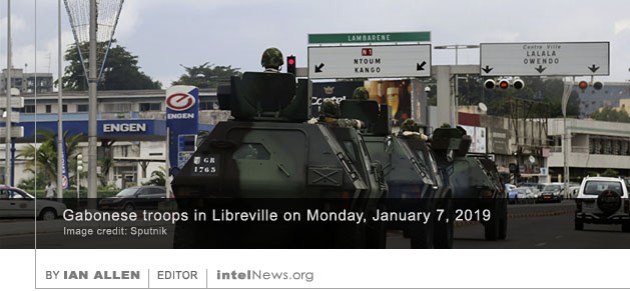 The United States deployed troops to the Central African nation of Gabon just days before a group of military officers staged tried to take over power in the oil-rich nation on Monday. Situated on the Atlantic coastline of Central Africa, Gabon is a member of the Organization of Petroleum Exporting Countries (OPEC). However, despite producing of 176,000 barrels of oil per day, making it one of Africa’s most significant oil producers, over a third of its 2 million inhabitants live below the official poverty line. The country has been ruled by the Bongo family for over a century with its current President, Ali Bongo Ondimba, having led the country since his father’s death a decade ago. In October of last year, however, Bongo went to Saudi Arabia for medical treatment after suffering a stroke, and has yet to return. In a televised message aired on New Year’s Day, Bongo told the citizens of Gabon that he was recovering and would soon be returning to his duties.
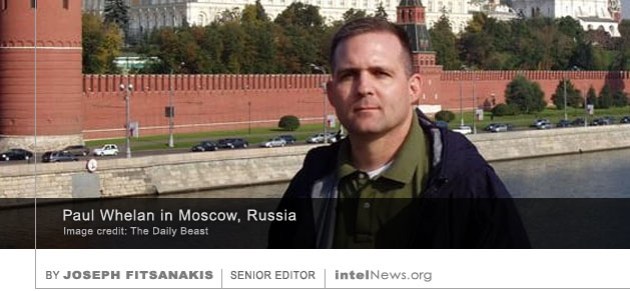 An American former Marine, who faces espionage charges in Russia, is a citizen of at least three other countries, namely Canada, Britain and the Republic of Ireland, according to reports. Paul Whelan, 48, was arrested by Russia’s Federal Security Service (FSB) on December 28 at the Metropol, a five-star hotel in downtown Moscow. News of Whelan’s arrest first emerged on January 3 in a
 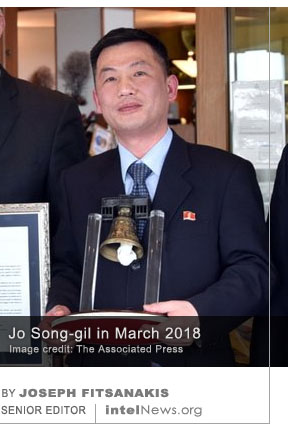 The acting ambassador of North Korea to Italy has been missing for two months and there are reports that he may be under the protection of a Western country. Jo Song-gil (pictured), 48, a career diplomat who is fluent in Italian, French and English, presented his diplomatic credentials to the Italian government in May of 2015. In October 2017, he became his country’s acting ambassador after Italian authorities expelled Ambassador Mun Jong-nam from the country. The expulsion came in response to North Korea’s nuclear test in September of that year, when Pyongyang announced the detonation of a hydrogen bomb that could be loaded onto an intercontinental ballistic missile.
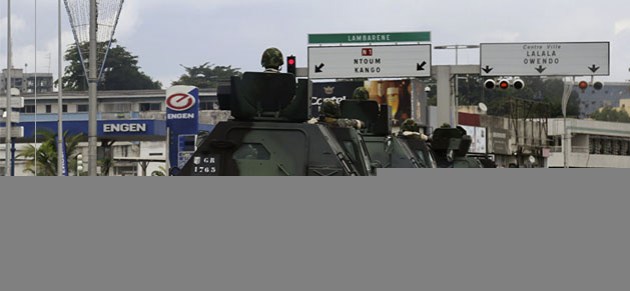 A retired general, who rose through the military’s ranks during Brazil’s 20-year dictatorship, will head the country’s intelligence agency as one of several military men in the new cabinet of President Jair Bolsonaro. Augusto Heleno, 71, was sworn in on Tuesday as head of the Institutional Security Cabinet (GSI), which advises the president on security policy and oversees Brazil’s intelligence and counterterrorism services. Heleno is one of four retired generals who are included in Bolsonaro’s 22-member
 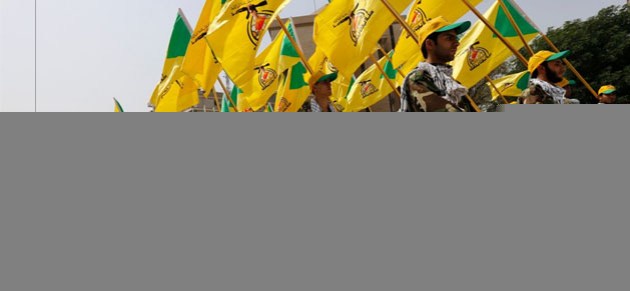 Authorities in Colombia said that three Venezuelans, who were arrested in Colombia’s Caribbean coast with submachine guns and explosives, were planning to assassinate President Iván Duque. The claim was aired in a
  Since 2008, when we launched intelNews, it has been our
  Since 2008, when we launched intelNews, it has been our
  Since 2008, when we launched intelNews, it has been our
 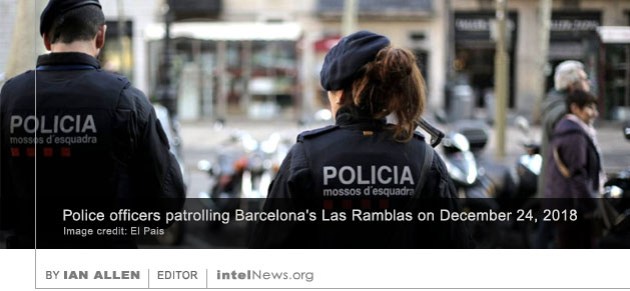 Police in Barcelona have intensified security checks in some of the Spanish city’s most recognizable landmarks, following a security warning from the United States Department of State. The surprise warning came in the form of a post on the popular social networking site Twitter on Sunday, December 23. In the
 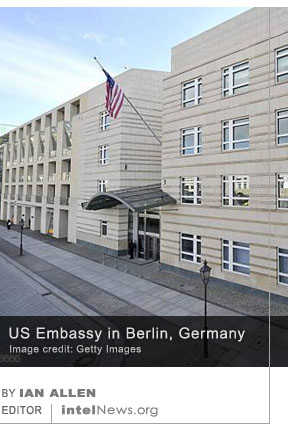 The Chinese government says it is seeking explanations from Washington after a leaked procurement database showed that American embassies purchased data forensics software and various tactical spy equipment. The purported database was
  On the heels of chaotic scenes at Britain’s Gatwick Airport, which








Huawei fires Chinese employee arrested in Poland for spying
January 14, 2019 by Joseph Fitsanakis 2 Comments
Reports from Poland said that Wang was arrested alongside a Polish national, who was identified in media reports only as Piotr D. He is believed to be a mid-level executive of Orange, a French multinational telecommunications carrier who is Huawei’s main domestic partner in Poland. Polish media also reported that, prior to joining Orange, Piotr D. was an upper-level manager in an unnamed Polish intelligence agency. Piotr D.’s house was searched by security officers on Tuesday, along with Wang’s house. The two arrests came six weeks after Meng Wanzhou, Huawei’s chief financial officer, was arrested in Canada. Meng, who is also the daughter of Huawei’s founder, was reportedly detained on December 1 in Vancouver at the request of the United States. Washington says it has evidence that Meng “tried to evade the American embargo against Iran”.
Over the weekend, Poland’s Internal Affairs Minister, Joachim Brudzinski, said that the European Union and the North Atlantic Treaty Organization —of which Poland is a member— should develop a joint position on whether to continue to allow Huawei to operate in Europe. But his call was reportedly met with a lukewarm response from government and private-sector leaders. Meanwhile, China’s Ministry of Foreign Affairs said that it was concerned about Wang’s arrest and urged Warsaw to treat him “with fairness”.
► Author: Joseph Fitsanakis | Date: 14 January 2019 | Permalink
Filed under Expert news and commentary on intelligence, espionage, spies and spying Tagged with China, espionage, Huawei Technologies, News, Orange, Piotr Durbajlo, Poland, Wang Weijing