New law to give Australian intelligence officers more rights to use firearms
November 29, 2018 2 Comments
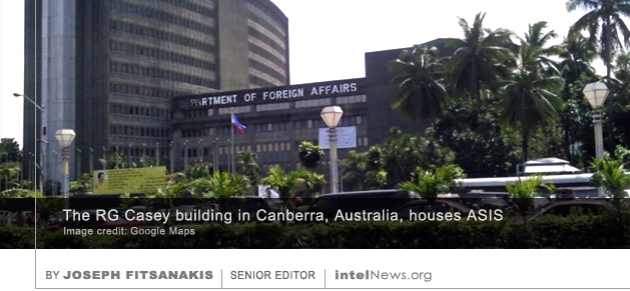 The Australian government has proposed a new law that would give intelligence officers broader powers to use firearms during undercover operations abroad. If it is approved by parliament, the new law would apply to the Australian Secret Intelligence Service (ASIS), a civilian intelligence agency that carries out covert and clandestine operations abroad. Modeled after Britain’s Secret Intelligence Service (MI6), ASIS was established in 1952, but its existence was not officially acknowledged by the Australian government until 25 years later, in 1977.
In 2004, ASIS was given legal permission for the first time to use firearms during undercover operations abroad. However, under current Australian law, this is allowed only as a last resort. ASIS personnel engaged in overseas operations are allowed to employ firearms in self-defense or to protect their agents —foreigners that have been recruited by ASIS to spy for Australia. However, the current government of Prime Minister Scott Morrison argues that ASIS personnel must be given broader powers to exercise “reasonable force” via the use of firearms during overseas operations. In a speech on Wednesday, Australia’s Minister for Foreign Affairs Marise Payne said that the overseas environment in which ASIS operates today is more complex than that of 2004, when the current laws of engagement were enacted. She added that nowadays ASIS personnel work in more hazardous locations, including warzones, and carry out “more dangerous missions in new places and circumstances”.
The government argues that the proposed changes will allow ASIS personnel to “protect a broader range of people and use reasonable force if someone poses a risk to an operation”. The new law will give ASIS officers permission to open fire against adversaries in order to protect parties other than themselves —such as hostages— or to avoid getting captured. This, says the government, will allow them to efficiently “protect Australia and its interests”. The last time that the Australian government flirted with the idea of giving ASIS broader powers to use firearms during undercover operations was in 2010. That year, the government of Prime Minister Kevin Rudd commissioned a multimillion dollar independent review of the Australian intelligence community’s mission and operations. The review proposed that ASIS personnel be allowed more powers to carry and handle weapons while engaging in “paramilitary activities” outside Australia. But the proposal was never enacted into law.
The latest proposal by the Morrison administration is scheduled to be discussed in the Australian Parliament today.
► Author: Joseph Fitsanakis | Date: 29 November 2018 | Permalink
 A senior North Korea expert in the United States Central Intelligence Agency, who has been instrumental in the ongoing negotiations between Washington and Pyongyang, has tendered his resignation, according to sources. The official was
  A senior civil servant in the upper house of the French parliament has been arrested on suspicion of spying for North Korea, according to prosecutors. The news of the suspected spy’s arrest was first
 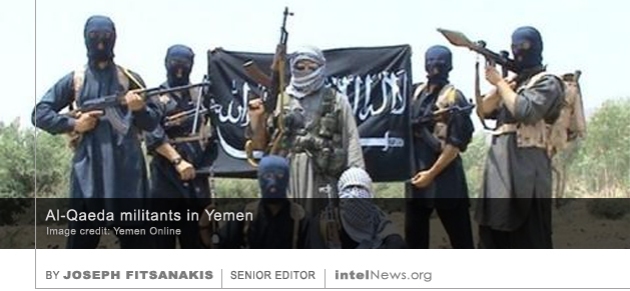 There are four times as many Sunni Islamist militants today in the world than on September 11, 2001, despite an almost 20 year-long war campaign by the United States and its allies, according to a new report. Washington launched the ‘global war on terrorism’ in the aftermath of the 9/11 attacks that were perpetrated by al-Qaeda. In the ensuing years, American and other Western troops have engaged militarily in over a dozen countries, including Afghanistan, Iraq, Pakistan, Syria, Libya, Yemen, Somalia, Sudan, and the Philippines. But a
 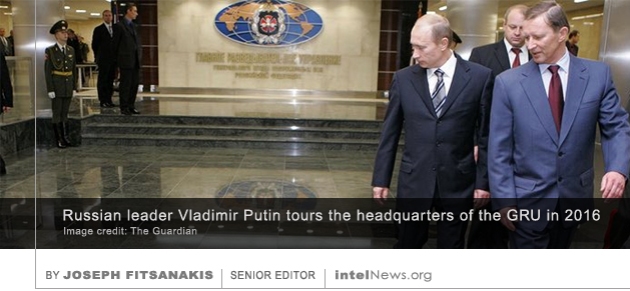 The amount of poison smuggled into Britain for a near-fatal attack on Russian former spy Sergei Skripal was powerful enough to kill “thousands of people”, according those leading the investigation into the incident. Skripal, a former military intelligence officer, was resettled in the English town of Salisbury in 2010, after spending several years in a Russian prison for spying for Britain. But he and his daughter Yulia almost died in March of this year, after being
 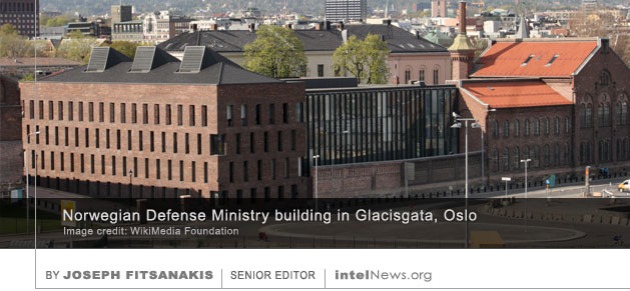 Norway’s supreme legislature body is considering a bill that would offer immunity from prosecution to intelligence officers and informants who are authorized by the country’s spy service to conduct espionage. The bill has been proposed on behalf of the Royal Norwegian Ministry of Defense, which supervises the operations of the Norwegian Intelligence Service (NIS), Norway’s primary intelligence agency. The NIS operates primarily abroad and is the only institution of the Norwegian state that can be authorized by the government to break laws in foreign countries. However, supporters of the new bill point out that NIS overseas operations can also break Norwegian law. That is something that the proposed bill addresses, they argue.
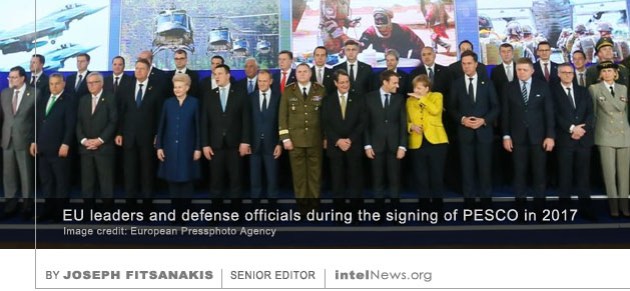 Twenty-five members of the European Union have agreed to establish a joint intelligence training academy, a move interpreted by some as a concrete effort to deepen inter-European security cooperation following Brexit. The announcement came just hours after leading EU heads of state
 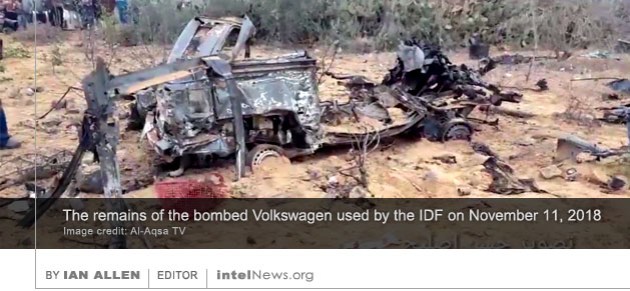 An undercover Israeli team that clashed with Hamas in Gaza on November 11 —an incident that brought the region to the brink of war— was installing an advanced surveillance system, according to Palestinian sources. Local media reports said that the Israeli undercover team —believed to be members of the Israel Defense Forces (IDF)— killed seven members of Izz ad-Din al-Qassam Brigades, the military arm of Hamas’ armed wing. The IDF troops eventually escaped into Israel with the help of air support, having lost one team member. The incident was followed by a barrage of nearly 500 rockets and mortars fired from the Gaza Strip into Israel. The Israelis responded by firing more than 160 missiles that fell throughout the Palestinian enclave. Hostilities were halted on November 13, when Hamas declared a unilateral ceasefire brokered by Egypt. The incident prompted the
  Police in the Australian state of Queensland have offered a $250,000 (US $182,000) reward for information that can help solve the murder of a former Soviet KGB colonel 18 years ago. The victim, Gennadi Bernovski, worked in the domestic wing of the Soviet KGB, until his retirement, which coincided with the dissolution of the USSR. In 1996, he moved to Australia with his family and bought a house in Benowa Waters, a luxury suburb of Gold Coast, a city located south of Brisbane on the country’s east coast. But on the evening of July 24, 2000, Bernovski was shot to death outside his home by what witnesses said were two men in combat diver suits. They
 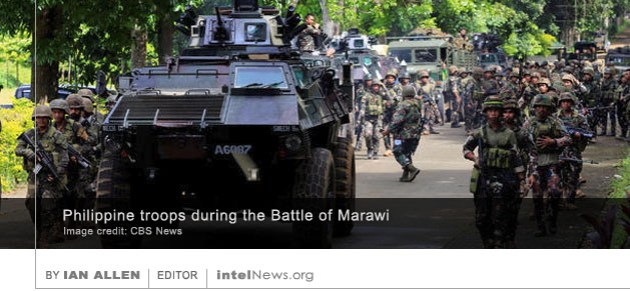 The number of foreign Islamic State fighters entering the Philippines is growing, and the momentum they generate among local Islamist groups may prompt them to declare a new caliphate, according to experts. British newspaper The Guardian cited “a high-ranking intelligence officer” who said that between 40 and 100 foreign fighters have joined the Islamic State in the southern Philippines in the past 12 months. Most of them come from neighboring countries, such as Indonesia, Malaysia and Singapore. But there are also fighters from Pakistan, Bangladesh and several Middle Eastern countries, said the intelligence officer. One of them, a Moroccan militant,
  Authorities in Austria have arrested a second alleged spy for Russia in a week, according to media reports. Several Austrian news outlets reported on Monday that police had arrested an Austrian counterintelligence officer on suspicion of passing classified information to Russian intelligence. The news follows reports late last week of the arrest of an unnamed retired colonel in the Austrian Army, who is believed to have spied for Russia since 1988. As intelNews
 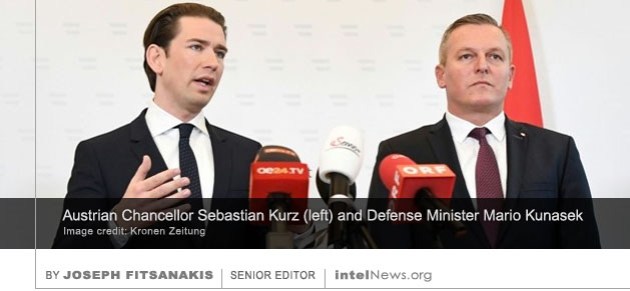 The Austrian Ministry of Foreign Affairs summoned the Russian ambassador to Vienna on Friday, following the arrest of a retired Austrian Army colonel who allegedly spied for Moscow for more than two decades. The news was announced on Friday by Austrian Chancellor Sebastian Kurz at an emergency news conference in Vienna. He did not reveal the alleged spy’s identity, but said that he had been taken into custody as Austrian counterintelligence were investigating the extent of the security breach he caused.
 In a sign of worsening relations between the United Kingdom and Russia, a busy intersection in Moscow has been named after Kim Philby, the British senior intelligence officer who secretly spied for the Soviet Union. While working as a senior member of British intelligence, Harold Adrian Russell Philby, known as ‘Kim’ to his friends, spied on behalf of the Soviet NKVD and KGB. His espionage activities lasted from about 1933 until 1963, when he secretly defected to the USSR from his home in Beirut, Lebanon. Philby’s defection sent ripples of shock across Western intelligence and is often seen as one of the most dramatic incidents of the Cold War. He was part of a wider ring of upper-class British spies, known collectively as ‘the Cambridge spies’ because they were recruited by Soviet intelligence during their student days at the University of Cambridge in England.
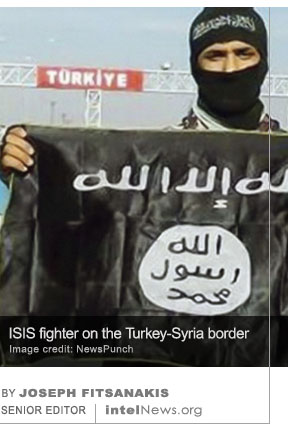 Islamic State cells are using Turkey as a strategic base in which to recuperate, rebuild, and plan an underground war in Europe, according to a new report by Dutch intelligence. This assessment is featured in a








US government plans background checks on Chinese students over espionage fears
November 30, 2018 by Joseph Fitsanakis 1 Comment
Now, however, the Trump administration is reportedly considering the possibility of imposing deeper background checks and additional vetting on all Chinese nationals wishing to study in the US. Citing “a US official and three congressional and university sources”, Reuters said on Thursday that the measures would apply to all Chinese students wishing to register in undergraduate and graduate academic programs in the US. The news agency quoted a “senior US official” as saying that “no Chinese student who’s coming [to the US] is untethered from the state […. They all have] to go through a party and government approval process”. Reuters reported that the proposed plan includes a comprehensive examination of the applicants’ phone records and their presence on social media platforms. The goal would be to verify that the applicants are not connected with Chinese government agencies. As part of the proposed plan, US law enforcement and intelligence agencies would provide counterintelligence training to university officials.
However, the plan has many American universities —including elite Ivy League schools— worried that they may be losing up to $14 billion in tuition and other fees spent annually by more than 350,000 Chinese nationals studying in the US. The fear is that the latter may be looking to study elsewhere, in countries such as Canada, Australia and the United Kingdom. Reuters said that many of America’s top universities are “regularly sharing strategies to thwart” plans by the Trump administration to make it more difficult for Chinese nationals to study in the US. The news agency said it contacted the Chinese ambassador to Washington, who called the White House’s fears of espionage by Chinese students “groundless” and “very indecent”.
► Author: Joseph Fitsanakis | Date: 30 November 2018 | Permalink
Filed under Expert news and commentary on intelligence, espionage, spies and spying Tagged with China, counterintelligence, immigration intelligence, News, United States