Crowdfunding campaign seeks release of CIA’s mind control program files

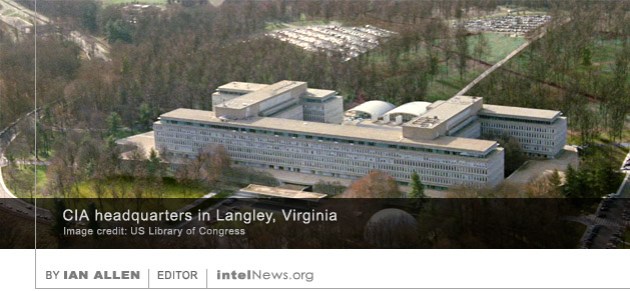
CIA headquartersAn online fundraising campaign is seeking to secure the release of over 4,000 pages of documents relating to a controversial mind control program developed by the United States Central Intelligence Agency. The project, referred to as MKNAOMI/MKULTRA in US government files, was a joint effort by the CIA and the US Department of Defense to study the effects of substances such as heroin and LSD on the human brain. It began in 1953 and over the years involved the work of hundreds of scientists, many of whom were not aware they were working on a CIA project. But it was hurriedly shut down in 1976, once post-Watergate investigations by the US Congress revealed that it led to the death of at least one person and involved the application of drugs on hundreds of nonconsenting subjects. Several lawsuits relating to MKULTRA have been filed in US courts in recent years.

In 2004, the Black Vault, a volunteer website specializing in publishing declassified government documents, released tens of thousands of pages that were released by the CIA following a lengthy Freedom of Information Act (FOIA) application. The agency released the file along with an 85-page index that listed the file’s contents. But in 2016, a Black Vault reader noticed that some of the listings contained in the file were missing from the documents. Working through the news aggregation and discussion website Reddit, a group of readers identified all the irregularities in the released documents and notified Black Vault’s owner, John Greenwald. Greenwald then contacted the CIA and, following a two-year exchange with the agency’s FOIA desk, he was told that the missing pages would require a separate FOIA request. The reason, according to the CIA, is that the original FOIA request had requested documents pertaining to “mind control”, whereas the missing pages related to “behavioral modification”, which is a separate topic.

The CIA told Greenwald that releasing the pages pertaining to “behavioral modification” would require a payment of $425.80, at 10 cents per page. After failing to convince the CIA that it should release the pages for free, because they should have been included in the original 2004 FOIA petition, Greenwald decided to launch a crowdfunding campaign. He used the popular crowdfunding website GoFundMe to request $500 toward a new FOIA and related expenses. By Wednesday night, the campaign had exceeded the amount requested by Greenwald. The owner of the Black Vault website now says that he is preparing to file a FOIA for 4,358 pages about MKULTRA that are missing from the original 2004 document release.

Author: Ian Allen | Date: 16 August 2018 | Permalink

ISIS remains strong with 30,000 members in Iraq and Syria, experts warn

ISIS forces in RamadiThe Islamic State has recovered from some of its recent defeats in the battlefield and has as many as 30,000 committed members in Iraq and Syria, according to two reports by American and United Nations experts. Last month, the Iraqi government announced that the war against the group, which is also known as the Islamic State of Iraq and Syria (ISIS) had been won. The statement was echoed by the United States President Donald Trump, who said that the war against the militant Sunni group was “98 percent” over. But now two new reports, one produced by the United States Department of Defense and the other by an expert UN panel, warn that both ISIS and al-Qaeda remain powerful, popular and dangerous in Iraq, Syria, and many other regions of the world.

The UN report was published on Monday by the organization’s Analytical Support and Sanctions Monitoring Team, which is tasked with monitoring the impact of UN-imposed international sanctions. The report recognizes that ISIS has suffered unprecedented military defeats in Iraq and Syria in the past year, and that many of its most hardened fighters are dead or have abandoned the conflict zones in the region. But it warns that the militant organization is now morphing into a “covert version” of its former self and that its organizational core remains mostly intact in both Iraq and Syria. What is more, ISIS’ center is backed by as many as 30,000 unreconstructed members, who are split roughly equally between the two countries. The US Pentagon report, which was delivered this week to Congress states that ISIS has as many as 17,100 fighters in Iraq and another 14,000 in Syria. Many of those surviving fighters are citizens of dozens of different countries around the world, according to the report. Some of them are still engaged in armed fighting, while others are “hiding out in sympathetic communities and urban areas”, mostly in Iraq, the UN report states.

There are also tens of thousands of ISIS fighters and supporters in Libya, Afghanistan, Egypt, and in several West African and Southeast Asian countries, according to the reports’ authors. These fighters are led by commanders who remain in contact with senior ISIS leaders and continue to revere Abu Bakr al-Baghdadi as the group’s central figure. In addition to ISIS, al-Qaeda also remains strong and dangerous, according to the UN report. Its regional structure “continues to show resilience” and in some regions of the world it is far stronger than ISIS. These include several regions of Africa, including areas of Somalia and the Sahel, as well as in Yemen, where al-Qaeda is believed to command as many as 7,000 armed fighters at the moment.

Author: Joseph Fitsanakis | Date: 15 August 2018 | Permalink

Canada seeks to take away passports from children of Russian spies

Vavilov FoleyTwo Canadian brothers, whose Russian-born parents fraudulently acquired Canadian citizenship before being arrested for spying on the United States for Moscow, are not entitled to Canadian citizenship, according to the government of Canada. Tim and Alex Vavilov are the sons of Donald Heathfield and Tracey Foley, a married couple arrested in 2010 under Operation GHOST STORIES, a counterintelligence program run by the US Federal Bureau of Investigation (FBI). Following the couple’s arrest, their sons, who allegedly grew up thinking their parents were Canadian, were told that their parents were in fact Russian citizens and that their real names were Andrei Bezrukov and Elena Vavilova. Their English-sounding names and Canadian passports had been forged in the late 1980s by the KGB, the Soviet Union’s primary external intelligence agency.
But the two brothers, who had never been to Russia prior to their parents’ arrest in 2010, are currently involved in a prolonged legal battle to keep their Canadian citizenship, after the government of Canada refused to recognize their Canadian passports. The latter were annulled when it became clear that the Canadian passports of the brothers’ parents were fraudulent. According to the Canadian Citizenship Act, children born in Canada to “employees of a foreign government” are not entitled to Canadian nationality. But the brothers argue that they were 20 and 16 when their parents were arrested and were unaware of their double identities. It follows, they say, that they cannot be punished for their parents’ crimes, and insist that Canada is the only home they know.

Last year, Canada’s Federal Court of Appeals overturned the decision of a lower court and ordered the government to reinstate Alex Vavilov’s Canadian citizenship. According to the Appeals Court, the Vavilov could not be considered as having been born to employees of a foreign government, since his parents were not accredited diplomats, nor did they enjoy diplomatic privileges while living in Canada. Since that time, the two brothers have had their Canadian passports renewed and say they hope to be able to settle and work in Canada. But the Canadian government was given until September 20 of this year to decide whether to appeal the Federal Court of Appeal’s decision, and take the case to the Supreme Court.

Now the Canadian government has filed a new court submission, effectively challenging the Federal Court of Appeals’ decision. It its submission, the government claims that the Vavilov brothers should be denied Canadian citizenship because their parents were, effectively, secret employees of a foreign government. The two Russian spies may not have been accredited by the Canadian state as foreign employees, it says, but they were in reality “dedicated to serving their home country, except in their case, the employment was carried out clandestinely”. Canada’s Supreme Court has said that it plans to hear the case before the end of the year.

Author: Joseph Fitsanakis | Date: 14 August 2018 | Permalink

Montenegro seeks arrest of ex-CIA officer accused of role in pro-Russian coup

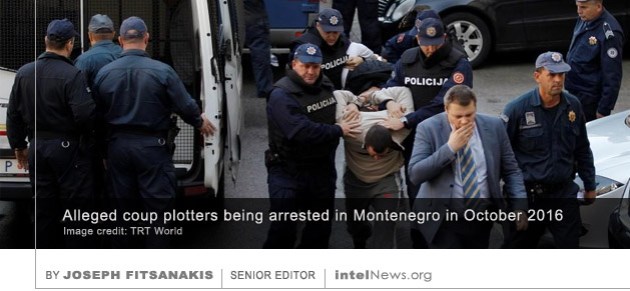
Montenegro coupGovernment prosecutors in Montenegro, the youngest member of the North Atlantic Treaty Organization, claim that a former officer of the United States Central Intelligence Agency helped pro-Russian plotters organize a coup in 2016. In October of that year, authorities in Montenegro accused “nationalists from Russia and Serbia” of staging a failed plot. Their goal was allegedly to kill the country’s then-Prime Minister Milo Dukanović, spark a pro-Russian coup in the country, and prevent its entry into NATO. The allegations surfaced after 20 Serbians and Montenegrins were arrested in Montenegro for allegedly planning an armed coup. The arrests took place on election day, October 16, 2016, as Montenegrins were voting across the Balkan country of 650,000 people. The plotters had even hired a “long-distance sharpshooter” who was “a professional killer” for the task of killing Đukanović, according to Montenegrin police. After killing the prime minister, the plotters allegedly planned to storm the parliament and prompt a pro-Russian coup.

Russia has vehemently denied the allegations. But in March of last year, the then British foreign secretary Boris Johnson appeared to validate the Montenegrin government’s allegations. Since then, a sensational trial has been taking place in the Montenegrin capital Podgorica of the 20 men who were arrested in October 2016, in addition to two Russians who are being tried in absentia. During the trial, prosecutors fingered Joseph Assad, a former CIA officer, as a co-conspirator in the coup plot. The Egyptian-born Assad served as a counter-terrorism expert in the CIA after arriving in the US in 1990, but eventually left the agency to launch his own security firm. It is believed that at the time of the alleged coup plot, Assad’s firm was employed by Aron Shaviv, a political strategist connected with the Democratic Front, a vocal pro-Russian opposition party in Montenegro. Shaviv, who has joint British and Israeli citizenship, said he hired Assad’s firm to provide counter-surveillance against Montenegro’s security services. According to Shaviv, the Montenegrin authorities spied on him and harassed him because of his connections to a domestic political party that is seen as pro-Russian.

But prosecutors in the trial of the alleged coup plotters claim that Assad’s role was to organize and provide escape routes and methods for the coup plotters. In light of these allegations, a warrant has been issued for Assad, accusing him of “operating a criminal enterprise”, according to Britain’s Guardian newspaper. Assad has rejected the charges as a “deception campaign”. In a statement issued on Saturday, he said he was “a loyal American who had no role in any crimes or coup in Montenegro”. Meanwhile, the Democratic Front and a number of other opposition parties in Montenegro denounced the government’s claims of a failed coup as “publicity stunts” aimed at distracting the country’s citizens from the state of the economy and other domestic concerns.

Author: Joseph Fitsanakis | Date: 13 August 2018 | Permalink

Vietnam arrests deputy security minister in unprecedented anti-corruption campaign

Phan Van Anh VuIn a move that has stunned Vietnamese society, authorities in Hanoi have arrested one of the country’s most powerful security officials, allegedly for helping a business tycoon and former intelligence agent escape abroad. The move, which observes described as “unprecedented” in modern Vietnamese history, signals a widening of the anti-corruption campaign that started in 2016 and is now affecting Vietnam’s powerful intelligence agencies. Vietnam boasts one of Asia’s fastest-growing economies, but its economic performance is severely hampered by corruption, which is endemic in the communist country of 93 million. In its most recent Corruption Perceptions Index, Transparency International ranked Vietnam 107th out of the world’s 180 countries, behind nations like Colombia, Albania and Zambia. Two years ago, the Vietnamese government launched an anti-corruption campaign, which has so far resulted in a wave of arrests and demotions of senior officials in the country’s lucrative energy and banking sectors. The moves have stunned the Vietnamese public, which is not used to witnessing public discussions of corruption, let alone the open punishment of state officials.
Until this week, one major area of government appeared to have been spared from the anti-corruption probe: the feared security and intelligence community. This largely means the Ministry of Public Security (MPS), which is the most powerful civilian agency in the country and has traditionally been off-limits during previous transitional periods in Vietnam’s turbulent history. The MPS is in charge of the country’s extensive police force, its civilian intelligence wing, and its nascent cyber security units. The size of its employee base is classified, though it is believed to be vast.

But now the traditional shielding of the MPS from the unprecedented changes taking place in the Vietnamese government appears to have ended. On Wednesday, authorities announced the arrest of Bui Van Thanh, MPS’ deputy minister and the country’s second most powerful intelligence official. A press statement issued by the government said that Thanh had committed “serious violations in his work”. Consequently, he had been dismissed and his military rank would be lowered from lieutenant general to colonel. Government officials said Thanh came under suspicion for facilitating the escape of Phan Van Anh Vu, a government employee who became a property tycoon after amassing a large personal fortune while working as an MPS agent. Vu was wanted by Hanoi for allegedly selling state secrets in exchange for money, but managed to leave the country. In January, however, he was arrested in Singapore and extradited to Vietnam. He reportedly told authorities that a fake passport in his possession had been given to him by Thanh. He also said that Thanh helped him buy state property by giving him inside information affecting the sale prices. In July, Vu was jailed or nine years for espionage and corruption, following a closed-door trial. The precise charges against him remain unclear.

Earlier this week, the Vietnamese government announced that a “major restructuring” would be taking place in the MPS, with the aim of reducing its size and maximizing its efficiency. Government media reported that “hundreds of departments” would be merged and the overall structure of the organization would be heavily scrutinized. Many observers believe that more arrests and demotions will follow in connection with this announcement. Some critics have argued, however, that political infighting is fueling the anti-corruption probe and that it is a concealed attempt to neutralize intra-party opponents of the current administration in Hanoi.

Author: Joseph Fitsanakis | Date: 10 August 2018 | Permalink


Germany arrests Jordanian intelligence operative who spied on mosque

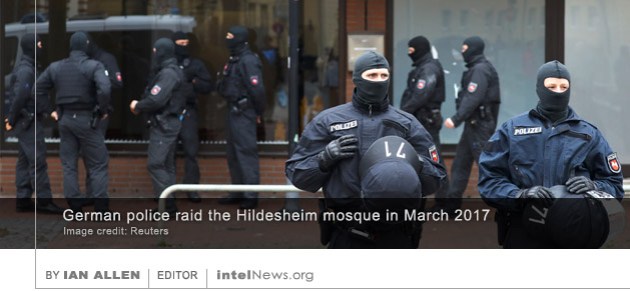
Hildesheim mosqueAuthorities in Germany announced yesterday the arrest of a German national who is accused of spying on a central German mosque on behalf of Jordan, according to media reports. The man was reportedly arrested on Tuesday at an unknown location by officers of Germany’s domestic intelligence agency, the Federal Office for the Protection of the Constitution (BfV). In a press statement, the agency said the man is a 33-year-old German national named “Alexander B.”. German privacy rules forbid the public identification of crime suspects prior to their conviction in a court of law.


According to the public statement issued by the BfV, the 33-year-old man is believed to have worked for “a Jordanian intelligence agency” —most likely the Jordanian General Intelligence Department, or GID, which is a branch of the Jordanian Armed Forces— since at least 2016. He is accused of having infiltrated a Sunni mosque in the central German city of Hildesheim, located 20 miles southeast of Hanover in Germany’s Lower Saxony region. His mission, according to the BfV, was to keep tabs on mosque goers who expressed support for the ideology of the Islamic State, and might even consider traveling to the Middle East to join the radical group. The alleged Jordanian intelligence operative was also tasked with reporting on news reaching the mosque from those of its members who had already gone to the Middle East and joined the Islamic State.

Last year, German authorities closed down the Hildesheim mosque, known in German as Deutschsprachiger Islamkreis Hildesheim e. V. (DIK), and arrested its imam, Ahmad Abdulaziz Abdullah A., known as Abu Walaa. The Iraqi-born imam was charged with supporting a foreign terrorist organization by actively recruiting young Muslims on behalf of the Islamic State. The mosque has since remained closed, because authorities believe that it had become a beehive of fundamentalist activity. Jordan is one of the Middle East’s most liberal states and has been targeted repeatedly by the Islamic State, which views its leadership as pro-Western. However, it appears that Alexander B. was spying on the Hildesheim mosque —therefore on German soil— without having informed the host country of his activities. The government of Jordan has not commented on his arrest.

Author: Ian Allen | Date: 09 August 2018 | Permalink

US-backed alliance in Yemen war bribes, recruits al-Qaeda warlords, report finds

Al-Qaeda in YemenYemeni militias backed by Saudi Arabia, the United States and the United Arab Emirates are actively paying off al-Qaeda-allied factions to abstain from the fighting, and are recruiting al-Qaeda members to fight against Shiite rebels, according to a new investigative report. Ever since 2015, when the civil war in Yemen broke out, the US, along with its Arab allies UAE and Saudi Arabia, has supported Sunni troops in their war against Shiite Houthi rebels. The latter are believed to be supported by Iran, and the US-backed coalition is engaged in an effort to curtail what it sees as Iranian expansionism in the Middle East.

But Iranian-supported fighters are just one of the many well-armed factions involved in the Yemeni Civil War, which Washington is ostensibly against. Another such faction is Al-Qaeda in the Islamic Peninsula (AQAP), believed to be the strongest surviving branch of the group that carried out the attacks of September 11, 2001. For several years now, the US-led coalition in Yemen has argued that its forces have severely limited AQAP’s strength and ability to fight, and that the group’s territorial control has been shattered. But a new investigative report published on Monday by the Associated Press argues that the reason why AQAP’s activities appear to have decreased in Yemen, is that its commanders are being bribed by US-backed Sunni militias and that its fighters are being recruited to fight against the Houthis. As strict Sunni Salafists, AQAP members view the Shiite Houthis as apostates and enemies of Islam. They are therefore “effectively on the same side as the Saudi-led coalition” in Yemen, note the editors of the Associated Press report. Citing “interviews with two dozen officials, including Yemeni security officers, militia commanders, tribal mediators and […] members of al-Qaeda”, the report’s authors say that US-backed Sunni militias “actively recruit al-Qaeda militants […] because they’re considered exceptional fighters”.

The Associated Press report also claims that the Sunni coalition has struck a series of secret agreements with AQAP, under which it paid off its fighters to abandon several Yemeni towns that were under their control. Upon leaving, these AQAP fighters were allowed to take with them tons of military equipment and valuables, including cash. In one case, AQAP was bribed to abandon the port city of Mukalla, Yemen’s fifth-largest urban center, and its fighters were allowed to keep their weapons and up to $100 million in looted cash deposits, said the Associated Press. In another case, AQAP militants were paid off to leave several towns in Yemen’s Abyan province, and 250 of them were incorporated into the so-called Security Belt, a Sunni militia backed by the government of the UAE. The AQAP fighters reportedly told their Security Belt commanders that they would “unite with the devil [himself] in the face of Houthis”.

The Associated Press notes that there is no evidence that funds supplied to Yemeni Sunni militias by the US have ended up into the hands of AQAP. Additionally, the US government has repeatedly denied accusations by Russia, Syria, and others that it supports various al-Qaeda factions. However, the Associated Press argues that the US Pentagon has been privy to the secret agreements between the Sunni militias and AQAP, which some say may end up strengthening al-Qaeda’s most formidable local branch anywhere in the world.

Author: Joseph Fitsanakis | Date: 08 August 2018 | Research credit: M.A. | Permalink

US fired Moscow embassy employee who may have spied for Russia

US embassy in RussiaA female Russian national who worked for the United States Secret Service in Moscow was quietly dismissed in 2017, amidst concerns that she was spying for Russia. British newspaper The Guardian, which broke the story last week, did not name the Russian woman. But it said that she had worked at the US Embassy in Moscow “for more than a decade”, most recently for the Secret Service –a federal law enforcement agency that operates within the Department of Homeland Security. The Secret Service has several missions, the most important of which is to ensure the physical safety of America’s senior political leadership.

Throughout her Secret Service career, the Russian woman is thought to have had access to the agency’s email system and intranet network, said The Guardian, citing “an intelligence source”. She could also potentially have had access to “highly confidential material”, said the paper, including the daily schedules of America’s past and current presidents and vice presidents, as well as their family members’ schedules.

The unnamed Russian national first came under suspicion in 2016, said The Guardian, during a routine security review conducted by two counterintelligence staff members at one of the Department of State’s Regional Security Offices (RSO). These reviews usually take place every five years and scan the background and activities of employees at American embassies abroad. The review showed that the unnamed Russian national was holding regular meetings with officers of the Federal Security Service (FSB), Russia’s domestic intelligence service. In January of 2017, the Department of State reportedly shared its findings with the Secret Service. But the latter waited until several months later to fire the Russian woman, having decided to do so quietly, said The Guardian.

According to the paper, instead of launching a major investigation into the State Department’s findings, the Secret Service simply dismissed the woman by revoking her security clearance. The paper said that the Russian national’s dismissal took place shortly before the US embassy in Moscow was forced to remove or fire over 750 employees as part of Russia’s retaliation against economic sanctions imposed on it by Washington. That coincidence helped the Secret Service “contain any potential embarrassment” arising from claims of espionage, said The Guardian. The paper contacted the Secret Service and was told that “all Foreign Service nationals” working for the agency “are managed accordingly to ensure that […US] government interests are protected at all times”. Their duties, therefore, are “limited to translation, interpretation, cultural guidance, liaison and administrative support. This is of particular emphasis in Russia”, said a Secret Service spokesman, who refused to discuss specific cases.

Author: Joseph Fitsanakis | Date: 07 August 2018 | Research credit: S.F. | Permalink

Syrians accuse Israel of assassinating top missile scientist in Hama province

Syrian Scientific Studies and Research CenterOne of Syria’s leading pro-government newspapers has said that Israel was behind a bomb blast in Hama province that killed a senior scientist working for the country’s missile program. Aziz Azbar was reportedly a senior research director at the Syrian Scientific Studies and Research Center, known as CERS. The Damascus-based agency is thought to be at the center of the Syrian government’s formidable chemical weapons program. Last year, the United States Department of the Treasury imposed economic sanctions on nearly 300 CERS employees, after Washington accused them of being directly responsible for the Syrian government’s repeated use of chemical weapons against rebels and civilians. The European Union, as well as the French and British governments, also imposed sanctions on CERS and its staff.

According to Syrian media, Azbar specialized in developing and maintaining rocket systems in the city of Masyaf, located about 160 miles north of Damascus, where CERS maintains a research facility. He reportedly died last Saturday night when his car suddenly blew up. According to some reports, the blast originated from a bomb that had been placed in the headrest of his car seat and was detonated remotely. His driver was also killed in the blast, according to Syrian media reports. An insurgent group calling itself the Abu Amara Battalions, which is linked with the Sunni Levant Front in Syria’s Aleppo province, issued a statement claiming responsibility for Azbar’s killing. The Abu Amara Battalions have previously issued similar statements after reportedly assassinating Syrian government officials or militia commanders.

However, on Sunday Syria’s al-Watan newspaper said that the Israeli intelligence agency Mossad was responsible for Azbar’s death. The Syrian scientist was “a person of the utmost interest to Israel” said the paper, because of his direct connection to Damascus’ Russian- and North Korean-built Scud missile arsenal. However, officials in Israel refused to acknowledge that Tel Aviv had any connection with Azbar’s killing. “Every day in the Middle East there are hundreds of explosions and settling of scores”, said Israel’s Defense Minister Avigdor Liberman. “Every time they try to pin the blame on [Israel], so we won’t take this [latest accusation] too seriously”, he added. The Syrian government has not made any formal statements regarding Azbar’s death.

Author: Ian Allen | Date: 06 August 2018 | Permalink

British police arrest man over mystery killing of Seychelles leader in 1985

Gérard HoarauA man has been arrested by British counter-terrorism police in Northern Ireland, reportedly in connection with the assassination of a Seychelles exiled political leader in London in 1985. No-one has ever been charged with the murder of Gérard Hoarau, who was gunned down with a Sterling submachine gun in Edgware, London, on November 29, 1985. At the time of his killing, the 35-year-old Hoarau led the Mouvement Pour La Resistance (MPR), which was outlawed by the Seychelles government but was supported by Western governments and their allies in Africa. The reason was that the MPR challenged the president of the Seychelles, France-Albert René, leader of the leftwing Seychelles People’s United Party —known today as the Seychelles People’s United Party. The British-educated René assumed the presidency via a coup d’etat in 1977, which was supported by neighboring Tanzania, and remained in power in the island-country until 2004.

Despite proclaiming that he espoused a “moderate socialist ideology”, his critics —including Hoarau— accused him of being a secret admirer of Cuban-style communism and called for his removal from office. In 1979, Hoarau was one of several critics of René who were ordered to leave the Seychelles under threat of imprisonment. He initially found refuge in South Africa. But in 1981, the Seychelles security forces foiled an armed invasion by South African-supported mercenaries, which aimed to depose René. The mercenaries —most of them South African Special Forces veterans, former Rhodesian soldiers, Belgian veterans of the Congo Crisis, and American Vietnam War veterans— were led by British-Irish mercenary Thomas Michael “Mad Mike” Hoare. The group of over 50 armed men was intercepted at the Seychelles International Airport in Mahé and managed to escape only after taking hostages and hijacking an Air India passenger airplane that happened to be at the airport. However, they left behind five mercenaries, including at least one officer of South Africa’s National Intelligence Service.

In 1982, South Africa struck a deal with the Seychelles for the release of the captured mercenaries. In return, it promised to stop sheltering René’s opponents, including Hoarau. The latter was thus forced out of South Africa and sought refuge in London, England, where he was assassinated three years later. At the time of Hoarau’s killing, there was strong suspicion that the government of the Seychelles was directly involved in his assassination. There were also reports in the British press that a British hitman may have been hired to assassinate Hoarau. But despite several arrests in connection with the case, no-one was ever charged with the Seychellois exiled leader’s assassination. This, however, may soon change. In 2016, the British Metropolitan police re-opened the case and, according to a police press statement “established fresh lines of inquiry”. On Thursday, a 77-year-old man was reportedly arrested in Antrim town, Northern Ireland, by officers of the Metropolitan Police and the Police Service of Northern Ireland. The man, who has not been named, was transported to London for questioning “on suspicion of conspiracy to murder”. A police spokesman said on Thursday that the man had not previously been arrested as part of the Hoarau murder investigation.

Author: Joseph Fitsanakis | Date: 02 August 2018 | Permalink

Facebook says efforts to subvert upcoming US elections resemble ‘new arms race’

FacebookFacebook has said it is involved in an “arms race” against “bad actors” as it announced on Tuesday the removal of accounts that allegedly tried to subvert the upcoming mid-term elections in the United States. The social-media giant said its security division had identified 32 profiles and pages that were set up for the sole purpose of disrupting, subverting or otherwise influencing the American political process. At least seven more accounts were shut down on the Instagram platform –which is also owned by Facebook– for the same reasons. In the past 14 months, the suspect accounts generated nearly 10,000 posts and were liked or followed by over 290,000 users, said Facebook.

In addition to producing memes that aimed to stir existing racial, political and religious tensions in American society, the suspect accounts are also believed to have generated approximately 150 paid advertisements, spending around $11,000 for that purpose. Moreover, close to 30 public events were organized, advertised and hosted by the suspect pages throughout the US in the past 14 months. One such event was subscribed to by 4,700 users, with another 1,400 users stating that they would attend.

In a preliminary report posted on its online newsroom, Facebook said it was too early in the investigation to identify the party or parties behind the alleged effort to influence the US mid-term elections. Its security team had detected “one instance” of a connection between this latest operation and the Russian-based Internet Research Agency (IRA), which Facebook identified as being one of the main sources behind efforts to influence the 2016 US presidential elections. But the report cautioned that the instigators of this latest attempt to influence the US political process had gone to great pains to hide their identities, affiliations and geographical coordinates. For instance, they routinely employed virtual private networks in order to disguise their internet protocol addresses. They also used third parties to purchase advertisements on Facebook and Instagram. These and many other tactics severely limited the ability of security technicians to attribute these efforts to specific countries, governments or companies, said Facebook.

Using unusually strong language to describe its ongoing probe, Facebook said that the exploitation of its platform for sinister political purposes resembled “an arms race” and that constantly changing tactics were needed to combat it. In addition to removing the suspect accounts, Facebook said it was working closer with law enforcement and leading online security firms in order to analyze and eliminate threats from what it described as “bad actors”. It added that it was “investing heavily” in more people and better technology in order to eliminate those who were trying to weaponize its communication platform for sinister goals.

Author: Joseph Fitsanakis | Date: 01 August 2018 | Permalink

US diplomats secretly met with Taliban without Afghan government

TalibanIn a dramatic change to longstanding policy, senior United States diplomats have reportedly held secret meetings with Taliban leaders without the presence –and presumably knowledge– of the Afghan government. For over a decade, the Taliban have refused to negotiate with the Afghan government, which they view as a puppet regime controlled by Washington. They have instead sought to speak directly with the United States, without Kabul’s mediation. In 2015, the United States sought to initiate peace talks with the Taliban in the Qatari capital Doha, but the effort collapsed after the Afghan government denounced it and demanded a seat at the table. The negotiation process has remained dormant since then.

Last week, however, The Wall Street Journal reported that a series of unannounced meetings have been taking place between a delegation of senior Taliban officials and an American team led by Alice Wells, principal deputy assistant secretary of the US Department of State’s Bureau of South and Central Asian Affairs. On Saturday, The New York Times confirmed the story, saying that meetings between the two sides were being held in Qatar, where the Taliban maintain an informal diplomatic mission. Citing “two senior Taliban officials”, The Times said that the American diplomats have been meeting with members of the Taliban’s political commissariat. But the paper said it had no information about the substance or progress of the talks. If The Times’ claims are accurate, they would mark a dramatic reversal of longstanding US policy on the Taliban. Since 2001, Washington has consistently argued that any negotiation process involving the Taliban would be “Afghan-owned and Afghan-led”. Therefore, direct talks between Washington and the Taliban without Kabul’s mediation would mark a major shift in America’s security strategy in Afghanistan and beyond.

The New York Times said it contacted the US Department of State in Washington, seeking clarification about the alleged talks. But a spokesman refused to discuss the claims and insisted that “any negotiations over the political future of Afghanistan will be between the Taliban and Afghan government”. However, The Times noted that the spokesman did not expressly deny the existence of the talks with the Taliban.

Author: Joseph Fitsanakis | Date: 31 July 2018 | Permalink

FIFA World Cup host Qatar ‘used ex-CIA agents to sabotage rival bids’

Qatar FIFA 2022The government of Qatar, which won the right to host the 2022 FIFA World Cup, hired a high-profile public relations group and a team of former officers of the United States Central Intelligence Agency (CIA) in order to undermine rival bids to host the tournament, according to a British newspaper. In December 2010, Qatar was named as the host of the lucrative tournament, which is held every four years under the auspices of the International Federation of Association Football. In winning the right to host the tournament, the Middle Eastern oil kingdom beat formidable rival bids from Japan, South Korea, Australia and the United States. FIFA’s decision to award the 2022 World Cup to Qatar has been heavily criticized –not least because it will take place in the winter, so as to avoid Qatar’s scorching summer temperatures. Many countries in Europe, Latin America and elsewhere will therefore have to resort to the highly unusual step of disrupting their domestic football seasons in order to send their national teams to compete in Qatar.

Now controversy over Qatar’s winning bid is likely to intensify following a claim by a leading British newspaper that the oil kingdom hired former CIA officers and public-relations specialists to discredit rival bids. According to the London-based Sunday Times newspaper, Qatar employed the public-relations firm Brown Lloyd Jones (now known as BLJ Worlwide) and a team of ex-CIA operatives. The Times said it had seen internal documents leaked by an unnamed whistleblower, which reveal the sinister nature of Qatar’s public-relations offensive. Much of it, said The Times, centered on propagating the view that World Cup bids by the United States and Australia would not be supported by the two countries’ domestic audiences. Organizations, academics, journalists and pressure groups from Australia and the United States, who were critical of their countries’ efforts to host the tournament, were clandestinely funded in order to promote their views. Additionally, BLJ and the former CIA operatives compiled intelligence folders on the leading figures of the rival countries’ bids.

If The Sunday Times’ allegations are correct, it would mean that Qatari authorities violated FIFA’s regulations for bidding to host tournaments. But last night the Supreme Committee for Delivery and Legacy, Qatar’s state-run group that organized the country’s World Cup bid, disimssed the newspaper’s accusations. Its spokesman rejected “each and every allegation put forward by The Sunday Times” and assured reporters that Qatar had “strictly adhered to all FIFA’s rules and regulations”.


Author: Joseph Fitsanakis | Date: 29 July 2018 | Permalink

Researchers uncover ‘ambitious’ Iranian hacker group that targets the Middle East

Computer hackingAn American cyber security firm has reported the discovery of a previously undetected, “highly active” Iranian cyber espionage group, whose extensive target list consists mainly of large organizations and companies in the Middle East. The cyber security firm Symantec, makers of Norton antivirus software, which uncovered the cyber espionage group’s existence, has dubbed it “Leafminer”. It said the group has been active since the beginning of 2017, but has “significantly ramped up its activities” in 2018 and is currently involved in dozens of ongoing attacks.

In a report published on Wednesday, Symantec said that its security experts managed to obtain what appears to be Leafminer’s master list of targets. The list is written in the Farsi language and contains just over 800 organizations, which according to Symantec researchers is “an ambitious goal” for any cyber espionage group. The organizations listed on the target sheet come from a variety of sectors, including government, transportation, the financial sector, energy and telecommunications. But the majority of the group’s targets appear to be in the petrochemical and government sectors. Additionally, virtually all of Leafminer’s targets are located in the Middle East and North Africa, in countries such as Israel, Egypt, Bahrain, Qatar, Kuwait and the United Arab Emirates. Some of the group’s targets are located in Afghanistan and Azerbaijan.

Symantec said its researchers observed the Leafminer hackers execute attacks in real time on at least 40 targets in the Middle East, including on the website of an intelligence agency in Lebanon. According to the cyber security company, Leafminer uses a variety of hacking tools, including custom-designed malware and some publicly available software. The group’s operational sophistication is also varied, and ranges from complex, multilayered attacks to brute-force login attempts. Symantec said it concluded that the cyber espionage group originates from Iran because its master target list is written in Farsi and because Iran is virtually the only country in the Middle East that is missing from the target list. However, it said that it did not have sufficient evidence to link Leafminer to the Iranian government. In a separate development, Germany’s domestic intelligence agency, the Federal Office for the Protection of the Constitution (BfV), said this week in its annual report that the government of Iran has significantly expanded its cyber warfare capabilities and “poses a danger to German companies and research institutions”.

Author: Joseph Fitsanakis | Date: 26 July 2018 | Permalink

German far-right group is arming itself, poses serious threat, report warns

ReichsbuergerAdherents of a bizarre far-right movement in Germany, who claim to be citizens of Prussia, are arming themselves and pose a growing security threat, says a new report by the country’s domestic spy service. The members of the movement call themselves Reichsbuerger (“citizens of the Reich”) and reject the legitimacy of the Federal Republic of Germany. Instead of the modern-day German state, which emerged in 1990 from the union of East and West Germany, Reichsbuergers swear allegiance to the Deutsches Reich (German Reich), the Nazi German state that existed between 1933 and 1945. They also claim that the Deutsches Reich, which they occasionally refer to as Prussia, continues to exist in its pre-1945 state and is still governed by a provisional government in exile.

In some cases, Reichsbuerger adherents have contacted foreign embassies in Berlin and asked to be recognized as citizens of the Third Reich, but without success. In addition, some Reichsbuerger associations issue Deutsches Reich identification cards and Deutsches Reich car license plates. But these are dismissed as “fantastical” by German authorities, who have historically refused to take Reichsbuerger adherents seriously. But now the Federal Office for the Protection of the Constitution (BfV), Germany’s main domestic security agency, has said that the Reichsbuerger movement is growing and needs to be viewed as a potential security threat. According to the BfV’s annual report, which was published on Tuesday, the Reichsbuerger movement has grown by more than 65 percent since 2016 and currently consists of approximately 20,000 committed members.

In its report, the BfV notes that the numerical growth of Reichsbuerger adherents may be partly attributed to the heightened attention that German authorities have been paying to far-right organizations in recent years. The agency also states that only about five percent of Reichsbuergers may be described as violent or potentially violent extremists. However, violent Reichsbuergers have risen from 500 in 2016 to 900 in 2017, an 80% increase in a year, according to the report. Moreover, says the BfV, many core members of the Reichsbuerger movement maintain close contacts with German far-right criminal networks, whose members include current and former supporters of the National Socialist Underground (NSU). Earlier this month, several NSU members were found guilty of having participated in 10 politically motivated killings of immigrants between 2000 and 2007. The BfV report states that Reichsbuergers increasingly view the NSU’s violent acts as examples to follow, and that they are systematically attempting –and usually succeeding– to obtain gun licenses. In a report published earlier this year, the BfV had warned that the Reichsbuerger movement was trying to build an army.

Author: Ian Allen | Date: 25 July 2018 | Permalink