Opinion: Deforming the US National Security Council
February 2, 2017 2 Comments
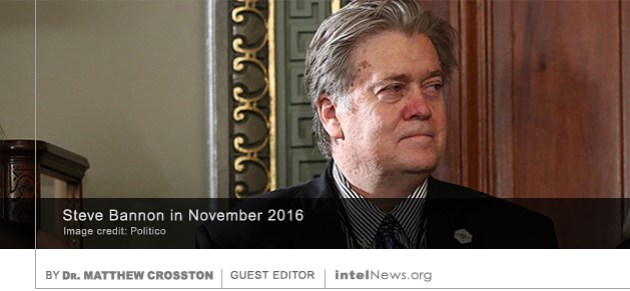 There has been much consternation and confusion over the maneuverings engineered by United States President Donald Trump with the National Security Council (NSC). By now everyone knows the Chairman of the Joint Chiefs of Staff and the head of the Office of the Director of National Intelligence (ODNI) have been essentially demoted down to Principals Committee meetings, with the no-doubt unsatisfying caveat that “when their specific expertise” is needed they will be asked to attend the main Principals meeting with the President. The irony, of course, is that both of these offices have always been oversight and unifying leadership positions: the Chairman of the Joint Chiefs oversees and coordinates discussion and debate between the heads of all the military branches while the ODNI was basically created to go do the thing the Department of Homeland
 Security was initially meant to do after 9/11 —coordinate and improve communication and cooperative transparency across the entire US Intelligence Community. It is therefore somewhat mystifying as to why two deeply experienced actors with comprehensive knowledge of military and intelligence affairs writ large would be inexplicably categorized as ‘knowledge specialists’, not required for the big general meeting. It is not like the ODNI came into the NSC meetings pre-Trump as the ‘Basque subject matter expert’ alone, or the Chairman of the Joint Chiefs laid claim to being the world’s only ‘Gulf of Aden’ maritime security specialist. While it is still too early to know, it seems a logical bet that there is some personality conflict or discomfort between these two men and the incoming member(s) that Trump has designated. Safe money is on General Michael Flynn. But since that right now will remain unsubstantiated rumor and gossip, we are left with nothing but conjecture.
Which leads us appropriately into the appointment of Trump chief strategist Steve Bannon as a permanent sitting member of the National Security Council. Read more of this post
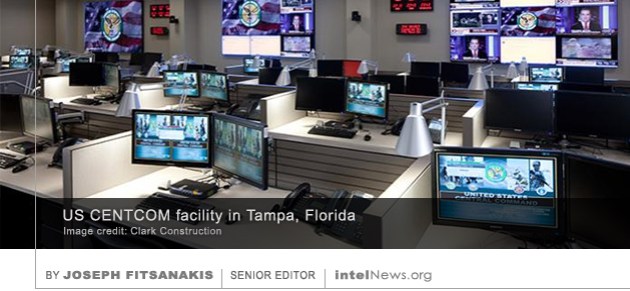 Whistleblowers say mismanagement, amateurism and cronyism are plaguing a multimillion-dollar American psychological operation aimed at countering online propaganda by the Islamic State. The program, known as WebOps, was established by the United States Department of Defense during the administration of US President Barack Obama. Its stated goal is to counter efforts by the Islamic State (also known as the Islamic State of Iraq and Syria —ISIS) to spread propaganda and recruit followers using online social media. Since its creation, it has been administered by the US Central Command’s Information Operations Division. But its implementation has been contracted to Colsa Corporation, a private company based in the US state of Alabama. The company specializes in providing services for US government agencies, some of which include the use of specialized software that utilizes information found on social media.
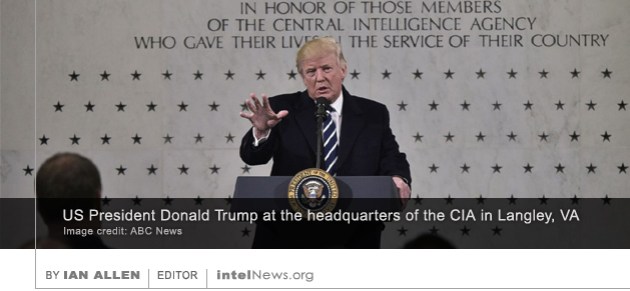 The White House announced on Monday a revised policy that reinstates the Central Intelligence Agency on the National Security Council. Chaired by the president, the NSC was established 70 years ago as a forum to provide the commander-in-chief with advice from senior civilian and military officials before making key decisions on domestic and foreign affairs. Principal attendees of the NSC include the US vice president, the secretaries of state, defense, and energy, the chair of the Joint Chiefs of Staff, and the director of national intelligence. Last week, the White House removed the chair of the Joint Chiefs of Staff and the director of national intelligence from the Principals Committee —the core participants— of the NSC. A
 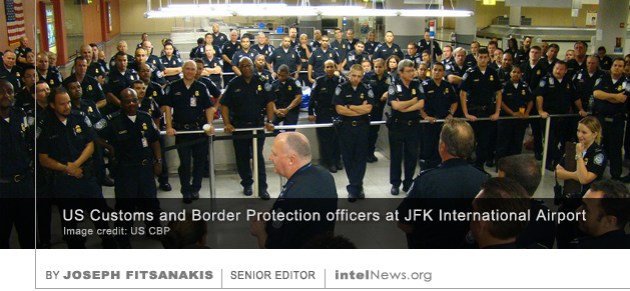 Intelligence veterans have raised concerns that the temporary ban on immigrants and refugees from seven Muslim-majority nations, which has been imposed by the White House, will significantly hinder American efforts to recruit intelligence assets and sources in Muslim countries. United States President Donald Trump signed an executive order on Friday, banning entry into the United States of citizens of Iran, Iraq, Syria, Yemen, Sudan, Somalia and Libya. According to the White House, the goal of the temporary ban is to help increase domestic security in the US. But
 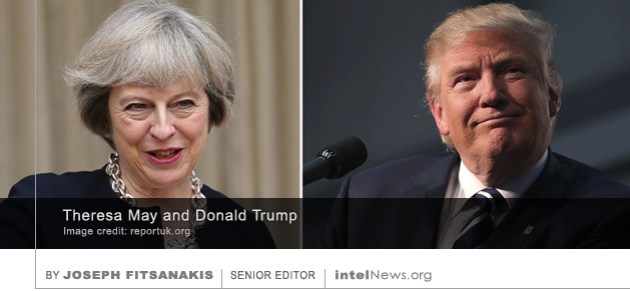 The British government may limit or end intelligence cooperation with the United States, if Washington revives its post-9/11 torture program, according to reports. On Wednesday, US President Donald Trump said he had asked “people at the highest level of intelligence […], does torture work?” and had received the answer “yes, absolutely”. He added that he was considering reviving some of the torture techniques that were used in the “war on terrorism”, including waterboarding and, in his words, “a hell of a lot worse”.
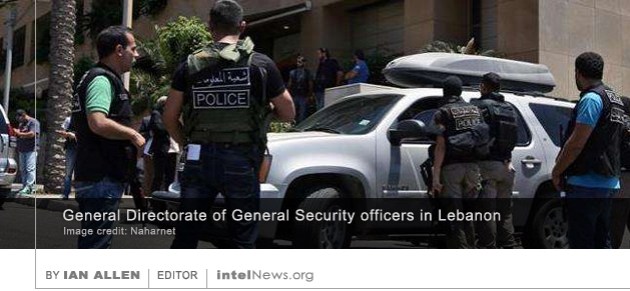 The security services of Lebanon announced on Wednesday that they had arrested five foreign nationals who were allegedly spying of Israel. A brief statement issued by Lebanon’s General Directorate of General Security (GDGS, also known as the General Security Directorate) said the five individuals were members of a “spy ring” set up by the Mossad, Israel’s external intelligence agency. The five —three men and two women— are accused of contacting Israeli embassies in countries in the Middle East, Europe and Asia, with the aim of passing information about domestic Lebanese affairs.
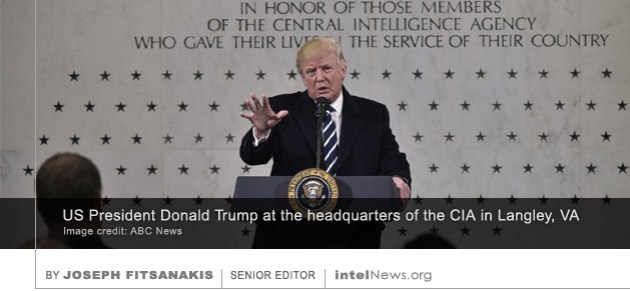 Officials at the United States Central Intelligence Agency have questioned whether it is safe for them to reveal the sources of their information about Russia to America’s new President, Donald Trump, according to a report. The implication is that some at the CIA are concerned that Trump’s allegedly close ties with Russian officials may put CIA operations officers in danger. The information was shared on Monday by Mary Louise Kelly, national security correspondent for National Public Radio (NPR). She
  There is no doubt whatsoever that Russia has compiled ‘information’ on United States President Donald Trump. Russian intelligence considers it a rightful duty to compile information on persons of relevance, especially when they are conducting significant business or maintain political relations with Russia. Trump qualified under that definition long before he even thought about running for president. Even I have been followed, during my numerous times in Russia, both openly and tacitly. I have had my computer hacked and hotel phone bugged. And my affairs in Russia have come nowhere near to the financial or political relevance of Donald Trump.
 intelligence on Trump has nothing to do with American celebrity culture. If it truly exists, this would have been done under the edict of ‘national security’ for Russian geopolitical interests. As such, the proper Russian intelligence behavior would be to deny its existence and hold on to anything it has until a time deemed strategically best. The least efficient usage of that compromising material would be to just embarrass him publicly before he is inaugurated, TMZ ‘gotcha’ style. Russians simply don’t work that way. Rather, keeping it secret and using it in a non-public but strategically effective manner for their national interests is the Russian way.
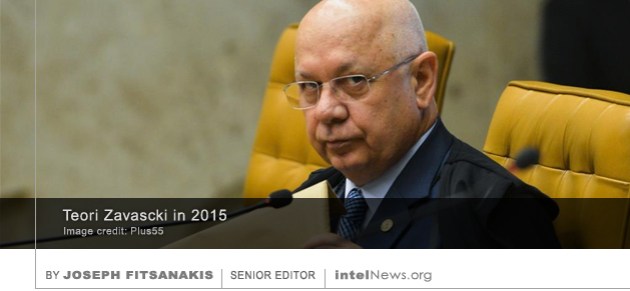 Brazilian authorities have launched an investigation into last week’s plane crash that killed the leading judge in the largest corruption probe in the nation’s history, involving government officials and two giant companies. Supreme Court judge Teori Zavascki died last Thursday with two other people, when the small airplane they were on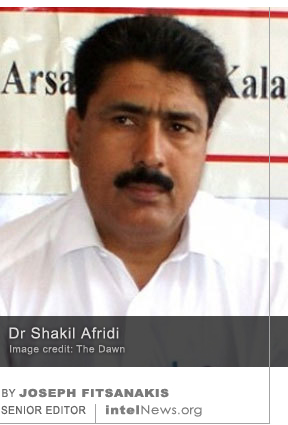
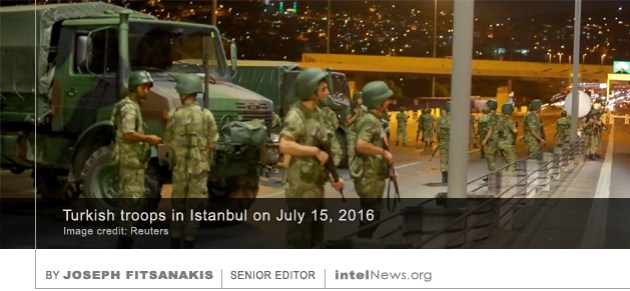 A leaked report by a European Union intelligence body states that Islamist forces were not behind last July’s failed coup in Turkey, and that the ruling party used the coup to neutralize its few remaining political rivals. The government of Turkish President Recep Tayyip Erdoğan accuses members of the so-called Gülen movement of orchestrating the coup, which included an armed attack on the country’s parliament and the murder of over 200 people across Turkey. The Gülen movement consists of supporters of Muslim cleric Fethullah Gülen, who runs a global network of schools, charities and businesses from his home in the United States. The government of Turkey has designated Gülen’s group a terrorist organization and claims that its members have stealthily infiltrated state institutions since the 1980s.
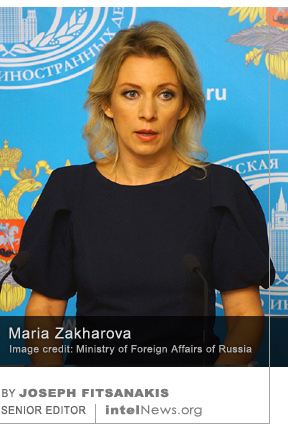 A senior Russian official has accused the United States Federal Bureau of Investigation of trying to blackmail a Russian diplomat who was attempting to purchase anti-cancer drugs in an American pharmacy. The allegation was made Sunday on live Russian television by Maria Zakharova, spokeswoman for Russia’s Ministry of Foreign Affairs. She was being interviewed on Sunday Night with Vladimir Solovey, a popular politics roundtable show on Russia’s state-owned Rossiya 1 television channel. Zakharova told Solovey that, a few years ago, the Russian government authorized one of its diplomats in the United States to purchase several thousand dollars’ worth of anti-cancer drugs. The drugs were to be used by Yevgeny Primakov, Russia’s prime minister in the late 1990s, who was battling liver cancer.
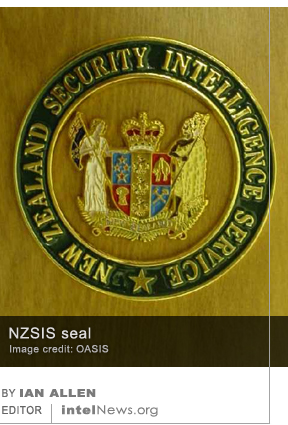 The intelligence agency of New Zealand has issued a report warning that the country is being targeted by foreign spies who operate using fake covers. Many of them aim to infiltrate some of the highest levels of the government, according to the agency. The warning appeared in the annual report of the New Zealand Security Intelligence Service (NZSIS), the country’s main national intelligence organization, which is responsible for intelligence, counterintelligence and counter- terrorism. The NZSIS’
 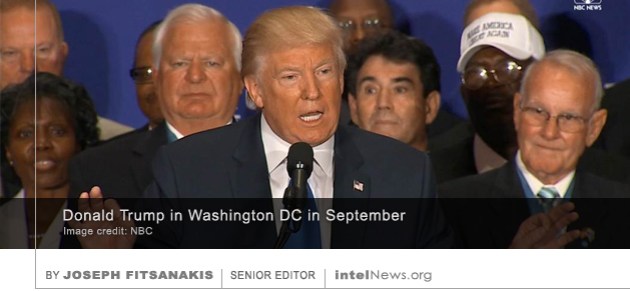 American intelligence officials allegedly warned their Israeli counterparts not to share intelligence with Washington once Donald Trump becomes president of the United States. The reason was that, according to the US officials, there was no guarantee that the intelligence would not be leaked to Russia. There was also the danger, they claimed, that the compromised intelligence would end up in the hands of Russia’s ally Iran, a regional adversary of Israel. The claim was






 intelNews.org
Observers speak of uncertainty as North Korean leader fires spy chief
February 6, 2017 by Joseph Fitsanakis 1 Comment
Kim is believed to have joined the Korean People’s Army (KPA) in 1962, at age 17. He rose through the ranks of the military to become a commander and a commissar (political officer) with the KPA’s General Political Bureau. In 1998, Kim was elected to North Korea’s Supreme People’s Assembly, which functions as the country’s parliament. In 2003, the North Korean leadership appointed Kim to director of the Military Security Command —the North Korean Army’s intelligence directorate. By 2009, Kim had been made a General and had entered the personal circle of Kim Jong-un. In 2011, when Kim Jong-un became supreme leader of North Korea, General Kim was widely viewed as one of his most trusted advisors. Few were surprised, therefore, when Kim was made State Security Minister, in April 2012. From that position, General Kim oversaw the activities of the regime’s secret state police, North Korea’s most powerful security institution, which is answerable only to the country’s supreme leader.
But it now appears that General Kim was dismissed from his powerful post two weeks into 2017, allegedly on charges of corruption and abuse of state power. Some reports suggest that his dismissal may be related to the defection of Thae Yong-ho, a senior North Korean diplomat who defected with his family while serving in the country’s embassy in London last year. It is also believed that Kim was demoted from a four-star to a one-star general.
Since he assumed power in the country in late 2011, Kim Jong-un has purged several layers of elite government apparatchiks. But he has not interfered in the country’s intelligence and security agencies. Thus, if General Kim was indeed dismissed, it would mark the first major demotion of a senior official in the Ministry of State Security in over six years. Some observers suggest that Kim’s demotion may mark the beginning of a major round of purges in the country’s security and intelligence services. But others think that that Kim was demoted by the country’s supreme leader in a pre-emptive action aimed at preventing a possible military coup against him.
► Author: Joseph Fitsanakis | Date: 06 February 2017 | Permalink
Filed under Expert news and commentary on intelligence, espionage, spies and spying Tagged with DPRK Ministry of State Security, Kim Won-hong, News, North Korea, South Korea