News you may have missed #714

Tjostolv Moland and Joshua FrenchBy IAN ALLEN | intelNews.org |
►►British PM urged to intervene in Congo spy case. The mother of Joshua French, who has dual British and Norwegian nationality, and is facing execution in the Democratic Republic of Congo, has urged British Prime Minister David Cameron to ask Congolese authorities to pardon him. French, and his Norwegian friend Tjostolv Moland, were sentenced to death for murder and spying in the vast central African country in 2009. A prison official claimed in August last year that the pair had tried to escape, but their lawyer denies this.
►►Computers of Syrian activists infected with Trojan. Since the beginning of the year, pro-Syrian-government hackers have steadily escalated the frequency and sophistication of their attacks on Syrian opposition activists. Many of these attacks are carried out through Trojans, which covertly install spying software onto infected computers, as well as phishing attacks which steal YouTube and Facebook login credentials. According to the Electronic Frontier Foundation, the latest surveillance malware comes in the form of an extracting file which is made to look like a PDF if users have their file extensions turned off. The PDF purports to be a document concerning the formation of the leadership council of the Syrian revolution and is delivered via Skype message from a known friend.
►►Report claims Australian government spied on anti-coal activists. The leader of the Australian Greens, Bob Brown, says he is outraged at reports that the Australian Security Intelligence Organisation (ASIO) is spying on mining protesters, and says such action is a misuse of the spy agency’s resources. The revelations were reported in Australian newspapers yesterday, and are based on a Freedom of Information request to the Department of Resources, Energy and Tourism that was reportedly rejected because it involved “an intelligence agency document”. The ASIO says it cannot confirm whether it has conducted surveillance of anti-coal protesters, but it says it does not target particular groups or individuals unless there is a security-related reason to do so.

Breaking News: Russian troops land in Syria

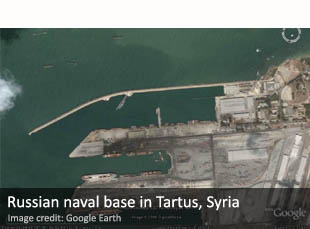
Russian naval base in Tartus, SyriaBy JOSEPH FITSANAKIS| intelNews.org |
The Russian service of the BBC has confirmed that a contingent of Russian “antiterrorist special forces” have landed in Syria. The news first appeared on Monday on the websites of several Russian news agencies, including Interfax and RIA Novosti. The latter claimed that the Russian troops, who were said to be Marines, arrived in the Syrian port of Tartus onboard the tanker Iman, which is part of Russia’s Black Sea fleet. According to the report, the tanker is strictly tasked with performing “logistical tasks [including] the replenishment of fuel and food [and] providing maritime anti-piracy security in the Gulf of Aden”. According to a statement from the Russian Black Sea Command, the special forces had landed in Syria in order to “demonstrate the Russian presence in the turbulent region and possibly evacuate Russian citizens”. Shortly after the initial reports of the troops’ landing in Tartus, ABC News spoke to an anonymous source at the United Nations Security Council, who described the news as “a bomb” that was “certain to have serious repercussions” on the situation in Syria. Soon afterwards, however, an unnamed source in the Syrian Ministry of National Defense told the SANA news agency in Damascus that the reports of Russian troops landing in Syria were “completely devoid of truth” and said the presence of the Russian tanker was connected with an anti-piracy mission. The Russian Ministry of Defense also told reporters that the Iman is not a warship and that its crew is composed entirely of civilian personnel. But a separate report on the Russian-language service of the BBC claims that, although the vessel is indeed hydrographic —designed to collect undersea topographic data— it contains sophisticated dual-use hardware that can easily be used for intelligence collection. The BBC report repeats earlier claims by the Interfax news agency that the Russian ship arrived in Tartus with a large contingent of marine brigade and airborne assault battalion members. It also quotes sources from the Syrian opposition, which allege that Russian troops were indeed seen disembarking in Taurus. Read more of this post
News you may have missed #695

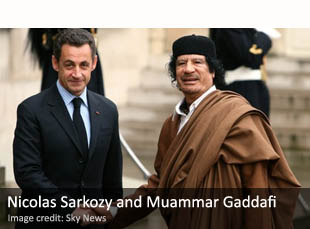
Nicolas Sarkozy and Muammar GaddafiBy IAN ALLEN| intelNews.org |
►►Spies meet over Syrian crisis. CIA chief David Petraeus met Turkey’s Prime Minister Recep Tayyip Erdogan on Tuesday for closed-door talks focusing on the crisis across the border in Syria. Meanwhile, General Murad Muwafi, who heads Egypt’s General Intelligence Directorate, left Cairo on Tuesday for a visit to Riyadh, Saudi Arabia. Also, US General Ronald Burgess, Defense Intelligence Agency Director, has arrived in Egypt and is expected to meet with several Egyptian officials to discuss the situation in Syria.
►►Gaddafi contributed €50m to Sarkozy election fund. Damaging new claims have emerged about the funding of Nicolas Sarkozy’s 2007 election campaign and his links with former Libyan leader Muammar Gaddafi. The French investigative website Mediapart claims to have seen a confidential note suggesting Gaddafi contributed up to €50 million to Sarkozy’s election fund five years ago.
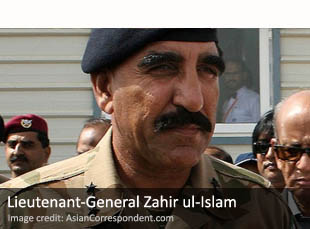
►►Analysis: US relations on the agenda for Pakistan’s new spy chief. Yusuf Raza Gilani has appointed Lieutenant General Zahir ul-Islam as the new chief of the Inter-Services Intelligence (ISI) agency, the main spy arm of the Pakistani military, ending weeks of speculation he would extend the term of Lieutenant Gen Ahmed Shuja Pasha, due to retire on March 18. The new spymaster faces a tough task fixing ever-worsening ties with the United States, but analysts say he is unlikely to reform an institution accused of helping militants in Afghanistan.

News you may have missed #692

Lieutenant-General Zahir ul-IslamBy IAN ALLEN| intelNews.org |
►►Mole theory over MI6 codebreaker’s death. It is one of Britain’s most baffling spy mysteries. In 2010, the body of expert code breaker Gareth Williams was found locked in a large sports bag in the bathtub of his London flat. There were no obvious signs of how he died or who was responsible —with many claiming a “wall of silence” surrounding his death points to a cover-up at the very heart of the British establishment. And now it has been revealed Gareth may have been betrayed by a British double agent.
►►Pakistan picks new director for spy agency. The prime minister of Pakistan appointed a new general to run the country’s most powerful intelligence agency on Friday, signaling an important change in the military leadership at a pivotal moment in relations with the United States. Lt. Gen. Zahir ul-Islam will take over as the director general of the Inter-Services Intelligence Directorate, or ISI, on March 18, replacing Lt. Gen. Ahmed Shuja Pasha, who has held the post since 2008.
►►Russian diplomat alleges 15,000 foreign fighters in Syria. Addressing a one-day humanitarian forum on Syria at the United Nations in Geneva, Russia’s deputy ambassador Mikhail Lebedev said rebels had recently committed large-scale attacks against Syrian infrastructure, including schools and hospitals. Asked by Reuters how many foreign fighters were believed to be in Syria, he said: “how many got in through illegal routes? The border there is not demarcated, not delimited, so nobody knows. But at least 15,000”.

Analysis: US spy agencies stil in the dark about Syria

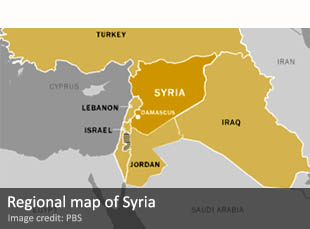
Regional map of SyriaBy JOSEPH FITSANAKIS| intelNews.org |

It has been almost a year since the ongoing anti-government uprising erupted in Syria. But intelligence agencies in the United States are still struggling to make sense of most aspects of the spiraling conflict. In February, the US Department of State closed down its embassy in the Syrian capital Damascus and recalled all of its diplomatic personnel, including US Ambassador to Syria, Robert Ford, to Washington. Since then, the Central Intelligence Agency, which conducted its operations in Syria largely out of the US embassy there, has been forced to rely on scattered fragments of its agent network in Damascus, as well as on the work of a handful of allied intelligence services, including those of Jordan, Turkey, Israel, and Saudi Arabia. Naturally, the closure of the US embassy in Syria has boosted the role of the signals intelligence collection and satellite reconnaissance. But, none of these intelligence collection channels have been able to compensate for the lack of adequate human intelligence collection from inside Syria. As a result, according to The Washington Post, which cites “senior US officials”, US intelligence-gathering on the situation in Syria is currently “fragmentary [and] out of focus”. Specifically, the US intelligence community remains unclear about the tactical and strategic intentions of the regime of Syrian President Bashar al-Assad, and has limited information about the makeup and strength of the opposition forces in the country. Perhaps more importantly, American intelligence analysts have little evidence on which to base any sort of firm conclusions about the extent of involvement of militant Islamists in the funding and operations of the Syrian opposition. Read more of this post

News you may have missed #685

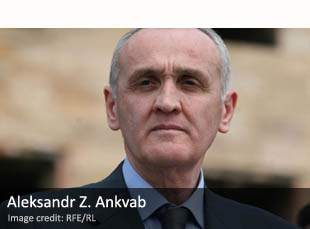
Aleksandr Z. AnkvabBy IAN ALLEN| intelNews.org |
►►Abkhazia President survives assassination attempt. Unidentified assassins tried on Wednesday to kill Aleksandr Z. Ankvab, the president of Abkhazia, a Russian-backed rebel enclave of Georgia. The assailants used automatic rifles, grenade launchers and a powerful roadside bomb in an attack that raised fresh questions about Moscow’s ability to preserve order there.
►►Groups object to CIA declassification charges. Open government advocates are protesting a recently adopted CIA policy that allows the agency to charge up to $72 an hour to review requests to declassify secret records. The effect “will be to price the public out of submitting” requests for “mandatory declassification review,” the American Library Association, Sunlight Foundation and more than 30 other organizations said in a letter Thursday to CIA Director David Petraeus.
►►Analysis: Fallout from Syrian colonel’s abduction in Turkey. The smokescreen surrounding the abduction of Syrian Col. Hussein Harmush, who defected to Turkey in June 2011 before being handed over to the Syrian secret service in September 2011, has begun to clear in recent weeks following a judicial probe. Claims that Turkey’s spy agency, the National Intelligence Organization (MİT), was involved in handing Harmush over to Syria were finally confirmed on February 2 when the Adana Chief Public Prosecutor’s Office issued a written statement saying one MİT agent had been arrested for questioning and further MİT officials had been called to testify as “suspects” in the scandalous repatriation case.

Turkey denies reports of intelligence officers arrested in Syria

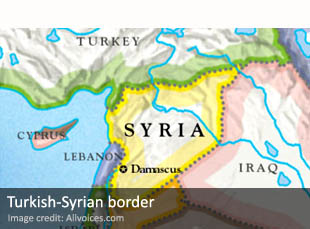
Turkish-Syrian borderBy JOSEPH FITSANAKIS | intelNews.org |
The Turkish government has denied reports in the Israeli media that dozens of Turkish intelligence officers have been arrested and are under interrogation in neighboring Syria. Israeli newspaper Ha’aretz reported over the weekend that at least 40 Turkish intelligence officers had been captured by the Syrian military and were being questioned. The paper also claimed that Syrian military interrogators had extracted “confessions” from the captured Turkish officers, according to which they were operating on instructions to “carry out bombings” in Syria, and other operations aimed to “undermine the country’s security”. Citing Syrian sources, Ha’aretz also said that the Turkish intelligence officers “admitted” having been trained by Israeli intelligence agency Mossad, and that the Mossad also trains members of the opposition Free Syrian Army. The Israeli daily also said that Ankara and Damascus have been involved in “intensive negotiations” over the fate of the 40 Turkish intelligence officers. According to Ha’aretz, Syria has offered to release the Turks, providing Ankara extradites scores of Syrian defectors —most of them from the military— who have been given political asylum in Turkey during the past few months. Damascus reportedly also insists that Turkey takes immediate steps to prevent the smuggling of weapons and military supplies to the Free Syrian Army through its territory. But in a brief press statement on Monday, a Ministry of Foreign Affairs spokesman said that the report in Ha’aretz was “incorrect”. Turkish newspaper Zaman also quoted anonymous Turkish intelligence sources who flatly refuted the reports from Israel. Read more of this post

Who is behind mystery spy devices dropped over Syria?

Radio transmitters found in Afrin, SyriaBy JOSEPH FITSANAKIS | intelNews.org |
On December 14, residents of a small town in northern Syria reported seeing unidentified aircraft circling overhead, and dropping several small items attached to mini-parachutes. Two days ago, one local resident, Adnan Mustafa, posted on Facebook several photographs of some of these items, which were found scattered around the area. The gadgets, pictured here, look suspiciously like surreptitious listening devices. Residents say the question is: who dropped them, and why? The devices were found in the hills around Afrin, a predominantly ethnic-Kurdish town 20 miles south of the Syrian-Turkish border. Local townsfolk said the flight patterns of the planes observed on December 14 resembled those of previous sightings of Turkish aircraft, which routinely invade Syrian airspace before returning to the Turkish air base in Incirlik, about 100 miles north of Afrin. Syrian newspaper Al-Hakikah (The Truth), which supports the opposition Syrian National Council for Truth, Justice and Reconciliation, said the suspected spy gadgets weigh about 90 grams each and bear “Made in Germany” labels, as well as “GRAW DFM-06” inscriptions. Graw is a Nuremberg-based German company that produces radiosondes, small radio transmitters used in weather balloons, that measure various atmospheric parameters and transmit them to fixed receivers. But Al-Hakikah reports that the devices found in Afrin seem to transmit GPS coordinates, and appear to have been modified to intercept radio communications. Some suspect that the devices are aimed at eavesdropping on the communications of Syrian government troops and of Syrian Air Force planes, which are engaged in an increasingly bloody conflict against the opposition Syrian National Council. Read more of this post