News you may have missed #469

  • Vulture not a Zionist spy after all, declare Saudis. After more than a week of febrile rumor and speculation, the King of Saudi Arabia has declared that a vulture found on the country’s territory, carrying a GPS tracker labeled “Tel Aviv University”, is not part of an Israeli reconnaissance plot.
  • Germany jails two Libyans for spying. Two Libyans have been sentenced in a Berlin court for spying on members of the Libyan opposition living in Europe. ‘Adel Ab.’, an officer for the Libyan intelligence service, was sentenced to two and a half years in prison while his accomplice, ‘Adel Al.’ was sentenced to one year and 10 months.
  • Russian aide accused of spying to remain in UK until October. Britain’s MI5 accuses Katia Zatuliveter, former assistant to Liberal Democrat MP Mike Hancock, of spying for Russia. But she will remain in the UK until next October, when she will be able to challenge her pending deportation at an immigration hearing.

News you may have missed #449

  • Damning report on CIA attack on missionary plane. US Central Intelligence Agency officers involved with a secret counternarcotics mission in the Peruvian jungle routinely violated agency procedures, tried to cover up their mistakes, and misled Congress immediately after a missionary plane was accidentally shot down in 2001, according to a blistering CIA internal report released on Monday.
  • Israeli legislators call on US to release Jewish spy. Members of the Israeli Knesset are calling on US President Barack Obama to pardon American-born spy Jonathan Pollard, having been jailed in a maximum-security facility since 1985. George Bush refused to pardon Pollard in the last days of his presidency.
  • Analysis: Britain’s MI6 operates a bit differently than CIA. “Like the CIA, MI6 has a website, but while the U.S. agency site is only in English, MI6’s is also in Arabic, Russian, French, Spanish and Chinese. Another sign of British sophistication: while the CIA site has games and quizzes for kids, the MI6 site gives short tests to allow potential recruits to assess their analytical and administrative skills”. Interesting comparative assessment by Walter Pincus.
News you may have missed #446

  • American pleads guilty to spying for China. Glenn D. Shriver acknowledged on Friday that he accepted $70,000 from Chinese spies as he attempted to secure jobs with the CIA and US Foreign Service that would have allowed him to expose US government secrets. He apparently spent two years going through the CIA hiring process and reached the final security screenings. But US intelligence sources say Shriver was discovered very early in the hiring process.
  • Obama widens CIA operations in Pakistan. The US is pushing to expand secret CIA operations in Pakistan. But Islamabad is so far rebuffing US requests to allow additional CIA officers and special operations military trainers to enter the country.
  • US spy balloons blew towards Iran. The latest WikiLeaks revelations show that on two occasions in 2006 American JLens spy balloons broke from their moorings in Iraq and drifted toward the Iranian airspace. No information on the balloons’ fate is reported in the war logs. Did Iran get hold of them?

News you may have missed #437

  • Huge demand for spy balloons in Afghan war. The hottest US weapon in Afghanistan lacks a lethal capability, floats thousands of feet in the air and doesn’t carry troops. It’s a spy balloon. Similar contraptions have been making appearances at the Lebanese-Israeli border.
  • One, two, many WikiLeaks. Daniel Domscheit-Berg, a defector from the WikiLeaks website has said he has decided to jump ship and is thinking of creating a competitor site to Julian Assange’s whistleblower platform.
  • Is publication of classified info a criminal act? When WikiLeaks published tens of thousands of classified US military records concerning the war in Afghanistan last July, did it commit a criminal act under US law? A US Congressional Research Service report argues that it did not.

News you may have missed #423

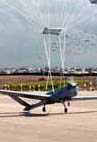
US use of stealth spy drones in Afghanistan raises questions

RQ-170 Sentinel

RQ-170 Sentinel

By IAN ALLEN | intelNews.org |
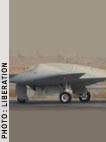
On December 6, we posted a link to a photo of what appeared to be a classified US drone aircraft, which was published on a blog belonging to French newspaper Libération. Then, unexpectedly, on December 8, the US Air Force admitted that the mystery aircraft, dubbed ‘the Beast of Kandahar’ by aviation spotters, is the RQ-170 Sentinel, an unmanned, unarmed surveillance and reconnaissance drone with stealth capabilities, that is officially still in production by US defense contractor Lockheed Martin. That’s all well and fine. But the question is: why would the US be using a stealth drone against the Taliban in Afghanistan, who have no known antiaircraft radar systems, and are therefore unable to track enemy surveillance planes? Read more of this post

News you may have missed #0215

  • Ex-MI5 officer cannot publish memoirs, court decides. A former MI5 officer, known only as “A.”, cannot publish his memoirs, which consist of a 300-page manuscript, a panel of British judges has decided. Interestingly, “A.” has said he intends to remain anonymous.
  • Turkey denies Israel use of its airspace to spy on Iran. If Israel were to violate Turkish airspace in order to conduct reconnaissance operations on Iran, Ankara’s reaction would resemble an “earthquake”, Turkish Prime Minister Recep Tayyip Erdoğan has said in an interview.

Bookmark and Share

Controversial Israel-Russia drone deal includes secret Iran clause

MK II UAV

MK II UAV

By IAN ALLEN | intelNews.org |
I have written before on this blog about a controversial $53 million agreement between Russia and Israel to provide Moscow with Israeli-made intelligence-gathering drones. The agreement, revealed last April, marked Israel’s first-ever sale of military systems to Russia, as well as Moscow’s first known purchase of a foreign weapons system. Last time I wroteintelNews received information that the Israeli move angered some US Pentagon officials. It turns out, however, that the Israeli-Russian deal contains a vital clause: the Israelis have agreed to provide Russia with as many intelligence-gathering drones as they want, and even allow them to reverse-engineer them, providing they cancel an agreement with Tehran to provide the Iranian government with Russian-made state-of-the-art air defense missiles. Read more of this post

News you may have missed #0194

Bookmark and Share

Israel, Azerbaijan, tight-lipped on rumored reconnaissance deal

Ilham Aliyev

Ilham Aliyev

By IAN ALLEN | intelNews.org |
The Israeli and Azerbaijani governments are apparently keeping quiet about rumored plans to jointly manufacture unmanned drone aircraft and spy satellites. Representatives of Israel’s reconnaissance and aeronautics industry were among dozens of Israeli business leaders who joined last June’s state visit to Azerbaijan by Isarel’s President Shimon Peres. It was the first-ever visit to the Caspian Sea state by an Israeli head of state. Soon after the end of the visit, there were rumors in the Israeli press that Tel Aviv had managed to convince Azerbaijan’s President, Ilham Aliyev, after four years of negotiations, to approve the construction of a manufacturing plant in Azerbaijan that will construct unmanned drone surveillance aircraft. Moreover, Israel was said to have agreed to help Azerbaijan construct a TecSAR all-weather satellite reconnaissance system. Azerbaijan, which borders with Russia, Iran, Armenia and Georgia, is one of the few predominantly Muslim countries that maintain bilateral relations with Israel.

Bookmark and Share

How many spy drones did Russia purchase from Israel?

MK II UAV

MK II UAV

By IAN ALLEN | intelNews.org |
Back in April, intelNews reported on a $53 million agreement between Russia and Israel to provide Moscow with three Israeli-made intelligence-gathering drones. Much was made at the time of the purchase of those unmanned aerial vehicles (UAVs), which was interpreted as an indirect admission by Moscow that its armed forces severely lacked aerial intelligence. The purchase of the three Israel-made drones was reportedly designed to cover immediate needs, while the Russians were working on a plan to start building their own UAVs. It turns out, however, that neither the Israelis nor the Russians were quite upfront in their public announcement of the deal. Last April the two sides said that Russia would receive “three unmanned aircraft” from Israel Aerospace Industries (IAI). In reality, $53 million is much too high a fee to purchase just three UAVs. This puzzled Washington, which does not want to see Russia improve its aerial reconnaissance capabilities. The US Pentagon thus sought –and subsequently received– assurances from Israel that it was not planning to sell Moscow its state-of-the art, super-expensive Heron UAV model. But the Americans were correct to be suspicious of the high cost of the deal. Russian media now reports that the Russians will be receiving, not three, but twelve UAVs for their $53 million. Read more of this post

Georgia war prompted Russian purchase of Israeli drones

By IAN ALLEN | intelNews.org |
Much was made last week of an agreement between the Russian government and Israel Aerospace Industries (IAI) to purchase three Israeli-made intelligence-gathering drones. The Israeli company will receive $50 million to supply the Russian military with three unmanned aerial vehicles (UAVs), namely a Bird-Eye 400 mini, an I-view MK 150 tactical, and a Searcher MK II medium-range UAV. The Russian Ministry of Defense announced the deal last Friday, saying it needed the new generation UAVs “to provide battlefield reconnaissance to the country’s armed forces”. What the Ministry didn’t say, however, is that it was prompted to purchase the Israeli-made drones after it saw its operations severely hampered by lack of aerial intelligence during the 2008 South Ossetia war last August. Read more of this post