Danish Muslim convert claims he was CIA’s mole inside al-Qaeda
October 12, 2012 8 Comments
 By JOSEPH FITSANAKIS | intelNews.org |
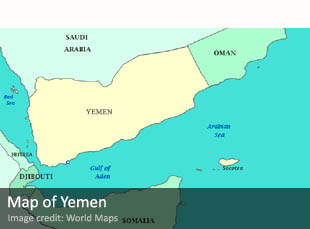
A Danish citizen who converted to Islam in the early 2000s claims he was a spy for the United States Central Intelligence Agency and helped track down an American-born Islamist cleric who was killed by a drone strike in 2010. The man, who goes by the name Morten Storm, told Danish newspaper Jyllands-Posten that he converted to Islam while living in the United Kingdom. But he quickly grew disillusioned, he said, and in 2006 he was recruited by the Danish Police Intelligence Service (PET). In subsequent years, he traveled several times to Yemen on PET missions, and gradually managed to gain the trust of members of the al-Qaeda in the Arabian Peninsula (AQAP). Eventually, he said, he grew close to one of AQAP’s central figures, the American-born Yemeni cleric Anwar al-Awlaki. At that point, claims Storm, the PET turned him over to the CIA, who allegedly used him to gather information on al-Awlaki. The Danish Muslim convert claims that his role as a CIA informant was so important that US President Barack Obama knows his name. He also told the paper that it was his information that eventually helped the CIA track and assassinate the charismatic cleric. According to Storm, the CIA supplied him with a memory stick that contained a stealth Global Positioning System tracking device. He sent the memory stick to al-Awlaki, who used it on his computer, thus allowing the CIA to track him down. In April 2010, President Obama ordered that al-Awlaki’s name be included on a list of individuals that the CIA was officially authorized to kill. Little less than a year later, on September 30, 2011, the cleric and three other suspected members of AQAP were killed when their car was hit by two Hellfire missiles in Yemen’s northern al-Jawf province. Read more of this post










 intelNews.org
Yemeni troops kill al-Qaeda suspects disguised as women
December 15, 2014 by Ian Allen 1 Comment
Troops in Yemen shot dead five men, believed to be members of al-Qaeda, who tried to pass through a security checkpoint disguised as women. The incident reportedly happened on Saturday at an emergency roadside checkpoint set up by Yemeni troops in Harad, a dusty desert town located 10 miles south of Yemen’s border with Saudi Arabia. According to official reports, a minivan drove up to the checkpoint carrying what appeared to be six women, which was heading toward the Saudi border. All passengers were dressed in black robes and wore the niqab, a black cloth used to hide the face and worn along with the hijab, which typically covers a woman’s hair. The niqab is worn in several Arab countries, including Yemen, Saudi Arabia, Oman, and Bahrain. Yemeni soldiers conferred briefly with the male driver of the vehicle before one of them climbed onboard the minivan for a routine inspection. At that moment, one of the minivan passengers opened fire at the soldier, wounding him. The rest of the members of the inspection unit then opened fire on the passengers, killing five of them. Following the incident, the Yemeni soldiers discovered that the minivan’s passengers were all men and had been armed. An official speaking at a press conference later that day reported that at least two of those killed were Saudi citizens. He added that one of the passengers, who was also disguised as a woman, survived, as did the male driver of the minivan. All are believed to be members of al-Qaeda in the Arabian Peninsula (AQAP), an armed Islamist movement that is widely seen as the most formidable branch of al-Qaeda anywhere in the world. Following the 2011 uprising in Yemen, which was part of the Arab Spring, AQAP took advantage of the collapse of the Yemeni state and took over large swathes of territory in Sunni-dominated eastern and southern Yemen. These areas are still considered AQAP strongholds today. Security forces in Yemen often conduct roadside inspections, but they rarely enter vehicles carrying women, in an attempt to respect tribal customs in what is a very conservative part of the Arab world. Authorities in Harad said on Saturday that, following the shootout, a suicide belt and several weapons were discovered onboard the minivan. The surviving passenger is being questioned, along with the driver of the vehicle.
Filed under Expert news and commentary on intelligence, espionage, spies and spying Tagged with al-Qaeda in the Arabian Peninsula, disguises, Harad (Yemen), News, Saudi Arabia, terrorism, Yemen