Turkey refused to extradite bin Laden’s son-in-law to US
February 4, 2013 1 Comment
 By JOSEPH FITSANAKIS | intelNews.org |
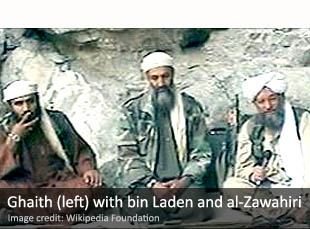
Turkish authorities have reportedly rejected a formal extradition request by the United States for a son-in-law of Osama bin Laden, who was arrested in Ankara on Friday following a tip-off by the Central Intelligence Agency. Suleiman Abu Ghaith was born in Kuwait but had his citizenship revoked after publicly opposing the rule of the Kuwaiti monarchy and demanding the institution of shari’a law in the oil emirate. In 2000, he traveled to Afghanistan where he met Osama bin Laden and joined al-Qaeda. He eventually married Fatima bin Laden, one of bin Laden’s numerous daughters, who is currently living in Saudi Arabia. He gradually rose within the ranks of the organization, eventually becoming one of its public spokesmen. Soon after the US invasion of Afghanistan, in 2001, Ghaith is believed to have escaped from Afghanistan by entering Iran on foot. He was eventually captured by Iranian government forces and placed in a detention camp along with other suspected al-Qaeda and Taliban members. It is not known how he managed to leave Iran and enter Turkey (though some say he was released the by Iranian authorities), or how the CIA knew of his presence there. However, according to Turkey’s leading daily Milliyet, the Agency contacted members of the Turkish National Intelligence Organization (known as MİT) and told them that Ghaith had entered the country on a forged passport. He was arrested soon afterwards at a hotel in Ankara’s affluent Çankaya district. The hotel where Ghaith was captured is reportedly located near the official residence of the Turkish President and a stone’s throw from numerous foreign embassies —including the embassy of the US, which was attacked by a suicide bomber on February 1. Read more of this post













 intelNews.org
Al-Qaeda manual on how to deceive unmanned drones found in Mali
February 22, 2013 by Joseph Fitsanakis Leave a comment
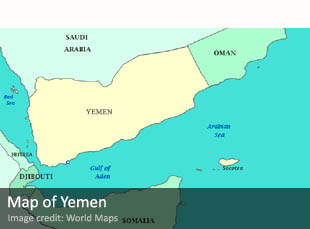
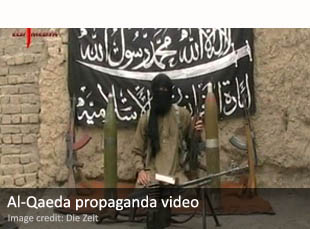
A detailed manual with instructions on how to defeat the surveillance capabilities of unmanned drones has been found in a former al-Qaeda hideout in northern Mali. International news agency The Associated Press said the photocopied document, which is written in Arabic, had been left behind in a building previously occupied by members of Al-Qaeda in the Islamic Maghreb (AQIM). The militants abandoned the document while fleeing into the Sahara desert, ahead of a French military advance on the town of Timbuktu. The document is believed to have been authored by Abdallah bin Muhammad, the operational name of a Yemeni militant serving as a senior commander in the Al-Qaeda in the Arabian Peninsula (AQAP). Its earliest known date of publication is June 2, 2011, on an online Islamist forum. Since that time, it has reappeared at least three times, all in Arabic, according to The Associated Press. The version of the manual found in Mali contains nearly two dozen detailed tips on how to deceive unmanned drones. One tip advises covering the tops of vehicles with floor mats made of hay or other natural-looking material, in an effort to confuse aerial surveillance systems. Another tip proposes camouflaging the roofs of buildings with the use of reflective glass, so as to render them invisible to aerial surveillance. A third suggestion is to mix sugar with water and dirt and apply the sticky mixture onto the body of vehicles, in order to confuse the imagery sensors of unmanned drones. Read more of this post
Filed under Expert news and commentary on intelligence, espionage, spies and spying Tagged with Abdallah bin Muhammad, aerial reconnaissance, Africa, al-Qaeda, AQIM, Mali, manuals, News, Predator drones, spycraft, Timbuktu (Mali), unmanned aerial vehicles