News you may have missed #0075

Bookmark and Share

Analysis: How vital was spying during the Cold War?

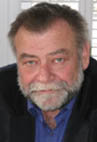
Gordon Corera

Gordon Corera

By IAN ALLEN | intelNews.org |
The BBC’s security correspondent, Gordon Corera, asks a very basic yet very intriguing question about the history of the Cold War: did espionage actually make a difference in ts outcome? This question stems out of BBC Radio 4’s three-part documentary series examining the 100-year history and operations of MI6, Britain’s foremost external intelligence agency. Corera’s article on the BBC website provides conflicting answers by intelligence defenders and intelligence skeptics, including Rodric Braithwaite, former British ambassador to the USSR, and David Owen, Britain’s former Foreign Secretary, who says that, barring a few important exceptions, UK policy makers “didn’t really […]  know exactly what was going on” in the Communist Bloc. Other commentators include former MI6 deputy director Sir Gerry Warner, and Sir David Omand, who argues that most of the intelligence collected during the Cold War was of a military or tactical nature and would therefore have proven effective only “if the Cold War had gone hot”.

Bookmark and Share

Analysis: Can Obama’s inter-agency interrogation unit overcome turf-wars?

By IAN ALLEN | intelNews.org |
The task force set up by President Barack Obama to reform US interrogation policies will shortly be unveiling its long-awaited report. There are rumors in the US intelligence community that the report will call for a new inter-agency interrogation unit that will combine experts from several US military and intelligence agencies, including the CIA and FBI. But in a well-argued article in Time magazine, Bobby Ghosh asks the important question of whether such a plan is represents mere wishful thinking, by ignoring the “brief and bleak” history of inter-agency cooperation on interrogation. Read more of this post

Analysis: Why were CIA assassination squads canceled?

CIA HQ

CIA HQ

By IAN ALLEN | intelNews.org |
Despite all the razzmatazz surrounding the rumored secret CIA plan to set up assassination squads, several questions remain unanswered. IntelNews is among a number of websites that believe that something in the entire controversy doesn’t add up. The fact is, as I have mentioned before, the ongoing strikes by US unmanned drones in Afghanistan and Pakistan effectively amount to

deliberate assassinations of suspected terrorists, which are planned and implemented outside the framework of even elementary judicial oversight. Regardless of one’s feelings about terrorism, the democratic process […] explicitly forbids the circumvention of longstanding legal norms, which specify concrete judicial means of arrest, detention, trial and punishment of accused criminals.

So, if it is the case that the CIA is already following a policy of targeted assassinations –which often result in indiscriminate murder of civilians– then why all the fuss about the CIA assassination squad revelations? Moreover, why was the project reportedly canceled? Writing for The Los Angeles Times, Greg Miller provides a possible explanation. Read more of this post

Analysis: What is the state of Cuban spying in the US?

Gwen Myers

Gwen Myers

By IAN ALLEN | intelNews.org |
The recent arrest by the FBI of Walter Kendall Myers and his wife Gwendolyn Steingraber Myers, on charges of spying for Cuba for over 30 years, offers a good opportunity to contemplate the current state of Cuban espionage in the US. In an article published in The Miami Herald, Juan Tamayo relays a brief history of Cuban espionage in the US, from the first decades (1950-1980), when the island’s intelligence services were “regarded as among the world’s best”, to the purges of the late 1980s, to today. Read more of this post

Analysis: Former CIA agent warns of Pentagon takeover

Robert Baer

Robert Baer

By IAN ALLEN | intelNews.org |
Robert Baer, the former CIA agent whose memoirs were behind the film Syriana, has written a new column for Time magazine, in which he warns that a Pentagon takeover of the CIA may be again in the works. The bureaucratic infighting between military and civilian agencies for control of the CIA is old news. But Baer believes that the military background of Admiral Dennis Blair, President Barack Obama’s new Director for National Intelligence (DNI), may be a factor in placing the Pentagon closer to its ultimate goal of swallowing the CIA. The former CIA agent mentions the dispute between Admiral Blair and CIA Director Leon Panetta over the appointment of Washington’s new intelligence chief in Kabul. Rumor has it that Blair is preparing to name a uniformed officer for the position, whereas Panetta wants to maintain the CIA tradition of appointing a civilian intelligence official. Read more of this post

Analysis: CIA loyal only to itself, says former agent

By JOSEPH FITSANAKIS | intelNews.org |
Judging from emails we have received, several intelNews readers have noticed the absence from this website of any mention of the recent imbroglio between Nancy Pelosi and the CIA. There are several important reasons for the absence of this story (not least is this site’s focus on under-reported intelligence news), but the most crucial is its “news unworthiness” –for lack of a better term. All parties involved in the dispute appear to be primarily jockeying for political currency, which, in the opinion of this writer, makes for a sad spectacle. A few days ago, however, there surfaced an interesting editorial on the subject by Ishmael Jones. This is the pseudonym of a longtime CIA agent, who resigned from the Agency in good standing and now routinely publishes professional memoirs and critical position papers on intelligence reform. Read more of this post

Analysis: Major Colombian wiretap scandal explained

By IAN ALLEN | intelNews.org |
Last April, Colombia’s Administrative Department of Security (Departamento Administrativo de Seguridad, or DAS) suffered one of the most extensive purges in its history, when 22 of its detectives were fired in connection with an investigation into illegal wiretapping against several public figures in Colombian political life. Those targeted by the illegal wiretappers included Supreme Court judges, prominent journalists, as well as the chief of the Colombian National Police, former president Cesar Gaviria, and even the minister of defense Juan Manuel Santos. Investigative reporter Joseph Huff-Hanon has produced what in this writer’s opinion is the best English-language analysis of the political dimension of the Colombian wiretap scandal. Read more of this post

Analysis: The timeliness of the Alger Hiss case

Susan Jacoby

Susan Jacoby

By IAN ALLEN | intelNews.org |
Susan Jacoby, author of Alger Hiss and the Battle for History, has written a noteworthy opinion piece on the symbolism of the Alger Hiss spy case. The veteran reporter and author’s piece was published by The Los Angeles Times on March 22, 58 years to the day after Hiss began serving a 44-month prison sentence. Alger Hiss was a US State Department official and alleged former member of the Communist Party USA (CPUSA). He served as US President F.D. Roosevelt’s chief aide during the 1945 Yalta Conference, and at the 1945 San Francisco Conference that established the United Nations Charter. In 1948, former CPUSA member Whittaker Chambers alleged that Hiss had been a covert communist sympathizer who had used his State Department privileges to supply classified government documents to the Soviets. Hiss was convicted of perjury, not spying, and never admitted collaborating with the Soviets. Susan Jacoby, who says she is “95% certain that [Hiss] did pass on government documents”, considers the Hiss case to be symbolic of the politics McCarthyism, which continue to split America today. Read more of this post

Analysis: Interesting interview with a CIA psychiatrist

David Charney

David Charney

By IAN ALLEN | intelNews.org |
Veteran national security correspondent Jeff Stein has published some interesting highlights of an interview with psychiatrist Dr. David L. Charney, who has worked for the US intelligence community for over 20 years. Charney is one of several medical professionals whom the CIA has appointed to assist its personnel in dealing with a variety of emotional issues. Additionally, he has previously been appointed to supervise the psychiatric assessment of a number of American double spies, including Robert Hanssen, the former FBI agent who spied for the Soviet Union and Russia for over two decades. In the interview, Charney identifies a number of psychological disorders that tend to burden CIA officers, including post-traumatic stress disorder (PTSD), which often plagues agents who have survived “death-defying escapes after their covers were blown”. Read more of this post

Analysis: Can US intelligence help with economic crisis?

By IAN ALLEN| intelNews.org |
Last month, US Director of National Intelligence, Dennis Blair, warned that the ongoing global economic crisis should be Washington’s “primary near-term security concern”. Although it is unclear whether Blair’s statement represents a grass roots shift in the US intelligence community’s analytical and operational focus, his comments were seen as an attempt to raise economic intelligence to the top of Washington’s intelligence priorities. Observers have described such a potential transformation as “a sea change” and “a new prism” for analyzing global developments from an intelligence standpoint. But do Blair’s remarks represent a concrete change in US intelligence attitudes? Is the economic crisis really a more important intelligence concern than transnational terrorist networks? Read more of this post

Analysis: A look at new House Intel Committee appointee

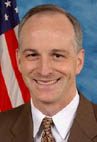
Rep. Smith

Rep. Smith

By IAN ALLEN| intelNews.org |
Les Blumenthal, of McClatchy Newspapers, has penned an interesting article on US Representative Adam Smith (D-WA), who has just been appointed to the House of Representatives Permanent Select Committee on Intelligence. In the article, Blumenthal reminds those who were surprised by this liberal Democrat’s appointment to the spy committee, that Smith was, until recently, a member of the House Armed Services Committee, where he chaired for over two years the Terrorism, Unconventional Threats and Capabilities Subcommittee. Moreover, during the recent Presidential campaign, Smith “developed [ties] to the White House’s national security staff”, says Blumenthal. Read more of this post

Analysis: US may lose its most important base in Afghan war

Bakiyev

Bakiyev

By JOSEPH FITSANAKIS | intelNews.org |
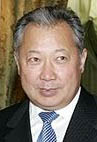
US Pentagon officials routinely describe the US Air Force base in Manas, Kyrgyzstan, as “hugely important”. It became even more so in 2005, after the government of Uzbekistan shut down the US Air Force base in Karshi-Khanabad, under Russian pressure. Since then, the Manas airbase has become the “primary logistics hub” for the US military’s Operation Enduring Freedom in Afghanistan, as it offers US forces a vital northern supply line to Afghanistan “in the face of ongoing insurgent attacks along the Khyber Pass route through Pakistan”. Pentagon officials were therefore stunned when Kyrgyz President Kurmanbek Bakiyev announced last Tuesday that his government “has made the decision on ending the term for the American base on the territory of Kyrgyzstan and in the near future, this decision will be announced”. Read more of this post

Analysis: Rare film on National Security Agency aired

By JOSEPH FITSANAKIS | intelNews.org |
The Nova documentary series on PBS has aired a rare look at the National Security Agency (NSA), America’s signals intelligence and cryptological organization that rarely releases information to outsiders. The ultra-secret Agency is said to be the world’s largest intelligence institution, employing tens of thousands of technicians, analysts and mathematicians. The PBS film, titled The Spy Factory, features veteran author James Bamford, who has authored books on NSA for nearly 30 years. The primary focus of the documentary is on NSA’s share of the intelligence failure in detecting and preventing the 9/11 attacks. The film also examines NSA’s STELLAR WIND program, a warrantless eavesdropping scheme targeting communications of American citizens, which the Bush Administration authorized shortly after 9/11. Read more of this post

CIA officer behind “Syriana” comes out in favor of Panetta

Robert Baer

Robert Baer

By JOSEPH FITSANAKIS | intelNews.org |
Robert Baer, the former CIA field officer whose memoir, See No Evil, formed the basis of the 2005 motion picture Syriana, has publicly endorsed Leon Panetta, US President Elect Barack Obama’s nominee to head the CIA. In an article published on Friday in The New Republic, Baer describes Panetta as an experienced political operator who “knows his way around the Oval Office” and will thus have “the stature to stroll into the [White House] and tell the president, ‘no'”. More importantly, Baer seconds this author’s assessment, expressed here on January 6, that Panetta’s nomination by the incoming US President is part of a broader effort to “demilitarize[e] the CIA [by] reaffirming the Agency’s operational independence from the Pentagon”. Baer notes that “[t]he Pentagon is [currently] firmly on top of the intelligence heap” by controlling “80 percent of the intelligence budget” while trying to “take the rest”. Baer further notes, as I indicated on January 8, that “Panetta will be faced with an armature of wariness, mistrust, and anxiety as soon as he walks through the [CIA’s] front door”.