France arrests six far-right militants who plotted to kill President Macron

Emmanuel MacronAuthorities in France have announced the arrest of six individuals who were allegedly involved in a plot to kill French President Emmanuel Macron. Government prosecutors said on Tuesday that the six were arrested for planning “a violent action against the president of the Republic”. A former economy and industry minister, Macron resigned from the cabinet of left-of-center Prime Minister Manuel Valls in 2016 in order to lead a new right-of-center movement called En marche (Forward). In 2017 he won the presidential election with 66.1 percent, becoming the youngest president in the history of France.

French security services have responded to several instances of potential plots against Macron. In one recent case, a man was charged in July of last year with plotting to kill the president during France’s annual Bastille Day celebrations. This latest case, however, appears to be larger in size and sophistication. According to prosecutors, Tuesday’s arrests were part of a wider probe in to “a criminal terrorist association”. All six suspects had reportedly been monitored for quite some time by France’s domestic security agency, the General Directorate for Internal Security (DGSI).

The names and backgrounds of those arrested have not been released. But France’s BFM-TV station said on Tuesday that their ages ranged from 20 to 60, that they were men and women, and that they belonged to an unspecified “far-right organization”. It is also notable that their arrests took place as a result of raids in three different parts of the country —namely in the city of Moselle, located on the border of France, Germany and Luxembourg, and in Ille-et-Vilaine near Rennes in France’s northwestern Brittany region. More raids reportedly took place in the region of Isere in the French Alps. Reports early on Wednesday morning said that authorities were examining the details of the alleged assassination scheme, which was “imprecise and loosely formed”.

Author: Joseph Fitsanakis | Date: 07 October 2018 | Permalink

Denmark recalls its envoy from Tehran, accuses Iran of assassination plot

Finn Borch AndersenThe Danish government has recalled its ambassador from Iran and has accused the intelligence services of the Islamic Republic of plotting an assassination operation on Danish soil. Danish government officials also said that Copenhagen would seek to impose further economic and diplomatic sanctions on Tehran, in coordination with the European Union. The accusations against Iran were leveled during an emergency news conference in the Danish capital on Tuesday, led by Anders Samuelsen, Denmark’s Minister of Foreign Affairs, and Finn Borch Andersen (pictured), Director of the Danish Security and Intelligence Service, known as PET.

The two men said that “an Iranian intelligence agency” had planned “an attack on Danish soil”, which  Defense Minister Samuelsen condemned as “completely unacceptable”. PET Director Andersen said that a Norwegian national of Iranian background had been arrested in Sweden on October 21, and was now in custody awaiting extradition to Denmark. The arrestee is an employee of Iranian intelligence, said Andersen, and had been observed conducting surveillance against a Danish-based leading member of an Iranian separatist group. The alleged target is a member of the Arab Struggle Movement for the Liberation of Ahvaz (ASMLA), a hardline separatist group campaigning for a separate homeland for Iran’s Arab minority. Approximately 2 percent of Iranians (around 1.5 million people) belong to the country’s ethnic Arab population. Most of them are concentrated in Khuzestan, a region in Iran’s oil-rich southwest, which borders neighboring Iraq. Some of these ethnic Arabs seek autonomy from Tehran, which they see as an alien regime. ASMLA represents the militant wing of Iran’s separatist Arab community and has a history of staging terrorist attacks inside Iran. Last September, the group claimed it was behind an armed attack on a military parade in the city of Ahvaz —a major urban center in Iran’s Arab-speaking region— which killed 24 people, including some women and children. Later, however, a representative of the group retracted the claim.

On Tuesday, several Iranian officials issued strong denials of the Danish government’s allegations. Speaking in Tehran, Iranian Foreign Ministry Spokesman Bahram Qassemi dismissed Denmark’s claims as “spiteful”. He added that the timing of reports linking Iran to assassination operations on European soil were suspect and described them as “a plot by [Iran’s] enemies to damage Tehran’s growing relations with European countries”. Earlier this month, France seized the financial assets of individuals whom it described as Iranian spies, after blaming Tehran for a foiled bomb attack in Paris. The move followed the arrest of six people in France, Germany and Belgium, who allegedly planned to bomb the annual conference of the National Council of Resistance of Iran (NCRI) last June. The NCRI is led by Mujahedin-e Khalq (MEK), a militant group with roots in radical Islam and Marxism, which Iran sees as a terrorist organization.

Author: Joseph Fitsanakis | Date: 31 October 2018 | Permalink

Major suspect in Maduro assassination plot dies in captivity in Caracas

Nicolás MaduroA leading suspect in a failed attempt to kill Venezuelan President Nicolas Maduro using drones, has died in mysterious circumstances while being held by the country’s intelligence agency. The attack took place on August 4, 2018, in front of the Palacio de Justicia government complex in the Venezuelan capital Caracas. That afternoon, President Maduro was giving a nationally televised speech on the occasion of the 81st anniversary of the Bolivarian National Guard. An hour after the commencement of the outdoor ceremony, Maduro’s speech was interrupted by a loud noise that appeared to come directly from above, approximately 100 yards away from the podium. The noise turned out to have been a bomb affixed on a modified, commercially available drone. Moments later, another drone exploded after crashing into a building just two blocks northeast of where the Venezuelan president was standing. Seven members of the National Guard were injured in the attack.

President Maduro, who escaped unharmed, has blamed Colombia-based far-right extremists for the attack, and has named former Colombian President Juan Manuel Santos as their leader. But the Colombian government has rejected these allegations and has demanded to see proof. Throughout August, several people were arrested by Venezuelan authorities and charged with treason in connection with the assassination plot. Approximately 30 people have been named as participants in the plan. Among them was Fernando Albán, a 56-year-old critic of Maduro, who was serving as an opposition city councilor in Caracas. Althouth his arrest was announced on Friday, there were no reports about his fate over the weekend. On Monday, however, the government said that Albán had died after committing suicide. A subsequent report said that the 56-year-old had died after throwing himself out of a window located on the tenth floor of the headquarters of the Bolivarian Intelligence Service, where he was being held. Later on Monday, Nestor Luis Reverol, Venezuela’s Minister of Interior, said that Albán voluntarily jumped out of the window as he was being transported to court in order to be formally charged.

On Monday night, Venezuela’s Attorney General Tarek William Saab said during a television interview that Albán had been given permission to go to the bathroom and used it as an opportunity to kill himself. But critics of the government see the August 4 assassination attempt as a false-flag operation orchestrated by the Maduro administration to justify a new crackdown on the opposition. They claim that Albán was murdered and that it would have been impossible for him to throw himself out of a window given the security precautions that are in place at the Bolivarian Intelligence Service building. Meanwhile, Albán’s attorney, Joel Garcia, dismissed the Venezuelan government’s explanation of his client’s death as “totally false” and doubted that he would have been allowed to go to the bathroom unaccompanied.

Author: Joseph Fitsanakis | Date: 10 October 2018 | Permalink

Pro-Soviet radicals planned to kill Gorbachev in East Germany, book claims

Mikhail GorbachevA group of German radicals planned to assassinate Soviet Premier Mikhail Gorbachev in East Germany in 1989, thus triggering a Soviet military invasion of the country, according to a new book written by a former British spy. The book is entitled Pilgrim Spy: My Secret War Against Putin, the KGB and the Stasi (Hodder & Stoughton publishers) and is written by “Tom Shore”, the nom de guerre of a former officer in the British Secret Intelligence Service (MI6). The book chronicles the work of its author, who claims that in 1989 he was sent by MI6 to operate inside communist East Germany without an official cover. That means that he was not a member of the British diplomatic community in East Germany and thus had no diplomatic immunity while engaging in espionage. His mission was to uncover details of what MI6 thought was a Soviet military operation against the West that would be launched from East Germany.
In his book, Shore says that he did not collect any actionable intelligence on the suspected Soviet military operation. He did, however, manage to develop sources from within the growing reform movement in East Germany. The leaders of that movement later spearheaded the widespread popular uprising that led to the collapse of the German Democratic Republic and its eventual unification with West Germany. While finding his way around the pro-democracy movement, Shore says that he discovered a number of self-described activists who had been planted there by the East German government or the Soviet secret services. Among them, he says, were members of the so-called Red Army Faction (RAF). Known also as the Baader Meinhoff Gang or the Baader-Meinhof Group, the RAF was a pro-Soviet guerrilla group that operated in several Western European countries, including Germany, Belgium and Holland. Its members participated in dozens of violent actions from 1971 to 1993, in which over 30 people were killed. Among other attacks, the group tried to kill the supreme allied commander of the North Atlantic Treaty Organization and launched a sniper attack on the US embassy in Bonn. The group is known to have received material, logistical and operational support from a host of Eastern Bloc countries, including East Germany, Poland and Yugoslavia.

According to Shore, the RAF members who had infiltrated the East German reform movement were planning to assassinate Soviet Premier Mikhail Gorbachev during his official visit to East Germany on October 7, 1989. The visit was planned to coincide with the 40th anniversary celebrations of the formation of the German Democratic Republic in 1949, following the collapse of the Third Reich. Shore says he discovered that the assassination plot had been sponsored by hardline members of the Soviet Politburo, the communist country’s highest policy-making body, and by senior officials of the KGB. The plan involved an all-out military takeover of East Germany by Warsaw Pact troops, similar to that of Czechoslovakia in 1968. But Shore claims that he was able to prevent the RAF’s plan with the assistance of members of the East German reform movement. He says, however, that at least two of the RAF members who planned to kill Gorbachev remain on the run to this day. The RAF was officially dissolved in 1998, when its leaders sent an official communiqué to the Reuters news agency announcing the immediate cessation of all RAF activities. However, three former RAF members remain at large. They are Ernst-Volker Staub, Burkhard Garweg and Daniela Klette, all of them German citizens, who are believed to be behind a series of bank robberies in Italy, Spain and France in recent years.

Author: Joseph Fitsanakis | Date: 11 September 2018 | Permalink

Montenegro seeks arrest of ex-CIA officer accused of role in pro-Russian coup

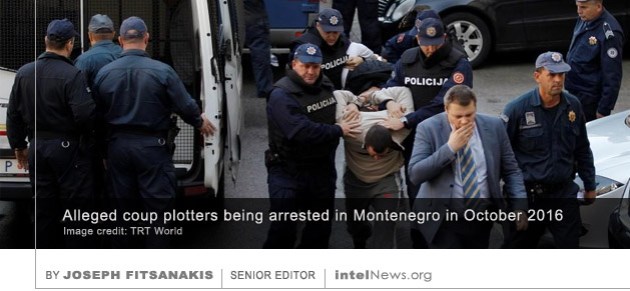
Montenegro coupGovernment prosecutors in Montenegro, the youngest member of the North Atlantic Treaty Organization, claim that a former officer of the United States Central Intelligence Agency helped pro-Russian plotters organize a coup in 2016. In October of that year, authorities in Montenegro accused “nationalists from Russia and Serbia” of staging a failed plot. Their goal was allegedly to kill the country’s then-Prime Minister Milo Dukanović, spark a pro-Russian coup in the country, and prevent its entry into NATO. The allegations surfaced after 20 Serbians and Montenegrins were arrested in Montenegro for allegedly planning an armed coup. The arrests took place on election day, October 16, 2016, as Montenegrins were voting across the Balkan country of 650,000 people. The plotters had even hired a “long-distance sharpshooter” who was “a professional killer” for the task of killing Đukanović, according to Montenegrin police. After killing the prime minister, the plotters allegedly planned to storm the parliament and prompt a pro-Russian coup.
Russia has vehemently denied the allegations. But in March of last year, the then British foreign secretary Boris Johnson appeared to validate the Montenegrin government’s allegations. Since then, a sensational trial has been taking place in the Montenegrin capital Podgorica of the 20 men who were arrested in October 2016, in addition to two Russians who are being tried in absentia. During the trial, prosecutors fingered Joseph Assad, a former CIA officer, as a co-conspirator in the coup plot. The Egyptian-born Assad served as a counter-terrorism expert in the CIA after arriving in the US in 1990, but eventually left the agency to launch his own security firm. It is believed that at the time of the alleged coup plot, Assad’s firm was employed by Aron Shaviv, a political strategist connected with the Democratic Front, a vocal pro-Russian opposition party in Montenegro. Shaviv, who has joint British and Israeli citizenship, said he hired Assad’s firm to provide counter-surveillance against Montenegro’s security services. According to Shaviv, the Montenegrin authorities spied on him and harassed him because of his connections to a domestic political party that is seen as pro-Russian.

But prosecutors in the trial of the alleged coup plotters claim that Assad’s role was to organize and provide escape routes and methods for the coup plotters. In light of these allegations, a warrant has been issued for Assad, accusing him of “operating a criminal enterprise”, according to Britain’s Guardian newspaper. Assad has rejected the charges as a “deception campaign”. In a statement issued on Saturday, he said he was “a loyal American who had no role in any crimes or coup in Montenegro”. Meanwhile, the Democratic Front and a number of other opposition parties in Montenegro denounced the government’s claims of a failed coup as “publicity stunts” aimed at distracting the country’s citizens from the state of the economy and other domestic concerns.

Author: Joseph Fitsanakis | Date: 13 August 2018 | Permalink

Syrians accuse Israel of assassinating top missile scientist in Hama province

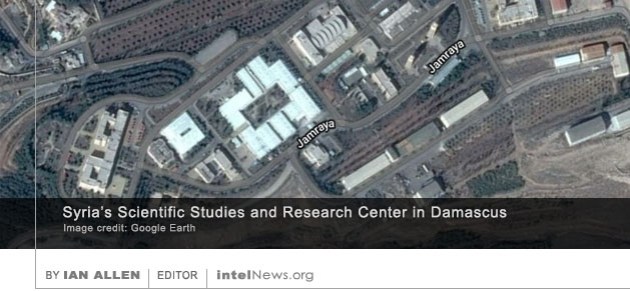
Syrian Scientific Studies and Research CenterOne of Syria’s leading pro-government newspapers has said that Israel was behind a bomb blast in Hama province that killed a senior scientist working for the country’s missile program. Aziz Azbar was reportedly a senior research director at the Syrian Scientific Studies and Research Center, known as CERS. The Damascus-based agency is thought to be at the center of the Syrian government’s formidable chemical weapons program. Last year, the United States Department of the Treasury imposed economic sanctions on nearly 300 CERS employees, after Washington accused them of being directly responsible for the Syrian government’s repeated use of chemical weapons against rebels and civilians. The European Union, as well as the French and British governments, also imposed sanctions on CERS and its staff.
According to Syrian media, Azbar specialized in developing and maintaining rocket systems in the city of Masyaf, located about 160 miles north of Damascus, where CERS maintains a research facility. He reportedly died last Saturday night when his car suddenly blew up. According to some reports, the blast originated from a bomb that had been placed in the headrest of his car seat and was detonated remotely. His driver was also killed in the blast, according to Syrian media reports. An insurgent group calling itself the Abu Amara Battalions, which is linked with the Sunni Levant Front in Syria’s Aleppo province, issued a statement claiming responsibility for Azbar’s killing. The Abu Amara Battalions have previously issued similar statements after reportedly assassinating Syrian government officials or militia commanders.

However, on Sunday Syria’s al-Watan newspaper said that the Israeli intelligence agency Mossad was responsible for Azbar’s death. The Syrian scientist was “a person of the utmost interest to Israel” said the paper, because of his direct connection to Damascus’ Russian- and North Korean-built Scud missile arsenal. However, officials in Israel refused to acknowledge that Tel Aviv had any connection with Azbar’s killing. “Every day in the Middle East there are hundreds of explosions and settling of scores”, said Israel’s Defense Minister Avigdor Liberman. “Every time they try to pin the blame on [Israel], so we won’t take this [latest accusation] too seriously”, he added. The Syrian government has not made any formal statements regarding Azbar’s death.

Author: Ian Allen | Date: 06 August 2018 | Permalink

British police arrest man over mystery killing of Seychelles leader in 1985

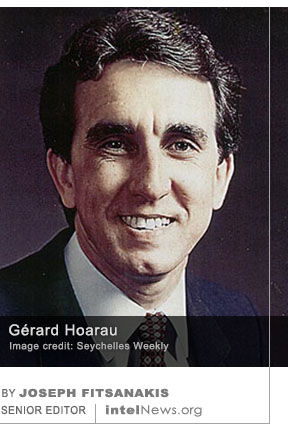
Gérard HoarauA man has been arrested by British counter-terrorism police in Northern Ireland, reportedly in connection with the assassination of a Seychelles exiled political leader in London in 1985. No-one has ever been charged with the murder of Gérard Hoarau, who was gunned down with a Sterling submachine gun in Edgware, London, on November 29, 1985. At the time of his killing, the 35-year-old Hoarau led the Mouvement Pour La Resistance (MPR), which was outlawed by the Seychelles government but was supported by Western governments and their allies in Africa. The reason was that the MPR challenged the president of the Seychelles, France-Albert René, leader of the leftwing Seychelles People’s United Party —known today as the Seychelles People’s United Party. The British-educated René assumed the presidency via a coup d’etat in 1977, which was supported by neighboring Tanzania, and remained in power in the island-country until 2004.
Despite proclaiming that he espoused a “moderate socialist ideology”, his critics —including Hoarau— accused him of being a secret admirer of Cuban-style communism and called for his removal from office. In 1979, Hoarau was one of several critics of René who were ordered to leave the Seychelles under threat of imprisonment. He initially found refuge in South Africa. But in 1981, the Seychelles security forces foiled an armed invasion by South African-supported mercenaries, which aimed to depose René. The mercenaries —most of them South African Special Forces veterans, former Rhodesian soldiers, Belgian veterans of the Congo Crisis, and American Vietnam War veterans— were led by British-Irish mercenary Thomas Michael “Mad Mike” Hoare. The group of over 50 armed men was intercepted at the Seychelles International Airport in Mahé and managed to escape only after taking hostages and hijacking an Air India passenger airplane that happened to be at the airport. However, they left behind five mercenaries, including at least one officer of South Africa’s National Intelligence Service.

In 1982, South Africa struck a deal with the Seychelles for the release of the captured mercenaries. In return, it promised to stop sheltering René’s opponents, including Hoarau. The latter was thus forced out of South Africa and sought refuge in London, England, where he was assassinated three years later. At the time of Hoarau’s killing, there was strong suspicion that the government of the Seychelles was directly involved in his assassination. There were also reports in the British press that a British hitman may have been hired to assassinate Hoarau. But despite several arrests in connection with the case, no-one was ever charged with the Seychellois exiled leader’s assassination. This, however, may soon change. In 2016, the British Metropolitan police re-opened the case and, according to a police press statement “established fresh lines of inquiry”. On Thursday, a 77-year-old man was reportedly arrested in Antrim town, Northern Ireland, by officers of the Metropolitan Police and the Police Service of Northern Ireland. The man, who has not been named, was transported to London for questioning “on suspicion of conspiracy to murder”. A police spokesman said on Thursday that the man had not previously been arrested as part of the Hoarau murder investigation.

Author: Joseph Fitsanakis | Date: 02 August 2018 | Permalink

Spy agencies warn Turkish president of assassination attempt during Bosnia visit

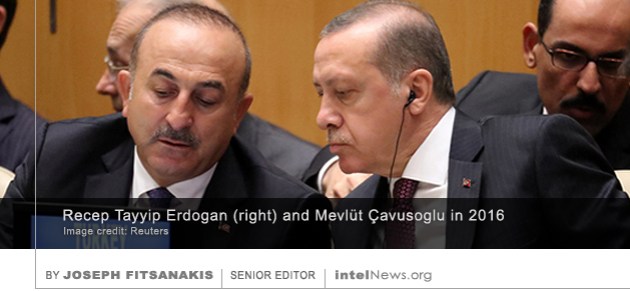
Erdogan and CavusogluA number of European intelligence agencies have reportedly warned the Turkish government of a possible assassination attempt against the country’s president, Recep Tayyip Erdoğan, during an official state visit to Bosnia and Herzegovina. On Sunday the Turkish leader embarked on a week-long visit to the Balkans, beginning with Bosnia, which along with Albania is seen as Turkey’s strongest political ally in Europe. During his visit to Bosnia, Mr. Erdoğan is scheduled to meet with Bakir Izetbegovic, one of the country’s three presidents. He is also scheduled to address a rally of expatriate Turks in the Bosnian capital Sarajevo, held in support of his ruling Justice and Development Party.

On Saturday night, Turkey’s state-owned TRT broadcaster reported that the Turkish president’s delegation had been warned about a possible assassination attempt against him. According to TRT, the information came initially from the intelligence services of the Republic of Macedonia, another state of the former Yugoslavia, which, like Bosnia, has a large Muslim population. Turkish intelligence were reportedly warned that a group of militant opponents of Mr. Erdoğan living in the Balkans were planning to kill him, said the report. It was allegedly followed by similar warnings issued by unnamed “Western intelligence agencies”. TRT did not provide further details about the alleged plot, but said that an “in-depth investigation” was underway by Turkish intelligence.

The Turkish president is facing one of the most direct challenges of his political career in less than two weeks, when Turks will go to the polls to elect a new parliament and —potentially— a new president. Some political commentators believe that, come June 2, Mr. Erdoğan may be removed from power after 15 years in the country’s leadership. But members of his government appeared unphased. One of them, Deputy Prime Minister Bakir Bozdag, tweeted on Saturday that warnings about Mr. Erdoğan’s life were “not new, and have always been there. Our President Recep Tayyip Erdogan is not a person who will be afraid of the threats and change his policy”, wrote Mr. Bozdag. And he continued: “Those, who have not understood that yet, are fools”.

Author:  Joseph Fitsanakis | Date: 21 May 2018 | Permalink

NATO obtained Soviet Novichok nerve agents through German intelligence in 1990s

Sergei SkripalSome North Atlantic Treaty Organization (NATO) member states obtained access to the Soviet Union’s so-called ‘Novichok’ nerve agents in the 1990s, through an informant recruited by German intelligence, according to reports. NATO countries refer to ‘Novichok-class’ nerve agents to describe a series of weaponized substances that were developed by the Soviet Union and post-Soviet Russia from the early 1970s to at least 1993. They are believed to be the deadliest nerve agents ever produced, but Moscow denies their very existence. A type of Novichok agent, described by British scientists as A234, is said to have been used in March of this year by the person or persons who tried to kill Sergei Skripal in Salisbury, England. Skripal is a former Russian military intelligence officer who spied for Britain in the early 2000s and has been living in England ever since he was released from a Russian prison in 2010.
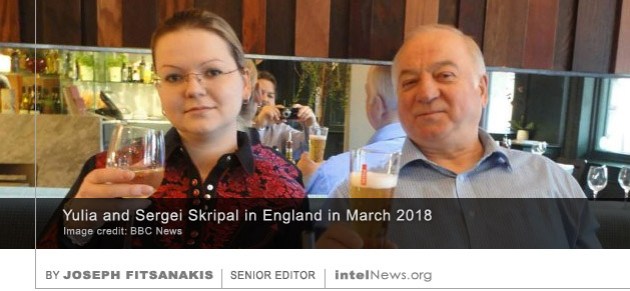
On Thursday, two German newspapers, Die Süddeutsche Zeitung and Die Zeit, and two regional public radio broadcasters, WDR and NDR, said that the NATO alliance has had access to the chemical composition of Novichok nerve agents since the period immediately following the collapse of the USSR in 1991. Specifically, the reports claimed that the access was gained through a Russian scientist who became an informant for the German Federal Intelligence Service, known as the BND. The scientist struck a deal with the BND: he provided the spy agency with technical information about the Novichok agents in exchange for safe passage to the West for him and his immediate family. Initially, the German government was reluctant to get its hands on material that was —and remains— classified as a weapon of mass destruction by international agencies. But eventually it asked for the chemical composition of the Novichok nerve agents and even acquired samples from the Russian informant.

According to media reports, the BND proceeded to share information about the chemical composition of the Novichok nerve agents with key NATO allies, including Sweden, France, Britain and the United States. The sharing of such a sensitive substance was approved by the then German Chancellor Helmut Kohl, said the reports. In the following years, a handful of NATO countries proceeded to produce what media reports described as “limited quantities” of Novichok agents, reportedly in order to experiment with various defense measures against them and to produce antidotes. Russia has denied accusations that it was implicated in Skripal’s poisoning and has argued that other countries, some of them NATO members, have the capacity to produce Novichok agents.

Author: Joseph Fitsanakis | Date: 18 May 2018 | Permalink

Russia tried to kill ex-double spy because he trained Eastern European agencies

Sergei SkripalRussia may have made the decision to kill former double spy Sergei Skripal because he continued to provide counterintelligence assistance to Eastern European governments, according to media reports from Prague. Skripal, 66, a veteran military intelligence operative who spied for Britain in the early 2000s, has been living in England since 2010. He was recently released from hospital after he was poisoned with what London claims was a military-grade nerve agent. As soon as Skripal and his daughter, Yulia, fell critically ill in March of this year, some observers expressed skepticism at the suggestion that Moscow may have tried to assassinate the former double spy. Their argument was that Skripal was pardoned by the Kremlin in a spy-swap deal, in which ten Russian intelligence operatives were handed over to Moscow in exchange for four agents of United States and British intelligence organizations.
Typically a spy who has been pardoned as part of an authorized spy-swap will not need to worry about being targeted by the agency that he betrayed. If it indeed tried to kill Skripal, Russia may therefore have broken the unwritten rules of the espionage game, some argued. But according to the reputable Czech investigative newsmagazine Respekt, the Kremlin tried to kill Skripal because he broke the rules of his release, namely that he would not participate in any intelligence-related activities against Russia. Specifically, Respekt claimed on Sunday that Skripal traveled extensively in Eastern Europe, where he advised local intelligence agencies on how to defend against Russian espionage. According to the Prague-based newsmagazine, Skripal’s travels to countries like the Czech Republic and Estonia were facilitated by the British Secret Intelligence Service (known commonly as MI6). The British agency thus killed two birds with one stone, said Respect: on the one hand it cultivated friendly relations with Eastern European spy agencies, while at the same time it provided the out-of-work Russian defector with a steady income.

Skripal’s information was at times dated, said Respekt, but it was deemed valuable enough to entice intelligence officers from Estonia, the Czech Republic, and possibly other European intelligence agencies, to regularly travel to the United Kingdom and further-consult with Skripal. Skripal’s contacts with Eastern European intelligence personnel were kept strictly secret in order to protect him from the ire of the Kremlin. But Moscow found out about Skripal’s activities somehow, and decided to kill the former double spy, said Respekt. The Russian government has vehemently denied all allegations that it was behind an attempt to kill Skripal and his daughter.

Author: Joseph Fitsanakis | Date: 15 May 2018 | Permalink

Hamas accuses Mossad of assassinating Palestinian engineer in Malaysia

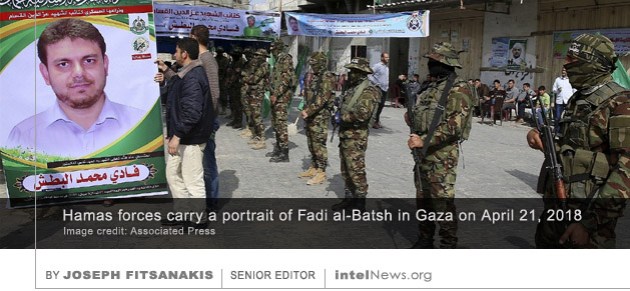
Fadi al-Batsh Fadi AlbatshMilitants in the Gaza Strip have accused Israel of assassinating a Palestinian engineer based in Malaysia, who was shot dead on Saturday by unknown assailants riding motorcycles. The victim has been identified as Dr. Fadi M. al-Batsh, 35, from the town of Jabalia in the Gaza Strip, a Palestinian enclave controlled by the militant group Hamas. Al-Batsh is believed to have completed undergraduate and Master’s degrees in electrical engineering at the Islamic University of Gaza. In 2011 he enrolled as a PhD student at the University of Malaya in Kuala Lumpur, from where he subsequently received his doctorate in electrical engineering. He was then employed as a lecturer by the University of Kuala Lumpur’s British Malaysian Institute. The Institute is located in the Jalan Gombak neighborhood of the Malaysian capital, where al-Batsh lived with his wife and three children. Some reports from Israel said that al-Batsh worked on drone technology and that he had authored scientific articles on the development of drone technology, as well as on the technical specifications of transmitters used to remotely control drones.
Local reports said al-Batsh was gunned down at around 6:00 a.m. on Saturday morning as he was walking from his home to a nearby mosque for early-morning prayers. Footage taken from nearby security cameras shows that al-Batsh was shot by two men riding on a large BMW 1100cc motorcycle, who waited for him to arrive at the scene for at least 20 minutes before opening fire. Malaysian police said the Palestinian man was pronounced dead at the scene, having sustained wounds from 14 bullets in the chest and head. A subsequent report by local police authorities said the incident was being treated as a “targeted killing”, not as a terrorist attack, because the assassins appeared to focus solely on al-Batsh while ignoring several bystanders that were present.

Shortly after al-Batsh’s killing some reports identified him as a relative of Khaled al-Batsh, a senior official in the Palestinian Islamic Jihad. A subsequent statement published by Hamas-affiliated media said al-Batsh was a commander in the Izz ad-Din al-Qassam Brigades, Hamas’ military wing. The militant group described him as a “loyal member” and called him a “shahid” (martyr), who was “assassinated by the hand of treachery”. The Gaza-based group also vowed retaliation against Israel and the Mossad intelligence agency.

Malaysian authorities said on Sunday that they did not rule out anything, including the possibility that al-Batsh may have been killed by militants belonging to the Islamic State. Malaysia’s Deputy Prime Minister, Ahmad Zahid Hamidi, said that the possible involvement of “foreign agents” in al-Batsh’s killing was also being looked at. He added that the two main suspects behind the killing were believed to be “white, European-looking men”. On Monday, Malaysian police released facial composites of the two suspects, based on eyewitness testimonies. An accompanying press release said the two suspects were “around 1.80 meters tall, well built, had fair complexions, and were believed to be of Middle Eastern or Western descent”.

Author: Joseph Fitsanakis | Date: 23 April 2018 | Permalink | Research credit: R.B. and C.F.

Russian ex-spy sees link between Skripal and GCHQ officer found dead in 2010

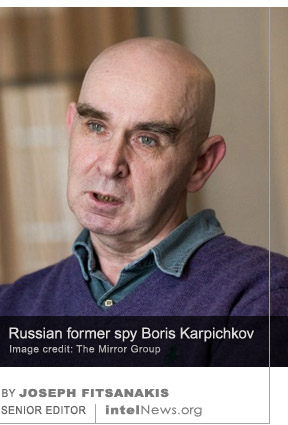
Boris KarpichkovA former officer in the Soviet KGB, who now lives in the United Kingdom, is to be questioned by British police after alleging that there is a link between the recent poisoning of Sergei Skripal and the mysterious death of a British intelligence officer in 2010. There has been extensive media coverage in the past month of the poisoning of Sergei Skripal, a Russian former military intelligence officer who spied for Britain in the early 2000s and has been living in England since 2010. Nearly every European country, as well as Canada, Australia and the United States, expelled Russian diplomats in response to the attack on the Russian former spy, which has been widely blamed on the Kremlin.

But eight years ago, another mysterious attack on a spy in Britain drew the attention of the world’s media. Gareth Williams, a mathematician in the employment of Britain’s signals intelligence agency, GCHQ, had been seconded to the Secret Intelligence Service (MI6), Britain’s external intelligence agency, to help automate intelligence collection. He had also worked with United States agencies, including the Federal Bureau of Investigation and the National Security Agency. But his career came to an abrupt end in August 2010, when he was found dead inside a padlocked sports bag at his home in Pimlico, London. It remains unknown whether his death resulted from an attack by assailants.

Last weekend, however, Boris Karpichkov, a former intelligence officer in the Soviet KGB and its post-Soviet successor, the FSB, said that Williams was killed by the Russian state. Karpichkov, 59, joined the KGB in 1984, but became a defector-in-place for Latvian intelligence in 1991, when the Soviet Union disintegrated. He claims to have also spied on Russia for French and American intelligence. In 1998, carrying two suitcases filled with top-secret Russian government documents, and using forged passports, he arrived with his family in Britain, where he has lived ever since. In an interview with the British tabloid newspaper The Sunday People, Karpichkov said that Williams was killed by Russian intelligence operatives with an untraceable poison substance, because he had discovered the identity of a Russian agent within his agency, the GCHQ. According to Karpichkov, Williams had befriended the mole, codenamed ORION by the Russians, and had realized that he was working for the Russians. The mole then allegedly told his Russian handler, a non-official-cover officer with an Eastern European passport, codenamed LUKAS, that Williams had grown suspicious. Read more of this post

Syria sought out and assassinated American journalist, former spy says

Marie ColvinThe Syrian government tracked down and killed American journalist Marie Colvin in order to stop her from reporting about the Syrian Civil War, according to a Syrian intelligence officer who has defected to Europe. Colvin was an experienced war correspondent who worked for The Sunday Times. The British newspaper sent her to Syria soon after the outbreak of the war. From there, she gave live interviews to media outlets such as CNN and the BBC. But on the morning of February 22, 2012, Colvin was killed along with French war photographer Remi Ochlik. Their death came when Syrian government forces repeatedly shelled a media center in the city of Homs, which housed the two reporters.
In 2016, the San Francisco-based Center for Justice and Accountability filed a lawsuit against the government of Syrian President Bashar al-Assad, claiming that Colvin’s death was deliberate and wrongful. The lawsuit is supported by Colvin’s family in the United States. Court records unsealed on Monday include a sworn testament by a Syrian former intelligence officer who has defected and now lives under a new identity in an undisclosed European country. The defector, codenamed ULYSSES, said that Colvin was assassinated by the Assad government as part of a concerted effort to hunt down Western journalists and local media correspondents. The ultimate purpose of the plan was to hinder international reporting about the war. The plan was allegedly carried out by the Syrian military under the guidance of the country’s Military Intelligence Directorate. Many of the reporters targeted for assassination were reporting from the city of Homs, where Colvin was killed.

According to ULYSSES, Syrian government forces began targeting the Homs media center after they found out that foreign journalists had managed to enter the city’s western sector from nearby Lebanon. They then employed a mobile satellite interception system to capture the journalists’ communications, which in turn revealed their precise location. At that point, Syrian troops were ordered to fire several missiles at the building housing the journalists, in full knowledge that Colvin and Ochlik were inside. In his testimony, ULYSSES claimed that Syrian intelligence officials “celebrated” when they were told that Colvin had been killed. He identified eight senior Syrian officials who he said were involved in planning the American journalist’s alleged assassination. One of them, said ULYSSES, was Maher al-Assad, President Assad’s brother, who leads the 4th Armored Division of the Syrian Army, considered as one of the staunchest pro-government parts of the Syrian military. Testimonies in the case continue this week.

Author: Ian Allen | Date: 10 April 2018 | Permalink

Britain looking to resettle poisoned Russian spy to the United States, says source

Sergei SkripalThe British government may relocate Sergei Skripal, the Russian double spy who appears to have survived an assassination attempt in England, to the United States, in an effort to protect him from further attacks. The BBC reported last week that Skripal, who had been in a critical condition for nearly a month, was “improving rapidly”. Skripal, 66, who spied for Britain in the early 2000s, and has been living in England since 2010, was poisoned with what London claims was a military-grade nerve agent. Nearly every European country, as well as Canada, Australia and the United States, expelled Russian diplomats in response to the attack on the Russian former spy. His daughter, Yulia, who is 33, also came down with nerve-agent poisoning on the same day as her father, but appears to have survived.

The London-based newspaper The Sunday Times said yesterday that British government officials are exploring the possibility of resettling Skripal and his daughter in an allied country. The paper claimed that the countries being considered for possible relocation belong to the so-called “Five Eyes” agreement (also known as UKUSA), a decades-old pact between intelligence agencies from Australia, New Zealand, Britain, Canada and the United States. The Times quoted “an intelligence source” familiar with the negotiations allegedly taking place between the British government and its UKUSA partners. The source reportedly told the paper that the Skripals “will be offered new identities”, but did not elaborate on how they would avoid attention after their images were published by every major media outlet in the world following last month’s incident in England.

The anonymous source told The Times that “the obvious place to resettle [the two Russians] is America because they are less likely to be killed there and it is easier to protect them there under a new identity”. The paper also reported that Britain’s Secret Intelligence Service, also known as MI6, is holding discussions with its American counterpart, the Central Intelligence Agency, about resettling the Skripals on American soil. But an article published on Sunday in another British newspaper, The Daily Telegraph, said that senior government officials in the United States are now worried that Russian defectors and former spies living there may not be safe. The paper quoted an unnamed “senior US administration official” as saying that Washington has “massive concerns” that US-based Russians who have spied for America, or have publicly criticized the Kremlin, could be targeted just like Skripal. The Times said it contacted the British Foreign Office seeking to confirm whether the Skripals would be relocated abroad, but did not get a response.

Author: Joseph Fitsanakis | Date: 9 April 2018 | Permalink

Surge in Russian spy activity prompts US agencies to bring back retired officers

FBIA surge in the activity of Russian intelligence personnel on United States soil has caused American spy agencies to rehire retired Russia specialists, according to Newsweek. Additionally, Russian defectors living in the US are reevaluating their personal safety in light of the poisoning of Russian spy Sergei Skripal in England last month, said Newsweek’s intelligence correspondent Jeff Stein in an article published on Sunday. Writing from Washington, Stein said that US counterintelligence agencies —notably the Federal Bureau of Investigation— are “on edge” over the attack on Skripal, which the British government said was carried out with a military-grade nerve agent on orders of the Kremlin.

Soviet spy agencies have a long history of assassinating defectors, called ‘wet operations’ in Russian spy parlance. But such activities were considerably scaled back after the 1970s. However, many claim that the rise of Vladimir Putin to power brought back these tactics, and that Moscow may now be investing more time and money in ‘wet operations’ training. Stein quoted one anonymous Russian defector living in the US as saying that it would be “easy [for Russian spy services] to find us if they are really determined”. It usually takes an email, text or phone call to friends or relatives back in Russia for Moscow to start tracking the physical whereabouts of defectors. In other cases, family members of defectors may be followed by Russian intelligence personnel while visiting the US to reunite with relatives, said the US-based defector.

The same source told Stein that suspected Russian intelligence personnel had been spotted by US counterintelligence teams surveilling the neighborhoods where Russian defectors reside. To address what they see as an “uptick in Russian activity […] over the past two years”, the FBI and the Central Intelligence Agency “have been bringing people out of retirement” with expertise on Russian intelligence operations, Stein reports. The veteran intelligence correspondent also spoke to retired CIA officers, who did not rule out an attempt by Russian intelligence to carry out a ‘wet operation’ on American soil. Stein contacted the CIA and the FBI, asking them to respond to these concerns. He said the CIA declined to comment, while the FBI did not return his messages.

Author: Joseph Fitsanakis | Date: 01 April 2018 | Permalink