Syria sought out and assassinated American journalist, former spy says
April 10, 2018 Leave a comment
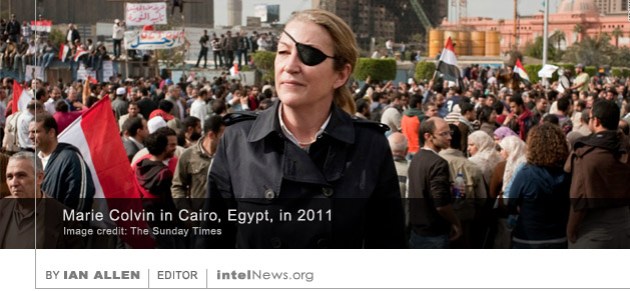 The Syrian government tracked down and killed American journalist Marie Colvin in order to stop her from reporting about the Syrian Civil War, according to a Syrian intelligence officer who has defected to Europe. Colvin was an experienced war correspondent who worked for The Sunday Times. The British newspaper sent her to Syria soon after the outbreak of the war. From there, she gave live interviews to media outlets such as CNN and the BBC. But on the morning of February 22, 2012, Colvin was killed along with French war photographer Remi Ochlik. Their death came when Syrian government forces repeatedly shelled a media center in the city of Homs, which housed the two reporters.
In 2016, the San Francisco-based Center for Justice and Accountability filed a lawsuit against the government of Syrian President Bashar al-Assad, claiming that Colvin’s death was deliberate and wrongful. The lawsuit is supported by Colvin’s family in the United States. Court records unsealed on Monday include a sworn testament by a Syrian former intelligence officer who has defected and now lives under a new identity in an undisclosed European country. The defector, codenamed ULYSSES, said that Colvin was assassinated by the Assad government as part of a concerted effort to hunt down Western journalists and local media correspondents. The ultimate purpose of the plan was to hinder international reporting about the war. The plan was allegedly carried out by the Syrian military under the guidance of the country’s Military Intelligence Directorate. Many of the reporters targeted for assassination were reporting from the city of Homs, where Colvin was killed.
According to ULYSSES, Syrian government forces began targeting the Homs media center after they found out that foreign journalists had managed to enter the city’s western sector from nearby Lebanon. They then employed a mobile satellite interception system to capture the journalists’ communications, which in turn revealed their precise location. At that point, Syrian troops were ordered to fire several missiles at the building housing the journalists, in full knowledge that Colvin and Ochlik were inside. In his testimony, ULYSSES claimed that Syrian intelligence officials “celebrated” when they were told that Colvin had been killed. He identified eight senior Syrian officials who he said were involved in planning the American journalist’s alleged assassination. One of them, said ULYSSES, was Maher al-Assad, President Assad’s brother, who leads the 4th Armored Division of the Syrian Army, considered as one of the staunchest pro-government parts of the Syrian military. Testimonies in the case continue this week.
► Author: Ian Allen | Date: 10 April 2018 | Permalink
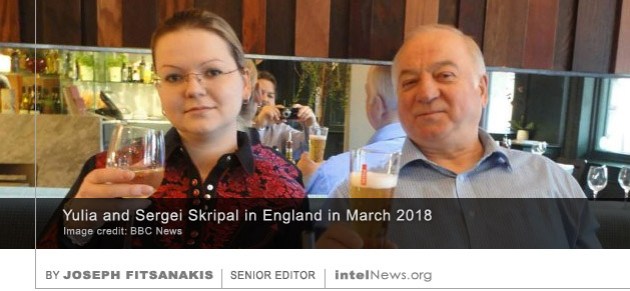 The British government may relocate Sergei Skripal, the Russian double spy who appears to have survived an assassination attempt in England, to the United States, in an effort to protect him from further attacks. The BBC
  A surge in the activity of Russian intelligence personnel on United States soil has caused American spy agencies to rehire retired Russia specialists,
  The nerve agent that poisoned a Russian double spy in England last week may have been smeared on his car’s door handle, according to sources. Sergei Skripal, 66, and his daughter Yulia, 33, are in critical condition after being
  The British prime minister said on Monday that it was “highly likely” the nerve agent used to attack a Russian defector in England last week was developed by Russia. But sources in London told the BBC that the British government would not invoke Article 5 of the North Atlantic Treaty Organization (NATO), which states that an attack on one member of the alliance is an attack on all. Theresa May was referring to an
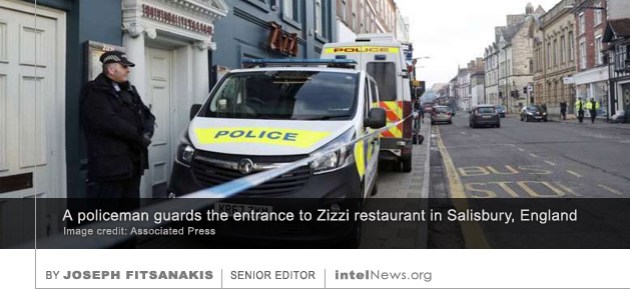
  The British secret services have begun tightening the physical security of dozens of Russian defectors living in Britain, a week after the attempted murder of former KGB Colonel Sergei Skripal in southern England. The 66-year-old double spy and his daughter, Yulia, were found in a catatonic state in the town of Salisbury on March 4. It was later determined that they had been attacked with a nerve agent. Russian officials have vehemently denied that the Kremlin had any involvement with the brazen attempt to kill Skripal. But,
  Most state-sponsored assassinations tend to be covert operations, which means that the sponsoring party cannot be conclusively identified, even if it is suspected. Because of their covert nature, assassinations tend to be extremely complex intelligence-led operations, which are designed to provide plausible deniability to their sponsors. Consequently, the planning and implementation of these operations usually involves a large number of people, each with a narrow set of unique skills. But —and herein lies an interesting contradiction— their execution is invariably simple, both in style and method. The
  Skripal, who continued to provide his services to British intelligence as a consultant while living in the idyllic surroundings of Wiltshire. Like the late Russian defector Alexander Litvinenko, who died in London of radioactive poisoning in 2006, Skripal entrusted his personal safety to the British state. But in a country that today hosts nearly half a million Russians of all backgrounds and political persuasions, such a decision is exceedingly risky.
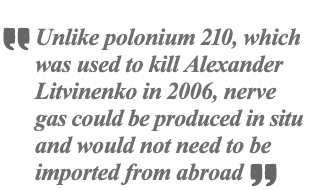 from abroad. It is, in other words, a simple weapon that can be dispensed using a simple method, with little risk to the assailant(s). It fits the profile of a state-sponsored covert killing: carefully planned and designed, yet simply executed, thus ensuring a high probability of success.
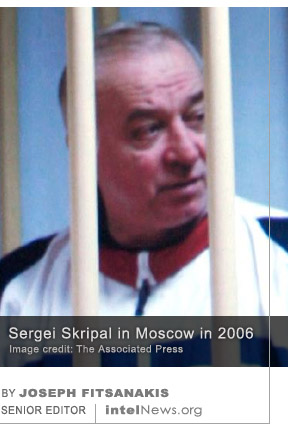 Britain’s counterintelligence service is nearing the conclusion that a foreign government, most likely Russia, tried to kill a Russian double spy and his daughter, who are now fighting for their lives in a British hospital. Sergei Skripal, 66, and his daughter Yulia Skripal, 33, are said to remain in critical condition, after falling violently ill on Sunday afternoon while walking in downtown Salisbury, a picturesque cathedral city in south-central England. Skripal arrived in England in 2010 as part of a large-scale
 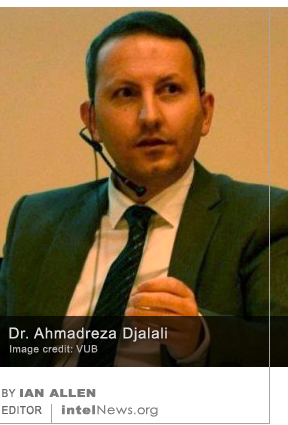 The government of Sweden has granted citizenship to an academic who is on death row in Iran for allegedly helping Israel kill Iranian nuclear scientists. Sweden’s Foreign Affairs Ministry confirmed on Saturday that Ahmadreza Djalali, who lives in Sweden and has lectured at Stockholm’s renowned Karolinska Institute, is now a Swedish citizen. IntelNews has
 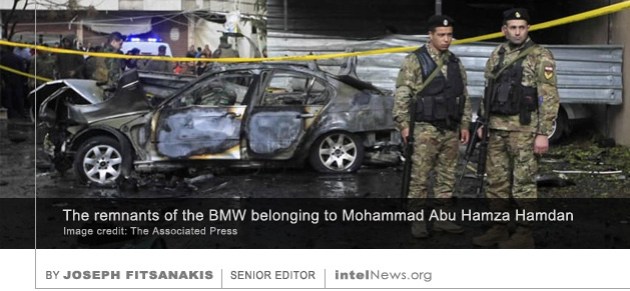 Media reports from Lebanon claim that Israel was behind a
 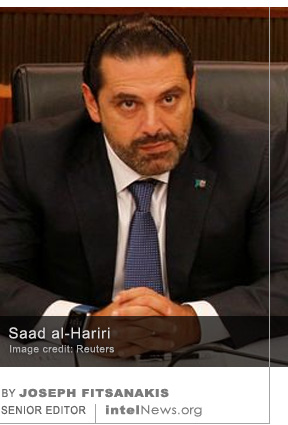 Western intelligence services warned Lebanon’s former Prime Minister Saad al-Hariri of an assassination plot against him, thus prompting him to resign on Sunday, according to Saudi news media. Hariri is a Saudi-born Lebanese politician, reputed to be one of the world’s wealthiest people. He is the second son of the late Rafiq Hariri, who ruled Lebanon for much of the 1990s but was assassinated in 2005. Saad al-Hariri spent most of his life in Saudi Arabia, the United States and France, but returned to Lebanon in 2014 to lead the Future Movement, a center-right political party supported by Sunni Muslims and some Christians. He became prime minister in 2016.
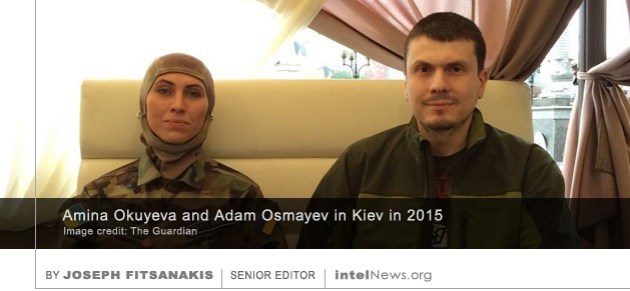 An armed attack in the outskirts of Kiev has killed the wife of a Chechen commander of a Ukrainian paramilitary unit, who is wanted in Russia for an alleged plan to kill President Vladimir Putin. Adam Osmayev is believed to have survived the attack, but his wife, Amina Okuyeva, was reportedly shot in the head and died on the spot. Osmayev, a Russian Chechen, became widely known in Ukraine in February of 2012, when he was arrested by police in Odessa, a major port city located on the northwestern shore of the Black Sea in the country’s south. He was found to be carrying forged identity documents. When police searched his apartment, they found large quantities of illegal explosives. Authorities in Moscow told the Ukrainian government that Osmayev was involved in a conspiracy to kill Russian President Vladimir Putin. A Chechen associate of Osmayev, Ilya Pyanzin, was handed over to Russia by the Ukrainians and was given a 10-year prison sentence by a Moscow court.
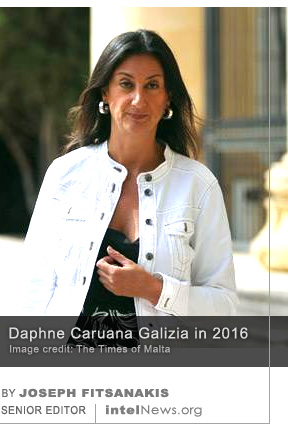 Malta’s best known investigative journalist, whose reporting about offshore tax evasion prompted a major political crisis in the European Union member-state, has been killed by a powerful bomb near her home. Daphne Caruana Galizia, who died Monday, aged 53, gained international prominence last year, when she used information from various sources, including the leaked “Panama Papers”, to accuse senior members of Malta’s government of implication in tax-evasion schemes. Her reporting led to the resignation and eventual re-election of the country’s Labor government last year.








Russian ex-spy sees link between Skripal and GCHQ officer found dead in 2010
April 16, 2018 by Joseph Fitsanakis 3 Comments
But eight years ago, another mysterious attack on a spy in Britain drew the attention of the world’s media. Gareth Williams, a mathematician in the employment of Britain’s signals intelligence agency, GCHQ, had been seconded to the Secret Intelligence Service (MI6), Britain’s external intelligence agency, to help automate intelligence collection. He had also worked with United States agencies, including the Federal Bureau of Investigation and the National Security Agency. But his career came to an abrupt end in August 2010, when he was found dead inside a padlocked sports bag at his home in Pimlico, London. It remains unknown whether his death resulted from an attack by assailants.
Last weekend, however, Boris Karpichkov, a former intelligence officer in the Soviet KGB and its post-Soviet successor, the FSB, said that Williams was killed by the Russian state. Karpichkov, 59, joined the KGB in 1984, but became a defector-in-place for Latvian intelligence in 1991, when the Soviet Union disintegrated. He claims to have also spied on Russia for French and American intelligence. In 1998, carrying two suitcases filled with top-secret Russian government documents, and using forged passports, he arrived with his family in Britain, where he has lived ever since. In an interview with the British tabloid newspaper The Sunday People, Karpichkov said that Williams was killed by Russian intelligence operatives with an untraceable poison substance, because he had discovered the identity of a Russian agent within his agency, the GCHQ. According to Karpichkov, Williams had befriended the mole, codenamed ORION by the Russians, and had realized that he was working for the Russians. The mole then allegedly told his Russian handler, a non-official-cover officer with an Eastern European passport, codenamed LUKAS, that Williams had grown suspicious. Read more of this post
Filed under Expert news and commentary on intelligence, espionage, spies and spying Tagged with assassinations, Boris Karpichkov, Gareth Williams, News, Pimlico (London), Russia, Sergei Skripal, suspicious deaths, UK