Holland says Iranian spies assassinated two men on Dutch soil
January 9, 2019 2 Comments
 Authorities in Holland have officially accused Iran of ordering the contract murders of two men on Dutch soil in 2015 and 2017, one of them just a block away from the Dutch foreign ministry’s headquarters. The announcement illuminates the reason behind the expulsion of two Iranian diplomats from Holland last year, which the authorities did not explain at the time.
The first of the two assassinations happened on December 15, 2015, in Almere, a coastal town located 25 miles east of Amsterdam. The victim was Mohammad-Reza Kolahi, a 56-year-old electrician who was wanted in Iran for allegedly planting a bomb in 1981. The bomb targeted the headquarters of the ruling Islamic Republican Party, killing more than 70, and is often referred to as the deadliest domestic terrorist attack in Iran’s history. Kolahi, a member of a Marxist-Islamist group calling itself the People’s Mujahedin Organization of Iran (MEK), fled the country and was sentenced to death in absentia. He eventually married a Dutch national and acquired Dutch citizenship, changing his name to Ali Motamed. He was reportedly shot in the head at point-blank range by two assailants dressed in all black. Nearly two years later, on November 9, 2017, Ahmad Mola Nissi was also shot in the head in broad daylight by two assailants. The murder took place in the middle of the street in downtown Hague, site of Holland’s parliament and a host of international institutions. Nissi, 52, was a co-founder of the Arab Struggle Movement for the Liberation of Ahwaz (ASMLA), a secessionist group that seeks an independent Arab homeland in the oil-rich southwestern regions of Iran. Tehran has claimed for decades that both groups, MEK and ASMLA, have been supported by Iraq, Israel, the United States and the European Union.
On Tuesday, Holland’s Minister of Foreign Affairs, Stef Blok, informed the Dutch parliament that the country’s intelligence services had provided “strong evidence” that the Islamic Republic was involved in the assassinations of Kolahi and Nissi. He added that both men were Dutch citizens and that their murders on Dutch soil were “hostile actions” that directly violated Dutch sovereignty. He also revealed that the expulsions of two Iranian diplomats from Holland in June of last year were in direct response to the evidence unearthed by the Dutch intelligence services about the two murders. IntelNews readers will recall that the Dutch Foreign Ministry did not explain the reason for the expulsions when these were announced last summer. Also on Tuesday, the European Union announced the imposition of financial sanctions against two individuals associated with Iranian military intelligence, reportedly in response to Holland’s announcement.
► Author: Joseph Fitsanakis | Date: 09 January 2019 | Research credit: M.K. | Permalink
 Authorities in Colombia said that three Venezuelans, who were arrested in Colombia’s Caribbean coast with submachine guns and explosives, were planning to assassinate President Iván Duque. The claim was aired in a
  Saudi Crown Prince Mohammed bin Salman sent at least eleven text messages to the man in charge of the 15-member hit team that killed journalist Jamal Khashoggi last month, according to a classified report produced by the United States Central Intelligence Agency. The CIA report was leaked to The Wall Street Journal, which said in a
 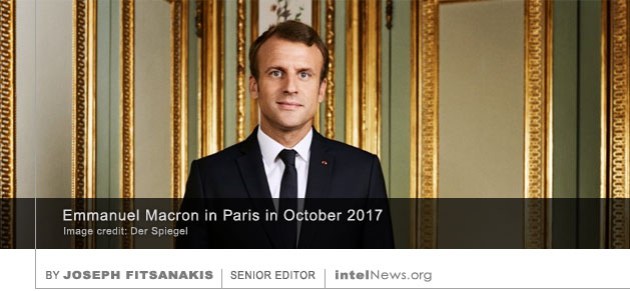 Authorities in France have announced the arrest of six individuals who were allegedly involved in a plot to kill French President Emmanuel Macron. Government prosecutors said on Tuesday that the six were arrested for planning “a violent action against the president of the Republic”. A former economy and industry minister, Macron resigned from the cabinet of left-of-center Prime Minister Manuel Valls in 2016 in order to lead a new right-of-center movement called En marche (Forward). In 2017 he won the presidential election with 66.1 percent, becoming the youngest president in the history of France.
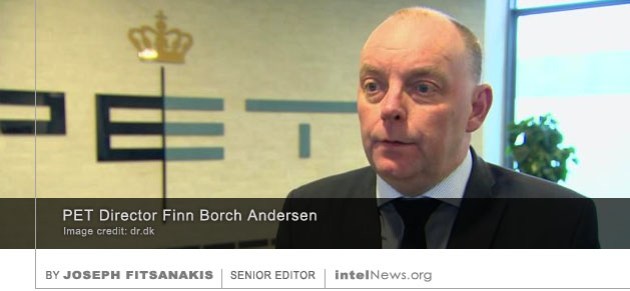 The Danish government has recalled its ambassador from Iran and has accused the intelligence services of the Islamic Republic of plotting an assassination operation on Danish soil. Danish government officials also said that Copenhagen would seek to impose further economic and diplomatic sanctions on Tehran, in coordination with the European Union. The accusations against Iran were leveled during an emergency news conference in the Danish capital on Tuesday, led by Anders Samuelsen, Denmark’s Minister of Foreign Affairs, and Finn Borch Andersen (pictured), Director of the Danish Security and Intelligence Service, known as PET.
 A leading suspect in a failed attempt to kill Venezuelan President Nicolas Maduro using drones, has died in mysterious circumstances while being held by the country’s intelligence agency. The
 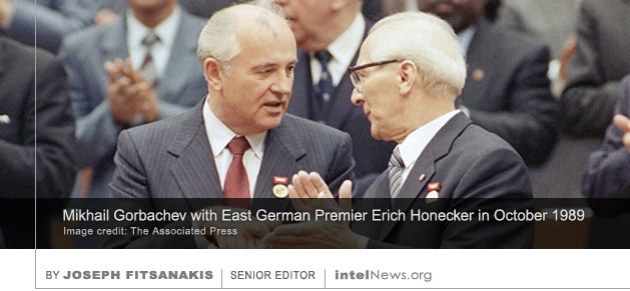 A group of German radicals planned to assassinate Soviet Premier Mikhail Gorbachev in East Germany in 1989, thus triggering a Soviet military invasion of the country, according to a new book written by a former British spy. The
 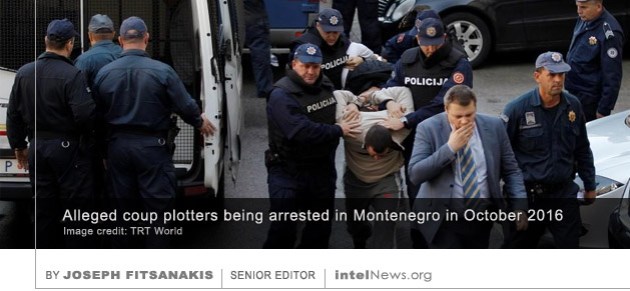 Government prosecutors in Montenegro, the youngest member of the North Atlantic Treaty Organization, claim that a former officer of the United States Central Intelligence Agency helped pro-Russian plotters organize a coup in 2016. In October of that year, authorities in Montenegro accused “nationalists from Russia and Serbia” of staging a failed plot. Their goal was allegedly to kill the country’s then-Prime Minister Milo Dukanović, spark a pro-Russian coup in the country, and prevent its entry into NATO. The allegations surfaced after 20 Serbians and Montenegrins were
 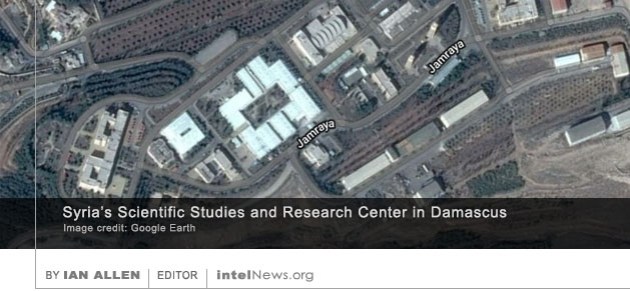 One of Syria’s leading pro-government newspapers has said that Israel was behind a bomb blast in Hama province that killed a senior scientist working for the country’s missile program. Aziz Azbar was reportedly a senior research director at the Syrian Scientific Studies and Research Center, known as CERS. The Damascus-based agency is thought to be at the center of the Syrian government’s formidable chemical weapons program. Last year, the United States Department of the Treasury imposed economic sanctions on nearly 300 CERS employees, after Washington accused them of being directly responsible for the Syrian government’s repeated use of chemical weapons against rebels and civilians. The European Union, as well as the French and British governments, also imposed sanctions on CERS and its staff.
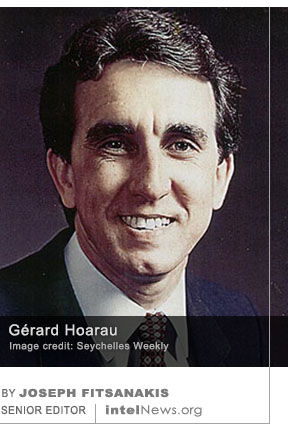 A man has been arrested by British counter-terrorism police in Northern Ireland, reportedly in connection with the assassination of a Seychelles exiled political leader in London in 1985. No-one has ever been charged with the murder of Gérard Hoarau, who was gunned down with a Sterling submachine gun in Edgware, London, on November 29, 1985. At the time of his killing, the 35-year-old Hoarau led the Mouvement Pour La Resistance (MPR), which was outlawed by the Seychelles government but was supported by Western governments and their allies in Africa. The reason was that the MPR challenged the president of the Seychelles, France-Albert René, leader of the leftwing Seychelles People’s United Party —known today as the Seychelles People’s United Party. The British-educated René assumed the presidency via a coup d’etat in 1977, which was supported by neighboring Tanzania, and remained in power in the island-country until 2004.
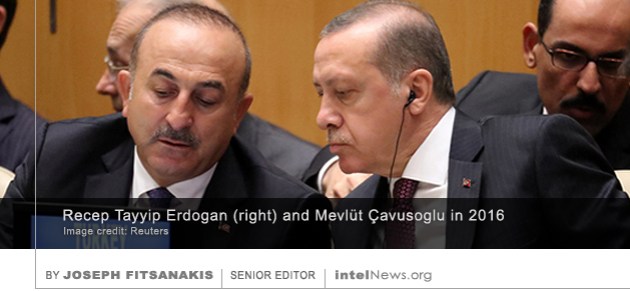 A number of European intelligence agencies have reportedly warned the Turkish government of a possible assassination attempt against the country’s president, Recep Tayyip Erdoğan, during an official state visit to Bosnia and Herzegovina. On Sunday the Turkish leader embarked on a week-long visit to the Balkans, beginning with Bosnia, which along with Albania is seen as Turkey’s strongest political ally in Europe. During his visit to Bosnia, Mr. Erdoğan is scheduled to meet with Bakir Izetbegovic, one of the country’s three presidents. He is also scheduled to address a rally of expatriate Turks in the Bosnian capital Sarajevo, held in support of his ruling Justice and Development Party.
 Some North Atlantic Treaty Organization (NATO) member states obtained access to the Soviet Union’s so-called ‘Novichok’ nerve agents in the 1990s, through an informant recruited by German intelligence, according to reports. NATO countries refer to ‘Novichok-class’ nerve agents to describe a series of weaponized substances that were developed by the Soviet Union and post-Soviet Russia from the early 1970s to at least 1993. They are believed to be the deadliest nerve agents ever produced, but Moscow denies their very existence. A type of Novichok agent, described by British scientists as A234, is said to have been used in March of this year by the person or persons who
 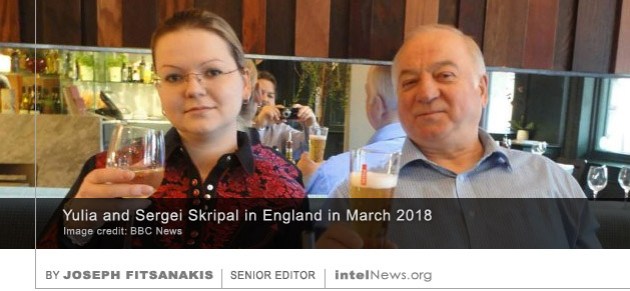 Russia may have made the decision to kill former double spy Sergei Skripal because he continued to provide counterintelligence assistance to Eastern European governments, according to media reports from Prague. Skripal, 66, a veteran military intelligence operative who spied for Britain in the early 2000s, has been living in England since 2010. He was recently released from hospital after he was
 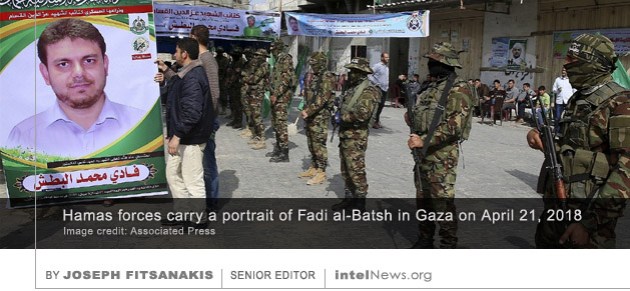 Militants in the Gaza Strip have accused Israel of assassinating a Palestinian engineer based in Malaysia, who was shot dead on Saturday by unknown assailants riding motorcycles. The victim has been identified as Dr. Fadi M. al-Batsh, 35, from the town of Jabalia in the Gaza Strip, a Palestinian enclave controlled by the militant group Hamas. Al-Batsh is believed to have completed undergraduate and Master’s degrees in electrical engineering at the Islamic University of Gaza. In 2011 he enrolled as a PhD student at the University of Malaya in Kuala Lumpur, from where he subsequently received his doctorate in electrical engineering. He was then employed as a lecturer by the University of Kuala Lumpur’s British Malaysian Institute. The Institute is located in the Jalan Gombak neighborhood of the Malaysian capital, where al-Batsh lived with his wife and three children. Some reports from Israel said that al-Batsh worked on drone technology and that he had authored scientific articles on the development of drone technology, as well as on the technical specifications of transmitters used to remotely control drones.








Law advocacy center sues CIA for access to Jamal Khashoggi files
January 10, 2019 by Joseph Fitsanakis Leave a comment
A few weeks after the murder, it was reported that British and American intelligence agencies were aware of efforts by the Saudi government to detain or otherwise silence Khashoggi, and that they had even warned Riyadh against such a move. In November, the CIA was reported to have concluded that Mohammed bin Salman’s Saudi Arabia’s powerful crown prince, had personally ordered Khashoggi’s murder. After its intelligence committee was briefed by the CIA on the matter, the US Senate unanimously condemned bin Salman and the government of Saudi Arabia, and called on the White House to impose sanctions on the oil kingdom. However, US President Donald Trump appears to have rejected the CIA’s conclusion and has refused to condemn the Saudi government over Khashoggi’s murder.
Now the Open Society Justice Initiative, a New York-based foundation specializing in national security and human rights, has filed a lawsuit against the CIA over the Khashoggi case. The lawsuit also names the Department of Defense, the National Security Agency and the Office of the Director of National Intelligence as defendants. The 17-page complaint, filed in a New York court on Wednesday, calls for the “immediate release” of all records in possession of these government agencies about Khashoggi’s murder under the US Freedom of Information Act. It calls these records “imperative for the public to properly and timely evaluate Congressional and Executive responses to Mr. Khashoggi’s killing”.
The Justice Initiative is one of the programs of the Open Society Foundations, the international civil-society advocacy group founded by Hungarian-American investor and philanthropist George Soros. Since its establishment in 2003, the Justice Initiative has filed over 100 national and international lawsuits relating to national security, most notably regarding the CIA’s extraordinary rendition program, which the agency launched following the attacks of September 11, 2001.
► Author: Joseph Fitsanakis | Date: 10 January 2019 | Permalink
Filed under Expert news and commentary on intelligence, espionage, spies and spying Tagged with assassinations, CIA, declassification, Jamal Khashoggi, News, Open Society Foundations, Open Society Justice Initiative, Saudi Arabia