Czech media name alleged Russian spy behind poison plot against Prague officials
May 13, 2020 2 Comments
 News media in the Czech Republic have named a Russian diplomat who allegedly transported poison to Prague last month, in what officials claim was a foiled plot to kill as many as three high-profile Czech politicians. Late last April, the Czech weekly investigative magazine Respekt reported that a Russian assassination plot had been foiled by authorities in the capital Prague.
Respekt said a Russian citizen carrying a diplomatic passport had arrived in Prague in early April. The man allegedly had with him a suitcase with a concealed quantity of ricin —a deadly toxin. His alleged mission was to assassinate Prague mayor Zdeněk Hřib, as well as Pavel Novotny and Ondřej Kolář, two of Prague’s three district mayors. All three men are known as fervently anti-Russian. Earlier this year, Hřib led a nationwide effort to rename the square in front of the Russian Embassy in Prague after Boris Nemtsov, a Russian opposition activist who was gunned down in Moscow in 2015. Kolář has been advocating for years for the removal of Soviet-era statues from Prague’s public spaces.
This past Sunday, Czech state television’s flagship investigative program 168 Hodin (168 Hours) claimed that the Russian diplomat who tried to smuggle poison into the country is Andrei Konchakov (pictured). Konchakov, 34, directs the Russian Center for Science and Culture in Prague, which is an extension of the Russian Embassy there. Citing “intelligence sources” 168 Hodin said Czech counterintelligence officials believe Konchakov is a actually an non-official-cover intelligence officer for Russian intelligence. Konchakov is alleged to have arrived at Prague’s Vaclav Havel International Airport on in April, where he was picked up by a Russian Embassy car and driven to the compound of the Russian diplomatic representation in the Czech capital.
Soon after the allegations against him emerged, Konchakov spoke to the Czech news website Seznam Zprávy. He strongly denied the accusations against him and told the website that the suitcase he was carrying with him during upon his arrival in Prague contained “disinfectant and candies”. He added that he would not, for the time being, respond to further questions, as he would first have to be granted permission to do so from the Russian government. Meanwhile, the Russian Embassy in Prague released a statement claiming that it had asked Czech authorities to provide police protection for Konchakov, because of “credible threats” he had received following the allegations against him by 168 Hodin.
► Author: Joseph Fitsanakis | Date: 13 May 2020 | Permalink
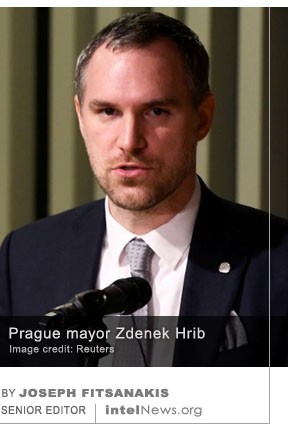 The Russian government has strongly denied accusations in the Czech media that it dispatched an assassin to Prague to kill two leading Czech politicians. The denial was issued by the Kremlin a day after Prague mayor Zdeněk Hřib said he had been placed under 24/7 police protection because of fears his life could be in danger.
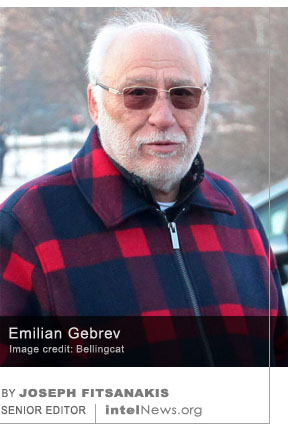 A Russian intelligence officer, who was allegedly involved in an attempt to kill a Bulgarian arms dealer in Sofia in 2015, is now a diplomat, according to report published on Tuesday by the investigative website Bellingcat. The website also claimed that there is a possible connection between the intelligence officer and the
 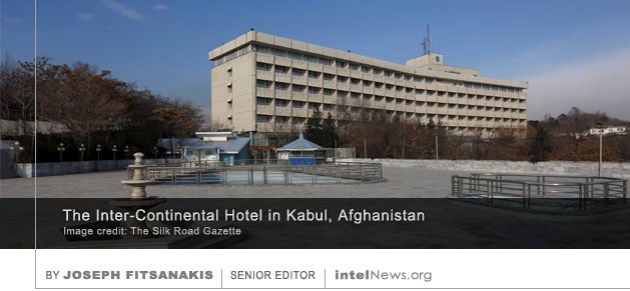 Two senior members of the Pakistani Taliban, who were carrying fake identification documents, were reportedly assassinated earlier this month in the vicinity of a luxury hotel in the Afghan capital Kabul. The culprits remain unknown, although the leadership of the Pakistani Taliban has blamed the United States for their death.
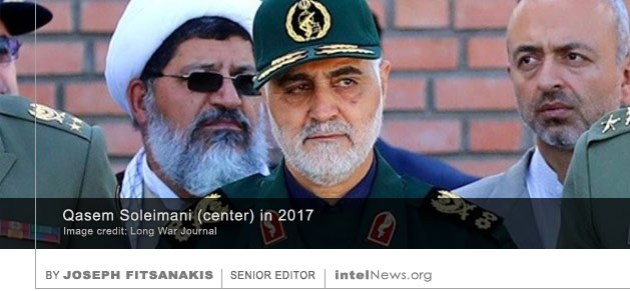 In an act whose implications are impossible to overstate, the United States has assassinated General Qasem Soleimani, arguably Iran’s second most powerful official. In the early hours of this morning, the entire Middle East stood on the verge of a regional war as the US Department of Defense
  why US President Donald Trump made the decision to kill Soleimani, and why he did so now.
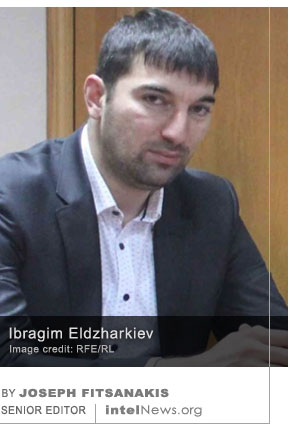 A senior counter-terrorism officer in the Russian police has been gunned down along with his brother in a downtown Moscow street, in what authorities describe as a contract killing. One of the two victims has been named as Ibragim Eldzharkiev (pictured), who headed the Russian Interior Ministry’s Anti-Extremism Center in the Republic of Ingushetia in the Russian Caucasus. His younger brother was reportedly also killed in the attack.
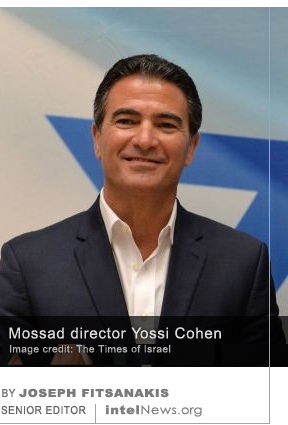 Yossi Cohen, the chief of the Mossad —Israel’s main external intelligence agency— said he has authorized “more than a few” assassinations during his tenure and warned that more may be on the way. Cohen, 57, who took command of the Mossad in 2016, spoke last week to Mishpacha, a magazine aimed at ultra-orthodox Jews. His comments were
 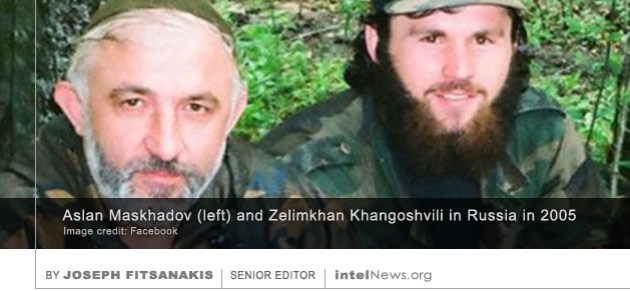 Authorities in Germany suspect that Moscow may have been behind the assassination of a Chechen separatist who was shot in broad daylight in Berlin by a man wearing a wig and carrying a pistol fitted with a silencer. The victim of the attack was Zelimkhan Khangoshvili, 40, who was a leading figure in the so-called Second Chechen War. The conflict pitted the Russian military against groups of Muslim fighters in the North Caucasus between 1999 and 2009.
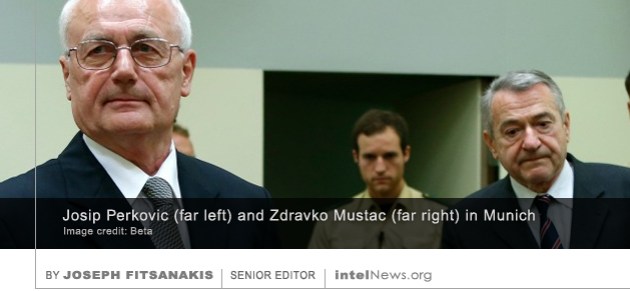 Germany has extradited a former senior official of the Yugoslav intelligence service to Croatia, where he is expected to serve a 30-year prison sentence for organizing the assassination of a dissident in Munich in 1983. Josip Perković is a former senior official in the Yugoslav State Security Service, known as UDBA. In 2014, he was extradited to Germany from Croatia alongside another former UDBA officer Zdravko Mustać. The two men were tried in a German court in the Bavarian capital Munich for organizing the assassination of Stjepan Đureković on July 28, 1983. Đureković’s killing was carried out by UDBA operatives in Wolfratshausen, Bavaria as part of a UDBA operation codenamed DUNAV. Đureković, who was of Croatian nationality, was director of Yugoslavia’s state-owned INA oil company until 1982, when he suddenly defected to West Germany. Upon his arrival in Germany, he was granted political asylum and began associating with Croatian nationalist émigré groups that were active in the country. It was the reason why he was killed by the government of Yugoslavia.
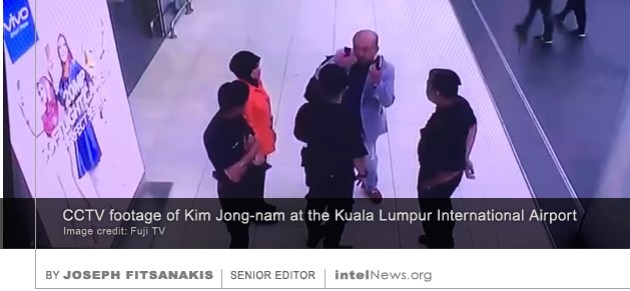 Kim Jong-nam, the half-brother of North Korean leader Kim Jong-un, held regular meetings with American intelligence officers before he was assassinated with VX nerve gas at a busy airport terminal in Malaysia. Two women
  The second of two female assassins who killed the half-brother of North Korean leader Kim Jong-un in 2017 in Kuala Lumpur has been released from prison by the Malaysian state, after a mostly secret trial. The two women, Doan Thi Huong of Vietnam and Siti Aisyah of Indonesia (pictured),
 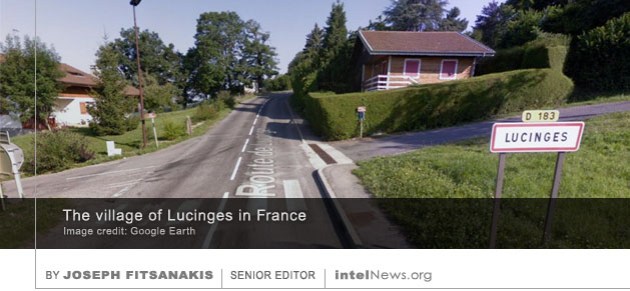 A former paramilitary officer in the French intelligence service, who was under investigation for allegedly plotting to kill a senior Congolese opposition figure, has been shot dead near a village in the French Alps. Daniel Forestier, 57, served for nearly 15 years in a paramilitary unit of the Directorate-General for External Security (DGSE) —France’s equivalent of the United States Central Intelligence Agency. After his retirement from the DGSE, he moved with this wife and two children to the alpine village of Lucinges, near Geneva, in the Auvergne-Rhône-Alpes region in southeastern France. He reportedly operated a tobacconist shop, served in the village council, and wrote spy novels in his spare time.
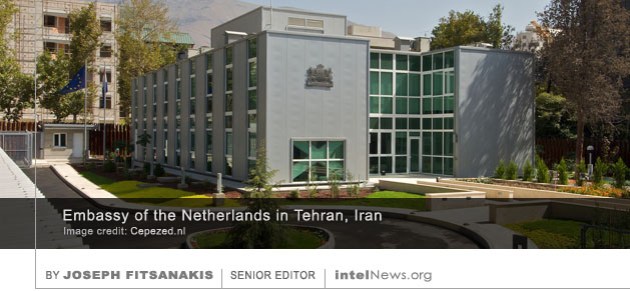 Holland said on Monday that it had recalled its ambassador from Tehran after Iran expelled two Dutch diplomats, in a deepening dispute involving the assassination of two Dutch citizens by alleged Iranian agents. In July of last year, Holland
 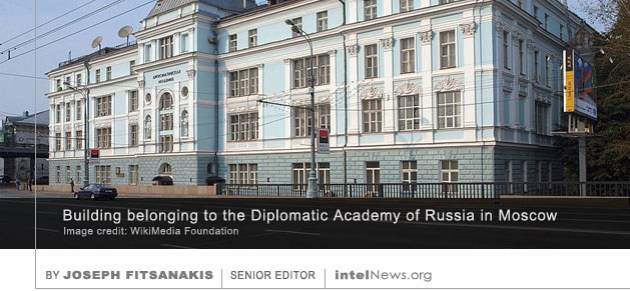 An investigative website has linked a graduate of an elite intelligence academy in Moscow with the attempted assassination of a Russian former double spy in Britain last year. Reports last year identified Dr. Alexander Yevgenyevich Mishkin (cover name ‘Alexander Petrov’) and Colonel Anatoliy Chepiga (cover name ‘Ruslan Boshirov’) as the two men that tried to kill Sergei Skripal in the English town of Salisbury in March 2018. Skripal, a former officer in Russia’s military intelligence service, the GRU, was resettled in Salisbury in 2010, after spending several years in a Russian prison for spying on behalf of Britain. But he and his daughter Yulia almost died last March, after they were







Russia responds angrily to Czech expulsions of Russian diplomats in poison probe
June 9, 2020 by Joseph Fitsanakis 2 Comments
In April, the Czech weekly investigative magazine Respekt reported that a Russian assassination plot had been foiled by authorities in Prague. The magazine said a Russian citizen carrying a diplomatic passport had arrived in Prague in early April. The man allegedly had with him a suitcase with a concealed quantity of ricin —a deadly toxin. His alleged mission was to assassinate Prague mayor Zdeněk Hřib, as well as Pavel Novotny and Ondřej Kolář, two of Prague’s three district mayors. All three men are known as fervently anti-Russian. Earlier this year, Hřib led a nationwide effort to rename the square in front of the Russian Embassy in Prague after Boris Nemtsov, a Russian opposition activist who was gunned down in Moscow in 2015. Kolář has been advocating for years for the removal of Soviet-era statues from Prague’s public spaces.
A few weeks later, the Czech state television’s flagship investigative program 168 Hodin (168 Hours) claimed that the Russian diplomat who tried to smuggle poison into the country is Andrei Konchakov (pictured). Konchakov, 34, directs the Russian Center for Science and Culture in Prague, which is an extension of the Russian Embassy there. Citing “intelligence sources” 168 Hodin said Czech counterintelligence officials believed Konchakov was a actually an intelligence officer for Russia.
Now the Czech government has officially declared Konchakov and one of his colleagues at the Center for Science and Culture persona non grata (unwanted persons) and has ordered their expulsion from the country. In a statement issued on Friday, the Czech Ministry of Foreign Affairs accused the two diplomats of “trying to harm the relations of the two countries”. At a news conference in Prague, Czech foreign minister Tomas Petricek told reporters that Prague had “made efforts to settle the situation discreetly and diplomatically”. However, “Russia’s approach gives us no choice but to expel the diplomats”, said Petricek.
Speaking later that day, Russia’s Minister of Foreign Affairs, Sergey Lavrov, dismissed Prague’s allegations as “absurd”. The head of the Russian Foreign Intelligence Service (SVR), Sergey Naryshkin, called the expulsions “a very vile and mean provocation by the Czech authorities” and vowed that “retaliatory measures will be taken”. In a press statement issued in response to the expulsions, the Russian Ministry of Foreign Affairs said that the Czech authorities had “seriously damaged” bilateral relations between the two countries “without any basis”. The statement went on to state that “Prague’s actions will not only receive an adequate response, but will also be taken into account when forming the Russian policy on bilateral relations with the Czech Republic”.
► Author: Joseph Fitsanakis | Date: 09 June 2020 | Permalink
Filed under Expert news and commentary on intelligence, espionage, spies and spying Tagged with Andrei Konchakov, Andrey Konchakov, assassinations, Czech Republic, News, poisoning, Prague (Czech Republic), ricin, Russia, Russian Center for Science and Culture in Prague