Iran denies murder plot after alleged assassin caught with gun and silencer in Cyprus
October 5, 2021 2 Comments

ISRAEL HAS ACCUSED IRAN of being behind a plot to kill Israeli citizens in the Republic of Cyprus, following the arrest of a man who was reportedly found carrying a gun fitted with a silencer in the Cypriot capital Nicosia. The man reportedly entered Cyprus on a flight that landed at Larnaca International Airport last week. He is believed to be a 38-year-old Azeri national, who allegedly entered Cyprus using a Russian passport.
Cypriot police kept tabs on the suspected assassin as soon as he entered Cyprus, according to reports. IntelNews hears that the Israeli intelligence agency Mossad may have been behind a tip given to the Cypriots about the man’s presence on the island. In the days following his arrival, the suspect crossed several times into the Turkish-occupied northern region of Cyprus, using his Russian passport and “trying to keep a low profile”, according to Israeli media reports.
The Azeri man was eventually arrested in Nicosia, shortly after entering from northern Cyprus at the Agios Dometios checkpoint. Some local news reports suggest that he was found to be carrying a gun fitted with a silencer, and that he was planning to target a number of prominent Israeli business people who live on the island. Reports in Israel claim that the alleged assassin’s primary target was Teddy Sagi, an Israeli investor who owns online gambling platforms, as well as properties in the United Kingdom and Cyprus. He is believed to be among Israel’s richest citizens.
Iran has vehemently denied Israel’s claim that Cypriot police averted “an act of terror [that] was orchestrated by Iran against Israeli business people” in Cyprus. However, the Israeli government’s announcement did not go into details, while Israeli officials refused to confirm that Teddy Sagi was the target of the alleged operation.
► Author: Joseph Fitsanakis | Date: 05 October 2021 | Permalink
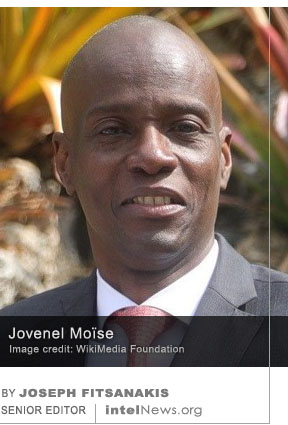 The United States Drug Enforcement Administration (DEA) has said that at least one of the assailants who killed Haiti’s president, Jovenel Moïse, last week, had been its confidential source in the past. It also appears that one of the middlemen of the operation is a Haitian-born pastor based in the US state of Florida. It was he, according to Haitian police, who hired the assassins through a Venezuelan security company headquartered in Florida. However, this is disputed by the alleged middleman himself, who claims he was “duped”.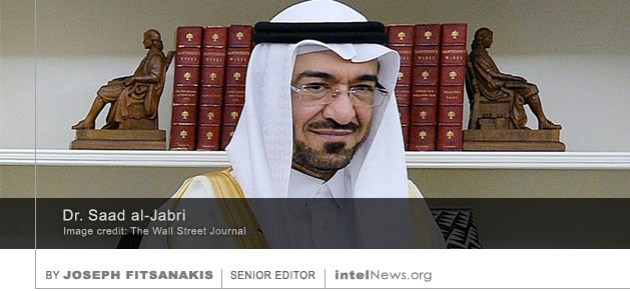
 AUSTRIAN AUTHORITIES HAVE REPORTEDLY expelled from the country an Italian citizen of Turkish origin, who was allegedly hired by the Turkish government as an assassin. The man, Feyyaz Öztürk, 53, reportedly turned himself in to Austrian intelligence last year.
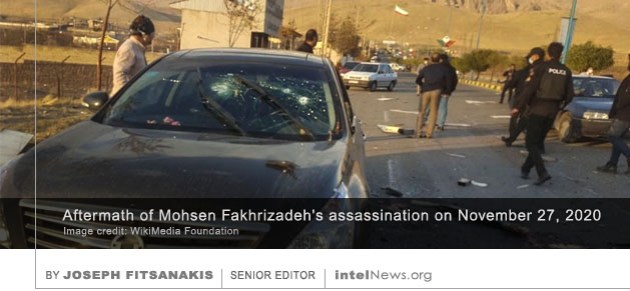
  REPORTS IN BRITAIN AND Israel claim that Iranian authorities have visually identified the assassins who were allegedly involved in the killing of Mohsen Fakhrizadeh, a nuclear scientist believed to have led Iran’s nuclear program. Fakhrizadeh was a brigadier general in the Islamic Revolutionary Guard Corps (IRGC), Iran’s elite paramilitary force. He was accused by the United States and Israel of leading the Islamic Republic’s nuclear weapons program, whose existence Tehran strongly denies.
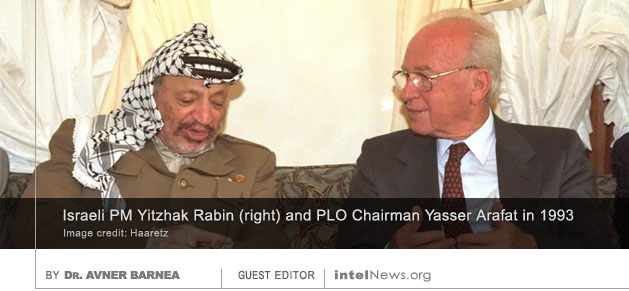
 An Iranian plot to kill the United States’ ambassador to South Africa was reportedly uncovered by American intelligence agencies, which believe Tehran is still seeking to avenge the assassination of General Qassem Soleimani in January of this year. The head of the Islamic Revolutionary Guard Corps, Iran’s elite paramilitary force, was killed by a US drone strike during a visit to the Iraqi capital Baghdad, sparking major tension between Washington and Tehran.
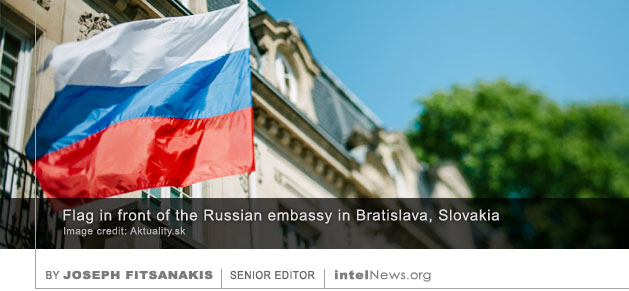 Three Russian diplomats have been ordered to leave Slovakia, reportedly in connection with the killing in Germany of a Chechen former separatist, which many believed was ordered by Moscow. On Monday, the Foreign Ministry of Slovakia confirmed media reports that three Russian diplomats had been declared ‘unwanted persons’ and ordered to leave the country.
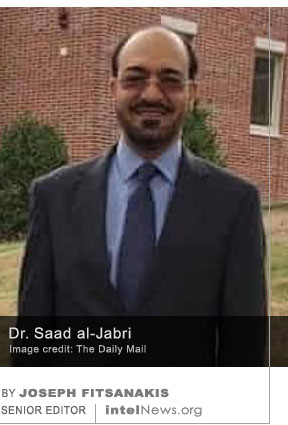 Canadian border guards thwarted a sophisticated plot to kill a Saudi former senior intelligence official, who has been targeted by the oil kingdom’s crown prince because he served a rival member of the royal family, according to a lawsuit filed in an American court.
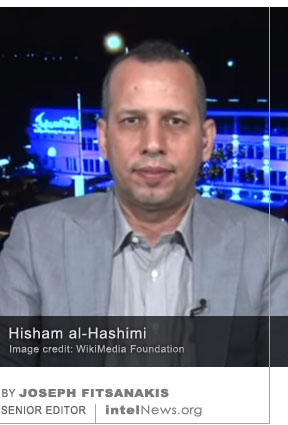 A leading Iraqi expert on paramilitary groups has been shot dead outside his home in Baghdad, raising concerns that the Iraqi government is unable to curtail the activities of militias in the country. Hisham al-Hashimi, 47, was a Baghdad University-educated historian, who rose to prominence in post-Ba’athist Iraq as an expert on paramilitary groups in the country. He was seen as a leading local authority on the Islamic State and advised the United States-led coalition on the group’s inner workings.








Turkey announces arrest of Russian and Israeli alleged spies following crackdown
October 22, 2021 by Joseph Fitsanakis Leave a comment
THE GOVERNMENT OF TURKEY has announced the arrest of 21 individuals, among them foreign citizens, whom it accuses of “political and military espionage” on behalf of Israel, and of planning assassinations ordered by Russia. Turkish authorities released separately two statements on Thursday, announcing the arrests of alleged spies for Israel and Russia respectively. The two sets of arrests do not appear to be connected, despite the fact that they were announced on the same day.
Six alleged assassins operating under Russian command were arrested on October 8 in Antalya, a tourist resort located on Turkey’s southern coast. Turkey’s National Intelligence Organization (MİT) said the group includes four Russians, a Ukrainian and an Uzbek. They allegedly planned to kill a number of Chechen separatists who live in Turkey. In preparation of the alleged assassinations, group members “were in the process of obtaining weapons”, according to Turkish government prosecutors.
A court in Istanbul has reportedly ruled that the members of the alleged assassination team should remain behind bars, pending a trial for espionage. Meanwhile the a Russian government spokesman said on Thursday that the Kremlin was “not aware” of any Russian citizens having been arrested on espionage charges in Turkey, adding that the Russian embassy in Ankara had not been informed of any such arrests.
Meanwhile, in a separate announcement issued on Thursday, the MİT disclosed the arrests of 15 members of an alleged spy ring for Israel’s Mossad intelligence agency. Turkish media reports said the 15 individuals had been arrested in a series of raids that took place across four Turkish provinces on October 7, following a year-long counterintelligence operation. Turkish authorities claim that the spy ring monitored the activities of Palestinians living in Turkey and provided the information to the Mossad, in return “for tens of thousands of dollars and euros”. The Israeli government has not commented on these reports.
► Author: Joseph Fitsanakis | Date: 22 October 2021 | Permalink
Filed under Expert news and commentary on intelligence, espionage, spies and spying Tagged with Antalya (Turkey), assassinations, counterintelligence, espionage, Israel, Mossad, MİT (Turkey), News, Russia, Turkey