Bomb hidden inside decorative figurine kills pro-Kremlin military blogger in Russia
April 3, 2023 3 Comments
 A POWERFUL EXPLOSION, LIKELY caused by a bomb hidden inside a decorative figurine, has killed one of the most prominent pro-Kremlin bloggers as he was giving a public talk in downtown St. Petersburgh, Russia. The bomb killed Maxim Fomin, 40, who was known in online blogger circles under the pseudonym Vladlen Tatarsky. Born in eastern Ukraine, Fomin supported the pro-Russian secessionist movement in the Donbas. By 2021, when he obtained Russian citizenship, he had already made a name for himself as a pro-Kremlin military blogger on the Telegram social media platform.
In 2022, when the Russian military invaded Ukraine again, Fomin used his Telegram channel to spread pro-Kremlin information among his nearly 600,000 followers. He quickly rose to prominence as a commentator on military matters on Russian state-owned television. He also authored several books espousing Russian nationalist views. Fomin’s online activism came to embody a new generation of Russian bloggers who use their reach among Russian Internet users to aggressively promote pro-Kremlin political views.
On Sunday afternoon, Fomin was the main speaker at a pro-Kremlin event held in a St. Petersburg meeting hall, which is known as the Street Food Bar #1 Café. The downtown establishment used to belong to Yevgeny Prigozhin, one of Russian President Vladimir Putin’s closest collaborators. Prigozhin is the alleged owner of the Wagner Group private military company. In 2019, Prigozhin is believed to have donated the property to a group of pro-Kremlin activists, who have since been using it to host nationalist meetings in downtown St. Petersburg.
On Sunday afternoon, Fomin was the main speaker at an event held in the Street Food Bar #1 Café. The event had been organized by Cyber Front Z, an umbrella group of Russian nationalist bloggers, who refer to themselves on Telegram as a pro-Kremlin cyber army. At least 100 people were present at the event, according to reports. Shortly before the event began, an unknown woman tried to enter the facility carrying a large box. She told the event organizers at the entrance that the box contained a figurine, which she intended to present to Fomin as a gift. Read more of this post
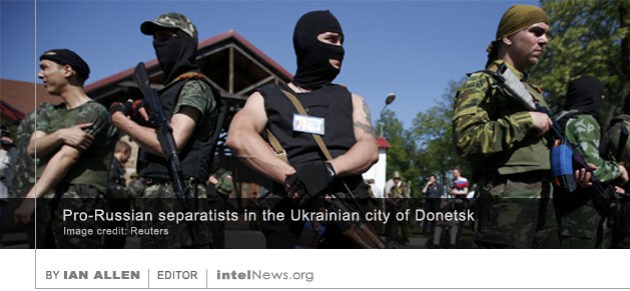 A LEADING RUSSIAN NATIONALIST, who styled himself as the originator of ‘Z’, the symbol of the Russian campaign in Ukraine, has
 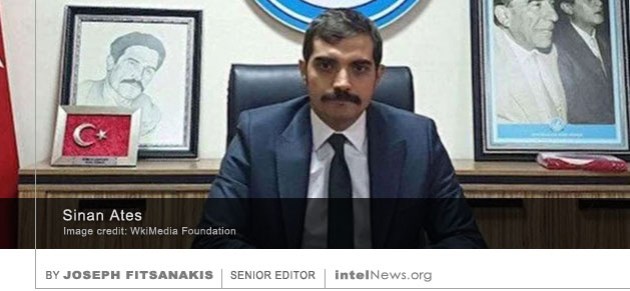 ON FRIDAY, DECEMBER 30, 2022, an assailant on a motorcycle
 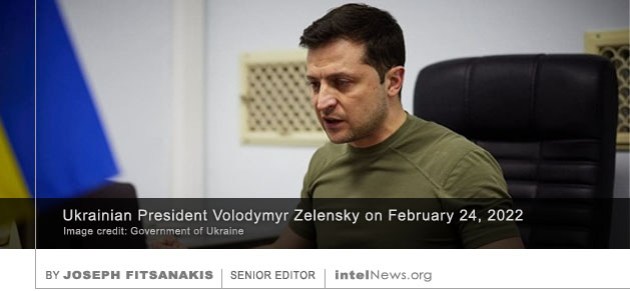 INFORMATION PROVIDED BY THE United States Central Intelligence Agency helped Kyiv foil two Russian plots against the life of Ukraine’s President, Volodymyr Zelenskyy, in the crucial early stages of the Russo-Ukrainian war, according to a new book. The claim is made in
 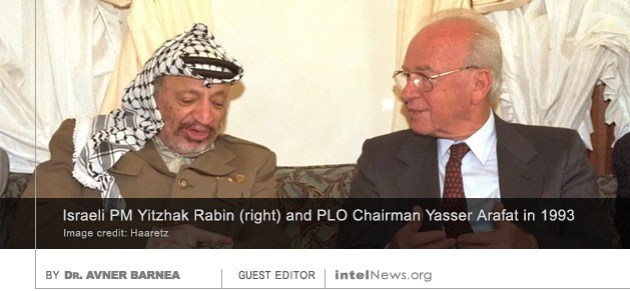 LAST WEEK, THE CHAIRMAN of the Israeli Religious Zionist Party, Bezalel Smotrich, who will soon be appointed as a cabinet minister, alleged that the Israel Security Agency (ISA) encouraged the killer of the late Israeli Prime Minister, Yitzhak Rabin. Smotrich’s allegation shocked many Israelis, because of the unfortunate timing —it was uttered close to the annual Remembrance Day for Prime Minister Rabin, who was assassinated by radical rightwing activist Yigal Amir 27 years ago. But also because of the unacceptable content, which echoes conspiracy theories that have accompanied Rabin’s assassination for many years. To counter these conspiracy theories, it is fitting to discuss the failure to defend Rabin that did occur under the responsibility of the ISA.
 ISA to infiltrate extreme rightwing groups. The Committee did not ask: could the ISA’s intelligence have prevented the murder?
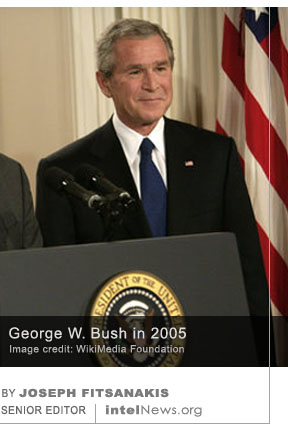 A TIP BY BELGIAN intelligence helped the Federal Bureau of Investigation foil a plot by Iraqi nationals to kill former United States President George W. Bush. American news outlets
  A GROWING NUMBER OF security observers point to Israel as the most likely culprit behind the assassination of a leading member of the Islamic Revolutionary Guard Corps (IRGC), Iran’s powerful paramilitary force. Brigadier General Hassan Sayyad Khodaei, who was killed in broad daylight in Tehran on May 22, served as deputy director of the Quds Force, a major branch of the IRGC. The mission of the Quds Force is to carry out unconventional warfare, especially in support of IRGC operations against adversaries abroad.
 ISRAEL’S MOSSAD INTELLIGENCE AGENCY allegedly foiled a plot by Iranian intelligence to send assassins abroad and kill an Israeli diplomat, an American military official and a French reporter, according to reports. The information about the alleged plot first surfaced late last week in the Iran International News Channel, a British-based Iranian news agency, which is opposed to the government in Tehran. The news agency claimed that the plot had been organized by the Quds Force, the paramilitary wing of the Islamic Revolutionary Guards Corps.
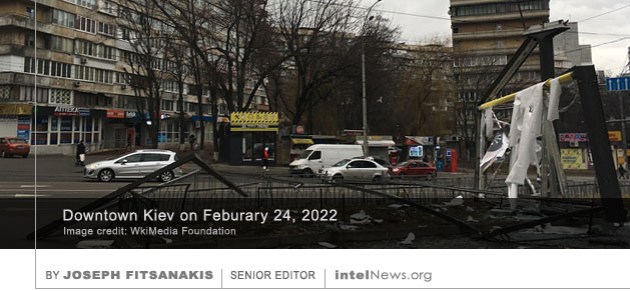 A PLOT BY A notorious Chechen paramilitary group to assassinate the President of Ukraine, Volodymyr Zelensky, was foiled by Ukrainian forces, according to a Ukrainian government official. The claim was made on Tuesday by Ukraine’s Center for Strategic Communications, a government-linked enterprise that works closely with the country’s Ministry of Defense and Ministry of Foreign Affairs.
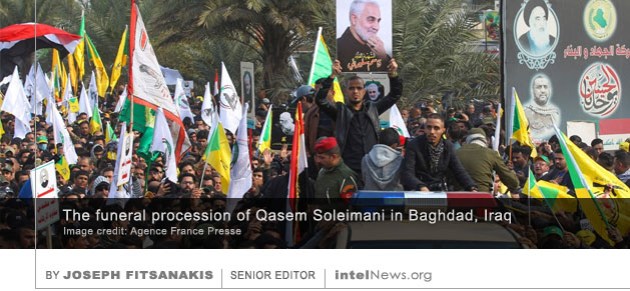 THE RECENTLY RETIRED DIRECTOR of Israel’s military intelligence agency has claimed in an interview that Israel had a role in the assassination of Qassem Soleimani, who led Iran’s Islamic Revolutionary Guard Corps (IRGC). Soleimani was arguably Iran’s most revered military official. He was
  TURKISH AUTHORITIES HAVE LAUNCHED an investigation after a makeshift explosive device was found under the car of a police officer guarding an open-air speech by President Recep Tayyip Erdoğan. The rally took place on Saturday in Siirt, a Kurdish-majority town located about 90 miles from the Turkish-Syrian border. The town has a symbolic significance for Erdoğan, as it is the hometown of his wife, Emine Erdoğan, and was his constituency for four years. In 2003 he won a by-election there and entered the Turkish Grand National Assembly as a member.
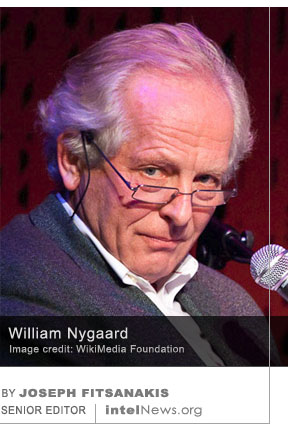 THE GOVERNMENT OF NORWAY has pressed charges against two men, among them a former diplomat in the Iranian embassy in Oslo, for the attempted murder of a high-profile Norwegian publisher in 1993. The case centers on an attempt against the life of William Nygaard, a Norwegian publisher and former director of the Norwegian Broadcasting Corporation.








Analysis: Did Ukraine try to assassinate Vladimir Putin?
May 4, 2023 by Joseph Fitsanakis 2 Comments
There were no injuries or material damages, according to the Russian Federal Protective Service, which is responsible for the protection of high-ranking state officials and government facilities, including the Kremlin complex. Within hours, Russia openly placed blame on the government of Ukraine for the alleged attack and claimed that it had been intended to kill President Putin. A subsequent statement praised the Russian armed forces for thwarting the alleged attack on Putin’s life with “timely actions”. Meanwhile, government officials in the United States said that the White House “had no foreknowledge of an impending drone attack on the Kremlin” and urged that Moscow’s allegations be treated with skepticism.
UKRAINE IS CAPABLE OF STRIKING INSIDE RUSSIA
The Ukrainian military and paramilitary forces are both interested in, and capable of, carrying out strikes inside Russia. In 2023 alone, there have been dozens of apparent acts of sabotage in European Russia, which have damaged bridges, disrupted railway transportation systems, and rendered weapons depots unusable. This week alone, a fuel depot in Russia’s Krasnodar Krai was extensively damaged by a fire, which local authorities claimed was caused by a kamikaze UAV attack. About 1,500 miles north in Bryansk Oblast, near Russia’s border with Belarus, two trains were derailed by blasts that, according to news reports “appeared to be separate but identical incidents”. Ukraine denies involvement in these incidents, but military observers remain suspicious.
Meanwhile, investigative work by news outlets such as The New York Times suggests that Ukrainian paramilitary units may have been behind acts of sabotage in Western Europe, and even assassinations of pro-Putin figures inside Russia. Some of these attacks —if that is indeed what they were— may have been carried out by teams of cover human operatives. Others may have been carried out by mechanical means, including UAVs. Certainly, the Ukrainian military has never been shy about its effort to develop a strong long-range strike capability using UAVs. There is also some evidence that it may have carried out at least one UAV-enabled attack near Moscow in recent months. It therefore stands to reason that Ukraine is both willing and able to launch strikes inside Russia. Read more of this post
Filed under Expert news and commentary on intelligence, espionage, spies and spying Tagged with 2022 Russian invasion of Ukraine, assassinations, Joseph Fitsanakis, News, Newstex, Russia, Ukraine, unmanned aerial vehicles