Iraqi Kurds claim they have captured senior Turkish intelligence officers
September 8, 2017 2 Comments
 The Turkish government has refused to comment on reports from Iraq, which suggest that Kurdish forces have captured at least two senior Turkish intelligence officers. News of the arrests first emerged in mid-August, when pro-Kurdish media in Turkey’s Anatolia region claimed that an armed Kurdish group in Iraq had captured two members of the National Intelligence Organization (MİT), Turkey’s principal intelligence agency.
According to the reports, the Turkish intelligence officers had used forged identity papers to travel from eastern Turkey to the northern Iraqi city of Erbil. From there, they went to Sulaimaniyah, a metropolitan center in Iraq’s Kurdish north. Allegedly, the Turkish officers traveled to Iraq in order to assassinate Cemîl Bayik, a co-founder and senior leader of the Kurdistan Worker’s Party (PKK). Founded in 1978, the PKK is a leftwing secessionist paramilitary organization that seeks an independent homeland for Turkey’s Kurdish minority. Iraq’s Sulaimaniyah region is controlled by another Kurdish armed group, the Patriotic Union of Kurdistan (PUK), which has close relations with Iran. But a rival Kurdish group, the Kurdistan Democrat Party (KDP), which is supported by Turkey and opposes the PKK’s secessionist aims, also has a strong presence in the area. It is not known whether KDP forces were aware of —or even assisted— the Turkish intelligence officers in Sulaimaniyah.
Kurdish sources claim that the two Turkish intelligence officers were arrested by PUK forces. Notably, media reports suggest that one of arrestees serves as the MİT’s deputy undersecretary for foreign operations, while the other heads the MİT’s PKK desk. The PUK is now threatening to publish photographs of the two men, which would blow their cover. But there has been no comment on this story from Ankara, where Turkish government officials refuse to confirm or deny that the arrests happened or that the two men are indeed MİT employees. Some observers, however, note that the Turkish government shut down the PUK’s office in the Turkish capital on August 23, and expelled the organization’s representatives. The group has maintained an office in Ankara since 1991, so the Turkish government’s surprising move may signify that the media reports about the arrests of the two MİT officers are indeed accurate.
► Author: Joseph Fitsanakis | Date: 08 September 2017 | Permalink
 A senior military intelligence officer, who commanded a Ukrainian special-forces unit that fought against the Russians in eastern Ukraine, was killed on Monday when his car exploded in broad daylight in Kiev. Initially, the Ukrainian government sources simply said that the dead driver of the car was a member of the Ministry of Defense’s Main Directorate of Intelligence. Later, the casualty was
  The exiled half-brother of North Korea’s leader, who was assassinated in Malaysia in February, is thought to have met with a man believed to be an American intelligence officer shortly before he was killed, according to reports. Kim Jong-nam the grandson of North Korea’s founder Kim Il-Sung,
 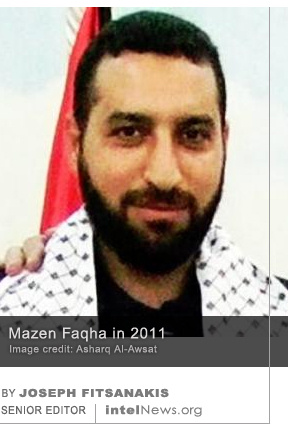 The sophistication behind the killing of a senior Hamas official, who was assassinated in his home in the Gaza Strip on Friday evening, points almost certainly to Israel, according to observers. Mazen Faqha, 38, helped plan several lethal operations by the Palestinian militant group, including a 2002 suicide bombing that killed nine and wounded over 50. Following an extensive manhunt, Israeli authorities arrested Faqha in the West Bank and in 2003 convicted him to nine life sentences. But in 2011, Faqha was among 1,027 Palestinian and Arab-Israeli prisoners that Israel released in exchange for Gilad Shalit, a soldier in the Israel Defense Forces, who was held prisoner by Hamas. Since that time, Faqha had lived in the Gaza Strip, the Hamas-controlled Palestinian enclave that has been under strict Israeli blockade since 2006.
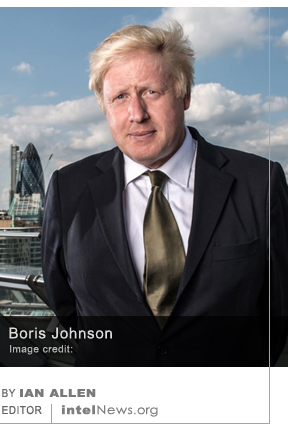 Boris Johnson, the British foreign secretary has said in an interview that Russian spies may have orchestrated last year’s failed attempt to kill the then-prime minister of Montenegro, Milo Dukanović. Mr. Johnson, a senior figure in the Conservative Party of the United Kingdom, was a major contender for the prime minister’s position in 2016, after the administration of David Cameron collapsed under the weight of the Brexit vote result. Speaking on Sunday morning to reporter Robert Peston, of Britain’s ITV television network, Mr. Johnson said that the West should “engage” with Russia, but warned that it should also “beware” of Moscow’s “dirty tricks” in Europe and the United States.
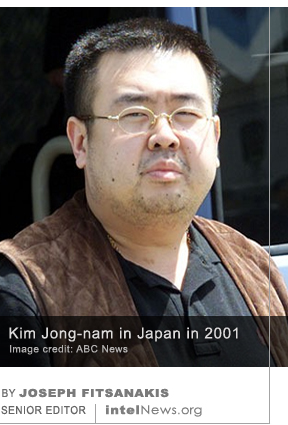 Two women have been arrested in the past 48 hours in connection with the assassination of Kim Jong-nam, half-brother of North Korea’s supreme leader, who died in Malaysia on Monday. Kim, the grandson of North Korea’s founder Kim Il-Sung, died after two women approached him at the Kuala Lumpur International Airport and splashed his face with liquid poison. Some reports suggest that he was injected with a poisoned needle.
  The half-brother of North Korean Supreme Leader Kim Jong-un has been killed in an audacious attack in Malaysia, reportedly by two female assassins who used a poisonous substance to murder him. Kim Jong-nam, was the eldest son of Kim Jong-il, and grandson of Kim Il-Sung, who founded the Democratic People’s Republic of Korea in 1948. However, he left the country in 2007, reportedly after it became clear that his younger half-brother, Kim Jong-un, was the regime’s preferred successor to his father, Kim Jong-il.
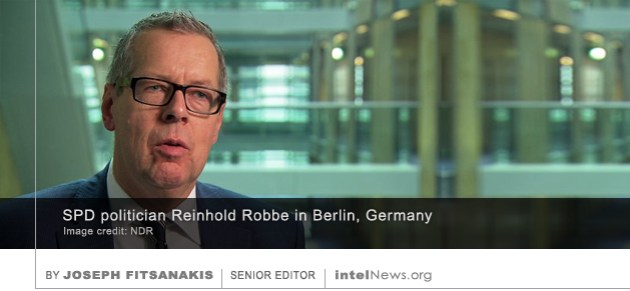 Authorities in Germany have pressed espionage charges against a Pakistani man who allegedly spied for Iran and even compiled lists of potential targets for assassination. The man, who has been identified in media reports only as “Syed Mustafa H.”, is a 31-year-old worker at the German Aerospace Center in the northern German city of Bremen. He is also reportedly a graduate of the Materials Science and Production Engineering department of the Universität Bremen. According to court documents, he is believed to have been spying for Iranian intelligence since the summer of 2015. It appears that the Federal Office for the Protection of the Constitution (BfV), Germany’s domestic intelligence agency, had been aware of the man’s espionage activities for at least a year prior to his arrest.
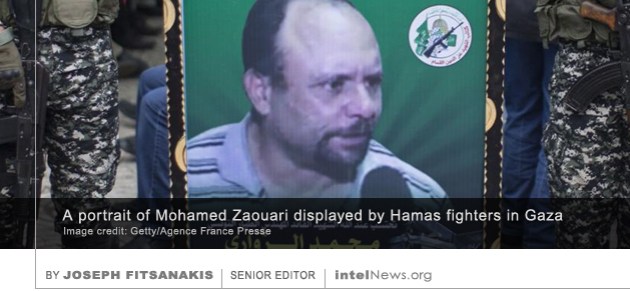 Despite persistent silence from Tel Aviv, commentators there seem increasingly convinced that Israeli spies were behind last week’s killing of an aviation engineer who worked for the Palestinian militant group Hamas. The man, Mohamed Zaouari, 49, was a Tunisian national who had spent over a decade creating an innovative aerial drone program for the Palestinian group that controls the Gaza Strip. He was
  A senior aviation engineer who headed the unmanned aerial vehicle program of the Palestinian militant group Hamas, has been shot dead outside his home in Tunisia by a group of assailants using gun silencers. Mohamed Zaouari, 49, was a Tunisian national who had spent over a decade creating an innovative aerial drone program for Hamas, the Palestinian group that today controls the Gaza Strip. He had lived outside of Tunisia for much of his life, most recently in Syria, where he is believed to have worked as an engineer in a private firm, while also consulting with the Palestinian group. He had returned to Tunisia in 2011, following the upheaval in the country that sparked the so-called Arab Spring.
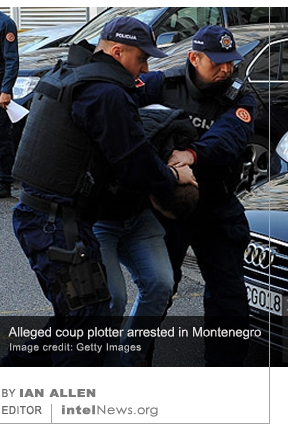 Authorities in the former Yugoslav Republic of Montenegro say that “nationalists from Russia” and Serbia were behind a failed plot to kill the country’s prime minister and spark a pro-Russian coup in the country. As intelNews
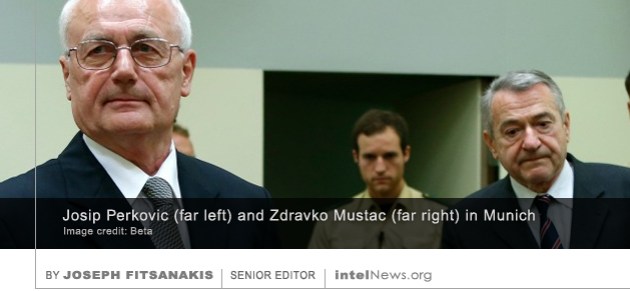
 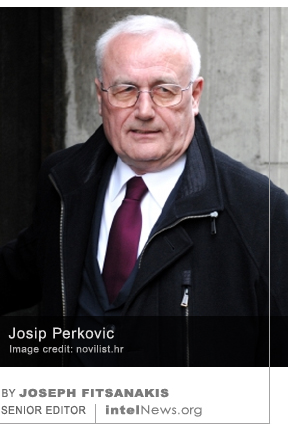 A German court has given life sentences to two senior intelligence officers in Cold-War-era Yugoslavia, who masterminded the murder of a Croat dissident in 1983. Josip Perković and Zdravko Mustać, both former senior officials in the Yugoslav State Security Service, known as UDBA, were
  A former officer in the Cold-War-era Yugoslav intelligence service has begun testifying at a trial concerning the 1983 murder in Germany of a Yugoslav dissident by assassins sent by authorities in Belgrade. Stjepan Đureković, who was of Croatian nationality, defected from Yugoslavia to Germany in 1982, while he was director of Yugoslavia’s state-owned INA oil company. Upon his arrival in Germany, he was granted political asylum and began associating with Croatian nationalist émigré groups that were active in the country. He was killed on July 28, 1983, in Wolfratshausen, Bavaria. His killing was part of an operation codenamed DUNAV, which was conducted by the Yugoslav State Security Service, known by its Serbo-Croatian acronym, UDBA.
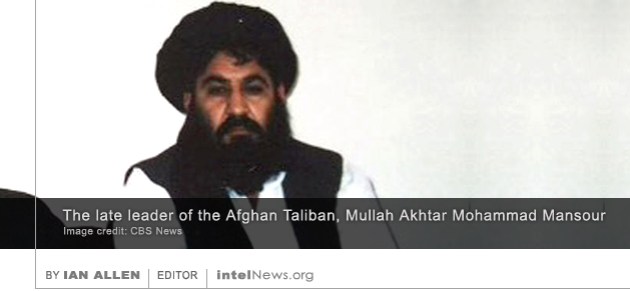 Frequent trips to Iran caused the demise of the late leader of the Afghan Taliban, Mullah Akhtar Mohammad Mansour, who was








Researcher seeks access to classified US document about Gandhi killing
October 2, 2017 by Joseph Fitsanakis 3 Comments
But there are many who claim that Gandhi’s assassination resulted from a far larger conspiracy, involving many more people and groups, but was covered up. One such proponent is Mumbai-based researcher Dr Pankaj Phadnis, who has been pushing for a new official investigation into Gandhi’s assassination since 1996. Last week, Dr Phadnis petitioned India’s Supreme Court, arguing that an American intelligence officer was present during Gandhi’s assassination and filed a report that may point to a broader conspiracy to kill the Indian civil rights leader. Dr Phadnis also argues that American intelligence agencies may have been involved in a secret effort to protect Gandhi from physical danger.
The Mumbai-based researcher told the Indian Supreme Court that he was able to obtain access to American diplomatic documents during one of his recent visits to the US National Archives and Research Administration in Washington, DC. Among them were telegrams sent to the Department of State by the US embassy in New Delhi before and after Gandhi’s assassination. The two most telling telegrams, said Dr. Phadnis, were written shortly after the assassination by a longtime American diplomat, Herbert Tom Reiner. According to many eyewitness accounts, including Reiner’s own, Reiner was present during Gandhi’s assassination, and was standing no more than five feet from the Indian leader when he was shot by Godse. The American diplomat helped apprehend the assassin before he and others surrendered him to the authorities.
Reiner submitted two telegrams to Washington as soon as he returned to the US embassy following Gandhi’s assassination, which Dr Phadnis was able to access. But a third one, sent at 8:00 p.m. that same evening, remains classified and out of the reach of researchers. Dr Phadris said he filed a Freedom of Information Act request with the US government and is expecting an answer. Now he is trying to get the Indian courts to agree that the existence of new evidence, including Reiner’s telegrams, justify the reopening of the probe into Gandhi’s assassination.
Reiner left India in the summer of 1949 and served briefly as assistant attaché in Budapest, Hungary, before being transferred again, this time to Seoul, South Korea. He then held posts in Sierra Leone, South Africa and Canberra. He died in 1999 in the US state of Massachusetts.
► Author: Joseph Fitsanakis | Date: 02 October 2017 | Permalink
Filed under Expert news and commentary on intelligence, espionage, spies and spying Tagged with assassinations, declassification, Herbert Tom Reiner, history, India, Mahatma Gandhi, News, Pankaj Phadnis, US Department of State