Israel intel official says Bahrain and Oman could follow UAE in normalizing relations
August 17, 2020 Leave a comment
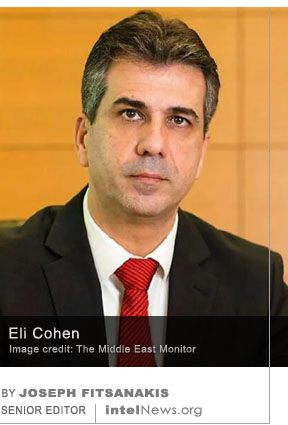 Israel’s minister of intelligence has said Bahrain and Oman could follow the United Arab Emirates in establishing diplomatic relations with Israel, following last week’s historic announcement. Israel said on Thursday that the UAE had agreed to establish formal diplomatic relations with the Jewish state, in return for Israel’s pledge to cancel its planned annexation of parts of the West Bank. The agreement, which was sponsored by Washington, makes the UAE only the third Arab country to establish formal diplomatic relations with Israel, after Egypt in 1979 and Jordan in 1994.
The announcement was greeted with enthusiasm and skepticism, with some observers claiming it could reshape Middle East politics, and others warning it could bring Palestinian factions closer to Iran. But on Sunday, Eli Cohen, Israel’s Minister of Intelligence and member of the country’s Security Cabinet, said the agreement between Israel and the UAE was likely to be the first of several similar deals. Speaking on Israel Army Radio, Cohen said that “additional agreements” would follow “in the wake of this agreement”, and that “Bahrain and Oman are definitely on the agenda”. The two Gulf countries are close allies of the United States and Saudi Arabia, which is one of Iran’s strongest regional rivals. In official statements issued on Thursday, Bahrain and Oman praised the normalization of relations between the UAE and Iran, but did not speak to whether they were contemplating following in the UAE’s footsteps. Meanwhile, the government of Kuwait said in an official statement last week that its position toward Israel remained unchanged, signaling that a change of status in its treatment of the Jewish state was not on the horizon.
Cohen also told Israel Army Radio that, in his assessment, “there is a chance that already in the coming year there will be [agreements between Israel and] Muslim countries in Africa […] chief among them Sudan”. In recent years, Israeli Prime Minister Benjamin Netanyahu has met with Omani and Sudanese leaders. The Israeli prime minister said last week he expected “more countries will be joining us in the peace circle”, adding that the Israel-UAE agreement signaled “a historic change which advances peace with the Arab world and will eventually advance a real, sober and secure peace with the Palestinians”. There are many critics of this view, especially among Netanyahu’s own voter base, which was highly supportive of his prior pledges that Israel would annex parts of the West Bank.
► Author: Joseph Fitsanakis | Date: 17 August 2020 | Permalink
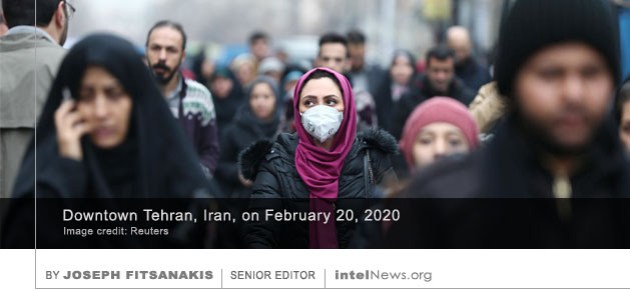 A senior Bahraini cabinet minister on Thursday accused the Iranian government of ‘biological aggression’ for spreading COVID-19 to several other countries in the Gulf, a claim that Iran promptly rejected. The allegation refers to Iran’s customary practice of not stamping the passport of visitors from some Sunni-majority nations.












 intelNews.org
Intelligence insiders see Israeli alliance with Gulf States as ‘biggest change in decades’
September 15, 2020 by Joseph Fitsanakis 2 Comments
The former CIA official, Marc Polymeropoulos, who worked closely with both Israel and the Palestinians in his 26-year career, told SpyTalk’s Jeff Stein and Jonathan Broder that secret intelligence links between Israel and some Arab countries are nothing new. However, “this [new] overt alliance is the biggest change in the region in decades”, said Polymeropoulos. He added that these intelligence links will only deepen now that official diplomatic relations have been established between Israel, the United Arab Emirates and Bahrain.
In their analysis, Stein and Broder explain that these historic developments in the Middle East were initially forged “in secret political interactions” facilitated in the intelligence domain. These were led by the Mossad, which has been tasked by the Israeli leadership with creating a regional alliance against Iran. These efforts have intensified in recent years, especially after the administration of United States Donald Trump annulled the Joint Comprehensive Plan of Action with Iran, which effectively signaled the resumption of Tehran’s nuclear program.
The end of the Joint Comprehensive Plan of Action, and the deepening polarization between Sunni and Shia populations in the Middle East, were the context in which the Israeli outreach to Arab states took shape. This context essentially convinced Arab leaders that their populations are sufficiently concerned about Iran to “stomach an alliance with Israel” Polymeropoulos told SpyTalk.
What’s next in this process? Stein and Broder suggest that Mossad officials will continue to reach out to their Arab counterparts, in secret, in the coming months, as part of Israel’s effort to build an alliance against Iran. These efforts will be crucially amplified by the White House, which recently sent US Secretary of State Mike Pompeo to Sudan in order to pressure the country’s new government to recognize Israel. In the meantime, say Stein and Broder, Mossad will become a lot more active in the Emirates and Bahrain.
► Author: Joseph Fitsanakis | Date: 15 September 2020 | Permalink
Filed under Expert news and commentary on intelligence, espionage, spies and spying Tagged with Analysis, Bahrain, Iran, Israel, Jeff Stein, Marc Polymeropoulos, Mossad, United Arab Emirates