Israeli Supreme Court dismisses spy chief’s firing as illegal

Yitzhak AmitEARLIER THIS WEEK THE High Court of Israel delivered its ruling regarding the dismissal of the head of the Israel Security Agency (ISA, more widely known as the Shin Bet), Ronen Bar, who had already announced his intention to leave his position. The court ruled that the Bar’s dismissal by Prime Minister Benjamin Netanyahu violated the law and that Netanyahu had a conflict of interest due to the ISA’s ongoing investigation into the “Qatar-Gate” affair.

Supreme Court President Yitzhak Amit and Justice Dafna Barak-Erez were in the majority, with Supreme Court Vice President Noam Solberg in the minority. “The government’s decision [to fire Bar] is unprecedented in the history of the State of Israel,” they ruled. The legal advisor to the government, Israel’s Attorney General Gali Baharav-Miara, requested that the court issue a verdict of principle regarding the relationship between a prime minister and the ISA. Her request followed an earlier request by government for the court to dismiss the petitions against the dismissal, claiming that they were no longer relevant.

Justice Amit ruled that “Israel’s security agencies, including the ISA, are responsible for maintaining the security of Israel, the security of its citizens, and the institutions of the state and the democratic regime. Their activities, roles, and powers make the security agencies a central component of the country’s governmental and legal foundations. Having been entrusted with the holiest of holies of the state, all heads of the security agencies —including the head of the ISA— owe a duty of loyalty to the public.”

According to Amit, “[t]he loyalty of the heads of the security apparatus is not a party-political loyalty to a particular government or personal loyalty to one or another prime minister. It is loyalty to the entire Israeli public, which has entrusted them with what is most precious: its life and its security. This duty of loyalty does not contradict the duty of the Shin Bet head to fulfill and promote government policy, but rather expresses the core principle of the fundamental commitment of all state authorities to the rule of law.”

Justice Amit added that, although the petitions were dismissed, as the dissenting judge, Justice Solberg, emphasized, there is still a need to create a deterrent against the government so that such cases do not recur. “The matter may repeat itself, and it is necessary to deter similar and inappropriate behavior in the future, in the sense of preempting a disaster,” he stated. “A question of legality or interpretation of a general norm arises.” Read more of this post

Before resigning, Israeli security official accuses Netanyahu of serious misconduct

Israel Supreme CourtVETERAN ISRAELI INTELLIGENCE OFFICER Ronen Bar, who has led the Israeli Security Agency (ISA, more widely known as the Shin Bet) since 2021, has submitted an affidavit to Israel’s Supreme Court, accusing Prime Minister Benjamin Netanyahu of serious misconduct. Netanyahu fired Bar in March, but the Supreme Court later suspended Bar’s firing.
Now Bar has submitted an open affidavit alongside a confidential one, alleging serious misconduct by Netanyahu, accusing him of attempting to use the ISA’s investigative powers against protestors and activists. He links this accusation to a number of conspiracies that are circulating in Israel, blaming the ISA for the October 7 intelligence failure. The veteran security official concludes his open affidavit by stating that he “will soon announce the date on which I will end my duties”. Last week, Bar said he would resign in June.

The ISA director also repeats earlier claims regarding the reasons behind Netanyahu’s statement that he “distrusts” him. Among other things, Bar claims that Netanyahu “expressed himself to me more than once in a way that sought to substantiate his expectation that the ISA should act against citizens involved in legal protest activities and demonstrations against the government”. Thus, Bar was asked to provide details about the identities of Israeli citizens, mostly protesting activists, because, according to Netanyahu, they were “following security targets”.

Furthermore, Bar claims he was asked to use the investigatory powers of the ISA to “monitor protest financiers”. He adds he was told during a conversation on the topic that, in the event of a constitutional crisis, he, as the head of the ISA, was required to take his orders from prime minister, and not from the High Court of Justice —another name for the Israeli Supreme Court. Bar notes that the full details of the matter will be provided to the Supreme Court in his confidential affidavit.

In his open affidavit, Bar clarifies that he established several criteria to address the question of whether the ISA should exercise its investigative powers without violating the constitutional right to protest. The criteria were largely based on the legal definition of subversion, defined as illegal activity involving clandestine aspects and has the potential for violence. According to Bar, actions that fail to meet this criterion are not a matter the ISA; rather, if any monitoring is warranted, the police should intervene in the interests of public order. “In borderline cases we consulted with the government’s legal counsel to ensure that the ISA’s broad powers would only be exercised within its designated framework and functions”, states Bar. He adds that “[t]he prime minister’s requests to act contrary to these criteria were refused. In quite a few cases, [Netanyahu] asked to discuss issues related to these issues at the end of working meetings, and after asking the military secretary and the typist, who operates the recording device, to leave the room with the clear goal that the exchange of words would not be recorded”. Read more of this post

Israeli prime minister publicly thanks Mossad chief for help with COVID-19

Yossi Cohen MossadThe embattled Prime Minister of Israel, Benjamin Netanyahu, met publicly with the Director of the Mossad, Yossi Cohen, and thanked him for leading the country’s procurement efforts during the COVID-19 crisis. The meeting was a rare public acknowledgement of the central role that the secretive spy agency played during the pandemic.

Early on during the COVID-19 outbreak, it was reported that the intelligence agencies of Israel were playing an increasingly important role in the Jewish state’s effort to combat the effects of the coronavirus in its territory. In an uncharacteristic move, the government went out of its way to advertise the participation of its secretive spy agencies in the national effort to limit the spread of the virus.

In a television interview, an unnamed official for Israel’s external intelligence agency, the Mossad, said the agency had managed to secure 100,000 coronavirus testing kits, 25,000 N-95 masks and 100 ventilators. The material had been acquired “from unnamed countries” by Mossad officers, he said. The officers had to “race to [foreign] factories” and secure these critical supplies after they had been “ordered by other countries”, he added. The agents then had to coordinate secret airlifts so that the medical material could be transported to Israel in time.

But many of the coronavirus testing kits procured by the Mossad turned out to be incomplete. According to local media reports, when the kits arrived in Israel from “an unidentified Gulf state”, scientists realized that they were useless. That was because they arrived without the chemical reagents that were required to carry out complete tests on subjects. These reagents were eventually procured from South Korea and arrived in Israel nearly a month later, when demand for them was far less urgent. The Mossad was heavily criticized for this operation.

But last weekend, Prime Minister Netanyahu publicly thanked the Mossad director for leading the nation’s Joint Procurement Command Center during the COVID-19 pandemic. He told Director Cohen that he had carried out his tasks “exceptionally well [and] the results speak for themselves”. The meeting took place to mark the return of the procurement centers’ command to the Ministry of Health. But the Mossad may be asked to step in again, said Netanyahu: “we are currently passing the torch”, said the prime minister. However, “we do not know what the next day, or the next month, will bring. Since you have acquired the experience, remember it, we may need it again”, he told Cohen.

Author: Joseph Fitsanakis | Date: 26 May 2020 | Permalink

Television program about the Mossad prompts controversy, strong denials in Israel

Tamir PardoIsraeli officials have denied reports that the head of the country’s internal security service was asked by the prime minister to spy on the director of the Mossad intelligence agency and the head of the military. The denials were prompted by allegations that will be made in full on Thursday, when the latest installment of the investigative news program Uvda (Fact) will be aired on Israel’s Channel 12 television channel. According to the program, the Israeli Prime Minister Benjamin Netanyahu requested that the personal phones of senior Israeli security officials, including those of the heads of the Mossad and the military, be wiretapped for security reasons.

The investigative news program reported on May 31 that the “unprecedented” request has its roots in a “major secret program” that was launched by the Israeli government in 2012. The program required a major transformation of the country’s intelligence budget, staffing and resources. Although numerous individuals from nearly every facet of the Israeli intelligence community had been briefed on the project, the Israeli prime minister was concerned about leaks to the media. He therefore kept his cabinet in the dark about the program, and did not consult with the Knesset, or even the members of the Knesset’s Subcommittee on Intelligence and Secret Services, which is required by law to be kept fully informed about Israeli intelligence operations.

Uvda further alleges that in 2013 Netanyahu convened an extraordinary meeting of senior officials, which included the participation of the attorney general, the head of the Shin Bet (Israel’s domestic security service) and others. It was during that meeting, according to Uvda, when Netanyahu allegedly approached Yora Cohen, the then-director of the Shin Bet, and asked him to “monitor the partners of the secret project”. When asked what he meant, Netanyahu allegedly said that the directors of the Israel Defense Forces (IDF) and the Mossad should have their telephones monitored for possible unauthorized leaks to the media. Two names mentioned during that meeting, according to Uvda: Tamir Pardo, head of the Mossad, and Benny Gantz, the IDF’s chief of staff. Both men were new at their posts. Eventually, however, when Cohen took Netanyahu’s request to senior officials at the Ministry of Defense, “they were shocked and rejected it”, Uvda reports.

On Sunday, Cohen took the unusual step of issuing a denial of Uvda’s allegations, calling “reports in the media” about the prime minister having instructed him to “specifically wiretap Gantz and Pardo […] untrue”. The Office of the Prime Minister also denied the Uvda report, describing it in a statement as “utterly baseless”. The statement went on to say that Uvda’s allegations represented “a total distortion of systemic efforts that are made from time to time to safeguard sensitive information related to Israel’s security”. Also on Sunday, Prime Minister Netanyahu directly criticized comments made by Pardo on the same program, which the Israeli leader saw as damaging to the reputation of the Mossad. Pardo told Uvda that “the fun part” about working for the Mossad was that the agency is “basically a crime syndicate with a license”. Netanyahu took exception to those comments on Sunday, saying that “the Mossad is not a criminal organization. It is a superb organization that does sacred work in the fight against terrorism and other threats to the state of Israel. We all salute it”.

Author: Joseph Fitsanakis | Date: 04 June 2018 | Permalink

US ‘spied on Israeli prime minister’ during Iran nuclear talks

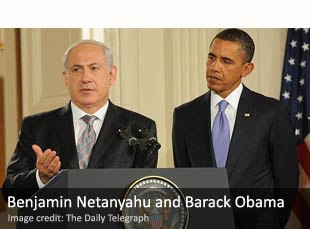
Netanyahu and ObamaAmerican intelligence agencies spied on Israeli Prime Minister Benjamin Netanyahu during the negotiations between the United States and Iran over the Islamic Republic’s nuclear program, according to officials. Tehran entered a deal, referred to as ‘the Geneva pact’, following drawn-out negotiations with a group of nations that came to be known as P5+1, representing the five permanent members of the United Nations Security Council plus Germany. The government of Israel, however, strongly criticized the negotiations. Prime Minister Netanyahu called the pact a “historic mistake” that would enable “the most dangerous regime in the world” to get closer to “attaining the most dangerous weapon in the world”. Israel’s strong reaction, which included open criticism of US President Barack Obama, caused some in the US to accuse Tel Aviv of trying to “manipulate American institutions”, while the White House did not hide its frustration with the Israeli leader.
Last week, The Wall Street Journal said in a leading article that the Obama administration spied systematically on Prime Minister Netanyahu, whom it suspected of actively trying to kill the Geneva pact. Citing interviews with “over two dozen past and present US officials”, The Journal claimed that the National Security Agency, America’s leading signals-intelligence collector, intercepted the communications between the Israeli prime minister and his senior advisors. The main purpose of the spy program was to find out whether the government of Israel was considering launching military strikes on Iran without first notifying Washington. Such a possibility was eventually ruled out. But in the process the NSA was able to listen in to private conversations between a number of senior Israeli government officials and American lawmakers. The latter were critical of the White House’s efforts to strike a deal with Iran, and were specifically asked by Israeli officials whether Israel could count on them to vote against the Geneva pact in Congress.

The NSA was also able to intercept conversations between Israeli leaders and American members of pro-Israel groups operating in the US. The newspaper implies that the Israeli leaders coached the Americans on how to campaign against the Geneva pact. Ironically, the NSA intercepts showed that Israel was itself spying on America in an effort to access inside information on the negotiations with Iran. The paper said that the Israelis would then regularly leak the information they acquired through espionage, in an effort to sabotage a possible deal. The Journal said it contacted the US National Security Council for a comment, and was told by a media representative that the US does “not conduct any foreign intelligence surveillance activities unless there is a specific and validated national security purpose. This applies to ordinary citizens and world leaders alike”, said the spokesman, refusing to elaborate.

Author: Joseph Fitsanakis | Date: 04 January 2016 | Permalink

Speculation ends as Israeli prime minister appoints new Mossad chief

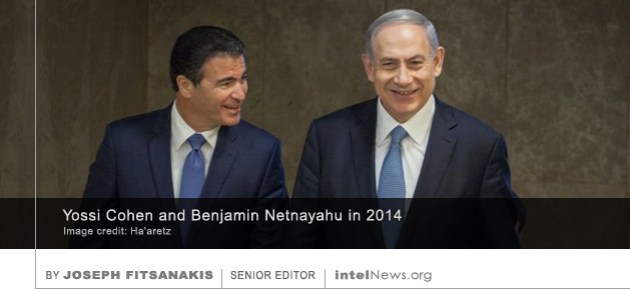
Yossi Cohen and Benjamin NetnayahuMonday brought an end to weeks of speculation in Israel, as Prime Minister Benjamin Netanyahu appointed the new director of the Mossad, the Jewish state’s national intelligence agency. At a hastily announced press conference in Jerusalem, Netanyahu said he had chosen Yossi Cohen for the post. A 30-year veteran of the Mossad, Cohen left the intelligence agency in 2013 to chair Israel’s National Security Council and advise the prime minister. Cohen, 54, who has four children, grew up in Jerusalem and became a fighter pilot before joining the Mossad. He gradually rose through the ranks to become deputy director at the agency. Prior to that, he led for several years the Mossad’s Department of Collections, which handles operations officers around the world.
More recently, Cohen led the agency’s Political Action and Liaison Department, which is tasked with facilitating cooperation between the Mossad and foreign intelligence agencies. From that position, he witnessed the worsening relations between Israel and the United States, as Washington struck closer relations with Iran despite Tel Aviv’s strong objections. That unprecedented development sparked a fierce internal debate between the Israeli intelligence community and the executive. The debate culminated when the Mossad’s outgoing Director, Tamir Pardo, objected to Prime Minister Netanyahu’s hardline stance on Iran. In 2011, Pardo, who will be stepping down from his post in January after 5 years at the helm, opined that the Iranian nuclear program was not an existential threat to Israel and that the Jewish state should concentrate instead on its dispute with the Palestinians.

Cohen, who is one of Netanyahu’s most trusted advisers, is expected to bring the Mossad closer to the prime minister’s office. He was reputedly one several candidates for the post, and was chosen from a list that included the Mossad’s former Deputy Director Rami Ben-Barak —currently at the helm of Israel’s Ministry of Intelligence Affairs— and the agency’s second-in-command, who is known publicly only as “N”. Following Monday’s announcement by Netanyahu, which came after an unexplained hour-long delay, there were rumors of last-minute complications with Cohen’s appointment. But The Times of Israel quoted an unnamed “senior diplomatic official” as saying that there had been “no last minute drama [or] pressures” prior to Netanyahu’s announcement.

Author: Joseph Fitsanakis | Date: 08 December 2015 | Permalink

CIA chief paid secret visit to Israel ahead of Iran nuclear deal

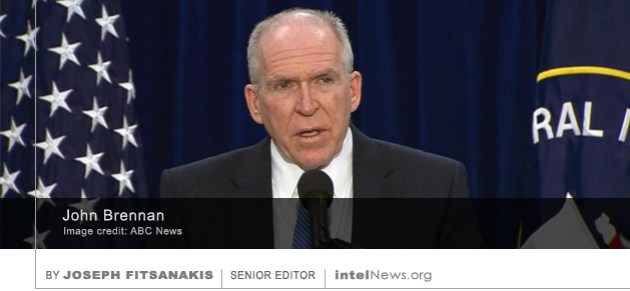
John BrennanThe director of the United States Central Intelligence Agency visited Israel in secret last week to discuss the Jewish state’s refusal to endorse an emerging deal with Iran over its nuclear program. Citing “two senior Israeli officials”, the Tel Aviv-based Israeli newspaper Haaretz said on Tuesday that CIA Director John Brennan arrived in Israel last Thursday. Although he was officially hosted by Tamir Pardo, director of Israeli intelligence agency Mossad, Brennan used the opportunity to hold secret meetings with several senior Israeli officials, said Haaretz. Among them were Prime Minister Benjamin Netanyahu, National Security Adviser Yossi Cohen, as well as Major General Hartzl Halevi, who heads Israel’s Military Intelligence Directorate.

According to Haaretz, Brennan’s visit to Israel had been planned “long ahead of time”, and should not be interpreted as a sudden diplomatic move from Washington. However, it came just weeks ahead of a deadline for a far-reaching settlement next month between Iran and six world powers over the Islamic Republic’s nuclear program. If successful, the much-heralded deal will mark the conclusion of ongoing negotiations between the Islamic Republic and a group of nations that have come to be known as P5+1, representing the five permanent members of the United Nations Security Council plus Germany. Israel, however, has strongly criticized the negotiations, referred to as ‘the Geneva pact’. Last year, the Israeli Prime Minister called the pact a “historic mistake” that would enable “the most dangerous regime in the world” to get closer to “attaining the most dangerous weapon in the world”.

It is not known whether Brennan brought with him a message from US President Barack Obama addressed to the Israeli Prime Minister, said Haaretz. On Monday, just 72 hours after Brennan’s departure, another senior American official landed in Tel Aviv —openly this time. It was General Martin Dempsey, Chairman of the US Joint Chiefs of Staff, who was hosted by his Israeli counterpart, General Gadi Eisenkot. Like Brennan before him, General Dempsey met with Prime Minister Netanyahu and Minister of Defense Moshe Yaalon. Haaretz contacted the CIA about Brennan’s secret visit to Israel, but an Agency spokesperson refused to comment.

Author: Joseph Fitsanakis | Date: 10 June 2015 | Permalink: https://intelnews.org/2015/06/10/01-1712/

Ex-Mossad chief calls for ouster of Israeli prime minister

Meir DaganBy JOSEPH FITSANAKIS | intelNews.org
A longtime former director of the intelligence agency Mossad has called for the ousting of the country’s Prime Minister Benjamin Netanyahu, dismissing him as dangerous for Israel’s security. Meir Dagan stepped down from his post as head of the Mossad in November of 2010, after leading the agency for over eight years —the longest tenure of any Mossad director in history. Soon after his retirement, Dagan emerged as a leading critic of the government of Prime Minister Netanyahu, whom he accuses of endangering Israel’s security by wrecking its international reputation and isolating the country from its friends and allies around the world. In 2011, Dagan gave a lengthy interview in which he admonished calls by Netanyahu to bomb Iran’s nuclear facilities as “the stupidest idea” he had ever heard. In a subsequent interview to Reuters news agency, Dagan insisted that the military option should be last on the table and said that the Iranian nuclear issue should be “left in the hands of the international community”.

Responding to the Israeli Prime Minister’s controversial trip to the United States last week, Dagan said last week it had been destructive to Israel’s interests. Speaking on Israel’s Channel 2 television, the former spy chief did not deny that Iran’s nuclear program was a potential threat to Israel’s security, “but going to war with the US [over Iran] is not the way to stop it”, he said. Dagan’s supporters, who come mostly from the center-left of the Israeli political scene, accuse the government of Prime Minister Netanyahu of focusing almost exclusively on the Iranian nuclear program and neglecting the increasingly volatile relationship between Israel and the Palestinians. Many Israeli left-of-center voters blame the Prime Minister for the 2014 war in the Gaza Strip, which they say damaged Israel’s reputation and failed to provide a long-term solution to the lingering Palestinian issue.

Last weekend, the former Mossad chief was the keynote speaker at a rally against the Netanyahu administration that brought together nearly 40,000 people in Tel Aviv. He told the crowd that the prime minister’s policies were leading to an apartheid state in the Occupied Territories and was making Israel less safe. “For 45 years I have served this country, all of them dedicated to safeguarding its security”, said Dagan. “I don’t want that dream to disappear”, he added, at one point breaking down in tears. Many of the speakers at the rally also called on the Israeli government to refocus its policy priorities away from Iran and toward domestic social issues, including education, housing, healthcare, income levels in relation to the rising cost of living, and services for the elderly.

Israeli ex-military, intelligence leaders, join forces against Netanyahu

Sunday's press conference in IsraelBy JOSEPH FITSANAKIS | intelNews.org
Nearly 200 former senior officials in Israel’s intelligence and security services called a public press conference on Sunday and denounced the foreign policy of Israeli Prime Minister Benjamin Netanyahu. The Israeli leader, who has been in office since 2009, has spoken out repeatedly against attempts by the United States and other Western countries to improve relations with Iran. As his critics held the press conference, the Israeli prime minister was leaving Tel Aviv for a controversial trip to the US, where he is scheduled to speak before a joint session of Congress. He was invited by senior Republicans in Washington, who, like Netanyahu, are sharply critical of US President Barack Obama’s policy on Iran. Netanyahu is also expected to address the annual conference of the American Israel Public Affairs Committee, which is widely considered the most powerful arm of the pro-Israel lobby in the US. But President Obama has refused to meet with the Israeli Prime Minister, whose trip to DC is seen as an attempt by the Republican Party to subvert the US leader’s foreign-policy agenda on Iran.

On Sunday, notable figures from Israel’s military and intelligence establishment gathered at a press conference to deliver sharp criticism against Netanyahu’s controversial trip to Washington and to blast the Israeli leader for allegedly injuring the Jewish state’s relationship with America. Among the numerous speakers at the press conference was the decorated veteran of Israel’s 1973 war, Major General Amnon Reshef. He appealed to Netanyahu to scarp his trip to the US and stop criticizing the Obama Administration “before it is too late”. The rift between Washington and Tel Aviv “cannot be accepted”, said Reshef, as it poses “clear and present dangers to the very security of Israel”.

Another speaker at the event, former deputy director of the Mossad, Major General Amiram Levin, told reporters that it was not easy for him to criticize Netanyahu, who had served under him in the Israel Defense Forces. But the Israeli prime minister’s actions left him with no choice, he said. Instead of working with President Obama to resolve the dispute with Iran, Netanyahu had chosen to “go there and stick his thumb in his eye”, said Levin. Such actions, aside from offending Obama, damage Israel’s image in the US among Americans. The latter, even when they are friends of Israel, said Levin, “are Americans first and foremost”. The former Mossad official concluded by saying that, without the strong support of Washington, Israel would be “far weaker strategically” and would allow Iran to get closer to building a nuclear arsenal.

A spokesman for the Likud party, which backs Prime Minister Netanyahu, dismissed the press conference as “a propaganda vehicle of the left”, whose campaign “is funded with millions of American dollars originating from left-wing circles abroad”.

Mossad saw pause in Iran nuke program in 2012, leaked file shows

Benjamin NetanyahuBy JOSEPH FITSANAKIS | intelNews.org
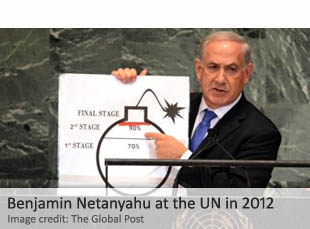
A file leaked to the media on Monday shows that the Israeli intelligence agency Mossad differed from the Israeli leadership’s position that Iran was advancing its nuclear weapons program in 2012. In September of that year, Israeli Prime Minister Benjamin Netanyahu addressed the United Nations in New York with a dramatic plea to help stop the Iranian nuclear program before it was too late. Holding a diagram showing a bomb about to explode, the Israeli leader urged UN member states to “draw a clear red line” forbidding the Islamic Republic from acquiring nuclear weapons in less than two years’ time, as it was poised to do, he said.

But a report drafted by the Mossad just weeks after Netanyahu’s UN address, said that Iran appeared to have stopped pursuing activities that were necessary to building a nuclear arsenal. The report was produced by the Mossad and distributed to a number of allied intelligence agencies around the world, including those of South Africa, from where it was presumably leaked to the media. British quality broadsheet The Guardian, which published the report, said it was able to “independently authenticate” the report, and added that it clearly went against Prime Minister Netanyahu’s assessment about the Iranian nuclear program. The top-secret document, which was communicated to the South Africans by the Mossad in late October of 2012, was also published by Qatar-based news agency Al Jazeera. It states that Iran did “not appear to be ready to enrich [uranium] to higher levels” and was thus “not performing the activity necessary to produce [nuclear] weapons”. According to The Guardian, the content of the Mossad communique is “in stark contrast to the alarmist tone set by Netanyahu” in his September 2012 address before the UN.

If the leaked document is genuine, it would appear to confirm previous indications of a difference of opinion on the matter of Iran’s nuclear program between Israel’s political leadership and its intelligence community. In January of this year, the Bloomberg news agency reported that the Mossad had been discreetly approaching US officials and politicians in order to raise support for a pending agreement between Iran, the United States and other countries, which would ease economic sanctions on the Islamic Republic in exchange for a short-term suspension of core aspects of its nuclear program. According to Bloomberg, the Mossad appeared to be acting behind the back of the Israeli prime minister, who has blasted the agreement as a “historic mistake” that enabled “the most dangerous regime in the world” to get closer to “attaining the most dangerous weapon in the world”. But in contrast to the Israeli leader, the Mossad appears to have urged American officials to support the agreement, saying that any move “that triggers [further] sanctions [against Iran] would collapse the talks” between Tehran and Washington, something which Israeli intelligence officials do not wish to see.

Mossad breaks with Israeli PM, cautions against new Iran sanctions

Benjamin Netanyahu and Barack ObamaBy JOSEPH FITSANAKIS | intelNews.org
The Israeli intelligence agency Mossad has broken ranks with the Israeli government of Prime Minister Benjamin Netanyahu, cautioning American members of Congress against imposing new sanctions on Iran. In November of 2013, Iran signed a Joint Plan of Action with six world powers in Geneva, Switzerland. Known as the Geneva interim agreement, the pact eases economic sanctions on the Islamic Republic in exchange for a short-term suspension of core aspects of the Iranian nuclear program. But two members of the Republican-controlled Senate in the United States, Robert Menendez and Mark Kirk, have voiced strong displeasure with what they see as the slow pace of progress in the talks. The two senators are co-sponsors of a proposed bill that would impose new sanctions on Iran if the Islamic Republic fails to make substantial progress toward the Geneva agreement by next June. US President Barack Obama opposes the bill, arguing that it would actually prompt Iran to accelerate its nuclear program, and has publicly said he would veto it. Meanwhile, his Secretary of State, John Kerry, quoted this week an Israeli intelligence official who allegedly told him that, if enacted, the Menendez-Kirk bill would “throw a grenade into the process”. It is no secret that the bill enjoys strong support from Netanyahu’s government. Last year, the Israeli Prime Minister called the Geneva pact a “historic mistake”, which enabled “the most dangerous regime in the world” to get closer to “attaining the most dangerous weapon in the world”. Late on Wednesday, however, the Bloomberg news agency reported that the Mossad has been discreetly approaching US officials and politicians and cautioning them that the Menendez-Kirk bill would indeed torpedo the Geneva agreement. The news agency said that the Israeli intelligence agency has been warning American officials abroad and it recently contacted a US Congressional delegation visiting Israel. The Bloomberg report cited two unnamed “senior US officials”, one of whom told the news agency that “any bill that triggers sanctions [against Iran] would collapse the talks”. If confirmed, the Bloomberg allegations would mean that the Mossad, Israel’s principal intelligence agency, is sharply breaking ranks with the government of Prime Minister Netanyahu on Iran. The Bloomberg article further states that Senator Menendez has contacted Ron Dermer, Israel’s Ambassador to the US, to complain about the actions of the Mossad, which, say critics, break diplomatic protocol.

Israeli ex-spy chief says Netanyahu policies ‘will destroy Israel’

Carmi GillonBy IAN ALLEN | intelNews.org
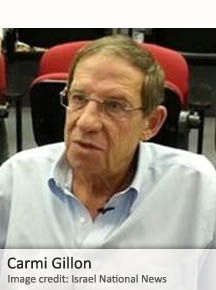
The former director of Israel’s internal security service has warned that the policies of the Israeli government could lead to the complete destruction of the country. Carmi Gillon, Israel’s former ambassador to Denmark, led the Shin Bet, also known as Israel’s Internal General Security Service, from 1994 to 1996. In a scathing attack against Israel’s current Prime Minister, Benjamin Netanyahu, Gillon accused him of being “an egomaniac” heading “a bunch of pyromaniacs” in government, who are leading the state of Israel “to its final destruction”. Gillon, 64, was speaking on Saturday evening at the “Peace Now” rally, organized outside the official residence of the Prime Minister in Jerusalem. Participants in the rally were protesting against the so-called Jewish State Law, a bill currently being discussed in the Israeli Knesset, which seeks to officially define Israel as “the nation state of the Jewish people”. The effort enjoys broad support from the Israeli right, including from Prime Minister Netanyahu. But it has been condemned by the country’s left, as well as by non-Jewish citizens of Israel, as a deliberate attempt to marginalize approximately a quarter of Israel’s population, which is non-Jewish. Some critics claim that Netanyahu and his supporters are attempting to prevent Israel from ever becoming a binational state, consisting largely of Jewish and Arab citizens, thus forever eliminating the so-called ‘one-state solution’ to the Jewish-Palestinian problem. The bill had been scheduled to be voted on in the Knesset on Wednesday, but its supporters in the Israeli parliament postponed the vote, following a wave of popular anger against the bill that has erupted throughout Israel in recent days. Speaking on Saturday at the rally in Jerusalem, Gillon said the Jewish State Law would “enshrine Israel’s status as a Jewish state” and would “eat the body of the entire nation like a cancer”. He added that he was speaking “with full professional authority” and urged opponents of the bill to “fight this fascism” that was propagated by “Bibi Netanyahu and the extreme right”. Later on Saturday, Israel’s former President, Shimon Peres, also spoke out against the proposed bill, which he described as “an attempt to undermine [Israel’s] Declaration of Independence for political interests”. He added that, if enacted, the bill would “damage the country both at home and abroad” and would “erode the democratic principles of the State of Israel”.

News you may have missed #808 (Obama-Netanyahu edition)

Benjamin Netanyahu and Barack ObamaBy IAN ALLEN | intelNews.org |
►►The other concession speech: Netanyahu congratulates Obama. At least there was no pretending. In the language of diplomacy, the greeting Israeli Prime Minister Benjamin Netanyahu extended to Barack Obama on the occasion of his re-election was “correct” and nothing more. “Prime Minister Netanyahu congratulates US President Barack Obama on his election victory,” read the public statement issued early Wednesday in Jerusalem. The next word out of Balfour Street, where Netanyahu mulled the returns, was a warning to members of his Likud party to shut up about how they figure the premier might really feel. By then, the deputy speaker of the Knesset had already called Obama “naïve” and vowed Israel would not “surrender” to him.
►►Netanyahu rushes to repair damage with US President. Over the past several years, Prime Minister Benjamin Netanyahu has on several occasions confronted or even undercut US President Barack Obama, taking his message directly to the Israel-friendly United States Congress, challenging Mr. Obama’s appeal to the Arab world, and seeming this fall to support his opponent, Mitt Romney. Mr. Netanyahu woke up Wednesday to find not only that his Republican friend had lost, but also that many Israelis were questioning whether he had risked their collective relationship with Washington.
►►Barack Obama victory spells trouble for Israel’s Netanyahu. Israeli Prime Minister Benjamin Netanyahu faces an even more awkward time with Washington and re-energized critics at home who accused him on Wednesday of backing the loser in the US presidential election. With Iran topping his conservative agenda, Netanyahu will have to contend with a strengthened second-term Democratic president after four years of frosty dealings with Barack Obama and a rift over how to curb Tehran’s nuclear program.

Mossad, IDF ‘resisted order’ to prepare for Iran war in 2010

Ehud Barak and Gabi AshkenaziBy JOSEPH FITSANAKIS | intelNews.org |
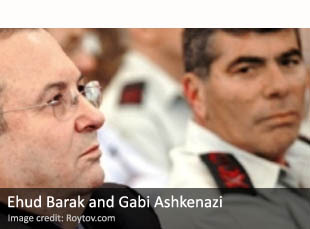
The heads of Israel’s army and main spy agency resisted an order issued by the Israeli Prime Minister to prepare for an all-out military attack on Iranian nuclear installations in 2010, according to a report aired today. According to Monday’s edition of Uvda (Fact), a popular investigative program on Israel’s Channel 2 television, the command to prepare for an attack was given by Israeli Prime Minister Benjamin Netanyahu and Minister of Defense Ehud Barak. The two men delivered the order to a meeting of senior cabinet ministers, telling them that the Israeli military’s preparedness level would be elevated to ‘P plus’, effective immediately. According to Uvda, ‘P plus’ meant that the Israeli armed forces should prepare to take military action at a moment’s notice. However, the then-Director of Israeli spy agency Mossad, Meir Dagan, who was present at the meeting, asked to speak and, according to Israeli newspaper Ha’aretz, which said it has seen the Uvda program, “came out sharply” against both Netanyahu and Barak. He told those present that elevating the military preparedness to ‘P plus’ was something that technically could only be decided at a meeting of Israel’s Political-Security Cabinet. Also known as “the inner cabinet”, the group, which consists of over a dozen Ministers and is led by the Prime Minister, is tasked with outlining and implementing Israel’s foreign and defense policy. Dagan told the two men that “only the [inner] cabinet is authorized to decide this” and warned them that they were “likely to make an illegal decision to go to war”. Dagan’s objection was later reinforced when General Gabi Ashkenazi, then-leader of the Israel Defense Forces, told the Prime Minister that the Israeli army was not ready to elevate its preparedness level to a ‘P plus’. Read more of this post

CBS re-broadcasts Iran comments by former Mossad chief

Meir DaganBy JOSEPH FITSANAKIS | intelNews.org |
One of the few certainties in the spiraling crisis between Iran, Israel and the United States, is that Tel Aviv and Washington do not agree on how to respond to Tehran’s nuclear program. Nowhere is this lack of unity more noticeable than in the difference of opinion between the Office of the Israeli Prime Minister, Benjamin Netanyahu, and the White House. Netanyahu, a leading hawk in Israeli political circles, has made it clear that, unlike United States President Barack Obama, he believes that the time for diplomacy has run out, and that Israel has no option but to consider direct military strikes on Iran. Last weekend he even took the unprecedented step of advising American voters to elect a leader willing “to draw a red line” on the issue of Iran. It is worth noting, however, that senior figures in Israel’s intelligence community seem to be siding with the US on this dispute. Leading the wave of dissention within the ranks is Meir Dagan, former Director of the Mossad, Israel’s most revered intelligence agency. In November of 2010, Meir Dagan stepped down from his post as the head of the Mossad after having led the agency for over eight years —the longest tenure of any Mossad director in history. Soon afterwards, he admonished calls by Netanyahu’s people to bomb Iran as “the stupidest idea” he had ever heard. On Sunday, September 16, the CBS flagship investigative program 60 Minutes aired again an important interview with Dagan, which was first broadcast on March 11 of this year. The timing of the re-broadcast is critical, as observers in the Middle East appear increasingly certain that an Israeli military attack on Iran is imminent. Read more of this post