US government publicly admits existence of rogue phone-tapping devices in DC

Embassy RowThe United States government has for the first time admitted publicly that it has detected devices known to be used by foreign intelligence services to spy on cellular communications in the nation’s capital. Known commonly as Stingrays, after a leading hardware brand, these devices are primarily used by government agencies, including law enforcement. But they can be purchased by anyone with anywhere from $1,000 to $200,000 to spare. They work by simulating the activity of legitimate cell towers and tricking cell phones into communicating with them. That allows the users of these cellphone-site simulators to monitor the physical whereabouts of targeted cell phones. Some of the more expensive Stingray models can intercept the actual content of telephone conversations and can even plant Trojans on the compromised phones of unsuspecting users.

Many governments have expressed concerns about the use of these devices, which are known to be used by intelligence agencies to monitor cellular communications on foreign soil. Major cities around the world, including Washington, are major targets of cellphone-site simulators, which are frequently located inside foreign embassies. However, the US government has never publicly commented on this issue, despite intense rumors that government agencies headquartered in Washington are major targets of Stingray devices. This changed recently, however, after Senator Ron Wyden (D-OR) wrote a letter to the Department of Homeland Security seeking information about the use of such devices in Washington. Wyden received a written response from Christopher Krebs, who heads the DHS’ National Protection and Programs Directorate. In the letter, dated March 26, Krebs confirmed that the DHS detected a number of active Stingrays in the DC area in 2017, which he referred to as “anomalous activity consistent with Stingrays”. But he added that the DHS lacks both funding and equipment needed to detect the full number of the devices and the full spectrum of Stingrays that are active in the nation’s capital.

The Associated Press, which published Krebs’ letter, said it acquired it from Wyden’s office in the US Senate. The news agency noted that the letter from DHS did not provide the technical specifications of the cellphone-site simulators, and did not enter into speculation about who might be employing them. Additionally the letter did not provide the exact number of Stingrays detected in DC in 2017, nor did it provide the exact locations in DC where Stingray activity was traced. In response to Krebs’ letter, Senator Wyden’s office released a statement blaming the US Federal Communications Commission for having failed to hold the cellular telecommunications industry accountable for the lack of security against Stingrays. “Leaving security to the phone companies has proven to be disastrous”, Senator Wyden’s statement concluded.

Author: Joseph Fitsanakis | Date: 4 April 2018 | Permalink

Lebanese spy agency used Android app to spy on thousands, say researchers

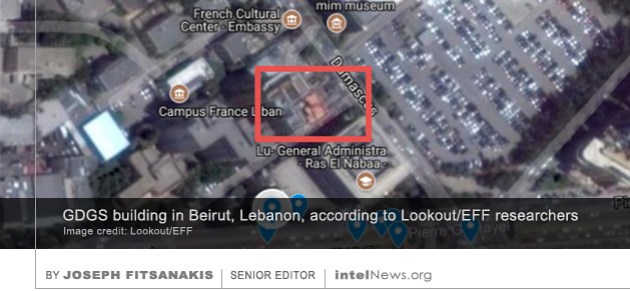
GDGS EFF LookoutThe spy agency of Lebanon used a virus designed for the Android mobile operating system to compromise the cell phones of thousands of people in at least 20 countries, according to a new mobile security report. The 50-page report was published on Thursday by a team of researchers from Lookout, a mobile security company, and the Electronic Frontier Foundation in Washington, DC. In an accompanying press release, the researchers said that the virus, which they named Dark Caracal, has been in existence for at least six years. They added that it was traced to a building in Beirut belonging to the General Directorate of General Security (GDGS), Lebanon’s primary external intelligence agency.

According to the Lookout/EFF research team, the trojanized phone application was camouflaged as a secure messaging service, resembling popular applications like Signal or WhatsApp. However, once an Android user downloaded it, it gave remote users access to the compromised phone’s cameras and microphone, thus turning it into a bugging device. The virus also stole email and text messages, pins and passwords, lists of contacts, call logs, photographs, as well as video and audio recordings stored on the compromised device. The report states that compromised devices were found in over 20 countries, including Lebanon, France, Canada, the United States and Germany. The majority of those targeted by the virus were civilian and military officials of foreign governments, defense contractors, and employees of manufacturing companies, financial institutions and utility providers.

On Thursday, Reuters contacted Major General Abbas Ibrahim, who serves as director general of GDGS. He insisted that the GDGS is known for collecting intelligence using human sources, not cyber technologies. “General Security does not have these type[s] of capabilities. We wish we had these capabilities”, General Ibrahim told the news agency.

Author: Joseph Fitsanakis | Date: 19 January 2018 | Permalink

Australian parliament reviews use of Chinese-made cell phones

ZTE CorporationThe Parliament of Australia is reportedly reviewing the use of cell phones built by a Chinese manufacturer, after an Australian news agency expressed concerns about the manufacturer’s links with the Chinese military. The cell phone in question is the popular Telstra Tough T55 handset. It is made available to Australian parliamentarians though the Information, Communications and Technology (ICT) unit of the Department of Parliamentary Services (DST). Any parliamentarian or worker in Australia’s Parliament House can order the device through the Parliament’s ICT website. According to data provided by the DST, 90 Telstra Tough T55 cell phones have been ordered through the ICT in the current financial year.
The handset is manufactured by ZTE Corporation, a leading Chinese telecommunications equipment and systems company that is headquartered in the city of Shenzhen in China’s Guangdong province. On Monday, the News Corp Australia Network, a major Australian news agency, said it had contacted the parliament with information that ZTE Corporation’s links to the Chinese military may be of concern. News Corp said it informed the DST that members of the United States Congress and the House of Representatives’ intelligence committee, have expressed serious concerns about the Chinese telecommunications manufacturer in recent years.

As intelNews reported in 2010, three American senators told the US Federal Communications Commission that the ZTE was “effectively controlled by China’s civilian and military intelligence establishment”. The senators were trying to prevent a proposed collaboration between American wireless telecommunications manufacturers and two Chinese companies, including ZTE Corporation. In 2012, the intelligence committee of the US House of Representatives investigated similar concerns. It concluded that telephone handsets manufactured by ZTE should not be used by US government employees due to the company’s strong links with the Chinese state. And in 2016, US-based security firm Kryptowire warned that some ZTE cell phone handsets contained a suspicious backdoor feature that could potentially allow their users’ private data to be shared with remote servers at regular intervals.

A DST spokesman told the News Corp Australia Network that the ZTE-manufactured cell phones had been selected for use by Australian parliamentarians based on “technical and support requirements, [DST] customers’ feedback and cost”. The spokesman added that the DST “is currently reviewing the ongoing suitability” of the T55 handsets, following reports about ZTE’s links with China’s security establishment.

Author: Ian Allen | Date: 05 September 2017 | Permalink

Israeli military says Hamas lured its soldiers using online profiles of women

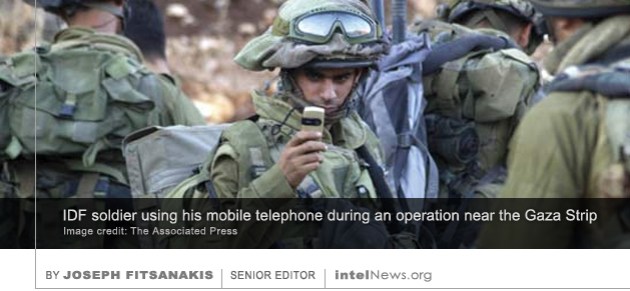
Cellular telephoneThe Israel Defense Forces told a press conference on Wednesday that hackers belonging to the Palestinian militant group Hamas lured Israeli soldiers by posing as young women online. Wednesday’s press conference was led by an IDF spokesman who requested to remain anonymous, as is often the case with the Israeli military. He told reporters that the hackers used carefully crafted online profiles of real Israeli women, whose personal details and photographs were expropriated from their publicly available social media profiles. The hackers then made contact with members of the IDF and struck conversations with them that in many cases became intimate over time. At various times in the process, the hackers would send the Israeli soldiers photographs of the women, which were copied from the women’s online public profiles.
The anonymous IDF spokesman said that, if the soldiers continued to show interest, they were eventually asked by the hackers posing as women to download an application on their mobile telephones that would allow them to converse using video. Once the soldiers downloaded the application, the ‘women’ would find excuses to delay using the application, or the relationships would abruptly end. But the soldiers would leave the application on their telephones. It would then be used by the Hamas hackers to take control of the camera and microphones on the soldiers’ mobile devices. According to the IDF spokesman, dozens of Israeli soldiers were lured by the Hamas scam. No precise number was given.

Media reports suggest that the Hamas hackers were primarily interested in finding out information about IDF maneuvers around the Gaza Strip, the narrow plot of densely inhabited territory that is controlled by the Palestinian militant group. They were also interested in collecting information about the size and weaponry of the Israeli forces around Gaza. Media representatives were told on Wednesday that the operation “had potential for great damage”. But the IDF claims that the harm to its operations was “minimal”, because it primarily targeted low-ranking soldiers. Consequently, according to the Israeli military, the hackers were not able to acquire highly sensitive information.

In 2009, dozens of members of Sweden’s armed forces serving with NATO’s International Security Assistance Force in Afghanistan were found to have been approached via Facebook, and asked to provide details on NATO’s military presence in the country. The Afghan Taliban are believed to have carried out the operation.

Hamas has not commented on the allegations by the IDF.

Author: Joseph Fitsanakis | Date: 12 January 2017 | Permalink

Senior South Korean officials’ cell phones hacked by North: report

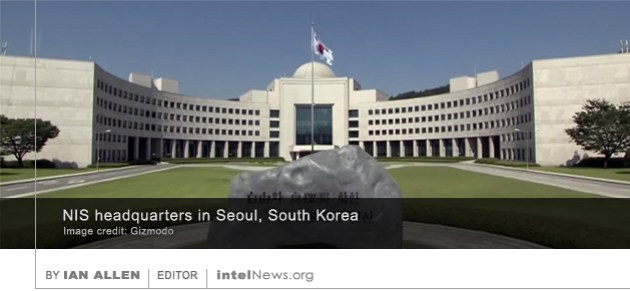
NIS South KoreaDozens of cell phones belonging to senior government officials in South Korea were compromised by North Korean hackers who systematically targeted them with texts containing malicious codes, according to reports. The National Intelligence Service (NIS), South Korea’s primary intelligence agency, said the cell phone penetrations were part of a concerted campaign by North Korea to target smart phones belonging to South Korean senior government officials. Once they managed to compromise a cell phone, the hackers were able to access the call history stored on the device, the content of text messages exchanged with other users and, in some cases, the content of telephone calls placed on the compromised device. Moreover, according to the NIS, the hackers were able to access the contact lists stored on compromised cell phones, which means that more attacks may be taking place against cell phones belonging to South Korean government officials.

The breach was considered critical enough for the NIS to host an emergency executive meeting with the security heads of 14 government ministries on Tuesday, in order to update them on the situation and to discuss ways of responding to the crisis. According to Korean media, the emergency meeting took place on Tuesday and lasted for over three hours. During the meeting the NIS told ministry representatives that the North Korean operation was launched in late February and was ongoing as of early this week. It specifically targeted government officials and appeared to concentrate on their cell phones, instead of their office phones –probably because the latter are known to be equipped with advanced anti-hacking features. The government employees’ cell phones were reportedly attacked using text messages and emails containing links to web sites that downloaded malicious codes on the users’ phones.

The NIS did not specify the precise purpose of the hacking operation, nor did it explain whether the attacks were informed by an overarching strategic goal. The officials targeted work for a variety of government ministries, but there is no clarification as to whether any operational or administrative links between them exist. The NIS did say, however, that approximately a fifth of all attacks against cell phones were successful in compromising the targeted devices.

Author: Joseph Fitsanakis | Date: 10 March 2016 | Permalink

South Korean spy’s suicide reportedly linked to wiretap controversy

NIS South KoreaA suicide note found next to the body of a South Korean intelligence officer mentions a phone hacking scandal that has caused controversy in the country. The 45-year-old man, identified only as “Lim” by South Korean authorities, worked for the country’s primary intelligence organization, the National Intelligence Service (NIS). He was found dead late on Saturday morning inside his car, which had been parked on a deserted rural road on the outskirts of South Korean capital Seoul. According to local reports, authorities found a metal plate with burnt-out coal inside his car, which had been locked from the inside. Finding no apparent marks on his body, the police have ruled his death a suicide.

The man reportedly left a three-page handwritten note on the passenger seat of his car, which is said to contain his will and a list of the reasons that drove him to kill himself. South Korean media cited a “senior government insider” who said that among the reasons mentioned in the suicide note is a controversial phone tapping scandal that has made national news in recent days. According to the insider, the program is identified in the letter as a wiretapping scheme “of national importance”.

The program appears to refer to the the disclosure made this month by a group of unidentified hackers that exposed the dealings of a surveillance software manufacturer with a markedly poor civil-liberties record. The disclosure, made by British newspaper The Guardian, shows that the Italian company, Hacking Team Ltd, is believed to have sold powerful surveillance software to governments with a history of civil-rights violations, including Nigeria, Ethiopia, Saudi Arabia, Azerbaijan and Uzbekistan. Among the customers, however, are a number of countries with stronger civil-rights protections, including South Korea and Cyprus, which is a member of the European Union. Cyprus’ intelligence chief resigned earlier this month as a result of the disclosure. According to technical experts, the software sold by Hacking Team can intercept data exchanged via cellular phones and other wireless devices. It can also spy on all communications devices connected to the Internet using malware that is undetectable by commonly used antivirus software. Moreover, software supplied by Hacking Team cannot be removed from a compromised cellular device unless it is reset at the factory.

NIS authorities in Seoul issued a press statement last week, claiming that the phone hacking software had been used only against North Korean targets abroad, including agents of Pyongyang operating around the world. But human rights organizations, as well as opposition parties in South Korea, said they believed the software had been used to monitor domestic dissent. Earlier this year, a former director of NIS was jailed for organizing an online propaganda campaign to dissuade citizens to vote for the liberal opposition. The NIS issued a statement last week saying that it would be willing to share the operational details and records of the controversial software with lawmakers in order to dispel rumors that it was used against domestic political activity.

Author: Ian Allen | Date: 20 July 2015 | Permalink: https://intelnews.org/2015/07/20/01-1738/

We must spy because of Turks, ISIS, says outgoing Cyprus spy chief

CyprusThe head of the main intelligence agency of the island state of Cyprus has resigned after an invoice leaked online showed that the agency made several purchases of controversial surveillance software. Andreas Pentaras, who has led the Cyprus Intelligence Service (KYP) since 2013, resigned on Saturday, less than a week after an unidentified group of hackers posted the controversial invoice online. The document, leaked to British broadsheet The Guardian and posted on Cypriot news site Sigmalive, shows that the KYP made numerous purchases of communications surveillance software from an Italian manufacturer with a markedly poor standing among civil-liberties advocates. The company, Hacking Team Ltd, is believed to have sold powerful surveillance software to governments that have documented records of civil-rights violations, including Nigeria, Ethiopia, Saudi Arabia, Azerbaijan and Uzbekistan.

According to technical experts in Cyprus, the software purchased by KYP can intercept data exchanged via cellular phones and other wireless devices. It can also spy on all communications devices connected to the Internet using malware that is undetectable by commonly used antivirus software. Moreover, software supplied by Hacking Team cannot be removed from a compromised cellular device unless it is reset at the factory. Pentaras also came under pressure to resign because the interception of communications is currently outlawed by the Cypriot Constitution. In 2011, the Cypriot parliament amended the Constitution to allow communications interception in extreme circumstances, but the legal interpretation of the amendment has yet to be officially outlined and approved. Technically, therefore, the interception of communications by the KYP remains illegal.

In an official statement issued on Friday, Pentaras said the surveillance software was purchased because of “the need and importance of maintaining a reliable operational intelligence service due to the circumstances caused by the occupation and due to the asymmetric threats caused by the instability in our region”. He was referring to the presence of up to 45,000 Turkish troops in the northern part of the island, which Turkey invaded in 1974 in response to a military coup organized by a group of far-right colonels who ruled Greece at the time. Pentaras was also referring to the arrest last month of a suspected Lebanese Hezbollah operative, who was captured in the Cypriot city of Larnaca while in possession of 67 thousand packages of ammonium nitrate. In September of last year, Pentaras said it was possible that Sunni nationalists in occupied north Cyprus were assisting the Islamic State of Iraq and Syria (ISIS).

According to Cypriot media, the country’s President, Nicos Anastasiades, accepted Pentaras’ resignation, saying he did so “in order to protect the commendable accomplishments of the KYP in recent years”. Late on Saturday, another Cypriot senior official, Public Health Minister Filippos Patsalis, surrendered from his post. Sources from Nicosia said that Patsalis’ resignation was not related to the KYP controversy.

Author: Joseph Fitsanakis | Date: 13 July 2015 | Permalink: https://intelnews.org/2015/07/13/01-1733/

Norway probes intercept equipment found near PM’s home

Parliament of NorwayBy JOSEPH FITSANAKIS | intelNews.org
Authorities in Norway are probing a possible espionage operation by a foreign intelligence agency, following the discovery of several electronic surveillance devices located near government buildings in downtown Oslo. The presence of the devices was revealed on December 12 in a leading article by Norwegian daily newspaper Aftenposten, which published the findings of what it said was a two-month technical investigation into the matter. The paper said its reporters teamed up with two leading companies specializing technical surveillance countermeasures. According to the article, investigators came up with a network of surveillance devices disguised to look like cell phone base stations, known as transceivers. But the devices were actually International Mobile Subscriber Identity (IMSI) catchers, essentially fake cell phone towers that are often used clandestinely to intercept telephone traffic among users, as well as their movements. Aftenposten said that the devices, whose unauthorized use is illegal in Norway, had been placed outside the official residence and office of the prime minister, outside the houses of parliament, as well as near major banks and corporate headquarters. IMSI catchers cannot access the content of cellular communications, as most providers encrypt them nowadays; but they can record the telephone numbers of users, as well as pen-register data —namely who calls whom, when, for how long, etc. Additionally, if those behind the surveillance knew the telephone numbers of targeted subscribers, they could keep track of their physical movements through their phone’s GPS system, and identify who they contact on their cellular devices. The newspaper said the surveillance devices were almost certainly installed to monitor the activities of senior Norwegian government officials, as well as perhaps senior executives of companies headquartered in the Norwegian capital. On Monday, Norway’s National Security Authority (NSM) said it thought Aftenposten’s claims were probably correct. NSM Director Kjetil Nilsen said the main question was now who was behind the installations. Norwegian Police Security Service (PST) spokeswoman Siv Alsen told reporters on Monday that “the possibility that this is coming from foreign state agencies” could not be dismissed. She added that the PST would now proceed to probe whether the surveillance network was the work of foreign spies or organized criminal networks. Norway, a founding member of the North Atlantic Treaty Organization, is traditionally seen as an ally of the United States and has seen its relations with Russia and China strained in recent years.

NSA spies on every cell phone company in the world, new data shows

NSA headquartersBy IAN ALLEN | intelNews.org
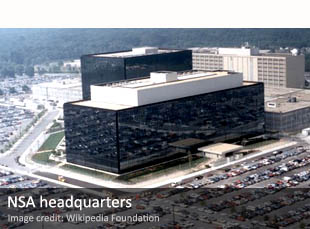
The United States National Security Agency has spied on virtually every cell phone manufacturer and provider in the world in an attempt to uncover security weaknesses that can be exploited for surveillance, according to newly leaked data. It also appears that the NSA has worked to sabotage the technical security features of commercial telecommunications systems in order to be able to spy on their users. The documents were released on Thursday by The Intercept’s Ryan Gallagher, who said he acquired them from American defector and former NSA computer technician Edward Snowden. The documents reveal the existence of an NSA project codenamed AURORAGOLD, which appears to have been operational since at least 2010. It has targeted telephone companies in virtually every country in the world, including in the US, as well as in nations closely aligned with Washington, such as Australia, Germany, United Kingdom, France and New Zealand. The project has been carried out by at least two separate NSA units, whose existence appears to have been publicly disclosed for the first time. One is the Wireless Portfolio Management Office, which is tasked with outlining and implementing the NSA’s strategy for penetrating wireless telecommunications systems. The other is the Target Technology Trends Center, whose mission is to track the development of emerging communications technologies so as to detect security innovations that could prevent the NSA from spying on their users. The leaked documents show that, as of late spring of 2012, the NSA had collected detailed technical information on nearly 70 percent of the world’s cellular telecommunications networks and was preparing to spy on the email accounts of their employees. The goal was to acquire technical blueprints and other planning papers that could help the NSA penetrate those networks. According to Gallagher, the broad scope of AURORAGOLD appears to be aimed at “ensuring virtually every cellphone network in the world is NSA-accessible”. But the publication quotes leading cellphone security experts who express strong skepticism over the NSA program. One of them, the University of Virginia’s Karsten Nohl, warns against any policy that aims to deliberately install security vulnerabilities on telecommunications networks. “Once NSA introduces a weakness, a vulnerability, it’s not only the NSA that can exploit it”, he says. Another security expert, F-Secure’s Mikko Hypponen, cautions that criminals and spies from every country could be among AURORAGOLD’s “inadvertent beneficiaries”. The Intercept spoke to an NSA spokeswoman, who said the Agency was committed to ensuring “an open, interoperable and secure global Internet”. But she declined to discuss AURORAGOLD.

News you may have missed #885

Shin BetBy IAN ALLEN | intelNews.org
►►Americans’ cellphones targeted in secret US spy program. The US Justice Department is scooping up data from thousands of mobile phones through devices deployed on airplanes that mimic cellphone towers, a high-tech hunt for criminal suspects that is snagging a large number of innocent Americans, according to people familiar with the operations. The US Marshals Service program, which became fully functional around 2007, operates Cessna aircraft from at least five metropolitan-area airports, with a flying range covering most of the U.S. population, according to people familiar with the program.
►►Israel’s usually secretive spy agencies get into public spat. Israel’s domestic intelligence agency, known as the Shin Bet, has been trading barbs with the military over whether faulty army intelligence left Israel unprepared for war with the militant group Hamas in the Gaza Strip. The spat went high-profile this week when Israel’s Channel 2 aired a report featuring Shin Bet officials –-rendered in pixilated, shadowed form-– claiming the military had brushed aside the agency’s assessment, months before fighting erupted in July, that an armed conflict with Hamas was in the making.
►►Poland mulls military intelligence brigade close to Belarus border. Polish Armed Forces will make emphasis on the unfolding of reconnaissance troops and will set up a separate brigade and military command in the north-east of the country, National Defense Minister Tomasz Siemoniak said on Thursday. The region he visited is located along the border with Belarus and close to the border with Russia’s westernmost Kaliningrad region, an exclave on the south-east shore of the Baltic Sea.

China hacking Hong Kong protesters’ smartphones, says security firm

Hong Kong protestersBy IAN ALLEN | intelNews.org
A mobile telephone security company has said the government of China is probably behind a sophisticated malware designed to compromise the smartphones of protesters in Hong Kong. Ever since the Hong Kong ‘umbrella revolution’ began to unfold, countless reports have referred to the use of smartphone applications as organizing tools by the protesters. According to one account, an application called FireChat was downloaded by more than 100,000 smartphone users in Hong Kong in less than 24 hours. FireChat is said to allow protesters to continue communicating with each other even when their individual devices are unable to connect to a mobile network. But a California-based mobile telephone security firm has warned that the Chinese government could be using such enabling applications to compromise the smartphones of pro-democracy protesters in the former British colony. Lacoon Mobile Security, which specializes in assessing and mitigating mobile security threats, said on Tuesday that it had detected several types of malware camouflaged as mobile phone applications designed to help the protesters organize. In a statement posted on its website, the security firm said that, once downloaded by a smartphone user, the malware gives an outsider access to the address book, communication logs and other private data stored on the unsuspecting user’s device. Lacoon added that what made the malware unusual was that it came in two different versions; one appears to target smartphones that run Apple’s iOS operating system, while the other is designed to compromise phones using Google’s Android software. The company noted that the types of malware that are circulating among Hong Kong protesters were some of the most sophisticated it had ever seen. They made use of a method called mRAT, which stands for multidimensional requirements analysis tool. Among other things, mRAT allows a hacker to take surreptitious pictures using the phone camera of a compromised smartphone. According to Lacoon, the design of the malware in question is so advanced that it is “undoubtedly backed by a nation state”. Read more of this post

Hidden spy software found in Chinese-made smartphones

Star N9500By JOSEPH FITSANAKIS | intelNews.org
A popular brand of Chinese-made smartphones, which are sold internationally by several major retailers, has been found to contain pre-installed monitoring software, according to a German security firm. The revelation was made on Tuesday by G Data Software, which is based in Bochum, Germany, and has a subsidiary in the United States. The firm, which was founded in 1985, said it discovered the spy software hidden deep inside the proprietary software found on the Chinese-made Star N9500. The product in question is a cheap smartphone based on the popular Samsung Galaxy S4, and can be purchased from numerous Internet retailers, including online outlets such as Amazon.com. A G Data spokesperson, Thorsten Urbanski, told reporters in Germany that his company purchased several Star N9500 telephones from an online retailer after receiving multiple messages from users of the telephone in Germany, who said the device’s operating system appeared to contain malicious software. The security firm said the Star N9500’s operating system contains hidden software applications that could allow a third party to access and steal the telephone user’s personal information. There are also secret applications that could permit a hacker to place calls from the telephone, or utilize the device’s microphone and camera without the consent of its owner. What is more, the stolen data was sent to a server based in China. G Data investigators added that their team of experts sought for “over a week” to track down the manufacturer of the Star N9500 but were unable to do so. German media reported that journalists from The Associated Press also tried to locate the manufacturer of the smartphone, by contacting several companies located in China’s southern province of Shenzhen, known as the center of the country’s telecommunications industry. Read more of this post

Snowden leaks reveal GCHQ’s reliance on NSA money, data

GCHQ center in Cheltenham, EnglandBy JOSEPH FITSANAKIS | intelNews.org |
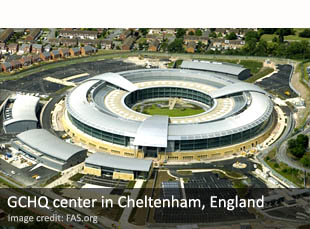
Information provided by American defector and former intelligence insider Edward Snowden shows that Britain’s signals intelligence agency is very much the junior partner in an uneven relationship with its American counterpart. Snowden, a former computer expert for the Central Intelligence Agency (CIA) and the National Security Agency (NSA), has been given political asylum in Russia. In June, he revealed a number of enormous intelligence-collection programs, including PRISM and TEMPORA. The latter is administered by the General Communications Headquarters (GCHQ), Britain’s signals intelligence organization. The program enables the agency to access communications traffic carried through fiber optic cables worldwide. But GCHQ also receives data from PRISM, a massive electronic surveillance program operated by the NSA, which provides access to millions of email and online chat exchanges facilitated by some of the world’s foremost Internet service providers. Because of these arrangements, GCHQ’s access to electronic data increased by 7,000 percent between 2008 and 2012, according to an internal GCHQ document provided to The Guardian newspaper by Snowden. The agency’s immense access to information has propelled it to a leading role within Britain’s intelligence establishment. It currently receives over half of Britain’s £1.9 billion annual intelligence budget, while its employee size is more than twice that of Britain’s domestic (MI5) and external (MI6) intelligence agencies combined. Its headquarters, the so-called “doughnut building” in Cheltenham, Gloucestershire, was Europe’s largest single construction project when it was being built in the early 2000s.  But the documents provided by Snowden show that, despite its considerable wealth and access to resources, GCHQ’s intelligence planners are deeply concerned about “being left behind by technology” in the fiber optic age. One internal report highlights “the pressure on the agency to deliver” and warns that “the complexity of [GCHQ’s] mission has evolved to the point where existing mission management capability is no longer fit for purpose”. Read more of this post

Situation Report: China’s Huawei Going Mobile? (Exclusive)

Huawei TechnologiesBy TIMOTHY W. COLEMAN | intelNews.org |
The Chinese firm, Huawei Technologies, a provider of information and communications technology, has been constantly under fire in the United States and around for the world for its supposed deep ties to China’s military and intelligence establishment. It is not without some justifiable concern either. Prior to starting Huawei Technologies, the company’s founder and CEO, Ren Zhengfei, served for more than 10-years in China’s People’s Liberation Army’s engineering corps. This reality, rightly or wrongly, has added fodder for concerns that Chinese government interests are intertwined with those of Huawei. On September 13, Huawei Technologies and another Chinese firm, ZTE, were the subject of a Congressional hearing titled “Investigation of the Security Threat Posed by Chinese Telecommunications Companies Huawei and ZTE”. The purpose of the hearing, as explained by the US House Permanent Select Committee on Intelligence, was to assess the potential danger of “telecommunications equipment manufactured by companies with believed ties to the Chinese government”. Read more of this post

Situation Report: Samsung accuses LG of corporate espionage

Samsung smartphones on display in KoreaBy TIMOTHY W. COLEMAN | intelNews.org |
Most technology companies spar with rivals over patent portfolio infringement, pricing arrangements, bundling of products and services with partners, and other trade practices. More recently, technology companies have been waging a war for talent and human capital. But in Korea, a dispute between Samsung and LG Electronics has been taken to a new level with Samsung publicly accusing LG of conducting corporate espionage. According to VenterBeat, Samsung has leveled corporate espionage charges against an employee at LG regarding particularly sensitive display technology that is used in smartphones and other mobile devices. This technology is of great value to Samsung, as its displays are used in nearly 98 percent of mobile phones around the globe. The critical display technology, active-matrix organic light-emitting diode, or MOLED, technology, is an extremely thin-film, which is a lynchpin technology for televisions and mobile devices. This technology replaced previously existing display technologies because it required significantly less power and therefore less battery drain and it also increased response rates to mere milliseconds. Such technology was perfectly positioned to help spur on the proliferation of the mobile and smartphone boom. Read more of this post