Forensic experts to probe alleged poisoning of Nobel Laureate poet Neruda
February 25, 2016 Leave a comment
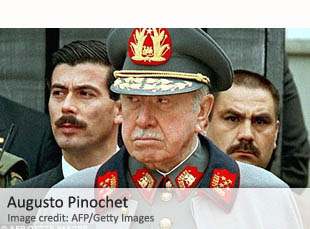
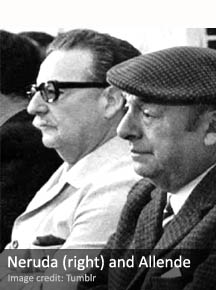
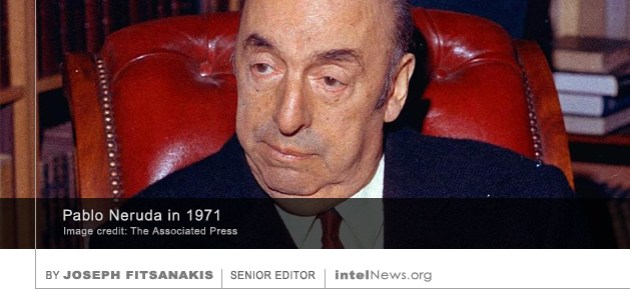 Two teams of international experts will examine the exhumed remains of Chilean Nobel Laureate poet Pablo Neruda, who some say was deliberately injected with poison by the Chilean intelligence services. The literary icon died on September 23, 1973, less than two weeks after a coup d’état, led by General Augusto Pinochet, toppled the democratically elected government of Salvador Allende, a Marxist who was a close friend of Neruda. The death of the internationally acclaimed poet, who was 69 at the time, was officially attributed to prostate cancer and the effects of acute mental stress caused by the military coup. In 2013, however, an official investigation was launched into Neruda’s death following allegations that he had been murdered.
The investigation was sparked by comments made by Neruda’s personal driver, Manuel Araya, who said that the poet had been deliberately injected with poison while receiving treatment for cancer at the Clinica Santa Maria in Chilean capital Santiago. According to Araya, General Pinochet ordered Neruda’s assassination after he was told that the poet was preparing to seek political asylum in Mexico. The Chilean dictatorship allegedly feared that Neruda would seek to form a government-in-exile and oppose the regime of General Pinochet. Last year, Spanish newspaper El País said it had been given access to a report prepared by Chile’s Ministry of the Interior, which allegedly argues that it was unlikely that Neruda’s death was the “consequence of his prostate cancer”. According to the paper, the document states that it was “manifestly possible and highly probable” that the poet’s death was the outcome of “direct intervention by third parties”. The report also explains that Neruda’s alleged murder resulted from a fast-acting substance that was injected into his body or entered it orally.
On Wednesday, it was announced that two teams of genomics and forensic experts, one in Canada and one in Denmark, will examine Neruda’s bones and teeth in an effort to extract fragments of bacterial DNA. According to reports, the experts hope that the extracted DNA will provide them with genomic data that can help identify pathogenic bacteria. That, in turn, could help establish a possible cause of death. The two teams are based at the Ancient DNA Center at McMaster University in Canada and the Department of Forensic Medicine at the University of Copenhagen in Denmark.
► Author: Joseph Fitsanakis | Date: 25 February 2016 | Permalink | News tip: R.W.
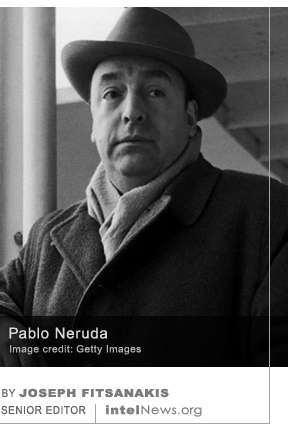 A report prepared by the Chilean government considers it “highly likely” that Chile’s Nobel laureate poet, Pablo Neruda, died as a result of deliberate poisoning. The literary icon, who was awarded the Nobel Prize in Literature in 1971, died on September 23, 1973. His death occurred less than two weeks after a coup d’état, led by General Augusto Pinochet, toppled the democratically elected government of Salvador Allende, a Marxist who was a close friend of Neruda.
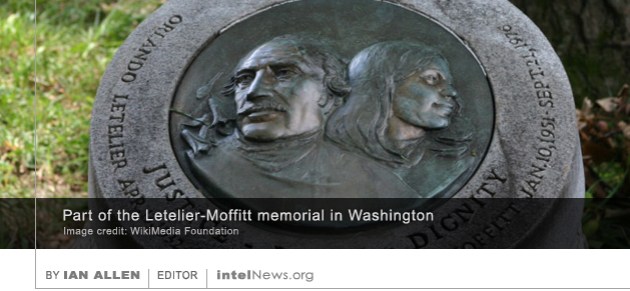 The president of Chile in the 1970s considered killing his own spy chief in order to conceal his government’s involvement in a terrorist attack in Washington DC, which killed two people, according to declassified memos from the United States Central Intelligence Agency. The target of the attack was Orlando Letelier, a Chilean economist who in the early 1970s served as a senior cabinet minister in the leftwing government of Salvador Allende. But he sought refuge in the US after Allende’s government was deposed in a bloody coup on September 11, 1973, in which Allende was murdered. He taught in several American universities and became a researcher at the Institute for Policy Studies (IPS) in Washington. At the same time, he publicly pressured the US to break off diplomatic and military ties with the Chilean dictatorship.









 intelNews.org
Chile will ask US to extradite three men wanted in killing of UN diplomat
May 23, 2016 by Joseph Fitsanakis Leave a comment
Soria’s activities made him a target of the Dirección de Inteligencia Nacional (DINA), Chile’s domestic security service, which was a leading implementer of Operation CONDOR, a widespread anti-communist program that began in 1968 with the participation of most Latin American governments. CONDOR, which ended in 1989, included psychological operations, kidnappings and assassinations that targeted leftwing organizations and activists. On July 14, 1976, Soria, who had by then resumed his previous UN post, was kidnapped by agents of the DINA. He was tortured and murdered under detention. His body was found on July 16 inside a car that had been dumped in a river in Santiago de Chile. The Pinochet government refused to investigate the incident, saying that Soria had been driving under the influence of alcohol.
Last Tuesday, however, after an investigation that dates back to 1991, the Supreme Court of Chile said that an extradition request will be sent to the United States for three individuals who were allegedly directly implicated in the murder of Soria. They are: Michael Townley, a US citizen; Armando Fernandez Larios, of Chile; and Cuban Virgilio Pablo Paz Romero, all of whom were agents of DINA at the time of Soria’s murder. Townley is a former professional assassin who was hired by DINA for a series of murders. In 1978, a US court convicted him for his participation in the assassination of Orlando Letelier, former Chilean ambassador to the US, who was killed in 1976, when his car exploded in Washington, DC. Since his release from prison, Townley has been living in the US under the Witness Protection Program.
Larios, a Chilean national, was also convicted of being “an accessory after the fact” in the Letelier assassination and is also living in the US, having struck a plea bargain with Washington. The third individual, Paz Romero, was sentenced to 12 years in prison in 1991, after admitting that he personally detonated the remote-controlled car bomb that killed Leteler. He was paroled after serving half of his sentence and was ordered to be deported to his home country of Cuba. However, due to the absence of a bilateral deportation agreement between Washington and Havana, Romero remained in the indefinite custody of the US Immigration and Naturalization Service. In 2001, the US Supreme Court ruled that indefinite detentions were unconstitutional, so Romero was released and has been living freely in the US since that time.
► Author: Joseph Fitsanakis | Date: 23 May 2016 | Permalink | News tip: R.W.
Filed under Expert news and commentary on intelligence, espionage, spies and spying Tagged with Armando Fernandez Larios, assassinations, Carmelo Soria, Chile, Cold War, DINA (Chile), extraditions, history, Michael Townley, News, Operation CONDOR, Orlando Letelier, United Nations, United States, Virgilio Pablo Paz Romero