News you may have missed #414

Bookmark and Share

CIA hid terrorism prisoners from US Supreme Court

CIA HQ

CIA HQ

By JOSEPH FITSANAKIS | intelNews.org |
The Central Intelligence Agency purposefully concealed at least four terrorism detainees from the US legal system, including the Supreme Court, according to an exclusive report by the Associated Press. The news agency has revealed that the CIA secretly transported the four to Guantánamo Bay Detention Camp on Cuba in 2003, two years before it publicly admitted their capture. It then secretly transferred them again to other sites in its black site prison network in various countries around the world, just three months before their prolonged stay at Guantánamo would entitle them to legal representation. While at Guantánamo, the four prisoners, Abd al-Nashiri, Mustafa al-Hawsawi, Ramzi Binalshibh and Abu Zubaydah, were kept at a facility known as ‘Strawberry Fields’, which is detached from the main prison site at the bay. By hiding the four, the Bush Administration managed to keep them under CIA custody while denying them legal representation for two years longer than allowed by US law. It also concealed their detention from national and international human rights monitoring bodies and from the US justice system, including the Supreme Court. Read more of this post

News you may have missed #412

Bookmark and Share

News you may have missed #407

Bookmark and Share

CIA killed Chile Army commander, says Pinochet’s spy chief

Carlos Prats

Carlos Prats

By JOSEPH FITSANAKIS | intelNews.org |
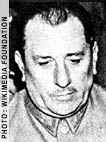
The convicted former chief of Chile’s intelligence services during the dictatorship of Augusto Pinochet has accused the CIA of murdering the deposed leader of the Chilean army and former Vice-President of Chile, in 1974. General Carlos Prats González was a close political ally of Chilean President Salvador Allende, who was toppled by a CIA-assisted military coup in 1973, led by General Augusto Pinochet. General Prats managed to escape with his family to neighboring Argentina. It was there where, in 1974, he was killed along with his wife, Sofia Cuthbert, in a massive car bomb. A Chilean court has convicted General Manuel Contreras, who headed Pinochet’s feared DINA secret police, for the murder of General Prats and his wife. But Contreras, 81, who has been in prison since 1995, servicing over 100 years for several kidnappings and murders of anti-Pinochet dissidents, now accuses the CIA of the Prats murders. Read more of this post

News you may have missed #405

  • Democracy Now on Google-CIA partnership. Democracy Now has aired an interview with John Simpson, director of Consumer Watchdog’s Inside Google project, and Noah Shachtman, of Wired magazine’s Danger Room blog, who broke the story of the Google-CIA investment partnership.
  • Ex-CIA chief downplays cyberwar with China. Retired CIA chief Michael Hayden downplayed the notion that the US is in a raging “cyberwar” with China during a speech on Thursday at the Black Hat Technical Security Conference in Las Vegas.
  • Men held over parcel bomb sent to MI6. Two men have been arrested in north Wales, after parcel bombs were sent to the offices of the British government executive at 10 Downing Street, and the headquarters of MI6, Britain’s external intelligence agency. The two men, aged 52 and 21, are believed to be related and of Pakistani origin.

Bookmark and Share

News you may have missed #404 (Wikileaks Afghan War Diary edition II)

  • Wikileaks posts mysterious ‘insurance’ file. WikiLeaks, the whistleblower website that recently published hundreds of thousands of classified Afghan War documents, has posted a mysterious encrypted file labeled “insurance”, whose size dwarfs the size of all the other files on the page combined. Cryptome, a separate anti-secrecy site, speculates that the file may be insurance in case something happens to the WikiLeaks website or to its founder, Julian Assange. In either scenario, WikiLeaks volunteers, under a prearranged agreement with Assange, could send out a password to allow anyone who has downloaded the file to open it.
  • Ex-CIA officer Baer comments on Wikileaks files. Robert Baer, the retired CIA field officer whose bestselling memoir, See No Evil, formed the basis of the 2005 motion picture Syriana, has called the quality of intelligence revealed in the Wikileaks Afghan War files “just awful. Basically, we don’t know who the enemy is”, says Baer, adding that “much of the information looks to be the result of walk-in informers –intelligence peddlers looking for a cash payment or some other reward for passing on gossip”.
  • Wikileaks informant suspect had help, says informer. Hacker-turned government informant Adrian Lamo, who is assisting the US government investigate thousands of leaked secret war records to Wikileaks, says Army intelligence analyst Bradley Manning, who is the suspected culprit of the leak, had civilian help.

Bookmark and Share

Documents detail history of previously unknown US spy agency

John V. Grombach

J.V. Grombach

By IAN ALLEN | intelNews.org |
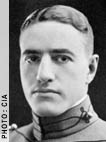
A collection of tens of thousands of documents discovered in a barn in a small Virginia town, have brought to light the history and operations of a previously unknown US spy agency that competed for prominence with the CIA during the early stages of the Cold War. The secrecy-obsessed agency was known at various times as the Secret Intelligence Branch, the Special Service Branch, the Special Service Section, or the Coverage and Indoctrination Branch; but insiders referred to it simply as “the Lake” or “the Pond”. It was created in late 1942 by the then newly established US Department of Defense, whose officials did not approve of the civilian character of the Office of Strategic Services (OSS), forerunner of the CIA. In its 13-year existence, the Pond operated on a semi-autonomous base under the Departments of Defense and State, but maintained a poor relationship with the CIA, which it considered too “integrated with British and French Intelligence and infiltrated by Communists and Russians”. This information is contained in the files, which were stored in several safes and filing cabinets by the organization’s secretive leader, US Army Colonel John V. Grombach, who died in 1982. Read more of this post

News you may have missed #403

Bookmark and Share

News you may have missed #401

Bookmark and Share

Largest leak in US military history reveals Afghan war details

WikiLeaks

WikiLeaks

By JOSEPH FITSANAKIS | intelNews.org |
American, British and German military planners are scrambling to contain the political impact of a massive cache of classified reports from Afghanistan, which has been leaked by an anti-secrecy activist group. It has now become known that, several weeks ago, the group Wikileaks.org handed over a total of 91,731 classified incident and intelligence reports from the US-led occupation force in Afghanistan to American newspaper The New York Times, British broadsheet The Guardian, and German newsmagazine Der Spiegel. All three outlets agreed to examine the material, abiding by Wikileaks’ condition that they would wait until Sunday, July 25, to release it. All three news media published news of the leak almost simultaneously on Sunday night, (see here, here and here), and posted several of the files, which provide an unprecedented six-year archive (from 2004 to 2009) of day-to-day US-led military operations in Afghanistan. This unprecedented disclosure is believed to represent the largest public leak of classified material in US military history. Read more of this post

Russian ‘spy’ breaks silence, wants to leave UK for Russia

Igor Sutyagin

Igor Sutyagin

By IAN ALLEN | intelNews.org |
One of the four Russian alleged spies that were handed over to the West in return for 11 Russian intelligence officers arrested in the US last month, has issued a public statement for the first time since his July 9 release from prison. At the time of his release, Dr. Igor Sutyagin, a nuclear expert who headed the Russian Academy of Sciences’ USA and Canada Institute, had served 11 years of a 15-year sentence, for allegedly passing state secrets to Alternative Futures, a British company alleged to be a CIA front by the Russian government. Once Washington included his name on the top-secret exchange list, Sutyagin was transferred from his prison cell in Kholmogory prison, near Arkhangelsk in northern Russia, to the Lefortovo high-security jail in Moscow. It was there that, following a meeting with this family, he was told that he would receive a Presidential pardon in exchange for his unconditional admission of guilt. Minutes after he agreed to the deal, the Russian scientist was flown to London, still in his prison uniform. Read more of this post

News you may have missed #398

  • Britain’s first spy chief ordered Rasputin’s murder. Mansfield Cumming, or ‘C’ as he became known, was the first chief of Britain’s Secret Intelligence Service (MI6). In December 1916, he sent three agents in Russia to eliminate Grigori Rasputin, an influential Orthodox Russian priest who had a positive view of Germany.
  • Russian spy network moved money to Zimbabwe. A Zimbabwean company called Southern Union is alleged to have been used by exposed Russian spy Anna Chapman in a money smuggling operation involving a syndicate linked to the Robert Mugabe regime.
  • Iran says nuclear scientist gave valuable info on CIA. Iran’s semiofficial Fars news agency says that Iranian nuclear scientist Dr. Shahram Amiri, who resurfaced and returned home last week from the United States, after having disappeared during a 2009 religious pilgrimage to Mecca, has provided Iran with “valuable information” on the CIA.

Bookmark and Share

News you may have missed #395 (Russia-US spy swap edition IV)

  • All children of Russian spies repatriated. All the children of the 10 Russian spies freed by the US in a dramatic swap with Moscow have been sent to Russia to rejoin their parents, US attorney general Eric Holder has said.
  • Moscow relieved that spy scandal is over. A sense of relief seemed to pervade the halls of the Russian government over the weekend that a potentially embarrassing spy scandal with the United States was over. But few Russian officials showed any enthusiasm about discussing the two-week affair.
  • Russia ‘gave spies hundreds of thousands of dollars’. US Attorney General Eric Holder says 10 Russian secret agents deported by US authorities as part of a spy swap had received hundreds of thousands of dollars from Moscow.

Bookmark and Share

News you may have missed #394 (Russia-US spy swap edition III)

  • Russian spy’s call to father triggered arrests. A telephone call from Russian spy Anna Chapman to her father in Moscow led US counterintelligence services to hasten the arrests of her and nine Russian agents in the United States, claims The Washington Post.
  • Non-Russian spy Pelaez to return to Peru in month. Vicky Pelaez, a journalist with dual US-Peruvian citizenship, who was deported from the United States to Russia on a spy swap, will return to Peru no sooner than in a month, Pelaez’s lawyer, Carlos Moreno, said on Monday.
  • Alleged CIA spy Sutyagin may return to Russia. Igor Sutyagin, a Russian arms expert convicted of espionage in 2004, may return home after he was deported to England in a spy swap with the US, according to his former colleague Pavel Podvig. “He has Russian citizenship, his wife and daughters are in Russia and he has been pardoned by the President”, said Podvig.

Bookmark and Share