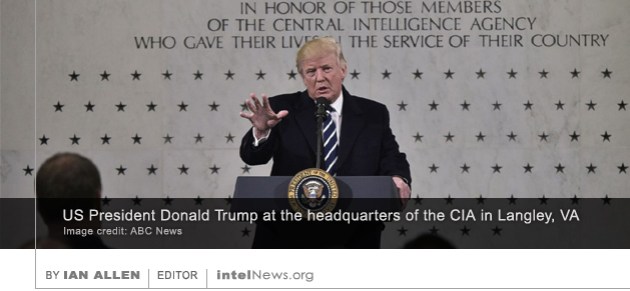
Pakistan denies it plans to release doctor who helped CIA find bin Laden

Dr Shakil AfridiAuthorities in Pakistan have dismissed rumors that a medical doctor who helped the United States Central Intelligence Agency find and kill al-Qaeda founder Osama bin Laden in 2011 is to be released from prison. Dr. Shakil Afridi was arrested in 2011, soon after bin Laden was killed in a CIA operation in the Pakistani city of Abbottabad. In the weeks following the CIA raid, it emerged that a team of local doctors and nurses had helped the American spy agency confirm bin Laden’s presence in the compound. The team of nearly 20 healthcare workers participated in a fake vaccination scheme carried out in Abbottabad, whose true purpose was to collect DNA samples from the residents of the compound where the CIA believed bin Laden was hiding.

Pakistani authorities fired 17 healthcare workers who participated in the CIA scheme and arrested its head, Dr. Afridi. Bizarrely, Dr. Afridi was arrested for having alleged links with an Islamist group that operates in the region, known as Lashkar-e-Islam. He then faced charges for alleged medical malpractice, which, according to the prosecution, resulted in the death of one of his patients. He is currently serving a 33-year prison sentence in Pakistan’s northwestern border city of Peshawar. Ever since his arrest, the US has pressured Pakistan to release Dr. Afridi, and Pakistani media often publish sensational reports about alleged covert attempts by the CIA to free the imprisoned medical doctor. Last week, Dr. Afridi was transported by helicopter from Peshawar to a jail near the village of Adiala, located near Pakistan’s border with the Indian region of Kashmir. Dr. Afridi’s move, which took place amid heavy security, sparked rumors in the media that the alleged CIA agent was about to be released and transported to America.

But on Thursday, Muhammad Faisal, a spokesman for Pakistan’s Ministry of Foreign Affairs, dismissed intense media speculation that Dr. Afridi was about to be released. He also denied that Islamabad was attempting to swap Afridi with Pakistani nationals living in the US, including Aafia Siddiqui, who is serving an 86-year prison term in the US for killing an American soldier in Afghanistan. Additionally, Faisal described as “nonsense” media reports of an alleged failed CIA attempt to organize a jailbreak in Peshawar, in order to free Dr. Afridi.

Author: Joseph Fitsanakis | Date: 4 May 2018 | Permalink

Report reveals deeper CIA role in 1963 Vietnam coup and Diem’s assassination

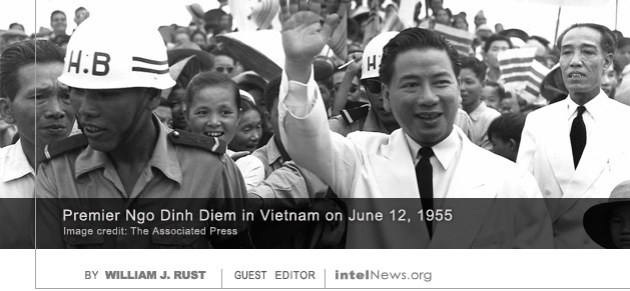
Ngo Dinh DiemA newly declassified report by the Inspector General of the United States Central Intelligence Agency reveals that the South Vietnamese generals who overthrew President Ngo Dinh Diem in 1963 used CIA money “to reward opposition military who joined the coup”. Acknowledging that “the passing of these funds is obviously a very sensitive matter”, the CIA Inspector General’s report contradicts the sworn testimony of Lucien E. Conein, the CIA liaison with the South Vietnamese generals. In 1975, Conein told a United States Senate committee that the agency funds, approximately $70,000 or 3 million piasters, were used for food, medical supplies, and “death benefits” for the families of South Vietnamese soldiers killed in the coup.

The report (.pdf), one of the 19,000 JFK assassination documents released by the US National Archives on Thursday, also contains new details about the South Vietnamese generals’ decision to assassinate Diem that contradict a conclusion of the coup’s history written by the CIA station in Saigon. The majority of the generals, said the CIA at the time, “desired President Diem to have honorable retirement from the political scene in South Vietnam and exile”. According to a newly declassified portion of the 49-page document written by the CIA’s Inspector General, an unidentified field-grade South Vietnamese officer who provided the CIA station with pictures of the bloodied bodies of Diem and his brother and advisor, Ngo Dinh Nhu, said that “most of the generals” favored their immediate execution: “The ultimate decision was to kill them. A Captain Nhung was designated as executioner”.

A redacted version of the Inspector General’s report, dated May 31, 1967, was released by the National Archives in November 2017. In that version of the report, the paragraphs related to the use of CIA funds and the generals’ decision to murder Diem were excised.

* William J. Rust is the author of four books about US relations with Southeast Asia countries during the cold war, including Kennedy in Vietnam. He is currently completing a book about US relations with Indonesia.


CIA seeking new ways to protect officers’ secret identities online, says official

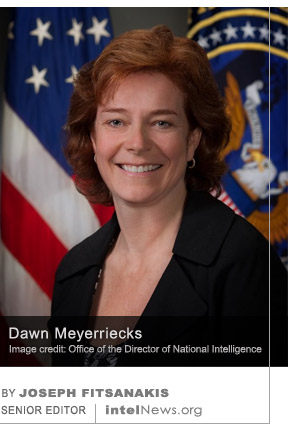
Dawn MeyerriecksIn a rare public appearance on Sunday, a senior member of the United States Central Intelligence Agency discussed ways in which ongoing technological changes pose challenges to concealing the identities of undercover operatives. Dawn Meyerriecks worked in industry for years before joining the CIA in 2013 as deputy director of the agency’s Directorate of Science and Technology. On April 22, she delivered one of the keynote speeches at the 2018 GEOINT Symposium. The meeting was held in Tampa, Florida, under the auspices of the Virginia-based United States Geospatial Intelligence Foundation, which brings together government agencies and private contractors.

In her speech, Meyerriecks discussed what she described as “identity intelligence”, namely the detailed piecing of a person’s identity from data acquired from his or her online activity and digital footprint left on wireless devices of all kinds. This data, combined with footage from closed-circuit television (CCTV) systems and other forms of audiovisual surveillance, poses tremendous barriers to clandestine operations, said Meyerriecks. Today, around 30 countries employ CCTV systems with features so advanced that they render physical tracking of human operatives unnecessary, she added. She went on to warn that the combination of these advanced systems with all-encompassing digital networks in so-called smart cities, as well as with the Internet of things, pose serious threats to the CIA’s ability to operate in secret. Abandoning the online grid is not a solution, said Meyerriecks, because doing so draws attention to the absentee. “If you have […] a six figure or low seven figure income, and you own no real estate, you don’t have any health [or] life insurance policies to speak of, you turn your cell phone off every day from 8:00 to 5:00, who do you work for?”, she said.

These technological challenges will not put an end human intelligence, but they are forcing “a sea of change” in the so-called “patterns of life” of clandestine operatives, said Meyerriecks. These operatives “are going to have to live their cover in a whole different way”, she said without elaborating. Ironically, technology may provide solutions to these challenges, for instance through phone apps that fake the geospatial coordinates of the device —“a growing area of research”, she remarked. Another example of a technological solution to the problem is the use of artificial intelligence algorithms to map CCTV camera networks in urban centers. These maps can help clandestine personnel avoid areas where camera networks are present, noted Meyerriecks.

Author: Joseph Fitsanakis | Date: 25 April 2018 | Permalink

Outgoing CIA director acknowledges US killed ‘couple of hundred’ Russians in Syria

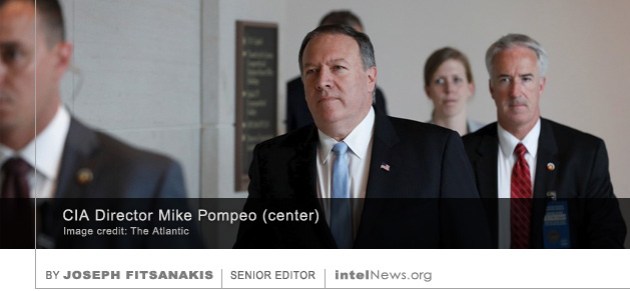
Mike PompeoThe outgoing director of the Central Intelligence Agency, Mike Pompeo, appeared on Thursday to confirm reports from last February that United States troops killed more than 200 Russian soldiers in Syria. According to sources from the US Pentagon, the armed confrontation took place on February 7, when a 500-strong Syrian government force crossed the Euphrates River and entered Kurdish-controlled territory in Syria’s northeastern Deir al-Zour region. US-supported Kurdish forces in the area, which include embedded American troops, responded with artillery fire, while US military aircraft also launched strikes on the Syrian government forces. The latter withdrew across the Euphrates after suffering heavy losses. The US side estimated at the time that over 100 attackers had been left dead, with another 200-300 injured. The toll later rose to several hundred dead.

At a press conference held soon after the armed clash, US Secretary of Defense James Mattis refused to discuss the matter, which he referred to as “perplexing”. Bloomberg said at the time that American officials were “in talks” with Russian counterparts “in search of an explanation for what happened”. On Thursday, however, Pompeo appeared to acknowledge that US troops killed hundreds of Russians in Deir al-Zour. The outgoing CIA director was speaking before a committee of the US Senate, during a hearing pertaining to his nomination to serve as the next US secretary of state. He was making the point that the administration of US President Donald Trump had maintained a hardline policy on Russia. After referring to the recent expulsions of 60 Russian diplomats from the US, Pompeo said: “in Syria, now, a handful of weeks ago the Russians met their match. A couple of hundred Russians were killed”.

Pompeo’s comments were seen by the media as an acknowledgement by a senior US government official of the incident in Deir al-Zour, which has remained shrouded in mystery since it happened. Later in his speech, Pompeo said that the Kremlin had “not yet gotten the full message about US determination to block aggression from Moscow. We need to continue to work at that”, he said.

Author: Joseph Fitsanakis | Date: 13 April 2018 | Permalink

Britain looking to resettle poisoned Russian spy to the United States, says source

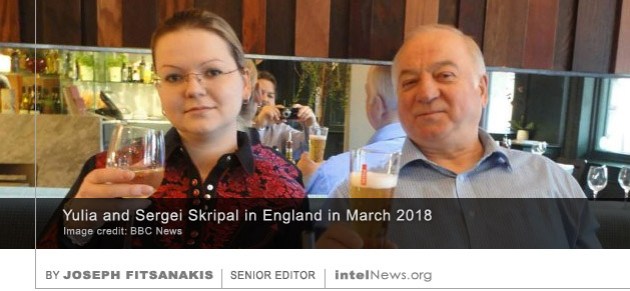
Sergei SkripalThe British government may relocate Sergei Skripal, the Russian double spy who appears to have survived an assassination attempt in England, to the United States, in an effort to protect him from further attacks. The BBC reported last week that Skripal, who had been in a critical condition for nearly a month, was “improving rapidly”. Skripal, 66, who spied for Britain in the early 2000s, and has been living in England since 2010, was poisoned with what London claims was a military-grade nerve agent. Nearly every European country, as well as Canada, Australia and the United States, expelled Russian diplomats in response to the attack on the Russian former spy. His daughter, Yulia, who is 33, also came down with nerve-agent poisoning on the same day as her father, but appears to have survived.

The London-based newspaper The Sunday Times said yesterday that British government officials are exploring the possibility of resettling Skripal and his daughter in an allied country. The paper claimed that the countries being considered for possible relocation belong to the so-called “Five Eyes” agreement (also known as UKUSA), a decades-old pact between intelligence agencies from Australia, New Zealand, Britain, Canada and the United States. The Times quoted “an intelligence source” familiar with the negotiations allegedly taking place between the British government and its UKUSA partners. The source reportedly told the paper that the Skripals “will be offered new identities”, but did not elaborate on how they would avoid attention after their images were published by every major media outlet in the world following last month’s incident in England.

The anonymous source told The Times that “the obvious place to resettle [the two Russians] is America because they are less likely to be killed there and it is easier to protect them there under a new identity”. The paper also reported that Britain’s Secret Intelligence Service, also known as MI6, is holding discussions with its American counterpart, the Central Intelligence Agency, about resettling the Skripals on American soil. But an article published on Sunday in another British newspaper, The Daily Telegraph, said that senior government officials in the United States are now worried that Russian defectors and former spies living there may not be safe. The paper quoted an unnamed “senior US administration official” as saying that Washington has “massive concerns” that US-based Russians who have spied for America, or have publicly criticized the Kremlin, could be targeted just like Skripal. The Times said it contacted the British Foreign Office seeking to confirm whether the Skripals would be relocated abroad, but did not get a response.

Author: Joseph Fitsanakis | Date: 9 April 2018 | Permalink

CIA is running informal negotiation channels with North Korea, say sources

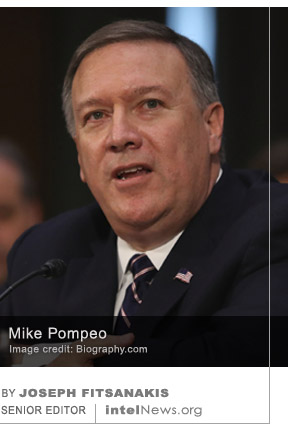
Mike PompeoThe Central Intelligence Agency has reportedly established back channels for negotiation between the United States and North Korea, which the Department of State is now using to communicate with Pyongyang. Rex Tillerson, who was summarily fired as US Secretary of State by President Donald Trump last week, was famously in favor of diplomatic negotiations between the US and North Korea. The White House had resisted and even publicly criticized Tillerson’s views. Ironically, Tillerson was fired just as his pro-diplomacy views on North Korea are being adopted by the White House.

It is now the task of the new US Secretary of State, Mike Pompeo to help facilitate President’ Trump’s desire to meet with North Korean Supreme Leader Kim Jong-un. On Sunday, US television network CBS reported that Pompeo had already established an informal negotiation channel with Pyongyang during his prior post as director of the Central Intelligence Agency. According to CBS, the CIA used the back channel to communicate directly with the North Korean regime, bypassing the Department of State, which is the traditional instrument of US foreign policy. The network quoted “two current and one former” US officials, which it did not name.

Now that Pompeo has been placed in charge of the Department of State, said CBS, he has already tapped into the CIA’s direct line of communication with Pyongyang, and has begun utilizing it as Secretary of State. The CIA remains in charge of the channel, according to the television network. Meanwhile, German news media said on Sunday that North Korea’s missiles could now reach Germany and other areas of Western Europe. The reports quoted Dr. Ole Diehl, deputy director of the BND, Germany’s foreign-intelligence agency, who allegedly made the statement at a closed-door meeting of the Bundestag, Germany’s parliament.

Author: Joseph Fitsanakis | Date: 19 March 2018 | Permalink

Ex-spy chief claims Palestinian officials worked with CIA to wiretap opponents

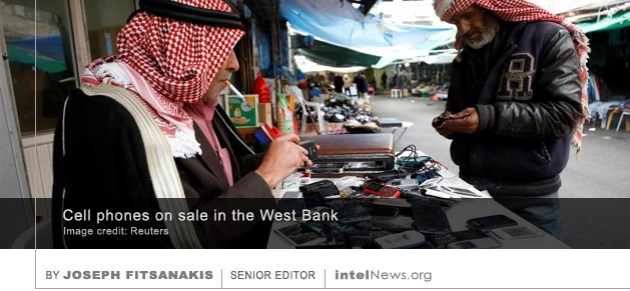
Telephones PalestineThe former head of the Palestinian Authority’s spy agency claims that the Palestinian government in the West Bank worked with the United States Central Intelligence Agency to wiretap thousands without court authorization. Tawfiq Tirawi, who headed the Palestinian General Intelligence from its founding in 1994 to 2008, has filed an official complaint against the Palestinian Authority and is calling for a criminal investigation into the alleged wiretaps. The complaint has also been signed by Jawad Obeidat, who is the president of the West Bank’s Bar Association. It is based on a leaked 37-page document that surfaced last month on the social networking application WhatsApp. The document was leaked by an anonymous individual who claims to have worked for a surveillance unit in the Palestinian Preventive Security Service, the Palestinian Authority’s domestic security service.

The leaked document appears to show that the Palestinian Preventive Security Service reached out to the CIA in 2013 asking for assistance with installing a communications surveillance system in the West Bank. The CIA agreed to provide the system in exchange for access to the intercepted data. The two agencies installed the interception system in the summer of 2014 and initiated what appears to have been a large-scale operation that included thousands of telephone subscribers. Initial targets of the operation included members of Hamas —the Palestinian group that controls the Gaza Strip— as well as members of the Iran-supported Islamic Jihad Movement in Palestine. But, according to the Associated Press, over time the targets of the program expanded to include “thousands of Palestinians, from senior figures in militant groups to judges, lawyers, civic leaders and political allies of Abbas”. The list of targets included Tirawi and Obeidat, who filed the official complaint on Tuesday.

The anonymous leaker of the document said he decided to quit his job and reveal the information about the intercepts after US President Donald Trump shifted Washington’s policy on Israel’s capital, by officially recognizing Jerusalem as the capital of the Jewish state. Earlier in February, the Palestinian Authority dismissed the leaked document as “nonsense” and said it was part of a large conspiracy that sought to harm Palestinian interests. The CIA refused to comment on the allegations.

Author: Joseph Fitsanakis | Date: 07 February 2018 | Permalink

Ex-CIA case officer was arrested after being lured back to US at least once

FBIA former case officer in the Central Intelligence Agency, who was arrested this week for violating the United States Espionage Act, was lured back to America from Hong Kong at least once by counterintelligence investigators, according to reports. Jerry Chun Shing Lee, 53, served in the CIA from 1994 to 2007. He was arrested by Federal Bureau of Investigation officers on Monday, as soon as he arrived in the US from Hong Kong. He is accused of carrying with him top-secret information about CIA agents and operations, which he was not authorized to possess. It now appears that the FBI had been investigating Lee since 2010, and that he was lured to the US in 2012 so that he could be investigated. It is also possible that he was lured back to the US from his home in Hong Kong on Monday, so that he could be arrested by the FBI.

The New York Times said on Wednesday that a consortium of FBI agents and CIA officers identified Lee as a suspect in a counterintelligence case involving the loss of over a dozen CIA assets in China between 2010 and 2012. By that time, Lee had left his job as a case officer —essentially a spy handler— in the CIA and was living in Hong Kong. According to NBC, the FBI decided to lure Lee back to American soil by creating a job for him in the nation’s capital. That was the reason why Lee traveled with his family back to the US in August of 2012. The family stopped in Hawaii, where, according to court documents, the FBI surreptitiously searched Lee’s possessions in a Honolulu hotel. FBI officers also searched Lee’s belongings in a hotel in Virginia a few days later. Lee was found to have with him two notebooks containing “operational notes from asset meetings”, “operational phone numbers” and even “the addresses of CIA covert facilities” —safe houses where CIA case officers meet their assets in privacy.

According to The Times, the FBI confronted Lee five times in subsequent months, but did not inform him that his belongings had been surreptitiously searched or that he had been found to possess classified information without authorization. But the FBI did not press charges against Lee, nor did it prevent him from returning to Hong Kong with his family in the summer of 2013. Instead, it focused on establishing a connection between Lee and the catastrophic loss of CIA assets in China. It was only this week, when Lee returned to the US, that authorities decided to arrest him. The reason why Lee decided to return to the US remains unknown. The possibility that he may have been lured back to the US by the FBI, just as he was in 2012, should not be excluded.

It appears that investigators have not at this point connected Lee with the more serious charge of conveying the classified information to foreign agents. Instead, the former CIA officer is charged simply with possessing top-secret information, but not with communicating it. The charge is believed to be “the same single charge that could have been brought years ago”, namely when Lee was found to be carrying classified information with him in Hawaii.

Author: Joseph Fitsanakis | Date: 18 January 2018 | Permalink

Ex-CIA case officer arrested in New York for violating Espionage Act

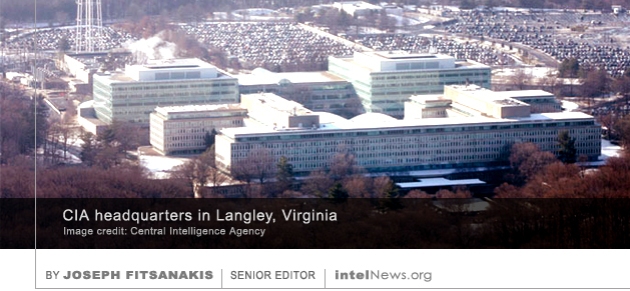
CIAA former operations officer in the United States Central Intelligence Agency has been arrested on charges of illegally possessing top secret information, including lists of real names of foreign assets and addresses of CIA safe houses. The news emerged on Tuesday, as the US Department of Justice announced that the Federal Bureau of Investigation had filed a criminal complaint over the weekend. The complaint identifies the former case officer as Jerry Chun Shing Lee, also known as Zhen Cheng Li. Lee, a 53-year-old naturalized American, served in the CIA from 1994 to 2007 “in various overseas positions and locations”, according to court documents. Lee has reportedly been living in Hong Kong since his retirement from the CIA. He was arrested by FBI officers on Monday, as he arrived on a flight that landed at the John F. Kennedy International Airport in New York.

The FBI criminal complaint alleges that Lee kept on his person a number of notebooks that contained classified details of his CIA work. These included the real names of covert CIA personnel and the real names of foreign assets —providers of intelligence information that are recruited by CIA case officers. The notebooks also contained “operational notes from asset meetings” (presumably meetings between Lee and the assets he handled during his CIA career), “operational phone numbers” and even “the addresses of CIA covert facilities” —safe houses where CIA case officers meet their assets in privacy. From the court documents it appears that the FBI has been investigating Lee since at least 2012. In August of that year, the FBI surreptitiously searched Lee’s possessions in a hotel in Hawaii, where he was staying while on holiday with his family. A few days later, FBI officers also searched Lee’s possessions in a hotel in Fairfax, Virginia, and photographed them.

According to The New York Times, Lee’s arrest is connected with reports last May that the Chinese intelligence services had arrested or killed over a dozen CIA assets in China between 2010 and 2012. There is intense speculation that the Chinese acted on information they received from a mole inside a US intelligence agency, possibly the CIA. But the court documents in Lee’s case do not mention any connection to foreign intelligence and do not accuse Lee of sharing classified information with unauthorized users. As of yesterday evening, the CIA was referring all media inquiries to the Department of Justice.

Author: Joseph Fitsanakis | Date: 17 January 2018 | Research Credit: C.B. | Permalink

Syrian rebels visit Washington to request resumption of CIA assistance

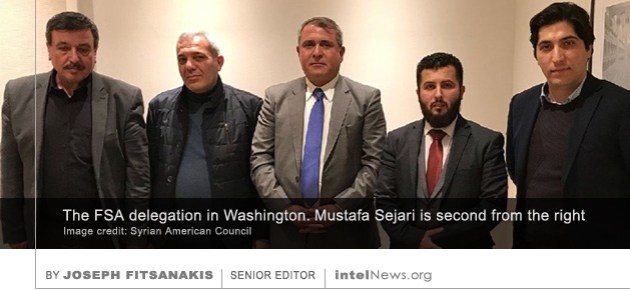
Free Syrian Army delegationA delegation of Syrian rebels is currently in Washington to ask that that United States President Donald Trump authorizes the Central Intelligence Agency to resume giving them military assistance. In 2013, the then-US President Barack Obama instructed the CIA to provide covert support to fighters in Syria. The CIA promptly began to assist fighters affiliated with the Free Syrian Army (FSA), whose goal was to topple the regime of Syrian President Bashar al-Assad. Under the project, which was codenamed TIMBER SYCAMORE, CIA personnel trained FSA fighters and gave them light weaponry. But in July of last year, President Trump abruptly terminated the CIA program, which he called “dangerous and wasteful”.

Now the FSA has sent a delegation to Washington to argue that, if the CIA does not help them, Iranian-backed militias will dominate much of Syria. On Monday, the Reuters news agency quoted Mustafa Sejari, a senior representative of the FSA, who said that the Syrian delegation had met with US Congress members and White House officials. This week they were hoping to speak with representatives from the Departments of State and Defense, said Sejari. Members of the delegation, Sejari told Reuters, “asked for the resumption of aid and explained the dangers of leaving moderate FSA forces without support”. He added that, if the US “is serious about challenging growing Iranian influence in Syria” by Hezbollah and other Shiite militias, it should resume its support of the FSA. Sejari also described Mr. Trump’s decision to end TIMBER SYCAMORE as “damaging”. The FSA, he said “endorse[s] President Trump’s statements about the need to confront Iranian hegemony in the region. It is time to turn words into action”. We went on to claim that “until now on the ground it’s the Iranian militias that are expanding without serious resistance”.

Shortly after President Trump announced his decision to terminate CIA support for the FSA, some experts warned that the move could backfire by causing the suddenly unemployed fighters to join jihadist organizations, if only to secure sources of income. In late August, it was reported that US troops deployed in Syria had exchanged fire with former FSA rebels that were now led by Turkish-trained commanders. In a related development, the government of Turkey dismissed on Monday plans by the US military to train members of the Kurdish Syrian Democratic Forces (SDF) as “terror army” tactics. The US-led coalition in Syria said that it planned to train a 30,000-strong SDF force as a professional army that could maintain control of the territories captured last year from the Islamic State.

Author: Joseph Fitsanakis | Date: 16 January 2018 | Permalink

Turkey issues warrant for ex-CIA officer over alleged role in 2016 coup

Recep Tayyip ErdoğanThe Turkish government has issued a warrant for the arrest of a former officer in the United States Central Intelligence Agency, which Ankara claims was instrumental in the failed July 2016 attempt to topple the government of Turkish President Recep Tayyip Erdoğan. The move comes amidst heightened tensions in relations between Ankara and Washington. The two NATO allies have partially revoked entry visas for each other’s citizens, while it is alleged that Michael Flynn, US President Donald Trump’s former national security advisor, had an illegal agreement with Turkey to help abduct a Turkish dissident cleric living in Pennsylvania and help transport him to Turkey.

The warrant was issued on December 1 by the Office of the Chief Public Prosecutor in Istanbul. It seeks the arrest of Graham Fuller, an 80-year-old former analyst in the CIA, who lives in Canada. The warrant identifies Fuller as a “former CIA official” and claims that he attempted to “overthrow the government of the Republic of Turkey” and obstruct “the missions” of the Turkish government. The reference here is to the July 2016 coup, which the Turkish government claims was carried out by the so-called Gülen movement. The Gülen movement consists of supporters of Muslim cleric Fethullah Gülen, who runs a global network of schools, charities and businesses from his home in the United States. The government of Turkey has designated Gülen’s group a terrorist organization and claims that its members have stealthily infiltrated Turkish state institutions since the 1980s. Ever since the failed coup, Ankara has engaged in a controversial campaign to remove so-called Gülenists from prominent posts in government and the private sector. More than 50,000 people have been arrested on terrorism charges and are awaiting trial. Another 150,000 public and private sector employees have been summarily fired from their job.

Many in Turkey accuse the CIA of having colluded with Gülenists to topple Erdoğan’s pro-Islamist government. Fuller is accused of having strong links with Gülen and of having been instrumental in helping the exiled cleric receive permanent residency in the US. Some Turkish media claim that Fuller acted as a “CIA handler” of Gülen, who is accused of being a CIA agent. Fuller’s CIA career involved a tour in Turkey in the 1960s. He concluded his career as a member of the US National Intelligence Council, a body that helps coordinate the US Intelligence Community’s broad and long-term strategic planning. In 1988, Fuller joined the RAND Corporation, a research think-tank with close links to the US Department of Defense. After 2006, he taught history at Simon Fraser University in Vancouver, Canada, where he lives today.

Fuller emailed a statement to major news agencies on Friday, rejecting the Turkish government’s allegations and saying that Ankara was using him as “a choice target”. The former CIA officer said he had not been to Turkey in over five years, and that he had only met Gülen once in 2002 in Istanbul. At that time, said Fuller in his statement, he had been out of the CIA for 15 years. Further on in his statement, Fuller said that he understood why some Turks accused the CIA of having planned the 2016 coup, given the agency’s history of meddling in domestic Turkish politics. However, he said he had nothing to do with the coup attempt, which he described as “pathetic, ill-conceived and amateurish”. The CIA has not commented on Ankara’s allegations.

Author: Joseph Fitsanakis | Date: 04 December 2017 | Permalink

Trump administration allegedly considering plan to privatize CIA operations

Trump CIAThe United States Central Intelligence Agency and the White House are considering several proposals to hire private companies to carry out covert operations abroad, according to a report. BuzzFeed News said on Thursday that the proposals were communicated to the White House in the summer. The news site, which described the proposed plans as “highly unusual”, quoted “three sources who have been briefed on or have direct knowledge of the proposals”. The sources told BuzzFeed that, if approved, the plans would include the establishment of large intelligence networks in so-called “denied areas” —namely foreign environments deemed hostile. The networks would recruit and handle local agents, carry out psychological operations, capture terrorism suspects and rendition them to the US or third countries. “Islamic extremism” is mentioned as the primary target of the proposals.

According to BuzzFeed, one of the proposals involves Amyntor Group, a private company headquartered in the remote town of Whitefish, in northwestern Montana. The company is staffed by former members of the US Intelligence Community who have security clearances. It specializes in intelligence training and risk assessment. But it also collects and analyzes intelligence and provides counterintelligence services for government agencies in America and what it calls “friendly foreign governments” abroad. The company has reportedly been holding discussions with senior officials in the administration of President Donald Trump in recent weeks, according to two of BuzzFeed’s sources. The same sources say that the move toward privatization of some intelligence operations is being led by a feeling in the Trump administration that the CIA has a negative view of the White House. They claim that the CIA is not prepared to go along with the Trump administration’s efforts to make the agency’s operations more aggressive and, in the words of its new director, Mike Pompeo, “much more vicious”. They therefore see privatization as a way to bypass the resistance and skepticism of the CIA’s upper management.

BuzzFeed said it contacted the CIA about the Amyntor Group proposal, but the agency preferred not to comment. A press officer for the National Security Council, which is chaired by President Trump, said that its members were not aware of the privatization proposals. Amyntor Group commented through one of its lawyers, who told BuzzFeed that any contract signed between the company and the US government would be directed and controlled “by the proper government authority”.

Author: Joseph Fitsanakis | Date: 01 December 2017 | Permalink

MI5 releases new information about Soviet ‘Portland Spy Ring’

DocumentFiles released on Monday by the British government reveal new evidence about one of the most prolific Soviet spy rings that operated in the West after World War II, which became known as the Portland Spy Ring. Some of the members of the Portland Spy Ring were Soviet operatives who, at the time of their arrest, posed as citizens of third countries. All were non-official-cover intelligence officers, or NOCs, as they are known in Western intelligence parlance. Their Soviet —and nowadays Russian— equivalents are known as illegals. NOCs are high-level principal agents or officers of an intelligence agency, who operate without official connection to the authorities of the country that employs them. During much of the Cold War, NOCs posed as business executives, students, academics, journalists, or non-profit agency workers. Unlike official-cover officers, who are protected by diplomatic immunity, NOCs have no such protection. If arrested by authorities of their host country, they can be tried and convicted for engaging in espionage.

The existence of the Portland Spy Ring has been known since 1961, when British authorities arrested five people throughout England. Two of them were British citizens, Harry Houghton, a clerk at the Royal Navy’s Underwater Detection Establishment facility in Dorset, England, and his mistress, Ethel Gee. Their Soviet handler was Konon Molody, a Soviet intelligence officer who was posing as a Canadian, under the name Gordon Lonsdale. Also arrested was a married couple from New Zealand, Peter and Helen Kroger. But in reality they were Americans, whose real names were Morris and Lona Cohen, and had worked for Soviet intelligence since the late 1930s. Collectively, the five were referred in media reports as members of the Portland Spy Ring.

The newly declassified files about the spy ring were released by the Security Service, known commonly as MI5, Britain’s primary counterterrorism and counterintelligence agency. They reveal how British authorities managed to bust the Portland Spy Ring. According to the files, the initial tip-off came from the Central Intelligence Agency (CIA). The American agency had managed to recruit Michael Goleniewski, codename SNIPER, a Polish military counterintelligence officer, who led the technical office of Poland’s military intelligence. In the spring of 1960, Goleniewski told the CIA that Polish intelligence were running a British agent who was recruited while serving in the office of the naval attaché at the British embassy in Warsaw. The CIA shared the information with British intelligence, who soon identified the agent as Harry Houghton in Dorset. MI5 agents followed Houghton and his girlfriend, Ethel Gee, as they met with a successful Canadian businessman in London, Gordon Lonsdale (real name Konon Molody). Molody had grown up with a family member in California in the 1930s, and spoke fluent English. He had joined Soviet intelligence during World War II and sent to Britain posing as a Canadian. When he arrived there, in 1954, he established the KGB’s first known illegal residency in the British Isles.

In turn, Molody led MI5 to Peter and Helen Kroger from New Zealand (real names Morris and Lona Cohen), who were posing as antique book dealers. The couple acted as couriers, radio operators and technical support officers for Molody. They were born in the United States and had been recruited by Soviet intelligence in the 1930s. It is now known that they had contacts with several other Soviet illegals in America, including Rudolf Abel (real name William Fisher) who was captured by the Federal Bureau of Investigation in 1957. The couple had left the United States on orders of the KGB in 1952 and reappeared in the United Kingdom using New Zealand passports and new names.

The newly declassified documents show that MI5 decided to move against the five members of the Portland Spy Ring after Goleniewski became an open defector and was exfiltrated to the United States by officers in the CIA’s Berlin station. British authorities feared that Goleniewski’s open defection would prompt the Soviets to pull out Houghton, whose identity was known to Goleniewski. Houghton and Gee were sentenced to 15 years in prison. They were released in 1970, married the following year, and died in the 1980s. Molody was sentenced to 25 years in prison but was released in 1964 and exchanged for Greville Wynne, a British spy captured in the USSR. The Cohens received 20 year sentences, but were released in 1969 and exchanged with Gerald Brooke, a British teacher who was arrested in the USSR for smuggling anti-communist literature and trying to organize dissidents inside the country.

Author: Joseph Fitsanakis | Date: 28 November 2017 | Permalink
CIA believed Yugoslavia was on the brink of going nuclear in 1975

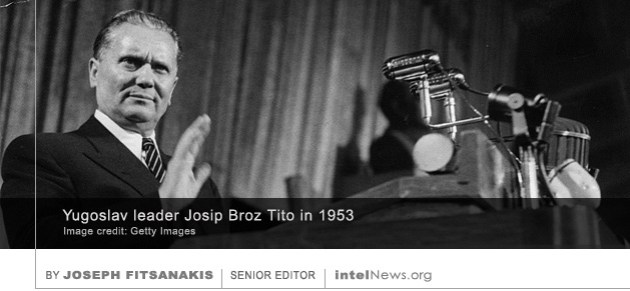
Josip Broz TitoThe United States Central Intelligence Agency believed that Yugoslavia was on the brink of becoming a nuclear-armed state in 1975, due partly to assistance from Washington, according to newly declassified documents. The documents, which date from 1957 to 1986, were unearthed by Dr Filip Kovacevic, a Montenegrin expert on American foreign policy who teaches at the University of San Francisco in California. He accessed the documents in October of this year, after filing a Freedom of Information Act request with the CIA in 2016. In response, the spy agency sent Dr Kovacevic eight different files consisting of 84 pages of formerly classified scientific studies, analytical estimates and other reports.
The documents show that the CIA placed the beginning of the Yugoslav nuclear program at the end of World War II. At that time, the multi-ethnic Balkan country became the focus of an intense campaign for influence by the two emerging superpowers, the United States and the Soviet Union. But Yugoslavia’s communist leader, Josip Broz Tito, opted for a policy of nonalignment, refusing to side with Washington or Moscow. It was at that time that Tito began to explore the creation of a nuclear arsenal, which he hoped would enable Yugoslavia to remain independent amidst the pressures of the Cold War. Interestingly, his plans were quietly supported by the US, which invited Yugoslav physicists and engineers to study and conduct research at American universities. Washington also sent teams of geologists to conduct surveys across Yugoslavia in 1952. These and subsequent surveys detected substantial uranium deposits in northern and southern Yugoslavia, which were deemed sufficient to fuel several nuclear bombs. Two decades later, an American manufacturing company, Westinghouse Nuclear, was contracted by Belgrade to build Yugoslavia’s first nuclear power plant in Slovenia.

The papers unearthed by Dr Kovacevic suggest that in 1975 the CIA was convinced that Yugoslavia was technically and financially capable of building an atomic weapon within four years. In a study entitled “Prospects for Further Proliferation of Nuclear Weapons”, the spy agency said that Belgrade had made remarkable technical strides in the area of nuclear research and production in 15 years, partly with America’s support. The only question was whether the Yugoslav leadership would decide to go nuclear, something that the CIA’s analysts warned that it would be difficult to ascertain, as President Tito was unpredictable in his decision-making. Eventually, the Yugoslav leader opted to beef up his country’s conventional forces instead of going nuclear. As Tito’s health worsened in the latter half of the 1970s, ethnic rivalries between competing officials took center stage, and the nuclear weapons question lost its immediacy. Tito died in 1980, and almost immediately the country began to sink under the weight of deepening ethnic tensions.

According to Dr Kovacevic, the CIA documents show that the agency kept close tabs on Yugoslavia’s nuclear ambitions throughout the Cold War. Moreover, CIA analysts appeared to have detailed, accurate and up-to-date information about the Yugoslav nuclear program, on which they based their —broadly accurate— estimates. Crucial pieces of information came from the CIA’s “well-organized network of informants” who were placed “across the country’s institutions” and provided the US with highly dependable intelligence on Tito’s nuclear plans, said Dr Kovacevic.

Author: Joseph Fitsanakis | Date: 23 November 2017 | Permalink

Revealed: China arrested US diplomat believing him to be CIA officer

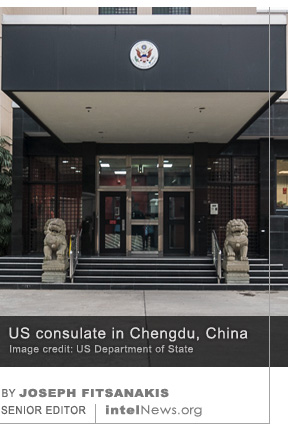
US Consulate ChengduAn American diplomat stationed in China was abducted and interrogated for several hours by Chinese authorities, who believed him to be an officer of the Central Intelligence Agency working under official cover. The alleged abduction took place in early 2016 but was revealed this week by the online news outlet Politico. The website said that the diplomat, who has not been named, was stationed at the United States consulate general in Chengdu, a city of 14 million that is the administrative capital of western China’s Sichuan province. Founded in 1985, the US consulate in Chengdu is one of Washington’s seven diplomatic and consular posts in China. It is staffed by 130 people, approximately 30 of whom are Americans and 100 are locally hired Chinese citizens. The facility’s consular district includes several Chinese provinces, including the politically sensitive Tibet Autonomous Region.


On Wednesday, Politico said it spoke with “more than half a dozen current and former national security officials” in the US, who confirmed that an American diplomat stationed at the Chengdu consulate was abducted and detained for several hours. The website said that the abduction took place in January 2016. The diplomat was reportedly “grabbed off the street” in the middle of the day by plainclothes Chinese officers and driven to a detention facility in an unmarked van. He was allegedly kept there for several hours despite his diplomatic status with full immunity, which protects diplomats from being subjected to arrest and detention in the host country. American officials claim that the Chinese authorities did not notify the US consulate of the diplomat’s whereabouts until several hours later. By that time, the diplomat had been aggressively interrogated and his responses had been filmed by his captors, who claimed that he was an officer of the CIA. He was later released but left the country soon afterwards, according to Politico.

American officials told the website that the diplomat’s abduction was “an unusually bold act” that illustrates an ongoing and increasingly tense confrontation between Chinese and American intelligence services. Several American diplomats told Politico that Chinese authorities followed them around and in some cases broke into their apartments and “searched their rooms and belongings”. According to the news website, Washington responded to the American diplomat’s abduction by issuing a formal protest and threatening to expel Chinese intelligence officers operating in the US with diplomatic cover. However, it is not believed that the threat materialized.

Author: Joseph Fitsanakis | Date: 13 October 2017 | Permalink