Australia rejected CIA request to open embassy in North Korea
September 20, 2017 Leave a comment
 Australia rejected a secret request by the United States Central Intelligence Agency to open an embassy in North Korea, which the Americans hoped to use as a base from where to collect intelligence on the communist state. According to The Australian newspaper, Washington approached the Australian government because it is one of the few pro-Western governments that continue to maintain cordial diplomatic relations with Pyongyang. Up until 1975, Australia was a rare example of a country that hosted embassies of both South Korea and North Korea on its soil. But when Canberra took South Korea’s side in a United Nations vote, the North Koreans objected by shutting down their embassy in Australia. A quarter of a century later, in 2000, Pyongyang reopened its embassy in the Australian capital, only to close it down again in 2008, due to financial constraints.
Throughout that time, Australia has maintained relatively smooth diplomatic relations with North Korea, but has refrained from opening a residential mission in the communist country. Instead, employees of Australia’s embassy in South Korea occasionally travel to the North to perform diplomatic tasks. But in 2014, the US Department of State reached out to Canberra to request that the Australian government consider the possibility of establishing a permanent residential mission in Pyongyang. According to The Australian, the request came from the CIA, which hoped to use the Australian embassy as a base from where to collect intelligence on the isolated country. The US, which lacks an embassy in North Korea, has always found it difficult to collect intelligence there.
The American request was promptly communicated to the then-Prime Minister Tonny Abbott and his Minister of Foreign Affairs, Julie Bishop. Both appeared willing to consider Washington’s proposal. But the civil servants of the Department of Foreign Affairs and Trade, who were tasked with putting together a cost-benefit analysis of the request, came back with a negative response. They allegedly contacted their colleagues working in other countries who maintain permanent residential diplomatic missions in Pyongyang. They told them that their consular employees are kept in complete isolation from North Korean society and government. Additionally, they are subjected to constant surveillance by the North Koreans, who are extremely suspicious of all foreign diplomats. Moreover, Canberra was worried that opening an embassy in Pyongyang would inevitably be seen by the North Koreans as an invitation to reopen their embassy in Australia. It would require significant effort and resources to monitor the activities of North Korean diplomats, who are notorious for abusing their diplomatic status by engaging in illicit activities of all kinds.
Eventually, therefore, the US request was rejected by Australia’s Department of Foreign Affairs and Trade. The latter concluded that Canberra should not proceed with opening a new embassy in Pyongyang, despite the allegedly “strong suggestion” of the CIA. The matter, said The Australian, never reach the cabinet and Washington never brought it up again.
► Author: Joseph Fitsanakis | Date: 20 September 2017 | Permalink
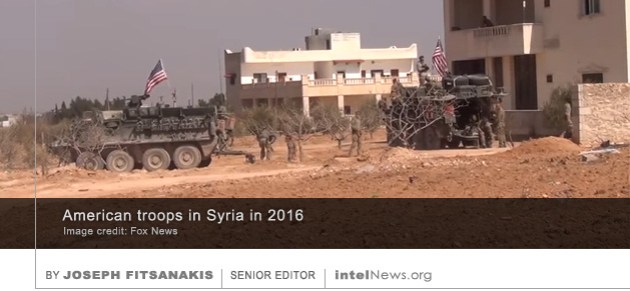 American troops deployed in Syria have exchanged fire with rebels that were until recently supported by the United States Central Intelligence Agency. In 2013, soon after the outbreak of the Syrian Civil War, the then-US President Barack Obama instructed the Central Intelligence Agency to provide covert support to fighters in Syria. Acting on the president’s directive, the CIA promptly joined forces with spy agencies from Britain, France, Saudi Arabia and the United Arab Emirates, to assist fighters affiliated with the Free Syrian Army. At that time, Washington saw the Free Syrian Army and forces affiliated with it as ideologically moderate. It also agreed with the group’s main aim, which was to topple the regime of Syrian President Bashar al-Assad.
 The United States Central Intelligence Agency recently warned Spanish authorities that the Islamic State planned to attack Barcelona, according to Spanish media. The disclosure follows Thursday’s dramatic events in the Catalan capital, where a white van deliberately drove into a crowd in the pedestrian mall of La Rambla, killing at least 16 people and injuring more than 100. The attack was followed by reports early on Friday that Catalan police had shot dead four suspects who were planning a second strike.
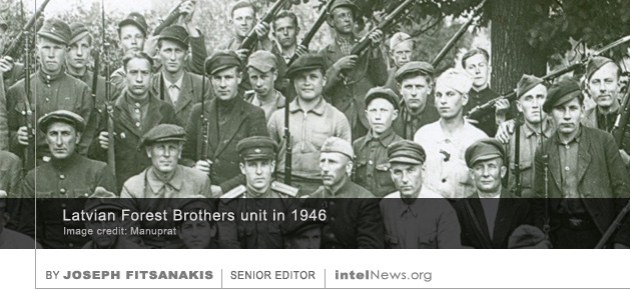 The role of the CIA in funding and helping to organize anti-Soviet groups inside the USSR has been known for decades. But, as intelNews explained in
 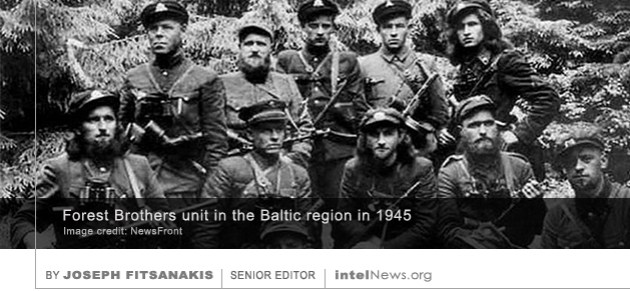 Recently declassified documents from the archive of the Central Intelligence Agency detail financial and material support given by the United States to groups of armed guerrillas in Soviet Latvia in the 1950s. The documents, initially marked ‘Top Secret’ but now declassified, show that the CIA was aware and supported the activities of an anti-Soviet guerrilla army known as ‘the Forest Brothers’. Known also as ‘the Forest Brethren’, the group was formed in the Baltic States in 1944, as the Soviet Red Army established Soviet control over the previously German-occupied states of Estonia, Latvia and Lithuania. The Soviet Union had previously occupied and annexed the three Baltic countries, in a failed attempt to pre-empt Germany’s eastward military expansion. Groups like the Forest Brothers consisted of the most militant members of anti-Soviet groups in the Baltic States, many of whom were ideologically opposed to Soviet Communism.
 The decision by the White House to terminate American support for rebels in war-torn Syria could backfire by causing the suddenly unemployed fighters to join jihadist organizations, according to experts. The United States’ support for the rebels began in secret in early 2013, after the then US President, Barack Obama, instructed the Central Intelligence Agency to provide covert support to fighters in Syria. The CIA then joined forces with spy agencies from Britain, France, Saudi Arabia and the United Arab Emirates, to assist fighters affiliated with the Free Syrian Army. At that time, Washington saw the Free Syrian Army and forces affiliated with it as ideologically moderate. It also agreed with the group’s main aim, which was to topple the regime of Syrian President Bashar al-Assad.
 A contractor for the United States Central Intelligence Agency has complained in an interview that no action has been taken in the seven years since he revealed a “billion-dollar fraud” and “catastrophic intelligence failure” within the Agency’s ranks. John Reidy argues that his case illustrates the unreasonable delay that impedes investigations by whistleblowers like him inside the CIA. Individuals like him, he argues, are forced to seek justice through leaks to the media, something which could be avoided if the CIA’s Office of the Inspector General addressed concerns more promptly.
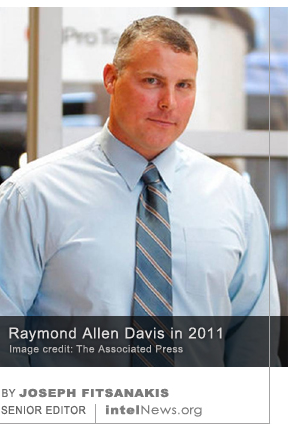 A former contractor for the United States Central Intelligence Agency, who was released from a Pakistani prison in 2011 despite being implicated in a double murder there, says he was freed with the help of senior Pakistani officials. Raymond Allen Davis was a CIA contractor posted in the US consulate in Pakistan’s Punjabi capital, Lahore, which is also the country’s second-largest city. It has been
 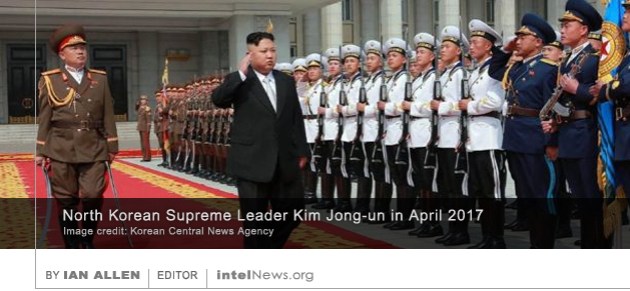 The United States Central Intelligence Agency has announced the establishment of a new center focusing on North Korea, shortly after Pyongyang accused Washington of plotting to assassinate its supreme leader. Last week, the regime’s Vice Minister of Foreign Affairs, Han Song Ryol, said the CIA tried to kill North Korean Supreme Leader Kim Jong-un. He was speaking during a meeting with foreign diplomats in the North Korean capital, where he
 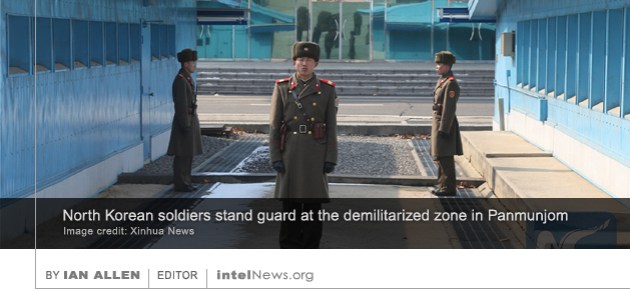 The director of the United States Central Intelligence Agency made an unannounced visit to South Korea over the weekend, to discuss the rising tensions in the Korean Peninsula with his South Korean counterpart and other senior officials. A spokesperson from the US embassy in Seoul made an official
 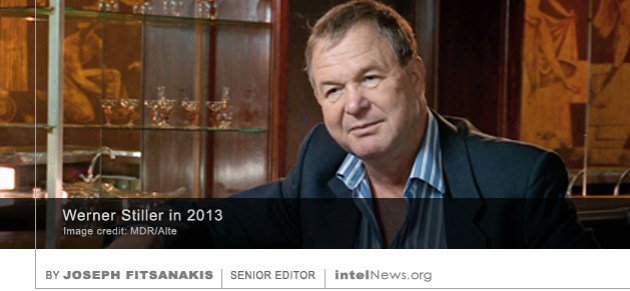 Werner Stiller, also known as Klaus-Peter Fischer, whose spectacular defection to the West in 1979 inflicted one of the Cold War’s most serious blows to the intelligence agency of East Germany, has died in Hungary. Stiller, 69, is believed to have died on December 20 of last year, but his death was not
 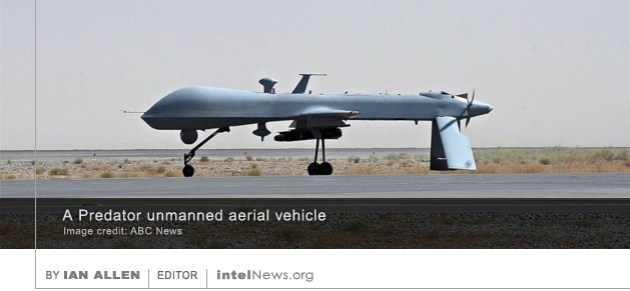 United States President Donald Trump has reportedly authorized the Central Intelligence Agency to bring back the routine use of lethal airstrikes by unmanned aerial vehicles (UAVs), which his predecessor, Barack Obama, curtailed in 2013. Washington began employing limited strikes by UAVs, otherwise known as drones, in the early 1990s, during the administration of President Bill Clinton. But it was under the Obama administration that the use of drone strikes reached an all-time high, with hundreds of such attacks documented after 2008. It is believed that Obama used this remote attack method to combat the Taliban and al-Qaeda, while at the same time keeping his promise of bringing back American troops from the Middle East and Central Asia. However, in 2013 the US president severely curtailed the controversial program, which some say damaged America’s image by inflicting civilian casualties.
 The United States federal government has launched a criminal investigation into the public disclosure of thousands of documents that purportedly belong to the Central Intelligence Agency. The documents were







Trump’s CIA director outlines plans to make agency more aggressive, cut red tape
October 5, 2017 by Joseph Fitsanakis 4 Comments
On Wednesday, Pompeo was the keynote speaker at a one-day conference on intelligence, hosted at George Washington University in Washington, DC. Entitled Ethos and Profession of Intelligence, the conference was co-sponsored by George Washington University and the CIA. In his speech, Pompeo outlined his plans to make CIA operations more aggressive and cut back what he repeatedly described as “red tape” at the agency. He based his observations on his opinion that the CIA is slow, not agile enough, and excessively centralized in its decision making. He added that, to better protect American national security, the Agency should engage in more offensive methods of intelligence collection. He went on to state that the most effective way to make the CIA more agile as an organization was to decentralize its decision-making processes. To do so, he said, decisions had to be pushed “to the lowest level possible”, thus allowing CIA station chiefs around the world to “call the shots” on operations. That was especially applicable to “tactical issues”, where the person with the most direct knowledge of the situation “is rarely me or anyone in my senior leadership team”, said Pompeo.
The CIA director went on to say that his plan is to “cut red tape” through various ways. One such way is reducing the numbers of CIA personnel that are required to review and approve intelligence operations, he said. Another way is increasing the number of CIA operations officers stationed abroad, thus placing CIA personnel closer to the agency’s intelligence targets. The goal is to “deploy our people, tools and resources into the heart of the fight”, said Pompeo. The CIA director concluded his remarks by saying he wants to instill a new culture at the Agency, based on the motto: “If you are in a process and you’re not adding value, get out of the way”.
► Author: Joseph Fitsanakis | Date: 05 October 2017 | Permalink
Filed under Expert news and commentary on intelligence, espionage, spies and spying Tagged with CIA, conferences, George Washington University, intelligence planning, Mike Pompeo, News, United States