Cold War files show CIA support for guerrilla warfare inside USSR (Part II)

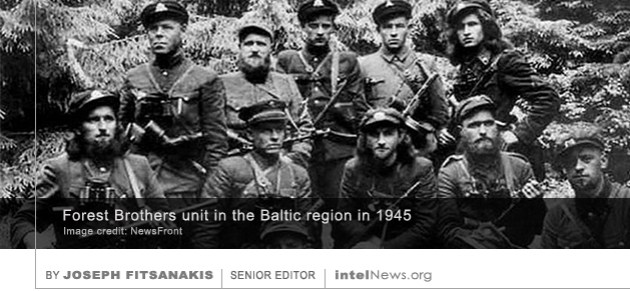
Latvia Forest BrothersThe role of the CIA in funding and helping to organize anti-Soviet groups inside the USSR has been known for decades. But, as intelNews explained in part I of this article, a batch of recently released documents, unearthed by Russian-language service of Latvian state television, sheds light into the CIA’s early understanding of the identity, strength and operations of these groups. They also contain new information about the background and structure of underground anti-Soviet groups like the Forest Brothers in Latvia.

Judging that Latvia’s anti-Soviet underground movement could be “of considerable operational value”, the CIA initiated project ZRLYNCH in the summer of 1950. Operated out of the CIA’s Munich station in Germany, ZRLYNCH was intended as a long-term project supervised by the Office of Policy Coordination, an early Cold War covert operations outfit that in 1952 was absorbed into the CIA’s Directorate of Operations. The Latvia operation was part of a wider effort by the CIA, which was aimed at subverting Soviet power in Eastern Europe.

For the first year of ZRLYNCH, the CIA’s Office of Policy Coordination asked for —and received— a budget of $30,000. The top-secret document unearthed recently by Latvian state television states that the budget was to be used primarily for intelligence collection inside Soviet territory, as well as for covert operations by the Forest Brothers (for information about the group, see part I of this post). The latter were to conduct sabotage activities as part of organized guerrilla warfare. These activities are not specified in the CIA documents. By the end of the first year, it appears that the CIA had recruited three Latvian agents in Europe (one in Sweden and two in Germany), who were acting as mediators between the CIA and the Forest Brothers inside the USSR. Less than three years later, the ZRLYNCH budget had risen to $134,000, with $52,000 going toward covert —mostly psychological— operations and the rest being used to fund intelligence collection efforts. The CIA was also funding the travel expenses of leading Latvian émigré figures in the US, and was diverting tens of thousands of dollars toward Latvian émigré conferences in America, which aimed to unite the various political factions of the fragmented Latvian community in the States.

But the CIA officers behind ZRLYNCH were extremely concerned about operational security. They did not want the Kremlin finding out that the Agency was behind efforts to stir up armed resistance against Soviet power in the Baltic region. One CIA document states that there would be no tolerance for “any breaches of security” that compromised ZRLYNCH. Consequently, any action that uncovered the link between the US government and the Forest Bothers would lead “to an immediate cessation of financial support” for ZRLYNCH, states the memo.

Ultimately, ZRLYNCH failed to seriously challenge Soviet power in Latvia. Most of the members of the Forest Brothers were killed during Red Army counterinsurgency operations, and much of the organization’s structure was penetrated by agents of Soviet intelligence. Eventually, the Forest Brothers became extinct in 1957, when their last members emerged from the forest and surrendered to Latvian and Soviet authorities.

Author: Joseph Fitsanakis | Date: 11 August 2017 | Permalink
Cold War files show CIA support for guerrilla warfare inside USSR (Part I)

Latvian Forest BrothersRecently declassified documents from the archive of the Central Intelligence Agency detail financial and material support given by the United States to groups of armed guerrillas in Soviet Latvia in the 1950s. The documents, initially marked ‘Top Secret’ but now declassified, show that the CIA was aware and supported the activities of an anti-Soviet guerrilla army known as ‘the Forest Brothers’. Known also as ‘the Forest Brethren’, the group was formed in the Baltic States in 1944, as the Soviet Red Army established Soviet control over the previously German-occupied states of Estonia, Latvia and Lithuania. The Soviet Union had previously occupied and annexed the three Baltic countries, in a failed attempt to pre-empt Germany’s eastward military expansion. Groups like the Forest Brothers consisted of the most militant members of anti-Soviet groups in the Baltic States, many of whom were ideologically opposed to Soviet Communism.

The role of the CIA in funding and helping to organize anti-Soviet groups inside the USSR has been known for decades. But the recently released documents, unearthed by Russian-language service of Latvian state television, shed light into the CIA’s early understanding of the identity, strength and operations of these groups. They also contain new information about the background and structure of underground anti-Soviet groups like the Forest Brothers in Latvia.

The first declassified CIA document that contains information on anti-Soviet resistance in Latvia is dated November 29, 1949, and is titled “The Organization of the Underground Resistance Movement in Eastern Europe”. It was soon followed by two other documents, entitled “Latvian Resistance to Russian Occupation” and “Request for [Support] to the Latvian Resistance Movement”. The latter document was produced in mid-1950, after the CIA was able to establish contact with anti-Soviet Latvian expatriates living in Germany and Sweden. From these contacts, the CIA was able to determine that active (and possibly armed) resistance to the Soviet Red Army in Latvia was limited to approximately 5,000 individuals, many of whom conducted periodic guerrilla attacks against Soviet troops or installations. However, the CIA report said that, as of 1950, the majority of these armed guerrillas remained dormant, “waiting for a more opportune moment” to return to action. The CIA memorandum also stated that clandestine radio communication existed between the leadership of Latvia’s anti-Soviet underground in Riga and exile Latvian communities in Sweden.

Note: Part II of this report can be found here.

Author: Joseph Fitsanakis | Date: 10 August 2017 | Permalink

CIA’s withdrawal from Syria could cause pro-US rebels to join Islamists, experts warn

Free Syrian ArmyThe decision by the White House to terminate American support for rebels in war-torn Syria could backfire by causing the suddenly unemployed fighters to join jihadist organizations, according to experts. The United States’ support for the rebels began in secret in early 2013, after the then US President, Barack Obama, instructed the Central Intelligence Agency to provide covert support to fighters in Syria. The CIA then joined forces with spy agencies from Britain, France, Saudi Arabia and the United Arab Emirates, to assist fighters affiliated with the Free Syrian Army. At that time, Washington saw the Free Syrian Army and forces affiliated with it as ideologically moderate. It also agreed with the group’s main aim, which was to topple the regime of Syrian President Bashar al-Assad.
Codenamed TIMBER SYCAMORE, the CIA program was designed to mirror a similar project run by the US military in support of local troops fighting the Islamic State. On the one hand, the White House wanted to use the CIA’s support for the FSA to weaken militarily the regime in Damascus. On the other hand, Washington hoped that the CIA’s involvement in the region would be able to control the influx of weapons, money and fighters that were streaming in from neighboring countries. Under TIMBER SYCAMORE, for over three years, CIA personnel trained Free Syrian Army fighters in irregular warfare, while also providing them with light weaponry including machine guns, sniper rifles and off-road vehicles.

But on July 19 of this year, US President Donald Trump abruptly ended the CIA program, which he called “dangerous and wasteful”. Some observers argued that the termination of TIMBER SYCAMORE was an attempt by the Trump administration to come to an agreement with Russia on Syria. It is believed that America’s local allies, such as Saudi Arabia and the United Arab Emirates, are also terminating their clandestine support for the Free Syrian Army, not wishing to go against the White House. This development, therefore, may signal the effective termination of substantial foreign support for the most important anti-Assad rebel group in Syria.

What does that mean for the fate of the Free Syrian Army and its thousands of fighters? Some experts say that their fate is uncertain, and warn that some of them may turn against their former benefactors. Writing in The Christian Science Monitor, Taylor Luck, said earlier this week that the Free Syrian Army reported 50 defections of its fighters in July. Some of these fighters, says Luck, are joining the Pentagon’s program in support of forces fighting the Islamic State, and are currently heading to the eastern and northern battlefronts. But many others are being tempted to join al-Qaeda affiliated groups, who are still fighting President Assad’s forces. Many do so for financial reasons, after seeing their CIA income suddenly disappear. Others, says Luck, are feeling very emotional and bitter against what they see as a betrayal by Washington. “We lost our brothers, our sisters, our children”, says one of these fighters, before vowing to fight Assad until the end. According to Luck’s report, Saudi Arabia and the United Arab Emirates are trying to come up with ways to continue to pay the Free Syrian Army rebels, in an attempt to stop them from joining rival jihadist groups.

Author: Ian Allen | Date: 04 August 2017 | Permalink

CIA whistleblower complains of seven-year inaction by Agency’s inspector general

CIAA contractor for the United States Central Intelligence Agency has complained in an interview that no action has been taken in the seven years since he revealed a “billion-dollar fraud” and “catastrophic intelligence failure” within the Agency’s ranks. John Reidy argues that his case illustrates the unreasonable delay that impedes investigations by whistleblowers like him inside the CIA. Individuals like him, he argues, are forced to seek justice through leaks to the media, something which could be avoided if the CIA’s Office of the Inspector General addressed concerns more promptly.
Reidy, 46, from Worcester in the US state of Massachusetts, joined the CIA in 2003, after graduating with a law degree from the University of San Francisco. But he left the agency soon after joining, initially to work for a security contractor before setting up his own company, Form III Defense Solutions. He continued to work with the CIA by subcontracting his services, focusing on Iran. Reidy’s company developed an intelligence study guide for Iran and advised the CIA on the use of human intelligence (known as HUMINT) in the Islamic Republic.

In 2010, Reidy submitted two complaints to the CIA’s Office of the Inspector General, the Agency’s internal watchdog that is tasked with investigating whistleblower allegations. The first issue related to what Reidy describes as large-scale “fraud between elements within the CIA and contractors”. The second issue involved a “massive [and] catastrophic” intelligence failure “due to a bungled foreign operation”. When he filed his concerns with the OIG, Reidy was hoping that attention would be given to his claims right away. However, seven years later, his case is still “gathering dust” at a CIA office, he says. When he realized that no progress had taken place in several years, a frustrated Reidy forwarded his case —which includes copies of 80 emails and nearly 60 other documents— to Senator Chuck Grassley, chairman of the US Senate Committee on the Judiciary. He also reached out to the McClatchy news service with his concerns.

The secrecy rules that apply to those who work for the US Intelligence Community prevent Reidy from disclosing details of the alleged fraud and intelligence failure, or from specifying the country in which these incidents took place —though it seems from his intelligence résumé  that they probably involve Iran. But in an interview with McClatchy news service, the intelligence contractor voiced grave concerns about the internal investigation process in the CIA. “I played by the rules [and] they are broken”, he said. “The public has to realize that whistleblowers [like me] can follow all the rules and nothing gets done”, added Reidy. He went on to warn that if the CIA does not improve its internal investigation system, leaks to the media “may grow worse”.

McClatchy contacted the CIA about Reidy’s concerns and was told by a spokesperson, Heather Fritz Horniak, that, “as a general matter, [the CIA does] not comment on ongoing litigation”.

Author: Joseph Fitsanakis | Date: 14 July 2017 | Permalink

Ex-CIA contractor says Pakistan’s leaders helped him escape murder charges

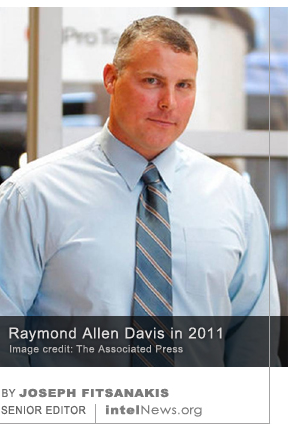
Raymond Allen DavisA former contractor for the United States Central Intelligence Agency, who was released from a Pakistani prison in 2011 despite being implicated in a double murder there, says he was freed with the help of senior Pakistani officials. Raymond Allen Davis was a CIA contractor posted in the US consulate in Pakistan’s Punjabi capital, Lahore, which is also the country’s second-largest city. It has been suggested that, for a while, Davis was the CIA’s acting station chief in Lahore, thus technically the most senior American intelligence officer in Punjab.
On January 27, 2011, while driving in downtown Lahore, Davis opened fire against two men riding on a motorcycle, killing them instantly. Soon after the incident, Davis appears to have contacted the US consulate in Lahore, which rapidly dispatched a consular vehicle to remove him from the scene of the shooting. However, the vehicle was unable to reach Davis, who was surrounded by an angry crowd. Unable to pick up Davis, the car then returned to the consulate after running down and killing a motorcyclist who was unconnected with the earlier incident. Eventually Davis was arrested and charged with double murder and illegal possession of a firearm. The Pakistani government dismissed Washington’s assertion that Davis was an accredited diplomat, and was thus not subject to Pakistan’s legal system because of his diplomatic immunity. With public opinion in Pakistan heavily against Davis, the case sparked a diplomatic crisis between Washington and Islamabad. Unexpectedly, however, Davis was released in March of the same year, after the families of the two men he killed appeared in court and said they forgave him and wanted him to be pardoned. It later emerged that the families of the murdered men had been given a total of $2.4 million as compensation for their deaths.

Read more of this post

China dismantled large CIA spy network in 2010, say sources

CIAA few years ago, China busted an extensive network of secret operatives run by the United States Central Intelligence Agency. The CIA has yet to recover from the massive blow to its operations, say sources. The CIA has devoted substantial resources to gathering intelligence in China in recent years, and has painstakingly built a network of spies. The latter are Chinese nationals recruited by CIA officers to spy on Beijing on behalf of the United States. But, according to The New York Times, in early 2010 the CIA’s assets began to disappear one by one. By 2012, the Agency’s network of secret operatives in China had been all but wiped out.

According to the Times report, published on Saturday, the CIA lost as many as 20 agents on the ground in China, who were either executed or imprisoned by the authorities in Beijing. The paper cites “ten current and former American officials”, who claim that many of the agents had operated for years deep inside the Chinese state apparatus prior to their capture. At least one of them, say sources, was executed “in front of his colleagues in the courtyard of a government building” in an attempt to dissuade other government employees from spying on the Chinese state. At least 12 of the CIA’s assets in the country were executed between 2010 and 2012, according to The Times.

The damage to the CIA has been incalculable, according to sources, and the Agency is still recovering from the loss of an extensive network of operatives that took years to assemble. Sources described the loss of the network to the Times as “one of the worst in decades” and compared it to the loss of assets caused in the 1980s and 1990s by two notorious American spies for the Soviet Union and Russia, CIA officer Aldrich Ames and Federal Bureau of Investigation agent Robert Hanssen. At that time, dozens of agents and over 100 intelligence projects were compromised.

According to the report, the FBI and the CIA set up Project HONEY BADGER, a joint counterintelligence investigation into the China breach. But the results of the investigation reportedly remain inconclusive. Some argue that such a major dismantling of a network of assets could only have originated from a mole inside the US Intelligence Community. Others believe that the arrests of CIA agents resulted from a sophisticated Chinese computer hacking operation that targeted the CIA. A third theory posits that the breach was caused by the infiltration of the intelligence community of Taiwan, an important American ally in Southeast Asia.

Since 2012, the CIA has been trying to rebuild its network in China, but it will take it years to reach the level of sophistication in had achieved in 2010. The New York Times said it reached out to the CIA and FBI for comment but received no responses.

Author: Joseph Fitsanakis | Date: 22 May 2017 | Permalink

North Korea accuses US of murder plot as CIA opens new DPRK mission center

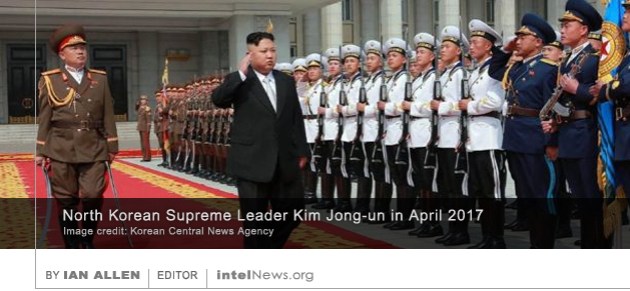
North KoreaThe United States Central Intelligence Agency has announced the establishment of a new center focusing on North Korea, shortly after Pyongyang accused Washington of plotting to assassinate its supreme leader. Last week, the regime’s Vice Minister of Foreign Affairs, Han Song Ryol, said the CIA tried to kill North Korean Supreme Leader Kim Jong-un. He was speaking during a meeting with foreign diplomats in the North Korean capital, where he repeated previously stated claims by government officials that American spies had tried to assassinate their country’s leader. According to Pyongyang, the plot involved an attack by a North Korean CIA agent, who had been trained in the use of a biochemical weapon by his handlers. The North Koreans also accuse South Korea of collaborating with the alleged CIA assassination plot, claiming that Seoul either bribed or blackmailed the would-be assassin.
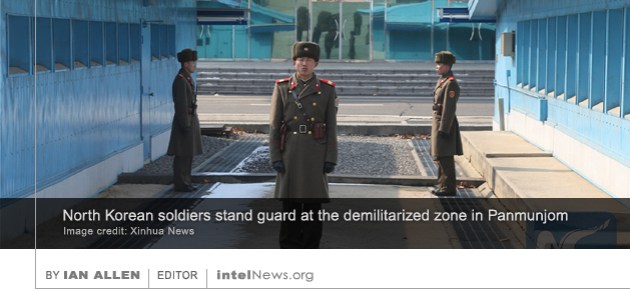
Meanwhile, the CIA announced last week that it has established a dedicated center focusing on developments in the Korean peninsula. The purpose of the center, said the CIA, is to “address […] the nuclear and ballistic missile threat posed by North Korea”. There are only 11 such centers in the CIA, which the Agency calls “Mission Centers”. They focus on specific issues or locations around the world, in accordance with the geopolitical priorities of the US policymaker community, led by the White House. The establishment of a dedicated Korean Mission Center is designed to reflect the elevation of the North Korean government’s missile program to a critical foreign-policy issue by the administration of US President Donald Trump.

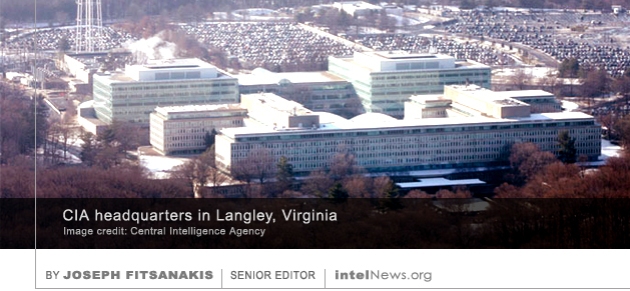
The new Mission Center will be located at the CIA headquarters in Langley, Virginia, and will bring together several intelligence analysts and even operations officers from a variety of directorates and units across the Agency. The goal of the new Center, according to the CIA, is to “integrate [these individuals] in one entity” in order to produce regular situation reports and analytical forecasts from the troubled region. Speaking to reporters late last week, CIA spokeswoman Heather Fritz Horniak said that the new Mission Center would allow Langley to “harness the full resources, capabilities and authorities of the Agency” in dealing with Pyongyang. But she refused to comment on North Korea’s allegations that the CIA tried to assassinate the communist state’s leader.

Author: Ian Allen | Date: 17 May 2017 | Permalink

CIA director makes unannounced visit to South Korea to discuss tensions

Korean DMZThe director of the United States Central Intelligence Agency made an unannounced visit to South Korea over the weekend, to discuss the rising tensions in the Korean Peninsula with his South Korean counterpart and other senior officials. A spokesperson from the US embassy in Seoul made an official announcement on Monday, in which he revealed the visit by Mike Pompeo, the CIA director who was appointed by US President Donald Trump in January of this year. When asked for details, however, the spokesperson refused to provide them. Consequently, Pompeo’s date of arrival to Seoul remains unknown, as is his date of departure. It is believed that he is now back in the US.
During his visit to the South Korean capital, Pompeo met with South Korean counterpart, Lee Byung-ho, who heads South Korea’s National Intelligence Service. South Korean media reports said Pompeo also met with senior officials in the office of the South Korean president. Additionally, he is said to have held several meetings with American intelligence and military officials stationed in South Korea, including a meeting with General Vincent Brooks, commander of United States Forces Korea. Reports in local media outlets said Pompeo’s visit aimed to coordinate American and South Korean intelligence responses to what Washington claims is increasing provocation by North Korea. The United States objects to North Korea’s repeated missile tests in recent weeks. On Saturday, Pyongyang attempted to launch a missile without success. The attempt, the third one in a month, elicited strong criticism from Washington and Seoul.

Pompeo’s trip to Seoul marked the fourth visit to South Korea by a senior US government official in recent weeks. The CIA director’s unannounced visit was preceded by separate official visits to Seoul by US Vice President Mike pence, Secretary of State Rex Tillerson, and Secretary of Defense James Mattis. Additionally, last Wednesday the White House organized an “extraordinary national security briefing” about North Korea for members of the United States Senate. The briefing featured presentations by senior American diplomats and military officials.

Author: Ian Allen | Date: 02 May 2017 | Permalink

Werner Stiller, one of the Cold War’s most notable defectors, dies

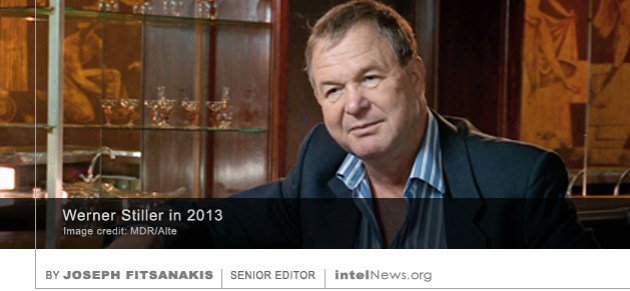
Werner StillerWerner Stiller, also known as Klaus-Peter Fischer, whose spectacular defection to the West in 1979 inflicted one of the Cold War’s most serious blows to the intelligence agency of East Germany, has died in Hungary. Stiller, 69, is believed to have died on December 20 of last year, but his death was not reported in the German media until last week. Born in 1947 in the German Democratic Republic, Stiller excelled in the sciences from an early age and eventually studied physics at the University of Leipzig, which was known at the time as Karl Marx Universitat. Shortly after graduating, he joined the GDR’s Ministry of State Security, commonly known as the Stasi. Within a few years, he was working as a case officer for the Main Directorate for Reconnaissance, the Stasi’s foreign intelligence division, where he was in charge of scientific espionage in the West. By the late 1970s, Stiller was handling nearly 30 spies —most of them abroad— who were regularly providing him with intelligence relating to nuclear research, weapons technologies, and biomedical research.
However, the Stasi vehemently disapproved of Stiller’s promiscuous lifestyle —he was married five times in his life and was reputed to have had many more affairs— which was one of the reasons why he decided to seek a new life in the West. In January of 1979, with the help of a waitress he was having an affair with, Stiller defected to West Germany along with a packet of microfiche containing hundreds of classified Stasi documents. He later helped the waitress escape to the West with her young son and an estimated 20,000 more pages of classified documents. The West German Federal Intelligence Service (BND) eventually shared the information from Stiller’s defection with the United States Central Intelligence Agency. It led to the dramatic arrests of 17 Stasi agents and officers in Europe and the US, while at least 15 others escaped arrest at the last minute, after being urgently recalled back to East Germany. The Stasi is believed to have recalled an additional 40 operatives from several Western countries as a precaution in response to Stiller’s defection. The information that Stiller gave to the BND also helped visually identify the longtime director of the Stasi’s Main Directorate for Reconnaissance, Markus Wolf. Previously, Western intelligence services had no photographs of Wolf, who was known as ‘the man without a face’, due to the many decades he spent as an undercover officer.

In 1981, Stiller moved to the US, where the CIA provided him with a new identity, using the fake name Klaus-Peter Fischer, a Hungarian émigré. He studied economics at Washington University in St. Louis, Missouri, before working as an investment banker for Goldman Sachs in the US and eventually an exchange broker for Lehman Brothers in Germany. It is believed that the Stasi kept looking for Stiller until the dissolution of the GDR in 1990, with the intent of abducting him or killing him. In 1999, Stiller moved to Hungary, where he stayed until the end of his life. He is survived by a son and a daughter.

Author: Joseph Fitsanakis | Date: 04 April 2017 | Permalink

Trump authorizes CIA to bring back regular use of drone strikes

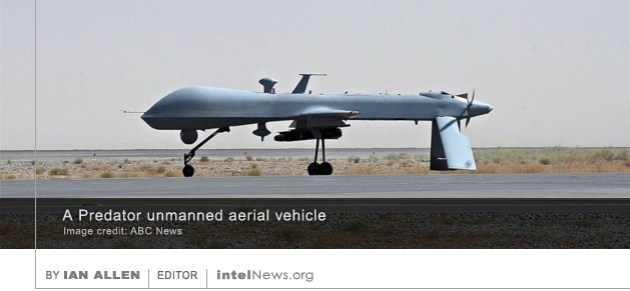
DroneUnited States President Donald Trump has reportedly authorized the Central Intelligence Agency to bring back the routine use of lethal airstrikes by unmanned aerial vehicles (UAVs), which his predecessor, Barack Obama, curtailed in 2013. Washington began employing limited strikes by UAVs, otherwise known as drones, in the early 1990s, during the administration of President Bill Clinton. But it was under the Obama administration that the use of drone strikes reached an all-time high, with hundreds of such attacks documented after 2008. It is believed that Obama used this remote attack method to combat the Taliban and al-Qaeda, while at the same time keeping his promise of bringing back American troops from the Middle East and Central Asia. However, in 2013 the US president severely curtailed the controversial program, which some say damaged America’s image by inflicting civilian casualties.

But on Monday, The Wall Street Journal reported that President Trump had resuscitated the drone program and authorized the CIA to begin using Predator drones on a regular basis against identified targets in the Middle East and Central Asia. According to the newspaper, the president gave senior CIA project mangers the right to authorize drone strikes. Under the Obama administration, the president himself, or especially designated National Security Council officials, had to give the go-ahead before the CIA could carry out drone strikes around the world.

The Wall Street Journal said that President Trump made the decision on January 21, just hours after taking office, following a secret meeting with senior officials from the CIA. According to the report, the CIA requested some time to rebuild the program. But the agency has allegedly conducted at least one drone strike, which targeted Abu al-Khayr al-Masri, a known al-Qaeda senior commander in Syria, who was reputed to be a son-in-law of the late al-Qaeda leader Osama bin Laden.

Author: Ian Allen | Date: 15 March 2017 | Permalink

FBI launches criminal investigation into WikiLeaks’ CIA disclosures

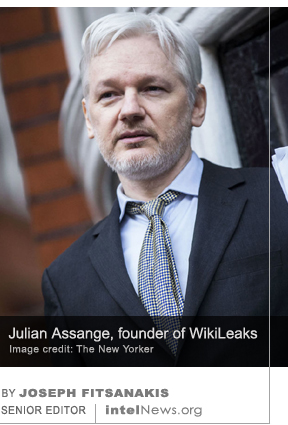
WikiLeaksThe United States federal government has launched a criminal investigation into the public disclosure of thousands of documents that purportedly belong to the Central Intelligence Agency. The documents were released on Tuesday by the anti-secrecy website WikiLeaks. They reveal what appear to be technical collection methods used by the CIA to extract information from digital applications and electronic devices, ranging from flash drives to smart screen televisions. WikiLeaks named the collection “Vault 7”, and said that it consists of nearly 8,000 web pages and 1,000 attachments. It also said that its editors redacted hundreds of pages of computer code, in order to prevent the public release of advanced cyberweapons allegedly used by the CIA to sabotage electronic devices and systems.
On Wednesday, former director of the CIA Michael Hayden told the BBC that the disclosure appeared “incredibly damaging”, because it revealed some of the methods that the CIA uses to acquire information. But some cybersecurity experts said that the techniques contained in the leaked documents did not appear to be uniquely advanced, and most focused on exploiting technical vulnerabilities that were generally known. Still, The New York Times reported on Wednesday that the CIA had begun to assess the damage caused by the release. The agency was also trying to contain the extent of the damage, and had even “halt[ed] work on some projects”, said The Times. Officials from the CIA are reportedly in communication with the Federal Bureau of Investigation, which on Wednesday launched a criminal investigation into the “Vault 7” release.

The main purpose of the FBI investigation is to find out how WikiLeaks acquired the files. The website said that the documents were leaked by a CIA contractor, which would imply that they were accessed from a server outside the CIA’s computer network. However, federal investigators are not excluding the possibility that the leaker of the information may be a full-time CIA employee. Reports suggest that the FBI is preparing to conduct hundreds, and possibly thousands, of interviews with individuals who are believed to have had access to the documents that were released by WikiLeaks. Meanwhile, neither the FBI nor the CIA have commented on the authenticity of the information contained in “Vault 7”. WikiLeaks said that Tuesday’s release, which it codenamed “Year Zero”, was the first part of several installments of documents that will be released under its Vault 7 program.

Author: Joseph Fitsanakis | Date: 09 March 2017 | Permalink

Files released by WikiLeaks show advanced CIA technical collection methods

Julian AssangeThousands of documents belonging to the United States Central Intelligence Agency, which were released on Tuesday by the international anti-secrecy website WikiLeaks, are almost certainly genuine. They reveal an entire universe of technical intelligence collection methods used by the CIA to extract information from digital applications and electronic devices, ranging from flash drives to smart screen televisions. WikiLeaks named the collection Vault 7, and said that it consists of nearly 8,000 web pages and 1,000 attachments. It also said that its editors redacted hundreds of pages of computer code, in order to prevent the public release of advanced cyberweapons that are allegedly used by the CIA to sabotage electronic devices and systems.

The information contained in the leaked documents is almost certainly genuine, and most likely belongs to the CIA —though many of the programs listed may be jointly run by the CIA and the National Security Agency (NSA). These programs, with names such as McNUGGET, CRUNCHYLIMESKIES, ELDERPIGGY, ANGERQUAKE and WRECKINGCREW, appear to be designed to compromise computer systems using a series of sophisticated methods that force entry or exploit built-in vulnerabilities or systems. Targets include popular communications systems like Skype and WhatsApp, smartphones produced by Google and Apple, commercial software like PDF and Microsoft Windows, and even so-called smart televisions that connect to the Internet.

The WikiLeaks revelations are most likely related to operations conducted under the auspices of the Special Collection Service (SCS), a joint CIA/NSA program that dates to the earliest days of the Cold War. The program was started by the United States Armed Forces but was eventually transferred to civilian hands and monitored by the CIA. It used advanced communications-interception facilities around the world to collect information. Over the years, the CIA collaborated with the NSA and developed many SCS projects targeting several foreign countries using technical and human means. In recent years the SCS has been primarily operated by the NSA, which oversees the program’s technical platforms.

WikiLeaks did not reveal the source of the documents. But it said that they had been “circulated [by the CIA] among former US government hackers and contractors” and that it was one of the latter that leaked them to the anti-secrecy website. A statement by WikiLeaks said that Tuesday’s release, which it codenamed “Year Zero”, was part one of several installments of documents that will be released under its Vault 7 program. The site also claimed that the information in “Year Zero” has “eclipsed the total number of pages published over the first three years of the Edward Snowden NSA leaks”. The CIA, the NSA and the White House have not commented on this development.

Author: Joseph Fitsanakis | Date: 08 March 2017 | Permalink

Trump administration instructs CIA to halt support for anti-Assad rebels in Syria

Free Syrian ArmyThe White House has instructed the Central Intelligence Agency to halt military support to armed groups that are associated with the Free Syrian Army (FSA), a group opposed to Syrian President Bashar al-Assad. Some believe that the move indicates a change in American policy under United States President Donald Trump. But Syrian rebel commanders say they believe the move is temporary, and that military aid will be restored. For several years, the CIA has provided training and other forms of assistance to rebel groups in Syria, such as the New Syrian Force, which operate under the umbrella of the FSA. Aside from training, the assistance has included light and heavy ammunition, including antitank missiles, mines and grenades.

However, it appears that the CIA was instructed nearly a month ago by the White House to freeze all assistance to these rebel groups. Correspondents from the Reuters news agency said they confirmed the change in policy by speaking to senior rebel commanders from five armed groups operating under the FSA. These commanders told Reuters that they had not been given any official reason for the sudden termination of all CIA assistance. The change coincided with the change of guard at the White House, from Barack Obama to Donald Trump. Some in Washington, as well as some members of rebel factions in Syria, are concerned that the change in the CIA’s stance might denote a broader policy shift in the White House. During his election campaign, Mr. Trump said repeatedly that he would end America’s overt and covert support for the FSA and would focus instead on defeating the Islamic State.

But the rebel commanders themselves told Reuters that the freeze in CIA support was due to a wave of renewed attacks against them by Jabhat Fateh al-Sham, a Sunni militant group that was previously affiliated with al-Qaeda. The rebels said that the CIA was concerned that weaponry provided to the FSA would end up in the hands of jihadist militants, so it temporarily halted its support until Jabhat Fateh al-Sham could be pushed back by FSA forces. Reuters published comments by two anonymous officials who were familiar with the CIA’s operations in Syria. They told the newspaper that the freeze of the CIA’s program had “nothing to do with US President Donald Trump replacing Barack Obama in January”. Additionally, said Reuters, Mr. Trump’s policy in Syria remains unknown. Several newspapers and news agencies contacted the CIA asking for comments, but the agency declined all requests on Wednesday.

Author: Ian Allen | Date: 23 February 2017 | Permalink

Wall Street Journal alleges US spies hide sensitive intelligence from Trump

Donald Trump CIAIn a leading article published on Wednesday, The Wall Street Journal alleged that American intelligence officials are choosing to withhold sensitive intelligence from President Donald Trump, fearing that it might be compromised. The WSJ, America’s leading newspaper by circulation, which is highly influential in conservative circles, cited “current and former officials familiar with the matter”. The paper said it was unclear how much information had been withheld from President Trump. It added that at no point did intelligence officials keep the president in the dark about critical security threats by foreign states or potential terrorist attacks by non-state groups. However, intelligence officials are consciously and systematically withholding information from the White House that concerns “sources and methods”, said the article. The term refers to the precise methods used by the United States Intelligence Community to collect information, as well as the identification of sources —human or otherwise— of the information.

In recent weeks, several media outlets have alleged that American intelligence officials are skeptical about providing the White House with sensitive information. Late last month, Steve Hall, a former member of the Central Intelligence Agency’s Senior Intelligence Service, told National Public Radio that the matter of President Trump’s trustworthiness was “a live question” at the CIA. But this week’s article in The WSJ marks the first time that a conservative media outlet alleges that senior American intelligence officials mistrust the president. According to the New York-based newspaper, the Intelligence Community is uncomfortable with Mr. Trump’s “repeated expressions of admiration” for his Russian counterpart Vladimir Putin. Many intelligence officials are also disturbed by the US president’s public support for the alleged hacking of Democratic Party computer servers by the Kremlin.

Relations between the White House and the Intelligence Community are said to be extremely tense at the moment. On Wednesday, President Trump repeated his previously stated allegation that the US Intelligence Community is systematically leaking information to the media in order to subvert his administration’s work. The WSJ said it spoke to a representative from the Office of the Director of National Intelligence, which heads and oversees the US Intelligence Community. The representative questioned the accuracy of the newspaper’s allegations, saying that “any suggestion that the US intelligence community is withholding information and not providing the best possible intelligence to the president and his national security team is not true”. The report was also denied by an official at the White House, who said that Mr. Trump and his aides had no evidence “that leads us to believe that [The WSJ article] is an accurate account of what is actually happening”.

Author: Joseph Fitsanakis | Date: 17 February 2017 | Permalink

Top aide to Trump’s security adviser denied security clearance by CIA

Michael FlynnA senior aide to Michael Flynn, National Security Adviser to United States President Donald Trump, will have to step down from his post because his application for a security clearance was rejected, say sources. Flynn had chosen Robin Townley, a former intelligence officer in the US Marine Corps, to serve as Senior Director for Africa on the National Security Council, a forum chaired by the president, which makes key decisions on domestic and foreign issues. Townley, who is described as “one of Flynn’s closest deputies”, held a top-secret security clearance for many years during his government career. But joining the National Security Council requires a so-called “sensitive compartmented information” clearance. This elite-status clearance allows designated individuals to access government programs and operations that are deemed highly sensitive.

According to Politico, Townley’s application for a sensitive compartmented information clearance was rejected last week. The news website cited two anonymous sources “with direct knowledge of the situation”, who said that Townley was informed on Friday that his application had been rejected. The rejection came from the Central Intelligence Agency, said Politico. One source told the website that the rejection had been met with agreement by Mike Pompeo, President Trump’s appointee to head the CIA. Townley cannot reapply for clearance, which means that he will have to give up his National Security Council post. Flynn will have to replace him.

The Politico report claims that Flynn and his team were “infuriated” by the CIA’s decision, which is expected to further-escalate tensions between the retired lieutenant-general and the Intelligence Community. Flynn has been criticized for his allegedly close connections to the administration of Russian President Vladimir Putin. In 2015, he delivered a speech in Moscow in return for a fee, and dined with Putin. Earlier this year, the Federal Bureau of Investigation investigated a telephone conversation between Flynn and Sergey Kislyak, Russia’s ambassador to the US, as part of a counterintelligence probe. Last week, The Washington Post alleged that Flynn and Kislyak discussed the topic of American economic sanctions on Russia, and that Flynn told the Russian diplomat that they would be lifted by the Trump administration.

The Politico report said that Flynn’s team views the rejection of Townley’s security clearance application as “a hit job from inside the CIA on Flynn and the people close to him”. It also said that Flynn’s team believe that the Intelligence Community feels “threatened by Flynn and his allies”. The website contacted the National Security Council and the CIA but received no responses.

Author: Ian Allen | Date: 13 February 2017 | Permalink