Trump removes DNI, reinstates CIA on the National Security Council

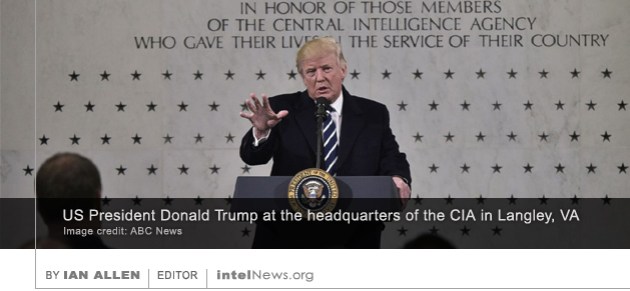
Trump CIAThe White House announced on Monday a revised policy that reinstates the Central Intelligence Agency on the National Security Council. Chaired by the president, the NSC was established 70 years ago as a forum to provide the commander-in-chief with advice from senior civilian and military officials before making key decisions on domestic and foreign affairs. Principal attendees of the NSC include the US vice president, the secretaries of state, defense, and energy, the chair of the Joint Chiefs of Staff, and the director of national intelligence. Last week, the White House removed the chair of the Joint Chiefs of Staff and the director of national intelligence from the Principals Committee —the core participants— of the NSC. A statement from the White House said that they would be invited to join the Principals Committee only when “issues pertaining to their responsibilities and expertise are to be discussed”.

On Monday, a new statement by the White House revised last week’s memorandum, by listing the director of the CIA as a “regular attendee” in NSC meetings. When asked by journalists about the change, White House Press Secretary Sean Spicer explained that “[t]he president has such respect for [CIA] Director [Mike] Pompeo and the men and women of the CIA, that today the president is announcing that he will amend the memo to add the CIA back into the NSC”.

Throughout the Cold War, the CIA was viewed as the most powerful and influential agency in the US Intelligence Community. It answered directly to the president and its director mediated between the White House and all of the nation’s intelligence agencies. That changed in 2005, when the administration of George W. Bush established the Office of the Director of National Intelligence as the central coordinating body of the US Intelligence Community. In the same year, the Bush administration replaced the CIA director’s place in the NSC with the DNI. Since that time, the DNI has acted as the de facto intelligence representative on the NSC. But Monday’s memorandum changes that, by essentially removing the DNI from the NSC and replacing him with the director of the CIA. Some believe that the change is bound to create tension between the DNI and the CIA, two agencies that have had a stormy relationship in the past decade. The CIA and the ODNI have not yet commented on the amended memorandum issued by the White House.

Author: Ian Allen | Date: 31 January 2017 | Permalink
US spies fear Trump travel ban will hurt recruitment of Muslim assets

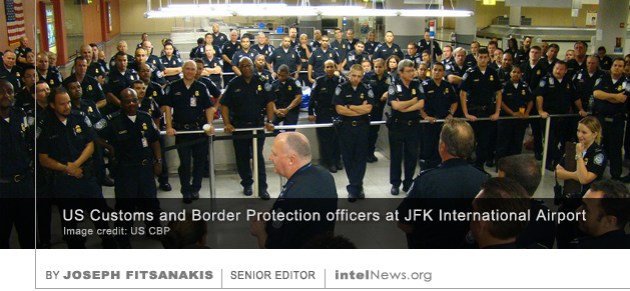
US Customs and Border Protection officers at JFK International AirportIntelligence veterans have raised concerns that the temporary ban on immigrants and refugees from seven Muslim-majority nations, which has been imposed by the White House, will significantly hinder American efforts to recruit intelligence assets and sources in Muslim countries. United States President Donald Trump signed an executive order on Friday, banning entry into the United States of citizens of Iran, Iraq, Syria, Yemen, Sudan, Somalia and Libya. According to the White House, the goal of the temporary ban is to help increase domestic security in the US. But according to Jeff Stein, a former intelligence officer and veteran intelligence correspondent, many in the US Intelligence Community view the travel ban as counterproductive and potentially fatal for their ability to operate.
In an article for Newsweek, Stein explains that, ever since the Cold War, American intelligence agencies have guaranteed to their assets —foreigners who agree to spy for the US— that they and their families will be exfiltrated to America if their lives are in danger. In other cases, assets or their family members are given costly medical treatment or educational opportunities in the US. The promise of eventual resettlement in America is a core recruiting tool used by case officers working in agencies such as the Central Intelligence Agency or the Defense Intelligence Agency. It is especially valuable in Muslim countries, where American spy agencies have traditionally found it difficult to operate, and where asset recruitment is arduous and dangerous. If current and potential assets are in any way concerned that they may not be able to enter the US, or not respected once they enter, their willingness to cooperate with their American spy handlers can quickly evaporate. Stein quotes Cindy Storer, who served 20 years as an analyst in the CIA, mostly on counterterrorism, and was in the agency team that led the successful hunt for al-Qaeda founder Osama bin Laden. Storer exclaimed that the travel ban “hurts, capital H-U-R-T-S” the CIA’s ability to collect intelligence. Another CIA veteran, Phillip Lohaus, who also served in the US Special Operations Command, lamented the “reduced likelihood that those in countries targeted by the ban will work with us in the future”.

Henry Miller-Jones, who worked for many years as a CIA operations officer in the Middle East, warned that the travel ban was likely to damage the flow of useful intelligence collected by US agencies from “students, professors, visiting businessmen and others” from Muslim countries. The latter are often recruited by US intelligence agencies when visiting America. Additionally, said Miller-Jones, Americans who travel or live in the Muslim world would now “get the cold shoulder” from potentially valuable contacts in those regions. He told Stein that CIA case officers often struggle to convince potential assets that America respects their religion and culture. The travel ban, no matter how geographically limited or temporary, will make it even more difficult to convince these potential assets to work for US intelligence now, he said.

Author: Joseph Fitsanakis | Date: 30 January 2017 | Permalink

Some at CIA wonder whether to share sources and methods with Trump

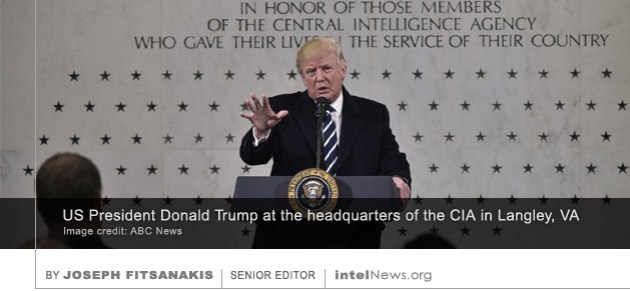
Donald Trump CIAOfficials at the United States Central Intelligence Agency have questioned whether it is safe for them to reveal the sources of their information about Russia to America’s new President, Donald Trump, according to a report. The implication is that some at the CIA are concerned that Trump’s allegedly close ties with Russian officials may put CIA operations officers in danger. The information was shared on Monday by Mary Louise Kelly, national security correspondent for National Public Radio (NPR). She told the Washington-based station that relations between the CIA and the new American president remain cool, despite the apparent rapprochement between the two sides last Saturday, when Trump gave a speech at the CIA headquarters.
Kelly cited Steve Hall, a former CIA operations officer who retired from the agency in 2015 after three decades in the National Clandestine Service, which is runs intelligence operations around the world. Hall spent time in Europe, Latin America and Central Eurasia, and some believe he was CIA station chief (America’s senior intelligence representative) in Moscow for a number of years. Hall retired as a member of the CIA’s Senior Intelligence Service, which consists of the most senior members of the National Clandestine Service. In her report, Kelly identified Hall as the CIA’s former “chief of Russia operations”. She told NPR that Kelly had responded with skepticism to President Trump’s speech at the CIA headquarters last weekend. He wondered, she said, what would happen if the CIA collected “a stellar piece of intelligence that […] puts [Russian President] Vladimir Putin in a bad light?”. Presumably the Agency would have to brief the US leader about the finding. But what if the president inquired about the source? The CIA would have to reveal its methods and sources, because that information cannot be kept from the president. According to Kelly, Hall asked: “How can you say no, we don’t trust you with the sourcing of that information?”. And continued: “[t]hat is a live question today at Langley”, referring to the location of the CIA headquarters in the US state of Virginia.

Last month, Hall wrote a guest column in The Washington Post in which he touched on the importance of sources and methods for the CIA. He wrote that the agency’s collection capabilities “could be rendered useless in one news cycle if disclosure is not handled correctly. [And] if it were human sources that provided the information, they could lose their lives”. Hall went on to argue that, if the CIA revealed its information about Russia’s alleged attempts to influence last November’s US presidential election, additional information would be demanded of it. “Questions like, ‘How exactly did you get that information?’ or ‘Where did that come from?’ and ‘When precisely did you know that?’ will inevitably be asked —and the protection of sources and methods will begin to erode”, wrote the retired CIA operations officer.

Author: Joseph Fitsanakis | Date: 25 January 2017 | Permalink

Pakistani doctor who helped CIA find bin Laden will stay in jail, says Islamabad

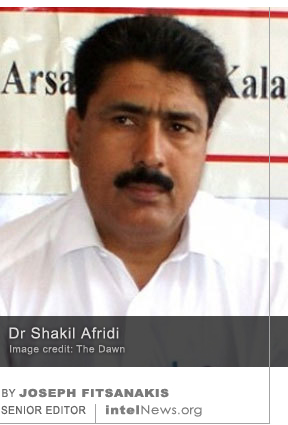
Dr Shakil Afridi

A Pakistani doctor who helped the United States find al-Qaeda founder Osama bin Laden in 2011 will remain in prison, despite calls by Washington to have him released, according to a government official in Islamabad. Dr Shakil Afridi was arrested in 2011, soon after bin Laden was killed during a Central Intelligence Agency operation in a residential compound in the city of Abbottabad, located 70 miles north of the Pakistani capital. In the weeks following the CIA raid, it emerged that a team of local doctors and nurses had helped the American agency in its efforts to confirm bin Laden’s presence in the compound. The team of nearly 20 healthcare workers participated in a fake vaccination scheme carried out in Abbottabad, whose true purpose was to collect DNA samples from residents of the compound where the CIA believed bin Laden was hiding.

In February 2012, the then CIA Director, Leon Panetta, publicly admitted that the vaccination scheme had been funded by the CIA. By that time, Pakistani authorities had fired 17 healthcare workers who had participated in the CIA scheme and arrested its head, Dr. Afridi. Prior to his arrest, Dr. Afridi was employed as a surgeon by the government of the Khyber Agency, a Federally Administrated Tribal Area along Pakistan’s border with Afghanistan. Bizarrely, Dr. Afridi was arrested for having alleged links with an Islamist group that operates in the region, known as Lashkar-e-Islam. In 2012, he was given a 33-year sentence for having links with terrorist groups. When his conviction was quashed in 2013, the doctor was ordered to remain in prison, and faced new charges, this time for alleged medical malpractice, which, according to the prosecution, resulted in the death of one of his patients.

Many American officials believe that the real reason for Dr. Afridi’s arrest is his collaboration with the CIA. In May of last year, Donald Trump said that, if elected US president, he would make Pakistan free Dr. Afridi, saying characteristically that he could achieve that “within two minutes”. But his comments prompted a strong response from Islamabad. On Tuesday, Pakistan’s Minister for Law and Justice, Zahid Hamid, reiterated that Dr. Afridi would not be freed just because Washington wishes it. Speaking in response to a question from a member of the Pakistani Parliament’s upper house, Hamid said that Dr. Afridi “worked against [Pakistani] law and our national interest” and would face a trial, as planned, despite Trump’s pre-election pledge. There was no comment yesterday from the US president-elect’s team.

Author: Joseph Fitsanakis | Date: 19 January 2017 | Permalink

Outgoing CIA director says scrapping Iran nuclear deal would be ‘disastrous’

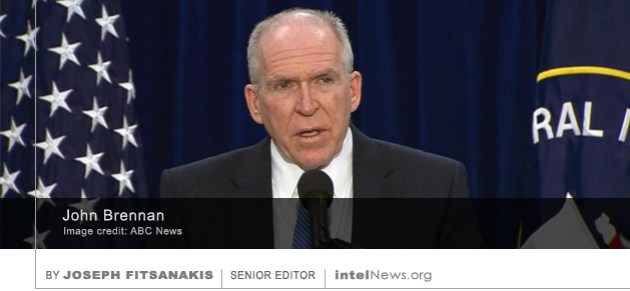
John BrennanThe outgoing director of the United States Central Intelligence Agency has warned in an interview that it would be “disastrous” for Washington to abandon a nuclear treaty with Iran, which was agreed in 2015. John Brennan is a career intelligence officer and fluent Arabic speaker, who has served in the CIA for 25 years. He was appointed director of the agency in March of 2013 by President Barack Obama and is scheduled to leave the position in January of 2017, after nearly four years at the helm of the CIA.
Earlier this week, in the first interview given by a serving CIA director to a British media agency, Brennan told the BBC that he hoped the incoming administration in Washington would show “prudence and discipline” in security matters. He was referring to the administration of US president-elect Donald Trump, which is currently taking shape in preparation for January. The business tycoon said during his election campaign that he would scrap the so-called Joint Comprehensive Plan of Action, an international agreement reached in 2015 between Iran and a group of nations known as the P5+1, namely the five permanent members of the United Nations Security Council plus Germany. As part of the deal, Iran has agreed to halt its nuclear weapons program in exchange for an end to economic sanctions.

The man chosen by Trump to replace Brennan at the helm of the CIA, Mike Pompeo, is a member of the so-called Tea Party Movement within the Republican Party and a fierce critic of the Iran deal. But Brennan told the BBC that “it would be the height of folly if the next administration were to tear up that agreement”. The outgoing CIA director said it would be “unprecedented” for an American administration to scrap an international agreement struck by its predecessor. Additionally, said Brennan, if Washington abandons the treaty it will strengthen hardliners in the Islamic Republic and would cause neighboring states to pursue their own nuclear programs in response to Tehran’s. During his interview, Brennan also cautioned the Trump administration to “be wary of Russian promises” and not to trust the advances of Russian President Vladimir Putin.

Author: Joseph Fitsanakis | Date: 02 December 2016 | Permalink

Russian defectors claim US intelligence agencies failed to protect them

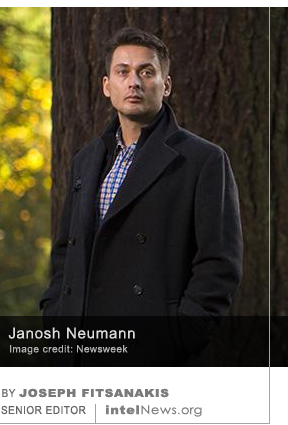
Janosh NeumannTwo Russian intelligence officers, who defected to the United States in 2008, claim that they had to fend for themselves after American spy agencies failed to protect them despite promises to the contrary. Janosh Neumann (born Alexey Yurievich Artamonov) and his wife Victorya were employees of Russia’s Federal Security Service (FSB) specializing in investigations of money laundering and corruption. But in 2008 they traveled from Russia to Germany and from there to the Dominican Republic. Once in the Caribbean island, they entered the US embassy and offered to work for the Central Intelligence Agency (CIA).

The couple claim that they provided “a trove of secrets” to the CIA, including information on FSB officials who engaged in corrupt practices such as bribing, money-laundering and large-scale tax evasion. In return, the CIA transported the Neumanns to America, where they were granted permission to settle temporarily based on humanitarian grounds. The two Russian defectors claim that they were promised green cards and, eventually, American citizenship. For several months following their entry into the US, the Neumanns were kept in a government safe house, where they were debriefed, given polygraph tests, and met regularly with officials from the Departments of Justice and Treasury, as well as with employees of the Federal Bureau of Investigation (FBI) and the CIA. They say they gave information to the CIA about the methods used by Russian intelligence operatives to infiltrate American corporations. But when the CIA tried to convince them to move back to Russia and work there for the US government as agents-in-place, the Neumanns refused and chose instead to work for the FBI.

The two Russians say the worked for the Bureau for five years, during which time they were paid approximately $1 million. But in 2013 when their employment contracts expired, the FBI did not renew them. Later that year, the Neumanns’ temporary visa to remain in the US expired. Meanwhile, US immigration authorities denied Janosh’s application for a green card because he allegedly hinted that he tortured people for the FSB during his interview with a US immigration official. Eventually, the Russian defectors convinced the FBI to send immigration officials a letter stating that there was no reason to assume that Janosh had tortured or persecuted people in Russia. Earlier this year, the Newmanns, who recently had a baby here in the US, were allowed to stay and have now applied for green cards again. But they say they reserve the right to sue the US government for having previously denied them protection and citizenship.

Author: Ian Allen | Date: 17 November 2016 | Permalink

US Special Forces soldiers killed in Jordan were with the CIA, say officials

JordanThree United States Special Forces soldiers who were killed outside a Jordanian military base earlier this month were working for the Central Intelligence Agency, according to American government officials. The three soldiers were shot dead on November 4 by a Jordanian soldier, who was subsequently wounded in an exchange of fire, according to reports. The US Department of Defense said the three men were members of the 5th Special Forces Group based in Fort Campbell, a US Army installation located in the American state of Kentucky. They were reportedly shot as they were attempting to enter the Prince Faisal Air Base, located in Jordan’s southern desert, 150 miles south of the capital Amman.
It is believed that the three soldiers were members of a 2,000-strong contingent of American troops who are currently stationed in the Arab country as part of Washington’s involvement in the regional war against the Islamic State. Some of these troops are assigned as advisers to Jordanian military units stationed at the border with Syria. But many others are allegedly involved in training so-called moderate Syrian rebel factions who are fighting against the regime of Syrian President Bashar al-Assad, as well as other rebel groups on the ground. According to The Washington Post, the three American soldiers were among the trainers and were detailed to the CIA while they were in Jordan.

Details of the incident that led to the death of the three Americans are still unclear and are reportedly being investigated by the Federal Bureau of Investigation. Jordanian sources allege that the US troops were returning to the base after a training session when one of their weapons accidentally misfired inside their vehicle. Thinking that they were under attack, Jordanian guards at the entrance to the base opened fire, killing the three Americans. But American officials told The Washington Post that the FBI is investigating whether the Jordanian soldier who opened fire on the US soldiers was an Islamist sympathizer.

If the three American soldiers were indeed detailed to the CIA, their killing will mark the most deadly incident involving CIA personnel since December 2009. Late that month, seven CIA personnel were killed in Khost, Afghanistan by suicide bomber who was masquerading as a CIA intelligence asset and managed to detonate a suicide vest inside a US military base. The Post said it contacted the CIA about the November 4 incident, but the Agency declined to comment.

Author: Joseph Fitsanakis | Date: 14 November 2016 | Permalink

FBI arrests two more members of hacker group that targeted CIA director

Computer hackingTwo more members of a computer hacker group that targeted senior United States intelligence officials, including the director of the Central Intelligence Agency, have been arrested by the Federal Bureau of Investigation. The arrests of Justin Liverman, 24, and Andrew Boggs, 22, took place on Thursday in Morehead City and North Wilkesboro, in the US state of North Carolina. They are accused by the FBI of being members of Crackas With Attitude (CWA) an international group of computer hackers that specialized in targeting American intelligence and law enforcement officials.
Last October, the international whistleblower website WikiLeaks published personal emails and documents belonging to CIA Director John Brennan. The documents included a 47-page application for security clearance that Brennan had submitted to the US government a few years earlier. It was apparently found on his personal America Online (AOL) email account, which had been hacked by the CWA hacker group. Members of the group, who are all in their late teens or early 20s, routinely employed a method known as ‘social engineering’ to gain access to their victims’ information. The method refers to impersonating technicians or other service provider company personnel to gain access to private email or telephone accounts.

CWA members used these techniques to target dozens of senior US government officials from October 2015 until February 2016. Their targets included the Director of National Intelligence James Clapper and the Deputy Director of the FBI, Mark Giuliano. The hackers also gained access to electronic databases belonging to the US Department of Justice, from where they obtained the names, personal telephone numbers and home addresses of nearly 30,000 employees of the FBI and the Department of Homeland Security. That information was eventually published online by the hacker group.

In February, a 16-year-old hacker known as ‘Cracka’, who is the purported ringleader of CWA, and whose name cannot be released due to his young age, was arrested in the East Midlands region of Britain. It is believed that information on the teenager’s electronic devices eventually led the FBI to the capture of Liverman and Boggs. The two men have been charged with computer crime and are expected to appear in court in the US state of Virginia next week.

Author: Joseph Fitsanakis | Date: 09 September 2016 | Permalink

CIA agent was among Watergate burglars, documents reveal

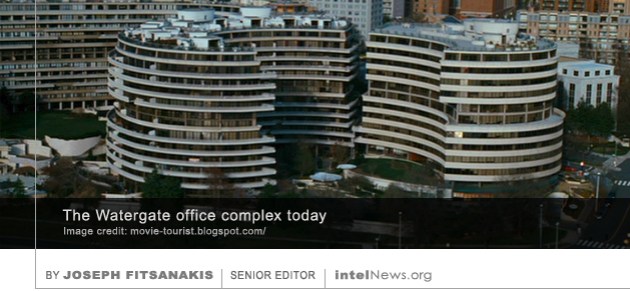
Watergate One of the men caught burglarizing the offices of the United States Democratic Party in 1972, a ploy that led to the resignation of President Richard Nixon, was an agent of the Central Intelligence Agency, according to a newly declassified document. The revelation is included in a narrative history of the Watergate scandal, produced over 40 years ago by the CIA to assess its own role in the affair. It recounts the events of the early morning hours of June 17, 1972, when a security guard saw five men dressed in black breaking into the headquarters of the Democratic National Committee at the Watergate office complex in Washington, DC. When the five men were arrested by police, it was discovered that one of them was connected with the Committee for the Re-Election of the President, a fundraising organization set up by US President Richard Nixon. The remaining four burglars had CIA contacts. They included E. Howard Hunt, a retired CIA operations officer who in 1961 had played a leading role in the failed Bay of Pigs invasion. It was eventually discovered that the burglary had been authorized by President Nixon himself, as part of a broader program to sabotage his political opponents.

Soon after the Watergate scandal erupted, the CIA produced an internal report entitled “CIA Watergate History – Working Draft”. Much of the 150-page document was authored by CIA officer John C. Richards, who had firsthand knowledge of the Watergate scandal. When Richards died unexpectedly in 1974, the report was completed by a team of officers based on his files. A few years ago, a Freedom of Information Act request was filed by Judicial Watch, a conservative legal watchdog, which petitioned to have the document released. The release was approved by a judge in early 2016 and was completed in July.

Despite numerous reductions throughout, the document gives the fullest public account of the CIA’s role in the Watergate scandal. Its pages contain the revelation that one of the men arrested in the early hours of June 17, 1972, was an active CIA agent. The man, Eugenio R. Martinez, has been previously identified as an “informant” of the CIA —a term referring to an occasional source. But the newly released document refers to Martinez as an agent —an individual who is actively recruited and trained by a CIA officer acting as a handler. It also states that Martinez was on the payroll of the agency at the time of his arrest, making approximately $600 per month in today’s dollars working for the CIA. Additionally, Martinez, a Cuban who had participated in the Bay of Pigs invasion, retained his contacts with the CIA and kept the agency updated about the burglary, his arrest and the ensuing criminal investigation.

Interestingly, the internal document reveals that the CIA was contacted about Martinez by the Watergate Special Prosecution Force, which was set up by the Department of Justice to investigate the scandal. But the CIA’s General Counsel, John S. Warner, told the prosecutors that it was against the CIA’s code of practice to turn over an agent, and that “under no circumstances” would the CIA agree to do so. Senior CIA officials, including its then Director, Richard Helms, continued to refuse to cooperate with investigators, including agents of the Federal Bureau of Investigation, even after President Nixon’s resignation.

Martinez, who is reportedly in his mid-90s and lives in Miami, Florida, has never spoken publicly about this role in the Watergate scandal or his alleged contacts with the CIA.

Author: Joseph Fitsanakis | Date: 31 August 2016 | Permalink

Iran executes nuclear scientist who claimed he was kidnapped by CIA

Shahram AmiriAuthorities in Iran have admitted that they executed a former scientist for the country’s nuclear program, who claimed that he was abducted by the United States after disappearing from Iran for a year. Shahram Amiri worked for the Atomic Energy Organization of Iran, the government body that is responsible for operating and regulating the country’s nuclear installations. But in the summer of 2009, while on a religious pilgrimage to the Saudi Arabian city of Mecca, Amiri disappeared. Iranian authorities alleged at the time that Amiri had been kidnapped and possibly killed by Saudi, Israeli or American intelligence operatives.
Remarkably, the Iranian scientist reappeared almost a year later in Washington, DC. He entered the embassy of Pakistan in the American capital and asked to speak to the official in charge of the embassy’s Iranian interests section (since America and the Islamic Public have no official diplomatic relations, Pakistan’s embassy serves as an intermediary). He told officials at the embassy that he had been abducted by the Central Intelligence Agency after being drugged in Saudi Arabia. He also claimed that he was secretly transported to the US, where he was “subjected to intense psychological pressure” involving psychotropic drugs, interrogated and forced to reveal secrets about Iran’s nuclear program. But US officials denied Amiri’s claims and said the Iranian scientist had defected on his own accord and was free to return to Iran, if he wanted. Unconfirmed reports suggested that Amiri had changed his mind after defecting to the US, because he feared that Iranian authorities would harm his family. Some anonymous sources in Washington also claimed that Amiri had been offered $5 million for the information he gave the CIA, but that he had chosen to return to Iran instead of accepting the money.

On July 15, 2010, just three days after contacting the Pakistani embassy in DC, Amiri returned to a hero’s welcome in Iran, which was televised live. Meanwhile, Iranian officials accused the US and Israel of employing dirty tactics against the Islamic Republic. However, in May 2011 Amiri was suddenly arrested at his family home in Tehran and charged with treason. He underwent a secret trial, was convicted and was never again seen in public. On Saturday, Amiri’s family said they had received his body from the government, and that it appeared that he had died from hanging, judging by rope marks around his neck. On Sunday, Iran’s first deputy chief justice and former intelligence minister, Gholam-Hossein Mohseni-Eje’i, told reporters that Amir had indeed been executed by hanging. During his brief announcement, Mohseni-Eje’i said Amiri had endangered the Islamic Republic by giving “vital intelligence about the country to the enemy”, by which he said he meant the United States.

Author: Joseph Fitsanakis | Date: 07 August 2016 | Permalink

Turkish media accuse US general, CIA, of plotting coup

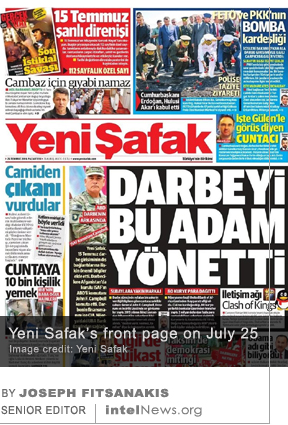
Yeni Şafak’sAmerican officials have strongly denied accusations in the Turkish press that Washington was behind the failed July 15 coup in Turkey. On July 25, Yeni Şafak, a popular Turkish daily, alleged that the failed coup had been funded and organized by the United States government. The newspaper, which is headquartered in Istanbul, is known for its conservative political stance and close links to the AKP, the party of Turkish President Recep Tayyip Erdoğan. Its editorials typically reflect the AKP’s position on the political affairs of the day.
In its leading article on Monday, Yeni Şafak cited “senior government officials” in claiming that the CIA had organized the plotters behind the July 25 military putsch. It also fingered retired US Army General John F. Campbell as the principal intermediary between the CIA and the coup plotters in the Turkish military. Born in 1957, General Campbell served as the US Army’s Vice Chief of Staff until 2014, when he assumed the command of all US armed forces in Afghanistan. Upon his retirement, in 2016, he stepped down from that post as the last commander of the International Security Assistance Force in the Central Asian country. Yeni Şafak’s July 25 front-page headline read: “This man led the coup”, next to a photograph of General Campbell. In the corresponding article, the retired American General was accused of having “organized and managed the soldiers” behind the coup, and having handled “at least $2 billion” in CIA funds, which he allegedly distributed to the coup plotters via the Nigeria-based United Bank for Africa (UBA).

But in a statement issued on Tuesday, UBA called Yeni Şafak’s allegations spurious and insisted it had “no involvement with, or connection to” the July 15 coup attempt in Turkey. Speaking to The Wall Street Journal, General Campbell also dismissed the allegations against him as “absolutely ridiculous”, adding that they “don’t even warrant a response”. On the same day, the Chairman of the US Joint Chiefs of Staff, General Joseph Dunford, described the Turkish newspaper’s article as “absurd”. Speaking at a press conference held jointly with US Defense Secretary Ashton Carter in Washington, General Dunford said: “I really don’t know where that report could have come from”. Last week, US President Barack Obama telephoned his Turkish counterpart to assure him that the US had no prior knowledge of, or involvement in, the coup.

Pro-AKP media in Turkey have repeatedly accused Washington of being behind the July 15 coup attempt. But the Yeni Şafak article marked the first time that a foreign individual was named as a leading coup plotter. Ankara claims that the main culprit of the coup is Fethullah Gülen, a charismatic religious figure who leads a large anti-AKP religious movement from his place of exile in the US state of Pennsylvania. Turkey has said that it will issue a formal request for Gülen’s extradition. But the White House says it will consider extraditing Gülen only in light of sufficient evidence from Ankara. Gülen himself denies all charges of involvement in the plot.

Author: Joseph Fitsanakis | Date: 28 July 2016 | Permalink

Senior Russian intelligence defector to the US is allegedly dead

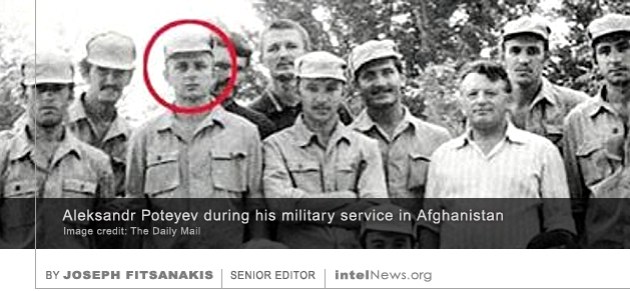
Aleksandr PoteyevA Russian former senior intelligence officer, who reportedly defected to the United States after helping the Federal Bureau of Investigation arrest 10 Russian spies in 2010, is believed to have died. The arrests, which revealed the so-called “Russian illegals program” in the US, were part of a counterintelligence operation codenamed GHOST STORIES by the FBI. The operation culminated in June 2010 with the dramatic arrests of 10 Russian ‘illegals’ in several US states. The Russian illegals, deep-cover intelligence operatives with no official connection to the country that employs them, had been operating in the US for over a decade prior to their arrest, using passports from third countries, including Britain, Canada and Uruguay. They were eventually exchanged with spies for the West that had been imprisoned in Russia.
Moscow blamed the arrests of the illegals on Colonel Aleksandr Poteyev, a veteran of the Soviet war in Afghanistan, who rose through the ranks of the KGB and its successor agency, the SVR, to become second-in-command in the so-called Department S. The senior leaders of Department S are believed to be appointed directly by the president of Russia, and are tasked with directing the activities of all Russian illegals operating abroad. According to the Russian government, which tried Poteyev in absentia in 2011, he began working for the US Central Intelligence Agency in 1999, shortly before entering the senior echelons of Department S.

A panel of judges was told during Poteyev’s Moscow trial that he left Russia without permission on June 24, 2010, just days before the FBI arrested the 10 Russian illegals in the US. He initially went to Belarus, from where he notified his unsuspecting wife via a text sent from a mobile phone that he was leaving Russia for good. He then traveled to Ukraine and from there to Germany, where he was allegedly picked up by his American CIA handler. It is believed that was provided with a new identity and passport, which he used to enter the US. By the time the Russians sentenced him to 25 years in prison for treason, Poteyev was adjusting to his new life in America.

But on July 7, the Moscow-based Interfax news agency reported that Poteyev, had died in the US, aged 64. The brief report did not specify the cause of Poteyev’s alleged death, nor did it state how Interfax acquired the information. Since the report was issued, no confirmation of Poteyev’s purported death has appeared from any other news source, or from government agencies. Russia’s Sputnik News contacted the SVR last week, but the agency declined to comment. It is believed that Poteyev’s two children were working in the US at the time of his defection, and that they are still living in the country.

Author: Joseph Fitsanakis | Date: 11 July 2016 | Permalink

Video footage shows alleged CIA spy tackled outside US Moscow embassy

US embassy scuffleA Russian television station has aired footage allegedly showing a Russian guard stationed outside the United States embassy in Moscow trying to stop an American diplomat from entering the embassy. The Kremlin claims that the alleged US diplomat was in fact a Central Intelligence Agency officer who was returning to the embassy in disguise following a spy operation. As intelNews reported on July 1, the incident took place in the early hours of Monday, June 6. The American diplomat was making his way to the front entrance of the US embassy complex, which is located in the Presnensky District in downtown Moscow.
According to American sources, the diplomat was approached by an employee of the Russian Federal Security Service, the FSB, which regularly stations security personnel around the sizeable US embassy complex. The FSB claims that the guards are there to protect US diplomats, though it is common knowledge that the Russian agency, which is responsible for counterespionage, is primarily there to monitor activities in and around the US embassy. American sources claim that the diplomat presented the Russian guard with proof of identification when asked to do so. But he was then physically attacked and struck repeatedly by the FSB officer, which left him with several injuries, including a broken shoulder. The diplomat managed to enter the embassy grounds and had to be flown out of the country for urgent medical treatment. He has not returned to Russia.

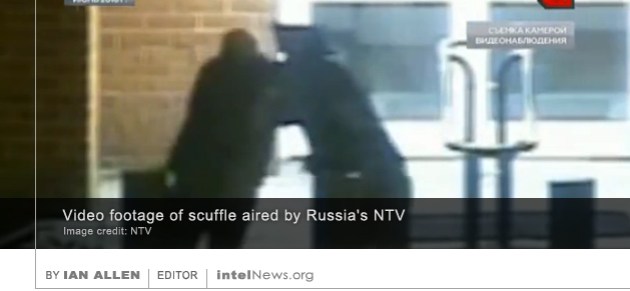
On Thursday, Russian television channel NTV aired video footage purporting to show the altercation between the US diplomat and the FSB guard. The video aired on NTV shows a man exiting a taxi in a hurry and heading to what appears to be the US embassy’s front-perimeter entrance. However, as the man makes heads for the entrance, a uniformed individual jumps out of a guard station located nearby and tackles the man, throwing him on the ground. A scuffle ensues, during which the alleged diplomat is seen desperately trying to reach the entrance of the US embassy, which is American soil. He eventually manages to enter the embassy grounds, despite the effort of the uniformed guard to prevent him from entering. The same NTV report identified the American diplomat as Daniel Van Dyken and showed the photograph of a man said to be him. The report states that Van Dyken serves as third secretary of the US embassy’s Political Department.

Last week, Russian Foreign Ministry spokeswoman Maria Zakharova alleged that the diplomat in question was an intelligence officer. “It is well known”, said Zakharova, “that this very diplomat was in fact an agent of the CIA and was returning [to the US embassy], in disguise, after conducting an intelligence operation the previous night”. She also said that the Russian government employee involved in the altercation was a “police officer” who was attacked by the alleged spy when he asked to be shown proof of identification. Instead of supplying identification documents, the American diplomat “struck the guard in the face with his elbow before disappearing into the embassy”, said Zakharova. The US State Department and the CIA have refused to comment on Zakharova’s allegations.

Author: Ian Allen | Date: 08 July 2016 | Permalink

Muslim man held in New York prison claims he was CIA spy

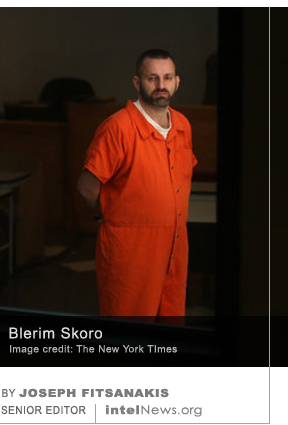
Blerim SkoroAn ethnic Albanian man facing deportation from the United States says he was trained by the Central Intelligence Agency to spy on “the most ruthless, dangerous terrorists in the Balkans and the Middle East”. Blerim Skoro, 45, from the former Yugoslav Republic of Kosovo, was arrested last February in Brooklyn, New York, for illegally using a discounted student MetroCard. He was then found to have entered the US illegally and is currently in prison in New Jersey, facing possible deportation back to Kosovo. But Skoro told The New York Times in an interview published on Wednesday that he cannot be sent back to Kosovo because he operated there as a spy for the CIA.

According to The Times, Skoro came to the US in 1994. Six years later, he was convicted in a New York court of transporting drugs and laundering nearly $700,000 in criminal proceeds. But while in prison, Skoro was recruited as an informant for the Federal Bureau of Investigation, and was tasked with monitoring inmates with militant Islamist leanings. In 2007, when Skoro was released from prison and deported back to Kosovo, he allegedly continued working for US intelligence. He told The Times that he was trained by US operatives in a CIA safe house in the former Yugoslav Republic of Macedonia before taking on assignments in the Balkans, the Middle East and even Pakistan. Throughout that time, Skoro says he posed as a militant Islamist who had become radicalized while serving his prison sentence in America. He claims to have supplied the CIA with intelligence relating to al-Qaeda and other Sunni Islamist groups.

However, in 2010, while traveling to a CIA safe house in Macedonia for a meeting, he was shot by assailants who probably knew he was working for a foreign spy agency. That incident prompted the CIA to sever its relationship with him, dismissing him from his agent status and offering him approximately $40,000 in compensation. Soon afterwards, Skoro made his way to Canada, from where he entered the US illegally, in November 2014. Before getting arrested in Brooklyn in February, he says he made contact with US intelligence officials, offering to spy for the US against the Islamic State. But his offer was not accepted. The Times article speculates that US intelligence may have no use for Skoro because his identity has been compromised, or because his reliability has come into question.

Currently Skoro is being held without bond at the Bergin County Jail in northern New Jersey, because federal prosecutors believe he might flee if released. The Times contacted the CIA, the FBI and police sources, but all declined to comment.

Author: Joseph Fitsanakis | Date: 07 July 2016 | Permalink

Diplomat involved in fight with US embassy guard is CIA spy, says Russia

FSB - IAThe Russian government says that an American diplomat, who was allegedly beaten up by a Russian security guard outside the United States embassy compound in Moscow, is an undercover spy. The man, who has not been named, was stationed in the Russian capital by the State Department as an accredited diplomat with immunity from prosecution in Russia. However, The Washington Post reported earlier this week that the American diplomat was severely beaten by a Russian government employee while attempting to enter the US embassy compound.

The alleged incident is reported to have taken place in the early hours of Monday, June 6. The American diplomat was making his way to the front entrance of the US embassy complex, which is located in the Presnensky District in downtown Moscow. According to American sources, the diplomat was approached by an employee of the Russian Federal Security Service, the FSB, which regularly stations security personnel around the sizeable US embassy complex. The FSB claims that the guards are there to protect US diplomats, though it is common knowledge that the Russian agency, which is responsible for counterespionage, is primarily there to monitor activities in and around the US embassy. American sources claim that the diplomat presented the Russian guard with proof of identification when asked to do so. But he was then physically attacked and struck repeatedly by the FSB officer, which left him with several injuries, including a broken shoulder. According to The Washington Post, the diplomat managed to enter the embassy grounds and had to be flown out of the country for urgent medical treatment. He has not returned to Russia.

The US government believes the attack was intentional. But what caused it? One theory entertained by The Washington Post is that the diplomat was in fact an officer of the Central Intelligence Agency working in Moscow under official cover, pretending to be a State Department employee. According to this theory, the FSB was chasing the American diplomat through the streets of Moscow after a spy operation that went awry. The Russians then tried unsuccessfully to prevent him from entering the US embassy, which constitutes American soil.

On Thursday, Russian Foreign Ministry spokeswoman Maria Zakharova alleged that the diplomat in question was an intelligence officer. “It is well known”, said Zakharova, “that this very diplomat was in fact an agent of the CIA and was returning [to the US embassy], in disguise, after conducting an intelligence operation the previous night”. She also said that the Russian government employee involved in the altercation was a “police officer” who was attacked by the alleged spy when he asked to be shown proof of identification. Instead of supplying identification documents, the American diplomat “struck the guard in the face with his elbow before disappearing into the embassy”, said Zakharova. The US State Department and the CIA refused to comment on Zakharova’s allegations.

Author: Ian Allen | Date: 01 July 2016 | Permalink