BBC releases archival documents on KGB spy Guy Burgess

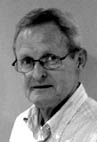
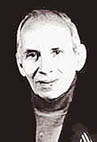
Guy Burgess

Guy Burgess

By JOSEPH FITSANAKIS | intelNews.org |
The BBC’s archive unit has released 24 previously unpublished documents on Guy Burgess, a British-born KGB double spy who defected to Moscow during the early stages of the Cold War. Prior to joining the British Foreign Office, Burgess worked for the BBC as a producer of its Week in Westminster radio program, which covered British Parliamentary activity. The archival documents, some of which date back to 1936, shed light on his activities while at the BBC. They include a reference letter addressed to the BBC from Burgess’ academic mentor, renowned Cambridge University historian Sir George Trevelyan. In the letter, Professor Trevelyan describes Burgess as “a first rate man” and notes that “[h]e has passed through the communist measles that so many of our clever young men go through and is well out of it”. Read more of this post

Brazil conspired with US to overthrow Allende, memos show

Richard Nixon

Richard Nixon

By JOSEPH FITSANAKIS | intelNews.org |
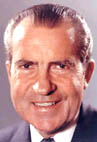
Four official documents from 1971, recently declassified by the US Department of State, show high-level collaboration between the US and Brazil in plans to overthrow the lawfully elected government of Chile. The documents include accounts of a frank discussion between US President Richard Nixon and Brazilian President Emilio Médici on ways to bring down the democratically elected Chilean leader Salvador Allende, as well as the government of Cuba, so as to “prevent new Allendes and Castros”, in Nixon’s words. The memorandum, which contains the official State Department account of the discussion between the two men, is dated December 9, 1971. Read more of this post
Analysis: How vital was spying during the Cold War?

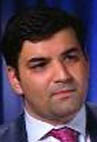
Gordon Corera

Gordon Corera

By IAN ALLEN | intelNews.org |
The BBC’s security correspondent, Gordon Corera, asks a very basic yet very intriguing question about the history of the Cold War: did espionage actually make a difference in ts outcome? This question stems out of BBC Radio 4’s three-part documentary series examining the 100-year history and operations of MI6, Britain’s foremost external intelligence agency. Corera’s article on the BBC website provides conflicting answers by intelligence defenders and intelligence skeptics, including Rodric Braithwaite, former British ambassador to the USSR, and David Owen, Britain’s former Foreign Secretary, who says that, barring a few important exceptions, UK policy makers “didn’t really […]  know exactly what was going on” in the Communist Bloc. Other commentators include former MI6 deputy director Sir Gerry Warner, and Sir David Omand, who argues that most of the intelligence collected during the Cold War was of a military or tactical nature and would therefore have proven effective only “if the Cold War had gone hot”.

Bookmark and Share

News you may have missed #0054

  • Stasi files reveal covert war against Western musicians. Files kept by the former East German secret police indicate that they were worried about rock concerts held within listening distance of East Berlin neighborhoods by Michael Jackson, Pink Floyd and Bruce Springsteen, among others.
  • Greece arrests Muslim minority member for ‘spy photos’. The man was arrested last weekend on charges of spying for Turkey, following the confiscation of hundreds of photographs from his home, most of which depict Greek military facilities. Greece’s State Intelligence Service (EYP) had been monitoring his activities for nearly a year.
  • Head of Bulgaria’s national security agency resigns. Petko Sertov, director of Bulgaria’s State Agency for National Security (DANS) has handed his resignation, allegedly after Bulgaria’s “American partners were said to have lost faith” in him.

Bookmark and Share

News you may have missed #0049

  • Return to court for ex-CIA station chief accused of rape. Andrew M. Warren has been free on bail since February of 2009, when he was unceremoniously recalled to the US from the CIA’s Algiers station. He is accused of having drugged and raped two Algerian women at his official residence. On Tuesday he was back at a federal courtroom in Washington for a status hearing.
  • Swedish spy threat at Cold War levels, claims report. A study by the Swedish Military Intelligence and Security Service (MUST), says spying on Sweden by “several countries, including those in our immediate surroundings” is “at the same level […] as during the Cold War”.
  • Former CIA station chief doubts Daniel Boyd story. Milt Bearden, former CIA station chief in Pakistan, doubts that Boyd, who was arrested along with seven others in North Carolina on domestic terrorism charges, ever saw action in Afghanistan, as stated by his prosecutors.

Bookmark and Share

Kim Philby’s granddaughter describes memories of her grandfather

Charlotte Philby

Charlotte Philby

By JOSEPH FITSANAKIS | intelNews.org |
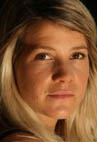
Charlotte Philby, daughter of John Philby, H.A.R. “Kim” Philby’s oldest son, has penned an extensive account of her memories of her grandfather. In her article, published yesterday in British daily The Independent, she describes Kim Philby as “a proud man, and one who chose to publicly stand by his actions”. Kim Philby was probably the most successful double spy in history. While working as a senior member of British intelligence, he spied on behalf of the Soviet KGB and NKVD from the early 1930s until 1963, when he defected to Moscow. Two years later he was awarded the Order of the Red Banner. The Soviet authorities buried him with honors when he died in 1988. Read more of this post

News you may have missed #0046

Bookmark and Share

Documents reveal CIA meddling in Japanese elections

Taketora Ogata

Taketora Ogata

By JOSEPH FITSANAKIS | intelNews.org |
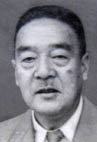
Researchers from three Japanese universities have unearthed US documents that detail CIA activities to monitor and influence Japanese politics in the early 1950s. Dubbed “The Ogata File”, the five-volume, 1,000-page document collection, which was declassified in 2005, relays CIA efforts to assist the electoral campaigns of Japanese conservative politician Taketora Ogata. Ogata led the Japan Liberal Party in the early 1950s and in 1955 was instrumental in merging his party along with other conservative groups into the Liberal Democratic Party, which has ruled Japan for most of the post-war period. Read more of this post

News you may have missed #0042

  • Postcards containing Cold War spy messages unearthed. The postcards, containing chess moves, were posted in 1950 by an unidentified man in Frankfurt, thought to have been an undercover agent, to Graham Mitchell, who was then deputy director general of MI5. The problem is, researchers are not quite sure whether the cryptic text on the postcards is based on British or Soviet codes, because Mitchell was suspected of being a secret Soviet agent at the time.
  • Is NSA actively mapping social networks? There are rumors out there that NSA is monitoring social networking tools, such as Tweeter, Facebook and MySpace, in order to make links between individuals and construct elaborate data-mining-based maps of who associates with whom.
  • US Senate bill would disclose intelligence budget. The US Senate version of the FY2010 intelligence authorization bill would require the President to disclose the aggregate amount requested for intelligence each year. Disclosure of the budget request would enable Congress to appropriate a stand-alone intelligence budget that would no longer need to be concealed misleadingly in other non-intelligence budget accounts.

Bookmark and Share

Cambridge spy ring member’s memoir reveals motives behind actions

Anthony Blunt

Anthony Blunt

By IAN ALLEN | intelNews.org |
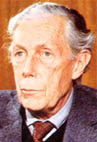
The British Library kept its promise and released yesterday the closely guarded, incomplete autobiographical manuscript of Anthony Blunt, fourth member of the Cambridge spy ring. The group of British spies, which worked secretly for the Soviet Union from the 1930s until the 1960s, included Guy Burgess, Donald Maclean and H.A.R. “Kim” Philby, all of whom eventually defected to the Soviet Union. In his 30,000-word memoir, Blunt, an art history professor who in 1945 became Surveyor of the King’s Pictures and was knighted in 1954, describes his recruitment to spy for the Soviets as “the most important decision of my life”. Read more of this post

Japanese intelligence history discussed in new books

By JOSEPH FITSANAKIS | intelNews.org |
In comparison to their Asian counterparts, Western intelligence organizations are oases of transparency and openness. In such Asian countries as Japan, governments have yet to recognize the existence –let alone operations– of their espionage agencies. This attitude is slowly changing in Japan, however, through a new trend of published books authored by former intelligence operatives. An article in Japan’s second-largest newspaper, Asahi Shimbun, available here in English, discusses this new trend, as well as some of the new information provided in several new memoirs by Japanese ex-intelligence professionals. One interesting aspect of postwar Japanese intelligence, revealed in such books, is its overwhelming concentration on Japan’s communist neighbors. Another is the substantial degree to which US intelligence agencies were involved in the day-to-day running of Japanese intelligence operations. Read more of this post

News you may have missed #0025

  • BREAKING NEWS: Several news outlets are reporting this morning that it was former US vice-President Dick Cheney who ordered the CIA to conceal from Congress key information about a covert action intelligence program of an undisclosed nature. See here for more.
  • New book claims Ernest Hemingway was KGB agent. The new book Spies: The Rise and Fall of the KGB in America (Yale University Press), co-written by John Earl Haynes, Harvey Klehr and Alexander Vassiliev, alleges that the Nobel prize-winning novelist was on the KGB’s list of agents in America from 1941, when he was given the codename “Argo” by the Soviets.
  • Thousands of former Stasi spies still working in German civil service. A report in the German edition of The Financial Times claims that over 17,000 former members of East Germany’s Stasi remain employed as civil servants in reunified Germany. Stasi is the name commonly used for the Ministry for State Security, communist East Germany’s secret police.
  • NSA director’s secret visit to New Zealand revealed. A reporter accidentally spotted Lieutenant-General Keith Alexander, director of the US National Security Agency, entering a Wellington building accompanied by security personnel. The revelation prompted a spokesperson at the US embassy in Wellington to admit that Alexander was indeed in New Zealand “for consultations with government officials”. The close signals intelligence relationship between the US and New Zealand have been known since 1996.
  • Chinese national caught trying to purchase crypto hardware. Chi Tong Kuok was arrested by the FBI at the Atlanta International Airport en route from Paris to Panama, where he allegedly planned to purchase US military radios. The US government claims Kuok has admitted he was “acting at the direction of officials for the People’s Republic of China”.
  • Taliban say cell phone SIM cards guide US drone strikes. A Taliban circular says SIM cards planted by informants in cell phones used by militants are used to signal American drones in Afghanistan and Pakistan. As IntelNews recently explained, there are suspicions that this and similar discoveries are gradually prompting the Taliban and al-Qaeda to stop using cell phones altogether.

Bookmark and Share

Danish Commission absolves secret services of Cold War violations

Leif Aamand

Leif Aamand

By IAN ALLEN | intelNews.org |
Something is rotten in the state of Denmark. In 1999, the Danish government set up the Police Intelligence Service (PET) Commission to review PET’s practice of keeping files on Danish citizens during the Cold War. After ten years, 4,600 pages and $13 million in public funds, the Commission has announced that PET’s activities during the Cold War largely fell within its mandate and that the organization was “never […] a state [with]in a state that acted according to its own norms”. The Commission concluded this despite discovering that PET systematically violated a September 1968 government decree preventing government departments from keeping files on Danish citizens based on their legal political activities. The Commission’s report reveals that the violation was authorized by a secret memorandum from the Danish Ministry of Justice, which allowed PET to continue its political vetting of Danish citizens. As a result, PET amassed detailed files on approximately 300,000 Danes, targeting mostly “Trotskyists, anarchists and left-wing revolutionary groups”, as well as members of Denmark’s Left Socialist Party. Read more of this post

W. German cop behind fatal 1967 shooting was a spy, documents show

By JOSEPH FITSANAKIS | intelNews.org |
On June 2, 1967, West German police opened fire on leftist students demonstrating against a visit to Berlin by the Shah of Iran. One of the shots fired by the police killed student protester Benno Ohnesorg. His killing was dubbed in Germany “the shot that changed the republic”. It had a major role in radicalizing the West German student movement in the late 1960s and early 1970s and directly sparked the creation of the militant student organization Red Army Faction –also known as the Baader-Meinhof Group. But a group of researchers working at Germany’s Office of the Federal Commissioner Preserving the Records of the Ministry for State Security of the German Democratic Republic (BStU), led by archivist Marianne Birthler, now claim they have discovered that the West German police officer who fired the shot that killed Ohnesorg was actually an East German spy. Read more of this post

Article on formerly unknown Soviet spy published

George Koval

George Koval

By JOSEPH FITSANAKIS | intelNews.org |
On November 2, 2007, some of Russia’s most senior military and intelligence officials gathered at the Kremlin to honor a Soviet spy whose name was until then completely absent from the annals of espionage history. Russian defense minister Anatoly Serdyukov and Main Intelligence Directorate (GRU) chief Valentin Korabelnikov were among several officials who joined Russian president Vladimir Putin to pay tribute to George Koval. Koval was an American citizen born in Iowa to immigrant parents from Belarus. In 1932, Koval, his parents and two brothers, all of whom were US citizens, moved back to the then rapidly developing Soviet Union to escape the effects of the Great Depression. It was there that the young George Koval was recruited by the GRU, the foreign military intelligence directorate of the General Staff of the Soviet Armed Forces. He received Soviet citizenship and returned to the US through San Francisco in October 1940. Read more of this post