March 9, 2020
by Joseph Fitsanakis
 The coronavirus (COVID-19) is quickly becoming the greatest security challenge of our time. The ease of transmission and high death rate of this disease, coupled with the asymmetric challenges it poses to our planet’s social, economic and political structures, threaten the very cohesion of our global system. This is especially true of Western societies, whose highly sophisticated organizational features make them especially susceptible to all forms of large-scale disruption. Few of those of us who are alive today in the West have ever faced a threat with the all-encompassing characteristics, disruptive capacity and persistent nature of COVID-19.
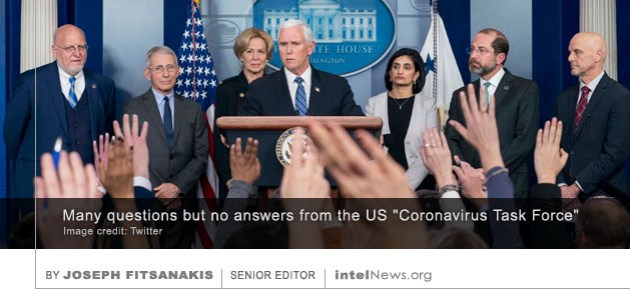
But no American would get this impression by watching the daily briefings of the so-called White House “Coronavirus Task Force”. The uncomfortable smiles and awkward acquiescence of its members, part of an unconvincing effort to assure Americans that “all is well”, coupled with their seemingly unending competition to offer lavish praises to each other, make for a truly uncomfortable viewing experience. Such astounding manifestations of mediocrity would be somewhat tolerable if they came alongside actionable information that Americans could use to protect themselves and the future of their country —preferably something beyond “washing your hands for at least 20 seconds”.
On February 26, Americans were told by their president that “within a couple of days [COVID-19 cases in the US would] be down close to zero, that’s a pretty good job we’ve done”. By that time, China was feverishly implementing the largest quarantine in human history. Ten days later, Italy began to quarantine 16 million people —a quarter of its population— in its northern regions. Meanwhile, Britain has begun re-hiring retired nurses to prepare for the coming unprecedented wave of medical emergencies, while France has banned all large meetings in its territory. But in America it’s business as usual: the National Collegiate Athletic Association (NCAA) announced on Sunday that all its tournament games nationwide will be held with fans despite growing concerns about the coronavirus. Not a single senior government official has stepped forward to address Americans’ growing anxiety about the potentially unprecedented degree of disruption that the US economy, including the nation’s supply chain, healthcare, transportation, education, entertainment, and services sectors are going to be experiencing in the coming months.
Additionally, Americans expect the so-called “Task Force” to provide non-politicized explanations of the ongoing failures of the US government’s treatment to the COVID-19 crisis, which continue to allow the virus to spread in our communities unabated. For instance, why did the US decline to use the World Health Organization’s diagnostic test for the disease, which had been made available to dozens of nations by the end of January? Or why does access to testing kits remain at alarmingly low levels, so much so that a frustrated New York Governor Andrew Cuomo recently described the US Centers for Disease Control and Prevention’s response to COVID-19 as “flat-footed”? So grave is this situation, that on March 8 The Washington Examiner —arguably America’s leading conservative publication— opined that COVID-19 “is exposing how deeply unsuited [Donald Trump] is to deal with a genuine crisis that he can’t bluff his way through”.
The American government’s tragically incompetent response to COVID-19 (at this point just slightly better than the Islamic Republic of Iran’s) hurts even more when one compares it with that of Taiwan —an island nation of 23 million, which the US often views as a client state. In January, when COVID-19 began making news headlines, experts predicted that Taiwan would end up with the world’s second-highest number of COVID-19 cases. This was primarily due to the country’s geographical proximity to mainland China —just 81 miles from the Chinese shore— as well as the  extensive transportation network that links the two nations. Over 1.2 million Taiwanese either live permanently or work in China, while nearly 3 million Chinese citizens visit Taiwan every year. Even more ominously, the COVID-19 outbreak occurred right before the Lunar New Year, which is the busiest travel season for both Chinese and Taiwanese holidaymakers.
But Taiwan has managed to spectacularly defy all early predictions about a potential COVID-19 epidemic. As a group of researchers from the University of California Los Angeles, Stanford University, RAND Corporation and the Koo Foundation in Taiwan, explain in The Journal of the American Medical Association, the reason dates back to 2003. That year’s severe acute respiratory syndrome (SARS) outbreak prompted the Taiwanese government to establish the National Health Command Center (NHCC). Since then, the NHCC has operated as a central command system that coordinates the activities of Taiwan’s Central Epidemic Command Center, the Biological Pathogen Disaster Command Center, the Counter-Bioterrorism Command Center, and the Central Medical Emergency Operations Center. Intelligence collected and analyzed by these centers is quickly distributed to central, regional and local authorities in all parts of the country.
The authors explain that, on December 31, the day when the World Health Organization notified national authorities of the first accounts of a severe pneumonia with unknown causes in the Chinese city of Wuhan, NHCC personnel began to board planes arriving from Wuhan. They began testing all passengers and crew on those planes for flu-like symptoms before allowing them to deplane. By January 5, NHCC personnel were reaching out to anyone who had traveled to Wuhan in the past fortnight and testing them for flu-like symptoms. By that time, the NHCC had already set up a nationwide toll-free hotline, which has since become decentralized to serve individual regions.
On January 27, the NHCC worked in collaboration with Taiwan’s National Health Insurance Administration (NHIA) to integrate the database containing the recent travel history of passengers with their NHIA identification card data. They also integrated the same database with national tourism and immigration data. Within 24 hours, the NHCC was reaching out to all citizens of Taiwan, as  well as tourists and immigrants, who had traveled to the Wuhan region during the previous month. Using this big-data analytics approach, Taiwanese authorities were able to generate real-time alerts that were sent to individual doctors for use during clinical visits, so that clinical symptoms could be matched with patients’ travel histories.
Those who had traveled to regions of China that were considered high-risk, were immediately quarantined at home for 14 days. Their movements were tracked through their mobile phones to ensure compliance with quarantine instructions. Meanwhile, all those who exhibited flu-like symptoms but had tested negative for influenza in weeks prior, were re-tested for COVID-19.
Considering the above, it is hardly surprising that, by March 9, Taiwan —located just 81 miles off the coast of China— had just 45 confirmed COVID-19 cases, with a single death. Importantly, this is not because the Taiwanese are not testing their citizens —unlike the US or, even more outrageously, Turkey, which continues to report zero cases of COVID-19. Taiwan has tested more people than all of the nations of the Americas combined. The low number of COVID-19 cases in Taiwan is due to one thing, and one thing alone: a preemptive approach to the security of the nation by an enlightened leadership and a forward-thinking government system. Which is precisely what the US lacks at this grave time for the nation’s future.
* Dr. Joseph Fitsanakis is associate professor in the Intelligence and National Security Studies program at Coastal Carolina University in the United States.
► Author: Joseph Fitsanakis | Date: 09 March 2020 | Permalink
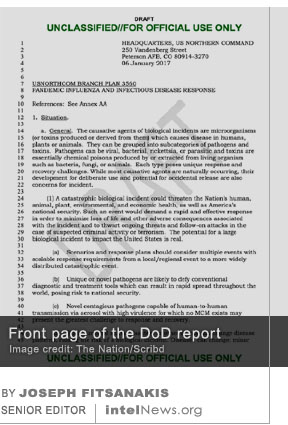 A United States Department of Defense report warned about the danger of a global crisis caused by a “novel respiratory disease”. The existence of the 2017 study adds to the mounting skepticism about President Donald Trump’s repeated assertions that the coronavirus pandemic “blind- sided the world” and “came out of nowhere”.
 The intelligence agencies of Israel are playing an increasingly important role in the Jewish state’s effort to combat the effects of the novel coronavirus pandemic in its territory. Israel’s intelligence agencies are known to be very secretive, but the government has gone out of its way to
 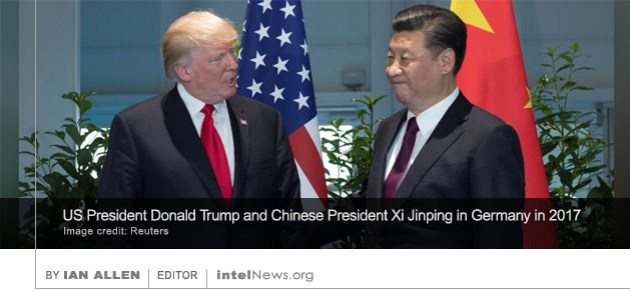 The United States Intelligence Community has concluded that the Chinese government intentionally withheld and even fabricated crucial data about infections and deaths from COVID-19, according to reports. Consequently, the official numbers relating to the novel coronavirus outbreak in China allegedly represent a considerable under-reporting of both total cases and total deaths.
 The National Operations Center of the United States Department of Homeland Security (DHS) is relocating to an emergency facility after a member of its staff tested positive for COVID-19, the illness caused by the novel coronavirus. The information was
  The administration of United States President Donald Trump is considering the possibility of expelling from the country dozens of Chinese diplomats, journalists, and others, who are believed to be undercover spies. The expulsions relate to a spiraling information war between Washington and Beijing, which has erupted in recent weeks as a result of the COVID-19 pandemic.
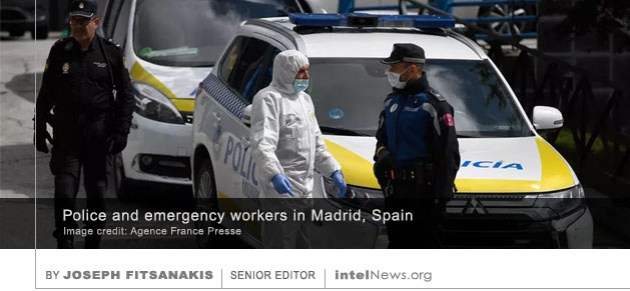 The government of Spain said on Tuesday it had begun to shift to “a war economy”, as the Spanish Ministry of Defense called on the North Atlantic Treaty Organization for assistance to fight the coronavirus pandemic. The term war economy is used to describe the rapid reorganization of a nation’s production and distribution capacity in response to a direct military threat to its existence.
 Ever since the emergence of the novel coronavirus, in December of last year, prominent public health scientists have consistently
  The United States Intelligence Community issued “ominous classified warnings” in January and February about the global danger posed by the coronavirus, but the White House failed to take timely action, according to an investigative
  The governor of New York has asked United States President Donald Trump to mobilize the Army in order to avoid a healthcare meltdown that will be “worse […] than what we are seeing in Italy”. In an
 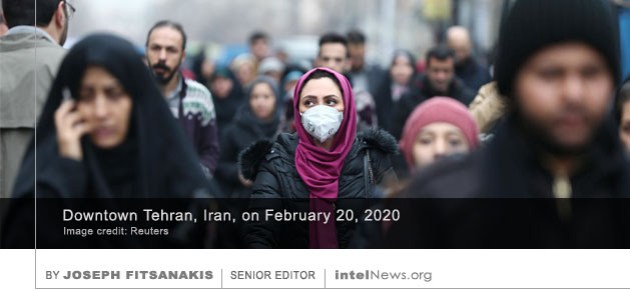 A senior Bahraini cabinet minister on Thursday accused the Iranian government of ‘biological aggression’ for spreading COVID-19 to several other countries in the Gulf, a claim that Iran promptly rejected. The allegation refers to Iran’s customary practice of not stamping the passport of visitors from some Sunni-majority nations.
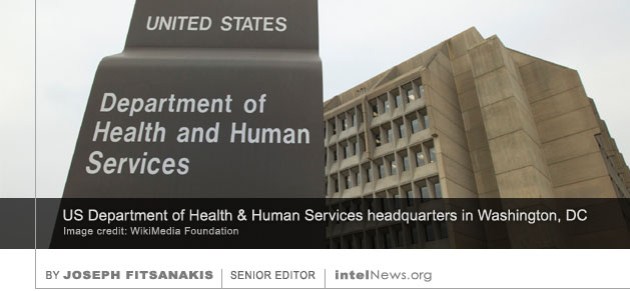 A number of United States government officials have expressed dismay about the White House’s treatment of top-level meetings about the coronavirus (COVID-19) as classified, a move described by some as “not normal”. On Wednesday the Reuters news agency
 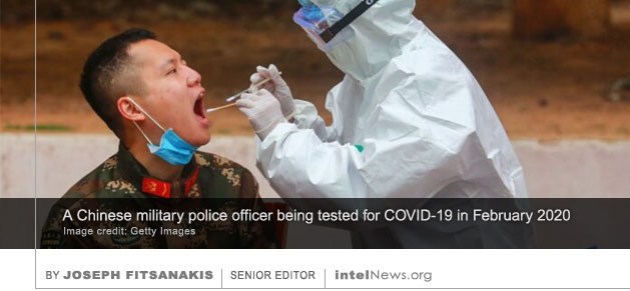 Military forces around the world are scrambling to contain the impact of COVID-19 on military readiness, as the virus continues to infect troops and commanders at an alarming rate. On Tuesday, the Polish government
 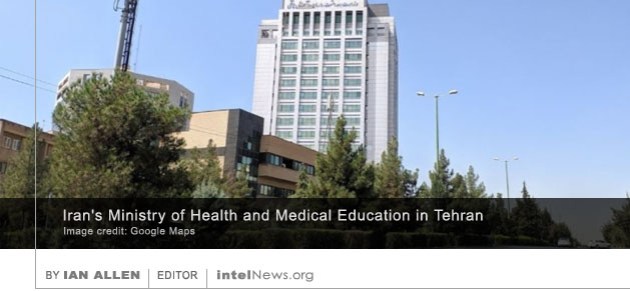 An Android application developed by the Iranian government to assist in coordinating the country’s response to the COVID-19 epidemic has been removed by Google amidst accusations that it may be used to track Iranian dissidents. The application, named AC19, was released several days ago by Iran’s Ministry of Health and Medical Education. Its release was announced through a text message sent by the Iranian government to every mobile telephone subscriber in the country. The text message urged citizens to download the application through a dedicated website or third-party app stores, including the Google Play Store. Millions have since done so.






 intelNews.org
Analysis: Will COVID-19 cause food shortages in the United States?
April 8, 2020 by Joseph Fitsanakis 2 Comments
COVID-19 IMPACT ON FARMS
Disruptions are likely to be felt first in the area of fresh produce, for two reasons. First, because large agricultural facilities are beginning to experience major shortages in personnel, as seasonal farmworkers —most of them from Central and South America— are unable to travel north due to the cessation of international travel in the Americas. Second, because —just like medical personnel across the country— agricultural workers are facing severe shortages in personal protective equipment (PPE), which is essential for keeping them healthy in a pandemic. Until now, major COVID-19 outbreaks have been occurring in densely populated urban centers. But as the disease continues to spread, it is only a matter of time before the virus reaches rural farming areas and enters farms, which are the beginning of the food supply chain. Many automated agricultural facilities, such as grain and soybean operations in the American Midwest, do not require large numbers of human laborers, and will thus suffer little disruption from the spread of the pandemic. However, this is not the case with fruits and vegetables, such as tomatoes or grapes, which require human pickers to extract them. The progression of the disease in rural regions of Florida and California, which produce over 20% of total US agricultural value, will be a critical factor. As an illustration, is worth pointing out that two farms in California supply over 85% of all carrots in the US market. If COVID-19 affects the production and distribution capacity of global producers of fresh fruits and vegetables, like the Florida-based Fresh Del Monte Produce, the ramifications are likely to be felt across the world for more than a year.
AGRICULTURAL DISRUPTIONS IN WESTERN EUROPE
Western Europe, which is ahead of the US in the spread of the disease, is already experiencing unprecedented disruptions in agricultural production. The closing of international borders has prevented millions of seasonal farmworkers from Eastern Europe, whom agricultural facilities in Western Europe rely on to pick fruits and vegetables each year, from traveling west. Italy and Britain hav e begun issuing calls for unemployed workers to form “land armies” and volunteer to pick produce in farms. The French government has called “for hairdressers, waiters, florists and others temporarily unable to work” due to the pandemic “to head to the nation’s fields and start picking”. And in Germany, the authorities have launched a website that solicits volunteers to work in farms across the nation. However, as only 16,000 have volunteered so far, the German government is now working on a plan to allow undocumented immigrants to make up the remaining 284,000 farmworkers that are needed to salvage this year’s crop.
DISRUPTION IN THE GLOBAL FOOD EXPORT SYSTEM
It is unrealistic to expect that these glitches will not eventually make their way to the US. Moreover, just like Western Europe, the US relies heavily on imported foods. The global nature of the pandemic is also beginning to cause major disruptions in food exports, as air and ship cargo dwindles dramatically. Already, the shortage of refrigerated containers used to transport meat and other food supplies from China to North America has prompted a drop in imports of over 25%. Meanwhile, India, which is the world’s largest exporter of rice, has completely halted exports due to logistical problems and labor shortages caused by the pandemic. The world’s second and third largest exporters of rice, Thailand and Vietnam, are likely to soon follow suit. Kazakhstan, which is among the world’s largest exporters of wheat flour, has now banned all exports of that product. Brazil, the largest exporter of coffee, sugar and soybeans in the world, has warned that it is facing an unprecedented shortage of farmworkers, truck drivers, and even spare parts for farm equipment. And Russia, which is the world’s largest exporter of wheat, has said that it will soon be forced to severely restrict exports for the same reasons as Brazil. These developments prompted the United Nations Food and Agriculture Organization to warn last week that food shortages, coupled with growing trade barriers between nations, “will create extreme volatility” in global food supply. Read more of this post
Filed under Expert news and commentary on intelligence, espionage, spies and spying Tagged with Analysis, Coronavirus, COVID-19, disease intelligence, food security, Joseph Fitsanakis, United States