CIA declassifies 1978 Camp David Accord files

Sadat, Carter and BeginBy JOSEPH FITSANAKIS | intelNews.org
The United States Central Intelligence Agency has declassified 1,400 pages of intelligence files relating to the Camp David Accords, the historic peace treaty between Egypt and Israel, which was signed in 1978. The treaty, the first between Israel and an Arab country, was signed on September 17, following thirteen days of high-level negotiations between Egypt and Isarel at the Camp David presidential retreat in the US state of Maryland. The two signatories were Egyptian President Anwar Sadat and Israeli Prime Minister Menachem Begin. The high-level summit was hosted by US President Jimmy Carter. All three heads of state were awarded the Nobel Peace Prize later that year, which they shared for helping bring about the first peace treaty between an Arab nation and Israel. The 250 previously classified documents on the Accords, which were released by the CIA earlier this week, date from January 1977 to March 1979. They include comprehensive political assessments and personality profiles of President Sadat, Prime Minister Begin, and other key personalities participating at the summit, which were given to President Carter to read before the meeting. One of the documents refers to a meeting between Carter and CIA analysts at the Agency’s headquarters in August 1978, during which the American President was coached about how to negotiate with the two Middle Eastern leaders. Or, as the document puts it, Carter was “steeped in the personalities of Begin and Sadat”. The papers also include declassified transcripts of meetings of the US National Security Council, in which the Accords were discussed. Read more of this post

Files reveal names of Americans targeted by NSA during Vietnam War

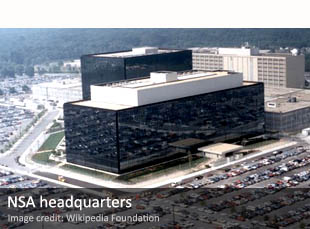
NSA headquartersBy JOSEPH FITSANAKIS | intelNews.org
The names of several prominent Americans, who were targeted by the United States National Security Agency (NSA) during the height of the protests against the Vietnam War, have been revealed in declassified documents. The controversial communications interception operation, known as Project MINARET, was publicly acknowledged in the mind-1970s, during Congressional inquiries into the Watergate affair. We know that MINARET was conducted by the NSA between 1967 and 1973, and that it targeted over a thousand American citizens. Many believe that MINARET was in violation of the Agency’s charter, which expressly prevents it from spying on Americans. But despite the media attention MINARET received during the Watergate investigations, the names of those targeted under the program were kept secret until Wednesday, when the project’s target list was declassified by the US government. The declassification decision was sparked by a Freedom of Information Request filed by George Washington University’s National Security Archive. The two Archive researchers who filed the declassification request, William Burr and Matthew Aid, said MINARET appears to have targeted many prominent Americans who openly criticized America’s involvement in the Vietnam War. The reason for the surveillance was that US President Lyndon Johnson, who authorized the operation, was convinced that antiwar protests were promoted and/or supported by elements outside the US. The newly declassified documents show that Dr. Martin Luther King, Jr., was a major surveillance target of the government. Read more of this post
CIA shuts down office that declassifies historical materials

CIA headquartersBy JOSEPH FITSANAKIS | intelNews.org |
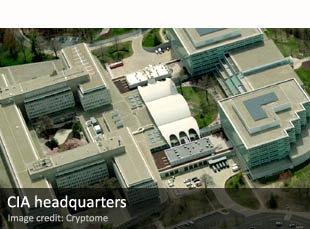
The division of the United States Central Intelligence Agency that is responsible for weeding through and declassifying historical materials from the Agency’s archives is to close due to the sequester budget cuts. The CIA’s Historical Collections Division has been at the source of some of the most sensational declassification of American intelligence material in recent years, spanning several decades of postwar history. But it has now been disbanded due to budget cuts associated with so-called sequester. The widespread cuts were automatically imposed after the two political parties in Congress failed to compromise last year on the Federal budget. The sequester is an across-the-board budget reduction that affects every single agency or office operating under the US government. It is believed that the CIA dealt with the cuts by terminating an unknown number of agreements with outside contractors, some of whom were responsible for the declassification of historical documents. The Los Angeles Times, which reported on the story, quoted CIA spokesman Edward Price, who told journalists last week that the Historical Collections Division had been “moved into a larger unit” within the Agency in order to “create efficiencies”. He identified that unit as the CIA’s Office of the Chief Information Officer, whose Information Management Services handle all Freedom of Information Act requests from the public. Price assured reporters that the CIA remained faithful to declassifying historical material, which it described as part of its “public interest mission”. But The Times quoted several scholars who said that the disbandment of the CIA’s Historical Collections Division will almost certainly result in a reduced number of public disclosures. Read more of this post

Document confirms CIA role in 1953 Iran coup

Iran and its regionBy JOSEPH FITSANAKIS | intelNews.org |
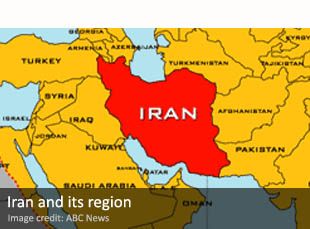
Almost exactly 60 years ago, on August 19, 1953, a military coup d’état deposed Iran’s legally elected Prime Minister, Dr. Mohammed Mossadegh, and replaced him with General Fazlollah Zahedi. Mossadegh was placed under house arrest, while his senior government associates and thousands of his supporters were arrested. Many, including Hossein Fatemi, Iran’s Minister of Foreign Affairs and Mossadegh’s trusted friend, were tortured and eventually executed. The coup, which reinstated the Shah at the helm of Iran’s government, is believed to have been planned and executed by Britain’s Secret Intelligence Service (MI6) in cooperation with the United States Central Intelligence Agency (CIA). This, however, has never been publicly acknowledged by the CIA. The Agency has consistently refused comment on the matter, saying that most of the records of its involvement in Iran at the time were “lost or destroyed” in the mid-1960s. This policy of silence, however, appears to have changed this week, after the CIA released an official document that acknowledges the Agency’s leading role in the coup. The document, entitled The Battle for Iran, is part of an internal CIA historical report produced in the mid-1970s by an Agency historian. Parts of it were declassified in 1981, but its most important chapter, titled “Section III: Covert Action”, had been redacted prior to its public release. Sometime ago, George Washington University’s National Security Archive filed a Freedom of Information Act request for the complete release of the report. This was not granted; but the CIA did release a new public version of the document, which contains fewer redacted passages. Among the newly uncovered information is a brief description of the operational side of the August 1953 coup, which the CIA codenamed TPAJAX. Read more of this post

Report reveals secret US-India Cold War collaboration

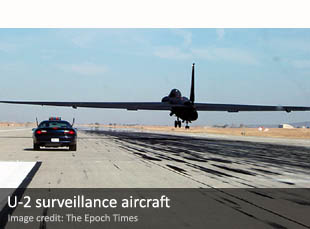
U-2 surveillance aircraftBy JOSEPH FITSANAKIS | intelNews.org |
During much of the Cold War, India enjoyed a close diplomatic and military relationship with the Soviet Union. But a newly declassified document reveals that the South Asian country allowed the United States to spy on the Soviets using its airspace. The revelation is contained in a 400-page history of the American U-2 reconnaissance aircraft program authored on behalf of the US Central Intelligence Agency (CIA). The formerly classified document, written in 1992 by CIA historians Gregory Pedlow and Donald Welzenbach, is titled: The Central Intelligence Agency and Overhead Reconnaissance: The U-2 and OXCART Programs, 1954-1974. It was declassified last week in response to a 2005 Freedom of Information Act request filed by Jeffrey T. Richelson, Senior Fellow at George Washington University’s National Security Archive. The Central Intelligence Agency had been involved in U-2 reconnaissance missions since 1954, when the spy program began. Known officially as Project HOMERUN, the U-2 program was a joint effort by the CIA and the National Security Agency that surreptitiously gathered signals and photographic intelligence on Soviet military sites. The program, which has been described by some historians as one of the most successful intelligence projects in US history, relied on the U-2’s ability to fly beyond 70,000 feet over the Soviet Union, thus avoiding detection or attack by Soviet forces. That assumption, however, proved to have been false. In reality, Soviet radars had been able to detect nearly every U-2 flight over Soviet territory. Eventually, on May 1, 1960, Soviet forces managed to shoot down one of the U-2 flights using a surface-to-air missile. This led to the so-called ‘U-2 incident’, during which India sided firmly with the Soviet Union, criticizing the US for violating Soviet airspace. But New Delhi’s attitude to the U-2 program appears to have changed drastically following the Sino-Indian conflict on October 1962, when Chinese forces launched a series of armed incursions into Indian territory, killing over 1,000 soldiers. Read more of this post

CIA kept file on American academic Noam Chomsky, say experts

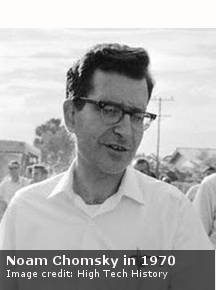
Noam Chomsky in 1970By JOSEPH FITSANAKIS | intelNews.org |
A 1970 communiqué between two United States government agencies appears to show that the Central Intelligence Agency (CIA) kept a file on the iconic American linguist and political dissident Noam Chomsky. Widely seen as a pioneer of modern linguistics, Chomsky adopted an uncompromisingly critical stance against the US’ involvement in the Vietnam War in the early 1960s. The US Intelligence Community’s systematic surveillance of antiwar and civil rights activists at the time prompted legal scholars and historians to deduce that Chomsky’s activities must have been routinely spied on by the American government. But a number of Freedom of Information Act (FOIA) requests in recent years turned up blank, with the CIA stating that it could “not locate any records” responsive to the requests. Scholars insisted, however, and a recent FOIA request unearthed what appears to be proof that the CIA did in fact compile a file on the dissident academic. The request was submitted to the Federal Bureau of Investigation (FBI) by attorney Kel McClanahan, executive director of National Security Counselors, a group specializing in “lawfully acquiring from the government material related to national security matters and distributing it to the public”. According to Foreign Policy magazine blog The Cable, McClanahan’s FOIA request revealed a memorandum sent from the CIA to the FBI on June 8, 1970. In it, the Agency seeks information about an upcoming trip by American antiwar activists to North Vietnam, which, according to the CIA, had received the “endorsement of Noam Chomsky”. The memo also asks the FBI for information on the trip’s participants, including Professor Chomsky. The Cable spoke to Marquette University Professor Athan Theoharis, domestic surveillance expert and author of Spying on Americans, who opined that the CIA request for information on Chomsky amounts to an outright confirmation that the Agency kept a file on the dissident academic. Read more of this post

News you may have missed #848

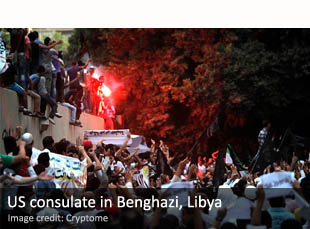
US consulate in Benghazi, LibyaBy IAN ALLEN | intelNews.org |
►►UK officials saw ‘communist spies’ in Japan in 1983. British officials believed in the early 1980s that Japanese institutions had been “slightly” penetrated by communist intelligence services, according to documents declassified last week at the National Archives in London. The documents, from 1983, assert that there were approximately 220 communist intelligence officers working in Japan: 100 for the Soviet Union, 60 for China and 60 for other communist countries.
►►‘Dozens of CIA operatives on the ground’ during Benghazi attack. CNN claims that “dozens of people working for the CIA” were on the ground the night of the attack on the US consulate in Benghazi, Libya, which killed four Americans, including Ambassador Christopher Stevens. The news station adds that, according to one source, the CIA is involved in “an unprecedented attempt to keep [its] Benghazi secrets from ever leaking out”.
►►Australians call for national debate on privatization of intelligence. Dr Troy Whitford, Associate Investigator with the Australian Research Council’s Centre of Excellence in Policing and Security, and lecturer at Charles Sturt University, has called for “a national debate on the extent, cost and consequences of Australia’s security and intelligence outsourcing”. The call was apparently prompted by news that 51% of the intelligence gathering in the US is now carried out by non-government contractors.

Is mismanagement driving away some of the CIA’s best talent?

CIA headquartersBy IAN ALLEN | intelNews.org |
Poor management practices and a culture that tolerates blunders by senior officials are generating cynicism and disillusionment among employees at the United States Central Intelligence Agency, according to an internal study. Completed in 2010 by the CIA’s Office of the Inspector General, the study was released in heavily redacted form last week, in response to a Freedom of Information Act request. The Los Angeles Times, which filed the request in 2011, said the report identifies mismanagement and unaccountability among senior leadership as major factors contributing to the CIA’s “retention challenges”. It cites a 2009 Agency-wide anonymous survey, which found that around 12% of the CIA’s workforce was considering resigning. Over half of those said they wanted to leave because of “poor management and a lack of accountability for poor management” among senior-level staff. This feeling is stronger among younger recruits, “who have exhibited high resignation rates in current years”, according to the report. Operations officers at the National Clandestine Service —the CIA’s covert-action arm— are also more disturbed than other Agency employees by perceived mismanagement. The report also notes that the CIA has failed to introduce mechanisms for encouraging accountability, in response to growing concerns by lower-level staff. The Times said it spoke to “more than 20 former [CIA] officers”, who said the 2010 report echoed “longstanding concerns about the CIA’s culture”. Read more of this post

MI6 archives reveal plans for WWII and Cold War black operations

Sir Stewart MenziesBy JOSEPH FITSANAKIS | intelNews.org |
Recently declassified British archives reveal a host of audacious plans for covert operations aimed at Nazi-occupied Europe during wartime and, after 1948, inside the Soviet Union. The plans, proposed by British intelligence officials, ranged from relatively innocuous psychological operations to assassinations of key political figures. The wartime plans were proposed in 1944 by Charles Peake, a British intelligence officer detailed to the headquarters of General Dwight Eisenhower. The iconic American military commander was in charge of plans for Operation OVERLORD, the allied troop landings on the beaches of Normandy in northern France. According to documents released last week by the United Kingdom National Archives, Peake’s proposal was entitled “Assassination Priorities for OVERLORD”. It contained an extensive list of senior German and French Axis officials that should be targeted for assassination in preparation for the D-Day landings. The hit list included “certain Germans in key positions in France”, notably Field Marshals Gerd von Rundstedt and Erwin Rommel. It also incorporated several senior members of France’s Nazi-controlled Vichy administration under Marshal Philippe Pétain. The proposal, however, was quickly shot down by no other than General Stewart Menzies, Director of the Secret Intelligence Service (known as MI6), who feared that intrusive covert actions by allied operatives would cause brutal reprisals against allied prisoners of war. Ironically, Menzies, known in government simply as “C”, drafted an ever more ambitious plan for black operations after the end of World War II, this time targeted at the Soviet Union. Read more of this post

WWII files reveal bizarre case of British cross-dressing spy

Dudley ClarkeBy IAN ALLEN | intelNews.org |
A set of World War II-era British Foreign Office documents detail a highly unusual incident of a senior British spy, who was arrested in Spain for cross-dressing. The files, which were released this week by the National Archives, concern the case of Lieutenant Colonel Dudley Clarke, a senior operative of British intelligence who served with distinction in Europe and the Middle East. In October of 1941, Clarke was traveling though Spain en route to Egypt, by way of the British colony of Gibraltar. His instructions were to maintain a low profile throughout his trip, during which he posed as a foreign correspondent for The London Times. In reality, he was carrying with him key naval intelligence addressed to the British high command in Cairo. However, soon after arriving in Spanish capital Madrid, Clarke was arrested for appearing in a busy street dressed as a woman. A frantic cable sent to the Foreign Office by the British embassy in Madrid mentioned that the intelligence officer had been detained after he had been found “in a main street dressed —down to a brassiere— as a woman’. According to the —now declassified— memoranda complied by the Foreign Office, Clarke had told his Spanish police captors that he was “a novelist” and had dressed as a woman in order to “study the reactions of men to women in the streets”. But the conservative police officials in Francoist Spain did not buy Clarke’s story, and decided to charge him with “engaging in homosexual behavior”. London, meanwhile, was trying frantically to ensure that Clarke was released before either Spanish or German authorities realized that he was a British intelligence officer. The Foreign Office cabled the British embassy in Madrid with direct instructions that “in no circumstances should it be revealed that C[larke] is a British [intelligence] officer”. Read more of this post

News you may have missed #836

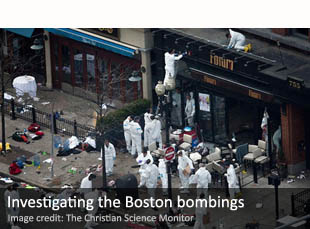
Investigating the Boston bombingsBy IAN ALLEN | intelNews.org |
►►NSA guide explains how to access private info on Google. In 2007, the US National Security Agency produced a book to help its spies uncover intelligence hiding on the World Wide Web. The 643-page tome, called Untangling the Web: A Guide to Internet Research (.pdf), has just been released by the NSA following a FOIA request filed in April by MuckRock, a site that charges fees to process public records for activists and others. Although the author’s name is redacted in the version released by the NSA, Muckrock’s FOIA indicates it was written by Robyn Winder and Charlie Speight.
►►Are the EU’s unofficial spy services growing out of control? Since its founding, the European Union has been building its own spy programs, often triggered by specific needs, in an ad-hoc manner, without strategy and without a coherent concept about their structure, methods, and people. Unofficially, the has been building an intelligence apparatus of six services so far, some of them brand new, populated already by 1,300 specialists. But because they are technically not conducting covert operations, they simply deny being intelligence services.
►►Hearing on Boston bombings exposes intelligence failures. The US House Committee on Homeland Security’s hearing on the Boston Marathon bombings on Thursday amounted to more than the usual political posturing: it exposed clear deficiencies in communications among intelligence- and law-enforcement agencies. whatever the cause of the intelligence breakdown, the failure to share vital information —and the continued finger-pointing between agencies yesterday— shows the need to improve coordination.

Court rejects release of spy records on iconic Canadian politician

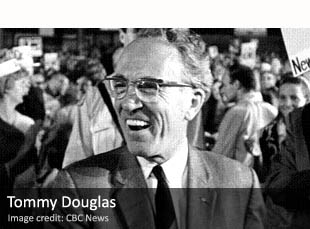
Tommy DouglasBy JOSEPH FITSANAKIS | intelNews.org |
Canada’s highest court has rejected a legal argument in favor of releasing surveillance records on Tommy Douglas, an iconic Canadian politician who was monitored for most of his life by the security services. Douglas was a Scottish-born Baptist minister who later became the leader of the New Democratic Party and Premier of the Canadian province of Saskatchewan. Under his Premiership, which lasted from 1944 to 1961, Saskatchewan’s government became the first democratic socialist administration in North America and the first in the Americas to introduce a single-payer universal healthcare program. But Douglas, who is widely recognized as the father of Canada’s healthcare system, was under constant surveillance by Canadian intelligence throughout most of his life. Government records show that the now-defunct Security Service of the Royal Canadian Mounted Police (RCMP) began monitoring the socialist politician shortly before the outbreak of World War II. It appears that, in the political context of the Cold War, Douglas had drawn the attention of Canada’s security establishment by supporting antiwar causes, which led some to suspect him of holding pro-communist sympathies. The government surveillance, which was at times extensive, lasted until shortly before the politician’s death in 1986. Under Canada’s legal system, security dossiers on individuals are typically released 20 years after the target’s death. However, even though several hundred pages from Douglas’ dossier have already been released, many hundreds more remain secret. In 2005, Canadian Press reporter Jim Bronskill launched a legal campaign aimed at securing the release of the remaining pages in Douglas’ dossier. His campaign is supported by Douglas’ family, notably Douglas’ daughter, Shirley. But the Canadian government has resisted Bronskill’s effort from the very beginning. Read more of this post

Soviets used civilian airliners to gather intelligence, documents show

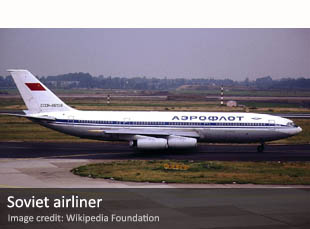
Soviet Aeroflot airlinerBy JOSEPH FITSANAKIS | intelNews.org |
Soviet spy agencies routinely used civilian airplanes to collect aerial intelligence over Western military installations, according to newly declassified documents. The revelation is contained in British government files from 1982 that were declassified on Friday, following the expiration of the United Kingdom’s 30-year classification rule. According to Bloomberg’s Robet Hutton and Thomas Penny, who accessed the files, they include a detailed memorandum addressed to Conservative Party politician Margaret Thatcher, who was serving as Britain’s Prime Minister at the time. The memorandum, which was authored by then Secretary of State for Defence, John Nott, informed Mrs. Thatcher that the airborne behavior of airliners belonging to Aeroflot, the Soviet Union’s state-owned civilian air carrier, appeared suspicious. Secretary Nott wrote in the memo that Britain’s Royal Air Force had “established that some [Soviet] aircraft deviated from their flight-plan routes” when flying over Western military bases. He goes on to describe an “incident of particular interest”, in which an Aeroflot Ilyushin IL62 airplane descended without authorization from 35,000 feet to 10,000 feet right above the village of Boulmer. Located in Northumberland, England, Boulmer is adjacent to a Royal Air Force base, which at the time featured a newly modernized radar system. The same Aeroflot airplane behaved in similar fashion while flying over a United States Navy base in Groton, Connecticut, which at the time hosted the first US submarine equipped with Trident Ballistic Missiles. The memorandum states that the circumstances surrounding the flight patterns of Aeroflot airliners had led the Royal Air Force to assume that the Soviet airplanes “were gathering intelligence” on Western military targets. Read more of this post

Jailed US spy gave Israel information on Pakistan nuclear program

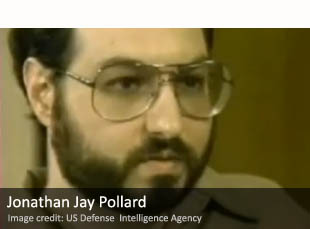
Jonathan Jay PollardBy JOSEPH FITSANAKIS | intelNews.org |
An American intelligence analyst, who was jailed in 1987 for spying for Israel, gave his spy handlers information on Pakistan’s nuclear weapons program, according to declassified documents. Former United States Navy intelligence analyst Jonathan Jay Pollard is currently serving a life sentence for selling classified information to the Israeli government between 1985 and 1987. On December 14, the Central Intelligence Agency declassified its official damage assessment of Pollard’s espionage, who some counterintelligence officials believe was the most prolific mole that ever spied on the US government for a foreign country. This was the second time that the CIA declassified the document, titled The Jonathan Jay Pollard Espionage Case: A Damage Assessment, following an appeal by George Washington University’s National Security Archive. Even though this latest version of the declassified document is still heavily redacted, it contains some new information. One new revelation is that Pollard’s Israeli handlers specifically asked him to acquire intelligence collected by the US government on the Pakistani nuclear weapons program. In a section titled “Implications of Compromises: What Israel Gained from Pollard’s Espionage”, the CIA assessment states that Pollard focused on “Arab and Pakistani nuclear intelligence” and gave his Israeli handlers information on a secret Pakistani “plutonium reprocessing facility near Islamabad”. Further information in the declassified report about this subject is completely redacted. The question is, what kind of information on Pakistan’s nuclear weapons program did Tel Aviv acquire from Pollard?  According to A.Q. Khan, the so-called father of the Pakistani nuclear bomb, Islamabad was able to detonate a nuclear device “within a week’s notice” by as early as 1984. Read more of this post

MI5 official’s diaries reveal tensions between UK, US spy agencies

Guy LiddellBy JOSEPH FITSANAKIS | intelNews.org |
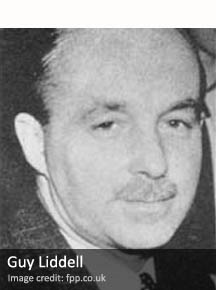
Newly declassified personal diaries belonging to a senior British intelligence official reveal tensions between British and American spy agencies in the years immediately following World War II. The National Archives, an executive agency operating under the United Kingdom’s Secretary of State for Justice, released the diaries on Friday. They belong to Guy Maynard Liddell, a longtime British intelligence operative who rose to the post of Deputy Director General of MI5, Britain’s domestic intelligence agency. Liddell meticulously kept a diary during most of the 1940s and 1950s, in which he detailed both personal information and details of his work at MI5. Two volumes of his diaries (from 1939 to 1945, edited by Nigel West) have already been published. Now a third installment has been declassified by the National Archives, containing Liddell’s diary entries from the late 1940s and 1950s. The diaries project what some intelligence historians describe as “a certain friction” between postwar British and American intelligence services. Even though the two countries were largely viewed as allies in the immediate postwar period, their respective intelligence agencies did not always see eye to eye. In one instance, Liddell describes his American colleagues as “utterly incapable […] of seeing anybody’s point of view except their own” and accuses them of being “quite ready to cut off their noses to spite their faces”. He also comes across as skeptical of the then-newly established Central Intelligence Agency, which, he writes, “someday” may be able to produce information that would be “worth disseminating, evaluating, or coordinating”. In 1947, shortly after the CIA’s founding, Liddell wrote with a degree of uncertainty that “in the course of time, [the Agency] may produce something of value”. Further on he relayed the opinion of CIA Deputy Director Edwin Kennedy Wright, who apparently told British intelligence officials that in American intelligence organizations “500 people were employed to do what 50 people would do” in the UK. Read more of this post